For the second time in its history, the American Academy of Achievement traveled to London, England for an International Achievement Summit steeped in history and overflowing with the wisdom of leading thinkers from both sides of the Atlantic.
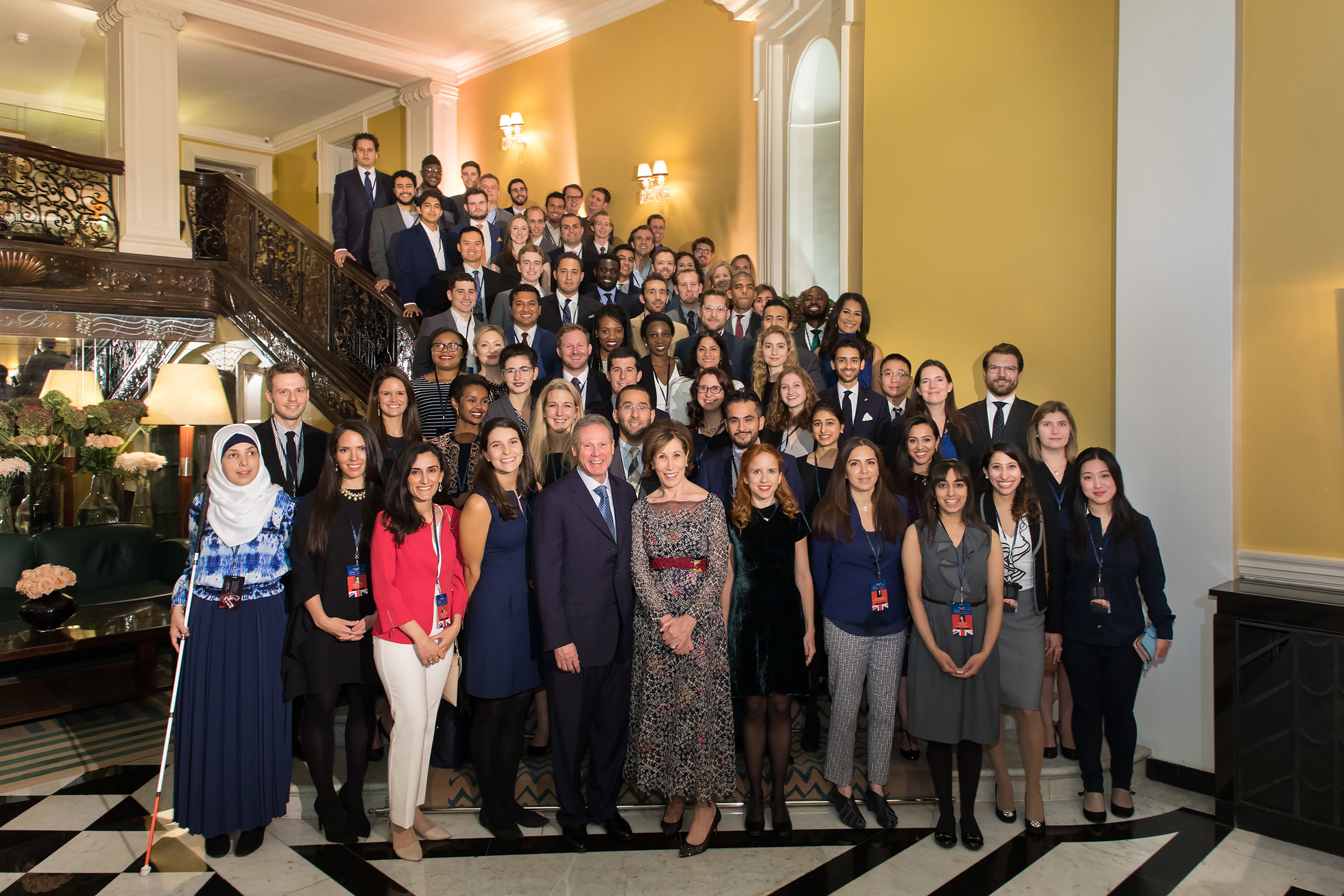
From October 17 to 19, 2017, the 52nd International Achievement Summit brought 75 of the world’s outstanding young scholars, scientists, entrepreneurs and public servants to London to meet with the Academy’s new honorees and its Awards Council, made up of past recipients of the Academy’s Golden Plate Award. These attendees included ten recipients of the Nobel Prize, two Presidents, two Supreme Court Justices, and legendary figures from the worlds of arts and letters, music and motion pictures. Thirty new honorees were inducted into the Academy during two days of fascinating discussions held at the storied hotel Claridge’s in the heart of London’s elegant Mayfair district.
Much has happened in the world since the Academy’s first London Summit in 2000. Commentators lament the decline of civility in public discourse and decry the increasing polarization of public opinion into irreconcilable camps, each unwilling to entertain alternative points of view. The International Achievement Summit provides an opportunity to transcend such antagonisms, and to promote the exchange of ideas between disciplines, between nations and generations, and across conventional divisions of ideology.
The Academy’s 2017 delegates included some of the world’s most promising young scholars, scientists and entrepreneurs — Marshall Scholars, Soros Fellows, medical students and young physicians of the Howard Hughes Medical Institute and the Harvard-MIT Medical Scientist Training Program — as well as scholars from the United Arab Emirates, Bahrain and Israel. Many have founded their own companies, nonprofits and NGOs. One is the Mayor of Ithaca, New York, and another is a member of Israel’s parliament.
Among the public servants attending the 2017 Summit were the 42nd President of the United States, William Jefferson Clinton; Supreme Court Justices Anthony M. Kennedy and Neil Gorsuch; the President of Rwanda, His Excellency Paul Kagame; the former Prime Minister of Israel, Ehud Barak; former CIA Director David Petraeus; ACLU Director Anthony Romero; attorney Barry Scheck; financier and philanthropist Lord Jacob Rothschild; and His Eminence Cardinal Ernest Simoni.
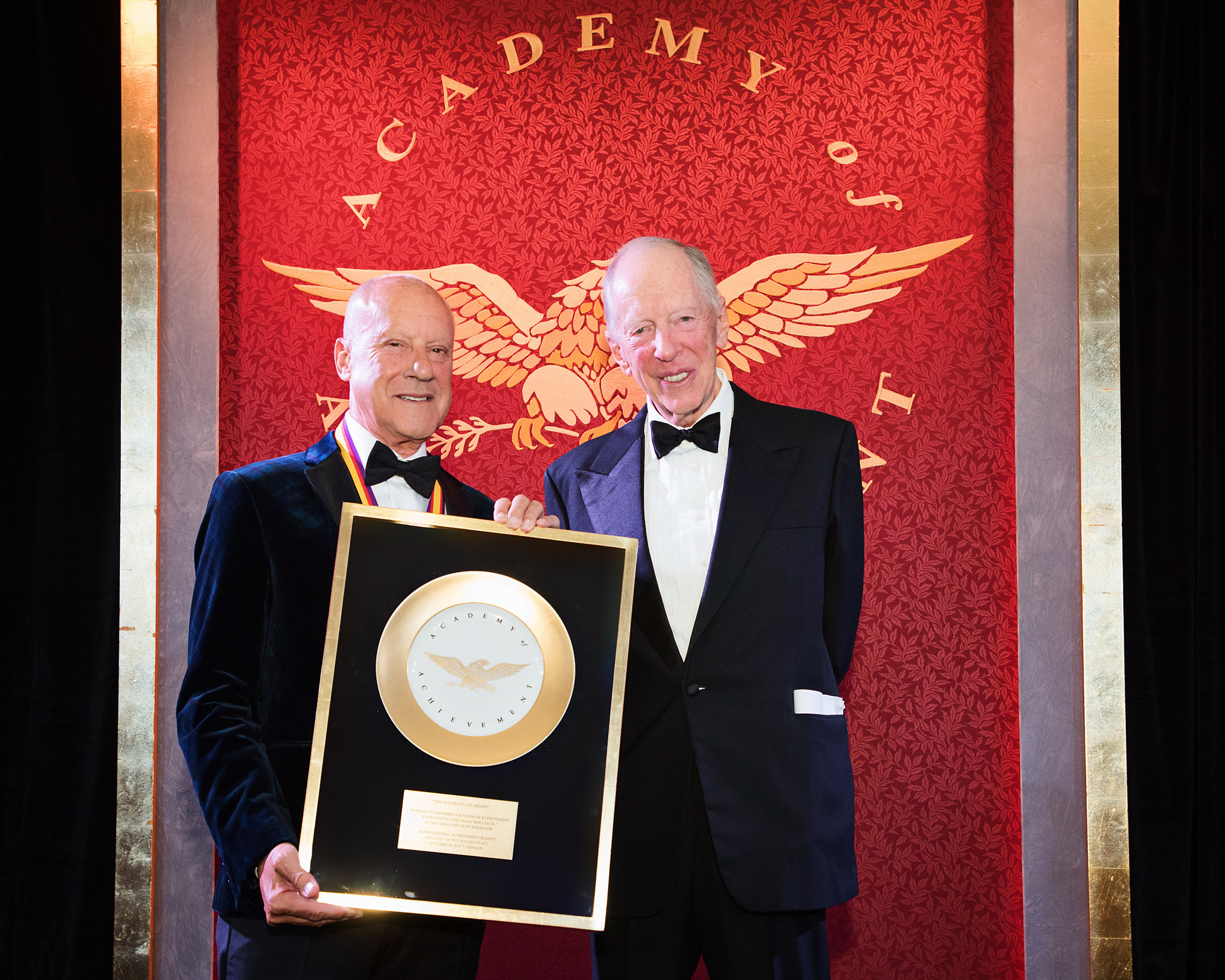
Leading scientists participating in the Summit included the pioneer of CRISPR technology, Dr. Jennifer Doudna; integrative medicine pioneer Dr. Andrew Weil; biomedical engineer Dr. Robert Langer; the Astronomer Royal, Lord Martin Rees; Chief of Surgery at the National Cancer Institute Dr. Steven Rosenberg; and the following recipients of the Nobel Prize: Sir Andre Geim, Sir John Gurdon, Dr. F. Duncan M. Haldane, Dr. Brian Kobilka, Dr. Robert Lefkowitz, Dr. Randy Schekman, Dr. Joseph Stiglitz and Sir Venki Ramakrishnan, President of the Royal Society.
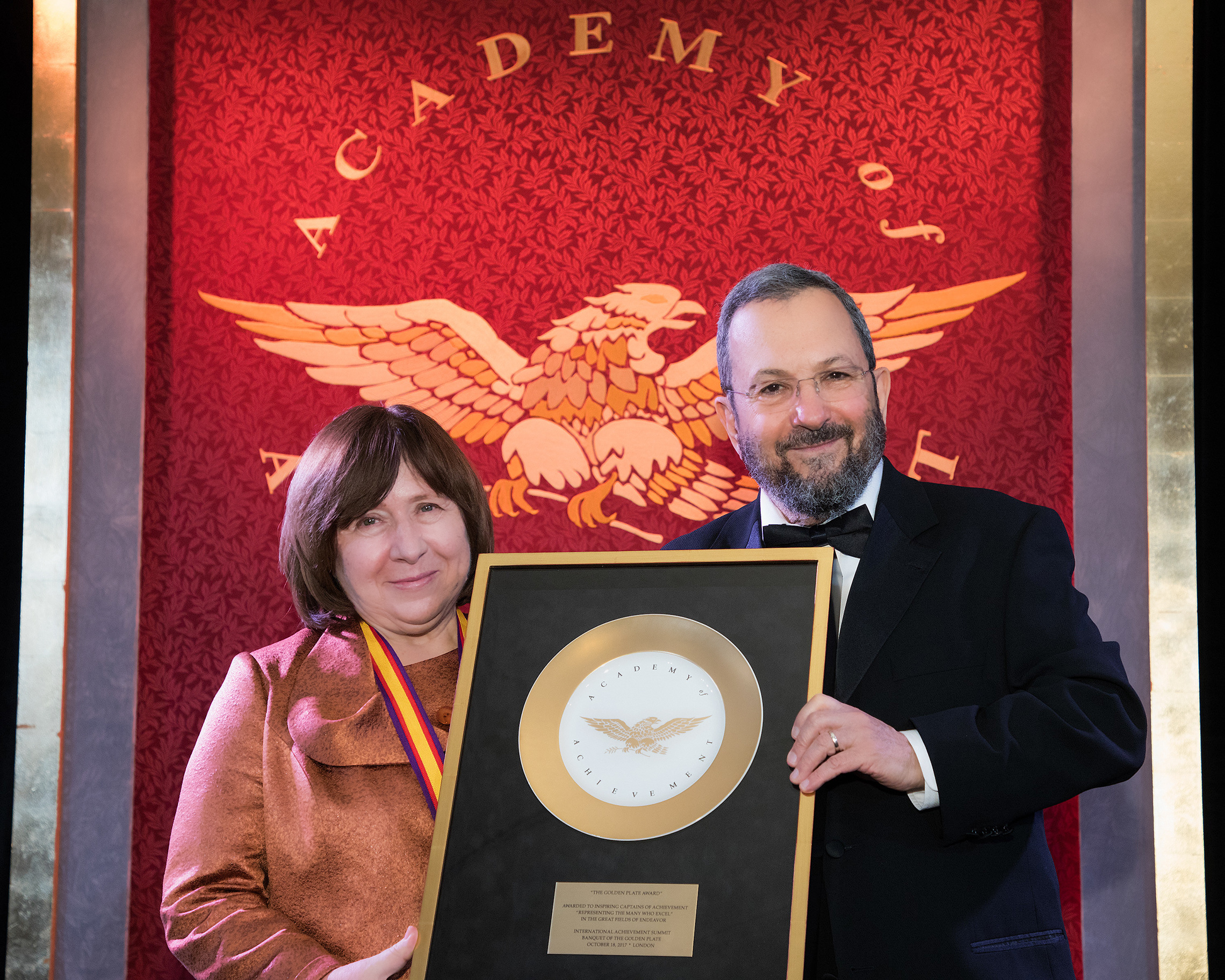
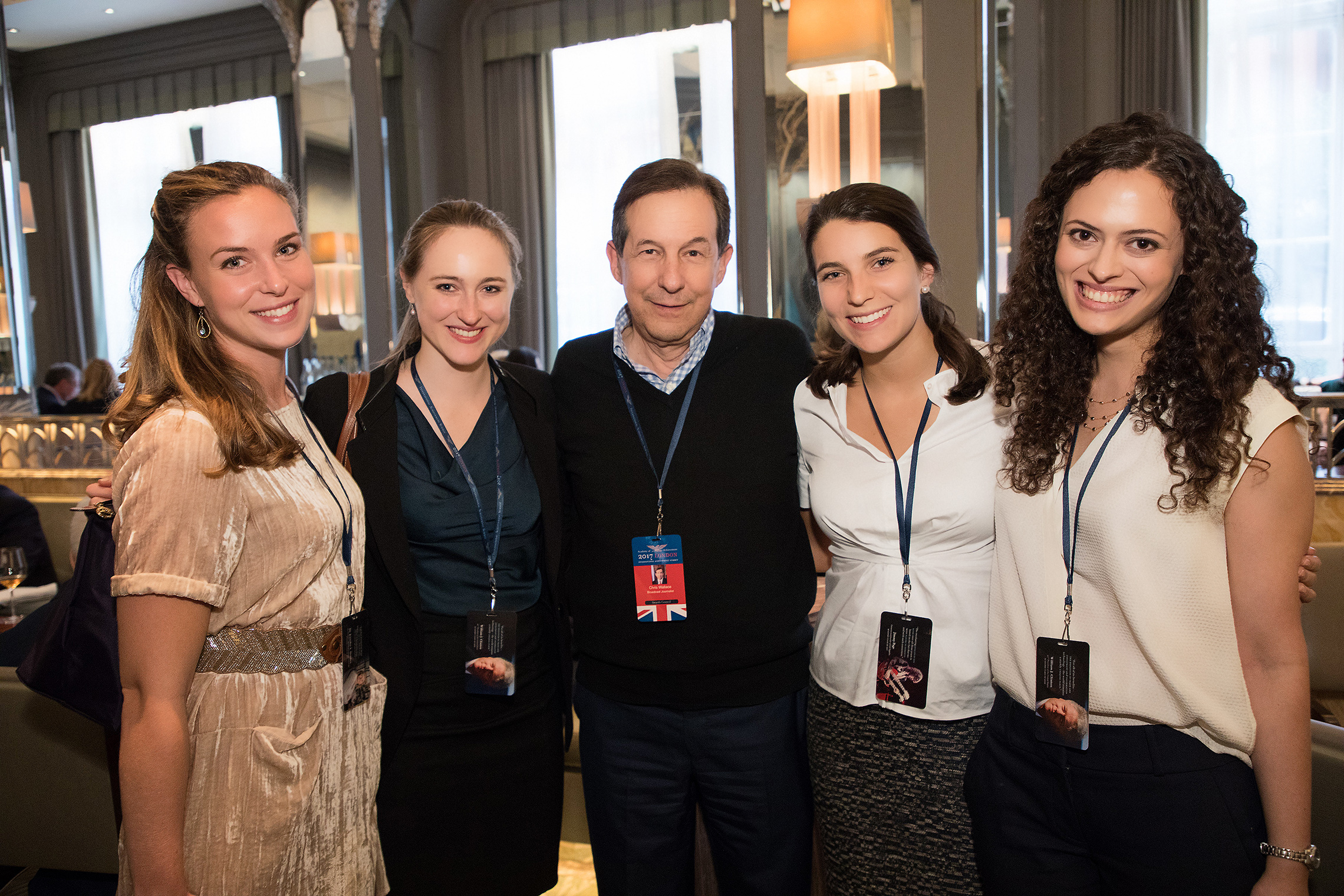
Major literary figures in attendance included recipients of Britain’s Man-Booker Prize John Banville and A.S. Byatt, and two Nobel laureates in Literature, Svetlana Alexievich and Kazuo Ishiguro. Other journalists and authors in attendance included Pulitzer Prize recipients Rick Atkinson and photojournalist Lynsey Addario, bestselling author and documentary filmmaker Sebastian Junger, and broadcasters Charlie Rose and Chris Wallace. More domains of art were represented by legendary fashion designer Valentino Garavani and world-renowned architect Lord Norman Foster.
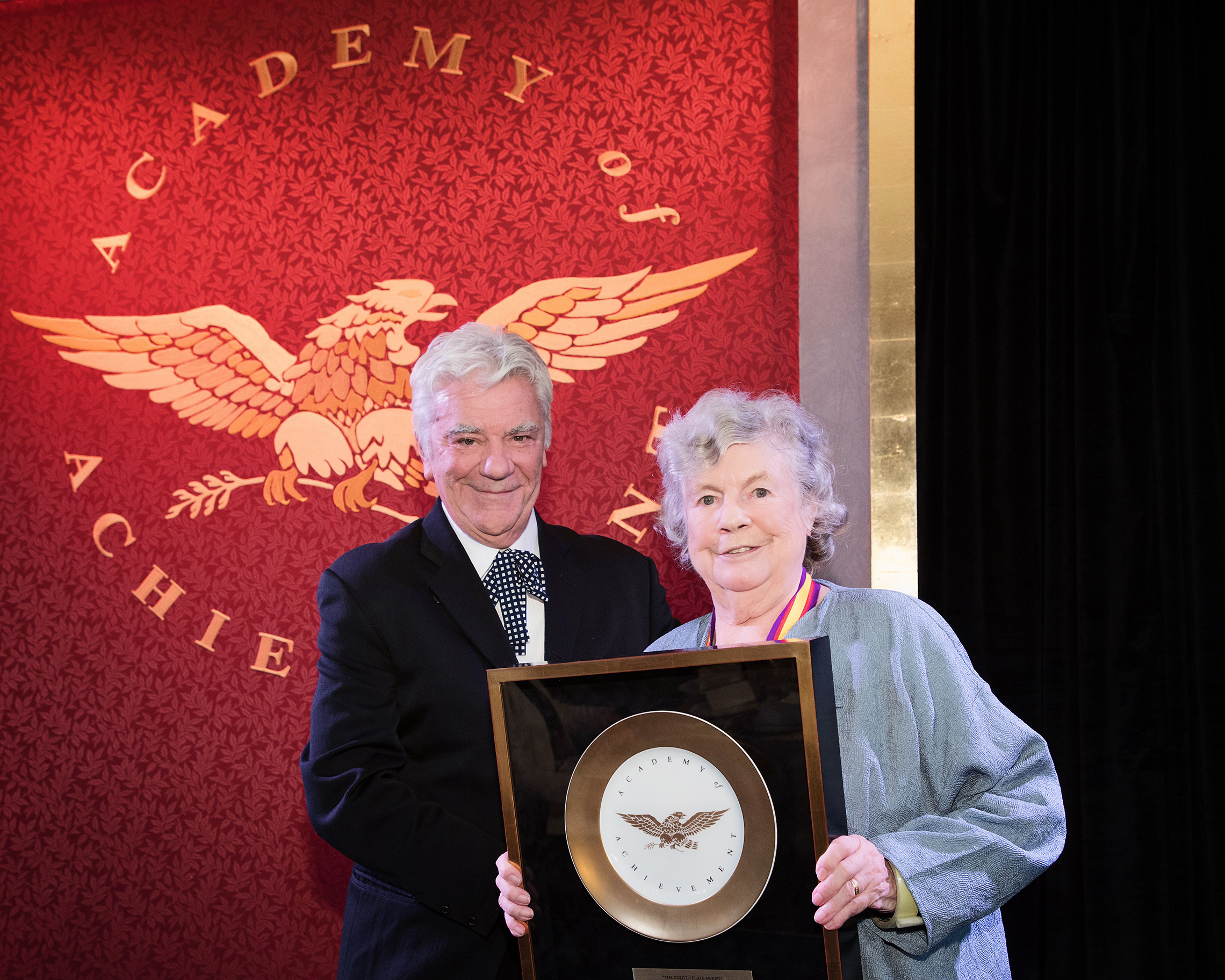
Business leaders at the Summit included iPod mastermind Tony Fadell; McLaren Technology founder Ron Dennis; Boots-Walgreens CEO Stefano Pessina; and Two Sigma founders John Overdeck and Dr. David Siegel. Among the honorees, guests and Awards Council members from the worlds of film and theater were Tony Award-winning director Bartlett Sher, Oscar-winning film director Sir Peter Jackson, and Oscar-winning actors Jeremy Irons and Sir Michael Caine.
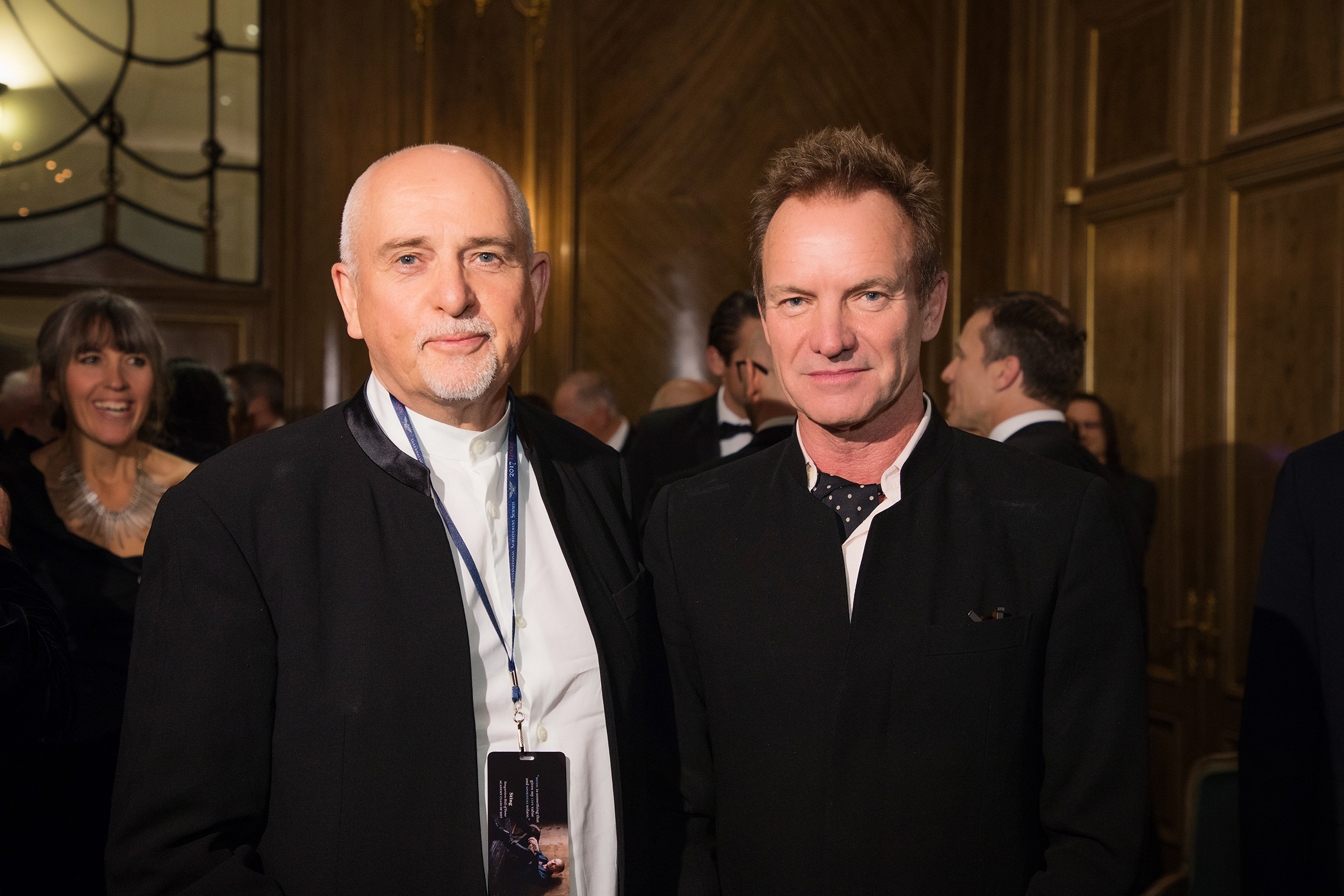
Musical luminaries appearing at the Summit were world-renowned violinist Joshua Bell, now the director of the Academy of St. Martin in the Fields; Genesis founder and two-time Rock and Roll Hall of Fame honoree Peter Gabriel; legendary guitarist and Led Zeppelin founder Jimmy Page; and 16-time Grammy Award winner Sting.
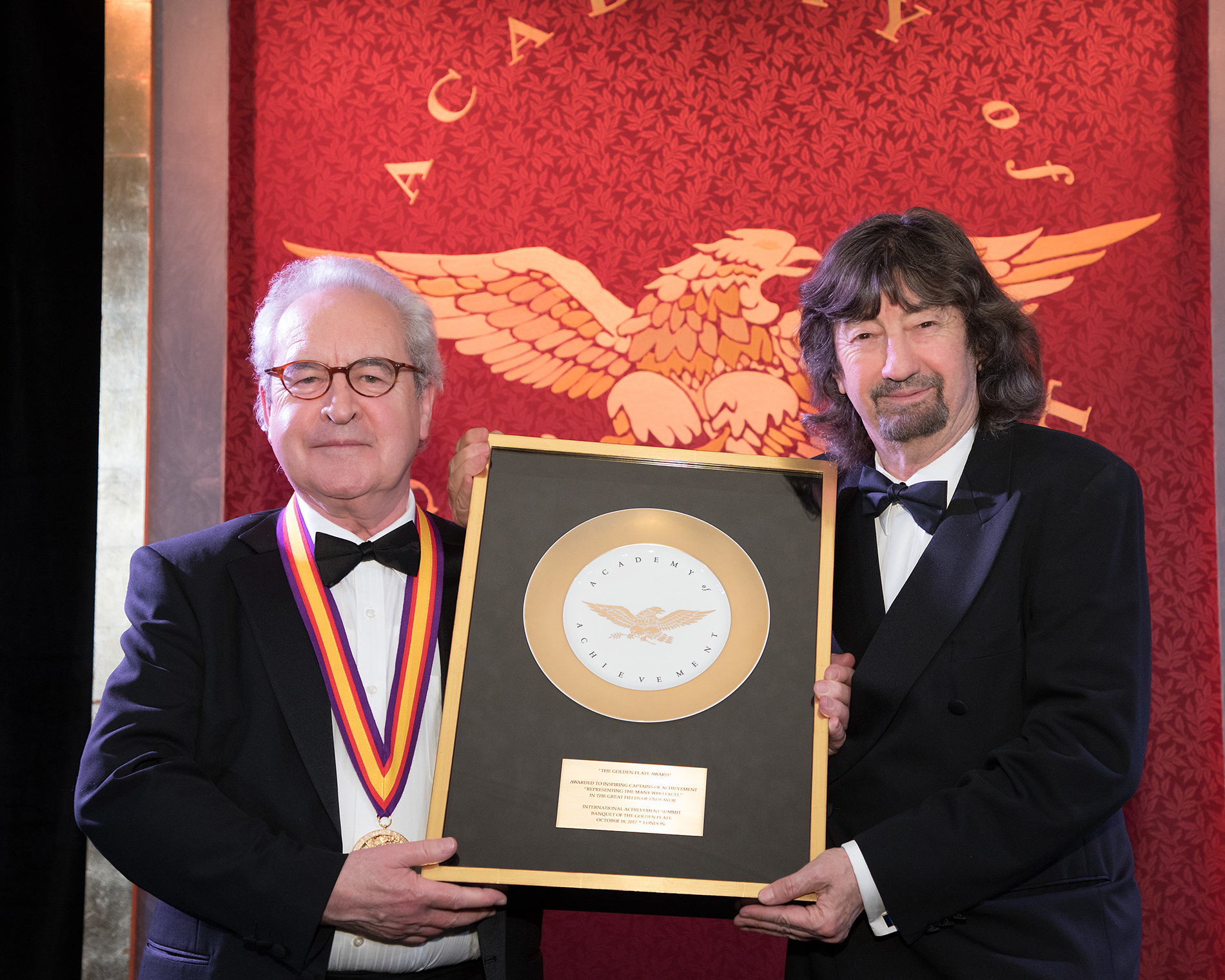
The world of sport was represented by Sir Roger Bannister — whose breaking of the four-minute mile was ranked by Sports Illustrated as the greatest sporting achievement of the 20th century — and by America’s most decorated gymnast, four-time Olympic gold medalist Simone Biles.
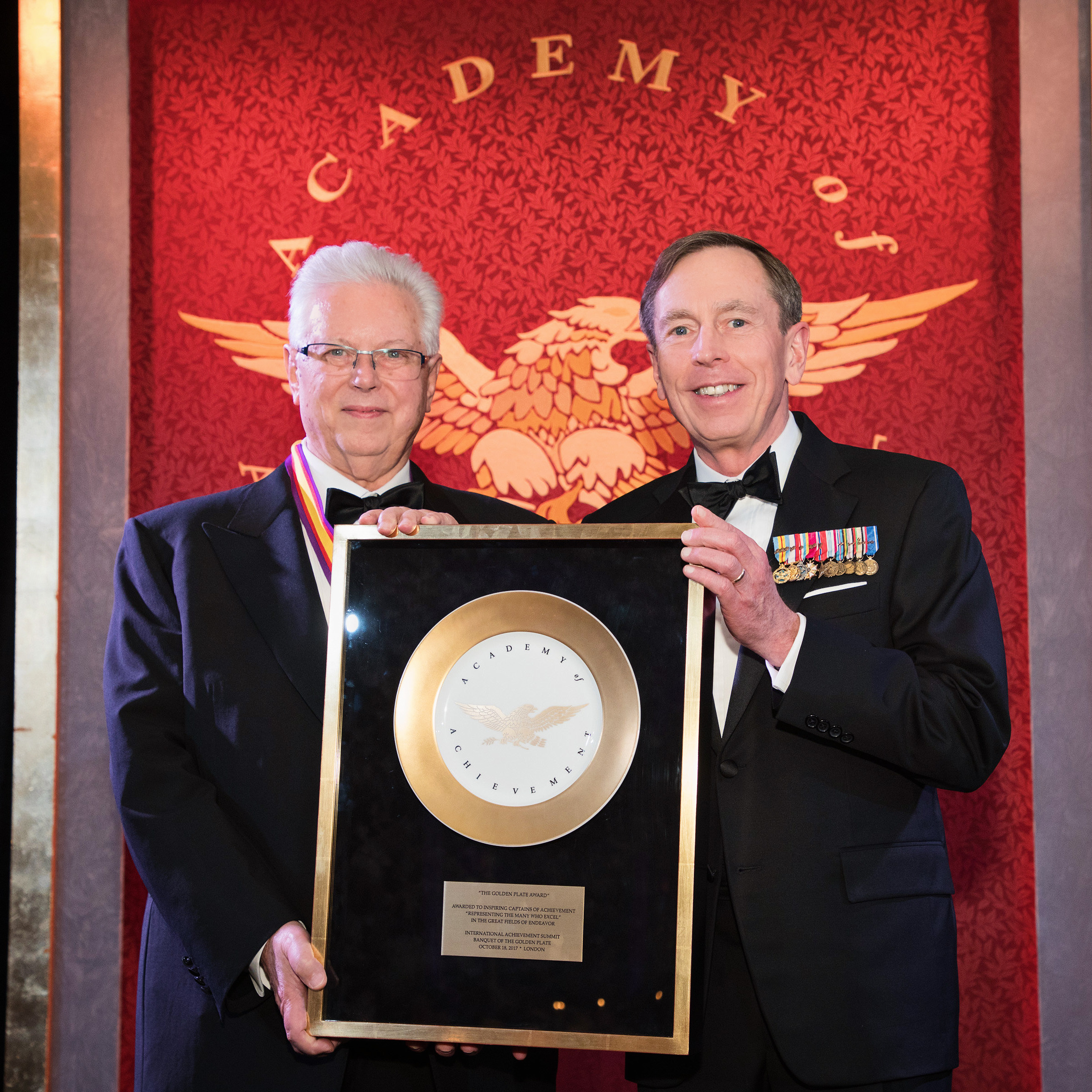
The 2017 Summit Host was Catherine B. Reynolds, Chairman and CEO of The Catherine B. Reynolds Foundation. The Summit was made possible by a generous grant from The Catherine B. Reynolds Foundation.
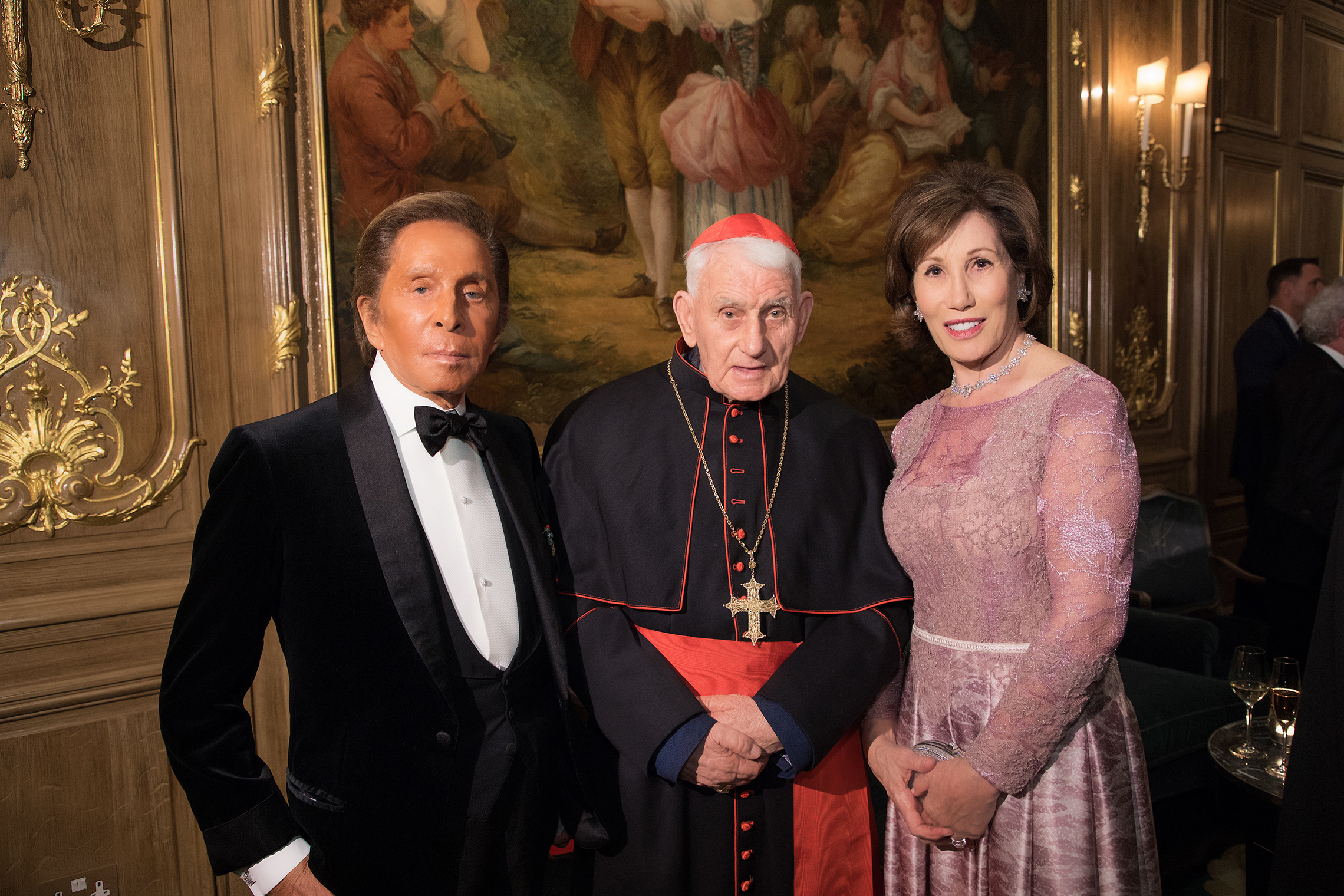
Delegates and honorees alike gathered on the evening of Tuesday, October 17 — an unseasonably mild, clear day for London in autumn — in the celebrated Art Deco ballroom of Claridge’s, the legendary haunt of royalty, film stars and the international set. Summit Host Catherine B. Reynolds welcomed the assembled guests before introducing a longtime member of the Academy, Supreme Court Justice Anthony M. Kennedy.
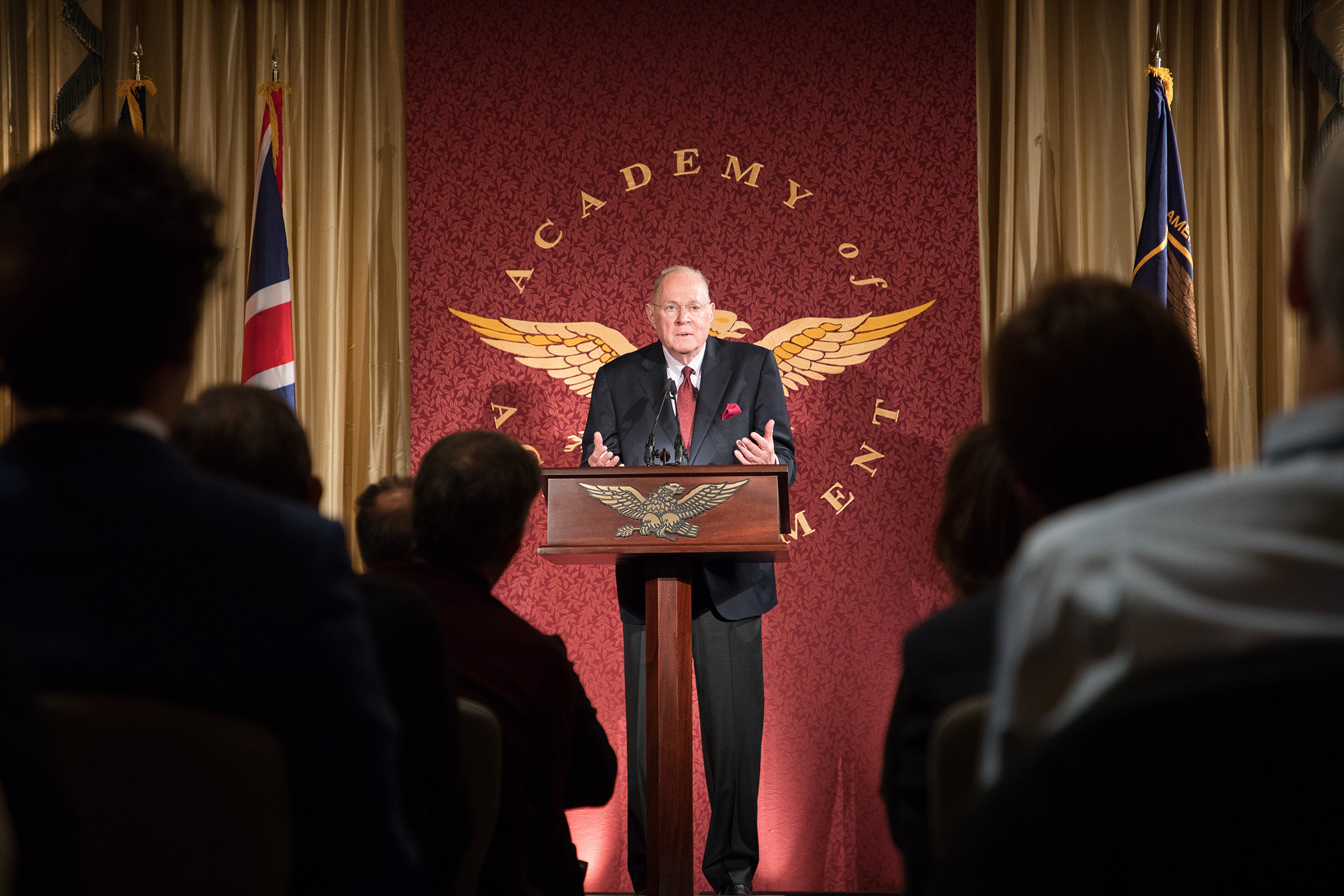
Justice Kennedy warmly recalled his student days at the London School of Economics and praised the civility he observed then among ideological antagonists, even between demonstrators and police at the height of Britain’s “Ban the Bomb” movement. The Justice identified a “crisis of civility” in our own time, and called for a return to the principle of civic dialogue, born in ancient Athens and essential to democracy today.
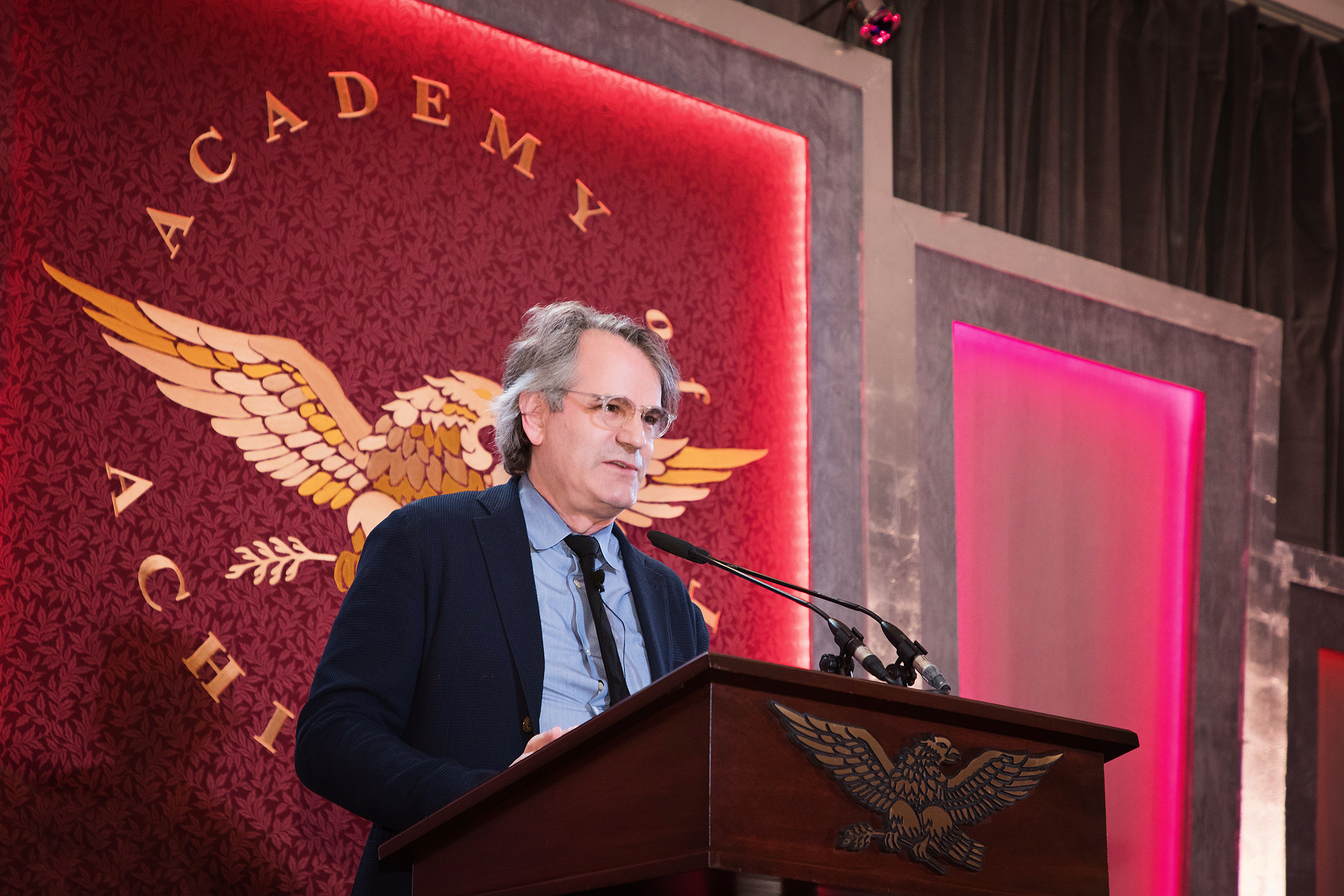
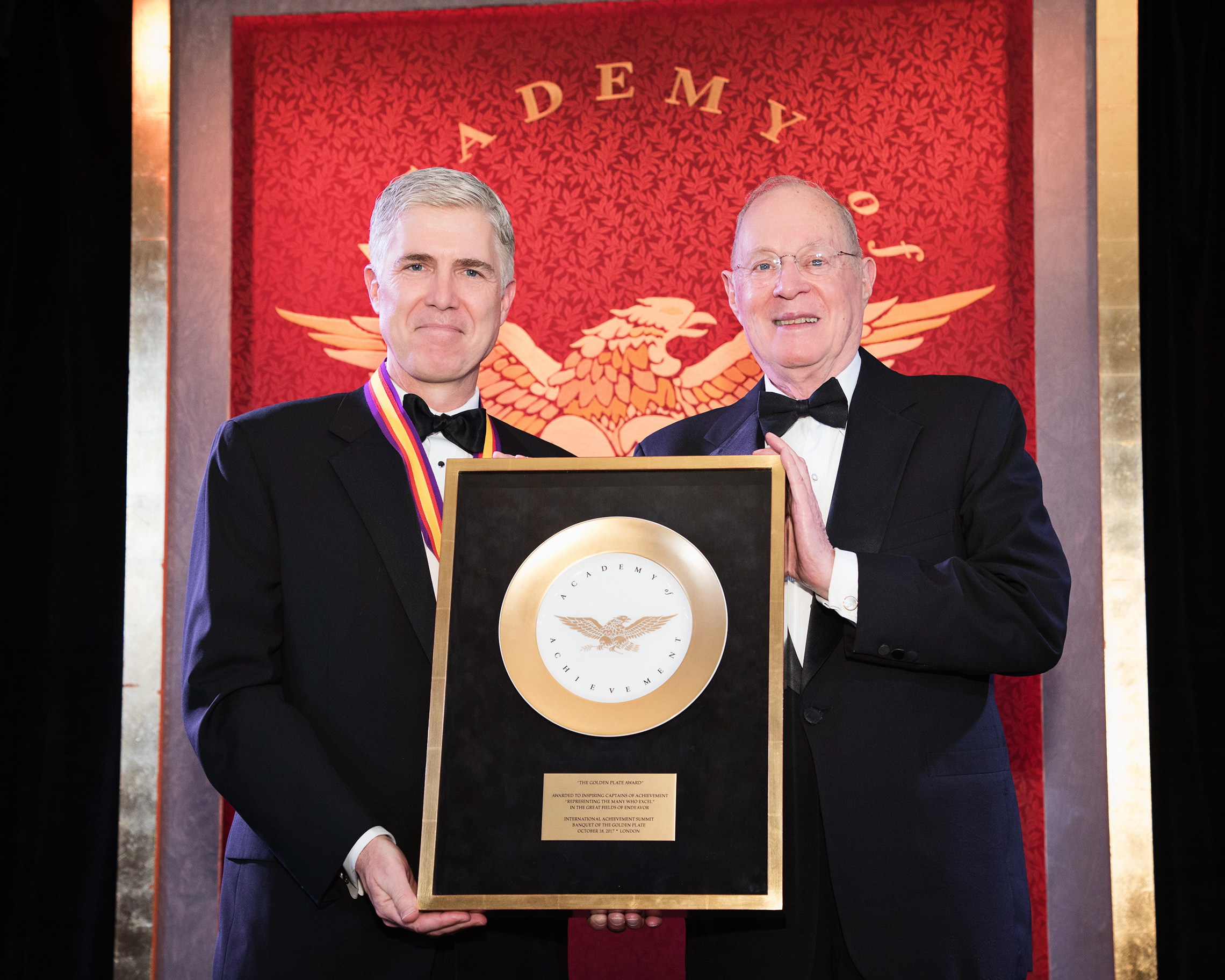
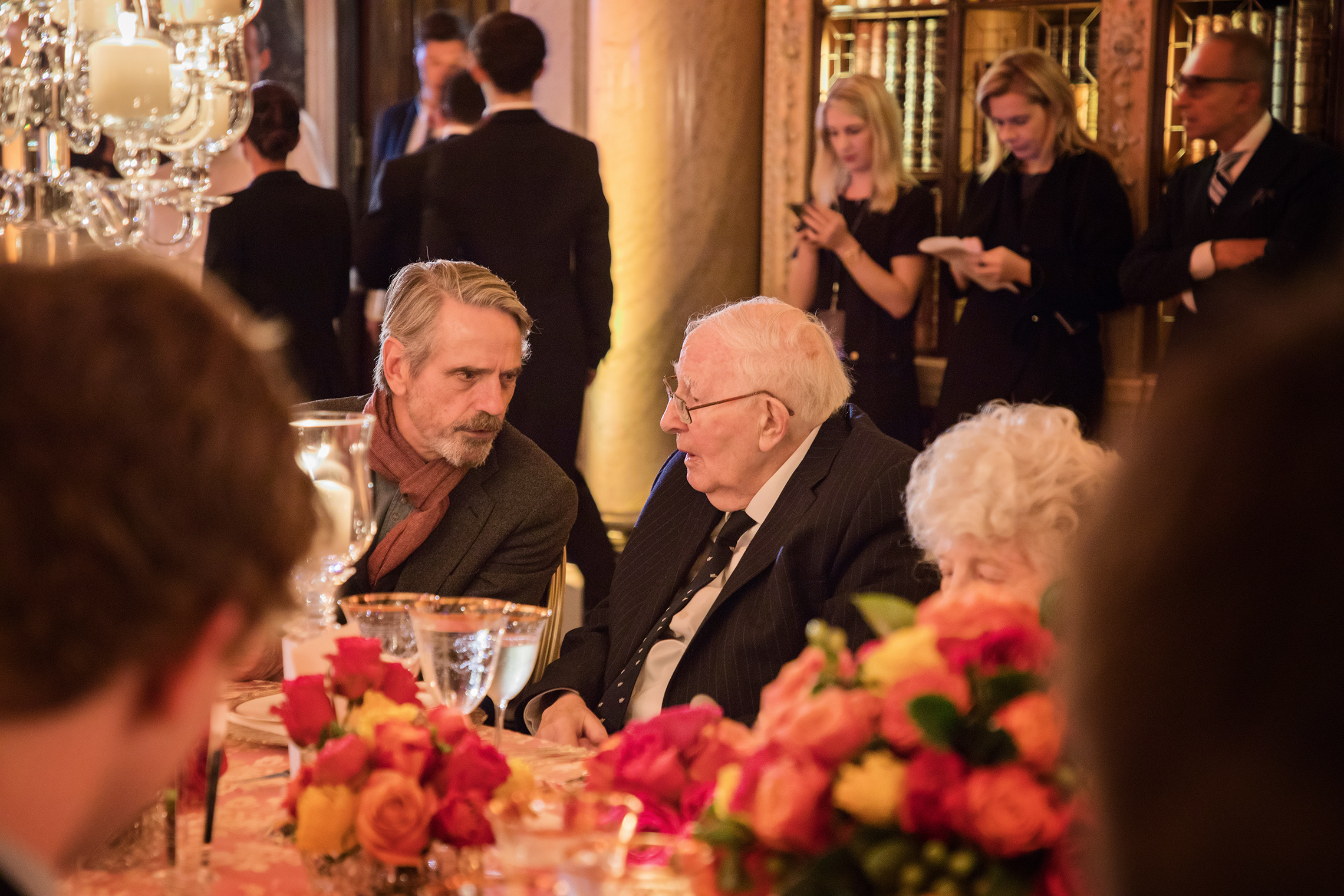
A member of the Academy’s Class of 2000, Oscar-winning actor Jeremy Irons, took the stage to introduce Tony Award-winning Broadway director Bartlett Sher and present him with the Academy’s Golden Plate Award as the first inductee of the Academy’s Class of 2017. Bartlett Sher spoke passionately of his life in the theater, and the ways in which a play such as Oslo, which deals with the Middle East peace process, took on completely different significance, in the light of current events, when he staged it in different cities over a period of less than two years.
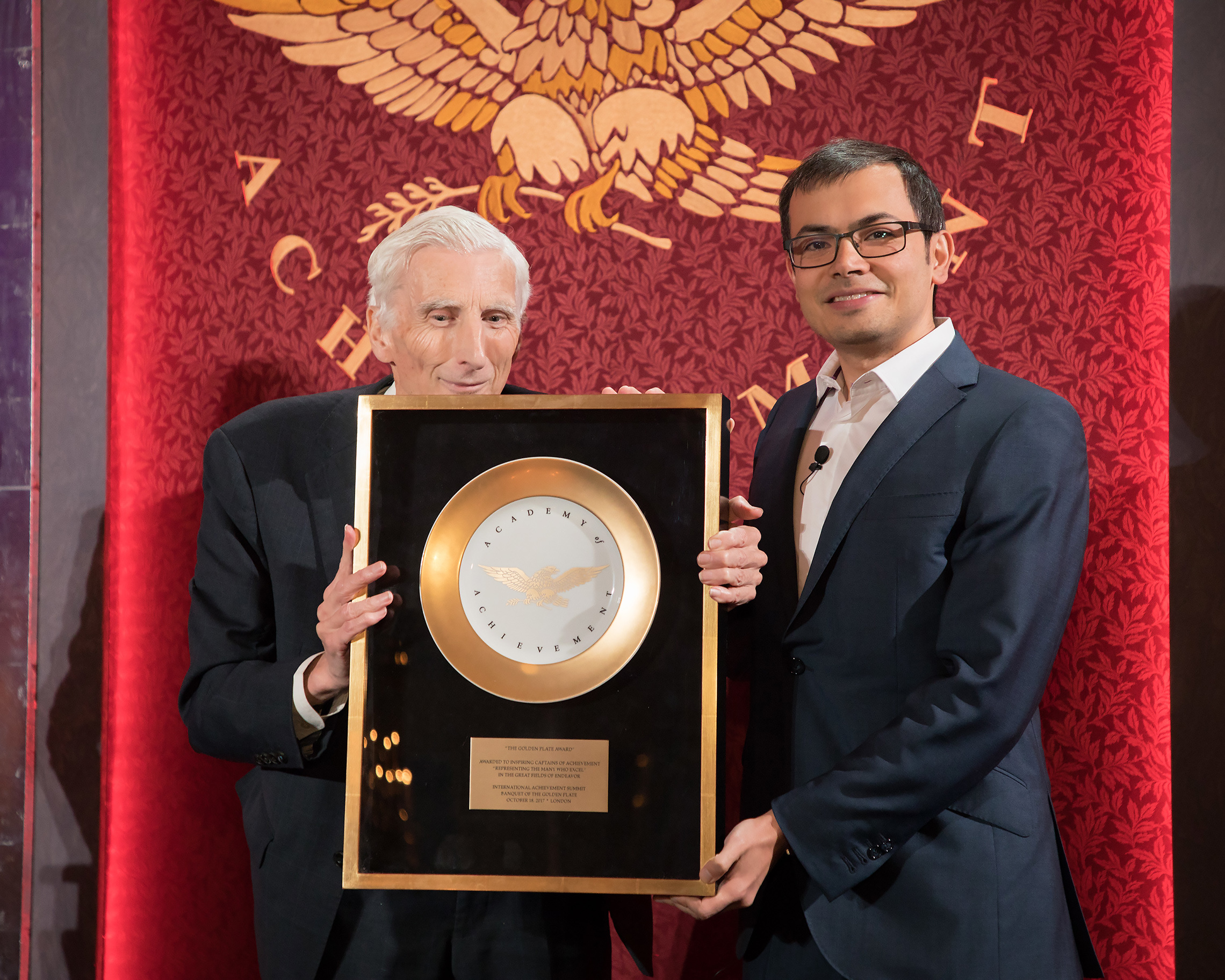
A member of the Academy’s Class of 1999, Britain’s Astronomer Royal, Lord Martin Rees, introduced the next honoree, Dr. Demis Hassabis, founder of artificial intelligence company DeepMind. As Hassabis put it, at DeepMind he has set his colleagues the task of “solving intelligence, then solving everything else.” A former chess prodigy and international computer games champion, he described his successful effort to build a program that can play the ancient Chinese strategic game Go, and learn from its interaction with human players. The complexity of the game, and its masters’ reliance on intangibles such as intuition, make it a perfect challenge for the development of artificial intelligence.
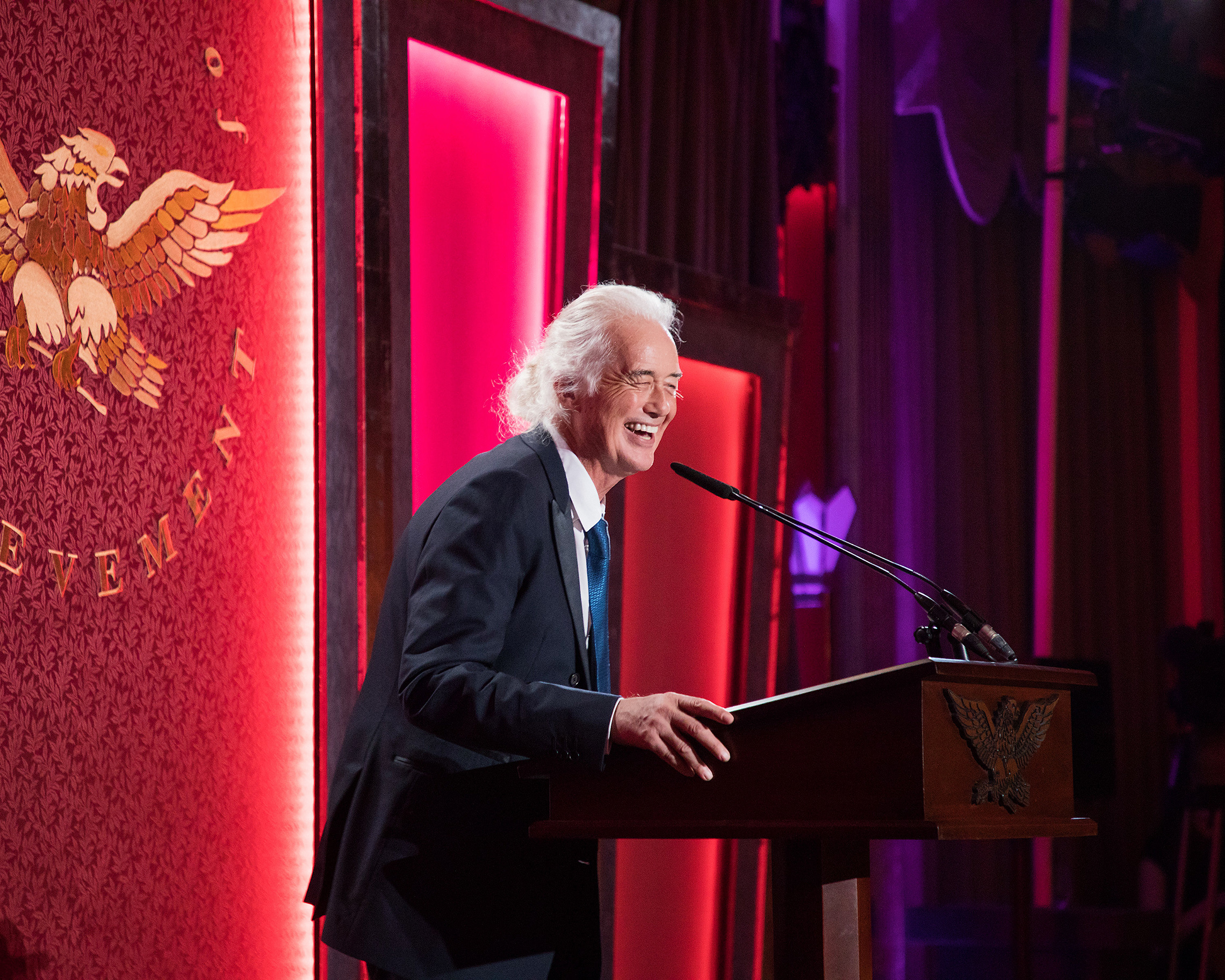
The evening’s contemplation of the problems of artificial intelligence and the nature of mind was broken by a blast of electric guitar pyrotechnics — a film clip of fretboard wizard Jimmy Page of Led Zeppelin performing his rock classic “Stairway to Heaven.” Following the film clip, Jimmy Page himself took the stage to give a disarmingly humble and self-effacing account of his rise in the world of music. He credits his success to his passion for the music and his persistence in mastering his craft. He shared a sincere pride in the lasting popularity of the music he created, a popularity he attributes to the absolute conviction he and his Led Zeppelin bandmates brought to their work.
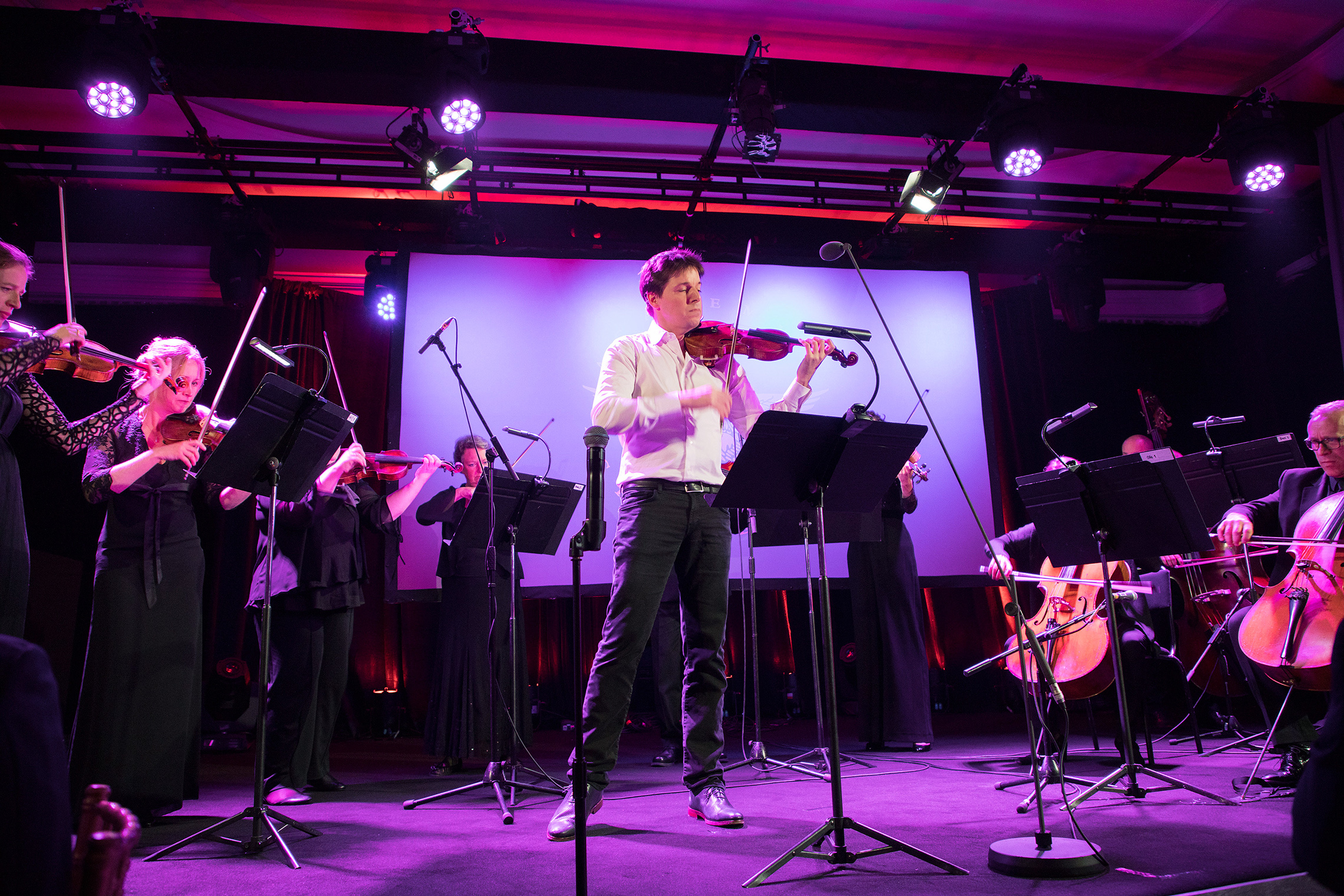
From the electric rock of Led Zeppelin, the evening turned to musical excellence of another kind with a visit from Academy member Joshua Bell, a world-renowned violinist and now director of the venerable Academy of St. Martin in the Fields. Along with ten members of his orchestra, Bell presented a fascinating study in musical contrasts. They opened with a spirited performance of the “Summer” movement from Vivaldi’s “The Four Seasons,” followed by another musical depiction of summer from “The Four Seasons of Buenos Aires” by the 20th-century Argentine composer Astor Piazzolla. Joshua Bell and his ensemble brought the same breathtaking energy and near-telepathic precision to Vivaldi’s shimmering Baroque cadences as they did to Piazzolla’s propulsive tango rhythms. After the stimulating discussion and dazzling performances of the evening, conversation among delegates and honorees continued into the small hours at a sumptuous reception in the elegant French Salon at Claridge’s.
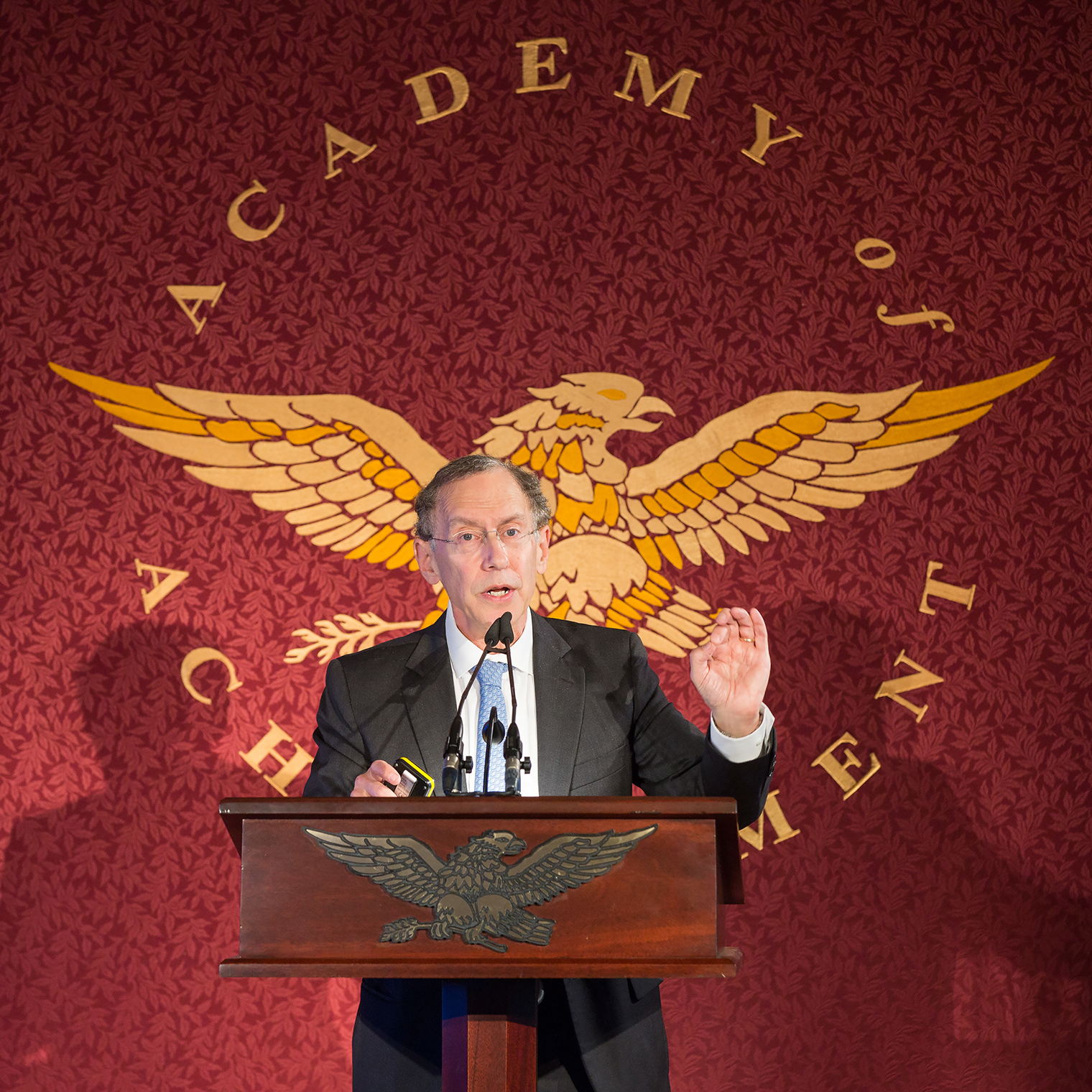
The Summit program resumed early Wednesday morning at Claridge’s with a fascinating audiovisual presentation by a member of the Academy’s Class of 2003, Dr. Robert Langer of MIT, the most prolific inventor and entrepreneur in the field of biotechnology. A mentor to many of the most adventurous thinkers in the field today, Dr. Langer’s work offers the potential to grow human tissues in the laboratory for the replacement or repair of damaged organs.
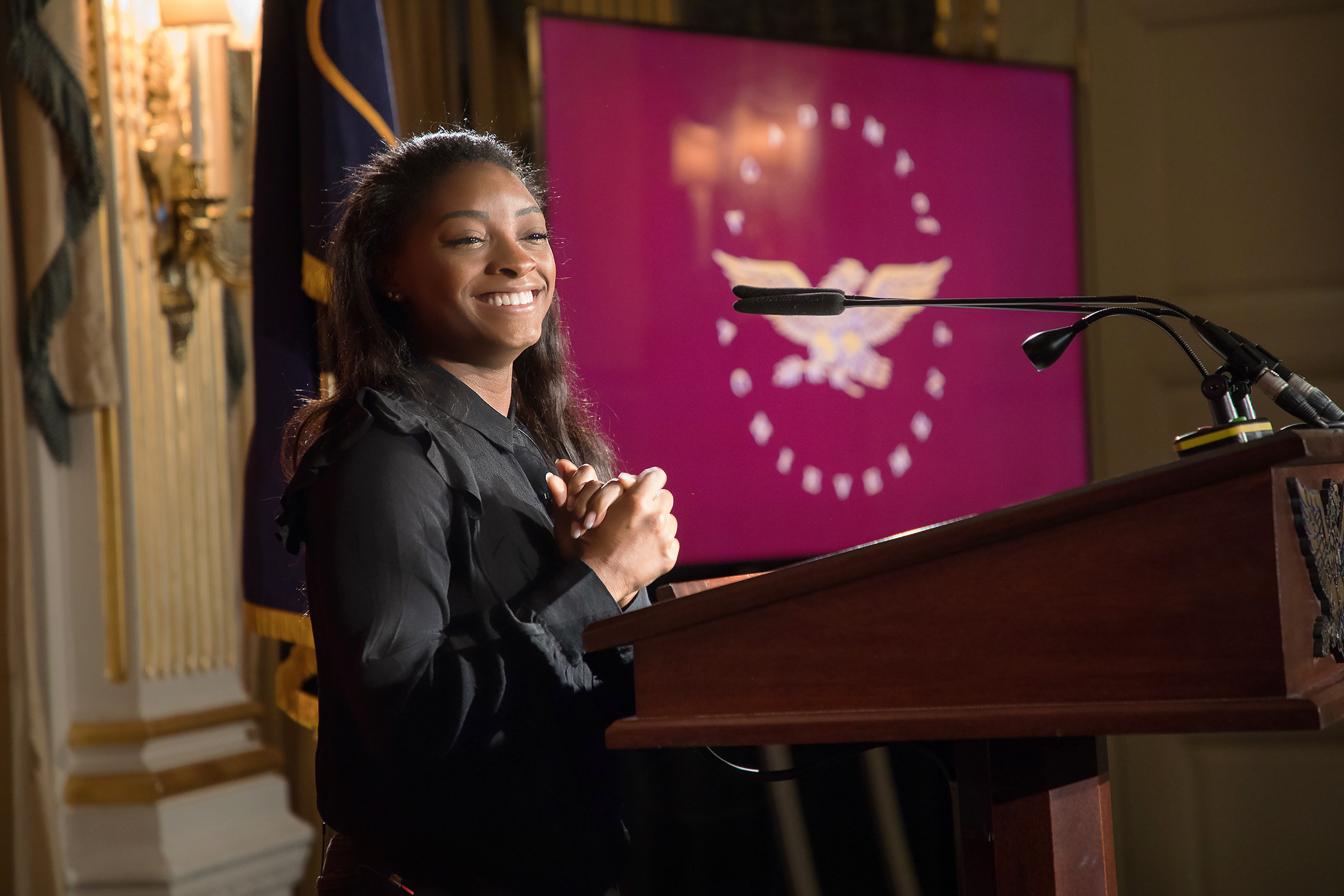
Four-time Olympic gold medalist Simone Biles, a 2017 honoree, gave a graceful and articulate account of her progress from an impoverished childhood, abandoned by her drug-addicted mother, to her reign as America’s most decorated gymnast.
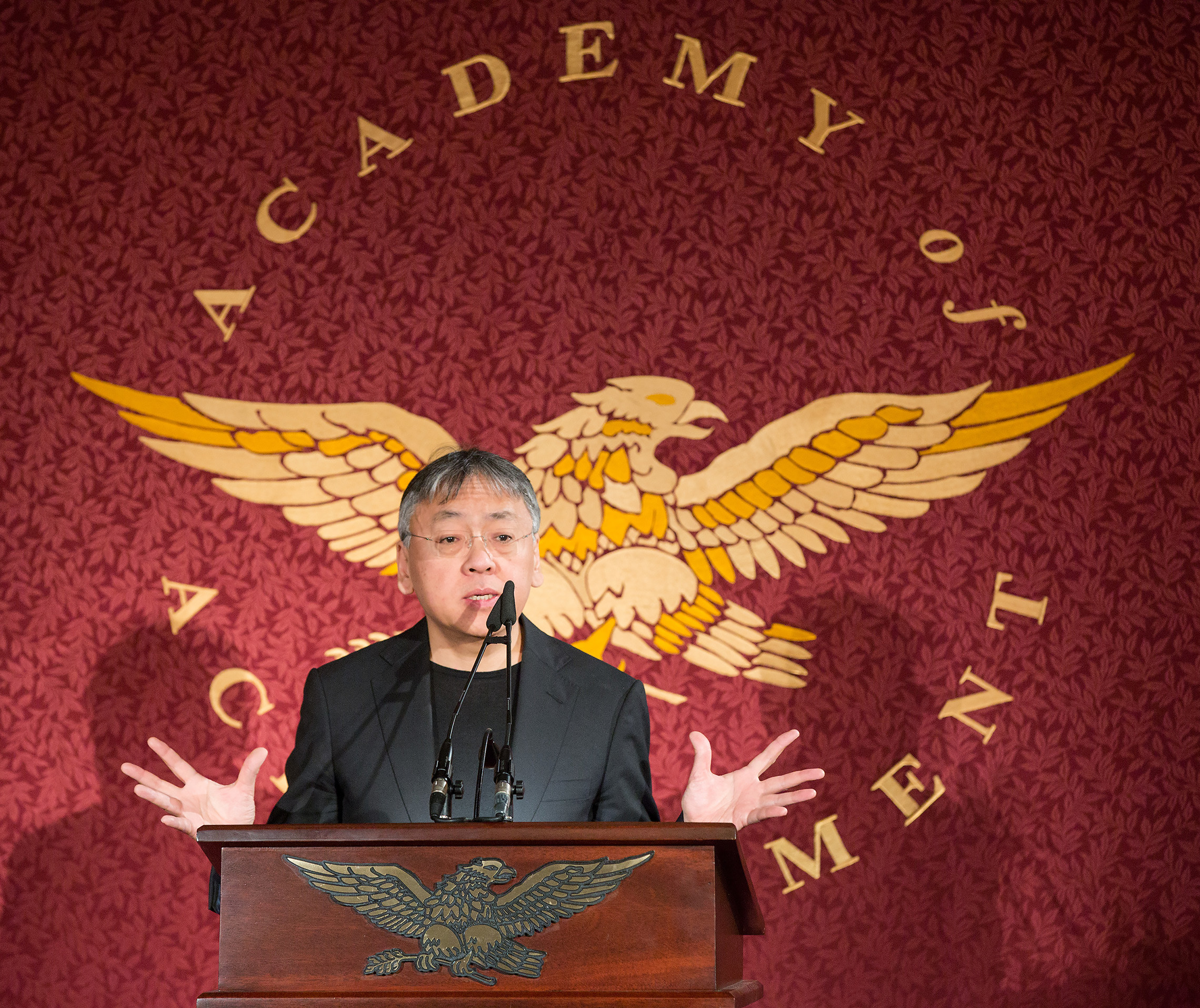
Kazuo Ishiguro, author of the international bestsellers The Remains of the Day and Never Let Me Go, was already one of Britain’s most honored novelists when he was invited to attend the International Achievement Summit as an honoree. Less than two weeks before the Summit, he was awarded the world of letters’ highest honor, the Nobel Prize in Literature. The Japanese-born, British-educated author described the small moments of discovery that enabled him to find himself as a writer, in terms of both technique and subject matter.
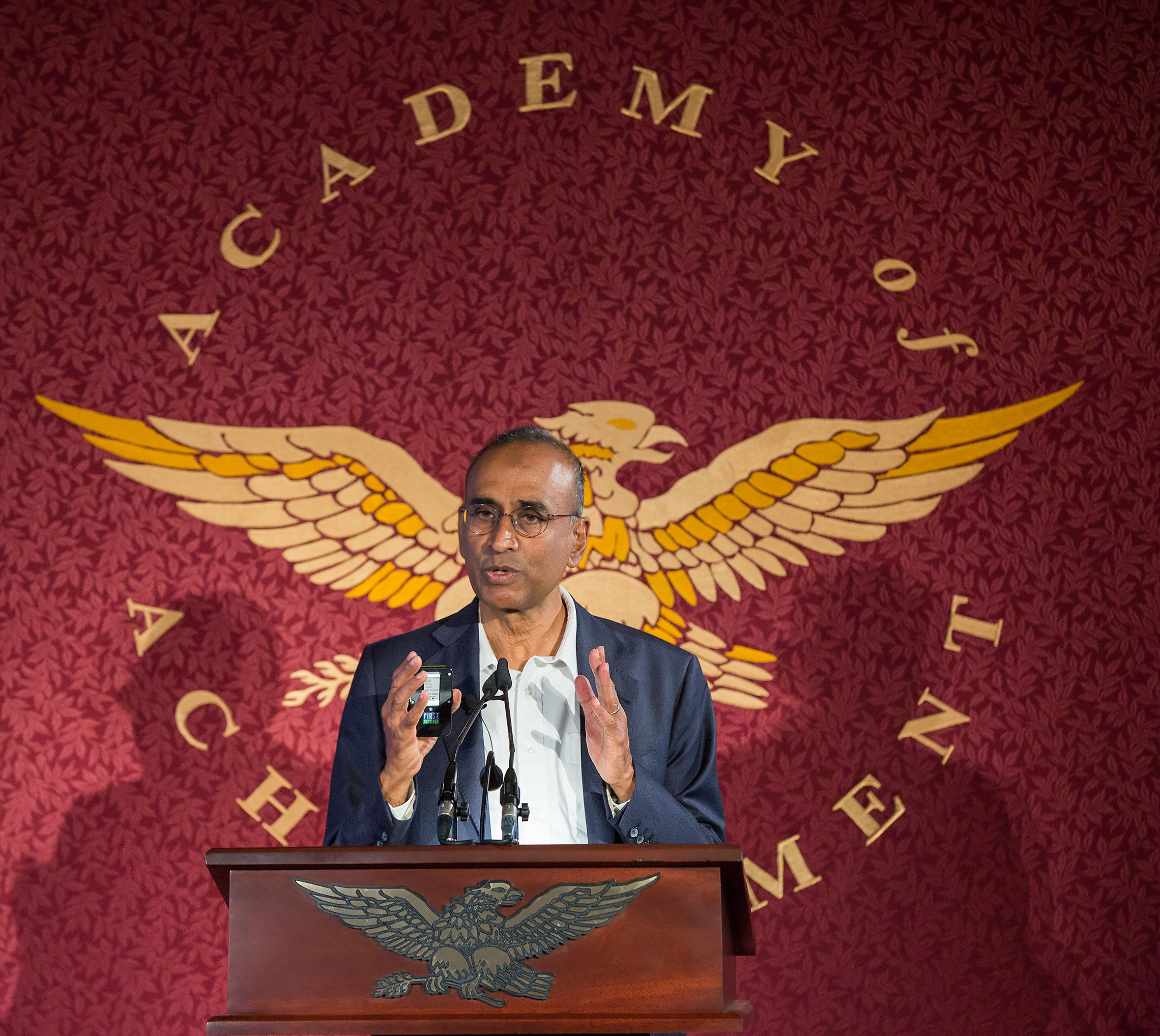
Another intriguing speaker that morning was Sir Venki Ramakrishnan, the president of the world’s oldest scientific association, Britain’s Royal Society. Born in India and educated in the United States, he made a crucial decision to take up the study of biology after he had already completed a doctorate in physics. This unusual choice made it difficult for him to pursue an academic career in the United States, but he eventually won a position as chief of the molecular biology lab at Cambridge University. His exploration of the molecular structure of the ribosome, and its implication for protein synthesis and the antibiotic function, earned him the 2009 Nobel Prize in Chemistry.
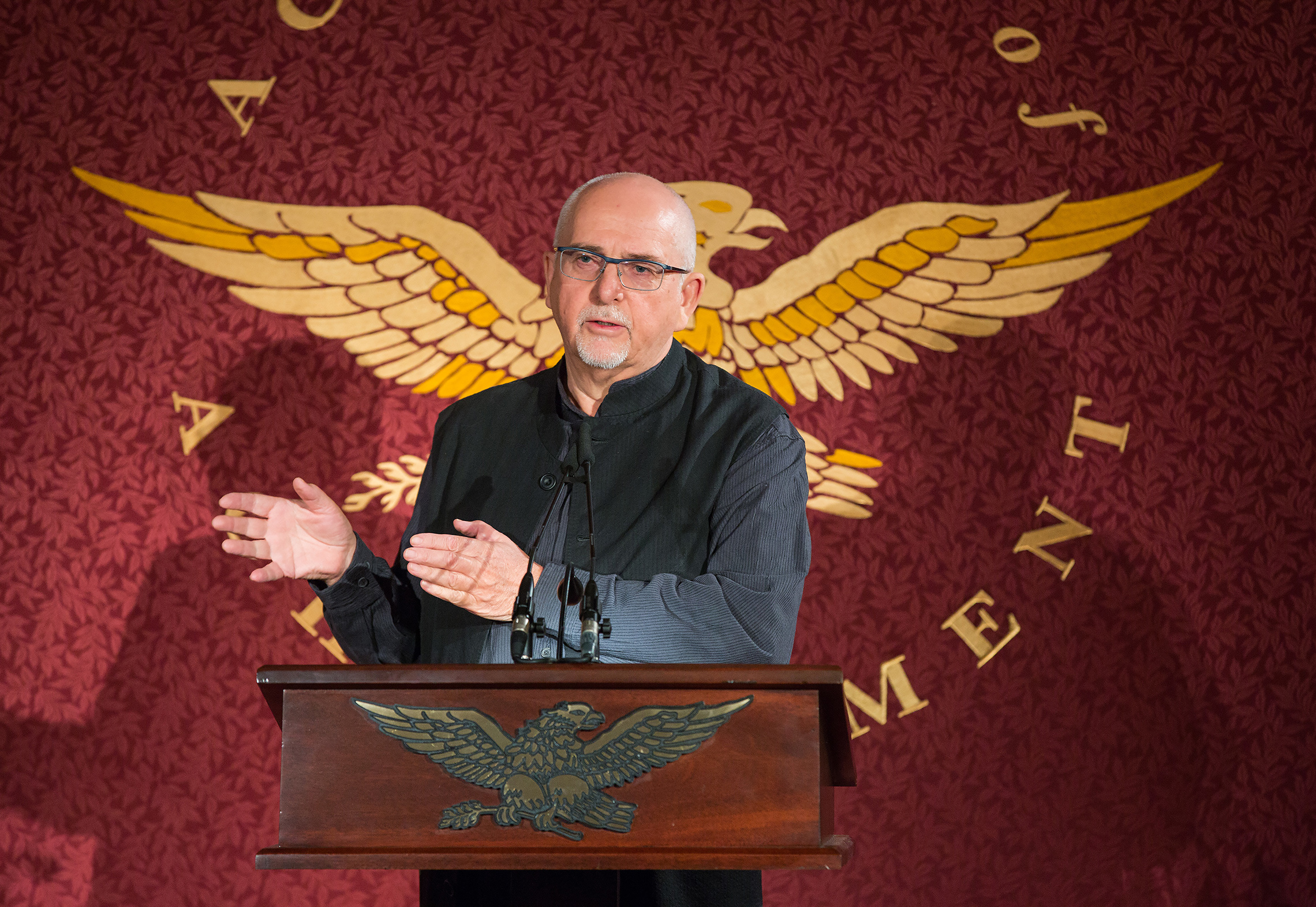
Peter Gabriel is a two-time honoree of the Rock and Roll Hall of Fame, as founder and lead singer of the progressive rock band Genesis, and for his stellar career as a solo artist. Looking back at his early struggles as a musician, he urged his listeners to heed their inner voices and leave the criticism to others. He also recalled the experiences that led to his interest in international human rights causes, and his efforts to promote world music through the WOMAD Festival.
A member of the Academy’s Class of 1998, Dr. Andrew Weil is a pioneer of integrative medicine, the synthesis of Western medicine with medical knowledge derived from other sources and traditions. A trained botanist, his study has embraced a vast variety of medicinal herbs and organic substances. On this occasion, he spoke about the history, chemistry, and biology of cannabis. As a fourth-year student at Harvard Medical School, Dr. Weil conducted the first double-blind placebo study of cannabis. In a briskly erudite survey, Dr. Weil moved from the culinary and industrial uses of hemp products to the medicinal potential of cannabis and the legal and political obstacles to its thorough study and exploitation.
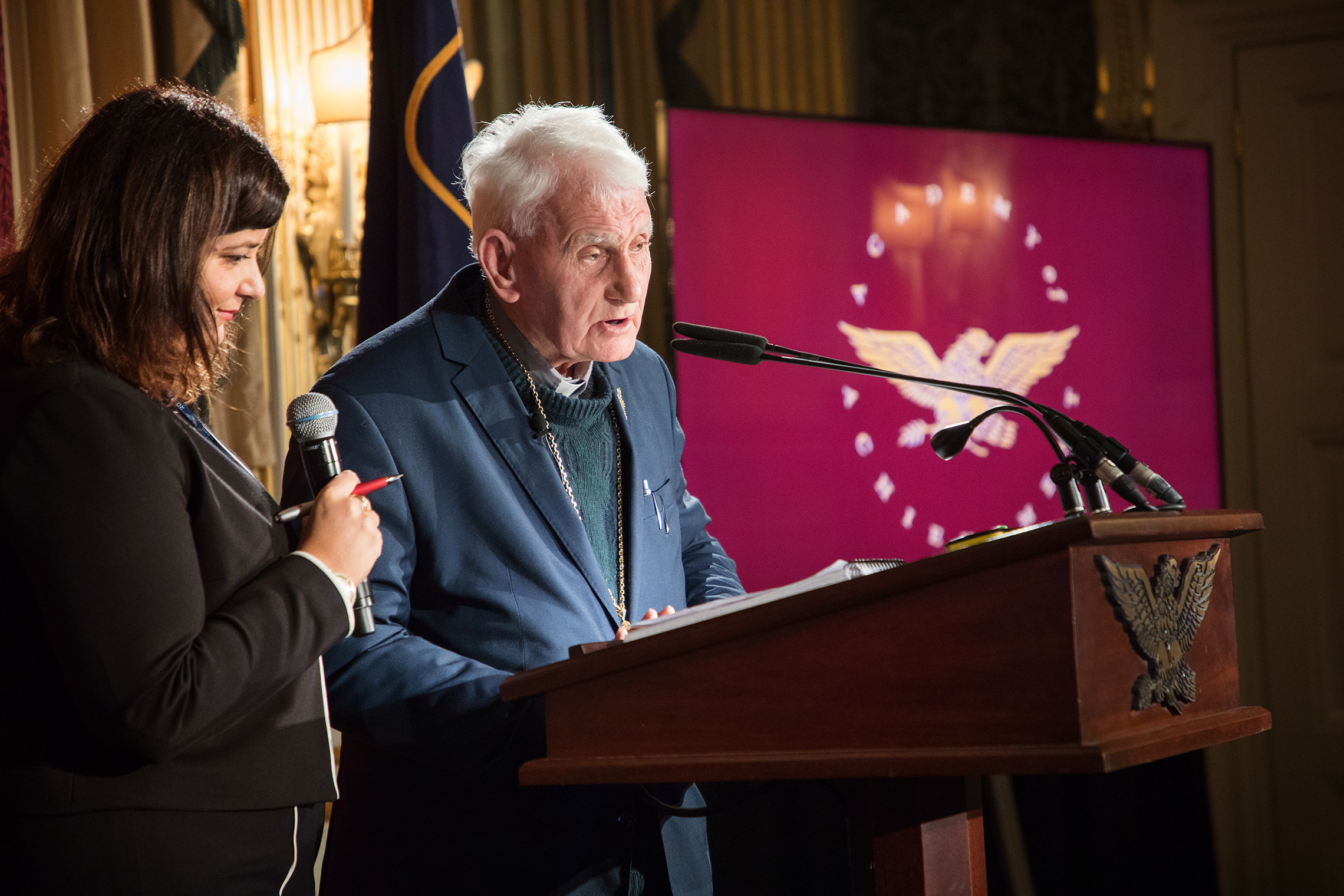
Cardinal Ernest Simoni, who survived a lifetime of persecution for his faith under a Communist dictatorship in Albania, recalled the circumstances that led to his arrest and imprisonment. Twice sentenced to death, his sentence was commuted to hard labor. Cardinal Simoni, who speaks both Albanian and Italian, delivered his remarks through an Italian interpreter. He affirmed his belief that God’s power is love and noted that he forgave his oppressors at every turn, prayed for them and said mass for them.
Anthony Romero, the Director of the American Civil Liberties Union, discussed the experience of his immigrant parents, and his own life growing up in New York City, to explain the origins of his interest in social justice issues, and the passion that drove him to become the first member of his family to go to college, and then on to law school and success as an attorney. During a question-and-answer session with the Academy’s delegates, Romero was asked if he thought the right of free speech should be balanced against the need to protect the vulnerable from hurtful or offensive speech. Romero’s answer was blunt. The First Amendment guarantee of the right of free speech exists specifically to protect unpopular speech, he insisted. In an academic setting, the opportunity to hear speech one disagrees with is an essential part of education, he asserted, and the contest of opinions in an open marketplace of ideas is the foundation of democracy.
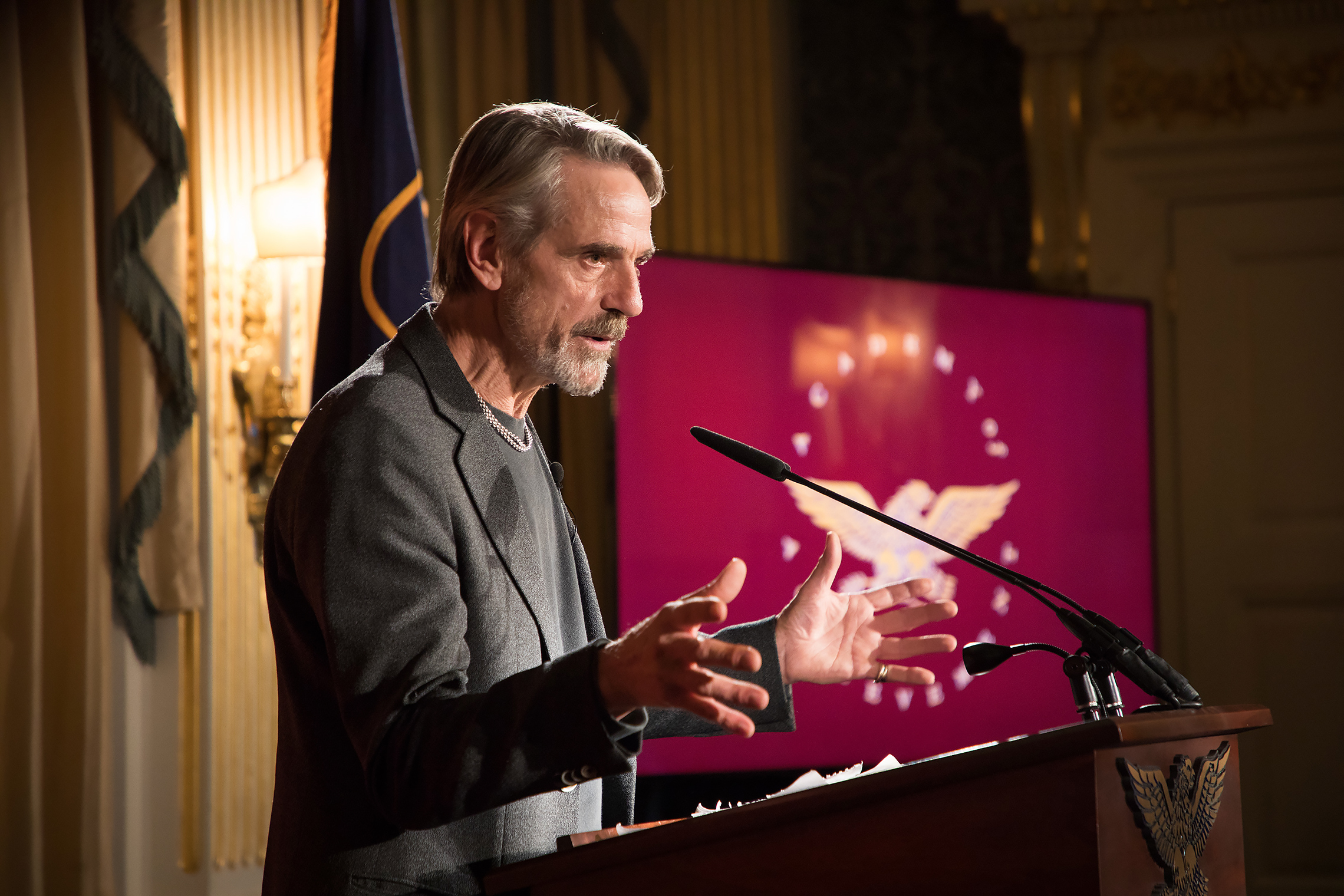
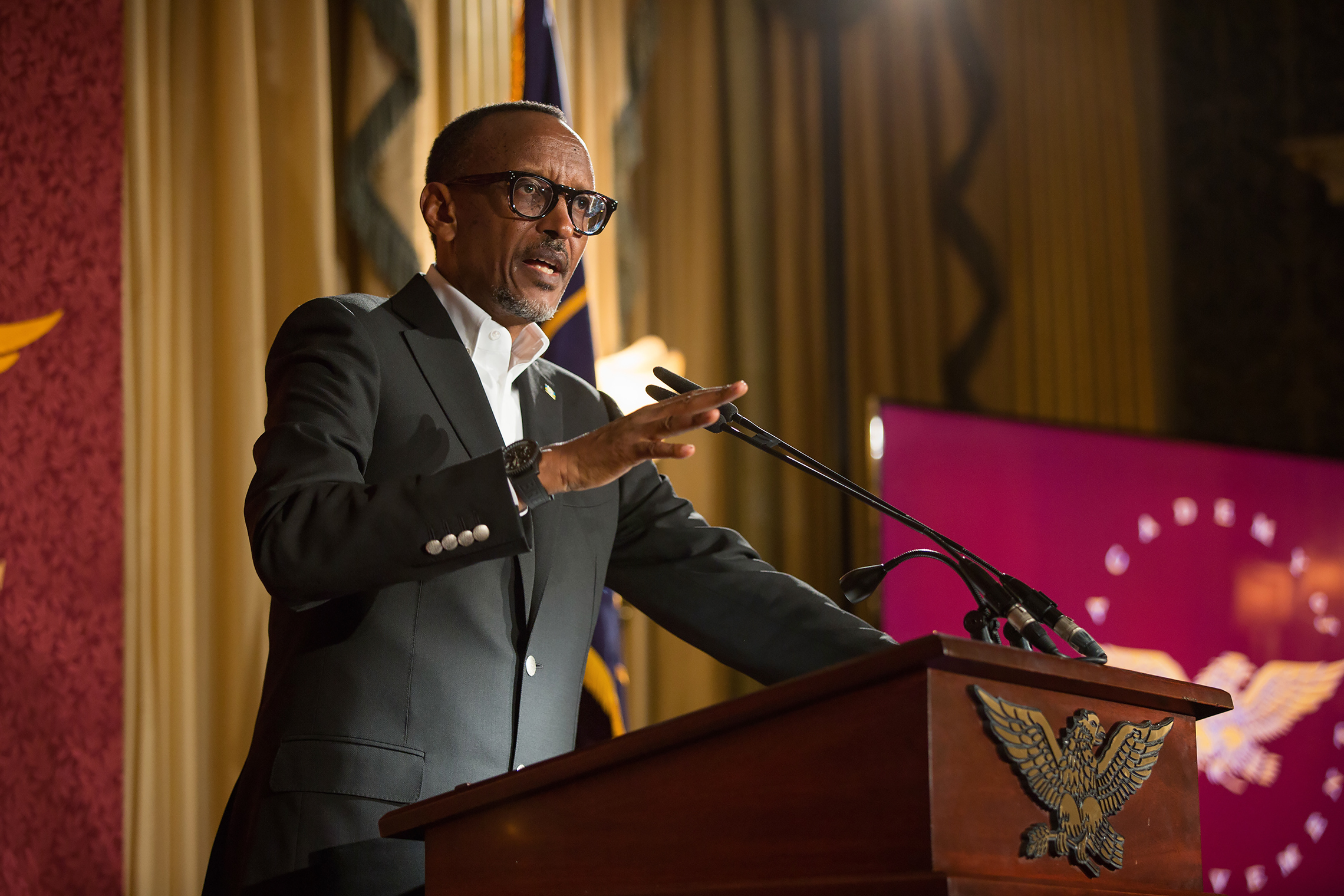
The last speaker of Wednesday morning’s session was the President of Rwanda, His Excellency Paul Kagame. He detailed his country’s struggle to overcome its tragic past and heal the wounds left by war and genocide.
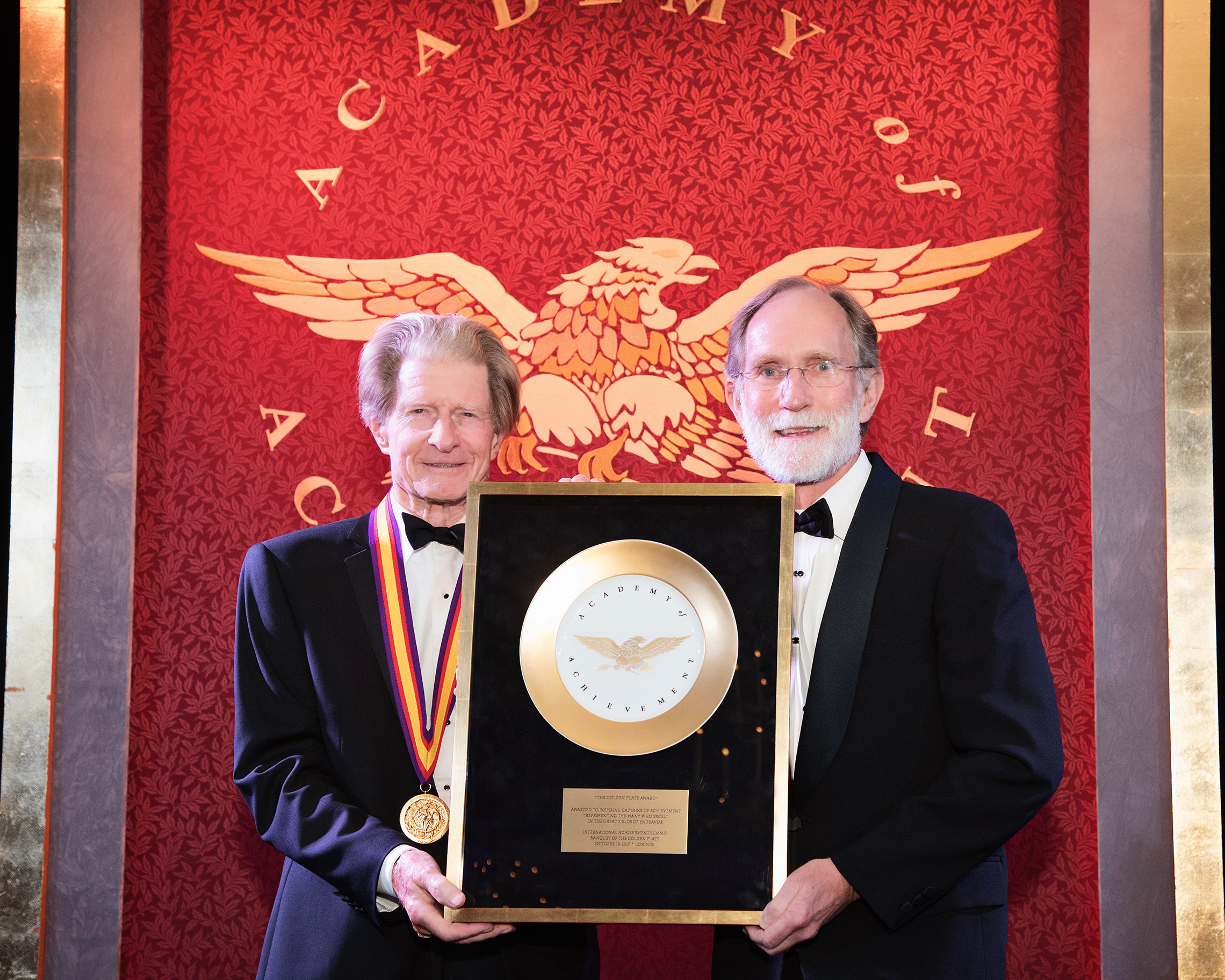
First, President Kagame related how he won the war against the Rwandan government that perpetrated the genocide of the Tutsi people. He then explained how his government set out to win the peace, encouraging victims and perpetrators to meet through a traditional process of reconciliation known as Gacaca. The President engaged in a thoughtful exchange with the Academy’s student delegates — several from African countries — over issues of postwar reconciliation and economic development. He emphasized that each country must effect its own solutions rather than relying on the outside world for help.
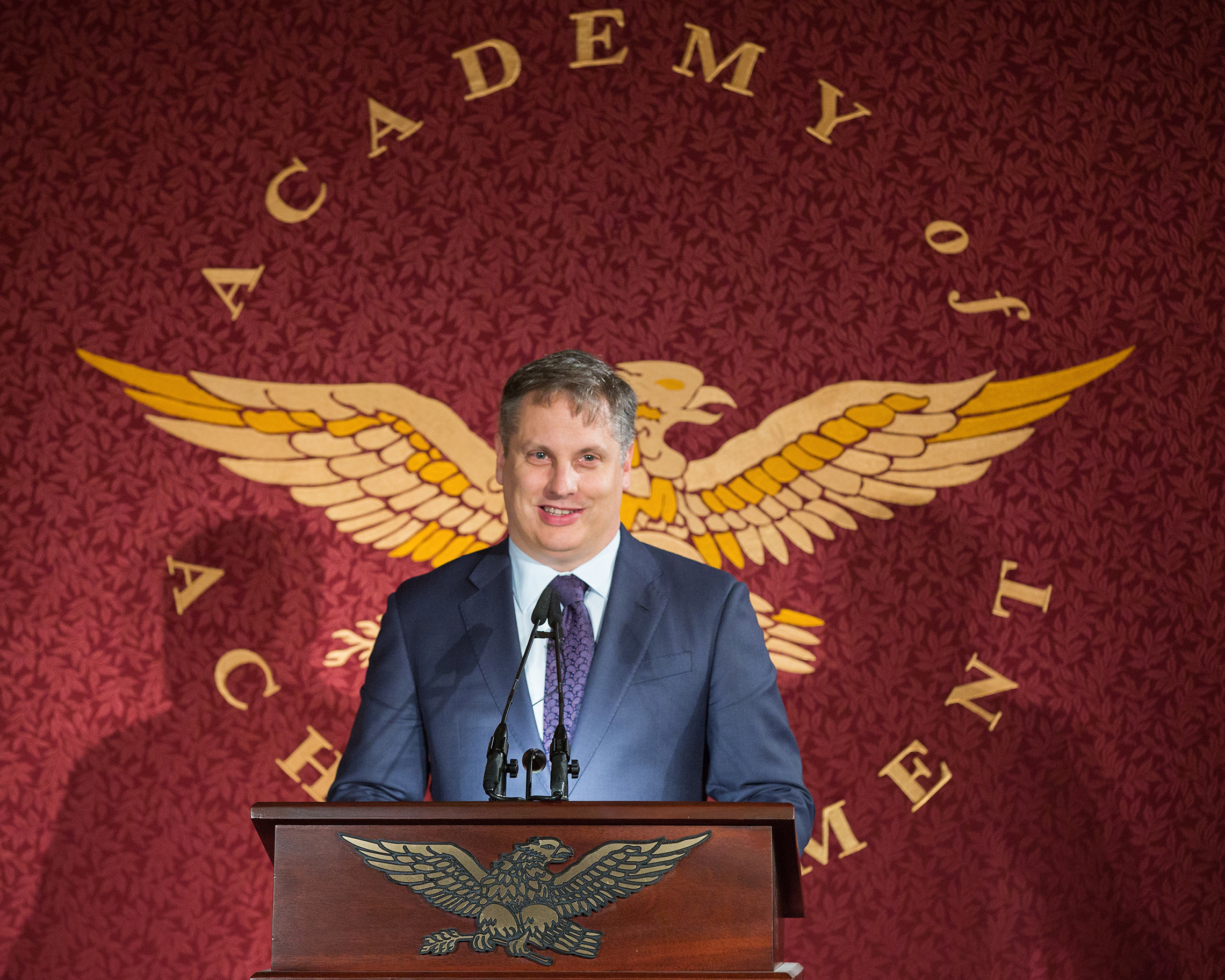
Wednesday afternoon’s program resumed after lunch with a presentation by Dr. Jennifer Doudna of the University of California at Berkeley. She is a pioneer of CRISPR technology, the ingenious new technique of genome editing that holds enormous promise for preventing birth defects and treating inherited disease. Dr. Doudna’s charisma and flair for communication made the complex science underlying her discoveries immediately comprehensible.
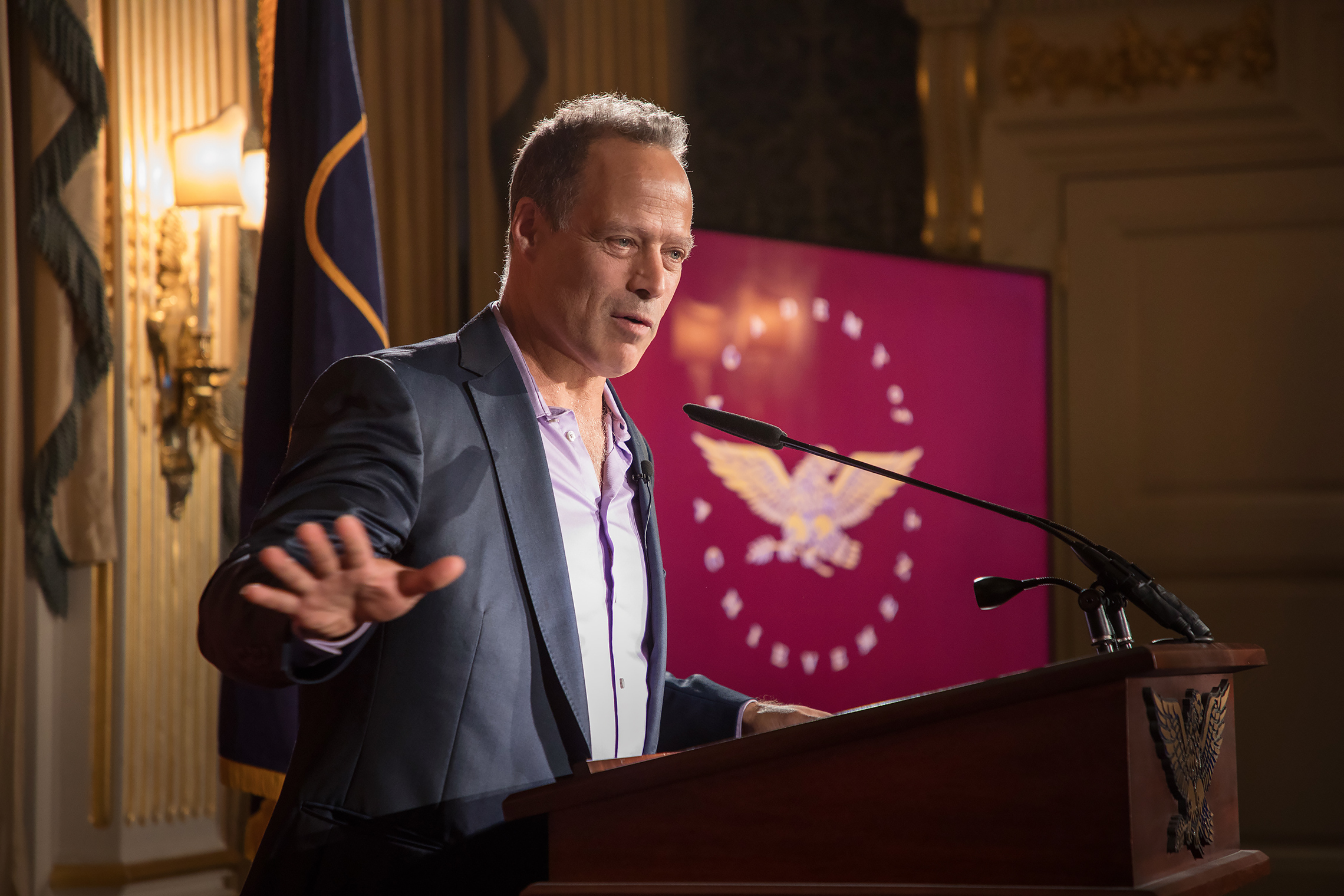
Academy members and delegates had enjoyed hearing briefly from acclaimed stage and motion picture actor Jeremy Irons on the first evening of the Summit. On Wednesday afternoon Irons gave a charming impromptu talk, discussing the path that led him to discover his life’s passion, along with the challenges and rewards of an actor’s life.
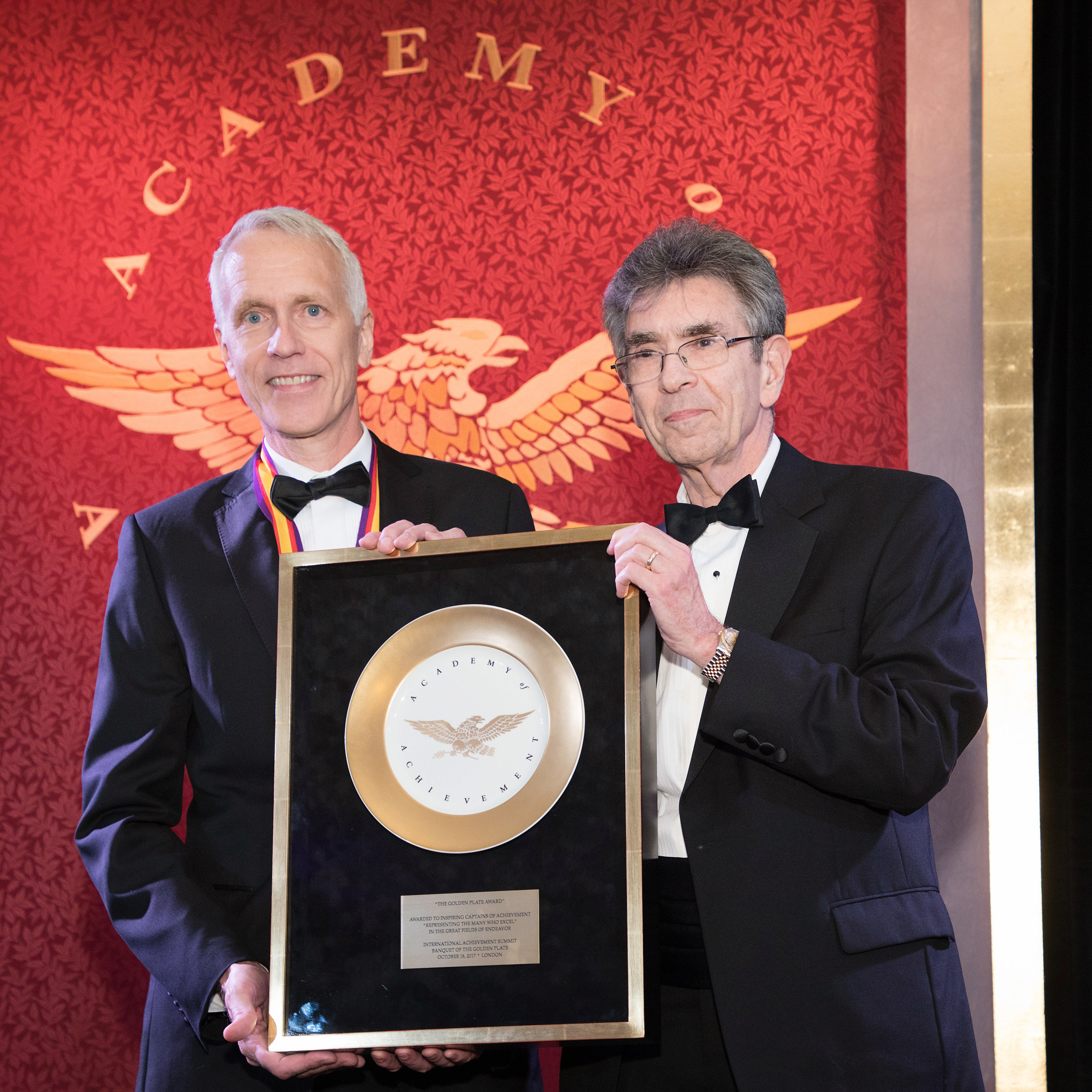
Sir John Gurdon, the recipient of the 2012 Nobel Prize in Chemistry, reviewed his work in the fields of cell nucleus transplantation and cloning, breakthroughs that initiated a new era of stem cell research. A former master of Trinity College, Cambridge, and the longtime leader of Wellcome’s cancer research arm, now known as the Gurdon Institute, Sir John demonstrated in a few minutes the charm and wisdom that have endeared him to generations of young scientists at Cambridge.
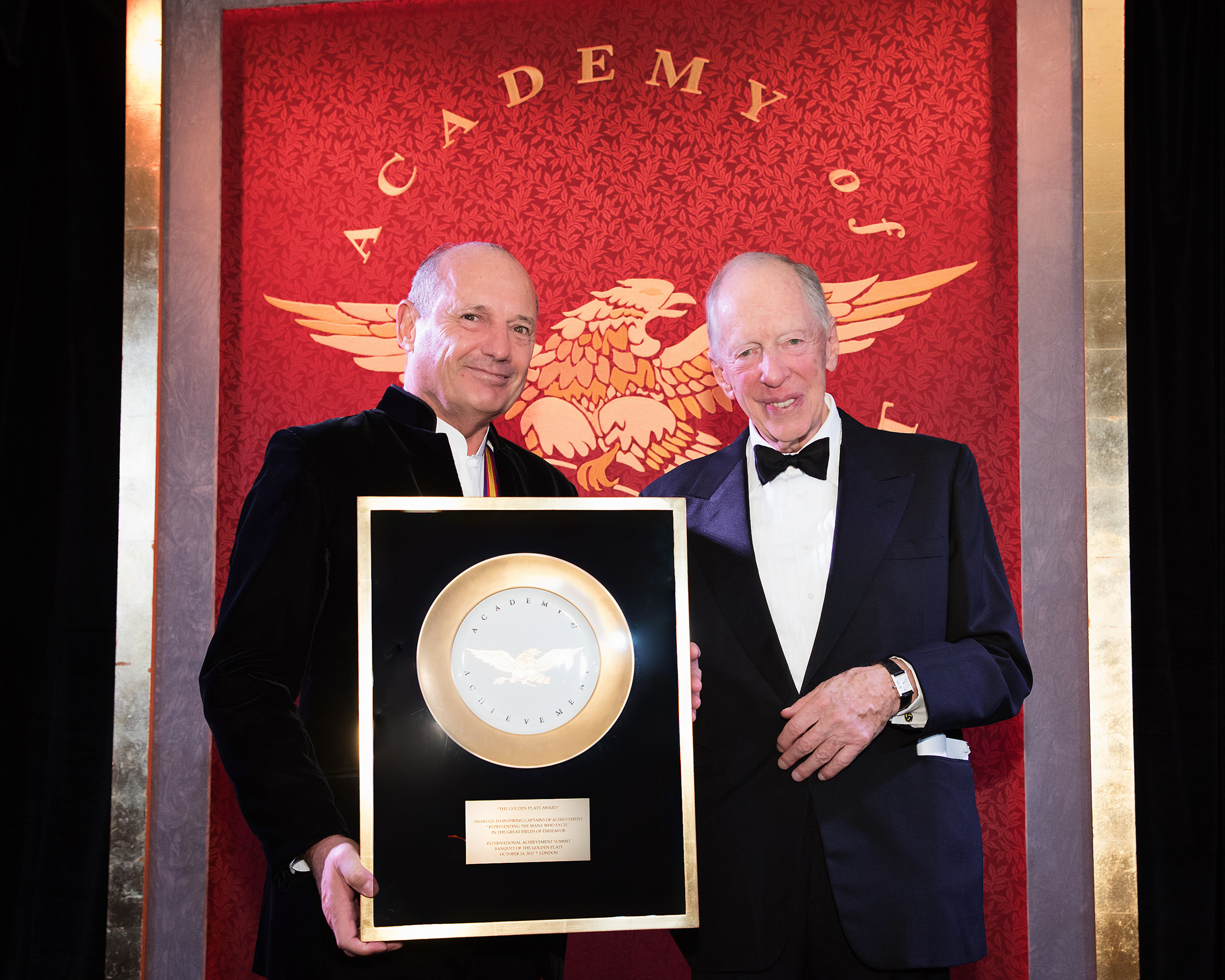
John Overdeck is a founder and Co-CEO of the revolutionary investment firm Two Sigma, which deploys cutting-edge data mining to uncover hidden value in the world’s markets. He shared the story of his evolution from teenage math prodigy to executive at Amazon and founder of Two Sigma.
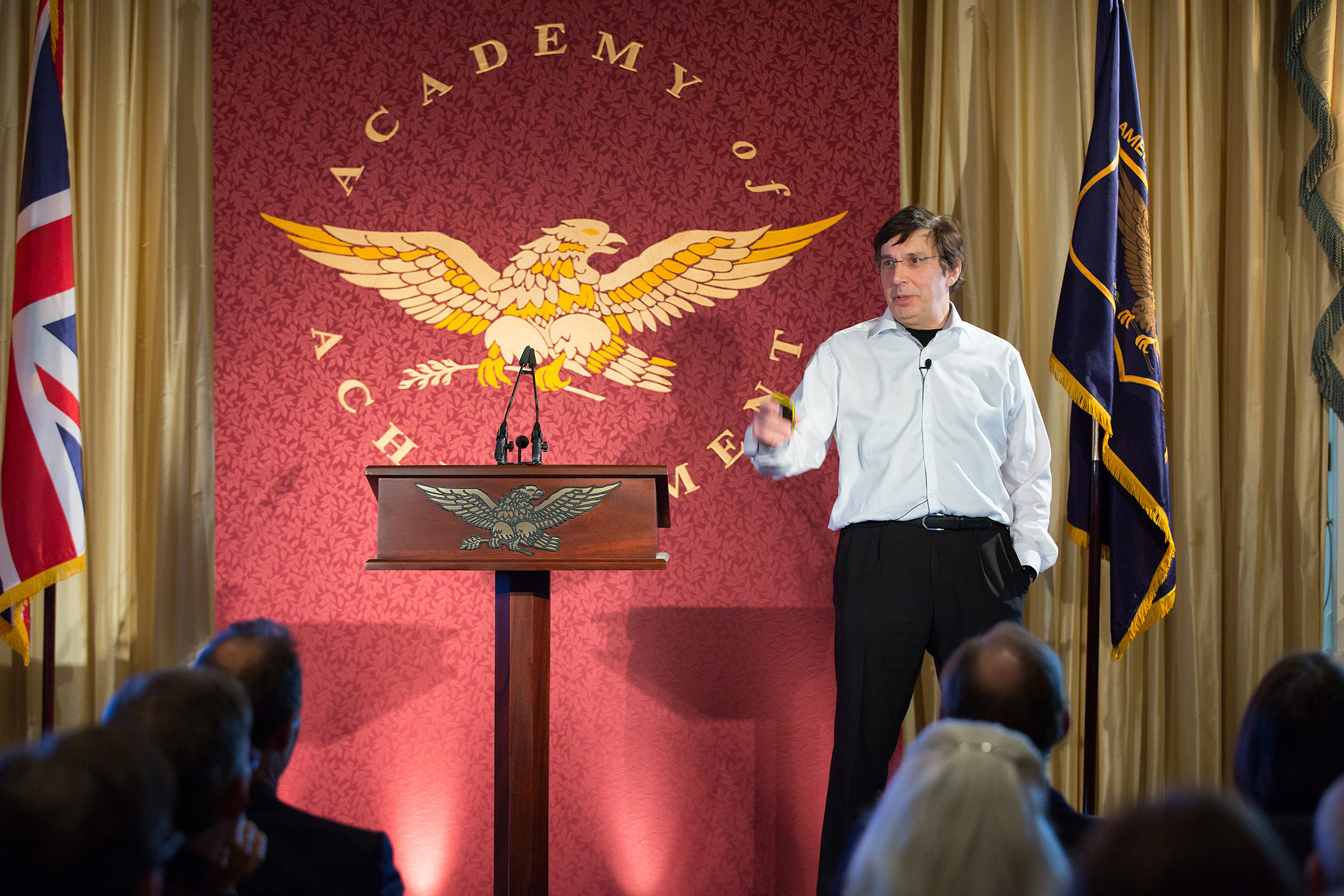
One of the most gripping presentations of the Summit came from author and documentary filmmaker Sebastian Junger. Author of the bestseller The Perfect Storm, among others, he showed a trailer for his new film, Hell on Earth: The Fall of Syria and the Rise of Isis. Junger looked back at his experiences as a war correspondent and shared the insight that men and women living through horrific circumstances may experience a depth of meaning in their relationships that they cannot easily recapture when they return to everyday life.
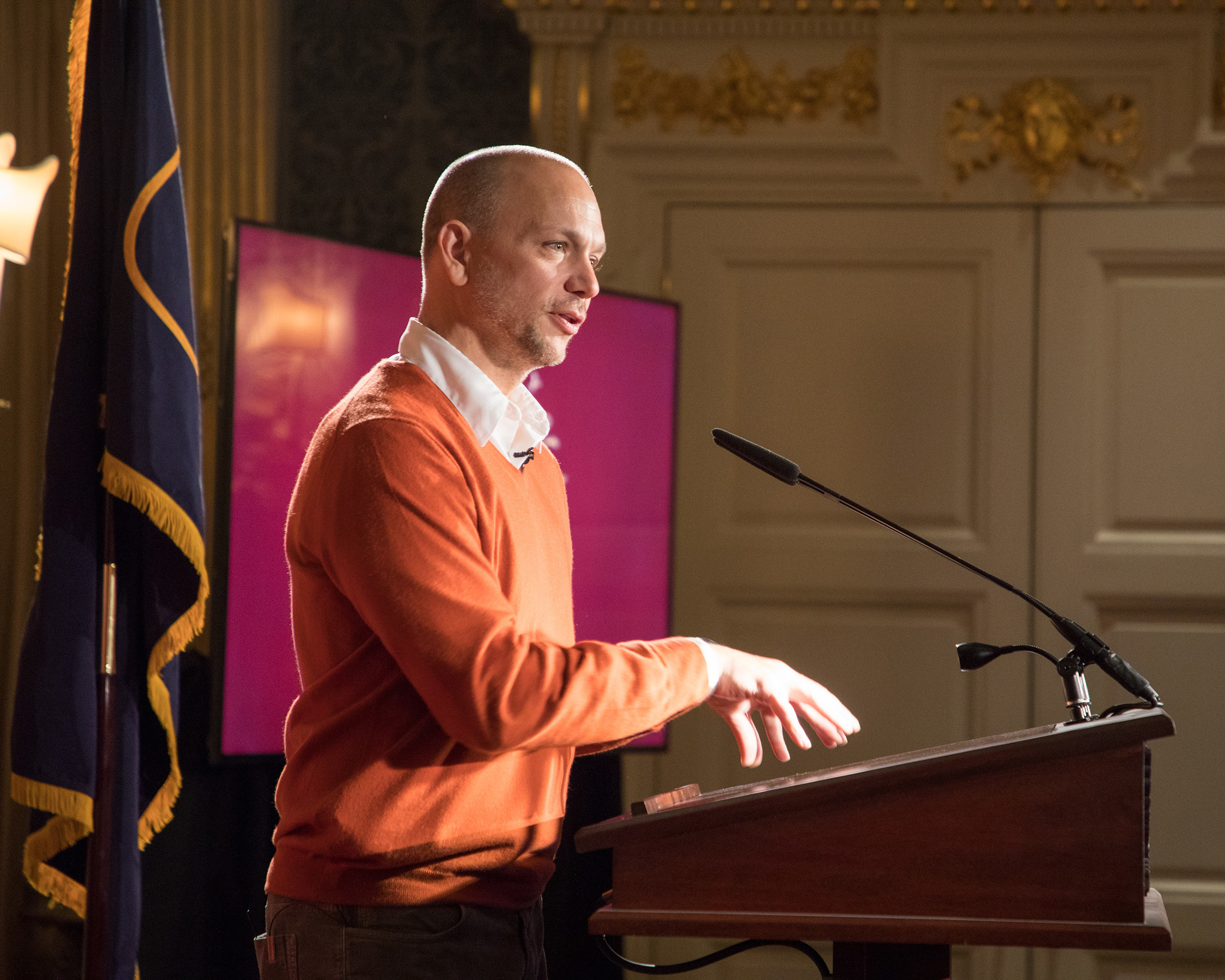
The youngest member of the United States Supreme Court, Justice Neil Gorsuch, a former Marshall Scholar, shared the impact that his studies in Britain and his experience as a federal judge have had on his understanding of the Constitution, and the importance of tolerance, decency, and respect for the truth.
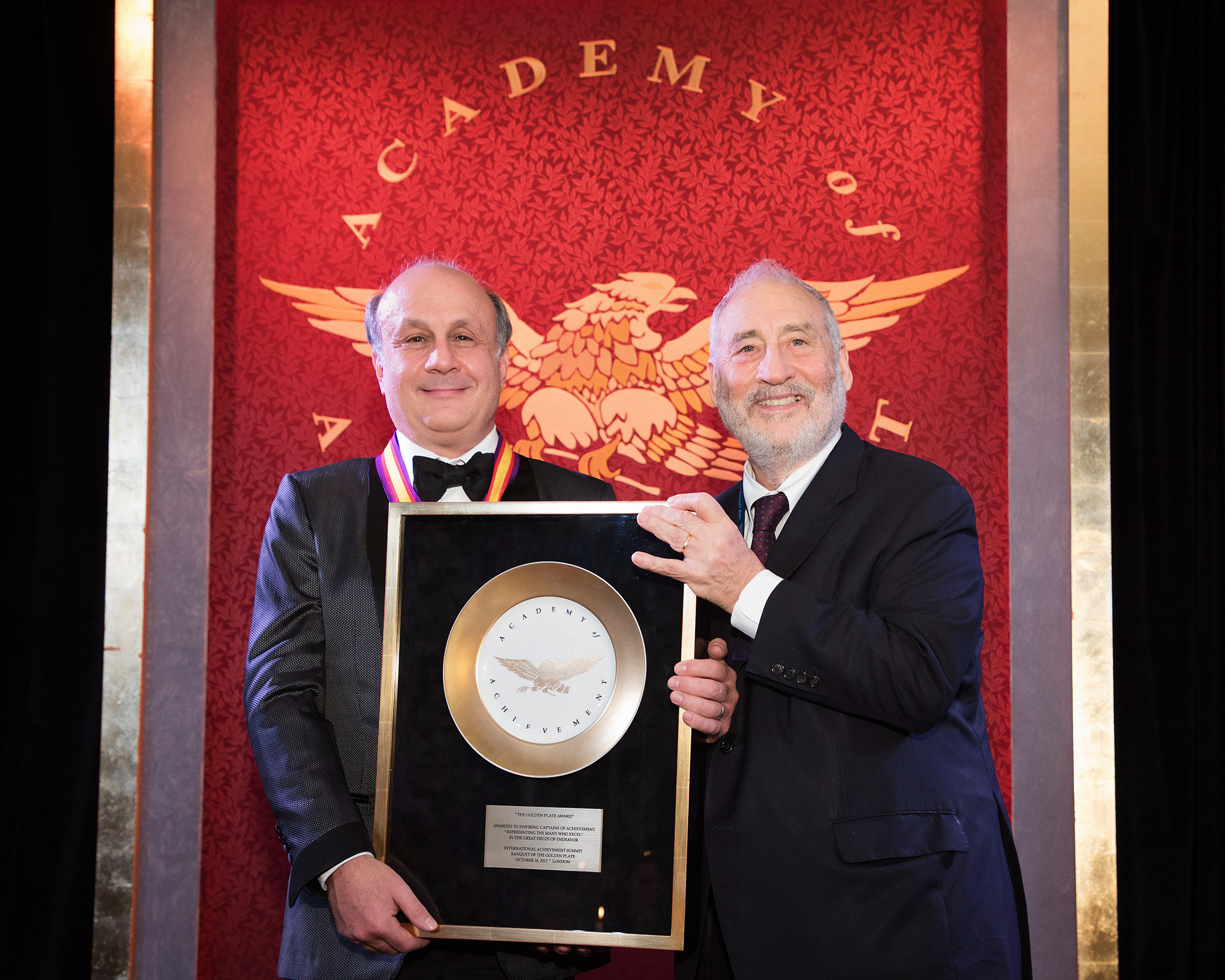
The most successful team chief in the history of Formula 1 racing, Ron Dennis recently retired as Chairman of McLaren Technology Group, the family of companies he created over 30 years ago. A longtime leader in British industry and engineering, he retraced his life’s journey, from his first travels as a teenage mechanic to taking over the company he worked for, revolutionizing the manufacture of high-performance cars, and building a diversified multibillion-dollar company employing thousands of people. None of this would have been possible, he noted, without the passion for cars, racing, and technology that drove him from the very beginning.
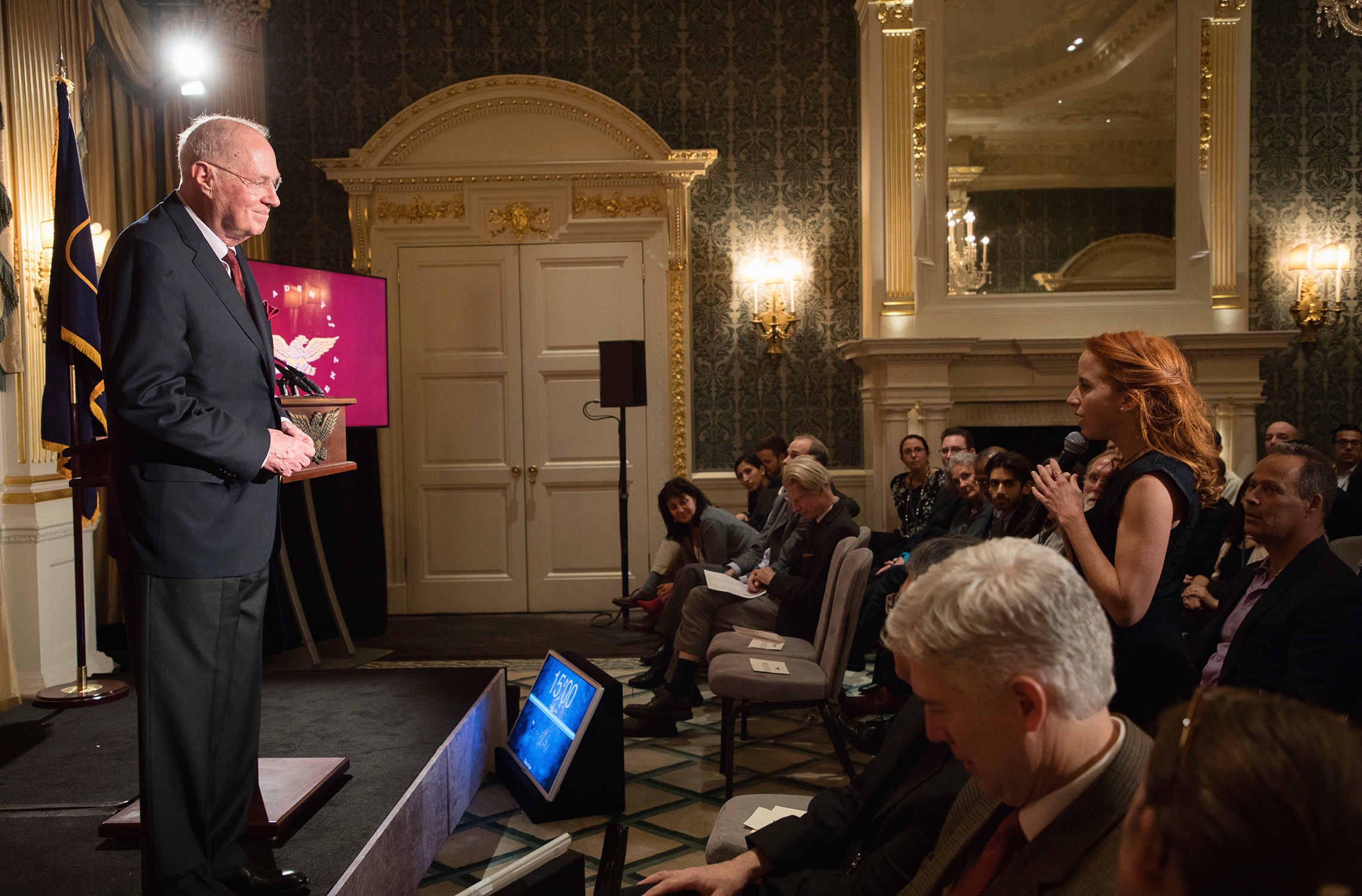
A recipient of the Nobel Prize in Chemistry, Sir Andre Geim demonstrated that excellence in research and a sense of humor are not mutually exclusive. A native of Russia who now makes his home in England, he laced his audiovisual presentation with dry humor. He retraced the route that led him from Russia, where he was born and educated, to Manchester, England, where he now teaches and conducts his research. With startling visual aids, he explained the experiments with magnetism that eventually led to his historic creation of graphene, a strong and highly conductive form of carbon, a single atom thick, with virtually unlimited applications in science and industry.

A love of music first inspired inventor Tony Fadell to create a pocket-sized digital music player, the forerunner of the iPod. Fadell recalled how Apple Computer chief Steve Jobs saw the potential of Fadell’s idea and hired him to develop the iPod, and later the iPhone, devices that have changed our way of life. In his warm, unassuming address, Fadell emphasized the experience of failure and the determination to overcome it as essential components of success. In his own career, he persisted in a long uphill struggle to develop new consumer devices for digital media, when investors were only interested in online services, not new hardware. In a lively question-and-answer session, he considered the social impact of handheld devices and the future role of artificial intelligence.
Computer scientist Dr. David Siegel, a founder and Co-CEO of Two Sigma Investments, further pursued the transformative potential of artificial intelligence, while cautioning his listeners of the cultural and economic dislocations it may cause. In a question-and-answer session, he criticized the short-term thinking of many in the venture capital community and called for a greater degree of government oversight and for greater diversity within government itself.

Having opened the Summit’s proceedings on Tuesday evening, Justice Kennedy closed them on Wednesday afternoon. He returned to the theme of civic discourse and the pursuit of truth as the foundation of a free society and urged the Academy’s young delegates to revisit the values underlying our Constitution and find ways to preserve them in our new age of digital communications. “You can’t preserve what you haven’t studied,” he reminded his listeners. “You can’t protect what you’ve not discussed. You cannot defend what you do not know.”
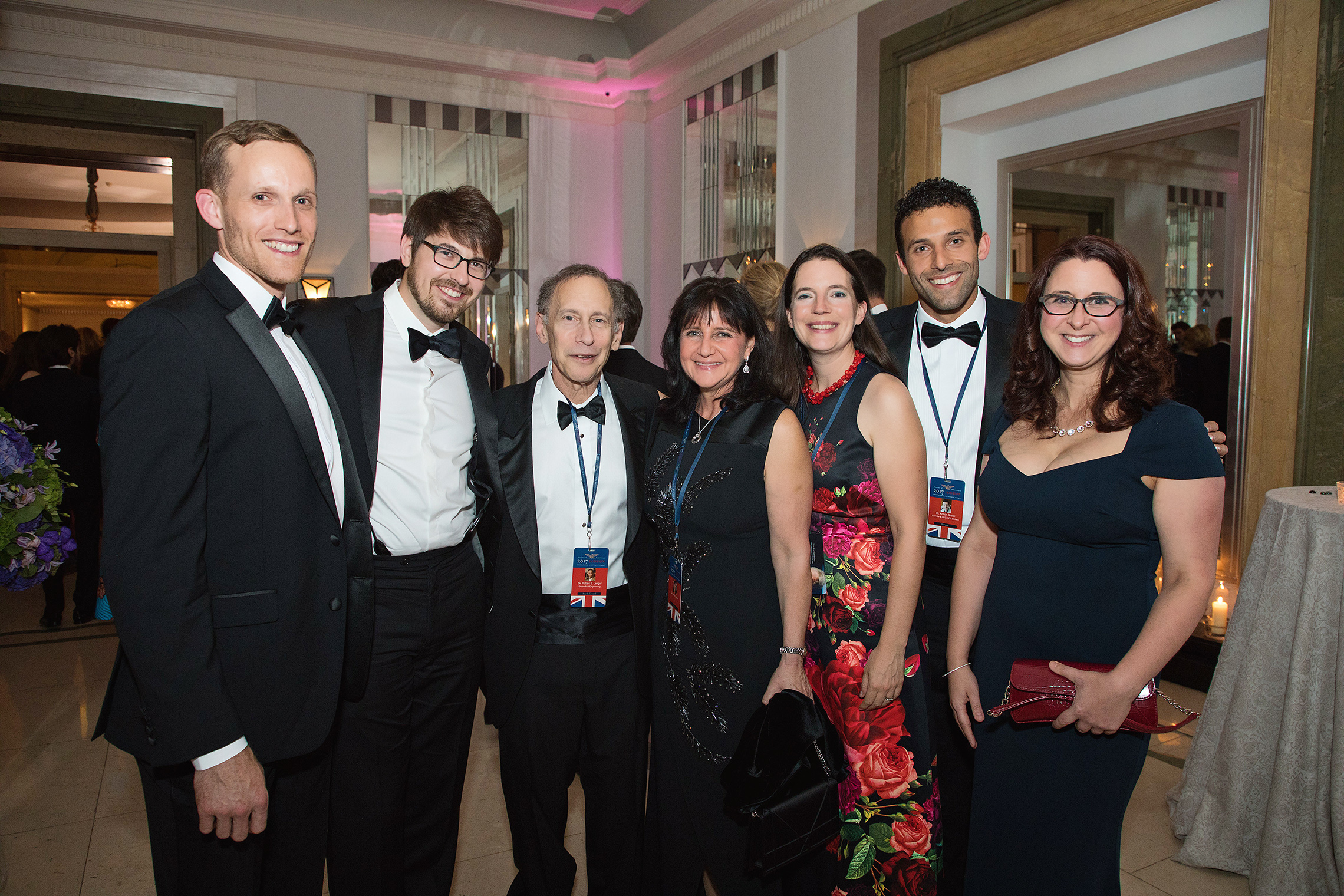
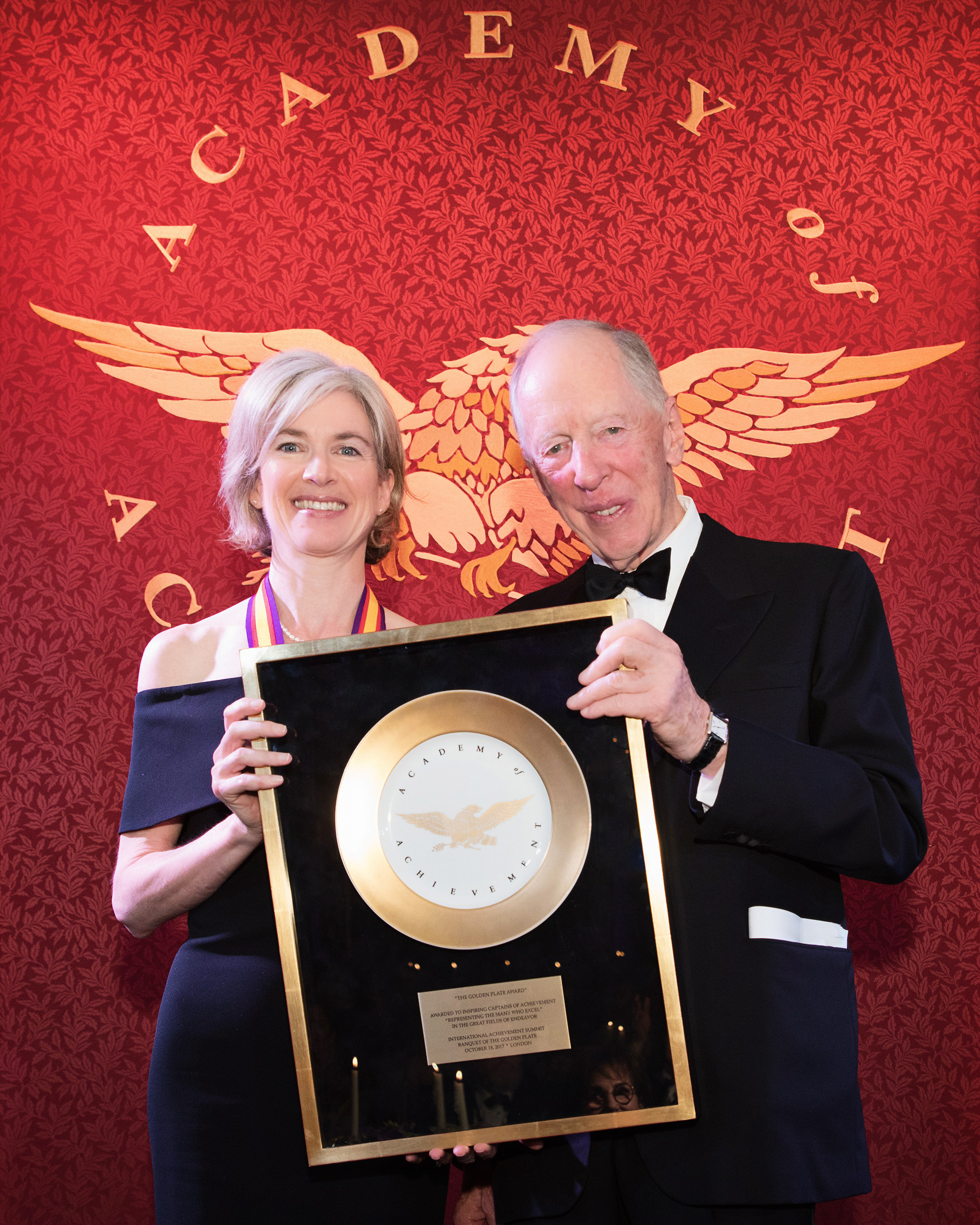
The 2017 International Achievement Summit culminated in the Banquet of the Golden Plate, held in the famous ballroom at Claridge’s, dramatically lit for the occasion and overflowing with flowers. As a member of the Academy’s Awards Council presented the Golden Plate Award to each new honoree, Jeremy Irons read a brief citation celebrating the inductee’s accomplishments.
During the course of the evening, the assembled members, guests, and delegates heard a song from one of the Academy’s delegates, the young German singer and songwriter Kim Petras, who at age 23 is already making waves in the music world.
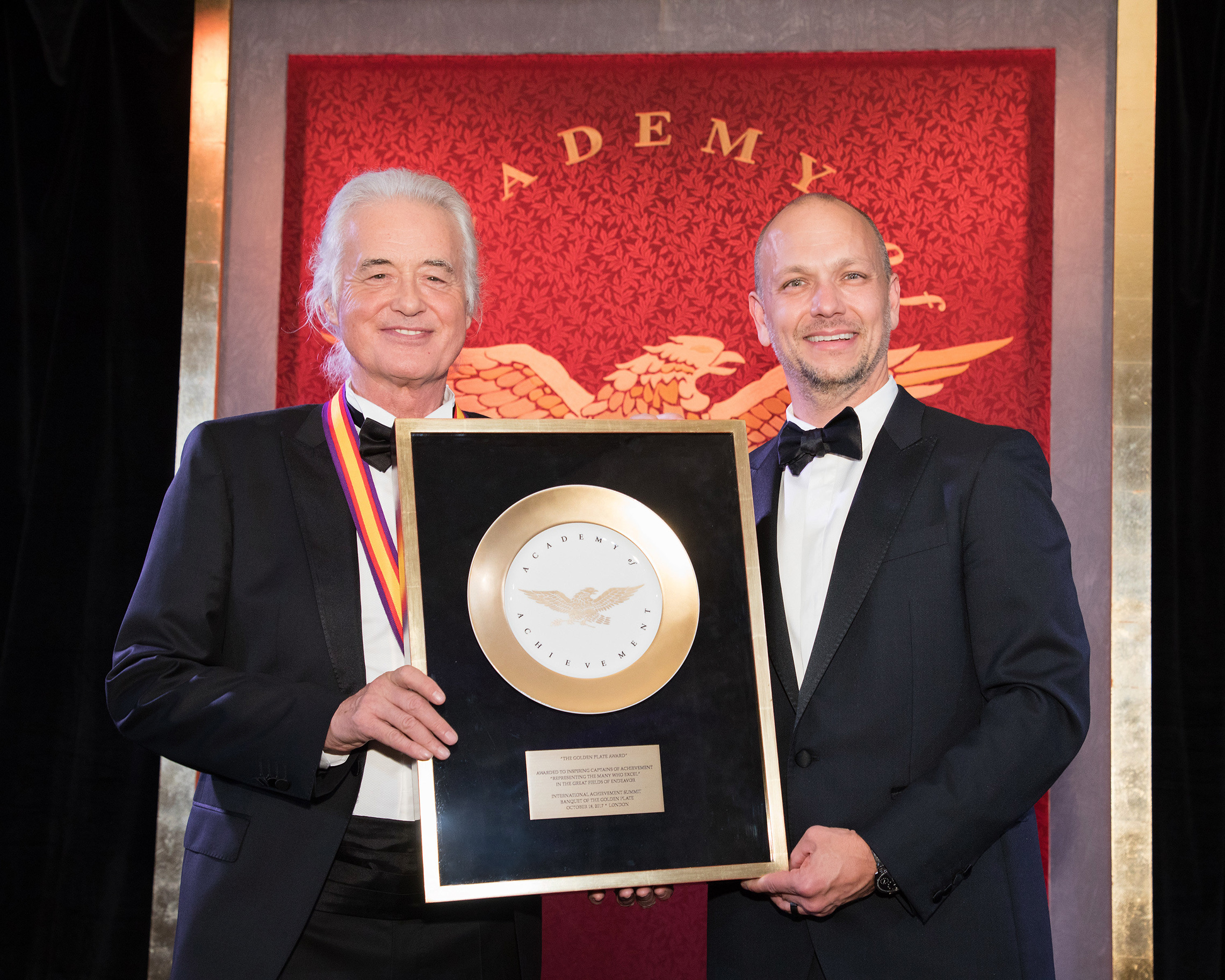
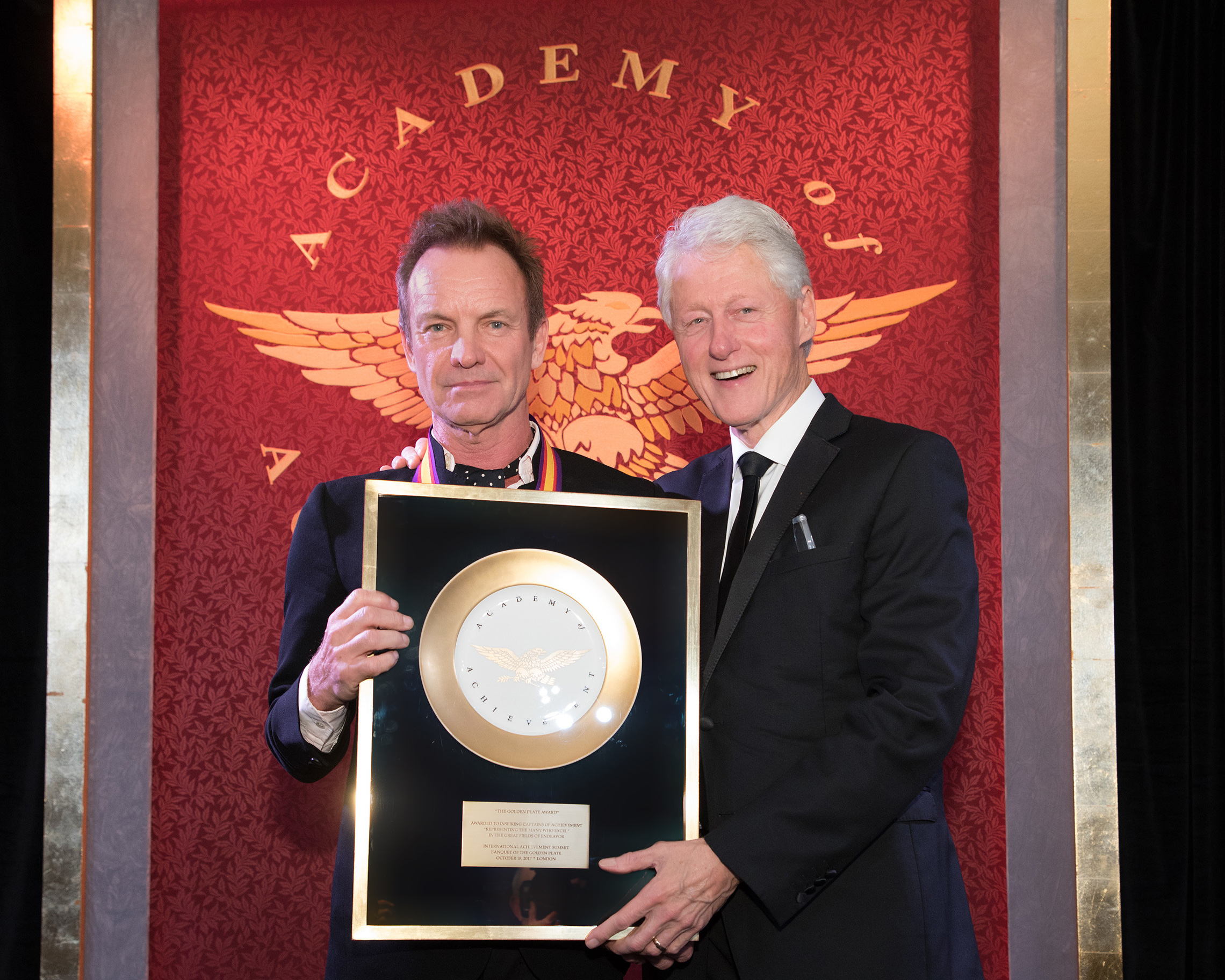
As the last presenter and honoree at the evening’s ceremony, President William Jefferson Clinton presented the Golden Plate to the singer and songwriter Sting. Following dinner, President Clinton returned to the stage to share some memories of his friend. He recalled traveling on a relief mission to Haiti in the aftermath of a devastating earthquake, and his surprise at encountering Sting delivering relief supplies to a remote village. Following President Clinton’s warm introduction, Sting took the stage, guitar in hand. Accompanied by a second guitarist and a drummer, he performed exquisite acoustic arrangements of his most famous songs, including “Every Breath You Take” and “Roxanne.” Although he could easily have held the audience rapt for hours more, he ended the set with a song he noted is often broadcast during times of crisis or catastrophe — “Fragile.”
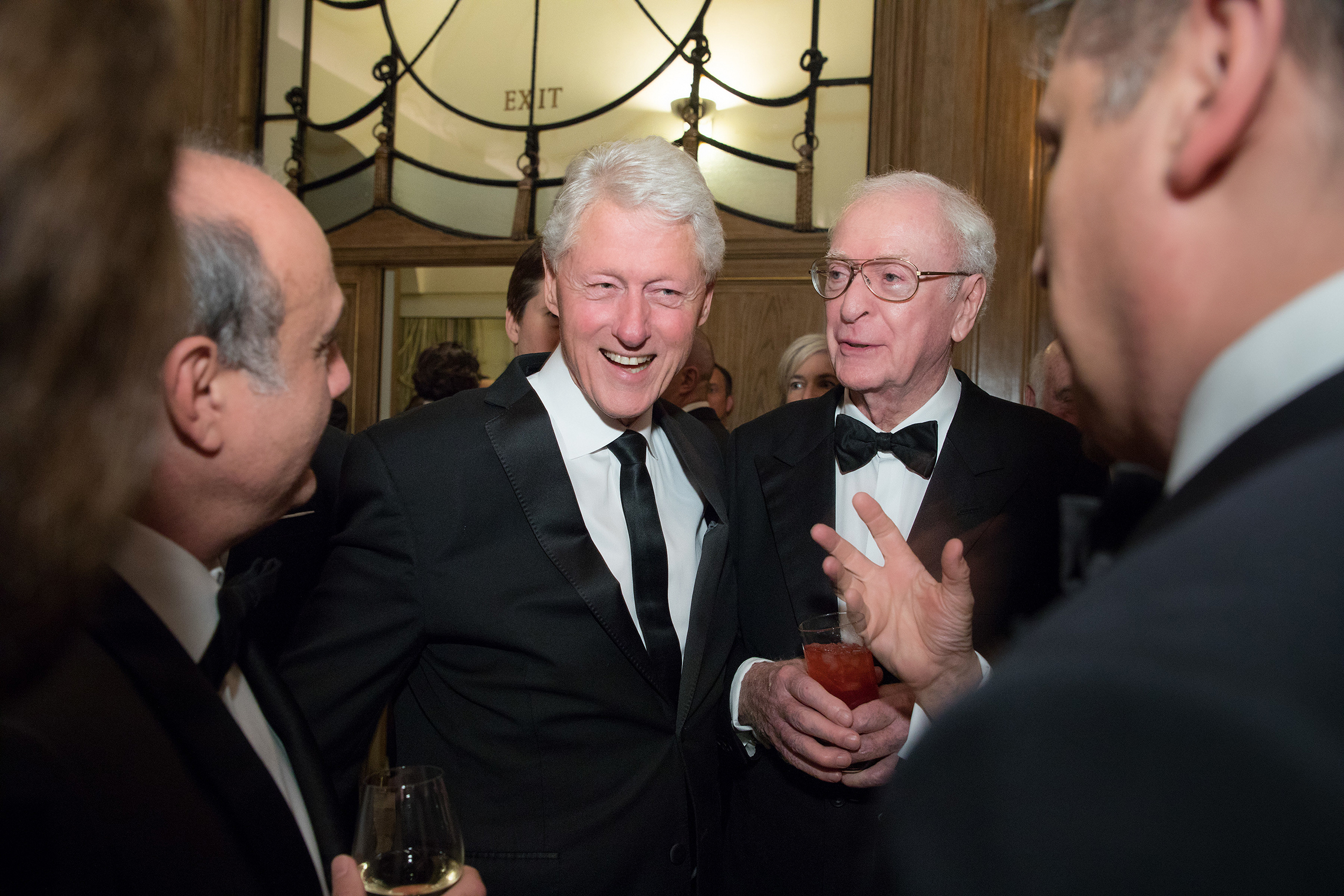
Following the Banquet, the honorees, guests, and delegates swarmed the salons and drawing rooms of Claridge’s, celebrating new friendships and continuing their explorations of the many issues they had heard discussed over the course of the day. The final program of the London portion of the Summit convened Thursday morning, with another sequence of fascinating speakers.
As at previous Summits, the Academy conducted a comprehensive series of video interviews with its honorees to preserve their personal journeys for students and teachers around the world. The interviews will be featured on the Academy website as well as the popular “What It Takes” podcast series. The Academy members who were interviewed at the 2017 Summit included President Bill Clinton, Jimmy Page, Simone Biles, Sir Venki Ramakrishnan, Kazuo Ishiguro, John Banville, Lord Norman Foster. and Lord Martin Rees.
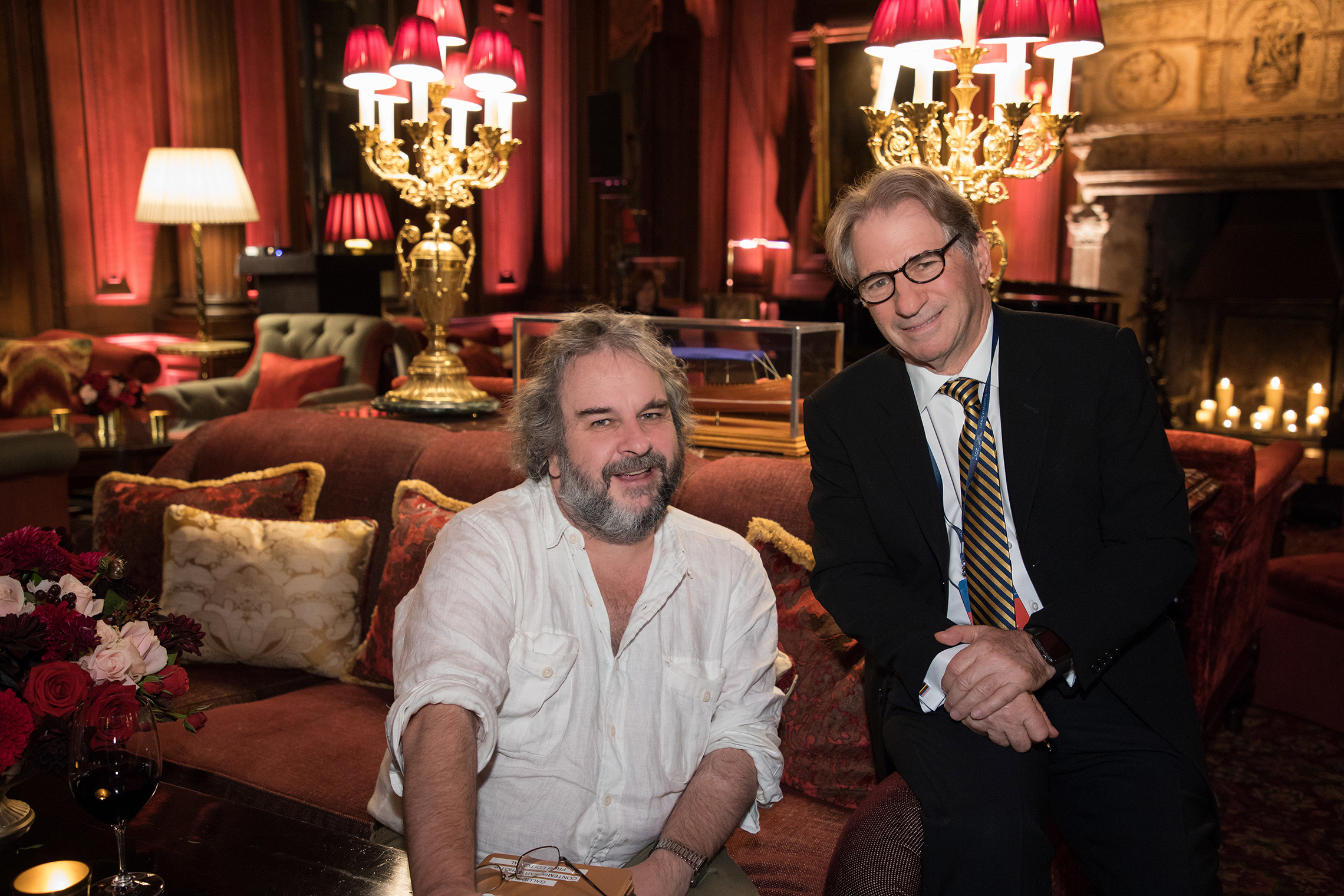
The morning’s second speaker, famed broadcaster Charlie Rose, invoked the power of questions as a tool for finding truth in the midst of controversy. The Irish novelist John Banville, winner of the Man-Booker Prize for his 2005 novel, The Sea, gave a witty account of his lifelong passion for literature. Filmmaker Sir Peter Jackson, best known for his Oscar-winning trilogy, The Lord of the Rings, described his youth in a small town in New Zealand, and his early passion for filmmaking. A homemade horror film he created with his friends led him to the Cannes Film Festival and a career as one of the most successful filmmakers of all time. Dr. F. Duncan M. Haldane, a recipient of the Nobel Prize in Physics, described his research into exotic states of matter, such as his discovery of topological quantum matter and his exploration of the physics of light.
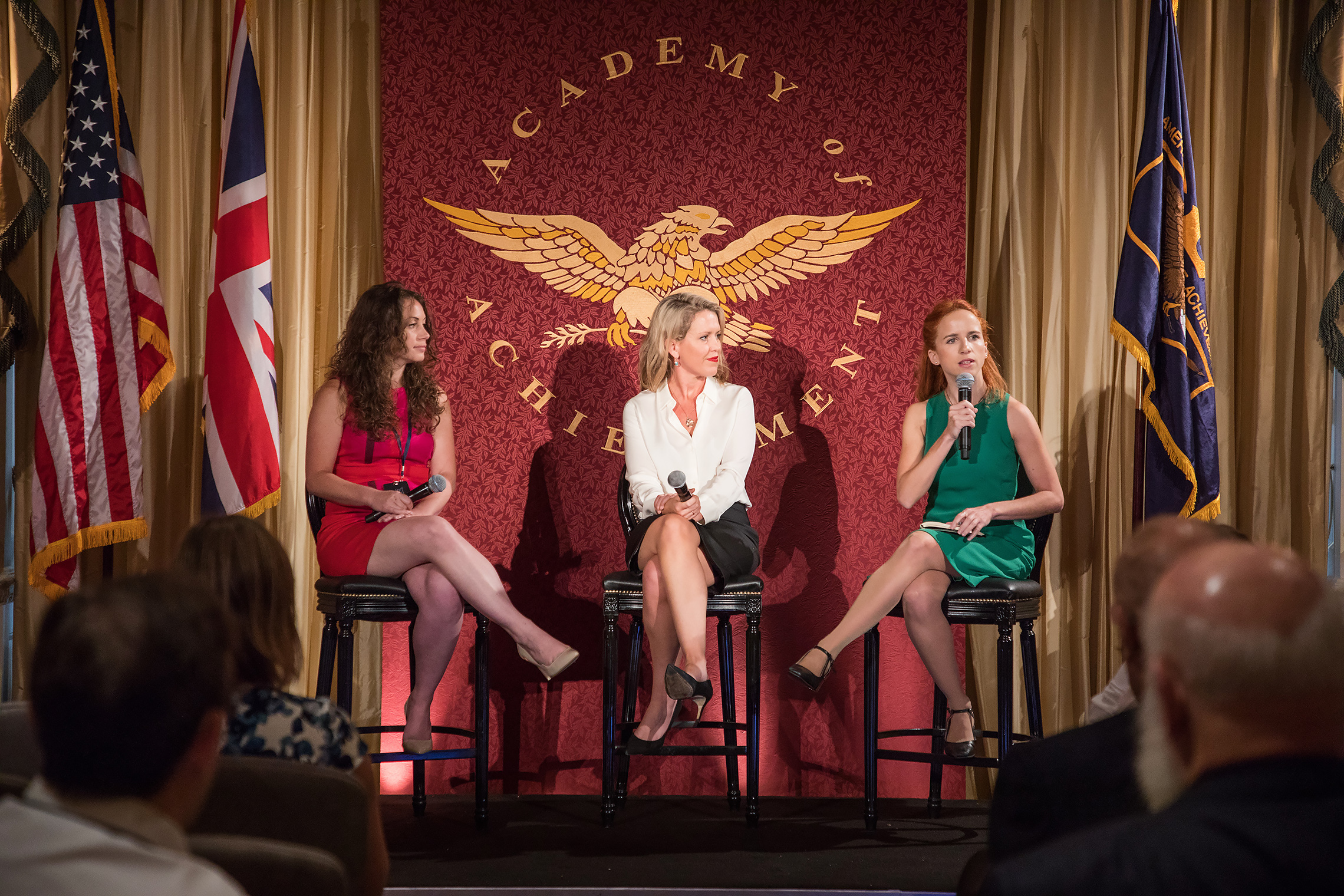
The last symposium session of the 2017 International Achievement Summit concluded with a panel discussion with three of the Academy’s delegate alumni. Jennifer Robinson attended the 2008 Summit as a Rhodes Scholar. She is now an international human rights attorney, whose clients include WikiLeaks founder Julian Assange. Debbie Sterling attended the 2014 Summit as a delegate. She is the founder and CEO of GoldieBlox, a unique and successful line of construction toys designed to interest young girls in building and engineering. Stav Shaffir, a delegate to the 2017 Summit, is the youngest serving member of Israel’s parliament —the Knesset — and the youngest female parliamentarian in Israel’s history. Prior to her election, she was a nationally known journalist and social activist. In a freewheeling discussion with their fellow delegates, they compared the influences and imperatives that led them to their respective courses in life.
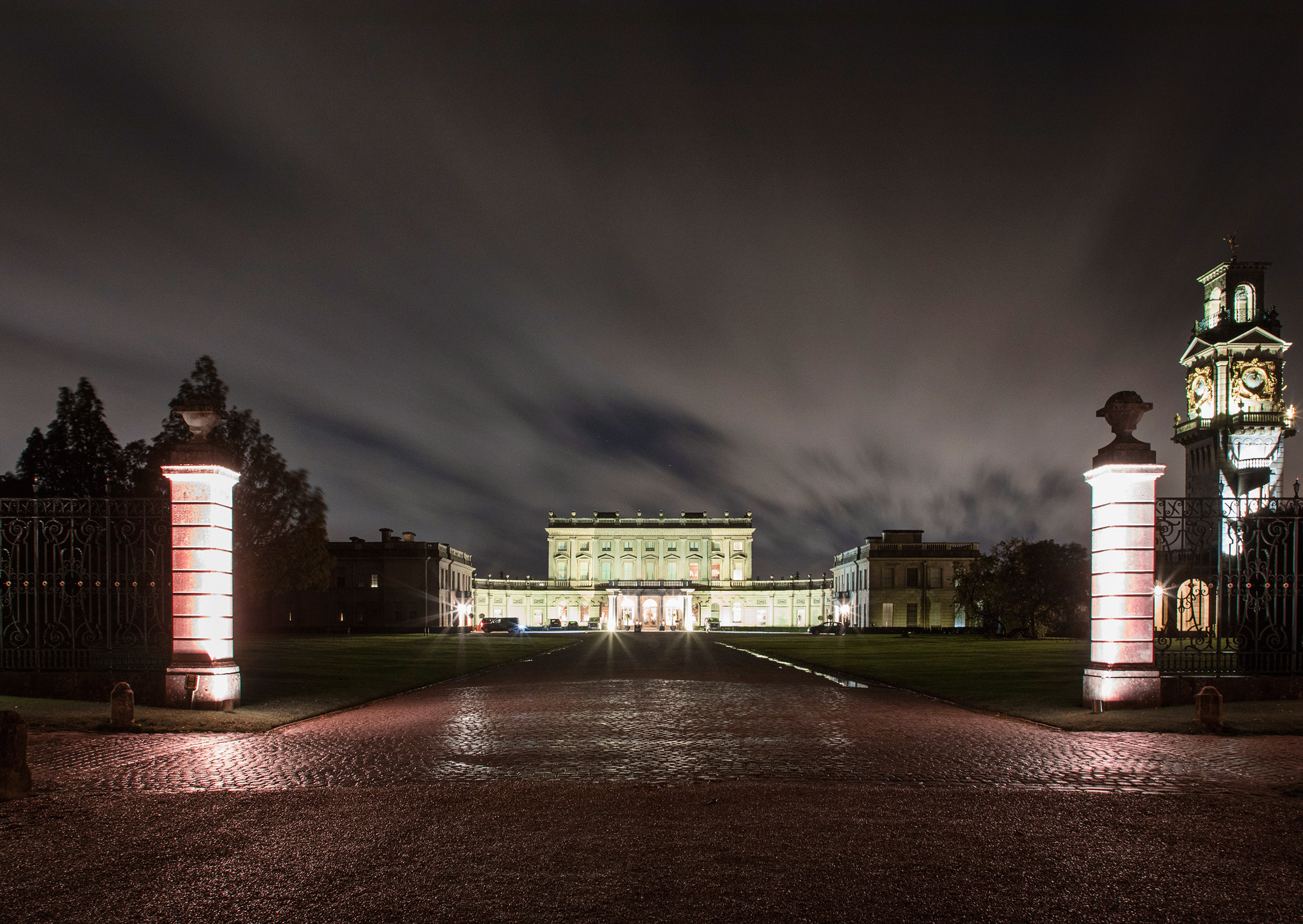
While Summit delegates returned to their respective studies and careers, Academy members participated in a retreat to the English countryside to explore the stately homes of Southeast England’s home counties. Academy members and guests stayed at historic Cliveden House, set among classical gardens, where they enjoyed panoramic views of the idyllic countryside and the glittering River Thames, and relaxed in the house’s graceful salons, adorned with paintings, tapestries, statuary and antique armor.
In Cliveden’s ornate French Dining Room, Academy members and guests heard Pulitzer Prize-winning journalist and author Rick Atkinson recount the dramatic history of the house. Previously home to the Dukes of Buckinghamshire and Somerset, and the Prince of Wales, in the 20th century it was purchased by William Waldorf Astor, an expatriate American who was ennobled for his services to Britain during the First World War. The first Viscount Astor gave the estate as a wedding present to his son Waldorf Astor and Waldorf’s American wife, Nancy, whose likeness can be seen in the house’s Great Hall in a radiant portrait by John Singer Sargent. In time, Waldorf became the 2nd Viscount Astor, and his wife the first woman to take a seat in Parliament. Through the decades preceding the Second World War, their house became a favorite gathering place for Britain’s literary and political intelligentsia.
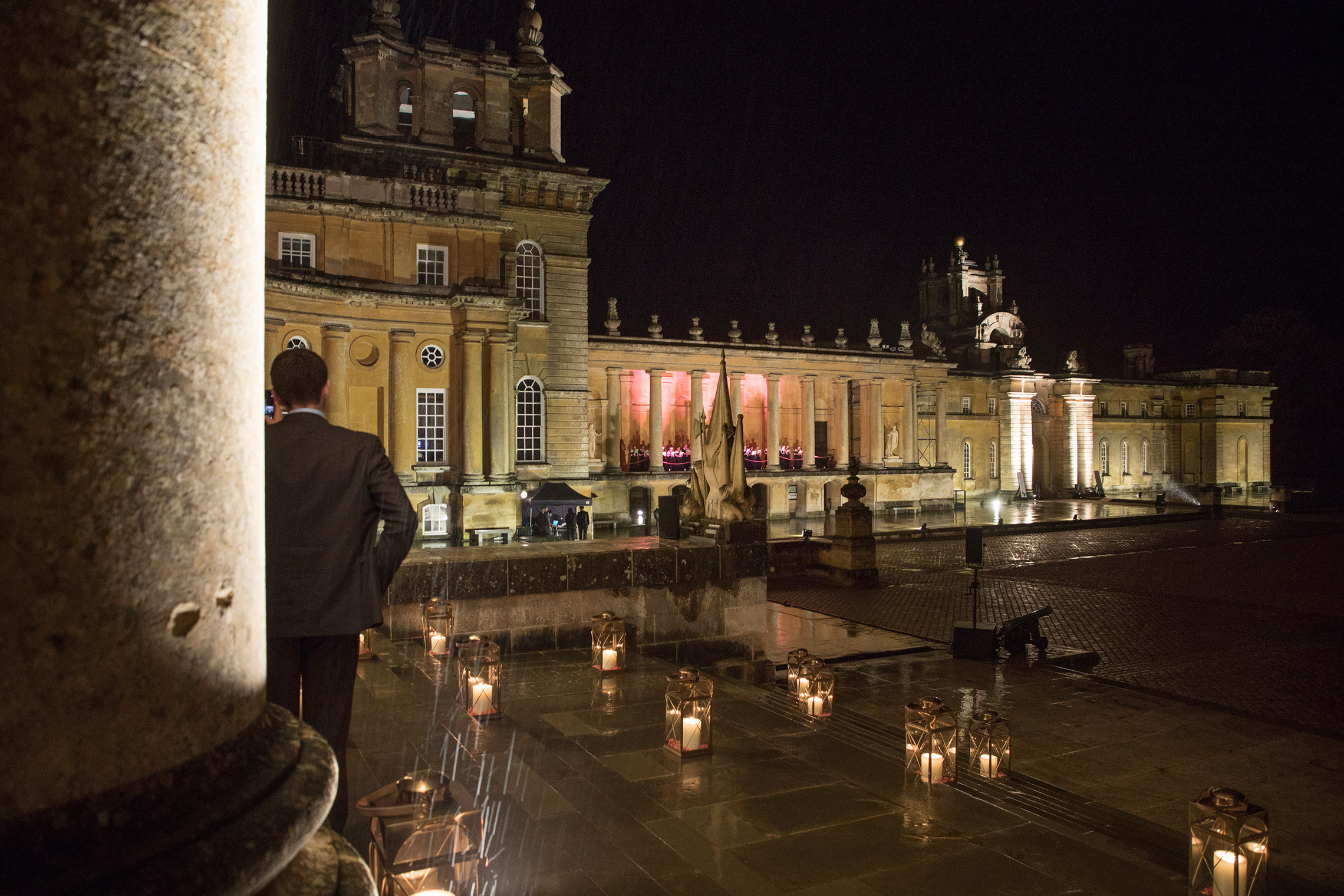
In the evening, the company traveled to an even more storied location, majestic Blenheim Palace, built in the first years of the 18th century to honor John Churchill, the first Duke of Marlborough, for his victories over the armies of Louis XIV. For 400 years it has been home to successive Dukes of Marlborough and their families. Britain’s wartime prime minister, Winston Churchill, a grandson of the 7th Duke, was born there in 1874.
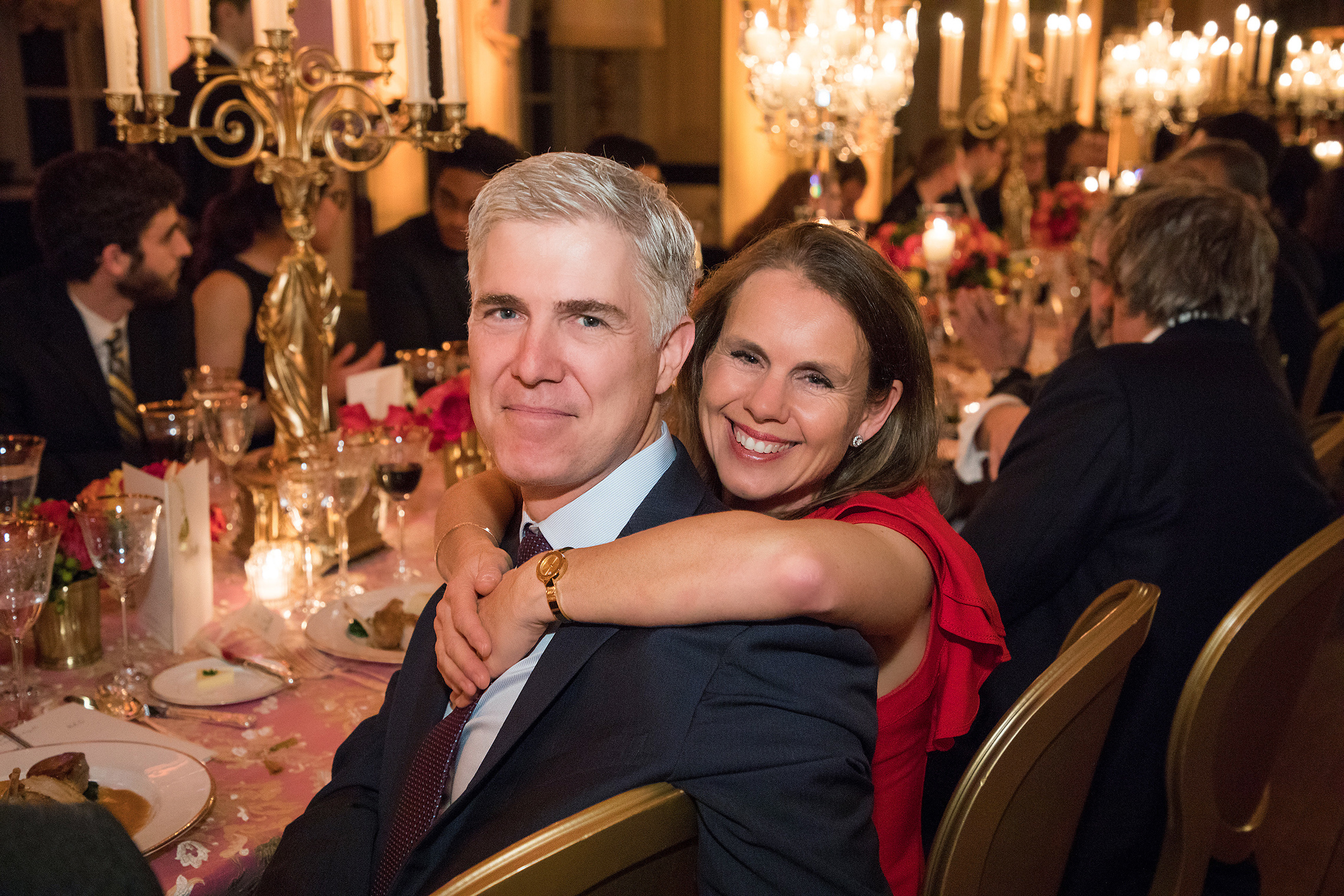
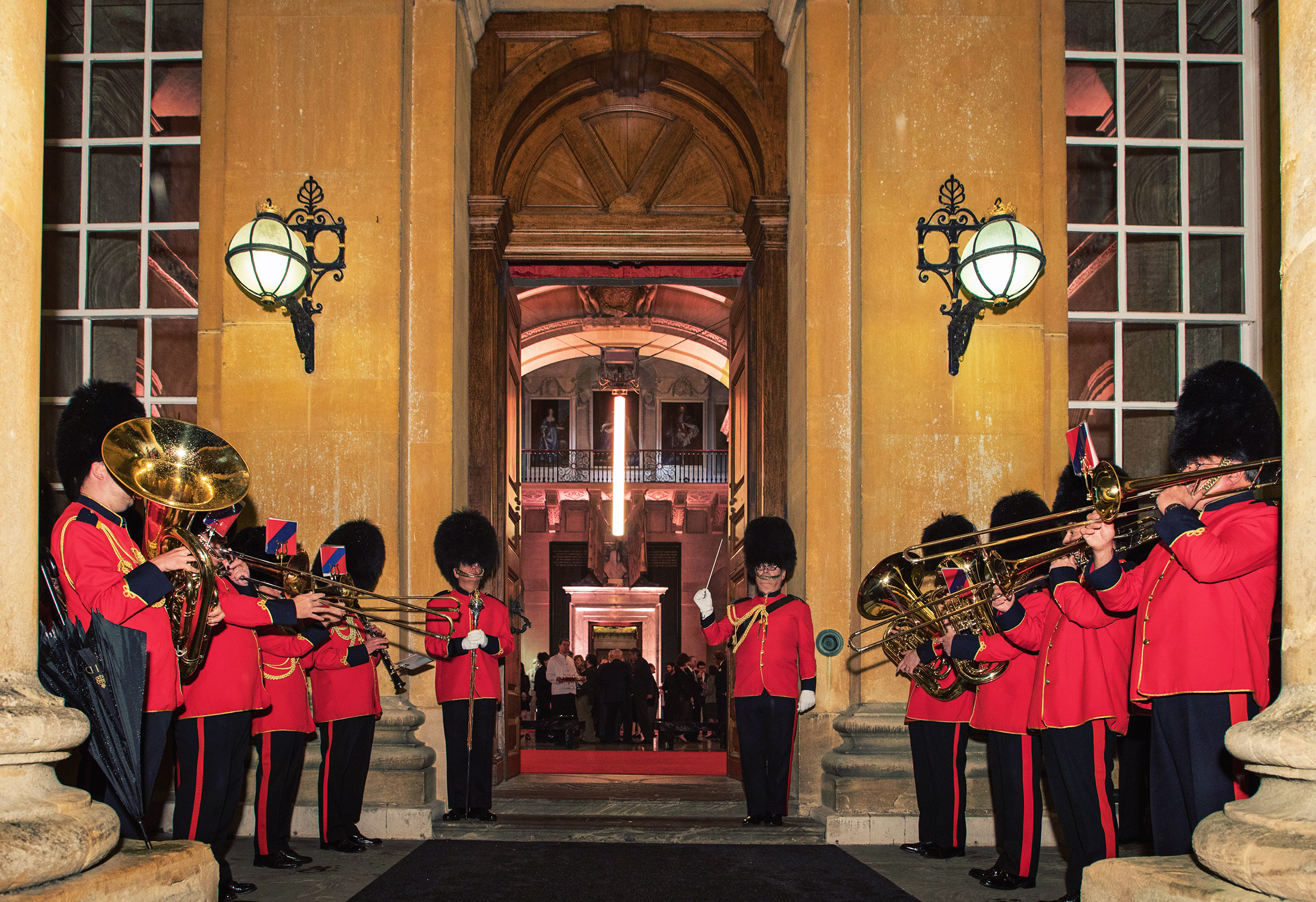
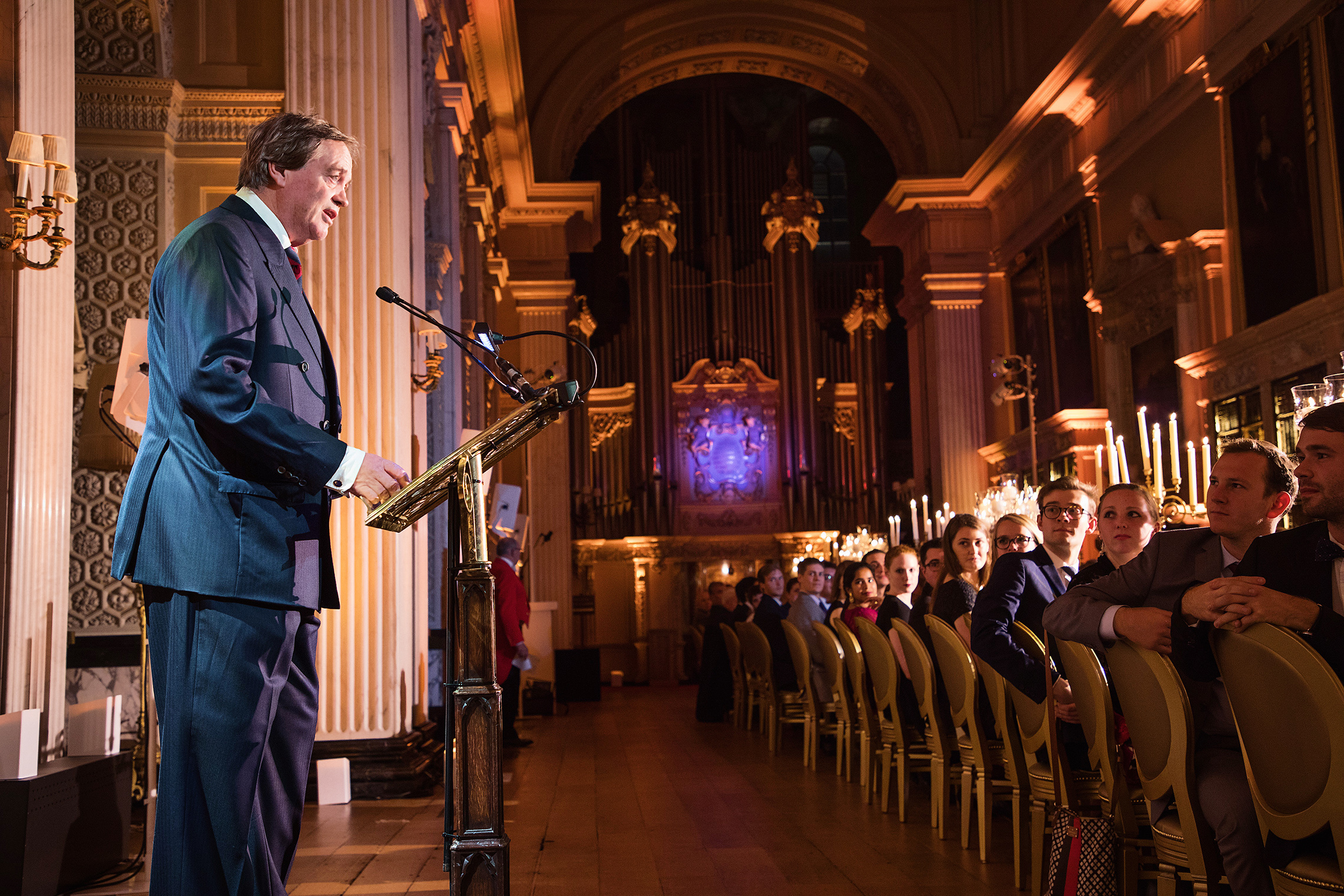
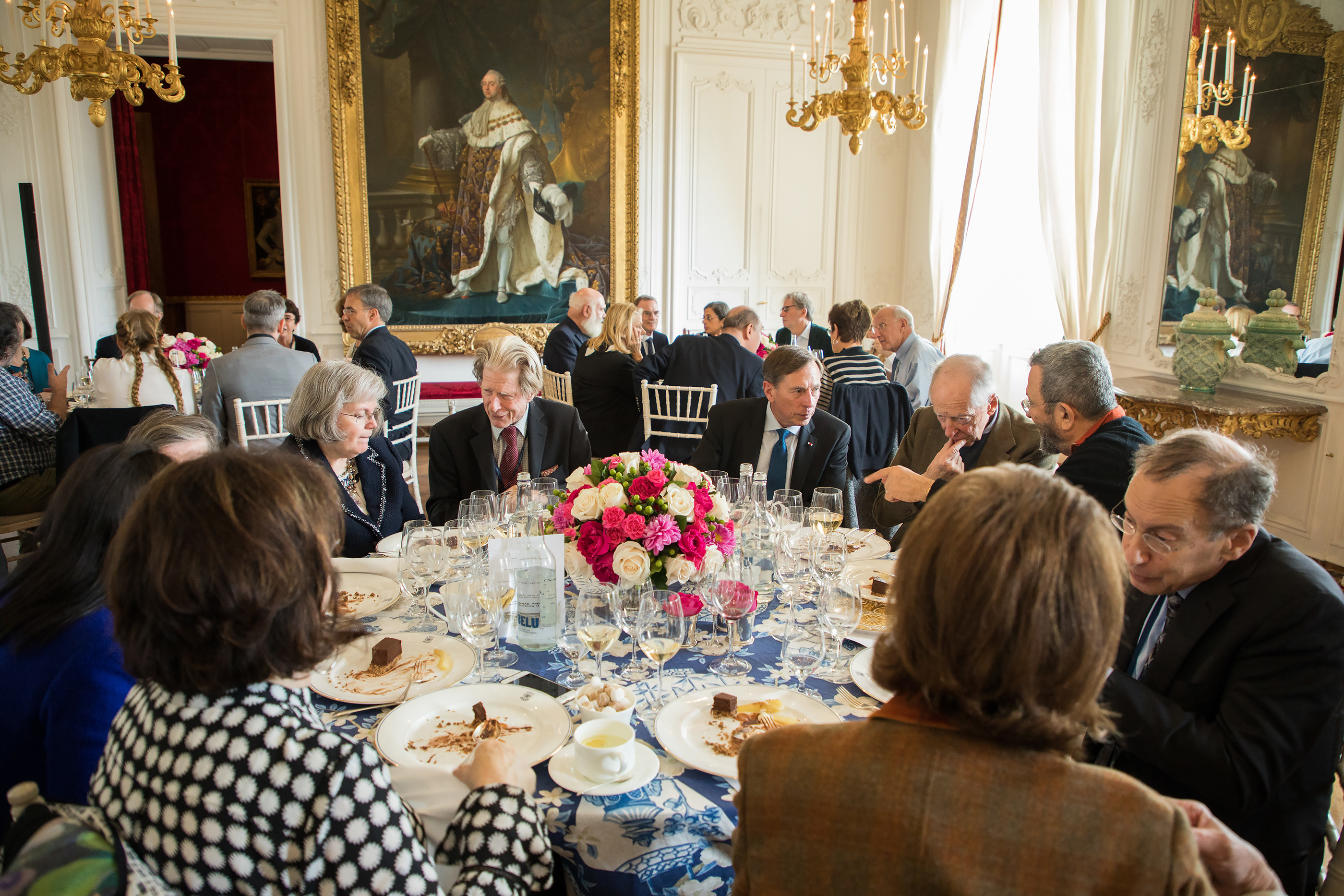
Joining 70 Marshall Scholars from nearby Oxford, Academy members were greeted on their arrival at Blenheim by a British Army band, resplendent in red coats and bearskin hats. The party toured the palace’s public rooms, hung with tapestries illustrating the first Duke’s victories, and admired the portraits of successive Dukes and their families, created by Britain’s most famous artists. The assembly dined in the palace’s justifiably famous Long Library. With the entire party of 102 seated at a single long table, Charles James Spencer-Churchill, the 12th Duke of Marlborough, personally welcomed the company to his home.
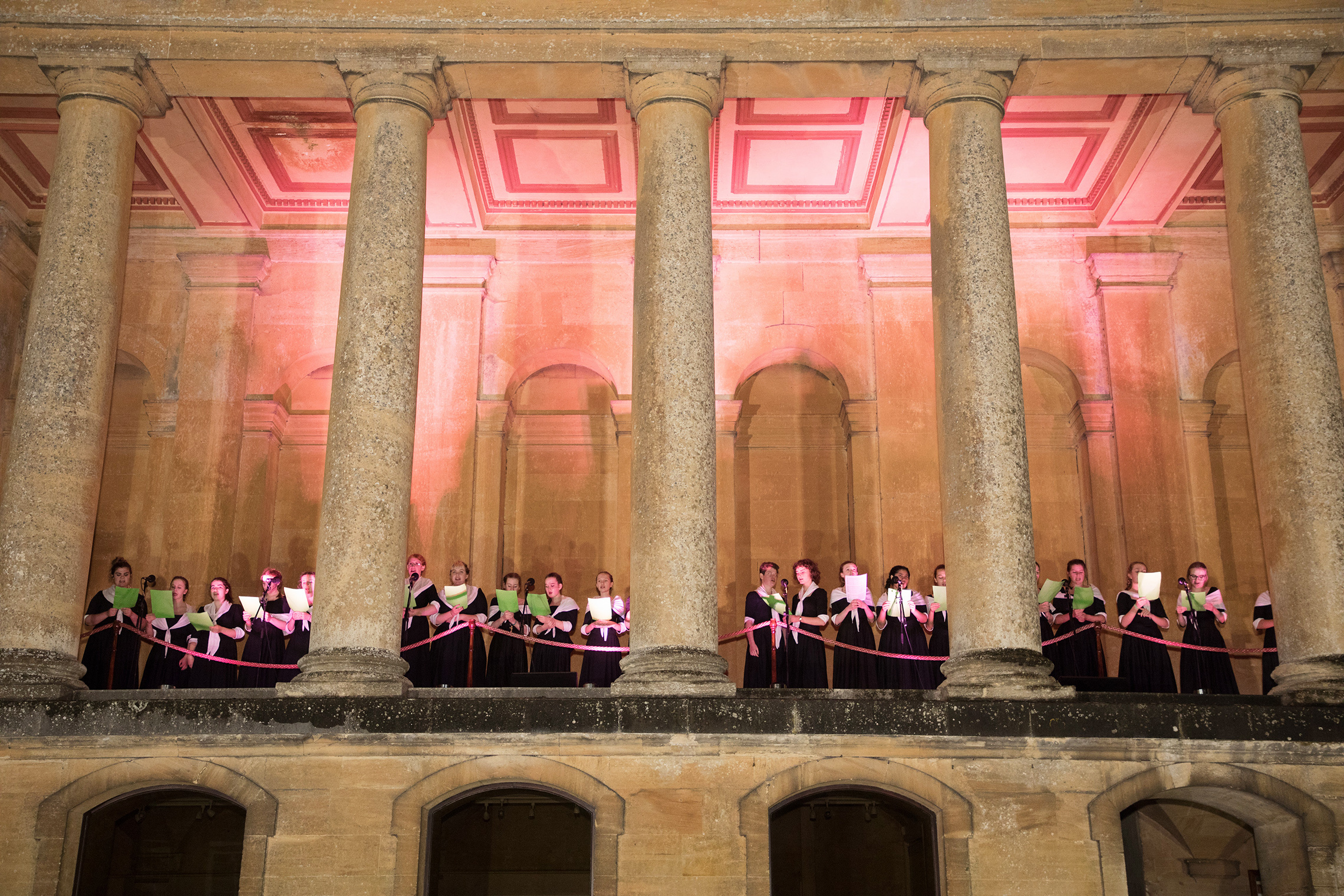
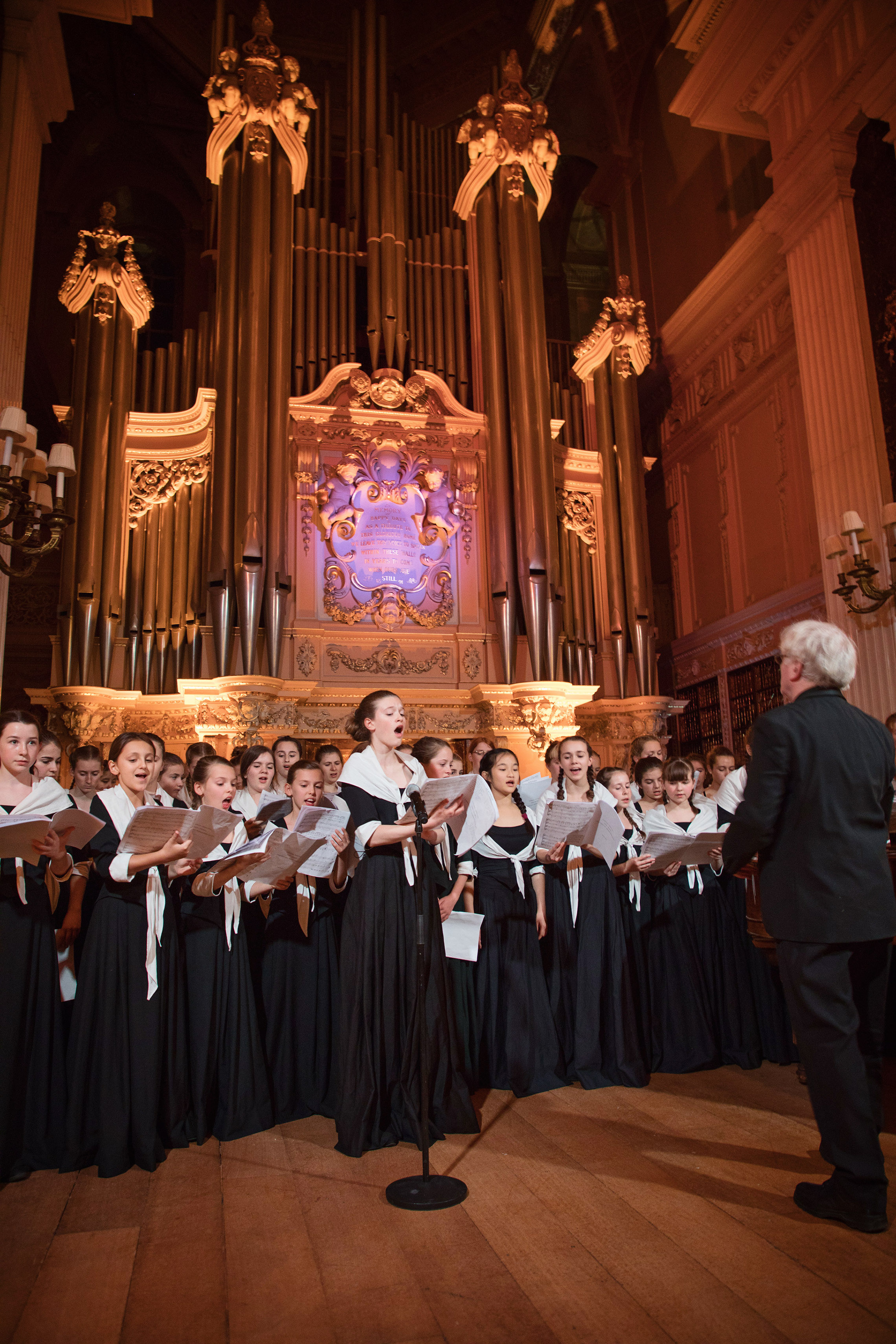
Over dinner, guests were serenaded by the Oxford Girls’ Choir. Retired General David Petraeus, former director of the CIA, discussed the special relationship between the United States and Britain. He focused on the role played by Winston Churchill, the son of an American mother, in forging a wartime alliance, through his close collaboration with President Franklin Roosevelt and General Dwight Eisenhower.

Supreme Court Justice Neil Gorsuch shared with the Marshall Scholars some warm memories of his own experiences as a Marshall Scholar at Oxford. Following dinner, the guests exited by way of the palace’s immense courtyard, where they were treated to a spectacular display of fireworks, soaring over the Oxfordshire countryside.
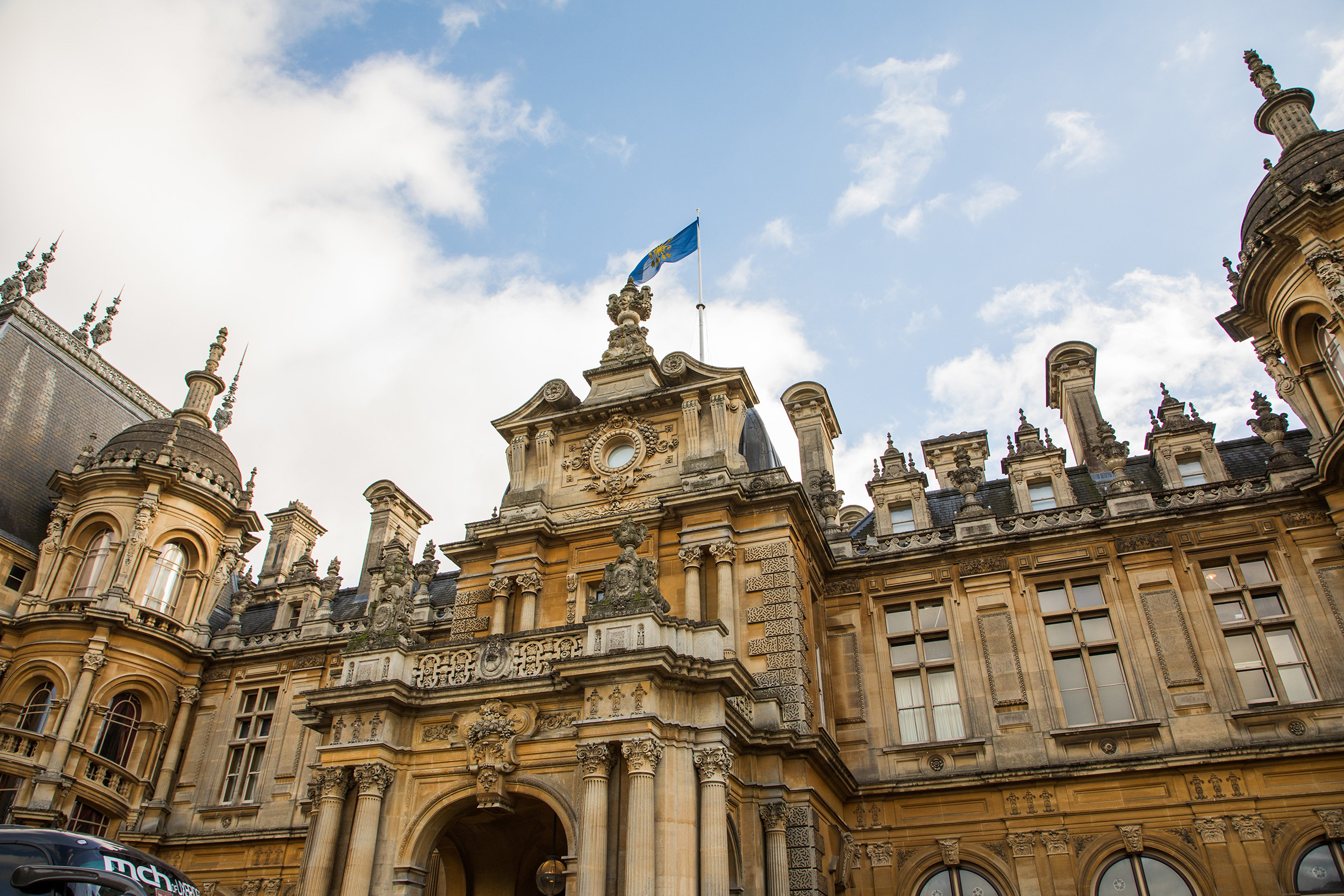
On Friday afternoon, the Academy members traveled from Cliveden to another of the historic homes of Southeast England, Waddesdon Manor, built by Baron Ferdinand de Rothschild in the style of a French chateau.
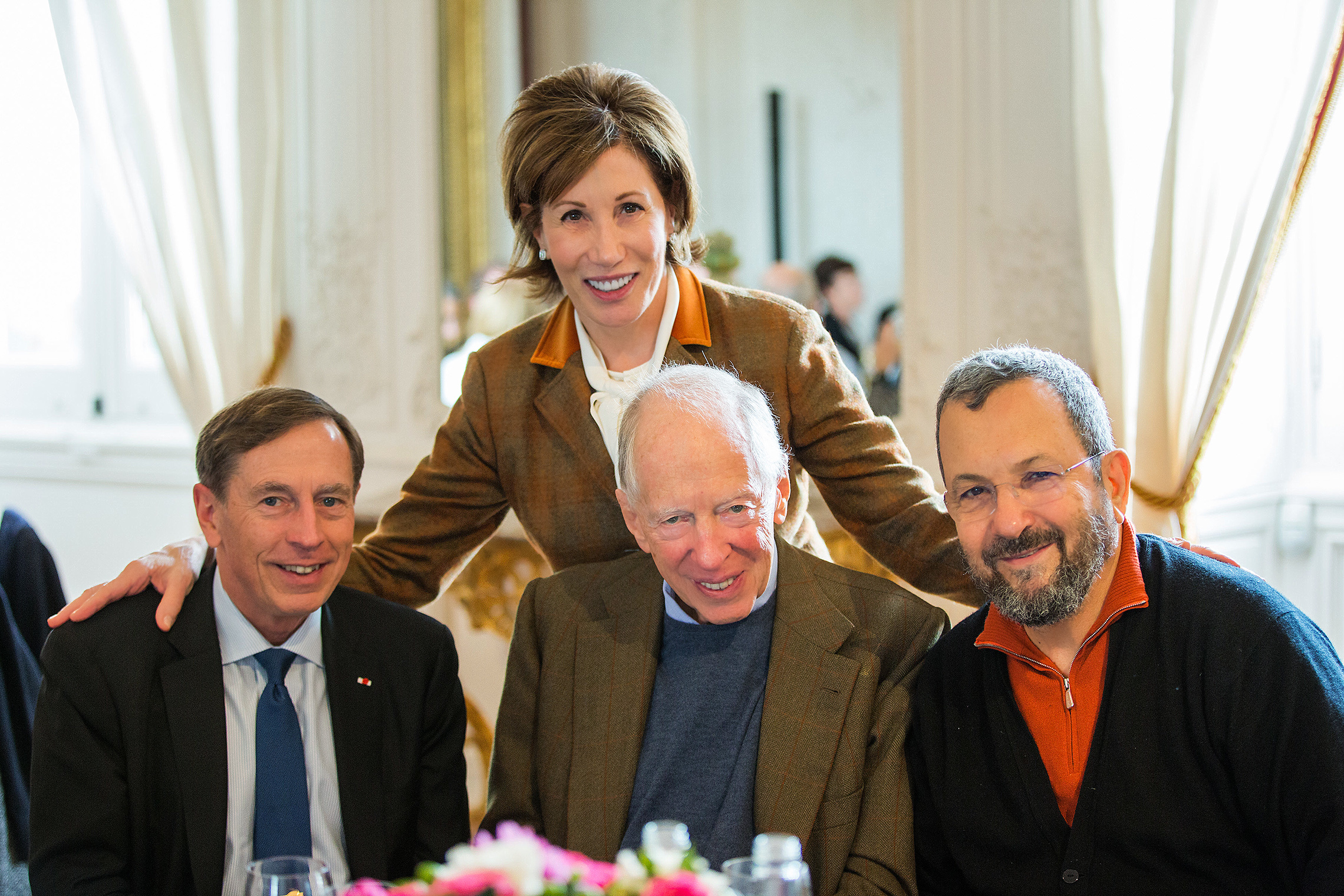
The Academy was given a private tour of the manor’s art treasures by Baron Jacob Rothschild, who hosted an intimate luncheon party in one of the manor’s exquisite drawing rooms. After lunch, Lord Rothschild took his guests for a tour of the manor’s cellar, a veritable wine museum maintained by the Rothschild family, well known for their many wine estates in France.
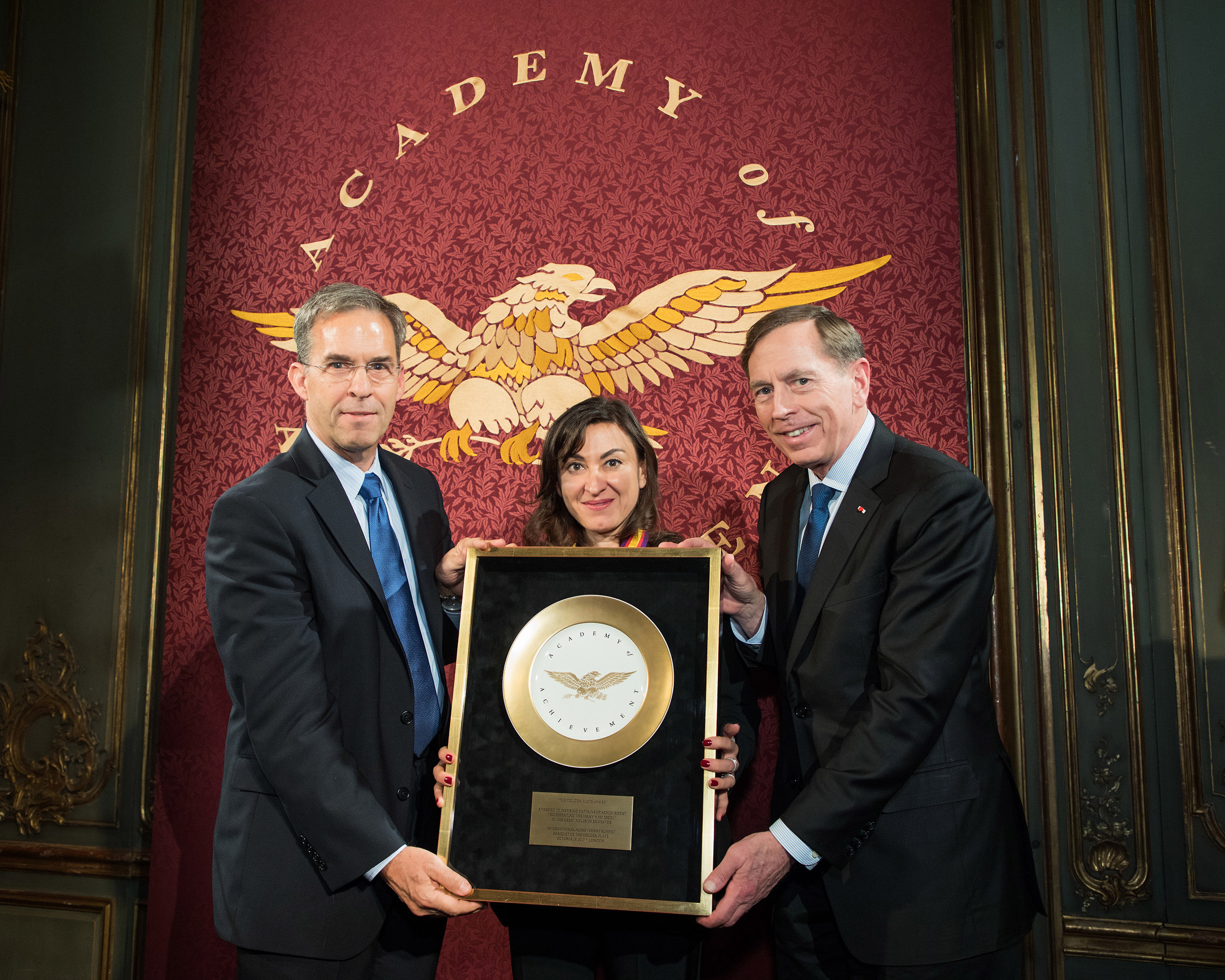
On their return to Cliveden that afternoon, the Academy members heard from the Academy’s last new honoree of 2017. The courageous photojournalist Lynsey Addario was awarded the Pulitzer Prize for The New York Times Magazine photo essay “Talibanistan.” While her stunning photographs were projected on a large video screen, she recounted the extraordinary dangers and ordeals she had endured to cover her stories, including capture and imprisonment during Libya’s civil war. General David Petraeus and Rick Atkinson presented the Academy’s Golden Plate Award to Addario following her presentation. The last speaker of the afternoon was Lord Martin Rees, the Astronomer Royal, who shared his witty and imaginative speculations about the future of such phenomena as the independent evolution of intelligent machines in outer space.
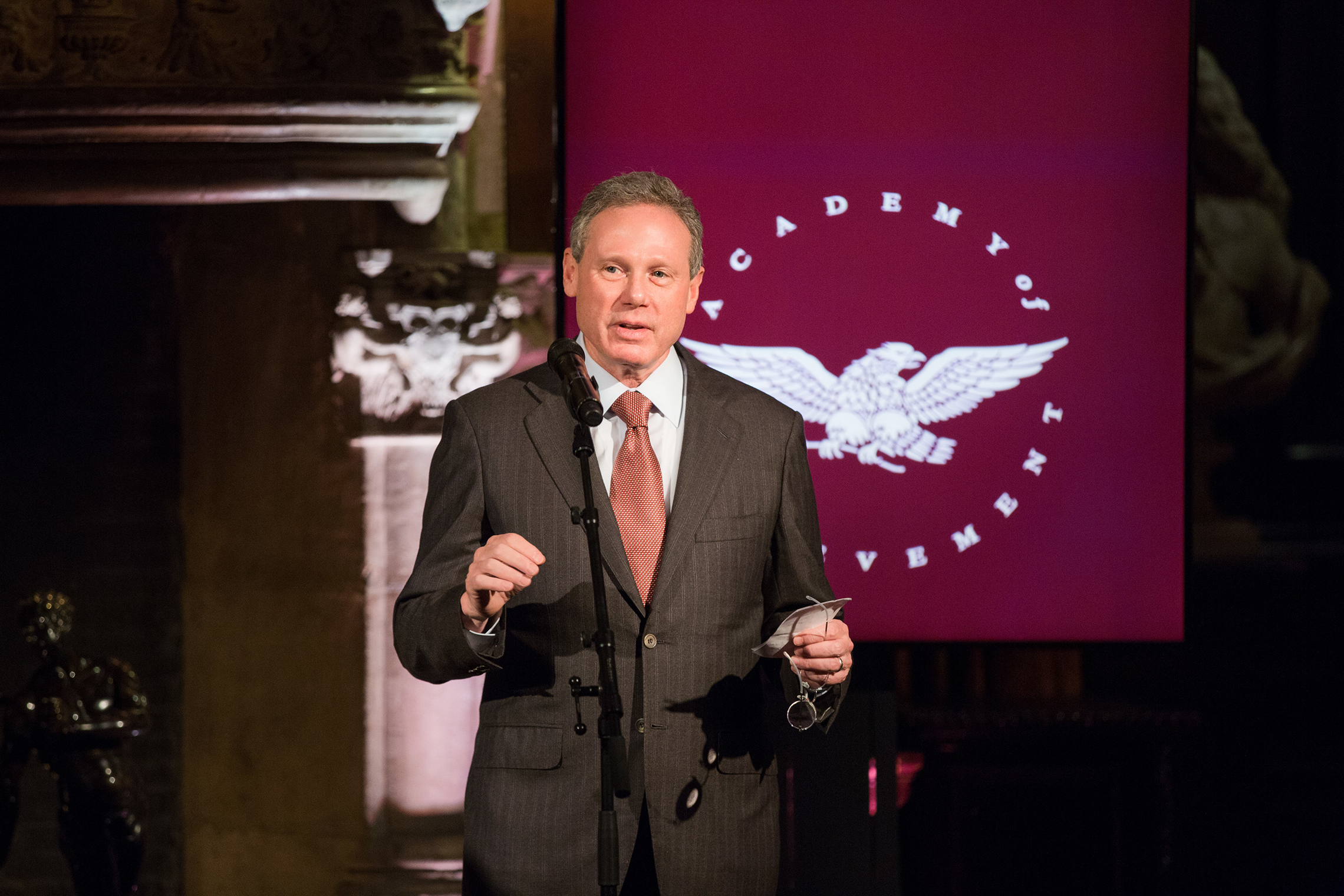
Following the last dinner at Cliveden, Academy members and guests repaired to the Great Hall, where, comfortably seated in overstuffed chairs, they enjoyed the final presentation of their stay. Academy Chairman Wayne Reynolds recounted his meeting with the late Judge Frank M. Johnson, a hero of the civil rights era. He played a short video of Judge Johnson’s interview, recorded by the Academy, and discussed plans to build a museum in Montgomery, Alabama, honoring Judge Johnson’s role in history.
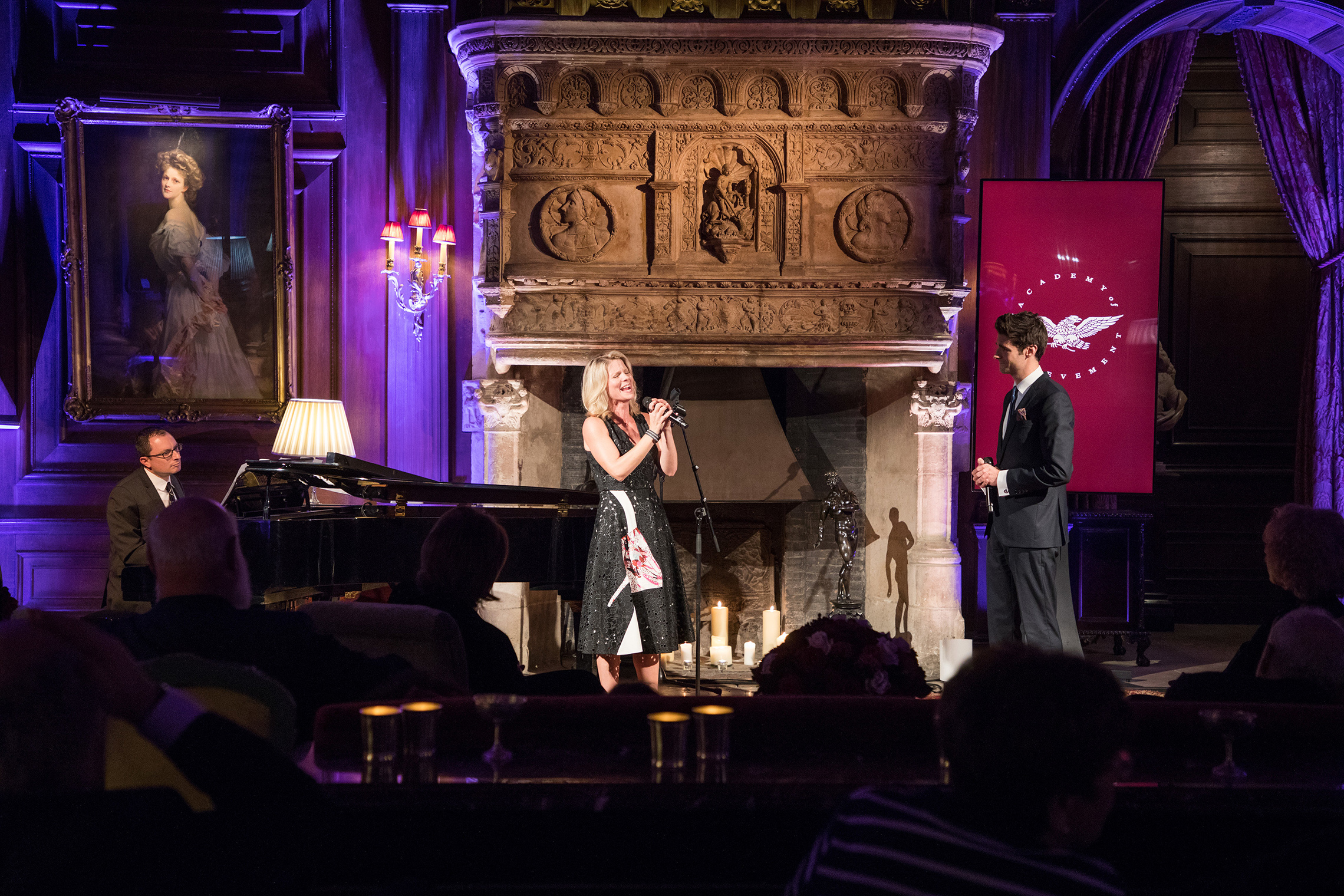
Chairman Reynolds showed a second video clip of another Academy member, author James A. Michener, describing the turning point of his life, a brush with death during World War II that motivated him to live the rest of his life “as though I were a great man.” Michener’s literary career began with his book Tales of the South Pacific, which inspired a classic Broadway musical. In 2008, Academy honoree Bartlett Sher won a Tony Award for directing an acclaimed revival of the show. After his presentation, Chairman Reynolds introduced the star of that production — Kelli O’Hara.
O’Hara confirmed her reputation as Broadway’s brightest star, performing songs from South Pacific, and from another Rodgers and Hammerstein classic, The King and I. In 2015, O’Hara won Broadway’s Tony Award for her starring performance in The King and I, also directed by Bartlett Sher. She was joined in duets by a rising star of television and Broadway, Drew Gehling. O’Hara’s infectious personality, dramatic gifts, and soaring voice captivated the audience and left the Academy members glowing and inspired to continue their impressive works in their respective careers.
For four days in London and the English countryside, exceptional men and women of many backgrounds, different nations, different generations, diverse philosophies and divergent strains of belief had celebrated our common humanity by exchanging ideas in a civilized atmosphere, without competition, envy or rancor. As Academy members return to their vocations, and the Academy’s young delegates discover their own, we hope they will carry the same generous, open-minded spirit wherever they go.