Papers by Agnese Codebo
América Crítica, 2024
In this essay, I am interested in analyzing, through an ecofeminist lens, the ways in which Boliv... more In this essay, I am interested in analyzing, through an ecofeminist lens, the ways in which Bolivian anarcho-feminist collective Mujeres Creando has used graffiti in the first decades of the 21st century to question the intimate connection that exists in Latin America between colonialism and patriarchy. Through its interventions in the streets of La Paz, Mujeres Creando aims at an epistemological decolonization that troubles the dominant symbolic order by which men have been considered superior to nature and women, and the North has been thought of as a civilizing agent of a South seen as barbaric. In this way, the Bolivian collective contributes to ecofeminism, a lively current in the contemporary Latin American debate, which reveals how the pillage of neo-extractivist capitalism affects both bodies and territories.-Ecofeminism, Mujeres Creando, grafiti, decolonial theory, depatriarchalize, decolonize.
Rassegna Iberistica, 2025
Since the economic crisis of 2001, slums have taken on a new role, becoming central spaces for Ar... more Since the economic crisis of 2001, slums have taken on a new role, becoming central spaces for Argentine cultural production. This essay, conceived as a survey, aims to analyze how certain examples of twenty-first-century slum literature propose the possibility of a slum aesthetic that highlights the productivity of these spaces. This is not achieved through their romanticization as sites of lost purity or human solidarity, but rather through an exploration of their potential as territories from which to understand the contemporary urban condition and articulate a critical perspective on the
city of Buenos Aires.

Múltiplas guerras possíveis, 2024
No texto que apresenta os relatos do seu A guerra não tem rosto de mulher, Svetlana Aleksiévitch ... more No texto que apresenta os relatos do seu A guerra não tem rosto de mulher, Svetlana Aleksiévitch descreve um pouco da sua infância em uma aldeia, com uma família determinada pela guerra, entre outras crianças cujas famílias também haviam sido implacavelmente marcadas pela guerra: "Não sabíamos como era o mundo sem guerra, o mundo da guerra era o único que conhecíamos, e as pessoas da guerra eram as únicas que conhecíamos. Até agora não conheço outro mundo, outras pessoas. Por acaso existiram em algum momento?" Aleksiévitch se refere à guerra contra os alemães, em meados do século XX, a uma guerra que se materializava no campo de batalha, com mortes e devastação. Imagem já clássica da guerra, difundida especialmente pelo cinema, o campo, as trincheiras e os bombardeios fazem parte do conhecimento popular do que seria a guerra. Mas a pergunta final de Aleksiévitch, sua dúvida sobre a existência em qualquer momento de um mundo sem guerra nos remete a uma concepção contemporânea da guerra, na qual a guerra envolve todos, soldados e civis, guerra total. No momento em que escrevemos este texto, há, pelo menos, duas guerras que tomam conta de algumas linhas, talvez meia página ou uma, de, possivelmente, todos os maiores jornais do mundo ocidental. A depender da ideologia da publicação, se condena mais ou menos um ataque, uma estratégia, o deslocamento forçado de uma população. Lamenta-se mais ou menos algumas mortes. A guerra, assim, aparece como fato corriqueiro e nos lança em um mundo de extrema vulnerabilidade. Nesse sentido, Gaza surge como uma espécie de paradigma da nossa (humana) indefensabilidade e destrutibilidade, ao mesmo tempo. Por tratar-se de território com estatuto jurídico incerto, sem exército, os ataques à Gaza desafiam a noção clássica de guerra. O que vemos acontecer ali coincide com as chamadas operações policiais no Rio de Janeiro em zonas favelizadas, dominadas-em uma lógica de guerra-pelo crime organizado. Uma porção da população se torna, então, refém da investida do braço armado do Estado, israelense ou carioca. Nosso embaraço diante deste estado provém do fato de estarmos tão próximos do mal. Aprendemos a ler quotidianamente sobre a guerra e a violência. Já sabemos identificar o som das balas de fuzis e pistolas-o escutamos enquanto dormimos e, no café da manhã, lemos nossos jornais Múltiplas guerras possíveis
REVISTA DE HUMANIDADES, 2023
Entre fines del siglo XX y principios del XXI la Argentina fue dejando de ser un país de agricult... more Entre fines del siglo XX y principios del XXI la Argentina fue dejando de ser un país de agricultura diversificada para transformarse en una potencia sojera. Las consecuencias más inmediatas de esta transición fueron el uso masivo de pesticidas, entre los que se destaca el glifosato, la contaminación de la tierra, del aire y de las aguas, la enfermedad y muerte de los habitantes y trabajadores de las zonas sojeras, la corrupción gubernamental, el ocultamiento de la verdad y el enriquecimiento de algunos. La literatura, de ficción y no ficción, se ha encargado en los últimos años de indagar y revelar los efectos nefastos del glifosato sobre el cuerpo humano y el ambiente. En la mayoría de esos textos el residuo tóxico, los desechos de agroquímicos que contaminan el ambiente y ponen en peligro las vidas de quienes los manejan, ocupan un papel central, convirtiéndose en pruebas irrefutables de la peligrosidad de la agricultura intensiva a la vez que catalizadores de las múltiples denuncias en contra de esas prácticas. En este ensayo, luego de presentar la íntima relación que se ha establecido a lo largo de los años entre los residuos y la literatura argentina, examino en específico el funcionamiento del residuo tóxico en Noxa (2016) de María Inés Krimer, una de las novelas de mayor éxito en la representación de los efectos del cultivo intensivo de la soja transgénica. Propongo en estas páginas que los residuos funcionarían no solo como entidad nociva, contaminadora del ambiente y de la salud humana, sino más bien como catalizadores de denuncia, verdad y creación de comunidad.
Between the end of the twentieth century and the beginning of the twenty-first century, Argentina ceased to be a country of diversified agriculture to become a soybean power. The most immediate consequences of this transition were the massive use of pesticides, among which glyphosate, the contamination of the environment, air and water, the illness and death of the inhabitants and workers of the soybean areas, government corruption, the concealment of truth and the enrichment of some. Literature, both fiction and non-fiction, has been in charge in recent years of investigating and revealing the harmful effects of glyphosate on the human body and the environment. In most of these texts, toxic waste –agrochemical waste that contaminates the environment and endangers the lives of those who handle it– occupies a central role, becoming an irrefutable proof of the danger of intensive agriculture as well as a catalyst of the multiple complaints against these practices. In this essay, after presenting the intimate relationship that has been established over the years between waste and Argentine literature, I specifically examine the functioning of toxic waste in Noxa (2016) by María Inés Krimer, one of the most successful novels in its representation of the effects of transgenic soybeans intensive cultivation. In what I propose in these pages, waste functions not only as a harmful entity, polluting the environment and human health, but also as a catalyst for denunciation, truth, and community creation.
Diálogos literarios, geografías afectivas: Italia-España-América Latina, 2023
Este ensayo explora el intercambio teórico en curso entre el feminismo italiano y el argentino. E... more Este ensayo explora el intercambio teórico en curso entre el feminismo italiano y el argentino. En específico, analizo cómo el co- lectivo feminista argentino contemporáneo Ni Una Menos se ha ins- pirado en las ideas de pensadoras feministas italianas como Silvia Federici y Carla Lonzi, figuras clave de las luchas de las mujeres en la década de 1970. Desde su fundación en 2015 Ni Una Menos ha catalizado con éxito, tanto en Argentina como en América Latina, los esfuerzos colectivos frente a la violencia contra las mujeres, em- pleando especialmente las redes sociales y las protestas callejeras. Al analizar las gestualidades de las protestas y las obras de Fede- rici, especialmente Caliban y la bruja: mujeres, cuerpo y acumulación primitiva (1998) en diálogo con el marco teórico de Ni Una Menos, el artículo revela las conexiones subyacentes entre los dos. Se resaltan en particular los vínculos que ambas establecen entre la base del patriarcado, la violencia de género como condición de existencia del capitalismo y la centralidad del cuerpo.
This essay explores the ongoing theoretical exchange be- tween Italian and Argentine feminism. Specifically, I analyze how the contemporary Argentine feminist collective Ni Una Menos has been inspired by Italian feminist thinkers such as Silvia Federici and Carla Lonzi, key figures in women’s struggles in the 1970s. Since its founding in 2015, Ni Una Menos has successfully catalyzed, both in Argentina, and in Latin America, collective efforts against violence on women, especially using social networks and street protests. By analyzing the gestures of the protests and the works of Federici, es- pecially Caliban and the witch: women, body and primitive accumulation (1998) in dialogue with the theoretical framework of Ni Una Menos, the article reveals the underlying connections between the two. It focuses specifically on the links that both establish between patriar- chy, gender violence as a condition of existence of capitalism, and the centrality of the body.
Journal of Latin American Cultural Studies
This article traces how poverty emerged culturally in mid-century Buenos Aires. It does so by exa... more This article traces how poverty emerged culturally in mid-century Buenos Aires. It does so by examining two contrasting models: (1) the state’s, revealed in the plans it prepared for the eradication of villas miseria (the local term for slums), (2) that of a corpus of cultural objects depicting slums between 1957 and 1963. My basic claim is that the politically motivated conceptual erasure of the slum informed its aesthetic representation. In particular, I look at Bernardo Verbitsky’s novel Villa Miseria también es América (1957), and Antonio Berni’s series of multimedia collages focused on the fictional character of Juanito Laguna (1958–1978). As my essay shows, each of these works responds to the state plans to eradicate slums. Each takes up the state’s idea of the slum as a tabula rasa, a blank slate, but inserts into this plane an excess of materiality. By looking at the shared forms of these objects, I describe how culture came to place the slum within the city’s regular grid, interrupting the linearity imagined by the state. Such a gesture will ultimately have the consequence of turning poverty into something absolutely consumable.
The Palgrave Encyclopedia of Urban Literary Studies, 2020
Latin American Literary Review, 2018
Los estudios críticos que se han dedicado a Evita son numerosos y variados, entre estos se destac... more Los estudios críticos que se han dedicado a Evita son numerosos y variados, entre estos se destacan cuatro tendencias
principales que intentan explicar la naturaleza de Eva como símbolo nacional. Aquella que lee Evita como mito (Julie Taylor), aquella
que la define como fetiche (Diana Taylor, John Kraniauskas), aquella que la ve como tótem (Susana Rosano) y por último, aquella que la
interpreta como cuerpo (Paola Cortés Rocca y Martín Kohan, Beatriz Sarlo). Sin embargo, las multiplicidades que caracterizan la Evita
nacional, o mejor, las Evitas nacionales, cuyos mecanismos se revelan sobre todo en el plano de la representación literaria, superan
esas interpretaciones. Si, por un lado, la multiplicación de Evita se ha dado por sentada, lo que queda por indagar son los dispositivos
de producción que permiten su proliferación. Cómo es que el cuerpo de Eva se multiplica y qué revelan esos desdoblamientos sobre
la relación entre relato y peronismo. En este ensayo, a través del análisis de “Evita vive” (1975), “El cadáver” (1980) y “El cadáver de la
nación” (1989) de Néstor Perlongher y Santa Evita (1995) de Tomás Eloy Martínez, textos en que la usurpación del cuerpo de la mujer
es el mecanismo disparador de la narración, propongo una modalidad para entender por qué y cómo el cuerpo de Evita prolifera. En las
dos obras el cuerpo de Eva padece una forma de sparagmos, en la medida en que es descuartizado y diseminado por todo el territorio
para ser adorado o despreciado. Al individuar el descuartizamiento como el principio de la multiplicidad de Evita, los textos de Martínez
y Perlongher revelarían la naturaleza oscura de su culto, la imposibilidad de conciliar un sentido unitario sobre lo nacional, así como las
cualidades literarias del peronismo.
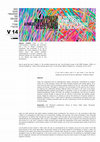
Today we understand cities as heterogeneous spaces continuously reconfigured by multiple actors, ... more Today we understand cities as heterogeneous spaces continuously reconfigured by multiple actors, be it urban planners, citizens with their everyday practices, and cultural agents. On a micro level the same could be said about specific elements of the city: monuments, buildings,
squares, and houses. This paper is inserted in this conversation on the ways the city is woven, by analyzing the relationship between different factors and actors in the work of the Italian naturalized Brazilian architect Lina Bo Bardi. In particular, I focus on her project for the SESC
Pompeia Recreational Center (1977-86), her writings on architecture, and her ties to Antonio Gramsci’s political thought to examine how her interest in both Italian and Brazilian popular houses shaped her practice as an architect as well as the entrance of vernacular elements in
Brazilian architecture. Thus, I argue that her attention to transnational vernacular forms was instrumental in creating a personal style, but also in fashioning a role for the architect as actor of social change.
A través del análisis de los textos de Enrique Gómez Carrillo y Jules Huret, viajeros que visitar... more A través del análisis de los textos de Enrique Gómez Carrillo y Jules Huret, viajeros que visitaron Argentina en ocasión de las celebraciones del Centenario de la Independencia, y de las crónicas de cuño higienista de Gabriela Laperrière de Coni, así como de los estudios más recientes de James Scobie y Jorge Liernur, este artículo propone pensar la Buenos Aires de
finales del XIX y comienzos del XX como una ciudad escenográfica. Ésta se manifestaría en la lectura en continuidad, que de ella promocionó la élite oligárquica durante la modernización
de la ciudad que, si por un lado, produjo la elegante Avenida de Mayo, por el otro, también generó las aporías de la pobreza urbana simbolizadas por el Barrio de las Ranas. Los intentos
de promocionar una visión homogénea y disciplinada de la ciudad chocarían, sin embargo, con el espacio urbano entendido como un territorio plural y en tensión continua.
Papers & Book Chapters by Agnese Codebo

Journal of Latin American Geography, 2019
This special issue centers on modern-colonial geographies in Latin America, and was co-organized ... more This special issue centers on modern-colonial geographies in Latin America, and was co-organized and co-edited by Mara Duer and Simone Vegliò. The topical and geographical focuses presented in this issue are diverse, ranging from Argentinian landfills to the emotional geographies of natural resource extraction, from the historical and cultural legacy of colonial-era mining in modern-day UNESCO World Heritage Sites to the landscapes of feminicide and memorialization in Juarez, Mexico. Common across all contributions to this special issue is a focus on decolonial literatures emerging across Latin America, scholarship whose impact increasingly resonates within geographical scholarship on/in/of Latin America. Importantly, this special issue reflects JLAG’s editorial commitment to expanding the geographical range of authors that the journal publishes, to broadening the journal’s notion of Latin America as a region, and to more deeply and systematically engaging with geographic scholarship originating in Latin America.
This issue also features a JLAG Perspectives forum on activist scholarship in Latin America. This forum is prompted by the ongoing and escalating militarization on the Mexico-U.S. border and the criminalization of humanitarian work along the same border, the recent murders of several prominent activists in Latin America, and JLAG’s evolving editorial position that these and other issues present an imperative for critically engaged scholarship (see JLAG vol. 18, no. 2, p. 5). The goal of this Perspectives forum is to feature the voices of activist-scholars working in the hemisphere as they explore the theoretical, methodological, and ethical dimensions of activist scholarship, and/or reflect on projects that they’re currently involved in. Contributions from Kate Swanson, Scott Warren, and Geoff Boyce focus on the Mexico-U.S. border, while the focus of Veronica Gago and Liz Mason-Dees centers on the feminist movement in Argentina, Manuel Bayón and Sofia Zaragocin on the work of the Colectivo de Geografía Crítica de Ecuador, and Thelma Vélez on identity, scholarship, and positionality in post-Maria Puerto Rico.
Conference Presentations by Agnese Codebo
Send us your proposals for the panel "Favelas/barriadas/villas miserias and peripheries in the co... more Send us your proposals for the panel "Favelas/barriadas/villas miserias and peripheries in the construction of urban imaginaries in Latin America," which we will coordinate at the III Congreso de la Asociación Iberoamericana de Historia Urbana, to be held in Madrid in November 2022. Attached the info about the panel in Spanish and Portuguese.
Abstracts must be sent to the emails of the two coordinators (Ana Castro/FAUUSP: [email protected] and Agnese Codebò: [email protected]) by April 20, 2022.
Up to 4 works will be selected.
In the face of profound uncertainties as to the future of planet Earth, the present historical m... more In the face of profound uncertainties as to the future of planet Earth, the present historical moment calls for revisiting the multi-layered relationships that are at the origin of socio- environmental conflicts on a local, national, and global scale. In response to some of the most pressing issues of our time, the Latin American Studies program and the Department of Spanish Language and Literatures at Villanova University invites researchers, graduate students, educators, artists, and activists to submit their proposals in English or Spanish for its conference Defending the Land: Socio-Environmental Conflicts in the Americas (April 22-23, 2022). This call plans for an in-person conference, however, if the evolution of the global health situation does not allow this face-to-face meeting, we will move to online or hybrid participation.
Books by Agnese Codebo
Pittsburgh University Press, 2024
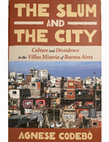
The Argentine capital is largely perceived as a middle-class space. Yet in reality, urban poverty... more The Argentine capital is largely perceived as a middle-class space. Yet in reality, urban poverty and precarious settlements are defining features of the city. Agnese Codebò investigates how slums have produced culture as well as their representation in literature and the visual arts from the 1950s to the present. Looking at government-led urban projects, as well as novels, artworks, films, militant magazines, poems, and music, she tells the story of how villas miseria have mattered culturally and socially as spaces that produce new aesthetics, cultural trends, and social alliances, while offering a vantage point to understand the city and its problems. Slums represent a heterogeneous urban space, and Codebò makes the case for their relevance in Argentine culture, demonstrates the need to rethink spaces of production, and develops a new premise for a decolonial approach to Argentine cultural production.
Alessandria: Puntoacapo, 2022
Il ruolo svolto dal giornalismo durante l’ultima dittatura militare in Argentina è ancora oggi ar... more Il ruolo svolto dal giornalismo durante l’ultima dittatura militare in Argentina è ancora oggi argomento di dibattito. Silenzi obbligati o intenzionali, giornalisti esiliati o scomparsi nel nulla, mezzi di comunicazione complici del regime, censura, liste nere: tutte situazioni che i media, tra il 1976 e il 1983, riportarono con impressionante frequenza. Il giornalismo argentino adottò all’epoca diverse strategie: il silenzio provocato dalla paura andò spesso di pari passo con atteggiamenti nettamente di parte, volti a giustificare le azioni della Giunta Militare. In questa cornice, nel giugno del 1978, fece la sua comparsa la rivista «Humor», diretta dal disegnatore Andrés Cascioli. A partire dall’irruzione di «Humor» sulla scena pubblica, l’umorismo politico in Argentina adottò un atteggiamento intransigente, lontano da ogni concessione o compiacenza nei confronti del potere. Grazie a una continua sfida alla censura instaurata dal regime, la rivista rappresentò un esempio di coraggio e di onestà intellettuale che la distinse da molte pubblicazioni che circolavano all’epoca: esercitò perciò un’influenza decisiva su molti prodotti giornalistici che apparvero in seguito. Questo libro, frutto di un lavoro di ricerca e di una lunga attività di reperimento sul campo delle informazioni, offre un contributo originale su un argomento che in Italia non è ancora stato oggetto di studi specifici. In esso si segue una duplice linea d’indagine. Da una parte, si tratta di capire come «Humor» sia riuscita a promuovere un pensiero di opposizione e a creare uno spazio in cui fosse possibile esercitare la libertà d’opinione. Dall’altra, si punta a comprendere in che modo la rivista sia riuscita ad eludere l’intransigente censura del regime e a sopravvivere durante gli anni della dittatura.
The role played by journalism during the last military dictatorship in Argentina is still a topic of debate today. Forced or intentional silences, journalists exiled or disappeared into thin air, media complicit with the regime, censorship, blacklists: all situations that the media, between 1976 and 1983, reported with impressive frequency. Argentine journalism adopted different strategies at the time: silence caused by fear often went hand in hand with clearly partisan attitudes, aimed at justifying the actions of the Military Junta. In this context, in June 1978, the magazine «Humor», directed by the designer Andrés Cascioli, made its appearance. Starting from the irruption of «Humor» on the public scene, political humor in Argentina adopted an intransigent attitude, far from any concession or complacency towards power. Thanks to a continuous challenge to the censorship established by the regime, the magazine represented an example of courage and intellectual honesty that distinguished it from many publications circulating at the time: it therefore exerted a decisive influence on many journalistic products that appeared later. This book follows a dual line of investigation. It attempts to understand how «Humor» managed to promote counter information and create a space in which it was possible to exercise freedom of opinion, while examining how the magazine managed to evade the regime's intransigent censorship and survive during the years of the dictatorship.



Uploads
Papers by Agnese Codebo
city of Buenos Aires.
Between the end of the twentieth century and the beginning of the twenty-first century, Argentina ceased to be a country of diversified agriculture to become a soybean power. The most immediate consequences of this transition were the massive use of pesticides, among which glyphosate, the contamination of the environment, air and water, the illness and death of the inhabitants and workers of the soybean areas, government corruption, the concealment of truth and the enrichment of some. Literature, both fiction and non-fiction, has been in charge in recent years of investigating and revealing the harmful effects of glyphosate on the human body and the environment. In most of these texts, toxic waste –agrochemical waste that contaminates the environment and endangers the lives of those who handle it– occupies a central role, becoming an irrefutable proof of the danger of intensive agriculture as well as a catalyst of the multiple complaints against these practices. In this essay, after presenting the intimate relationship that has been established over the years between waste and Argentine literature, I specifically examine the functioning of toxic waste in Noxa (2016) by María Inés Krimer, one of the most successful novels in its representation of the effects of transgenic soybeans intensive cultivation. In what I propose in these pages, waste functions not only as a harmful entity, polluting the environment and human health, but also as a catalyst for denunciation, truth, and community creation.
This essay explores the ongoing theoretical exchange be- tween Italian and Argentine feminism. Specifically, I analyze how the contemporary Argentine feminist collective Ni Una Menos has been inspired by Italian feminist thinkers such as Silvia Federici and Carla Lonzi, key figures in women’s struggles in the 1970s. Since its founding in 2015, Ni Una Menos has successfully catalyzed, both in Argentina, and in Latin America, collective efforts against violence on women, especially using social networks and street protests. By analyzing the gestures of the protests and the works of Federici, es- pecially Caliban and the witch: women, body and primitive accumulation (1998) in dialogue with the theoretical framework of Ni Una Menos, the article reveals the underlying connections between the two. It focuses specifically on the links that both establish between patriar- chy, gender violence as a condition of existence of capitalism, and the centrality of the body.
principales que intentan explicar la naturaleza de Eva como símbolo nacional. Aquella que lee Evita como mito (Julie Taylor), aquella
que la define como fetiche (Diana Taylor, John Kraniauskas), aquella que la ve como tótem (Susana Rosano) y por último, aquella que la
interpreta como cuerpo (Paola Cortés Rocca y Martín Kohan, Beatriz Sarlo). Sin embargo, las multiplicidades que caracterizan la Evita
nacional, o mejor, las Evitas nacionales, cuyos mecanismos se revelan sobre todo en el plano de la representación literaria, superan
esas interpretaciones. Si, por un lado, la multiplicación de Evita se ha dado por sentada, lo que queda por indagar son los dispositivos
de producción que permiten su proliferación. Cómo es que el cuerpo de Eva se multiplica y qué revelan esos desdoblamientos sobre
la relación entre relato y peronismo. En este ensayo, a través del análisis de “Evita vive” (1975), “El cadáver” (1980) y “El cadáver de la
nación” (1989) de Néstor Perlongher y Santa Evita (1995) de Tomás Eloy Martínez, textos en que la usurpación del cuerpo de la mujer
es el mecanismo disparador de la narración, propongo una modalidad para entender por qué y cómo el cuerpo de Evita prolifera. En las
dos obras el cuerpo de Eva padece una forma de sparagmos, en la medida en que es descuartizado y diseminado por todo el territorio
para ser adorado o despreciado. Al individuar el descuartizamiento como el principio de la multiplicidad de Evita, los textos de Martínez
y Perlongher revelarían la naturaleza oscura de su culto, la imposibilidad de conciliar un sentido unitario sobre lo nacional, así como las
cualidades literarias del peronismo.
squares, and houses. This paper is inserted in this conversation on the ways the city is woven, by analyzing the relationship between different factors and actors in the work of the Italian naturalized Brazilian architect Lina Bo Bardi. In particular, I focus on her project for the SESC
Pompeia Recreational Center (1977-86), her writings on architecture, and her ties to Antonio Gramsci’s political thought to examine how her interest in both Italian and Brazilian popular houses shaped her practice as an architect as well as the entrance of vernacular elements in
Brazilian architecture. Thus, I argue that her attention to transnational vernacular forms was instrumental in creating a personal style, but also in fashioning a role for the architect as actor of social change.
finales del XIX y comienzos del XX como una ciudad escenográfica. Ésta se manifestaría en la lectura en continuidad, que de ella promocionó la élite oligárquica durante la modernización
de la ciudad que, si por un lado, produjo la elegante Avenida de Mayo, por el otro, también generó las aporías de la pobreza urbana simbolizadas por el Barrio de las Ranas. Los intentos
de promocionar una visión homogénea y disciplinada de la ciudad chocarían, sin embargo, con el espacio urbano entendido como un territorio plural y en tensión continua.
Papers & Book Chapters by Agnese Codebo
This issue also features a JLAG Perspectives forum on activist scholarship in Latin America. This forum is prompted by the ongoing and escalating militarization on the Mexico-U.S. border and the criminalization of humanitarian work along the same border, the recent murders of several prominent activists in Latin America, and JLAG’s evolving editorial position that these and other issues present an imperative for critically engaged scholarship (see JLAG vol. 18, no. 2, p. 5). The goal of this Perspectives forum is to feature the voices of activist-scholars working in the hemisphere as they explore the theoretical, methodological, and ethical dimensions of activist scholarship, and/or reflect on projects that they’re currently involved in. Contributions from Kate Swanson, Scott Warren, and Geoff Boyce focus on the Mexico-U.S. border, while the focus of Veronica Gago and Liz Mason-Dees centers on the feminist movement in Argentina, Manuel Bayón and Sofia Zaragocin on the work of the Colectivo de Geografía Crítica de Ecuador, and Thelma Vélez on identity, scholarship, and positionality in post-Maria Puerto Rico.
Conference Presentations by Agnese Codebo
Abstracts must be sent to the emails of the two coordinators (Ana Castro/FAUUSP: [email protected] and Agnese Codebò: [email protected]) by April 20, 2022.
Up to 4 works will be selected.
Books by Agnese Codebo
The role played by journalism during the last military dictatorship in Argentina is still a topic of debate today. Forced or intentional silences, journalists exiled or disappeared into thin air, media complicit with the regime, censorship, blacklists: all situations that the media, between 1976 and 1983, reported with impressive frequency. Argentine journalism adopted different strategies at the time: silence caused by fear often went hand in hand with clearly partisan attitudes, aimed at justifying the actions of the Military Junta. In this context, in June 1978, the magazine «Humor», directed by the designer Andrés Cascioli, made its appearance. Starting from the irruption of «Humor» on the public scene, political humor in Argentina adopted an intransigent attitude, far from any concession or complacency towards power. Thanks to a continuous challenge to the censorship established by the regime, the magazine represented an example of courage and intellectual honesty that distinguished it from many publications circulating at the time: it therefore exerted a decisive influence on many journalistic products that appeared later. This book follows a dual line of investigation. It attempts to understand how «Humor» managed to promote counter information and create a space in which it was possible to exercise freedom of opinion, while examining how the magazine managed to evade the regime's intransigent censorship and survive during the years of the dictatorship.