Books by Albrecht Diem
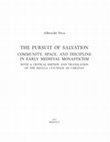
Turnhout: Brepols (Disciplina Monastica, vol. 13), 2021
This book is published with open access:
https://www.brepolsonline.net/action/showBook?doi=10.14... more This book is published with open access:
https://www.brepolsonline.net/action/showBook?doi=10.1484/M.DM-EB.5.120300
A history of the monastic pursuit of eternal salvation in the early medieval West, revolving around a seventh-century monastic rule for nuns, the Regula cuiusdam ad uirgines ("Someone’s Rule for Virgins")
The seventh-century Regula cuiusdam ad uirgines (Someone’s Rule for Virgins), which was most likely written by Jonas of Bobbio, the hagiographer of the Irish monk Columbanus, forms an ideal point of departure for writing a new history of the emergence of Western monasticism understood as a history of the individual and collective attempt to pursue eternal salvation.
The book provides a critical edition and translation of the Regula cuiusdam ad uirgines and a roadmap for such a new history revolving around various aspects of monastic discipline, such as the agency of the community, the role of enclosure, authority and obedience, space and boundaries, confession and penance, sleep and silence, excommunication and expulsion.
Table of Contents
Summary
The book consists of two sections. The first is a critical edition and translation of the Regula cuiusdam ad uirgines, a seventh-century Frankish monastic rule for nuns, along with the short treatise De accedendo ad Deum, which most likely formed a part of the Regula cuiusdam ad uirgines.
The second section is a study on the transformations and diversification of monastic theology, concepts of communal life and monastic discipline in the early medieval period. It revolves around the Regula cuisudam ad uirgines in its historical and intertextual context.
The study is divided four parts that are related to the four key words of the title of the book (Community, Space, Discipline, and Salvation). Each part consists of a chapter that makes an argument about the place of the Regula cuiusdam ad uirgines in intertextual contexts and a chapter that applies these arguments in a historical inquiry.
Introduction
Section I: Edition and Translation of the Regua cuiusdam ad uirgines
Section II: Study
Part I: Community
revolves around the question to what extent the monastic community can serve as an agent of the collective and individual pursuit of salvation
Chapter 1: Quidam pater – quaedam mater? The Regula cuiusdam ad uirgines and its author
provides a survey of the monastic milieu in which the Regula cuiusdam ad uirgines was written, discusses potential authors and stakeholders in the monastic foundation that may have been addressed by the Rule and shows on the basis of semantic and stylistic similarities and shared content and ideas that Jonas of Bobbio, the author of the Vita Columbani, is to be considered the author of the Regula cuiusdam ad uirgines as well.
Chapter 2: The dying nuns of Faremoutiers: the regula in action
argues that Jonas of Bobbio’s description of the deaths of the nuns of Faremoutiers, which is a part of Book 2 of his Vita Columbani, and the Regula cuiusdam ad uirgines represent the same monastic program, once presented as a "narrated rule", once as a normative text. The Faremoutiers episodes are closely modelled after Book 4 of the Dialogi of Gregory the Great and can be read as a critical response to Gregory’s eschatology and his notion of pursuing salvation by living a virtuous life. After having fleshed out the parallels and differences between the Dialogi and the Faremoutiers miracles, the chapter analyzes each episode of the Faremoutiers miracles, showing that Jonas wrote his monastic program in a highly sophisticated manner into stories describing the deaths occurring in the founding generation of nuns in Faremoutiers – deaths that were most likely still remembered by the primary audience of the Vita Columbani.
Part II: Space
discusses the role of space and boundaries for the monastic pursuit of salvation and explores the origins of the medieval cloister
Chapter 3 The Regula cuiusdam ad uirgines, a supplement to Caesarius’ Rule for Nuns?
compares the provisions of Caesarius of Arles’ Rule for Nuns with the Regula cuisudam ad uirgines and argues that Jonas wrote his Rule as an expansion and revision of Caesarius work: an "early medieval" update of a "late antique" monastic program, as it were.
Chapter 4: Enclosure re-opened: Caesarius, Jonas, and the invention of sacred space
discusses the evolution of Caesarius of Arles’ notion of enclosure as salvific instrument and then shows how Jonas of Bobbio tried to face the aporias of Caeasarius’ theology of enclosure by expanding it towards a system of total control of all physical, social and corporeal boundaries and the implementation of various enclosures.
Part III: Discipline provides a historical survey of the evolution of various aspects of monastic discipline in early medieval monastic rules leading to the Regula cuiusdam ad uirgines.
Chapter 5: The Regula Benedicti in seventh-century Francia
explores the role of the Regula Benedicti in Frankish monasticism in the aftermath of Columbanus and shows how Jonas used and revised the Regula Benedicti and refuted some of his main theological premises.
Chapter 6: The Regula cuiusdam ad uirgines and its context
describes the history of the topics addressed in each chapter of the Regula cuiusdam ad uirgines and provides a detailed commentary to the Rule itself, showing how Jonas rewrote the Regula Benedicti. I discuss every chapter of the Rule but put a special emphasis on the following topics: abbatial authority, hierarchy, boundaries, love, confession, silence, work, sleep, excommunication, and family ties.
Part IV: Salvation
focusses on the short treatise De accedendo ad Deum which provides a unique theological rationale why monastic discipline enables monks and nuns to pray effectively and to attain eternal salvation.
Chapter 7: De accedendo ad Deum – a lost chapter of the Regula cuiusdam ad uirgines?
shows that De accedendo was most likely a lost chapter of the Regula cuiusdam ad uirgines and thus written by Jonas of Bobbio as well.
Chapter 8: Prompto corde orandum: the theological program of De accedendo
analyzes the theological argument that monastic discipline enable a nun or monk to approach God through prayer, which forms one of the most sophisticated early medieval responses to the challenge of the doctrine of prevenient grace and the "semi-Pelagian" debate. De accedendo essentially explains how the monastic pursuit of salvation works.

This book is a study and German translation of three 7th-century monastic rules published after t... more This book is a study and German translation of three 7th-century monastic rules published after the time of Columbanus: the Regula cuiusdam patris, Regula cuiusdam ad virgines and the treatise De accedendo ad Deum. In the introduction I argue that all three texts assert different claims to define the heritage of the Irish monk and monastic founder Columbanus, and give different responses to the theological and practical challenges Columbanian monasticism faced after his death in 615. The Regula cuiusdam patris can be read as an angry polemic against the course Columbanian monasticism took, and might be associated with Agrestius, one of the antagonists of Columbanus’ successor Eusthasius of Luxeuil. The Regula cuiusdam ad virgines was probably written by Jonas of Bobbio as a counterpart to his Life of Columbanus. Both texts together form the program of Columbanian (or Hiberno-Frankish) monasticism as propagated by Jonas. De accedendo ad Deum may have originally been a chapter of the Regula cuiusdam ad virgines. As such it would form the theological core of the rule. The text provides a highly elaborate rationale for why and how monastic discipline enables a community to pray effectively for forgiveness of sins, to perform intercessory prayer and to attain salvation.
Edited Volume by Albrecht Diem
This volume brings together contributions of teachers, peers, friends and students of Janneke Raa... more This volume brings together contributions of teachers, peers, friends and students of Janneke Raaijmakers, who died in 2021 at age 48, to honour her life and academic accomplishments. Janneke Raaijmakers was an eminent early medieval scholar who studied the history of religious communities, the cult of saints, the veneration of relics and material culture particularly in the Carolingian world. Almost all chapters engage with different aspects of Janneke Raaijmakers’s research. The book is divided in four thematic sections: Saints, Relics, Community, and Memory.
Articles / Book chapters by Albrecht Diem
Otmars Welten. St. Gallen und das europäische Mönchtum vom 7. bis zum 9. Jahrhundert, 2025
Diem, Albrecht.Otmar on Trial. Walahfrid Strabo’s Defensio Otmari." In Otmars Welten. St. Gallen ... more Diem, Albrecht.Otmar on Trial. Walahfrid Strabo’s Defensio Otmari." In Otmars Welten. St. Gallen und das europäische Mönchtum vom 7. bis zum 9. Jahrhundert, edited by Sebastian Scholz, Sabrina Vogt, and
Gordon Blennemann, 145-173. Cologne: Böhlau, 2025. https://doi.org/10.7788/9783412532284.145.
This chapter reevaluates Walahfrid Strabo’s Vita of Otmar (d. 759), the founder of the Monastery of St. Gallen, focusing on its description of the trial that led to Otmar’s deposition and imprisonment. It argues that Walahfrid’s aim was not primarily to produce a text that established the cult of a foundation saint but rather a “Defensio Otmari” that engaged with the accusations of sexual misconduct that were still part of the collective memory of the community of St. Gallen. Otmar was – reluctantly – established as a founding saint of St. Gallen only two generations after the production of the Vita Otmari.
I place the trial in the context of contemporary legislation on monastic reform and clerical and monastic purity and show that Walahfrid’s description entirely lined up with the emerging monastic reform program and its normative basis.
Moreover, Otmar’s trial gives access to the networks of power in which St. Gallen was situated and the different stakeholders that tried to get control over the monastery, its wealth and its mode of living: the Carolingian rulers and their local representatives, local aristocratic families, donors, and members of the monastic community. Lantpert, whom Walahfrid vilified as one of the accusers of Otmar can probably be identified with Landbert, one of the most important donors of the monastery. His and his mother’s donations laid the basis for St. Gallen’s future wealth.
The Versus Winitharii, a sermon that was composed soon after Otmar’s deposition, most likely addressed its fallout on the community and the necessity to establish a proper vita regularis in St. Gallen. Reading the Vita Otmari along with the Versus Winitharii enhances our understanding of the process of turning the Regula Benedicti into the guiding monastic norm as part of the Carolingian monastic reform program.
Otmars Welten. St. Gallen und das europäische Mönchtum vom 7. bis zum 9. Jahrhundert/The Many Worlds of Otmar. St. Gall and European Monasticism from the 7th to the 9th Century, 2025
Van der Meer, Matthieu, and Albrecht Diem. "Walahfrid Strabo, Vita Otmari — The Life of Otmar: Tr... more Van der Meer, Matthieu, and Albrecht Diem. "Walahfrid Strabo, Vita Otmari — The Life of Otmar: Translation and Annotation." In Otmars Welten. St. Gallen und das europäische Mönchtum vom 7. bis zum 9. Jahrhundert/The Many Worlds of Otmar. St. Gall and European Monasticism from the 7th to the 9th Century, edited by Sebastian Scholz, Sabrina Vogt, and Gordon Blennemann, 381-407. Cologne: Böhlau, 2025. https://doi.org/10.7788/9783412532284.381.
Latin text and translation of the Vita Otmari/Life of Otmar, written by Walahfrid Strabo
Saints, Relics and Communities in the Early Medieval World – In Memory of Janneke Raaijmakers, 2025
This chapter explores the interplay between theology and concepts of community in sixth-century G... more This chapter explores the interplay between theology and concepts of community in sixth-century Gaul – a post-Roman world that was in the process of inventing itself. The Codex Regularum, the most important collection of Latin monastic rules, which was compiled by Benedict of Aniane in the early ninth century as part of his efforts to promote the Regula Benedicti, contains a number of rules that were produced in southern Gaul more than three centuries earlier: the rules of Caesarius of Arles (d. 542), Aurelianus of Arles (d. 551), and Ferriolus of Uzès (d. ca 573), and the Regula Tarnantensis, all of which are intertextually tied together. Comparing them and reading them as programmatic and theological texts rather than simply as collections of monastic norms show that they form distinct contributions to a textual debate about the purpose of monastic life and the nature of monastic discipline. Each author had a different kind of monastery in mind when he wrote his rule. Caesarius emphasized in his Rule for Monks the necessity of perseverance in a life-long individual battle. His Rule for Nuns made the monastic space and strict enclosure of the community the main agents of salvation. Aurelianus defined monastic life as submission under a holy rule and the holy abbot/abbess. The author of the Regula Tarnantensis conceptualized the monas- tery as a house owned by God and turned the monks into a community of fearful slaves. Ferriolus understood monastic life as the implementation of the precepts of Christ and the Apostles (especially Paul) to the community of the first Christians.
Regula cuiusdam ad virgines (Jonas of Bobbio): audio version, spoken by Matthieu van der Meer (open access)
The Pursuit of Salvation, 2021
SVMMA. Revista de Cultures Medievals, 2022
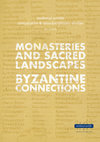
This contribution proposes different notions of "monastic landscapes" (geographic, political, tex... more This contribution proposes different notions of "monastic landscapes" (geographic, political, textual, economic, spiritual) and discusses whether applying them to the monastic movement allegedly initiated by Columbanus may help us to refine or deconstruct the concept of "Columbanian monasticism." Comparing evidence on monastic life in Gregory of Tours' hagiographic and historiographic works with the depiction of monastic life in Jonas of Bobbio's Vita Columbani shows that we can indeed identify a shift from a "landscape with monasteries" in sixth-century Merovingian Francia to a politically integrated "monastic landscape" in the seventh century. However, this does not mean that the fundamental shift was necessarily the result of the activities of the Irish monk Columbanus. An investigation of Jonas' depiction of the spiritual and physical landscape around Columbanus' main foundation Luxeuil shows the grade of continuity between monastic foundations in Gaul before Columbanus and the alleged center of a new "Columbanian" monastic movement.
Monastic Communities and Canonical Clergy in the Carolingian World. Categorizing the Church, 2022
in: Rutger Kramer, Emilie Kurdziel, and Graeme Ward (eds.), Monastic Communities and Canonical Cl... more in: Rutger Kramer, Emilie Kurdziel, and Graeme Ward (eds.), Monastic Communities and Canonical Clergy in the Carolingian World. Categorizing the Church, Turnhout: Brepols 2022, pp. 59-97
The article analyzes the Memoriale qualiter, a early ninth-century customary that was disseminated in the context of the Carolingian monastic reforms. The work is a hybrid of two texts that were written independently from each other: an outline of daily liturgical activities outside the Hours that focusses on awakening, daily confessions, meals, and going to sleep, and a sequence of short precepts based on the Regula Benedicti. The first text contains various allusions to the seventh-century Regula cuiusdam ad uirgines and documents the impact of “Columbanian” monasticism on Carolingian reform discourse. It may originally have been written for a community of nuns and turned into a reform document afterwards.
The Memoriale qualiter argues that everything a member of a monastic community pertains to the opus dei and needs to be disciplined as such. This leads to a strict choreography of movements and bodily expressions, a strict discipline of one’s voice, and a procedure of permanent confession and mutual intercessory prayer – key ideas of the Regula cuiusdam ad uirgines. I compare the provisions on monastic confession in the Memoriale qualiter with other Carolingian texts on confession and show that neither the practice nor the scope and theology of confession has been unified and standardized in the Carolingian world.
Pakistan Journal of Historical Studies, 2020
Early Mediaeval monastic rules did not only provide outlines for organizing communities, behavio... more Early Mediaeval monastic rules did not only provide outlines for organizing communities, behavioural norms and disciplinary measures but also aimed at controlling, repressing, and fostering emotions. They developed distinct strategies of emotional discipline based on different notions of the nature of emotions and their impact on the pursuit of salvation. I compare the emotional disciplines of three monastic rules: the Rule of Benedict, which became the guiding norm of Mediaeval monastic life; Caesarius of Arles’ Rule for Nuns, the oldest monastic rule written for a female community; and the Regula cuiusdam ad virgines, which responded to Benedict’s and Caesarius’ rules. Benedict’s emotional discipline centered on instilling fear and love and focused on repressing emotions that were harmful to the community and on fostering the motivation to submit to monastic discipline. Caesarius is primarily focused on a permanent spatial separation from the outside world and expected that enclosure and submission to the Rule made negative emotions irrelevant. The author of the Regula cuiusdam ad virgines considered emotions, rather than acts, the ultimate benchmark for attaining salvation and developed a disciplinary program that combined elements of Caesarius’ and Benedict’s rules with an elaborate system of incitement, surveillance and constant disclosure.
The Cambridge History of Medieval Monasticism in the Latin West, 2020
Albrecht Diem and Claudia Rapp, ‘The Monastic Laboratory: Perspectives of Research in Late Antiqu... more Albrecht Diem and Claudia Rapp, ‘The Monastic Laboratory: Perspectives of Research in Late Antique and Early Medieval Monasticism’, in: Alison Beach and Isabelle Cochelin (eds.), The Cambridge History of Medieval Monasticism in the Latin West, vol. 1, Cambridge: Cambridge University Press 2020, pp. 19-39.
Please contact me if you are interested in this text: [email protected]
This chapter provides a roadmap for new approaches to the history of early medieval monasticism (or rather of monasticisms) beyond the traditional narrative that starts in the Egyptian desert and culminates in the Carolingian monastic reforms in the West or the foundation of the Great Lavra in the East.
Instead of assuming that the late antique world created a largely stable monastic ideal revolving around a dichotomy of eremitic and coenobitic monasticism and the imperative of a vita regularis, monasticism should be viewed as a long-term experiment to shape ideal religious communities. These communities faced the challenge to develop a theological basis that did not cross doctrinal boundaries and to shape internal structures, disciplinary systems and economic models that allowed them to function perpetually and to gain them a place and role within the changing societal structures of the late antique and post-Roman world.
The result of these experiments was a broad diversity of often competing forms of communal life. Most sources establish a rhetoric of harmony, uniformity and organic development that conceals frictions and conflicts among monastic communities and between monasteries and the surrounding world. This means that our sources need to be read against the grain, identifying their agency in creating invented traditions and master narratives still powerful today and using them for a rigorous “archaeology of concepts”. Such an approach opens the ‘monastic laboratory’ to interdisciplinary approaches and invites various disciplines outside of history and theology to explore the monastic experiment.
in: Samantha Herrick (ed.), Hagiography and the History of Latin Christendom, 500-1500, Leiden: Brill, 2019
This chapter explores the use of hagiographic texts as 'Vitae vel regulae', i.e. as narrated mona... more This chapter explores the use of hagiographic texts as 'Vitae vel regulae', i.e. as narrated monastic rules and monastic programs. It focuses especially on the Life of Antony, the Life of Martin, the Life of the Jura Fathers, the Life of Pacomius and Walahfrid Strabo's Life of Gallus and explores the different textual strategies to convey monastic ideals and the different concepts of normativity and regular observance developed in these texts.
‘Vita vel Regula: Multifunctional Hagiography in the Early Middle Ages’, in: Samantha Herrick (ed.), Hagiography and the History of Latin Christendom, 500-1500, Leiden: Brill 2019, pp. 123-142.
in: Sylvie Joye, Cristina La Rocca, and Stéphane Gioanni (ed.), La construction sociale du sujet exclu (IVe-XIe siècle). Discours, lieux et individus, Turnhout: Brepols 2019 (Collection Haut Moyen Âge, vol. 33), pp. 123-147., 2019
This article contrasts the rhetoric of accessibility to monastic conversion as we can find it in... more This article contrasts the rhetoric of accessibility to monastic conversion as we can find it in late antique and early medieval narrative texts with practices of exclusion from monastic entry, especially for slaves and unfree people, priests, monks form other monasteries and the poor as it is laid out in monastic rules and other normative texts. It especially focuses on rituals of access to the monastery and techniques of exclusion in the ninth-century commentary to the Regula Benedicti by Hildemar of Corbie.
Medieval Worlds 9, pp. 112-138, 2019
This article discusses the limitations and advantages of using ›asceticism‹ as a universal catego... more This article discusses the limitations and advantages of using ›asceticism‹ as a universal category and as a hermeneutic tool in the study of late antique religious life and comparative studies of religious communities. It first explores the roots and the history of the terms ›asceticism‹, ›Askese‹ and ›ascétisme‹ arguing that they originate from early modern scholarly traditions rather than being based on the language of late antique and early medieval Christian texts. A second part traces the origins of the term askēsis in Greek monastic discourse, using the Vita Antonii, the Historia Lausiaca, Theodoret's Historia religiosa and the Greek and Latin versions of the Vita Pachomii as case studies. I argue that Athanasius of Alexandria's decision to use askēsis as a key term of his monastic program was motivated by limiting the range of appropriate religious practices rather than praising what we might call radical asceticism. Askēsis took on a life of its own and attained various meanings in Greek monastic texts but never found an equivalent in Latin monastic language. The third part describes the diversification of ›ascetic‹ practices and ideals in a number of Latin hagiographic and normative texts. I question to what extent it makes sense to consider religious practices emerging in the West (following a rule, unconditional obedience, humility, enclosure, sexual abstinence, liturgical discipline, etc.) as forms of Western ›asceticism‹ and argue that using ›asceticism‹ uncritically carries the danger of obfuscating nuances, diversity and transformations of religious practices in the Latin (but also in the Greek) world of Late Antiquity and the early Middle Ages.
Alexander O’Hara (ed.), Columbanus and the Peoples of Post-Roman Europe (Oxford Studies in Late Antiquity), Oxford: Oxford University Press, 2018, pp. 259-306, 2018
This article analyzes the 7th-century Regula cuiusdam patris, a monastic Rule produced shortly af... more This article analyzes the 7th-century Regula cuiusdam patris, a monastic Rule produced shortly after the death of the Irish monastic founder Columbanus (d. 615). It is, as I argue, a strong voice of dissent in the struggle who could claim Columbanus' legacy. The author develops a concept of monastic life and a theological program that is vastly different from the monastic ideal proposed in Jonas of Bobbio's Life of Columbanus. It shows similarity to the viewpoints ascribed to Agrestius who had launched a rebellion against Columbanus' successor Eusthasius of Luxeuil. The Rule may have been written by Agrestius himself or one of his followers.
The article provides the first English translation of the Regula cuiusdam patris.
in: Roy Flechner and Sven Meeder (eds.), The Irish in Early Medieval Europe. Identity, Culture and Religion, London/New York: Palgrave 2016, pp. 68-85 and 248-249.
Analysis of the Columbanus' monastic rules and the four 'Columbanian' monastic rules written afte... more Analysis of the Columbanus' monastic rules and the four 'Columbanian' monastic rules written after his death: the Regula Donati, the Regula cuiusdam ad virgines, the Regula cuiusdam patris and the fragment De accedendo ad deum. All four texts express different, and to a certain extent contentious claims on Columbanus' heritage and develop their own distinct monastic program. The Regula cuiusdam patris should be read as a voice of dissent against the path Columbanian monasticism took and might be related to the circle around the monk Agrestius. The Regula cuiusdam ad virgines was most likely written by Jonas of Bobbio, the author of the Vita Columbani. The fragment De accedendo ad deum may have been a lost chapter of the Regula cuiusdam ad virgines. As a reflection on the connection between prayer and ascetic achievements De accedendo can be read as a key text on Columbanian monastic theology.
German History 24:3, pp. 385-401 , 2016
In 824 the monk and teacher Wetti of Reichenau experienced a terrifying vision in which an angel ... more In 824 the monk and teacher Wetti of Reichenau experienced a terrifying vision in which an angel led him through an afterlife where monks, clerics and laypeople experienced a variety of temporal and eternal punishments. Only the intercession of saints, martyrs and virgins saves Wetti, who would have been irrevocably doomed because he had corrupted his students through his teaching, his bad example and his deeds. Wetti’s fellow monk Heito wrote a widely circulated prose version of this vision, which the Carolingian scholar Walahfrid Strabo later turned into an apparently metric version. Both versions extensively address the scelus sodomiticum (the crime of sodomy) but express fundamentally different viewpoints on the nature, the moral assessment and the dangers of same-sex sexuality in a monastic context. Heito implies that Wetti exposed himself and his students to the danger of eternal damnation through practising or at least facilitating sodomy. Walahfrid manages through a number of subtle alterations to acquit Wetti and his school from allegations of sodomy and to turn the scelus sodomiticum into an individual fault rather than a threat to the community and to monastic purity in general. Comparing the two versions of the Visio Wettini provides new insights into the medieval monastic classroom as a queer space, medieval assessments of same-sex desire, the role of classical learning in the monastic curriculum and the construction of monastic purity.
What do a rnonastery and an airplane have in cornrnon? Both are closed cornmunities; rhere is no ... more What do a rnonastery and an airplane have in cornrnon? Both are closed cornmunities; rhere is no way out (at !east after the plane has started). Both are regulaced by rules different from those followed in the world outside. In both cases there is a clear sense of hierarchy and a common goal. Entering a monastery should bring us doser to paradise; a plane should bring us to sorne sort of holiday paradise (if not, we end up at a conference). There are, however, also sorne differences: a plane trip usually cakes a couple of hours, which makes bearable the rules imposed on us, the enforced asceticism, and the spatial limitations (which, of course, depend on the airline). Entering a monastery means committing oneself to living a restricted !ife in a closed communiry for the rest of one's earthly existence, and this individual commitment is only a short episode in the long !ife of an instirution thar is organized and endowed with the purpose of existing un til the end of time 1 • The sociologist Airlie Hochschild uses the example of flight attendanrs ro exemplify her mode! of whac she calls ,emotion work" and ,emotion management". Insread of assuming thar destructive emotions and their ourward expression simply have ro be suppressed, she investigates how in many work-spheres positive feelings are shaped by a conscious and strictly regulated ourward acting. For Hochschild, the relation berween feeling and acting is not a one-way road. Certain behavior-imposed and self-imposed-evokes feelings, nor only on chose within one's surrounding, but also within the one who aces. Flight attendants are trained to smile in orcier to shape ·a pleasanr atmosphere and to create happiness, which eventually affects themselves and brings them into a stace of happiness, which !ases as long as the specifie constellation, but inevitably creates painful tensions berween the artificial yet 1 This article is basd on a profound revision of an essay published several years ago: Albrecht DIEM, Van liefde, vrees en zwijgen. Emoties en ,emotioneel beleid' in vroegmiddeleeuwse kloosters. Groniek. Historisch Tijdschrift 173 (2006) 409-423; many ideas broughr forward in this ,,try our" needed to be modified and refined. -The following abbreviations will be used: RBen = Regula Benedicri, ed. Jean NEUPVILLE-Adalbert DE VoGÜÉ (SC 181-182, Paris 1971); RCaeV = Caesarius of Arles, Regula ad virgines, ed. Adalbert DE VoGÜÉ-Joël CouRREAu (SC 345, Paris 1988) 170-272; RMag = Regula Magistri, ed. Adalbert DE VoGüÉ (SC 105-106, Paris 1965}; Rcui =Regula cuiusdam ad virgines (also called Regula Waldeberci), ed. Jacques-Paul MIGNE (PL 88, Paris 1862) 1051-1070; quotations from tbe Rcui are based on a forthcoming new edition. 1 would like to thank Barbara Rosenwcin for her commems and suggestions and for allowing me to work with her forrhcoming article on ,Problems and Methods in the History of Emotions", and William Roberts for in: Christina Lutter (ed.), Funktionsräume, Wahrnehmungsräume, Gefühlsräume. Mittelalterliche Lebensformen zwischen Kloster und Hof, Vienna/Munich: Böhlau/ Oldenbourg 2011, pp. 17-39.

Enfermements II: Règles et dérèglements en milieu clos (VIe-XIXe siècle), ed. by Isabelle Heullant-Donat, Julie Claustre, Élisabeth Lusset, and Falk Bretschneider, 2015
in: Isabelle Heullant-Donat, Julie Claustre, Élisabeth Lusset, and Falk Bretschneider (eds.), Enf... more in: Isabelle Heullant-Donat, Julie Claustre, Élisabeth Lusset, and Falk Bretschneider (eds.), Enfermements II: Règles et dérèglements en milieu clos (VIe-XIXe siècle), Paris: Publications de la Sorbonne 2015, pp. 215-238.
This article analyzes how different early medieval monastic rules (the Rules of Caesarius, Aurelian, Benedict, Columbanus and the Regula cuiusdam ad virgines) deal with the challenge of organizing collective sanctity and producing effective intercessory prayer despite the Augustinan postulate that every human is inevitably sinful and fully dependent on divine grace. Every rule develops different concepts of monastic discipline as tool for approaching perfection. Some rules (especially those of Caesarius and Aurelian) put a strong emphasis on enclosure and separation of the monastic space from the sinful and polluting outside world; other rules (those of Benedict and Columban) use obedience, humility and the permanent confession of sins as main instruments for attaining salvation. The seventh-century Regula cuiusdam ad virgines provides the most elaborate disciplinary system, which combines the concept of enclosure with that of submission and permanent confession.
Cet article étudie comment les différentes règles du haut Moyen Âge (les règles de Césaire, d’Aurélien, de Benoît, de Colomban et la Regula cuiusdam ad virgines) relevant le défi d’ «organiser» la sainteté collective et de produire des prières d’intercession efficaces, en dépit du postulat d’Augustin, selon lequel tout être humain est inévitablement voué au péché et totalement dépendant de la grâce divine. Chaque règle conçoit de façon différente la discipline monastique comme un outil pour atteindre le salut. Certaines règles (en particulier celles de Césaire et d’Aurélien) insistent sur la clôture et la nécessaire séparation de l’espace monastique par rapport au monde environnant où sévit le péché ; d’autres règles (celles de Benoît et de Colomban) font de l’obéissance, de l'humilité et de la confession régulière des péchés les instruments principaux du salut. La Regula cuiusdam ad virgines du VIIe siècle établit le système disciplinaire le plus élaboré, combinant la clôture, la soumission et la confession régulière.
This article as been translated from English by Jérôme Nicolas, Isabelle Heullant-Donat and Élisabeth Lusset.



Uploads
Books by Albrecht Diem
https://www.brepolsonline.net/action/showBook?doi=10.1484/M.DM-EB.5.120300
A history of the monastic pursuit of eternal salvation in the early medieval West, revolving around a seventh-century monastic rule for nuns, the Regula cuiusdam ad uirgines ("Someone’s Rule for Virgins")
The seventh-century Regula cuiusdam ad uirgines (Someone’s Rule for Virgins), which was most likely written by Jonas of Bobbio, the hagiographer of the Irish monk Columbanus, forms an ideal point of departure for writing a new history of the emergence of Western monasticism understood as a history of the individual and collective attempt to pursue eternal salvation.
The book provides a critical edition and translation of the Regula cuiusdam ad uirgines and a roadmap for such a new history revolving around various aspects of monastic discipline, such as the agency of the community, the role of enclosure, authority and obedience, space and boundaries, confession and penance, sleep and silence, excommunication and expulsion.
Table of Contents
Summary
The book consists of two sections. The first is a critical edition and translation of the Regula cuiusdam ad uirgines, a seventh-century Frankish monastic rule for nuns, along with the short treatise De accedendo ad Deum, which most likely formed a part of the Regula cuiusdam ad uirgines.
The second section is a study on the transformations and diversification of monastic theology, concepts of communal life and monastic discipline in the early medieval period. It revolves around the Regula cuisudam ad uirgines in its historical and intertextual context.
The study is divided four parts that are related to the four key words of the title of the book (Community, Space, Discipline, and Salvation). Each part consists of a chapter that makes an argument about the place of the Regula cuiusdam ad uirgines in intertextual contexts and a chapter that applies these arguments in a historical inquiry.
Introduction
Section I: Edition and Translation of the Regua cuiusdam ad uirgines
Section II: Study
Part I: Community
revolves around the question to what extent the monastic community can serve as an agent of the collective and individual pursuit of salvation
Chapter 1: Quidam pater – quaedam mater? The Regula cuiusdam ad uirgines and its author
provides a survey of the monastic milieu in which the Regula cuiusdam ad uirgines was written, discusses potential authors and stakeholders in the monastic foundation that may have been addressed by the Rule and shows on the basis of semantic and stylistic similarities and shared content and ideas that Jonas of Bobbio, the author of the Vita Columbani, is to be considered the author of the Regula cuiusdam ad uirgines as well.
Chapter 2: The dying nuns of Faremoutiers: the regula in action
argues that Jonas of Bobbio’s description of the deaths of the nuns of Faremoutiers, which is a part of Book 2 of his Vita Columbani, and the Regula cuiusdam ad uirgines represent the same monastic program, once presented as a "narrated rule", once as a normative text. The Faremoutiers episodes are closely modelled after Book 4 of the Dialogi of Gregory the Great and can be read as a critical response to Gregory’s eschatology and his notion of pursuing salvation by living a virtuous life. After having fleshed out the parallels and differences between the Dialogi and the Faremoutiers miracles, the chapter analyzes each episode of the Faremoutiers miracles, showing that Jonas wrote his monastic program in a highly sophisticated manner into stories describing the deaths occurring in the founding generation of nuns in Faremoutiers – deaths that were most likely still remembered by the primary audience of the Vita Columbani.
Part II: Space
discusses the role of space and boundaries for the monastic pursuit of salvation and explores the origins of the medieval cloister
Chapter 3 The Regula cuiusdam ad uirgines, a supplement to Caesarius’ Rule for Nuns?
compares the provisions of Caesarius of Arles’ Rule for Nuns with the Regula cuisudam ad uirgines and argues that Jonas wrote his Rule as an expansion and revision of Caesarius work: an "early medieval" update of a "late antique" monastic program, as it were.
Chapter 4: Enclosure re-opened: Caesarius, Jonas, and the invention of sacred space
discusses the evolution of Caesarius of Arles’ notion of enclosure as salvific instrument and then shows how Jonas of Bobbio tried to face the aporias of Caeasarius’ theology of enclosure by expanding it towards a system of total control of all physical, social and corporeal boundaries and the implementation of various enclosures.
Part III: Discipline provides a historical survey of the evolution of various aspects of monastic discipline in early medieval monastic rules leading to the Regula cuiusdam ad uirgines.
Chapter 5: The Regula Benedicti in seventh-century Francia
explores the role of the Regula Benedicti in Frankish monasticism in the aftermath of Columbanus and shows how Jonas used and revised the Regula Benedicti and refuted some of his main theological premises.
Chapter 6: The Regula cuiusdam ad uirgines and its context
describes the history of the topics addressed in each chapter of the Regula cuiusdam ad uirgines and provides a detailed commentary to the Rule itself, showing how Jonas rewrote the Regula Benedicti. I discuss every chapter of the Rule but put a special emphasis on the following topics: abbatial authority, hierarchy, boundaries, love, confession, silence, work, sleep, excommunication, and family ties.
Part IV: Salvation
focusses on the short treatise De accedendo ad Deum which provides a unique theological rationale why monastic discipline enables monks and nuns to pray effectively and to attain eternal salvation.
Chapter 7: De accedendo ad Deum – a lost chapter of the Regula cuiusdam ad uirgines?
shows that De accedendo was most likely a lost chapter of the Regula cuiusdam ad uirgines and thus written by Jonas of Bobbio as well.
Chapter 8: Prompto corde orandum: the theological program of De accedendo
analyzes the theological argument that monastic discipline enable a nun or monk to approach God through prayer, which forms one of the most sophisticated early medieval responses to the challenge of the doctrine of prevenient grace and the "semi-Pelagian" debate. De accedendo essentially explains how the monastic pursuit of salvation works.
Edited Volume by Albrecht Diem
Articles / Book chapters by Albrecht Diem
Gordon Blennemann, 145-173. Cologne: Böhlau, 2025. https://doi.org/10.7788/9783412532284.145.
This chapter reevaluates Walahfrid Strabo’s Vita of Otmar (d. 759), the founder of the Monastery of St. Gallen, focusing on its description of the trial that led to Otmar’s deposition and imprisonment. It argues that Walahfrid’s aim was not primarily to produce a text that established the cult of a foundation saint but rather a “Defensio Otmari” that engaged with the accusations of sexual misconduct that were still part of the collective memory of the community of St. Gallen. Otmar was – reluctantly – established as a founding saint of St. Gallen only two generations after the production of the Vita Otmari.
I place the trial in the context of contemporary legislation on monastic reform and clerical and monastic purity and show that Walahfrid’s description entirely lined up with the emerging monastic reform program and its normative basis.
Moreover, Otmar’s trial gives access to the networks of power in which St. Gallen was situated and the different stakeholders that tried to get control over the monastery, its wealth and its mode of living: the Carolingian rulers and their local representatives, local aristocratic families, donors, and members of the monastic community. Lantpert, whom Walahfrid vilified as one of the accusers of Otmar can probably be identified with Landbert, one of the most important donors of the monastery. His and his mother’s donations laid the basis for St. Gallen’s future wealth.
The Versus Winitharii, a sermon that was composed soon after Otmar’s deposition, most likely addressed its fallout on the community and the necessity to establish a proper vita regularis in St. Gallen. Reading the Vita Otmari along with the Versus Winitharii enhances our understanding of the process of turning the Regula Benedicti into the guiding monastic norm as part of the Carolingian monastic reform program.
Latin text and translation of the Vita Otmari/Life of Otmar, written by Walahfrid Strabo
This audio version is part of the critical edition of the Regula cuiusdam ad virgines published by Albrecht Diem, The Pursuit of Salvation. Community, Space and Discipline in Early Medieval Monasticism, Turnhout, Brepols 2021.
Open access: https://brepols.figshare.com/articles/media/Regula_cuiusdam_ad_uirgines_-_audio_files/13049939
The article analyzes the Memoriale qualiter, a early ninth-century customary that was disseminated in the context of the Carolingian monastic reforms. The work is a hybrid of two texts that were written independently from each other: an outline of daily liturgical activities outside the Hours that focusses on awakening, daily confessions, meals, and going to sleep, and a sequence of short precepts based on the Regula Benedicti. The first text contains various allusions to the seventh-century Regula cuiusdam ad uirgines and documents the impact of “Columbanian” monasticism on Carolingian reform discourse. It may originally have been written for a community of nuns and turned into a reform document afterwards.
The Memoriale qualiter argues that everything a member of a monastic community pertains to the opus dei and needs to be disciplined as such. This leads to a strict choreography of movements and bodily expressions, a strict discipline of one’s voice, and a procedure of permanent confession and mutual intercessory prayer – key ideas of the Regula cuiusdam ad uirgines. I compare the provisions on monastic confession in the Memoriale qualiter with other Carolingian texts on confession and show that neither the practice nor the scope and theology of confession has been unified and standardized in the Carolingian world.
Please contact me if you are interested in this text: [email protected]
This chapter provides a roadmap for new approaches to the history of early medieval monasticism (or rather of monasticisms) beyond the traditional narrative that starts in the Egyptian desert and culminates in the Carolingian monastic reforms in the West or the foundation of the Great Lavra in the East.
Instead of assuming that the late antique world created a largely stable monastic ideal revolving around a dichotomy of eremitic and coenobitic monasticism and the imperative of a vita regularis, monasticism should be viewed as a long-term experiment to shape ideal religious communities. These communities faced the challenge to develop a theological basis that did not cross doctrinal boundaries and to shape internal structures, disciplinary systems and economic models that allowed them to function perpetually and to gain them a place and role within the changing societal structures of the late antique and post-Roman world.
The result of these experiments was a broad diversity of often competing forms of communal life. Most sources establish a rhetoric of harmony, uniformity and organic development that conceals frictions and conflicts among monastic communities and between monasteries and the surrounding world. This means that our sources need to be read against the grain, identifying their agency in creating invented traditions and master narratives still powerful today and using them for a rigorous “archaeology of concepts”. Such an approach opens the ‘monastic laboratory’ to interdisciplinary approaches and invites various disciplines outside of history and theology to explore the monastic experiment.
‘Vita vel Regula: Multifunctional Hagiography in the Early Middle Ages’, in: Samantha Herrick (ed.), Hagiography and the History of Latin Christendom, 500-1500, Leiden: Brill 2019, pp. 123-142.
The article provides the first English translation of the Regula cuiusdam patris.
This article analyzes how different early medieval monastic rules (the Rules of Caesarius, Aurelian, Benedict, Columbanus and the Regula cuiusdam ad virgines) deal with the challenge of organizing collective sanctity and producing effective intercessory prayer despite the Augustinan postulate that every human is inevitably sinful and fully dependent on divine grace. Every rule develops different concepts of monastic discipline as tool for approaching perfection. Some rules (especially those of Caesarius and Aurelian) put a strong emphasis on enclosure and separation of the monastic space from the sinful and polluting outside world; other rules (those of Benedict and Columban) use obedience, humility and the permanent confession of sins as main instruments for attaining salvation. The seventh-century Regula cuiusdam ad virgines provides the most elaborate disciplinary system, which combines the concept of enclosure with that of submission and permanent confession.
Cet article étudie comment les différentes règles du haut Moyen Âge (les règles de Césaire, d’Aurélien, de Benoît, de Colomban et la Regula cuiusdam ad virgines) relevant le défi d’ «organiser» la sainteté collective et de produire des prières d’intercession efficaces, en dépit du postulat d’Augustin, selon lequel tout être humain est inévitablement voué au péché et totalement dépendant de la grâce divine. Chaque règle conçoit de façon différente la discipline monastique comme un outil pour atteindre le salut. Certaines règles (en particulier celles de Césaire et d’Aurélien) insistent sur la clôture et la nécessaire séparation de l’espace monastique par rapport au monde environnant où sévit le péché ; d’autres règles (celles de Benoît et de Colomban) font de l’obéissance, de l'humilité et de la confession régulière des péchés les instruments principaux du salut. La Regula cuiusdam ad virgines du VIIe siècle établit le système disciplinaire le plus élaboré, combinant la clôture, la soumission et la confession régulière.
This article as been translated from English by Jérôme Nicolas, Isabelle Heullant-Donat and Élisabeth Lusset.