Papers by Ana Cristina Costa Gomes
Historiographia Linguistica| International Journal for the History of the Language Sciences, Mar 4, 2025
A manuscript written by the Portuguese Jesuit José Monteiro (1646–1720) and a later one by his Fr... more A manuscript written by the Portuguese Jesuit José Monteiro (1646–1720) and a later one by his French confrère Jean-François Foucquet (1665–1741) shed new light on the didactic materials used in the China mission during the initial stage of learning Chinese Mandarin as a second language. These manuscripts, which are written in Portuguese and romanised Mandarin, are the only surviving copies we know of, although others have existed. This paper argues that the two documents prove the existence of an earlier common model, even though they were written independently. This model lost to history circulated at least in the Fujian Province from the late 17th century onwards. It was partly the result of the compilation of several earlier materials produced since the beginning of the China mission, which had the same purpose of training new learners in the Chinese language. José Monteiro’s document further reveals his intention to systematise the original version and disseminate his manual more widely throughout the mission, probably by printing it.
Rastos Dominicanos. De Portugal para o Mundo. 600 Anos da Província Portuguesa. Homenagem a Fr. José Augusto Mourão, 2022
Texto de homenagem a Fr. José Augusto Mourão, O.P. (1947-2011)
Rastos Dominicanos. De Portugal para o Mundo. 600 Anos da Província Portuguesa. Homenagem a José Augusto Mourão, O.P., 2022
The relationship between Dominican and Jesuit missionaries in China
was not always a history defi... more The relationship between Dominican and Jesuit missionaries in China
was not always a history defined by conflict, as it seems to be the case of the so-called Chinese Rites Controversy. Actually, this was a more complex narrative, one where histories of affinity and cooperation also played a part, sometimes decisively. One of such examples is elucidated in the flight of the Chinese Jesuit Paulo Vanhes/Wan Qiyuan from the residence of Shanghai in October 1689, and the role played by the Dominican bishop Gregorio López/Luo Wenzao illustrates this other reality, at a time when the creation of a Chinese clergy was discussed.
Three of the crucial documents to reconstitute this relationship will be transcribed in an annex.

"Miseries, Tribulations, and Calamities". António de Gouveia as an Eye-witness of the Seventeenth-century Eurasian Crisis
Ming Qing Yanjiu, 26(2), Brill, 113-149, 2022
The “General Crisis of the Seventeenth-Century” as a concept was first applied to Europe, where t... more The “General Crisis of the Seventeenth-Century” as a concept was first applied to Europe, where the Portuguese Restoration of 1640 was one of its most striking episodes, when a national dynasty dethroned a foreign one. Geoffrey Parker extended its use worldwide, having in mind similar events taking place all over the globe, namely in China, where dynastic transition took centre stage. Some parallels can be drawn between the two sides of Eurasia, though sometimes in opposite terms (e.g., while the Braganzas were Portuguese, the Qing were Manchu).
Among the coincidences occurring in both countries during dynastic changes, there is mention to omens and wondrous signs, interpreted as manifestations of something about to change, breaking away from the old established order which had lost some sort of divine assent. By using the writings of the Portuguese Jesuit António de Gouveia (1592/94–1677), namely his letters, some of which unpublished, we will seek to see how he interpreted these signs and dynastic change in China, while his own country (Portugal) was going through a similar process. We will make use of materials dating from 1636 to the 1650s, to see what kind of parallelisms Gouveia draws between the Chinese seventeenth-century crisis and the Portuguese case, and how he depicts and characterises the events occurring in China.
Res Sinicae. Pessoas, papéis e intercâmbios culturais entre a Europa e a China (1600-1800), 2022
Este texto anuncia um projecto em curso, como o próprio título indica: «Notícia de uma edição em ... more Este texto anuncia um projecto em curso, como o próprio título indica: «Notícia de uma edição em curso: Historia da Guerra dos Tartaros (1657), tradução para português de Diogo Gomes Carneiro do livro De bello Tartarico historia (1654), de Martino Martini». Uma nova edição desta tradução, acompanhada de um estudo analítico, justifica-se plenamente pelo facto de ser desconhecida no contexto europeu, não sendo sequer referenciada no quadro das edições em línguas modernas europeias desta obra de Martino Martini. No entanto, o português foi a quinta língua para a qual este texto foi traduzido, depois de terem sido impressas no próprio ano de 1654 as versões inglesa, francesa, alemã e neerlandesa desta obra, e em 1665, a versão espanhola.
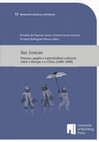
Res Sinicae. Pessoas, Papéis e intercâmbios culturais entre a Europa e a China (1600-1800), 2022
This study analyzes for the first time the active and passive epistolary corpus of the Portuguese... more This study analyzes for the first time the active and passive epistolary corpus of the Portuguese Jesuit António de Gouveia (1592/94-1677), which is still in manuscript and will be published soon as part of the Res Sinicae project. This text identifies the people with whom António de Gouveia exchanged correspondence, their institutional positions, and where these characters were geographically located, in order to establish the networks of letters circulating and the type of information exchanged.
Other dimensions covered in this work include the chronology covered in this epistolary universe and the themes addressed therein. One of the data discovered was the connection of Gouveia with the Philippines, to his Spanish confreres established there, as well as its possible extension to Spanish America, namely Mexico.
EBook: Actas do 5 Fórum Internacional do Ensino da Língua Portuguesa , 2021
Neste artigo apresenta-se o projecto financiado pela Fundação para a Ciência e a Tecnologia de Po... more Neste artigo apresenta-se o projecto financiado pela Fundação para a Ciência e a Tecnologia de Portugal, intitulado "Res Sinicae - Base digital de fontes documentais em latim e em português sobre a China (séculos XVI a XVIII). Levantamento, Edição, Tradução e Estudos", que decorre no Centro de Estudos Clássicos da Universidade de Lisboa, com a parceria do Palácio Nacional da Ajuda/Biblioteca da Ajuda, da Brotéria-Centro Cultural e Científico (Companhia de Jesus) e do Instituto Confúcio da Universidade de Lisboa. Este trabalho conta com uma equipa multidisciplinar e internacional, cujos membros são provenientes de diversas instituições de três continentes. O projecto pretende reunir e disponibilizar numa plataforma digital (em versão portuguesa, chinesa e inglesa), em constante actualização, documentação inédita em latim e em português sobre a China, das dinastias Ming e Qing, escrita por portugueses ou por estrangeiros com eles relacionados, bem como estudos académicos sobre as fontes publicadas. É um projecto que, além de uma forte componente científica, presta particular atenção à dimensão pedagógica, através da elaboração e publicação on-line de materiais didácticos. A natureza multilinguística subjacente a este trabalho, que conjuga o conhecimento de quatro línguas (português, latim, chinês e inglês), fomenta mais cooperação de investigadores, docentes e alunos de instituições de ensino superior tanto da China continental como de Macau.
Do manuscrito ao livro impresso II, Andrade, A. M. L. & Carrington, M. C. (Coords.). Aveiro, Coimbra: UA Editora – Universidade de Aveiro, Imprensa da Universidade de Coimbra., 2020
It is impossible to talk about the printing history of sixteenth century Portugal without referri... more It is impossible to talk about the printing history of sixteenth century Portugal without referring to the four official editions of the Os Lusíadas [The Lusiads] by Luís de Camões (those of 1572, 1584, 1591 and 1597). This work, despite not being the greatest success of the Portuguese printing press of that period, especially when compared to other books such as Frei Heitor Pinto’s Imagem da vida cristã [Image of Christian Life], quickly became one of the master-pieces of Portuguese Literature. Eduardo Lourenço places Os Lusíadas at the center of Portugal’s literary and cultural mythology, and considers that its stanzas were born out of an “epic oneirism”, aware of the disproportion between the reality of a small European country and the immense imperial adventure unfolding in the Orient. Though, from the Orient, like in other sixteenth century Portuguese works, China is present at Os Lusíadas. The aim of this study is only to analyze which are the Chinese topics addressed in the Camonian epic poem, and to what extent they appear, or not, in a line of continuity with those present in the works of other Portuguese humanists and men of letters published until 1572, date of the Os Lusíadas first edition.
Estruturas e Vivências na Modernidade. Sefarditas, intelectuais, religiosos e inquisição, 2020
Os Portugueses e a Ásia Marítima. Trocas Científicas, Técnicas e Sócio-Culturais (Séculos XVI-XVIII), 2020
Orientis Aura, 2019
This article focuses on the analysis of the Portuguese Jesuit António de Gouveia (c.1592-1677) an... more This article focuses on the analysis of the Portuguese Jesuit António de Gouveia (c.1592-1677) and his monumental work Monarchia da China dividida por seis edades (Monarchy of China, Divided in Six Ages). Completed in January 1654, in Fuzhou 福州, this is undoubtedly the least known of Gouveia's works, although it is often mentioned. Despite being one of the earliest histories of China written by a European in a Western language, and based on Chinese sources, the Monarchia da China remains unpublished and calls for a systematic study.
To the best of our knowledge, there are two manuscripts of this work. The most well-known is a copy dating from the eighteenth century kept at the National Library of Spain, in Madrid. However, we came across a second manuscript, in the Archivo de España de la Compañia de Jesús (henceforth AESI-A), in Alcalá de Henares, which we conclude to be the original autograph one. Therefore, it is from this latter manuscript, with its ca. 500 folios, that we are preparing the first critical edition of the work. This edition will include a biographical study of António de Gouveia, as well as other still unpublished significant textual production, namely his active and passive epistolography.
O Humanismo Português e Europeu. No 5º Centenário do Cicero Lusitanus: Dom Jerónimo Osório (1515-1580), 2020
Resumo: A informação que emerge, a partir de inícios do século XVI, sobre a China rapidamente se ... more Resumo: A informação que emerge, a partir de inícios do século XVI, sobre a China rapidamente se difunde e tem ecos na produção textual portuguesa. O fascínio despertado por aquele império e pela primazia dos letrados na sua or-dem político-administrativa marca presença em alguns autores, entre os quais se destaca o humanista Jerónimo Osório que, em 1549, no seu tratado De Gloria, abor-dava este mesmo tópico, glorificando um país onde não era "lícito entregar o poder supremo senão àquele que [tivesse] provado o seu domínio de toda a cultura". Será este tema de elogio da China, como uma verdadeira República de Letras/letrados, com reflexos no humanismo português, que se aborda neste texto. Abstract: The information on China collected since the early sixteenth century by the Portuguese in Asia quickly disseminated and found expression in textual production. The fascination originated by this Empire and by the key role played by the literati in its political and administrative order can be seen in many authors. Among them, we can highlight the humanist Jerónimo Osório, who, as early as 1549, addressed this topic in his work De Gloria. In it, he celebrated a country where it was only "licit to hand over the supreme power to those individuals who had proven their cultural mastery ". Our purpose in this paper is to analyze the highly favorable depiction of China as a Republic of Letters/literati and its echoes in the Portuguese humanism of the sixteenth and seventeenth centuries.
Portuguese Studies Review, 2017
Os Dominicanos em Portugal (1216-2016), 2018
É verdade que só o testemunho liga a memória e o presente. Mas há paixões que contagiam. E viver ... more É verdade que só o testemunho liga a memória e o presente. Mas há paixões que contagiam. E viver há-de ser identificar apelos e responder. Os Padres António do Rosário e Raul de Almeida Rolo souberam identificar apelos e responderam enquanto tiveram forças para isso. Numa Obra não há ponto de chegada. A memória não tem nem começo nem fim. A memória regressa do passado, grávida de esperanças, em tensão com o presente de que foge. Para se converter inteiramente em hospitalidade da Presença. " José Augusto Mourão 1 "Fr. Raul de Almeida Rolo e Padre António de Sousa Carvalho, que na tomada de hábito escolheu o nome de Fr. António do Rosário […]" aplicaram-se "[…] com paixão e competência, à pesquisa de fontes documentais no aprofundamento da história dominicana e de vultos maiores do seu insigne como bem provido e relevante alfobre nas ciências humanas e teológicas […]"
A Literatura Clássica ou os Clássicos na Literatura Portuguesa. Presença dos Clássicos nas Literaturas de Língua Portuguesa, 2017
Chinese wallpapers, one of several luxury imports from China during the 18th and 19th centuries, ... more Chinese wallpapers, one of several luxury imports from China during the 18th and 19th centuries, have been largely ignored within the scope of decorative arts in Portugal. This article aims to draw attention to the presence of this product in the interiors of Portuguese Manor Houses.
Living in Beijing during the time of Kangxi emperor, Tomás Pereira is quite well-know for the sev... more Living in Beijing during the time of Kangxi emperor, Tomás Pereira is quite well-know for the several activities he was engaged there. Among those stands out that of an artisan, expert on making "curious things", such as clocks, musical instruments and other kinds of mechanical devices. The purpose of this paper, based on Pereira's significant documental corpus , is to analyze this dimension of his activity, comprising one of his most interesting and appreciated skills, on account of which he was named by his contemporaries a "curious of hands".



Uploads
Papers by Ana Cristina Costa Gomes
was not always a history defined by conflict, as it seems to be the case of the so-called Chinese Rites Controversy. Actually, this was a more complex narrative, one where histories of affinity and cooperation also played a part, sometimes decisively. One of such examples is elucidated in the flight of the Chinese Jesuit Paulo Vanhes/Wan Qiyuan from the residence of Shanghai in October 1689, and the role played by the Dominican bishop Gregorio López/Luo Wenzao illustrates this other reality, at a time when the creation of a Chinese clergy was discussed.
Three of the crucial documents to reconstitute this relationship will be transcribed in an annex.
Among the coincidences occurring in both countries during dynastic changes, there is mention to omens and wondrous signs, interpreted as manifestations of something about to change, breaking away from the old established order which had lost some sort of divine assent. By using the writings of the Portuguese Jesuit António de Gouveia (1592/94–1677), namely his letters, some of which unpublished, we will seek to see how he interpreted these signs and dynastic change in China, while his own country (Portugal) was going through a similar process. We will make use of materials dating from 1636 to the 1650s, to see what kind of parallelisms Gouveia draws between the Chinese seventeenth-century crisis and the Portuguese case, and how he depicts and characterises the events occurring in China.
Other dimensions covered in this work include the chronology covered in this epistolary universe and the themes addressed therein. One of the data discovered was the connection of Gouveia with the Philippines, to his Spanish confreres established there, as well as its possible extension to Spanish America, namely Mexico.
To the best of our knowledge, there are two manuscripts of this work. The most well-known is a copy dating from the eighteenth century kept at the National Library of Spain, in Madrid. However, we came across a second manuscript, in the Archivo de España de la Compañia de Jesús (henceforth AESI-A), in Alcalá de Henares, which we conclude to be the original autograph one. Therefore, it is from this latter manuscript, with its ca. 500 folios, that we are preparing the first critical edition of the work. This edition will include a biographical study of António de Gouveia, as well as other still unpublished significant textual production, namely his active and passive epistolography.