Papers by Anna Calise
An-Icon Studies in environmental images, 2023
From summer 2021 to spring 2022 the Nxt Mu-seum in Amsterdam has run the exhibition Shifting Prox... more From summer 2021 to spring 2022 the Nxt Mu-seum in Amsterdam has run the exhibition Shifting Proximities, meant to investigate the ways in which global events and de-velopments, mediated by technologies “are continually shifting the proximities between us, both literally and metaphorically.” This study wants to offer an account which, starting from this exhibition experience, addresses the temporal variations of the relationship between museums, visitors and their bodies, trying to investigate the extent to which technological devel-opments, guided by changing epistemic paradigms, have contributed to influence display and curatorial choices and their relationship to the visitor’s body. In this interplay artistic intuition – intertwined with technical innovations – will prove essential to trigger institutional changes, together with phil-osophical undertakings of the political ideologies that inform power dynamics in the museum system. The visitor’s body, in its materiality and motion habits, will be seen as engaging in continuously changing ways with the museum space, mir-roring the evolving epistemological paradigms of its times. Through an historical account of bodily practices and customs across museum spaces, this study aims to discuss the ways in which citizens’ dives through museum halls have been and are used to establish socially shared ideas of art and knowledge.
Signata, 2023
Contemporary computer vision software represents an incredible opportunity for both art history r... more Contemporary computer vision software represents an incredible opportunity for both art history researchers and museum practitioners: it is a tool through which images can be described, organized, studied and shared. In this process—the one in which a computer vision software operates over a database of art history images—there are however a variety of dynamics at play. They have to do with theoretical assumptions, historical categories, technological constraints and ideological stances: a set of premises which calls for a closer methodological survey of the process. We propose an account which uses art theory and visual culture studies to scrutinize the different steps and activities which constitute the computer vision analysis: after all, the study of images has historically been a prerogative of art historians. Our intuition is that art images databases somehow provide a “protected environment” in which to observe how old problems, inherent to the discipline, interact with new problems created by the way we consume and design software. The three levels at which we will try to detect biased stances answer three different questions. Which images are we talking about? Which research questions are we asking? Which linguistic and political logics are at play? In order to do so, we will begin the discussion by debunking the myth of a simple parallelism between these new forms of conceptualizing the real and traditional ones, challenging Manovich’s (1999) use of Panofsky’s symbolic form (1927) as a hermeneutic of the database. We will show instead how the art-database logic somehow sticks to the traditional art historical narrative, while at the same time producing new kinds of biases. Then, we will focus on how this technology actually works, and which kind of art historical thought lays behind the algorithm. Our guess is that the praxis of this software is closer to the connoisseurship than to the art historical research. Thirdly, we will analyze the labeling process through which computer vision software creates descriptive metadata of the images in question, using Mitchell’s critical iconology (1994) account to problematize the strong ideological and political stance behind the image-text relationship. Throughout the discourse, and especially in the final paragraph, we will address the transparency and evaluation standards which need to be defined in order to allow a strict methodological approach to guard and guide the process, at times lacking both in the cultural sector and in the wider visual field. What will emerge is an account of computer vision software and processes which appear to be far from ‘neutral’ or ‘objective’ in their extremely layered functioning, built in the midst of diverse stakeholders’ interests and procedural false steps. Granted that these technologies are however contributing to build the visual culture of our time, we detect a series of overlooked assumptions along the way through the lenses of art theory, hoping to contribute to the design of a clearer view.
AN-ICON Studies in Environmental Images, 2022
Touch represents one of the latest and most complex frontiers of virtuality: a sense which histor... more Touch represents one of the latest and most complex frontiers of virtuality: a sense which historical- ly seems to have carried the burden of proof on reality, by definition resistant to illusory environments. The paper begins from this assumption to trace a history of illusion across authors and theorists that have debated the stat- ute of haptics, building a dialogue between philosophical dilemmas and technological developments. Moving both from an aesthetic and psychophysiological viewpoint, the article will root its analysis in an historical-artistic account, augmenting the discussion with a series of case studies from the museum sector. The introduction of haptic tech- nologies within cultural institutions, which dates back to the last three decades, proves an interesting field to test the functions which touch plays in both educational and imaginative scenarios. The open question being whether modern technologies should aim at replicating haptic re- alism in miming phenomenological accuracy, or whether the most innovative applications need to aspire to a more environmental employment of touch.

Visual Lockdown
Wunderkammer, 2021
Questo articolo affronta il tema della riscrittura del panorama visuale contemporaneo causata dal... more Questo articolo affronta il tema della riscrittura del panorama visuale contemporaneo causata dall’epidemia di SARS-CoV-2. Parte dall’inevitabile tematizzazione - il Covid Filter - che ha permeato tutto il campo dei contenuti visivi ed elabora le conseguenze di questo fenomeno dal punto di vista della creazione del senso. Le immagini che hanno ossessivamente raccontato il mondo della pandemia hanno riempito la nostra visuale di nuovi significati, ma ne hanno cancellati molti altri. L’esperienza sensibile, radicata nell’ambiente e nei media dalla tradizione della cultura visuale, è stata travolta dai cambiamenti spaziali e mediali imposti alla società contemporanea. In queste circostanze le donne e gli uomini si sono trovati a pensare partendo da un panorama immaginale monopolizzato, nei luoghi chiusi delle loro abitazioni e quasi esclusivamente attraverso dispositivi digitali. Nel chiedersi quali saranno le conseguenze pandemiche sullo sguardo dei cittadini di domani, si apre un punto di domanda su tutte le immagini mancanti di questi ultimi lunghi mesi: cosa è rimasto fuori dal nostro immaginario nella corsa a ritrarre tutti i volti della pandemia? E quale sarà l’impatto di questo vuoto nel discorso sociale?
Ucronia: towards the creation of eccentric worlds. Cosmogonies and cosmographies in the work of Camille Henrot and Laure Prouvost
Meta.space – Visions of Space from the Middle Ages to the Digital Age, 2022
The contemporary art system offers an immensely vast scenario to discuss the dialogue between ana... more The contemporary art system offers an immensely vast scenario to discuss the dialogue between analogue and digital media. More and more artists are using their creative practice to design new environmental images of the world, which critically tackle the ruptures between the reality we inhabit and the virtual interfaces we embody. This paper begins from the work of two contemporary female French artists, Camille Henrot and Laure Prouvost, who are engaged in the creation of cosmogonies and cosmographies which emerge from the fractures of intermedial systems. Their work aims to produce a space which creates a new semantic for neo capitalist economies, through the manipulation of images, data and streams. The eccentricity that spurs from their installations calls into question the power dynamics that lay behind contemporary modes of consumption in the digital sphere, thanks to a media-archeological approach. By highlighting iconographic connections that begin from the prehistory era and re-emerge in our everyday infosphere they allow for the creation of a new hybrid dimension: one where our ancient past meets what lies further ahead. What is left is an open field where humans and objects of consumption battle in an ecological perspective, searching for new environmental solutions to co-exist. What is unique about their work is that they draw from the literary identity of the cosmos, which historically existed only as a grapheme, a sign, and they transpose it into a hybrid environmental medium. This transmedial attempt proves extremely interesting in envisioning the ways in which both art history and contemporary art can inform the design of new digital spaces, a theme which will be discussed thanks to the analysis of a series of case studies beginning from the sixties. The works from the two artists around which the main argument will be formulated are Camille Henrot’s Grosse Fatigue and Laure Prouvost’s Deep Sea Blue Surrounding You, exhibited at the Venice Biennale respectively in 2013 and 2019.
Questo articolo esplora le potenzialità epistemologiche della Mixed Reality (MR) ed il valore cul... more Questo articolo esplora le potenzialità epistemologiche della Mixed Reality (MR) ed il valore culturale e strategico che l'utilizzo delle tecnologie virtuali immersive può avere nell'educazione museale. Parte dall'esigenza dei musei di confrontarsi con le innovazioni tecnologiche e guidare la transizione mediale contemporanea, per diventare luoghi in cui la cittadinanza culturale viene costruita in un dialogo attivo con il panorama cognitivo dei nativi digitali. Approfondisce il potenziale esperienziale ed informativo delle tecnologie immersive, argomentando la profonda interdipendenza dei sistemi cognitivi con un ambiente mediale diffuso nell'era della computer vision. In questo scenario l'MR - collocata a metà dello spettro tra VR e AR - offre una fusione tra reale e virtuale senza soluzione di continuità. Un mondo nel quale le immagini in computer graphic sono ibridate nella realtà, circondano gli oggetti e si lasciano animare dall'individuo. Questa tecnologia apre l'educazione museale ad un mondo nel quale il pubblico può sperimentare nei panorami dell'arte, vivendo un vero e proprio dialogo sensoriale tra la realtà e la propria immaginazione, costruendo nuove frontiere dell'emozione, e del sapere. Una prospettiva cui i musei hanno l'opportunità di prendere parte, democratizzando così la transizione digitale ed insieme reinventando le frontiere della conoscenza.
Conference Presentations by Anna Calise
If the work of the art historian has been organized from photographs since the origins of the mod... more If the work of the art historian has been organized from photographs since the origins of the modern Kunstwissenschaft, the use of digital photographs, and computer vision software, is radically reshaping the DNA of the discipline in unexpected directions. Computer vision software represents an incredible opportunity: it is a tool through which images can be described, organized, studied and shared. In this process there are however a variety of dynamics at play, which have to do with theoretical assumptions, historical categories, technological constraints and ideological stances: a set of premises which calls for a closer methodological survey. We propose an account which uses art theory and visual culture studies to scrutinize the different steps of computer vision analysis. Our intuition is that art photography databases provide a “protected environment” in which to observe how old problems, inherent to the discipline, interact with new problems created by the way we consume and design software. Which images are we talking about? Which research questions are we asking? Which linguistic and political logics are at play? What will emerge is an account of computer vision software which appears to be far from ‘neutral’ or ‘objective’ in its extremely layered functioning, built in the midst of diverse stakeholders’ interests and procedural false steps. Granted that these technologies are however contributing to build the visual culture of our time, we detect a series of overlooked assumptions along the way through the lenses of art theory, hoping to contribute to the design of a clearer view.
The goal of this research is to address the dialogue between iconic and textual forms within the ... more The goal of this research is to address the dialogue between iconic and textual forms within the iconological debate, with reference to the contributions that contemporary computer vision systems have brought to the table. As Mitchell (1994) has argued, texts and images seem to have been trying to endlessly overcome one another in the history of icology (beginning from Panofsky and continuing through the postmodernist debate): an eternal struggle between the accuracy of descriptivity and the ‘indescribable’ nature of pictures. Do we need words to truly understand an image and, if so, to what extent can these descriptions override the image itself? Or do icons possess an intrinsic and unique - untranslatable - quality, which resists all descriptions? And furthermore, how deep are the ‘situated’ roots of textual accounts, inevitably embedded in ideology and material culture?
Apparently forgetful of the depth of this debate, contemporary visual culture is more and more influenced - often without a critical stance - by the operations of computer vision software: used to create descriptive metadata of images in order to facilitate the organization, analysis and distribution of them (Santos, 2021). The span of this phenomenon is enormous, as these technologies can be employed in a variety of scenarios - often also within the cultural sector - solving practical necessities of LAMs institutions (Craig, 2021). Numerous studies are however proving the delicate issues concerning the labels which algorithms assign to the images (Crawford, 2020), problems which can be routed in numerous steps of the process (from dataset selection, to software processing to categorical taxonomy).
By returning to Mitchell’s critical iconology, and investigating the mechanism through which image descriptions are today created, the research will attempt to untangle some of the intricacies of this process. Hoping to contribute to the transparency of a key debate of our century: that which sees an ancient battle, the one between pictures, text, and their interoperability, being reinvented in the presence of new transformative technological discoveries.
Nel 2010, l’Eye Film Museum di Amsterdam inaugura Panorama: una installazione a 360 gradi nel pia... more Nel 2010, l’Eye Film Museum di Amsterdam inaugura Panorama: una installazione a 360 gradi nel piano terra del museo attraverso cui vedere clip di film digitalizzati della collezione d’archivio dell’istituzione. I visitatori entrano nello spazio “piastrellato” di immagini cinematografiche, si posizionano davanti ad una consolle - ce ne sono otto a disposizione - e attraverso delle suddivisioni tematiche - il colore, il conflitto, la magia - possono far partire sulla sezione di schermo davanti a sé la clip scelta. Dodici anni dopo, il museo si accinge ad inaugurare l’Eye Catcher, nuova installazione che andrà a sostituire quella precedente. La logica di base del dispositivo è la stessa: un palinsesto tecnologico nel quale i visitatori possono entrare e visualizzare - in un modalità che preserva sia caratteri randomici che interattivi - clip dell’archivio della collezione. Tanti aspetti sono però cambiati: in risposta alle nuove logiche di produzione e fruizione delle immagini, in linea con le categorie d’analisi dei software di computer vision e in seguito alle nuove ricerche su modalità di fruizione sensoriali dei materiali audiovisivi, l’Eye Catcher offre un'esperienza profondamente diversa. Nella nuova installazione i visitatori possono muoversi liberamente nello spazio, maneggiando dei tablet che gli consentono di “lanciare” sulle pareti circostanti e “catturare” da queste i brevi video, a loro volta in movimento. Il quantitativo di clip accessibili è aumentato di venti volte, i criteri attraverso cui raggrupparle anche. Questo saggio propone un’analisi della transizione dalla prima installazione alla seconda, mettendo in luce il modo in cui l’evoluzione tecnologica ed esperienziale degli ultimi decenni stia rivoluzionando le modalità di ricerca e fruizione di materiale audiovisivo dall’invenzione del cinema ad oggi. In questo scenario, il contesto museale emerge come spazio di negoziazione tra il rigore scientifico delle categorie archivistiche e l’esigenza di avvicinare i pubblici alle proprie collezioni, aprendosi a nuovi criteri espositivi.
La pandemia, e le restrizioni che ne sono conseguite, hanno potenziato un processo già in atto ne... more La pandemia, e le restrizioni che ne sono conseguite, hanno potenziato un processo già in atto nel settore museale: la migrazione della fruizione culturale dallo spazio fisico allo spazio digitale. Nell’era postmediale, in cui la naturalizzazione e la pervasività del sostrato tecnologico mettono in crisi il tradizionale funzionamento dei dispositivi mediali, i musei si trovano a dover reinventare la propria programmazione, dialogando con un panorama mediale sempre più fluido e ibrido. La digitalizzazione esponenziale della domanda e dell’offerta culturale, che ha investito indistintamente la fruizione onsite ed online, apre a nuove frontiere di sperimentazione narrativa, in cui le potenzialità dei singoli media devono necessariamente confrontarsi con modalità espressive sia transmediali che crossmediali. Il medium museale, inteso come ambiente, milieu, si configura oggi nella compresenza di contenuti culturali di matrice differente esposti ad un costante, fluido e responsivo rapporto dialogico. Questo articolo indaga il perimetro della transizione digitale ed interroga lo statuto ontologico del museo del futuro. L’argomentazione verrà sviluppata attraverso l’analisi di tre casi studio rappresentativi: lo Smithsonian di Washington, esemplificativo per la pervasività e la trasversalità della sua conversione digitale, l’HAM di Helsinki, il cui percorso coglie il grado di tempestività e di coinvolgimento abilitati dal digitale e il MAXXI di Roma, che ibrida l’evoluzione digitale dell’istituzione con la scelta del digitale come oggetto di ricerca.
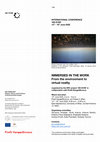
From summer 2021 to spring 2022 the NXT Museum in Amsterdam has run the exhibition
Shifting Proxi... more From summer 2021 to spring 2022 the NXT Museum in Amsterdam has run the exhibition
Shifting Proximities, meant to investigate the ways in which global events and developments,
mediated by technologies “are continually shifting the proximities between us, both literally and
metaphorically”. This study wants to offer an account which, starting from this exhibition
experience, addresses the temporal variations of the relationship between museums, visitors and
their bodies, trying to investigate the extent to which technological developments, associated and
guided by changing epistemic paradigms, have contributed to influence display and curatorial
choices and their relationship to the visitor’s body. In this interplay artistic intuition –
intertwined with technical and creative innovations – will prove essential to trigger institutional
changes, together with philosophical undertakings of the political ideologies that inform power
dynamics in the museum system. The visitor’s body, in its materiality and motion habits, will be
seen as engaging in continuously changing ways with the museum space, mirroring the evolving
epistemological paradigms of its times. Through an historical account of bodily practices and
customs across museum spaces, this study aims to discuss the ways in which citizens’ dives
through museum halls have been and are used to establish socially shared ideas of art and
knowledge.
Museums around the world, after roughly three centuries of being substantially unchanged, have fa... more Museums around the world, after roughly three centuries of being substantially unchanged, have faced a drastic revolution in the last three decades. The traditional concept of being a physical space where physical artifacts and artworks are collected and displayed has had to deal with a wide and rapidly growing number of technologies that have impacted this institution to its core. Adapting to the digital era has meant both learning to welcome technologies and their mediated forms of expression within the walls of the museum, but also creating an online interface for the museum within which physical collections could find their digital alter ego. The consequences of this turn are complex and transversal, spanning from the intricacy of transmedia storytelling to a deep understanding of the new cognitive hybrid and medialized space where cultural experience takes place today. What emerges from this picture is a museum which can be considered a medium in itself, the sum of a wide range of forms each existing through different media and moving across them (not just linearly from physical to digital but also across digital). In this scenario intermediality plays a central role: it represents the framework through which museums can aspire to a unitary status without negating the dependency that art and creativity have developed towards new media. The present paper wants to paint a picture of the contemporary museum from an intermedial perspective, investigating the motion of artworks through media within the programmes of two museums in the Netherlands: the Rijksmuseum and the Museum Boijmans Van Beuningen. With reference to these case studies empha sis will be placed on the role that contemporary creative technologies, like animation, can play in bridging classical art and modern visual practices, acting as a unifying tool for the coherency of new museum systems.
in collaborazione con il Center for Visual Studies (CVS) della IULM, promuove il convegno, "Armi ... more in collaborazione con il Center for Visual Studies (CVS) della IULM, promuove il convegno, "Armi improprie. Lo stato della critica d'arte in Italia", a cura di Vincenzo Trione, che si terrà il 27 e il 28 aprile 2023 negli spazi dell'ateneo. Il convegno mira a indagare lo stato della critica d'arte in Italia, dall'inizio del Novecento a oggi, proponendosi di verificare l'esistenza di una sorta di canone della critica d'arte del nostro Paese. "Armi improprie" intende colmare un vuoto nel campo degli studi di settore, esplorando un tema finora trattato in modo spesso frammentario e parziale. Attraverso i contributi di numerosi studiosi e critici d'arte italiani, si analizzerà l'apporto di libri divenuti "classici" della disciplina e, grazie a un'adeguata mappatura, si tenterà di restituire il ruolo chiave giocato da riviste di settore, periodici e quotidiani italiani nell'affermazione e nella diffusione di metodi e prospettive interpretative.



Uploads
Papers by Anna Calise
Conference Presentations by Anna Calise
Apparently forgetful of the depth of this debate, contemporary visual culture is more and more influenced - often without a critical stance - by the operations of computer vision software: used to create descriptive metadata of images in order to facilitate the organization, analysis and distribution of them (Santos, 2021). The span of this phenomenon is enormous, as these technologies can be employed in a variety of scenarios - often also within the cultural sector - solving practical necessities of LAMs institutions (Craig, 2021). Numerous studies are however proving the delicate issues concerning the labels which algorithms assign to the images (Crawford, 2020), problems which can be routed in numerous steps of the process (from dataset selection, to software processing to categorical taxonomy).
By returning to Mitchell’s critical iconology, and investigating the mechanism through which image descriptions are today created, the research will attempt to untangle some of the intricacies of this process. Hoping to contribute to the transparency of a key debate of our century: that which sees an ancient battle, the one between pictures, text, and their interoperability, being reinvented in the presence of new transformative technological discoveries.
Shifting Proximities, meant to investigate the ways in which global events and developments,
mediated by technologies “are continually shifting the proximities between us, both literally and
metaphorically”. This study wants to offer an account which, starting from this exhibition
experience, addresses the temporal variations of the relationship between museums, visitors and
their bodies, trying to investigate the extent to which technological developments, associated and
guided by changing epistemic paradigms, have contributed to influence display and curatorial
choices and their relationship to the visitor’s body. In this interplay artistic intuition –
intertwined with technical and creative innovations – will prove essential to trigger institutional
changes, together with philosophical undertakings of the political ideologies that inform power
dynamics in the museum system. The visitor’s body, in its materiality and motion habits, will be
seen as engaging in continuously changing ways with the museum space, mirroring the evolving
epistemological paradigms of its times. Through an historical account of bodily practices and
customs across museum spaces, this study aims to discuss the ways in which citizens’ dives
through museum halls have been and are used to establish socially shared ideas of art and
knowledge.