Books by Anna Pegoretti
L’11 ottobre 1896, in piena dominazione austroungarica, si inaugurava a Trento il monumento a Dan... more L’11 ottobre 1896, in piena dominazione austroungarica, si inaugurava a Trento il monumento a Dante «Genio tutelare della lingua e della civiltà italiana nel Trentino», opera dello scultore fiorentino Cesare Zocchi. Riconosciuto come il più articolato e riuscito fra i molti dedicati al poeta nel corso dell’Ottocento, quello di Trento è passato alla storia come un monumento apertamente irredentista, un’interpretazione che l’esito della Grande Guerra non fece che rafforzare. Ma nel contesto multinazionale dell’Impero, l’affermazione dell’italianità era impresa ben più complessa. Anna Pegoretti ricostruisce nel dettaglio l'episodio restituendolo al suo articolato contesto storico, culturale e letterario, dominato dalla figura di Giosue Carducci.

Il manoscritto Egerton 943 conservato a Londra presso la British Library è il più antico codice s... more Il manoscritto Egerton 943 conservato a Londra presso la British Library è il più antico codice superstite interamente miniato della Commedia di Dante, con oltre duecentocinquanta tra miniature e disegni. Si tratta di un prodotto di lusso databile al 1340 circa, frutto del lavoro di un ambiente scrittorio e miniatorio nord-orientale, fra Emilia e Veneto. Un vero e proprio “libro da banco”, simile a quello vagheggiato da Dante stesso nel Paradiso.
Seguendo le tracce depositatesi nel codice, questo volume lo restituisce al suo contesto e ai suoi lettori, ricostruendo l’elaborazione di quel paratesto complessivo – fatto di glosse, rubriche, miniature, diagrammi – che trasforma la Commedia Egerton 943 in un progetto editoriale peculiare e per molti versi eccentrico, capace di proporre un’interpretazione del poema sorprendentemente coerente e incisiva, in cui le immagini giocano un ruolo esegetico di primo piano.
"This book is an interdisciplinary enquiry of the MS Egerton 943 (Eg) housed in the British Library (circa 1340). Eg is the earliest 'Commedia'’s manuscript entirely decorated, with almost 250 scenes and diagrams; it also presents a corpus of Latin glosses generally known as the “Latin Anonymous”. Though verbal and pictorial commentaries are not directly connected, it is possible to consider the MS as an organic editorial product, whose goal is to suggest to the reader a systematic interpretation and to guide his comprehension of Dante’s poem.
Moreover, the dissertation demonstrated the importance of the Dominican Order in the reception of the 'Commedia'. Particular attention has been paid to the global diagrams of heaven and hell, interpreted as medieval "machinae memorialis".
It is forthcoming in a series patronized and directed by the Department of Italian Studies of the University of Pisa."""
The book explores the medieval traditions and the imagery that work together in the construction ... more The book explores the medieval traditions and the imagery that work together in the construction of space in Dante’s Purgatory.
"Che aspetto ha il Purgatorio? Dove si trova? Il Paradiso terrestre è stato risparmiato dal Diluvio? Con queste domande – del tutto legittime per un uomo del Medioevo – si confronta Dante nello scrivere la Commedia, dando loro risposte innovative e coerenti. Grazie all’apporto delle più recenti acquisizioni nel campo degli studi storici, storico-artistici e letterari, questo libro ripercorre le tradizioni e l’immaginario cui il poeta attinge per progettare il regno intermedio dell’aldilà: segue così le tracce degli elementi costitutivi del paesaggio purgatoriale e edenico (il mare, la spiaggia, la montagna, la pietra, l’albero, il fuoco, la scala, il giardino), di cui indaga anche la dimensione simbolica. Ma dietro ai simboli emerge prepotente il mondo terreno – quello in cui Dante ha concretamente vissuto – fatto di suoni, colori, spazi, immagini, mestieri."""
Edited Volumes by Anna Pegoretti
Simon Gilson, Leggere Dante a Firenze. Da Boccaccio a Cristoforo Landino (1350-1481), Italian edition ed. by A. Pegoretti (Roma: Carocci), 2019
Now Feed Yourself: Anglo-American and Italian Scholarship on Dante, ed. by Theodore J. Cachey jr., Zygmunt G. Barański, and Anna Pegoretti, Italian Perspectives, 63 (Oxford: Legenda – Modern Humanities Research Association

Santa Croce e la città. Atti della Giornata di Studi (Roma, 15 dicembre 2022), a cura di Anna Pegoretti e Federico Rossi, Ravenna, Longo (Studi su Santa Croce/Santa Croce Studies, 2)
Il volume raccoglie i lavori discussi nel corso di una giornata di studi tenutasi all’Università ... more Il volume raccoglie i lavori discussi nel corso di una giornata di studi tenutasi all’Università Roma Tre il 15 dicembre 2022 nell’ambito del Progetto di Ricerca di Interesse Nazionale “Libri e lettori a Firenze dal XIII al XV secolo: la biblioteca di Santa Croce”. Due sono i problemi principali affrontati nei saggi. Anzitutto si indaga la permeabilità del fondo librario santacrociano rispetto all’ambiente cittadino, popolato di figure e gruppi molto diversi per fisionomia sociale, spirituale, culturale e giuridica: le monache clarisse, della cui cura pastorale i frati minori erano responsabili; i frati del Terz’Ordine; i laici, spesso legati al convento per il tramite delle confraternite; il mondo dei fraticelli. In seconda istanza si individuano casi che permettano una parziale ricostruzione del testimoniale posseduto dalla biblioteca del convento minoritico fiorentino e dei suoi tempi e canali di crescita e dispersione. Pur certamente non esaustivi, i risultati che emergono dal volume vanno a comporre un affresco variegato, che include non solo diverse tipologie di testi, ma anche un rilevante numero di codici e di personaggi. Tale casistica rivela la vasta gamma di problemi e traiettorie che incrociano la vita della biblioteca del convento minoritico, il suo accrescersi nel tempo e la sua ricostruzione ex post.
Forum "Dante and Cosmology", coordinated by Theodore J. Cachey jr., Anna Pegoretti, Chiara Sbordoni
Dante Studies, 140, pp. 135-265, 2022
«L’Ellisse. Studi storici di letteratura italiana», a cura di M. Fiorilla, L. Marcozzi e A. Pegoretti, XVII, 1-2, 2022
Santi, giullari, romanzieri, poeti. Studi per Franco Suitner
, a cura di Giuseppe Crimi, Luca Marcozzi, Anna Pegoretti, Ravenna, Longo, , 2022
I contributi raccolti in questi Atti offrono una rappresentazione varia e articolata dei rapporti... more I contributi raccolti in questi Atti offrono una rappresentazione varia e articolata dei rapporti tra l’opera di Dante Alighieri e la cultura teologica tardomedievale, osservata in alcuni suoi aspetti fondamentali e con un’attenzione particolare all’esegesi antica della Commedia. I temi trattati coprono uno spettro ampio di problemi: la presenza dell’eresia nel poema; la presunta eterodossia dello stesso Dante; i riferimenti alla Croce e alla Passione, esaminati alla luce delle dottrine teologiche e delle pratiche devozionali del tempo; l’influsso esercitato dalla cosiddetta ‘mistica affettiva’ sulla riflessione poetologica dantesca; il problema della creazione e resurrezione dei corpi; l’apparentamento tra teologia e cielo Empireo proposto nel Convivio; l’arduo tema della visione profetica, indagato a partire dall’Epistola a Cangrande. A episodi ancora poco noti della ricezione del poema dantesco sono dedicati gli ultimi due contributi: le chiose dell’Anonimo Teologo al Paradiso e la presenza di Dante nei sermoni quattrocenteschi di Gabriele Barletta e Paolo Attavanti.
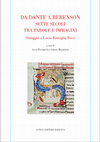
Il volume, di carattere spiccatamente interdisciplinare, raccoglie tredici saggi incentrati sull’... more Il volume, di carattere spiccatamente interdisciplinare, raccoglie tredici saggi incentrati sull’intreccio fra parola e immagine. Da prospettive diverse, si indagano tematiche riguardanti il rapporto tra arti visive e letteratura: dalla potenza icastica della parola dantesca alla ricchezza esegetica e iconografica della prima tradizione di commento alla Commedia; dal rapporto che Leonardo da Vinci – di cui si analizza la poco nota scrittura destrorsa – intrattenne con l’opera e la figura di Dante, fino alla peculiare fortuna critica dei disegni di Sandro Botticelli per il poema negli anni di Bernard Berenson. Oltre l’Alighieri, la prospettiva si allarga per affrontare il rapporto fra ideazione di immagini e fonti testuali tra tardo Medioevo e Rinascimento; la pratica mariniana del “ritratto” in versi; il ruolo che le immagini giocano nella prima Grammatica illustrata dell’italiano pubblicata nel 1898. Arricchisce il volume un contributo sulla formazione del giovane Boccaccio. Temi tutti cari a Lucia Battaglia Ricci, alla quale il volume è offerto.
Journal Articles by Anna Pegoretti
L’Ellisse. Studi storici di letteratura italiana, XX/2, 2025
The essay focuses on the geography of the Decameron, a topic of growing interest in Boccaccio stu... more The essay focuses on the geography of the Decameron, a topic of growing interest in Boccaccio studies, whose theoretical premises and major critical developments are here revisited. To illustrate the potential of this line of enquiry, a specific case study is offered, centred on the islands of Crete and Cyprus. The final two sections present the project for the geographical section of the Digital Encyclopedia of the Decameron, currently under construction. Its general framework and expected outcomes are outlined and exemplified through a second case study centred on the tale of Friar Cipolla (Dec. VI 10).
Dante on the Border (Trento, 1890-1921)
Bibliotheca dantesca, 6, 245–63 , 2024
Heavens of Knowledge: The Order of Sciences in Dante’s «Convivio»
Humanities, 13.4 “In terra per le vostre scole” (Par. XXIX, 70): Dante’s Paradiso and the Medieval Academic World, a cura di L. Dell’Oso e F. Meier, 2024
The essay focuses on Dante’s divisio scientiae presented in the second book of his Convivio. As
a... more The essay focuses on Dante’s divisio scientiae presented in the second book of his Convivio. As
a first step, it offers a fresh reading of Dante’s description of knowledge and the cosmos, emphasizing
its deeply visual nature. The article then presents an overview of the Medieval tradition of the divisio
scientiae, culminating with divisions that are geographically and chronologically close to Dante’s
Florence. In relation to Brunetto Latini’s Rettorica and Tresor, new evidence is provided to elucidate
his peculiar division of logic. Ultimately, Dante’s divisio and its objectives are reassessed in light
of their historical background, underscoring their cosmological and totalizing scope. Adopting an
interdisciplinary approach, the findings consider cognitive practices, such as diagrams, and examine a
wide array of sources within their historical and institutional context, highlighting their transmission
and dissemination.
Dante on the Border (Trento, 1890-1921)
in «Bibliotheca dantesca», 6, pp. 245-263 , 2024
The article focuses on the Dante monument in Trento, which was unveiled
on the October 11th, 189... more The article focuses on the Dante monument in Trento, which was unveiled
on the October 11th, 1896, and played a central role in the Dante centenary of
1921. In the city of Trento the celebrations became strikingly intertwined with
the enduring celebrations of the Italian victory in the First World War and the
acquisition of the so–called “unredeemed” territories. Conceived in the peculiar
historical context of an Italian-speaking territory under the rule of the Austro-
Hungarian Empire, the Trento monument reveals the enduring power of
Dante as a symbol of the Risorgimento. However, the article aims to challenge
the long–lasting interpretation of it as an overtly irredentist artwork advocating
for annexation to Italy. This reading became standard after the First World
War, overshadowing the complex negotiations of national cultures within the
multinational perspective of the Empire. Rather, it retraces the complex development
of the monument’s propagandist role, starting from the ode dedicated
to its inauguration by Giosuè Carducci and extending to the Great War
and the 1921 celebrations. Throughout this period, the artwork became increasingly
instrumental in the irredentist and warmongering rhetoric.
L’inferno e il paradiso in Dante e in Servasanto da Faenza
Lettere italiane, LXXV/3, pp. 359-388, 2023
L’articolo intende affrontare il problema della topografia dell’aldilà dantesco, e in particolare... more L’articolo intende affrontare il problema della topografia dell’aldilà dantesco, e in particolare del locus inferni, alla luce di un passo inedito di Servasanto da Faenza, di cui si fornisce la trascrizione in appendice. Nella prima parte l’a. mostra come la collocazione cosmologica e topografica precisa dei luoghi oltremondani e segnatamente dell’inferno fosse tutt’altro che pacifica per i teologi medievali, specialmente nel Duecento. Emerge per contro l’originalità e la relativa precisione di Dante, che assume a scheletro del suo aldilà un asse verticale che ha quale fondamento fisico le dottrine aristoteliche della caduta dei gravi e dei luoghi naturali caricate di una valenza anagogico-morale di stampo agostiniano. Nella terza parte si presenta un brano tratto dal Dialogo di Servasanto, ritrovato da Francesca Galli, mettendone in luce l’importanza ai fini della ricostruzione dell’ambiente intellettuale e dell’insegnamento teologico nella Firenze del giovane Dante.
La cosmologia negli studi danteschi: note per un orientamento
Dante Studies, 140, pp. 143-151, 2022
Lamentazioni fiorentine: Cavalcanti, Dante, Olivi
L'Alighieri, 60. Dante e la poesia in volgare del Due e Trecento In ricordo di Saverio Bellomo a cura di Luca Lombardo, Gaia Tomazzoli e Tiziano Zanato, 2022
This essay considers the extensive use of the Lamentations in the Rime by Guido Cavalcanti and in... more This essay considers the extensive use of the Lamentations in the Rime by Guido Cavalcanti and in Dante’s Vita nova by comparing it to the relevant presence of a brief didactic commentary to the biblical book written by Pierre de Jean Olivi towards the end of the 1280s in the Florentine house of Santa Croce. Of this exegesis the article enhences above all its attention to the literal, metrical and stylistic analysis of the sacred text, one which was updated to the most advanced tools of exegesis and “protophilology” which were being developed in Paris in those years and were present in Santa Croce in the MS Laur. Plut. 25 sin. 4.
in «L’Ellisse. Studi storici di letteratura italiana», XVII 1-2. Idee di Dante: scrittori e critici, a cura di M. Fiorilla, L. Marcozzi e A. Pegoretti, pp. 239-252, 2022
This paper traces the idea and image of Dante that comes to light from the studies by Bruno Nardi... more This paper traces the idea and image of Dante that comes to light from the studies by Bruno Nardi, ranging from his early dissertation in 1911 through to his death in 1968. Rather than dealing with his analysis of single doctrinal issues, the authors focus on the ideological premises of Nardi’s approach to Dante, one which is deeply rooted in a vision of philosophy as a comprehensive view of human experience that fully encompasses the theological and religious dimension. Specific attention is devoted to the philosophical context in which this scholar developed his oeuvre as dantista. Nardi’s Dante emerges as a poet whose work responds to existential issues and is urged by a profound prophetic stance.
Le macchie lunari dal "Convivio" alla "Commedia": una palinodia antiaverroista?
Scaffale Aperto. Rivista di Italianistica, 2020
This essay focuses on the two different explanations that Dante provides of the phenomenon of moo... more This essay focuses on the two different explanations that Dante provides of the phenomenon of moonspots. Since the first one, which features in the Convivio, is usually ascribed to an Averroist tradition, its rejection in Paradiso II is often read as a palinody, which would mark Dante’s overcoming of his previous philosophical beliefs. Through an investigation of Averroes’s theory of moonspots and of its
development during the thirteenth century, the essay shows how the explanation skectched in the Convivio was just a version of a theory that can be traced back to the Arab philosopher only partially, and that was variously endorsed by both philosophers and theologians. Finally, the essay reconsiders the role played by moonspots in the context of Paradiso II.



Uploads
Books by Anna Pegoretti
Seguendo le tracce depositatesi nel codice, questo volume lo restituisce al suo contesto e ai suoi lettori, ricostruendo l’elaborazione di quel paratesto complessivo – fatto di glosse, rubriche, miniature, diagrammi – che trasforma la Commedia Egerton 943 in un progetto editoriale peculiare e per molti versi eccentrico, capace di proporre un’interpretazione del poema sorprendentemente coerente e incisiva, in cui le immagini giocano un ruolo esegetico di primo piano.
"This book is an interdisciplinary enquiry of the MS Egerton 943 (Eg) housed in the British Library (circa 1340). Eg is the earliest 'Commedia'’s manuscript entirely decorated, with almost 250 scenes and diagrams; it also presents a corpus of Latin glosses generally known as the “Latin Anonymous”. Though verbal and pictorial commentaries are not directly connected, it is possible to consider the MS as an organic editorial product, whose goal is to suggest to the reader a systematic interpretation and to guide his comprehension of Dante’s poem.
Moreover, the dissertation demonstrated the importance of the Dominican Order in the reception of the 'Commedia'. Particular attention has been paid to the global diagrams of heaven and hell, interpreted as medieval "machinae memorialis".
It is forthcoming in a series patronized and directed by the Department of Italian Studies of the University of Pisa."""
"Che aspetto ha il Purgatorio? Dove si trova? Il Paradiso terrestre è stato risparmiato dal Diluvio? Con queste domande – del tutto legittime per un uomo del Medioevo – si confronta Dante nello scrivere la Commedia, dando loro risposte innovative e coerenti. Grazie all’apporto delle più recenti acquisizioni nel campo degli studi storici, storico-artistici e letterari, questo libro ripercorre le tradizioni e l’immaginario cui il poeta attinge per progettare il regno intermedio dell’aldilà: segue così le tracce degli elementi costitutivi del paesaggio purgatoriale e edenico (il mare, la spiaggia, la montagna, la pietra, l’albero, il fuoco, la scala, il giardino), di cui indaga anche la dimensione simbolica. Ma dietro ai simboli emerge prepotente il mondo terreno – quello in cui Dante ha concretamente vissuto – fatto di suoni, colori, spazi, immagini, mestieri."""
Edited Volumes by Anna Pegoretti
Journal Articles by Anna Pegoretti
a first step, it offers a fresh reading of Dante’s description of knowledge and the cosmos, emphasizing
its deeply visual nature. The article then presents an overview of the Medieval tradition of the divisio
scientiae, culminating with divisions that are geographically and chronologically close to Dante’s
Florence. In relation to Brunetto Latini’s Rettorica and Tresor, new evidence is provided to elucidate
his peculiar division of logic. Ultimately, Dante’s divisio and its objectives are reassessed in light
of their historical background, underscoring their cosmological and totalizing scope. Adopting an
interdisciplinary approach, the findings consider cognitive practices, such as diagrams, and examine a
wide array of sources within their historical and institutional context, highlighting their transmission
and dissemination.
on the October 11th, 1896, and played a central role in the Dante centenary of
1921. In the city of Trento the celebrations became strikingly intertwined with
the enduring celebrations of the Italian victory in the First World War and the
acquisition of the so–called “unredeemed” territories. Conceived in the peculiar
historical context of an Italian-speaking territory under the rule of the Austro-
Hungarian Empire, the Trento monument reveals the enduring power of
Dante as a symbol of the Risorgimento. However, the article aims to challenge
the long–lasting interpretation of it as an overtly irredentist artwork advocating
for annexation to Italy. This reading became standard after the First World
War, overshadowing the complex negotiations of national cultures within the
multinational perspective of the Empire. Rather, it retraces the complex development
of the monument’s propagandist role, starting from the ode dedicated
to its inauguration by Giosuè Carducci and extending to the Great War
and the 1921 celebrations. Throughout this period, the artwork became increasingly
instrumental in the irredentist and warmongering rhetoric.
development during the thirteenth century, the essay shows how the explanation skectched in the Convivio was just a version of a theory that can be traced back to the Arab philosopher only partially, and that was variously endorsed by both philosophers and theologians. Finally, the essay reconsiders the role played by moonspots in the context of Paradiso II.