Papers by Cecilia Dal Zovo
Journal of Anthropological Archaeology, 2023
The significance of local spatial choices and memory and their impact on mobility networks is sca... more The significance of local spatial choices and memory and their impact on mobility networks is scarcely recognised in Mongolian archaeology. Here, we present a mapping strategy aimed at disentangling the landscapes of movement and investigating the materiality that accumulated in the palimpsest of the Ikh Bogd Uul Mountain (Bayankhongor, Mongolia). Based on an integrated and diachronic approach, our analysis encompasses a variety of strategies and sources: satellite imagery and historical cartography, a rescaling of the research area and path-centered fieldwork, which we conceptualize as 'linear' survey. We document Late Prehistoric mounds as well as 'modern' springs, pastoral campsites, and paths. They are interpreted as landscape-objects associated with persistent mobility patterns and the construction of local knowledge and identityin the sense of a nutag or homeland. This study thus contributes to expanding the archaeological information available for a remote and scarcely investigated area and enriching the archaeological approach to a complex and highly mobile context over time. It also offers new insights into how ancient mobility contributed to shaping the local landscapes of movement, both in terms of seasonal pastoral shifts and long-distance networks in the Mongolian and Central Eurasian Late Prehistory and afterwards.
Full paper available open access: https://www.sciencedirect.com/science/article/pii/S0278416523000326

EMSCAT Études mongoles et sibériennes, centrasiatiques et tibétaines, 2021
https://journals.openedition.org/emscat/4925
The so-called ovoo-cairns of Mongolia display a var... more https://journals.openedition.org/emscat/4925
The so-called ovoo-cairns of Mongolia display a variety and pervasiveness that stimulated a rich anthropological analysis. However, their ancient history remains a challenging and scarcely frequented research topic. This paper introduces an archaeological focus combined with linguistic, historical, anthropological considerations to provide an alternative approach to the genealogy of the ovoos. Their multi-dimensional nature and persistent temporal aspects are investigated through the analysis of early written sources, local narratives, and the archaeological landscape. This is to substantiate the hypothesis that the origin of ovoos could lie far deeper in time than the Buddhist intensification of the 16th and 17th centuries. It could be connected with the ancient monumental tradition of piling (stone) objects in significant places of the sacred and pastoral landscapes of Mongolia. In particular, the possible intersection between present cairns and ancient funerary monumentality is investigated, taking into account three specific case studies of Late Prehistoric mounds that have been locally transformed into ovoos in the area of the Ih Bogd Mountain, in southern Mongolia (Bayanhongor Province). The “ovoo phenomenon” emerges as an exciting opportunity to analyse how people materially engage with and negotiate the local past within the landscape both in ancient and present times.
Series Minor 88, Wind Horses, 2019
The archaeological, historical, and sacred landscape of the Ikh
Bogd Uul Mountain, located in the... more The archaeological, historical, and sacred landscape of the Ikh
Bogd Uul Mountain, located in the Gobi-Altai mountain range,
has been studied as part of an Italian-Spanish-Mongolian international
project that aimed to investigate this little-known area of
Southern Mongolia. In this paper, the persistent features of the
local Late Prehistoric (2nd and 1st millennia BC) funerary geography
are illustrated in the light of the possible connection with
architectonic, spatial, and cosmological elements of Old Turkic
materiality and sources (1st millennium AD). Accordingly, a
description of Late Prehistoric and Old Turkic archaeological
sites documented on the Ikh Bogd Uul Mountain is provided and
comparatively discussed. In particular, the relation of spatial proximity
between Late Prehistoric mounds and Old Turkic features is
explored. The archaeological record is also analysed according to
the information provided by Old Turkic inscriptions, which represent
the oldest written sources available in Mongolia. In this comparative
perspective, an archaic correspondence between movement,
funerary rituals, and certain sacred places, such as mountain
heights, hilltops, and river terraces seems to emerge both for
Late Prehistoric burials as well as Old Turkic funerary sites. As a
result, the longue durée of the local sacred and funerary geographies
is identified as a potentially essential aspect of the monumental
landscape of the Ikh Bogd Uul Mountain.
Mediterranean Archaeology and Archaeometry, 2018
This paper explores the potential significance, in archaeological, archaeoastronomical, and symbo... more This paper explores the potential significance, in archaeological, archaeoastronomical, and symbolic terms,
of a NW/SE oriented row of 54 stone cairns, locally known as ‘the path of the spirits’. The row of 54 cairns,
which is apparently oriented towards the setting of the sun at the summer solstice, also displays a suggestive
spatial proximity to an outstanding Late Bronze Age funerary complex. The row of cairns, which has been
originally documented in the arid high mountain landscape of the Ikh Bogd Uul Mountain, Eastern
Mongolian Altai, does not seem to feature in the archaeological literature of Mongolia. Nevertheless, both
these characteristics, namely a NW/SE orientation and a spatial proximity to a Late prehistoric funerary
mound, can be also observed in a row of 9 stone cairns documented in the satellite imagery a few kilometres
away, on the southern slope of the Ikh Bogd Uul Mountain. In this paper, besides the description of such
archaeological features, the hypothesis that the articulation of rows of cairns with a powerful orientation and
numerical symbolism could be rooted in ancient and traditional Eurasian cosmologies and could play an
important role in the local sacred and funerary geographies is discussed.
Archaeology & Me: Looking at Archaeology in Contemporary Europe, 2016
Nuovi scenari per un'archeologia partecipativa -Italia, IBC
MARCHETTO Monia (ed.) Miti stellari e cosmogonici, dall’India al Nuovo mondo, Quaderni di Indoasiatica, Rimini, 2012
This article presents the results of an archaeoastronomical study on the orientation of the prehi... more This article presents the results of an archaeoastronomical study on the orientation of the prehistoric funerary mounds of the Ikh Bogd Uul Mountain, in the easternmost Mongolian Altai mountain range. After introducing the results of the measurements taken in the field, we hypothesise that the localisation pattern of mounds could be connected to an alignment with a specific mountaintop that is visible in the south eastern horizon, in coincidence with a specific lunar event: the southern major lunistice. In order to build a significant interpretative framework, we also examine several folk rituals from Central Asia that could be associated with the Mongolian traditional lunar calendar, as well as other moon-related celebrations.
Books by Cecilia Dal Zovo
Costeggiando l’Eurasia: Archeologia del paesaggio e geografia storica tra l’Oceano Indiano e il Mar Mediterraneo (ed. Marco Ramazzotti). Atlante del Vicino Oriente antico, 2024
In this chapter, we present the results of a ten-year geo-archaeological research project in Mong... more In this chapter, we present the results of a ten-year geo-archaeological research project in Mongolia, aimed at investigating funerary and ritual monumentality and protohistoric nomadic pastoralism in the area of the Lakes Valley and the Gobi-Altai Mountains (Mongolia). This project aims to understand and highlight the role of this area within pastoral mobility in Central Asia and the phenomenon of the ‘Silk Roads’. Thanks to the combination of prospecting activities and analysis of satellite images, our investigations offer new data and perspectives on the location of burial
mounds from the 2nd and 1st millennium BC. In particular, we present the results of our investigations on one of the largest concentrations of burial mounds in southern Mongolia, the Lake Orog necropolis, documented and partially excavated during the project, underlining its importance for the funerary archaeology of the region. These structures have also been located at high altitudes, in the area of the highland pastures of the Ikh
Bogd Mountain, and show a significant correlation with the layout of the paths and transit routes, including modern ones. This research also aims to enrich our understanding of the complex interactions between environment, culture, and human mobility consolidated during the Bronze and Iron Ages in Mongolia and their potential interconnections with the rest of Central Asia and Eurasia.
Key words: Tumuli, monumentalità, sentieri, mobilità, pastoralismo, steppe, alta montagna, Vie della Seta.
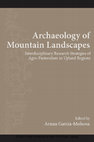
Archaeology of Mountain Landscapes: Interdisciplinary Research Strategies of Agro-Pastoralism in Upland Regions. Edited by Arnau García-Molsosa. SUNY Press, 2023
This chapter provides an overview of the archaeological landscape of the Gobi-Altai Mountains and... more This chapter provides an overview of the archaeological landscape of the Gobi-Altai Mountains and the main results of the research project "Archaeology of a Sacred Mountain," which focuses on the natural and cultural heritage of Ikh Bogd Uul (3,957 m) in Bayankhongor Aimag, Mongolia. The local pastoral landscape is explored in relation to late prehistoric funerary monuments and layered sacred geographies from a long-term perspective. In this context, both pastoral cyclicity and rituality appear tightly interwoven, apparently permeating the social, ritual, and economic space, as well as shaping the human relationship with animals and the "animated" high-mountain environment. Within this framework, the local landscape is interpreted as part of a persistent and articulated interaction. The inclusion of traditional cosmologies and local ecology into the archaeological analysis demonstrates the significance of integrated strategies applied to the archaeology of upland regions and mountain landscapes in Eurasia and elsewhere.
---
Note: This excerpt represents only a small portion of Chapter 4. Please do not hesitate to contact me should you wish to access the complete paper.
Prieto Martinez and Salanova (eds.) Current researches on Bell Beakers, 2013
We present recent findings from excavation work at the “A Ferradura” rock art site of Amoeiro Vil... more We present recent findings from excavation work at the “A Ferradura” rock art site of Amoeiro Village, Ourense, Galicia, in particular, the discovery of a sherd of bell-beaker pottery, as this type of material culture is quite rare to find in the context of petroglyph excavations. This finding will be useful to go over similar pieces in the area and will also allow us to suggest a preliminary interpretative proposal relating bell-beaker activity to rock art activity.
Bazarov and Kradin (eds.) Nomadic Empires of Eurasia in Archaeological and Interdisciplinary Studies, SB RAS Ulan Ude, 2019
The Eurasian steppe is certainly central for the study of the nomadic and pastoral societies, but... more The Eurasian steppe is certainly central for the study of the nomadic and pastoral societies, but mountains, like rivers,
equally have an important role in the local geography and cosmology, since early times. In Mongolia, the Burkhan Khaldun
Mountain is presently protected and worshipped, especially in relation to the figure of Chinggis Khaan. In the Secret History of
the Mongols, in fact, Temüjin escaped being pursued by his enemies by sheltering on that elevation, which he then chose as his
personal mountain deity. Furthermore, according to historical sources and Mongolian folk tradition, his burial site was secretly
located on that mountain, which thus became a fundamental landmark in Mongolia’s mythical landscape. The Burkhan Kaldun
additionally integrates significant Central Eurasian elements alluding to the divine nature of mountains and their symbolical link
to royal power and ancestors. In this paper, I will explore the relevance of mountains in the cosmology and sacred geographies
of the Mongols, as well as their possible interconnections with coeval and earlier beliefs of the people of the steppes.
ANAINA. Serie electrónica de monografías didácticas y de divilgación. Incipit CSIC, 2017
Two years ago, the Incipit designed and organized an exhibition, entitled “Diverse: Archaeology f... more Two years ago, the Incipit designed and organized an exhibition, entitled “Diverse: Archaeology from Incipit beyond Europe”. This exhibition was based on different archaeological and ethnoarchaeological projects carried out by the Incipit around the world. The common elements in all of these projects were, and still are, a community perspective and a sense of scientific practice as being inseparable from political work with citizens everywhere, along with the aim of making this perspective visible to our own community.
PhD Dissertation directed by Felipe Criado Boado, Marco García Quintela and A. César González Gar... more PhD Dissertation directed by Felipe Criado Boado, Marco García Quintela and A. César González García. Interdisciplinary research about the cultural heritage, the funerary landscape, the sacred geography and the cultural astronomy of Ikh Bogd Uul Mountain, Eastern Altai, Mongolia.
M. P. Prieto Martínez y L. Salanova (coords.) (2013). Current researches on Bell Beakers. Proceed... more M. P. Prieto Martínez y L. Salanova (coords.) (2013). Current researches on Bell Beakers. Proceedings of the 15th International Bell Beaker Conference: From Atlantic to Ural. 5th - 9th May 2011 Poio Pontevedra, Galicia, Spain. Copynino-Centro de Impresión Digital. Santiago de Compostela. ISBN: 978-84-941537-0-9
Talks by Cecilia Dal Zovo
Gallery of images from the presentation submitted on the public defence of the doctoral dissertat... more Gallery of images from the presentation submitted on the public defence of the doctoral dissertation at the University of Santiago de Compostela (Spain), 5th of February 2016.
Conference Presentations by Cecilia Dal Zovo
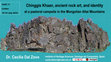
ICAS International Conference of Asia Studies, Leiden, 2019
Ancient engravings represent an important material evidence of the Mongolian prehistory. Outstand... more Ancient engravings represent an important material evidence of the Mongolian prehistory. Outstanding rock art sites of Mongolia and neighbouring Asian countries were submitted to or included in the World Heritage List. Several rock art sites were also documented in the frame of a research project on the Ikh Bogd Uul Mountain, a National Park and a specially protected area in the Eastern Mongolian Altai. In 2009, a richly engraved surface was documented at the winter campsite of B., a local expert herder and the project’s guide on the mountain. The year after, a section of the engraved rock had been transformed into a shrine for Chinggis Khan by the guide himself, in order to sanctify and protect his winter campsite. The figure of the Mongol warrior and emperor certainly has a prominent role in the construction of Mongolian national identity, while it is also venerated on a private level. On the other side, the sacralisation of ancient rock art at a living pastoral campsite can be linked to the local animated tradition of holy rocks and places, persistently included into long-term cosmologies and sacred geographies. Putting this subtle event into focus, I propose to analyse multiple levels and agencies of recognition and re-interpretation of the past and their relevance in shaping alternative heritages: a complex dialogue encompassing ancient places and materiality but also associated memories and values.

CALL for PAPERS TAG, 2019
2017 saw the publication of Mary Beard's bestseller Women and Power, and the explosion of the #Me... more 2017 saw the publication of Mary Beard's bestseller Women and Power, and the explosion of the #MeToo movement across social media. Billed as a manifesto, Beard's book apparently falls short of generating explicitly inclusive and intersectional practical steps for supporting wom*n's power in modern, multi-vocal archaeology. Yet much is happening: gender studies and feminist theorisations of the past have experienced growing popularity. Important conversations (Trowelblazers collective, 'Mentoring Women in Archaeology' Facebook group, Women's Classical Committee, BAJR Respect guide etc.) about the role of wom*n in archaeology are underway. Nonetheless, issues of gender seem still confined to a subgenre in archaeological research and theoretical development. Wom*n's (negative) experiences in and outside of the academy and struggles to rise to positions of power have also been highlighted. These issues are perhaps felt most keenly at intersections of class, race, sexuality, dis/ability, and in the experience of people identifying as non-binary or trans. Therefore, in this session, we invite consideration of the following questions: How can we re-theorise intersections between wom*n/gender and power in the past? What empowers wom*n in the present? Which current practices, theories and stories should we celebrate and build on? What are the barriers to inclusion now? What methods, approaches and guidelines could amplify a diverse range of voices to confront implicit and internalised biases? How can we collectively develop an explicitly inclusive approach to future archaeological theory and practice? We welcome 10-minute papers that approach broad theoretical discussion and/or practical case studies, with (or focused on) inclusive language and subjects. The session will work toward the development of a practical manifesto to redouble efforts to establish and support the power of wom*n in archaeology. We hope that speakers, workshop leaders and participants will continue to work with us after the session to bring this to a tangible end product. Session organisers: Coombe, Penny (DPhil student, University of Oxford; [email protected]) Dal Zovo, Cecilia (Postdoctoral researcher, Institute of Heritage Sciences, Spanish National Research Council; [email protected]) Hodgett, Beth (PhD student, University of London, Birkbeck and Pitt Rivers Museum, Oxford; [email protected]) Session format: Broadly in two parts: a panel debate session, with short position papers, followed by an open workshop and discussion. Find us: Panel 43 https://www.ucl.ac.uk/archaeology/news-events/conferences/tag-2019/conference-sessions-31-55 Picture: Enhanced after TARA Rock Art Project Photo-Drakensberg, South Africa. https://africanrockart.org/rock-art-gallery/south-africa/
The ancient derivation of the word magic is well attested in classical Greek and Iranian sources,... more The ancient derivation of the word magic is well attested in classical Greek and Iranian sources, where magi could be dream-interpreters, soothsayers, and, more in general, specialists in ritual practices, performing funerary functions, livestock sacrifices, and cultic libations, markedly to rivers and mountains. Although more refined and chronologically-fixed etymological considerations may lead to a speculative ground, it is quite significant that the Proto-Indo-European root, *magh-, apparently expressed the idea of power, or ability; while later attestations could also convey the idea of both gift and sacrifice. And how, one may wonder, can these semantic values combine with the analysis of ancient cosmologies, and ritual and funerary practices in the Bronze and Iron Age Eurasia? To which extent is it possible to trace their long-term persistence in several forms of ritual traditions and beliefs? In this paper, I analyse how in Mongolian Altaic cosmology and folklore, the surrounding world is conceived as an animated whole, inhabited and controlled by master spirits of the place –gazriin ezed-; while the landscape itself, as Caroline Humphrey highlighted, is actually seen as a context of interactions between humans and non-human forces, thus validating the essential idea of powerful figures of intermediation for the performance of ritual and funerary practices that include different forms of gifts and sacrifices. Furthermore, I comparatively explore how these concepts may enrich our understanding of the local archaeological landscape, especially in the sphere of Late Prehistoric funerary mounds: their liminal emplacement, cardinal orientation, architecture, and symbolic references to ancient animated cosmologies and worldviews.
In this paper, we discuss the preliminary results of an interdisciplinary dialogue between archa... more In this paper, we discuss the preliminary results of an interdisciplinary dialogue between archaeology and linguistics, which aims to explore the creation and long-term adaptation of sacred and pastoral geographies in Mongolia and Central Eurasia. Our research focuses on the local cosmologies and ancient funerary and ritual landscapes that intertwined with orientation practices and spatial choices in the Altai Mountains over time. In this investigation, we take into account traditional oral sources, as well as old Turkic and Middle Mongolic written sources, the oldest available in Mongolia, in order to explore also cognitive and symbolical aspects that have been only partially addressed by our disciplines. In this way, we comparatively approach the conceptualisation, interpretation, and revitalisation of the surrounding natural and cultural landscapes, as well as the traditional policies of preservation as part of the local history over time. In fact, the traditional animated Mongolian landscape is locally perceived as the result of living ancestral agencies and values that contributed to shape and preserve the local pastoral geographies, ecology, and identity. These material and immaterial aspects that define Mongolian cultural and natural ecology apparently belong to a sophisticated system of knowledge and ethics that actively incorporate the significance of past human agency in the present landscape and the imperative safeguarding for the future. In this sense, we propose that an interdisciplinary and comparative analysis of the Mongolian landscape, cosmology, and ecology may contribute to enrich and expand our critical approach to heritage studies. Besides producing original archaeological and linguistic information, we are testing the benefits and limits of an interdisciplinary archaeo-linguistic research method for a critical and multivocal historical analysis of the material and immaterial heritage in Mongolia and elsewhere.
Several sacred geographies and mountains of Mongolia have been recently proposed for or included ... more Several sacred geographies and mountains of Mongolia have been recently proposed for or included into the World Heritage List as 'mixed' relevant cultural and natural landscapes. The concept of the 'sacred' landscape certainly recurs in the definition of the Mongolian properties submitted to the UNESCO list. Here, I would like to explore the meaning of the sacredness attributed to natural features in Mongolia, and its relevance in terms of local identities, memories, and heritage. In fact, most Mongolian mountains are considered sacred in the local traditional cosmologies, according to which the landscape is intrinsically animated by the master spirits of the place and the spirits of the ancestors. Traditional and present cosmologies and ecologies apparently incorporate also ancient world-views, rituality, and religious and monumental practices performed in the landscape. In this paper, I aim to shed light on the local strategies of movement that enhance the sacredness of the Mongolian landscape, thus contributing to the preservation of its natural and cultural features. I will argue that traditional and present spatial choices, related to both pastoral mobility and rituality, likely encompass and revive a broad, holistic understanding of the surrounding topography. In particular, I will explore a collective day-trip of foreign researchers and local authorities on the Ikh Bogd Uul Mountain (Eastern Altai, Southern Mongolia) in 2011 as a possible pilgrimage performance in the setting of a layered mountain landscape that interweaves Late Prehistoric monuments, Buddhist toponymy and shrines, as well as traditional oboo cairns. In this way, I propose to show how local sacred geographies constitute an active and persistent heritage-making practice through which we can approach alternative conceptualisations of tangible and intangible heritage in a global perspective.



Uploads
Papers by Cecilia Dal Zovo
Full paper available open access: https://www.sciencedirect.com/science/article/pii/S0278416523000326
The so-called ovoo-cairns of Mongolia display a variety and pervasiveness that stimulated a rich anthropological analysis. However, their ancient history remains a challenging and scarcely frequented research topic. This paper introduces an archaeological focus combined with linguistic, historical, anthropological considerations to provide an alternative approach to the genealogy of the ovoos. Their multi-dimensional nature and persistent temporal aspects are investigated through the analysis of early written sources, local narratives, and the archaeological landscape. This is to substantiate the hypothesis that the origin of ovoos could lie far deeper in time than the Buddhist intensification of the 16th and 17th centuries. It could be connected with the ancient monumental tradition of piling (stone) objects in significant places of the sacred and pastoral landscapes of Mongolia. In particular, the possible intersection between present cairns and ancient funerary monumentality is investigated, taking into account three specific case studies of Late Prehistoric mounds that have been locally transformed into ovoos in the area of the Ih Bogd Mountain, in southern Mongolia (Bayanhongor Province). The “ovoo phenomenon” emerges as an exciting opportunity to analyse how people materially engage with and negotiate the local past within the landscape both in ancient and present times.
Bogd Uul Mountain, located in the Gobi-Altai mountain range,
has been studied as part of an Italian-Spanish-Mongolian international
project that aimed to investigate this little-known area of
Southern Mongolia. In this paper, the persistent features of the
local Late Prehistoric (2nd and 1st millennia BC) funerary geography
are illustrated in the light of the possible connection with
architectonic, spatial, and cosmological elements of Old Turkic
materiality and sources (1st millennium AD). Accordingly, a
description of Late Prehistoric and Old Turkic archaeological
sites documented on the Ikh Bogd Uul Mountain is provided and
comparatively discussed. In particular, the relation of spatial proximity
between Late Prehistoric mounds and Old Turkic features is
explored. The archaeological record is also analysed according to
the information provided by Old Turkic inscriptions, which represent
the oldest written sources available in Mongolia. In this comparative
perspective, an archaic correspondence between movement,
funerary rituals, and certain sacred places, such as mountain
heights, hilltops, and river terraces seems to emerge both for
Late Prehistoric burials as well as Old Turkic funerary sites. As a
result, the longue durée of the local sacred and funerary geographies
is identified as a potentially essential aspect of the monumental
landscape of the Ikh Bogd Uul Mountain.
of a NW/SE oriented row of 54 stone cairns, locally known as ‘the path of the spirits’. The row of 54 cairns,
which is apparently oriented towards the setting of the sun at the summer solstice, also displays a suggestive
spatial proximity to an outstanding Late Bronze Age funerary complex. The row of cairns, which has been
originally documented in the arid high mountain landscape of the Ikh Bogd Uul Mountain, Eastern
Mongolian Altai, does not seem to feature in the archaeological literature of Mongolia. Nevertheless, both
these characteristics, namely a NW/SE orientation and a spatial proximity to a Late prehistoric funerary
mound, can be also observed in a row of 9 stone cairns documented in the satellite imagery a few kilometres
away, on the southern slope of the Ikh Bogd Uul Mountain. In this paper, besides the description of such
archaeological features, the hypothesis that the articulation of rows of cairns with a powerful orientation and
numerical symbolism could be rooted in ancient and traditional Eurasian cosmologies and could play an
important role in the local sacred and funerary geographies is discussed.
Books by Cecilia Dal Zovo
mounds from the 2nd and 1st millennium BC. In particular, we present the results of our investigations on one of the largest concentrations of burial mounds in southern Mongolia, the Lake Orog necropolis, documented and partially excavated during the project, underlining its importance for the funerary archaeology of the region. These structures have also been located at high altitudes, in the area of the highland pastures of the Ikh
Bogd Mountain, and show a significant correlation with the layout of the paths and transit routes, including modern ones. This research also aims to enrich our understanding of the complex interactions between environment, culture, and human mobility consolidated during the Bronze and Iron Ages in Mongolia and their potential interconnections with the rest of Central Asia and Eurasia.
Key words: Tumuli, monumentalità, sentieri, mobilità, pastoralismo, steppe, alta montagna, Vie della Seta.
---
Note: This excerpt represents only a small portion of Chapter 4. Please do not hesitate to contact me should you wish to access the complete paper.
equally have an important role in the local geography and cosmology, since early times. In Mongolia, the Burkhan Khaldun
Mountain is presently protected and worshipped, especially in relation to the figure of Chinggis Khaan. In the Secret History of
the Mongols, in fact, Temüjin escaped being pursued by his enemies by sheltering on that elevation, which he then chose as his
personal mountain deity. Furthermore, according to historical sources and Mongolian folk tradition, his burial site was secretly
located on that mountain, which thus became a fundamental landmark in Mongolia’s mythical landscape. The Burkhan Kaldun
additionally integrates significant Central Eurasian elements alluding to the divine nature of mountains and their symbolical link
to royal power and ancestors. In this paper, I will explore the relevance of mountains in the cosmology and sacred geographies
of the Mongols, as well as their possible interconnections with coeval and earlier beliefs of the people of the steppes.
Talks by Cecilia Dal Zovo
Conference Presentations by Cecilia Dal Zovo