Books by Christian Erk
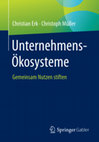
, 2021
Unternehmens-Ökosysteme („Business Ecosystems“) entfalten derzeit ihre transformative Wirkung auf... more Unternehmens-Ökosysteme („Business Ecosystems“) entfalten derzeit ihre transformative Wirkung auf viele etablierte Bereiche der Wirtschaft. Angesichts dieser Entwicklung besitzt das Verständnis dafür, wie sich solche Wertschöpfungsnetzwerke aufbauen und orchestrieren lassen, nicht nur in theoretischer Hinsicht, sondern vor allem auch in praktischer Hinsicht eine große Bedeutung. Denn UnternehmensÖkosysteme stellen ein Instrument dar, um spezifische und komplexe Kundenbedürfnisse auf kooperative Weise in überlegener nutzenstiftender Form zu befriedigen. Dieses Buch bietet einen integrierenden Rahmen für das Verständnis des Konzepts (plattformbasierter) Unternehmens-Ökosysteme. Es analysiert Wesen und Zweck von Ökosystemen, legt dar, wann der Aufbau von Ökosystemen eine sinnvolle Strategie darstellt und beschreibt im Sinne praktischer Handlungsanregungen die Grundlagen, wie sich Ökosysteme erfolgreich gestalten und nachhaltig entwickeln lassen.
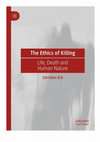
, 2022
In this book, Christian Erk examines the ethical (im)permissibility of killing human beings in g... more In this book, Christian Erk examines the ethical (im)permissibility of killing human beings in general and of selected killings in particular, namely suicide, lethal selfdefence, abortion and euthanasia, as well as organ transplantation and assisted suicide. He does so by addressing a range of important ethical questions: What does it mean to act? Of what elements is an action comprised? What is the difference between a good or evil action and a permissible or impermissible action? How can we determine whether an action is good or evil? Is there a moral duty not to kill? Is this duty held by and against all human beings or only persons? What and who is a person? What is human dignity and who has it? What is it that is actually taken when somebody is killed, i.e. what is life? And closely related to that: What and when is death? By integrating the answers to these questions into an argumentative architecture, the book offers a comprehensive exploration of one of the most fundamental questions of mankind: Under which conditions, if any, is killing human beings ethically permissible?
, 2020
Dieses Lehrbuch klärt die grundlegenden Fragen des Managements. Um was geht es beim Managen? Welc... more Dieses Lehrbuch klärt die grundlegenden Fragen des Managements. Um was geht es beim Managen? Welche Aufgaben, welche Rollen, welche Ziele hat Management? Welche gesicherten Erkenntnisse haben wir aus Wissenschaft und Praxis? Wie kann man als Manager Mehrwert generieren? Auf der Suche nach Antworten auf diese Fragen machen die Autoren Management in Form eines integrierten Modells versteh- und greifbar. Grundlage dieses Modells sind die Arbeiten wichtiger Managementtheoretiker der letzten 100 Jahre, die in einer vergleichenden Zusammenschau sozusagen übereinandergelegt werden. Die so identifizierten Gemeinsamkeiten werden zu einem Managementmodell integriert, das somit überzeitlich gültige Aussagen zum Thema „Management“ enthält. Diese bereiten die Manager von heute konzeptionell fundiert auf die neuen, komplexen und dynamischen Herausforderungen von morgen vor.
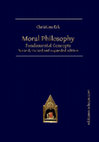
Second, revised and expanded edition, 2019
This book is a systematic introduction to moral philosophy (or as it is also called: ethics) that... more This book is a systematic introduction to moral philosophy (or as it is also called: ethics) that aims at raising its readers’ ethical literacy and competence. Starting from the nature and end of this science it examines the fundamental questions and concepts of ethics. The core chapters familiarise the reader with the elements of a human act, outline how these elements influence the ethical quality of such act and shed light on the standard of morality, i.e. the good. The book furthermore clarifies the concepts of duty, right as well as responsibility and explicates the moral duties and rights of the human person. In doing so it also elucidates the notions of human dignity and the common good. Last but not least, the book contains a range of practical tools that help the reader put ethical theory into practice. The comprehensive appendix contains chapters on the virtues, propositional logic and arguments.
Eine wirtschafts- und sozialethische Analyse der Rationierung nach Selbstverschulden, 2015
Diese Publikation befasst sich mit einer umstrittenen Handlungsstrategie zum Umgang mit dem chron... more Diese Publikation befasst sich mit einer umstrittenen Handlungsstrategie zum Umgang mit dem chronischen Finanzierungsdefizit unserer Gesundheitswesen: der Rationierung anhand des Kriteriums Selbstverschulden. Wie argumentiert wird, ist die Rationierung nach Selbstverschulden grundsätzlich moralisch zulässig, jedoch nur in einer sehr begrenzten Anzahl von Fällen möglich. Deswegen sollte vom Einsatz dieses Rationierungskriteriums abgesehen werden.
Eine Einführung in den klassischen Systembegriff, 2016
Systeme. Wir begegnen ihnen auf Schritt und Tritt, leben ganz selbstverständlich in und mit ihnen... more Systeme. Wir begegnen ihnen auf Schritt und Tritt, leben ganz selbstverständlich in und mit ihnen und sind sogar selber eines. Doch ist uns eigentlich bewusst, worüber wir sprechen, wenn wir von einem System sprechen? Die meisten von uns haben wohl eine intuitive Ahnung, aber so ganz genau könnten wir es wohl nicht erklären, wenn man uns fragen würde? Das vorliegende Buch hat es sich zur Aufgabe gemacht, im Sinne einer Einführung in die Grundlagen des systemischen Denkens eine Antwort auf die Frage "Was ist ein System?" zu geben und die Merkmale des Systembegriffs herauszuarbeiten.
Health as a human right has become pervasive. It has been acknowledged by a variety of internatio... more Health as a human right has become pervasive. It has been acknowledged by a variety of international law documents, which entered the political realm and academic circles. Yet, despite its prominence, health as a human right remains a mystery -especially with respect to its philosophical underpinnings. To address this unfortunate insufficiency, Health, Rights and Dignity critically assesses the stipulation that health is a human right, which-as international law holds-derives from the inherent dignity of the human person. The author scrutinies concepts underlying this stipulation (health, rights, dignity) and concludes that such a right cannot be upheld from a philosophical perspective.
Papers by Christian Erk
Bioethica Forum 7.3 (2014): 106-109.
International Journal of Bioethics and Health Policy, 2016
If we accept the “Dead-Donor-Rule (DDR)” as a true and valid premise, we are immediately confront... more If we accept the “Dead-Donor-Rule (DDR)” as a true and valid premise, we are immediately confronted with the arduous task of answering one of the most controversial questions of contemporary bioethics: How can we diagnose an explantee’s death with certainty? Taking this problem as its starting point this article takes a critical look at and suggests expanding the so-called “definition-criteria-tests (DCT)” model that is usually used to answer the question just posed. This suggestion derives from the insight that – as will be argued – every definition of death is necessarily based on a definition of life that logically precedes it. Applying the refined DCT model to the whole brain definition, the article then sets out to reveal the strange notion of life implied by brain-based defini-tions of death and by doing so questions their tenability. Accepting that brain-based approaches are not suitable to define death would allow for a concentration on the problem that really is at stake in the debate about the (im)permissibility of the transplantion of vital organic material, namely our understanding of the phenomenon we call life and its value.
Erk, Christian. “Corporate Responsibility:. Eine kritische Reflexion.” REPRAX. Zeitschrift zur Rechtsetzung und Praxis in Gesellschafts- und Handelsregisterrecht 2 (2015): 23-47.
Corporate Responsibility: Eine kritische Reflexion Inhaltsübersicht I. Corporate Responsibility o... more Corporate Responsibility: Eine kritische Reflexion Inhaltsübersicht I. Corporate Responsibility oder die Frage nach der Verantwortungsfähigkeit von Unternehmen II. Das Konzept «Verantwortung» und seine Facetten III. Können Unternehmen Verantwortung tragen? IV. Unternehmensstrafrecht ohne Unternehmensverantwortung? I. Corporate Responsibility oder die Frage nach der Verantwortungsfähigkeit von Unternehmen Steuervermeidung, Lohndumping, Arbeitsplatzverlagerung bzw. Outsourcing in Billiglohnländer, Massenentlassungen oder Werksschliessungen trotz Profitabilität, überbordende Managerlöhne, Ressourcenverschwendung, Korruption, Umweltverschmutzung, fragwürdige Werbepraktiken, Bestechung, Kinderarbeit, Ausbeutung in Sweatshops, Unterlaufen von Sozial-standards… Sobald ein Unternehmen öffentlich einer dieser Praktiken überführt oder auch nur bezichtigt wird, dauert es nicht lange, bis mit fast schon reflexartiger Routine der Ruf nach einer Stärkung der «Unternehmensverantwortung (UV)» bzw. der «Corporate Responsibility (CR)» 1 laut wird.
Tuckermann, Harald & Christian Erk. „Strukturierte Kommunikation und Spitalmanagement.“ Imago Hominis 22.1 (2015): 41-52.
Management in Spitälern ist eine hochgradig herausfordernde Aufgabe, insbesondere wenn es um klin... more Management in Spitälern ist eine hochgradig herausfordernde Aufgabe, insbesondere wenn es um klinik-, stationen- und abteilungsübergreifende Themen geht. Die Aufgabe von Management besteht darin, die vielfältigen Interessen, Perspektiven und Praktiken, die sich in den Kliniken, Stationen oder Abteilungen beobachten lassen, im Sinne des Ganzen aufeinander abzustimmen und für Entscheidungen mit Blick auf die Gesamtorganisation zu sorgen. Dabei kommt der Strukturierung von Kommunikation eine entscheidende Bedeutung zu. Denn: Die Qualität einer Entscheidung wird in nicht unwesentlichem Ausmass durch die Entscheidungspraxis, d.h. durch das „Wie“ des Entscheidens mitbestimmt. Dieser Artikel hat es sich deswegen zum Ziel gesetzt, dem Leser einführend Möglichkeiten vorzustellen, die eigene Entscheidungspraxis in ihrer kommunikativen Verfertigung zu reflektieren und auf dieser Basis zu optimieren.
Bioethica Forum 7.3 (2014): 106-109.
Theologisches. Katholische Monatsschrift. 44.3/4 (März/ April 2014): 109-128.
Die Idee, fehlende Körperteile oder schwer geschädigte Organe durch Transplantation zu ersetzen, ... more Die Idee, fehlende Körperteile oder schwer geschädigte Organe durch Transplantation zu ersetzen, hat seit jeher eine große Faszination auf die Menschen ausgeübt. So berichtet z.B. die von Jacobus de Voragine verfasste Legenda Aurea im Kapitel über die heiligen Ärztemärtyrer Cosmas und Damian ("De Sanctis Cosma et Damiano") vom "Wunder des schwarzen Beins", das in vielen Gemälden festgehalten und prominent auch auf der Innentür des Cosmas-Damian-Reliquienschreins (Jesuitenkirche Sankt Michael, München) dargestellt worden ist. Nach diesem Bericht sollen die heiligen Zwillinge das durch Krebs ("cancer") zerstörte Bein ("crus") eines Kirchendieners durch das Bein eines verstorbenen und gerade begrabenen Äthiopiers ersetzt haben -was nicht zuletzt auch deswegen Aufsehen erregt haben dürfte, da das Bein des Kirchendieners nach der Transplantation zu einem Teil hell-und zu einem Teil dunkelhäutig war: "Felix, the eighth pope after S. Gregory, did do make a noble church at Rome of the saints Cosmo and Damian, and there was a man which served devoutly the holy martyrs in that church, who a canker had consumed all his thigh. And as he slept, the holy martyrs Cosmo and Damian, appeared to him their devout servant, bringing with them an instrument and ointment of whom that one said to that other: Where shall we have flesh when we have cut away the rotten flesh to fill the void place? Then that other said to him: There is an Ethiopian that this day is buried in the churchyard of S. Peter ad Vincula, which is yet fresh, let us bear this thither, and take we out of that morian's flesh and fill this place withal. And so they fetched the thigh of the sick man and so changed that one for that other. And when the sick man awoke and felt no pain, he put forth his hand and felt his leg without hurt, and then took a candle, and saw well that it was not his thigh, but that it was another. And when he was well come to himself, he sprang out of his bed for joy, and recounted to all the people how This article has been published as: Erk, Christian. "Die Explantation vitalen organischen Materials "ex cadavere". Oder: Was macht einen lebenden Körper zu einem Leichnam?" Theologisches. Katholische Monatsschrift. 44.3/4 (März/ April 2014): 109-128. Seite 3 von 26 it was happed to him, and that which he had seen in his sleep, and how he was healed. And they sent hastily to the tomb of the dead man, and found the thigh of him cut off, and that other thigh in the tomb instead of his. Then let us pray unto these holy martyrs to be our succour and help in all our hurts, blechures and sores, and that by their merits after this life we may come to everlasting bliss in heaven. Amen." [40] Während für das Gelingen dieser Transplantation seinerzeit das Eingreifen zweier heiliger Ärzte nötig war, so hat der sich seit damals stetig entfaltende medizinisch-technische Fortschritt und die damit einhergehende Erweiterung des Möglichkeitsraumes menschlichen Handelns dazu geführt, dass Transplantationen heute auch ohne das direkte Wirken Heiliger gelingen können. Wie mit allen menschlichen Fähigkeiten stellt sich jedoch auch in Bezug auf diesen relativ neu hinzugekommenen Bereich des menschlichen Könnens die Frage, ob wir all das, was wir zu tun in der Lage sind, auch tun dürfen. 1 So ist im Hinblick auf die Möglichkeiten der Transplantationsmedizin also ganz grundlegend zu fragen, ob und wenn ja, unter welchen Bedingungen, eine Transplantation eine moralisch zulässige (oder zumindest: moralisch nicht unzulässige) Handlung darstellt. Da der Transplantation von organischem Material (Zellen, Gewebe, Organe, Organsysteme) in einen Empfänger notwendigerweise die (operative) Explantation (Transplantatentnahme) des zur Transplantation vorgesehenen organischen Materials aus einem "Spender" vorangehen muss, hängt die moralische Zulässigkeit der Transplantation in erster Linie davon ab, ob die zur Transplantation notwendige Explantation eine moralisch zulässige (oder zumindest: moralisch nicht unzulässige) Handlung darstellt oder nicht. 2. Die Tote-Spender-Regel als grundlegende moralische Grenze der Explantation Als grundlegender Maßstab für die Beurteilung der moralischen Qualität der Explantation organischen Materials gilt gemeinhin die moralische Pflicht, unschuldige Personen nicht zu töten. Wendet man diese Pflicht auf das Thema Explantation an, so besagt sie im Grunde nichts anderes, als dass unschuldige Personen für oder durch eine Explantation nicht getötet 1 Auch in Bezug auf die Transplantationsmedizin gilt das Wort des hl. Paulus aus 1 Thess 5, 21f, nach dem wir alles zu prüfen, nur das Gute zu behalten und uns jeglicher Form des Bösen zu enthalten haben: "πάντα δὲ δοκιμάζετε, τὸ καλὸν κατέχετε, ἀπὸ παντὸς εἴδους πονηροῦ ἀπέχεσθε." / "omnia autem probate, quod bonum est tenete, ab omni specie mala abstinete vos." This article has been published as: Erk, Christian. "Die Explantation vitalen organischen Materials "ex cadavere". Oder: Was macht einen lebenden Körper zu einem Leichnam?" Theologisches. Katholische Monatsschrift. 44.3/4 (März/ April 2014): 109-128. Seite 4 von 26 werden dürfen. Und dies bedeutet wiederum, dass aus einer unschuldigen Person nur dasjenige organische Material explantiert werden darf, dessen Explantation nicht kausal zum Tod der betreffenden Person führt. Diese die unhintergehbare Grenze der moralischen Zulässigkeit der Explantation bestimmende moralische Pficht wird gemeinhin als "Dead-Donor-Rule" (DDR; zu deutsch: Tote-Spender-Regel) 2 bezeichnet. Wie Abbildung 1 verdeutlicht, verbietet die Tote-Spender-Regel die prämortale Entnahme von vitalem, d.h. lebensnotwendigem, organischen Material zum Zwecke der Transplantation. Alle anderen dargestellten Formen der Transplantation werden von ihr nicht eingeschränkt, da diese üblicherweise nicht zwingend zum Tod des Spenders führen, sondern allenfalls mit gewissen gesundheitlichen Nachteilen für den Spender verbunden sind. Abb. 1: Formen der Transplantation und Dead-Donor-Rule Die Tote-Spender-Regel hat nicht nur in der Moralphilosophie faktisch weltweite Akzeptanz 3 gefunden, sondern wird auch in diversen Dokumenten und Verlautbarungen der Katholi-2 Linus Geisler formuliert die Tote-Spender-Regel wie folgt: "Lebenswichtige Organe dürfen nur von toten Patienten entnommen werden; lebende Patienten dürfen nicht für oder durch eine Organentnahme getötet werden" ([15], S. 4). Vgl. auch ([37], S. 674). 3 In diesem Zusammenhang ist der Vollständigkeit halber anzumerken, dass es durchaus Stimmen gibt, die dafür plädieren, von der Tote-Spender-Regel abzurücken. So ist es z. B. für Robert Troug und Franklin Miller [37] moralisch nicht relevant, wann eine Person tot ist oder ob sie durch die Organentnahme stirbt, da sie ihr Recht auf Leben, wenn sie einmal in den Sterbeprozess eingetreten ist, freiwillig autonom durch informierte Zustimmung aufgeben kann. Ebenfalls für die Aufgabe dieser Regel (zusammen mit der Vorstellung der Heiligkeit des Lebens), allerdings auf Basis eines an Lebensqualität orientierten utilitaristischen Arguments, sprechen sich Peter Singer ([24], S. 20 ff.) und Dieter Birnbacher [6] aus. Diese Argumente können hier jedoch nicht näher besprochen werden. This article has been published as: Erk, Christian. "Die Explantation vitalen organischen Materials "ex cadavere". Oder: Was macht einen lebenden Körper zu einem Leichnam?" Theologisches. Katholische Monatsschrift. 44.3/4 (März/ April 2014): 109-128. Seite 5 von 26 schen Kirche sowie nicht zuletzt auch von Papst Johannes Paul II. und Papst Benedikt XVI. bekräftigt: Catechismus Catholicae Ecclesiae: "Organorum transplantatio legi morali est conformis, si pericula et discrimina physica atque psychica quae donans subit, bono sunt proportionata quod pro eo quaeritur cui illa destinatur. Donatio organorum post mortem est actus nobilis et meritorius atque alliciendus tamquam generosae solidarietatis manifestatio. Moraliter acceptabilis non est, si donans vel eius propinqui ius ad id habentes suum explicitum non dederint consensum. Praeterea nequit moraliter admitti, mutilationem, quae invalidum reddit, vel mortem directe provocare, etiamsi id fiat pro aliarum personarum retardanda morte." ([41], 2296) 4
Erk, Christian. „Überlegungen zur sozialen Gerechtigkeit im Gesundheitswesen.“ Imago Hominis 20.1 (2013): 31-42.
(Soziale) Gerechtigkeit wird gemeinhin als Prinzip betrachtet, das beim Management und insbesonde... more (Soziale) Gerechtigkeit wird gemeinhin als Prinzip betrachtet, das beim Management und insbesondere der Verteilung der knappen Ressourcen des Gesundheitswesens berücksichtigt werden sollte. Der vorliegende Artikel setzt an dieser Beobachtung an und fragt, was es bedeutet, (soziale) Gerechtigkeit auf Makroebene zum Maßstab der Rationierung bzw. Priorisierung im Gesundheitswesen zu machen. Aus Sicht der hierbei vertretenen aristotelisch-thomistischen Position hat (soziale) Gerechtigkeit nicht primär mit Gleichheit, sondern vor allem mit der Berücksichtigung der zwischen einer Gemeinschaft und ihren Gliedern bestehenden und sich am Maßstab des ‚bonum commune‘ bemessenden (Anspruchs-)Rechte und Pflichten zu tun. Der Artikel möchte darüberhinaus dafür sensibilisieren, daß eine we-sentliche Weichenstellung für eine gesunde Zukunft unserer Gesundheitswesen darin be-steht, die Konzepte des ‚bonum commune‘ und der ‚caritas socialis‘ in das Zentrum der Re-formüberlegungen zu stellen.
Ethik in der Medizin 26.2 (2014): 121-135.
Der vorliegende Artikel plädiert dafür, die meist auf die Aspekte Todesdefinition, -kriterium und... more Der vorliegende Artikel plädiert dafür, die meist auf die Aspekte Todesdefinition, -kriterium und -feststellung fokussierte Diskussion über die moralische (Un-)Zulässigkeit der Spende und Transplantation vitaler Organe aufzubrechen und beim Nachdenken darüber das zum Ausgangspunkt der Überlegungen zu machen, was mit dem Tod eigentlich verloren geht, nämlich das Leben. Nach einer Antwort auf die Frage „Was ist Leben?“ suchend wird hierbei aufgezeigt, dass Leben nicht auf das Vorhandensein gewisser beobachtbarer physiologischer Größen reduzierbar ist, sondern in seinem wesentlichen Kern nur mit den Mitteln der Philosophie als der actus primus alles Lebendigen und das, was wir gemeinhin Seele nennen, er-klärt werden kann. Auf Basis der so gewonnenen Erkenntnisse wird geschlussfolgert, dass die Entnahme vitalen organischen Materials aus einer Person, deren Gehirnaktivitäten ausgefallen sind, immer prämortal erfolgt und damit einen Verstoß gegen die Tote-Spender-Regel bedeutet.
Bioethica Forum 5.3 (2012): 105-111., 2012
"An article published in an earlier issue of this journal advanced the thesis that “the embryo is... more "An article published in an earlier issue of this journal advanced the thesis that “the embryo is a potential person, because it will develop into a person if nothing prevents it” (1; p. 79). The interesting thing about this claim is not the statement itself but the author’s attempt to support his claim by reference to a tradition which he traces back to Thomas Aquinas. However, the idea of potential personhood is incommensurate with Thomas Aquinas’ understanding of personhood. For a Thomistic thinker the phrase ‘potential person’ is a ‘contradictio in adjecto’, a contradiction in terms. Showing why is what this essay is devoted to. It defends the thesis that there is no such thing as a potential person if we assume (with Thomas Aquinas) that a person is an individual substance who possesses a rational nature.
By doing so, this article is not only meant to render more precise the way we think about persons but also to refocus the content of our disputes about the problem of personhood. When we think about personhood it is not the dispute between the doctrines Baertschi (1; p. 77) has suggested to name actualism, dispositionalism and capabilitism which we should devote our attention to but a more fundamental question, namely whether personhood can and should be reduced to a mere property (or a set of mere properties) or has rather to do with ontology and substantial being."
Zeitschrift für Wirtschafts- und Unternehmensethik 13.1 (2012): 31-49.
The answer to the question of how to deal with the widening gap between the growing costs of heal... more The answer to the question of how to deal with the widening gap between the growing costs of health (care) and necessarily limited health (care) resources in a just fashion, heavily depends on what we take the term ‘just’, to signify. This article is meant to offer a perspective on the topic of just health
(care) which takes the idea of justice as virtue seriously by embedding it in the context of its original explication, namely an onto-teleological philosophy which takes (social) justice to be about claim-rights (as well as their corresponding duties) and the common good. This article is, however, not meant to provide ready-made answers or a discussion of the arguments featuring in the contemporary debate about health (care) prioritisation and/or rationing. It rather takes up the cudgels on behalf of the concept of the common good and reminds us of the fact that if we want to talk about (social) justice and just health (care) we cannot do so without also talking about the common good.
Zeitschrift für Medizinische Ethik 58.1 (2012): 23-36
Abstract english: The present article analyses the concept ‚responsibility’ both as object of as ... more Abstract english: The present article analyses the concept ‚responsibility’ both as object of as well as norm for ethics and having done so develops an argument for the basic responsi-bility of ethics. The first part of this article is devoted to the discussion of the concept ‚re-sponsibility’ and its facets of meaning. The second part of the article is meant to explore the question of the basic responsibility of ethics and of every person dealing with ethics respec-tively. In this connection, the article argues for a prospective responsibility to truth resulting from the character of ethics as the philosophy of morals.
Abstract deutsch: Der vorliegende Artikel analysiert das Konzept ‚Verantwortung’ sowohl als Gegenstand als auch als Maßstab der Ethik und entwickelt auf dieser Basis ein Argument für die grundlegende und für alle Bereichsethiken inkl. der biomedizinischen Ethik gültige Verantwortung der Ethik. Ein erster Teil dieses Artikels ist der Diskussion des Konzepts ‚Verantwortung’ und seiner Bedeutungsfacetten gewidmet. Im zweiten Teil des Artikels wird der Frage nachgegangen, was die grundlegende Verantwortung der Ethik bzw. jeder sich mit Ethik befassenden Person ist. Der Artikel argumentiert hierbei für eine prospektive Verant-wortung zur Wahrheit, die sich aus dem Wesen der Ethik als Philosophie der Moral ergibt.
Teaching Documents by Christian Erk

Sauber Petronas 2005: Achieving much with comparatively little
Peter Sauber founded the PP Sauber AG in 1970 in Hinwil, Switzerland using a 100,000 Swiss Franc ... more Peter Sauber founded the PP Sauber AG in 1970 in Hinwil, Switzerland using a 100,000 Swiss Franc loan from his father. The goal of the business was to build racing cars. After some initial hardship he achieved national success and acclaim relatively quickly, and then in 1989 his team came to international notice after winning the World Sports Car Championship and taking the first two places in the Le Mans 24 Hours.
Emboldened by these successes, and against the advice of many experts, in 1993 Peter Sauber took the plunge and entered a team in the fiercely competitive and hugely expensive blue riband of motorsport, Formula 1. The early years were tough and the team had to endure a succession of body blows and disappointments, but eventually a combination of outstanding performances and the loyal support of the main sponsors Credit Suisse, Petronas and Red Bull enabled them to establish themselves among the motorsport elite. The turning point came in 2001, when Sauber achieved a sensational fourth place in the constructor’s championship behind Ferrari, McLaren-Mercedes and Williams-BMW. However, throughout the 13 years in which Sauber has been competing in Formula 1 the struggle for the best-possible results has always been a battle between David and Goliath. As one of the few private teams the Swiss have to get by on a budget of around CHF 125 -150 million and 300 employees, whereas works teams like Ferrari or Toyota can each draw on ca. CHF 480 million to CHF 630 million and a workforce of over 700 employees, enabling them to exploit their full potential. If we compare the team’s limited resources with the success registered over the past few years, Sauber’s achievements cannot be praised too highly.
The cornerstone of this success is the team’s patriarch and founder of the company, Peter Sauber, who has understood over more than three decades how to develop the business with great skill and strategic vision. Despite sometimes strict leadership he also sets great store by team thinking and attempts to guide his team in the fast-moving Formula 1 business on foundations of trust, a down-to-earth approach, a sense of personal responsibility and emotional involvement. The working relationship thus engendered and the comparatively low turnover in personnel have led to a high degree of stability within the team and an ability to stand together when the going gets tough.



Uploads
Books by Christian Erk
Papers by Christian Erk
By doing so, this article is not only meant to render more precise the way we think about persons but also to refocus the content of our disputes about the problem of personhood. When we think about personhood it is not the dispute between the doctrines Baertschi (1; p. 77) has suggested to name actualism, dispositionalism and capabilitism which we should devote our attention to but a more fundamental question, namely whether personhood can and should be reduced to a mere property (or a set of mere properties) or has rather to do with ontology and substantial being."
(care) which takes the idea of justice as virtue seriously by embedding it in the context of its original explication, namely an onto-teleological philosophy which takes (social) justice to be about claim-rights (as well as their corresponding duties) and the common good. This article is, however, not meant to provide ready-made answers or a discussion of the arguments featuring in the contemporary debate about health (care) prioritisation and/or rationing. It rather takes up the cudgels on behalf of the concept of the common good and reminds us of the fact that if we want to talk about (social) justice and just health (care) we cannot do so without also talking about the common good.
Abstract deutsch: Der vorliegende Artikel analysiert das Konzept ‚Verantwortung’ sowohl als Gegenstand als auch als Maßstab der Ethik und entwickelt auf dieser Basis ein Argument für die grundlegende und für alle Bereichsethiken inkl. der biomedizinischen Ethik gültige Verantwortung der Ethik. Ein erster Teil dieses Artikels ist der Diskussion des Konzepts ‚Verantwortung’ und seiner Bedeutungsfacetten gewidmet. Im zweiten Teil des Artikels wird der Frage nachgegangen, was die grundlegende Verantwortung der Ethik bzw. jeder sich mit Ethik befassenden Person ist. Der Artikel argumentiert hierbei für eine prospektive Verant-wortung zur Wahrheit, die sich aus dem Wesen der Ethik als Philosophie der Moral ergibt.
Teaching Documents by Christian Erk
Emboldened by these successes, and against the advice of many experts, in 1993 Peter Sauber took the plunge and entered a team in the fiercely competitive and hugely expensive blue riband of motorsport, Formula 1. The early years were tough and the team had to endure a succession of body blows and disappointments, but eventually a combination of outstanding performances and the loyal support of the main sponsors Credit Suisse, Petronas and Red Bull enabled them to establish themselves among the motorsport elite. The turning point came in 2001, when Sauber achieved a sensational fourth place in the constructor’s championship behind Ferrari, McLaren-Mercedes and Williams-BMW. However, throughout the 13 years in which Sauber has been competing in Formula 1 the struggle for the best-possible results has always been a battle between David and Goliath. As one of the few private teams the Swiss have to get by on a budget of around CHF 125 -150 million and 300 employees, whereas works teams like Ferrari or Toyota can each draw on ca. CHF 480 million to CHF 630 million and a workforce of over 700 employees, enabling them to exploit their full potential. If we compare the team’s limited resources with the success registered over the past few years, Sauber’s achievements cannot be praised too highly.
The cornerstone of this success is the team’s patriarch and founder of the company, Peter Sauber, who has understood over more than three decades how to develop the business with great skill and strategic vision. Despite sometimes strict leadership he also sets great store by team thinking and attempts to guide his team in the fast-moving Formula 1 business on foundations of trust, a down-to-earth approach, a sense of personal responsibility and emotional involvement. The working relationship thus engendered and the comparatively low turnover in personnel have led to a high degree of stability within the team and an ability to stand together when the going gets tough.