Books by Christoph Schwall
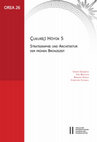
Der fünfte Band der Abschlusspublikationen zu den Ausgrabungen auf dem Çukuriçi Höyük (Westtürkei... more Der fünfte Band der Abschlusspublikationen zu den Ausgrabungen auf dem Çukuriçi Höyük (Westtürkei) behandelt die Stratigraphie und die Architektur der frühbronzezeitlichen Siedlungen.
In der Frühbronzezeit 1 (3000–2750 v. Chr.) findet sich auf dem Çukuriçi Höyük ein für die Region Westanatoliens bislang einzigartiges Metallhandwerkszentrum. Die großflächigen Ausgrabungen der Jahre 2006 bis 2014 legten ein dicht bebautes Siedungsareal frei, das aus zahlreichen Gebäudestrukturen bestand, die sich über Plätze und Wege erschließen ließen. Neben den verwendeten Baustoffen der einzelnen Raumeinheiten werden in diesem Band auch unterschiedliche Bautechniken, die Erschließbarkeit der Räume sowie Installationen, wie Öfen und Herdstellen, behandelt. Darüber hinaus zeigen detaillierte stratigraphische und bauforscherische Untersuchungen, dass sich die Wohn- und Werkstattbereiche sukzessive von freistehenden Bauten hin zu in agglutinierender Bauweise errichteten Gebäuden entwickelten, die sich im Lauf der Zeit über den Siedlungshügel ausgedehnt haben.
Anhand der neuen Grabungsergebnisse können unter Berücksichtigung interdisziplinärer Studien Aussagen zu der soziokulturellen Struktur des frühbronzezeitlichen Metallhandwerkszentrums auf dem Çukuriçi Höyük getroffen werden. Bei genauer Betrachtung der Forschungsresultate ergeben sich so neue Sichtweisen und Interpretationsansätze für das Sozialgefüge am Beginn des 3. Jahrtausends v. Chr. in Westanatolien und der Ägäis.
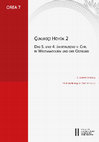
Der zweite Band der Çukuriçi Höyük-Reihe widmet sich dem 5. und 4. Jahrtausend v. Chr. in Westana... more Der zweite Band der Çukuriçi Höyük-Reihe widmet sich dem 5. und 4. Jahrtausend v. Chr. in Westanatolien und der Ostägäis mit einem Schwerpunkt auf den Forschungen zu den kupferzeitlichen Siedlungen des Çukuriçi Höyük.
Der behandelte Zeitraum des Mittel- und Spätchalkolithikums gehört zu den bis dato unzureichend erforschten Perioden der Region. Auf eine Einführung in die Terminologie und Chronologie folgt eine ausführliche Darlegung des aktuellen Forschungsstandes im Arbeitsgebiet und den angrenzenden Gebieten der Dodekanes und Türkisch-Thrakiens. Es wird deutlich, dass die Forschungen der letzten Jahrzehnte eine Vielzahl von neuen Daten erbracht haben. Diese erlauben eine Diskussion und Bewertung der derzeitigen Chronologie im Arbeitsgebiet. Den Kern des Buches stellen die Befund- und Materialstudien der spätchalkolithischen Ausgrabungen auf dem Çukuriçi Höyük dar.
Anhand dieser Grundlagenforschung lassen sich wichtige Erkenntnisse zu chronologisch relevanter Keramik der mittleren und späten Kupferzeit herausarbeiten. Die Resultate der Studien dienen als Grundlage für eine erstmalige Bewertung möglicher Faktoren, die zu den soziokulturellen Entwicklungen in der Kupferzeit in Westanatolien und der Ostägäis geführt haben.

This book represents the first volume of the Çukuriçi Höyük final publications. The prehistoric t... more This book represents the first volume of the Çukuriçi Höyük final publications. The prehistoric tell site at the Aegean coast of Turkey, close to the antique metropolis of Ephesos, was excavated between 2007 and 2014. The study includes a general outline of the research project, its main methodological and analytical approaches, and its key outcomes after seven excavation seasons, all in chapter I. A list of all currently published papers and books should offer the reader further detail on aspects that are not repeated in this volume. Chapters II to VI deal with various new results of Çukuriçi Höyük research in a diachronic perspective. The Neolithic settlements dating to the 7 th millennium BC are presented in aspects of technology and raw material procurement. In particular, the role of pressure technology in the Neolithisation process is discussed in detail to contextualise the 7 th millennium lithic assemblage of the site within broader cultural developments. The Late Chalcolithic and Early Bronze Age settlements of 4 th and 3 rd millennia BC highlight several facets of distinct regional and trans-regional networks. Two marble figurines of that date are used to re-evaluate the origin and development of early schematic figurines in western Anatolia and the Aegean. Analysis of 4 th and 3 rd millennia textile production demonstrates shared commonalities and regional connections as well. Micro-analyses of an Early Bronze Age metal workshop reconstruct the continuities and changes within a few generations. The diachronic pottery analyses offer not only the main ceramic fabrics based on petrography and geochemistry from 7 th to 3 rd millennium BC, but also the clay sources identified in the region, which are presented and discussed for the first time. All detailed studies of the Çukuriçi Höyük 1 volume are embedded in a broader Aegean-Anatolian view to provide a balanced cultural and geographical context for the excavation results.
Edited Books by Christoph Schwall

The 10th International Congress on the Archaeology of the Ancient Near East (ICAANE) was held in ... more The 10th International Congress on the Archaeology of the Ancient Near East (ICAANE) was held in Vienna in April 2016, organized by the Institute for Oriental and European Archaeology (OREA), the Austrian Academy of Sciences with the support of the University of Vienna, a generous welcome by the City of Vienna, and the Federal Ministry for Europe, Integration and Foreign Affairs. More than 800 participants from 38 countries presented their latest research in 8 parallel sections and 28 workshops (to be published in separate volumes). Additionally, a poster section with more than 80 posters was organized – a number of them integrated here in the chapters relevant to the corresponding topics.
The two-volume proceedings contain numerous contributions presented during the 10th ICAANE, giving an overview of current research, excavations and activities in Near Eastern archaeology. The first volume includes the "Statement about the Threat to Cultural Heritage in the Near East and North Africa", signed in the course of the 10th ICAANE, as well as papers of the sections Transformation & Migration, Archaeology of Religion & Ritual, Images in Context and Islamic Archaeology. The second volume is dedicated to the main topics Prehistoric and Historical Landscapes & Settlement Patterns and Economy & Society, and is completed with Excavation Reports & Summaries.
Papers by Christoph Schwall
C. Schwall – H. David-Cuny – E. Yousif – S. A. Jasim – B. Horejs, A newly discovered ‘Gulf type’ ... more C. Schwall – H. David-Cuny – E. Yousif – S. A. Jasim – B. Horejs, A newly discovered ‘Gulf type’ seal from Kalba, The IASA Bulletin 32, 2024, 19–21.
Ch. Schwall – M. Börner – M. Brandl – H. David-Cuny – D. Blattner – F. Ostmann – B. Horejs, Repor... more Ch. Schwall – M. Börner – M. Brandl – H. David-Cuny – D. Blattner – F. Ostmann – B. Horejs, Report on the 2023 Austrian Archaeological Expedition at Kalba (K4), Annual Sharjah Archaeology 22, 2024, 8–18.
Ch. Schwall – B. Horejs – M. Numrich – E. Pernicka, First Golden Times: the ‘Treasures’ of Troy a... more Ch. Schwall – B. Horejs – M. Numrich – E. Pernicka, First Golden Times: the ‘Treasures’ of Troy as an Indicator for Long Distance Trade Networks in the 3rd Millennium BC, in: R. Jung – H. Popov (Hrsg.), Searching for Gold. Resources and Networks in the Bronze Age of the Eastern Balkans, Oriental und European Archaeology 31 (Wien 2024) 347–366.
P. Librado – G. Tressières – L. Chauvey – A. Fages – N. Khan – S. Schiavinato – L. Calvière-Tonas... more P. Librado – G. Tressières – L. Chauvey – A. Fages – N. Khan – S. Schiavinato – L. Calvière-Tonasso – M. A. Kusliy – C. Gaunitz – X. Liu – S. Wagner – C. Der Sarkissian – A. Seguin-Orlando – A. Perdereau – J.-M. Aury – J. Southon – B. Shapiro – O. Bouchez – C. Donnadieu – Y. Running Horse Collin – K. M. Gregersen – M. Dengsø Jessen – K. Christensen – L. Claudi-Hansen – M. Pruvost – E. Pucher – H. Vulic – M. Novak – A. Rimpf – P. Turk – S. Reiter – G. Brem – C. Schwall – É. Barrey – C. Robert – C. Degueurce – L. Kolska Horwitz – L. Klassen – U. Rasmussen – J. Kveiborg – N. Nørkjær Johannsen – D. Makowiecki – P. Makarowicz – M. Szeliga – V. Ilchyshyn – V. Rud – J. Romaniszyn – V. E. Mullin – M. Verdugo – D. Bradley – J. L. Cardoso – M. J. Valente – M. T. Antunes – C. Ameen – R. Thomas – A. Ludwig – M. Marzullo – O. Prato – G. Bagnasco Gianni – U.o Tecchiati – J. Granado – A. Schlumbaum – S. Deschler-Erb – M. Schernig Mráz – N. Boulbes – A. Gardeisen – C. Mayer – H.-J. Döhle – M. Vicze – P. A. Kosintsev – R. Kyselý – L. Peške – T. O'Connor – E. Ananyevskaya – I. Shevnina – A. Logvin – A. A. Kovalev – T.-O. Iderkhangai – M. V. Sablin – P. K. Dashkovskiy – A. S. Graphodatsky – I. Merts – V. Merts – A. K. Kasparov – V. V. Pitulko – V. Onar – A. Öztan – B. S. Arbuckle – H. McColl – G. Renaud – R. Khaskhanov – S. Demidenko – A. Kadieva – B. Atabiev – M. Sundqvist – G. Lindgren – F. J. López-Cachero – S. Albizuri – T. T. Vukičević – A. R. Papesa – M. Burić – P. R. Šikanjić – J. Weinstock – D. Asensio Vilaró – F. Codina – C. García Dalmau – J. Morer de Llorens – J. Pou – G. De Prado – J. Sanmartí – N. Kallala – J. R.Torres – B. Maraoui-Telmini – M.-C. Belarte Franco – S. Valenzuela-Lamas – A. Zazzo – S. Lepetz – S. Duchesne – A. Alexeev – J. Bayarsaikhan – J.-L. Houle – N. Bayarkuu – T. Turbat – E. Crubézy – I. Shingiray – M. Mashkour – N. Y. Berezina – D. S. Korobov – A. Belinsky – A. Kalmykov – J.-P. Demoule – S. Reinhold – S. Hansen – B. Wallner – N. Roslyakova – P. F. Kuznetsov – A. A. Tishkin – P. Wincker – K. Kanne – A. Outram – L. Orlando, Widespread horse-based mobility arose around 2,200 BCE in Eurasia, Nature 631, 2024, 819–825. doi:10.1038/s41586-024-07597-5
C. Schwall – M. Brandl – M. Börner – S. Lindauer – K. Deckers – H. David-Cuny – E. Yousif – S. A.... more C. Schwall – M. Brandl – M. Börner – S. Lindauer – K. Deckers – H. David-Cuny – E. Yousif – S. A. Jasim – B. Horejs, Kalba: Research on Trade Networks of a Prehistoric Coastal Community on the Gulf of Oman, United Arab Emirates, Antiquity 98, 399, 2014, e17. doi:10.15184/aqy.2024.45
This project investigates the prehistoric coastal site of Kalba on the Gulf of Oman in the context of exchange networks between maritime waterways and land-based caravan routes on the southeastern Arabian Peninsula. In addition to favourable environmental conditions, raw-material procurement strategies were important for the economy of this multi-crafting community.
C. Schwall, Grabungsalltag zwischen Meer und Wüste, Antike Welt 1/2024, 2024, 94–96.
C. Schwall – M. Brandl, Kalba: Main Results of the Renewed Fieldwork During the Campaigns 2019–20... more C. Schwall – M. Brandl, Kalba: Main Results of the Renewed Fieldwork During the Campaigns 2019–2022, in: Zayed National Museum (ed.), Advances in UAE Archaeology. Proceedings of Abu Dhabi’s Archaeology Conference 2022 (Abu Dhabi 2024) 147–155. doi:10.32028/9781803276731
Archaeological excavations at the coastal site of Kalba on the Gulf of Oman revealed an occupation sequence from the Early Bronze Age to the Iron Age (c. 2500–600 BCE). The renewed research at Kalba focuses especially on the settlement remains dating to the Umm an-Nar period to gain insights into the origins and development of trade networks.
In this context, the excavations concentrate on a highly promising section in the east of the settlement, including a massive Early Bronze Age retaining wall that represents the foundation of the tower constructed above. Additionally, preliminary results of material analyses illustrate the importance of lithic and ore resources for this coastal community. Besides the favourable geostrategic position, the lithic material seems to have added a significant economic factor. This indicates that the site could have functioned as a trading post connecting maritime and inland trade routes leading into the inner part of the Arabian Peninsula.
Ch. Schwall – M. Börner – M. Brandl – D. Blattner – F. Ostmann, Report on the 2022 Austrian-Germa... more Ch. Schwall – M. Börner – M. Brandl – D. Blattner – F. Ostmann, Report on the 2022 Austrian-German Archaeological Expedition at Kalba (K4), Annual Sharjah Archaeology 21, 2023, 33–43.
Ch. Schwall – M. Börner – M. Brandl, Report on the 2020 Austrian Archaeological Expedition at Kal... more Ch. Schwall – M. Börner – M. Brandl, Report on the 2020 Austrian Archaeological Expedition at Kalba (K4), Annual Sharjah Archaeology 21, 2023, 23–32.
Ch. Schwall – M. Brandl – M. Börner – S. Lindauer – K. Deckers – S. Riehl – A. Cramer – C. Hauzen... more Ch. Schwall – M. Brandl – M. Börner – S. Lindauer – K. Deckers – S. Riehl – A. Cramer – C. Hauzenberger – E. Yousif – S. A. Jasim, The 2021 Field Season at Kalba: Results of the Excavations and Geo-archaeological Surveys, Proceedings of the Seminar for Arabian Studies 52, 2023, 305–321.
The ongoing fieldwork at Kalba (K4) in the Gulf of Oman focused on the area outside the Early Bronze Age ditch construction and its subsequent use in the later Bronze Age and Iron Age periods. Our previous investigations have exposed a mud-brick wall section in the lower eastern profile of the trench whose function and specific dating were unclear. The excavated superimposed architectural remains in this area indicate that approximately the same spatial dimensions of the sites' central part were continuously enclosed.
Besides environmental studies (archaeobotany, marine reservoir effect) and radiocarbon data, the archaeological material discovered during the investigations extend our knowledge of craft activities on the site. Apart from metallurgy and stone knapping, a fragment of a semi-finished soft-stone vessel attests to local manufacturing of specialized craft products. Based on the artefacts found at Kalba, the geo-archaeological survey was extended. The variety of lithic materials used to produce various objects demonstrates the deliberate choice of particular stone types, and the awareness of the site's inhabitants of local rock deposits. In this context, it is worth considering whether specific rock materials were procured as trade goods by the prehistoric coastal community.

The Late Chalcolithic and Early Bronze Age (EBA) 1 are dynamic prehistoric eras, encapsulating cr... more The Late Chalcolithic and Early Bronze Age (EBA) 1 are dynamic prehistoric eras, encapsulating crucial political, social and economic developments in western Anatolia and the adjacent regions. Although recent fieldwork and synthesis on this transition in western Turkey provide a general framework for this important transitional period, we still lack a holistic understanding of settlement types, subsistence patterns and socio-economic interaction zones. Discovery of the coastal site of Kababurun during surveys on the Karaburun Peninsula enhances understanding of the Late Chalcolithic–EBA 1 transition by providing data on settlement characteristics, material technologies and subsistence strategies. Kababurun is currently the only absolutely dated prehistoric site in the Karaburun Peninsula, offering a reliable chronological basis for comparisons in the region and beyond. In this article, we first introduce and then contextualise the Kababurun data within the eastern Aegean and western Anatolian research problems, then discuss how that data might contribute to a more refined understanding of Late Chalcolithic to EBA 1 communities. In particular, we argue that the site of Kababurun represents a form of community that is vitally important but poorly understood for this period: a small-scale rural settlement, connected to local networks but without a specialised function.
M. Numrich – Ch. Schwall – N. Lockhoff – K. Nikolentzos – E. Konstantinidi-Syvridi – M. Cultraro... more M. Numrich – Ch. Schwall – N. Lockhoff – K. Nikolentzos – E. Konstantinidi-Syvridi – M. Cultraro – B. Horejs – E. Pernicka, Untersuchungen mittels mobiler Laserablation und ICP-MS an Goldobjekten aus Troia und Poliochni, in: S. Klein – Ch. Berthold – D. Berger – E. Pernicka (eds.), Archäometrie und Denkmalpflege 2023. Jahrestagung an den Reiss-Engelhorn-Museen, Mannheim, 28. März-1. April 2023, METALLA Sonderheft 12 (Bochum 2023) 66–68. https://metalla.org/index.php/METALLA/issue/view/322/49
Arabian Archaeology and Epigraphy, 2023
This paper represents a study of archaeological fish remains retrieved from the excavations condu... more This paper represents a study of archaeological fish remains retrieved from the excavations conducted by C. S. Phillips between 1993 and 2001 at Kalbāʾ 4 (Emirate of Sharjah, UAE). Kalbāʾ 4 is a major coastal site that was continuously occupied from the Umm an‐Nar period to the Iron Age (c. 2700–600 BCE). The site is of particular interest regarding monumental architecture, pottery studies and exchange networks across Arabia and its neighbouring regions from the Bronze Age onwards. A corpus of about 5500 fish remains provides information on fishing economies during the entire occupation of the site. Data regarding fish complement results previously obtained from the study of other fauna including marine molluscs, sea turtles, terrestrial and marine mammals. They allow us to document a fishing‐based economy at Kalbāʾ 4. The results highlight the exploitation of a quite limited range of fish taxa associated mostly with reef areas (groupers, trevallies, snappers, spangled emperors, King soldierbreams), brackish waters (mullets) and the open sea (scombrids). The techniques seem to have mainly involved the use of baited lines from boats, fishing nets and possibly cage traps. The discussion includes comparisons with the other main fish studies conducted for the Bronze Age and the Iron Age in Eastern Arabia.
A. Galik – S. Emra – Ch. Schwall – B. Horejs, The Archaeozoological Remains from Late Chalcolithi... more A. Galik – S. Emra – Ch. Schwall – B. Horejs, The Archaeozoological Remains from Late Chalcolithic Çukuriçi Höyük, on the Western Anatolian Coast, in: N. Pöllath – N. Battermann – S. Emra – V. Goebel – P. Paxinos – M. Schwarzenberger – S. Trixl – M. Zimmermann (Hrsg.), Animals and Humans Through Time and Space: Investigating Diverse Relationships. Essays in Honour of Joris Peters, Documenta Archaeobiologiae 16 (Rahden/Westf. 2023) 139–148.
This paper presents the archaeozoological results from the Late Chalcolithic and initial Early Bronze Age 1 phases (c. 3350-2950 calBC) from the site of Çukuriçi Höyük, located on the western Anatolian coast. The mammalian assemblage is dominated by caprines, most likely representing goats, followed by cattle, fallow deer, and pig. A great deal of continuation is seen between the Late Chalcolithic phases and the initial Early Bronze Age 1, as well as already published Early Bronze Age remains from the settlement. The Late Chalcolithic remains represent one of very few published faunal assemblages from western Anatolia, and so provides valuable information in terms of the regional variation in subsistence strategies at this time. A thorough summary of published Late Chalcolithic comparative faunal assemblages from western Anatolia is also presented.
Ch. Schwall – U. Thanheiser – M. Börner – B. Horejs, The Crop is on Fire: Evidence of Subsistence... more Ch. Schwall – U. Thanheiser – M. Börner – B. Horejs, The Crop is on Fire: Evidence of Subsistence Strategies from Late Chalcolithic Çukuriçi Höyük, Arkeoloji Bilimleri Dergisi / Turkish Journal of Archaeological Sciences 3, 2023, 107–135. https://en.arkeolojibilimleridergisi.org/2023
The excavations of the Late Chalcolithic settlement phases at Çukuriçi Höyük produced important data on storage facilities and food processing activities. This paper focuses on the botanical remains to reveal detailed information on the inhabitant’s subsistence strategies. Since the settlements of the Late Chalcolithic in 4th millennium BC and the initial Early Bronze Age 1 dating around 3000 cal. BCE were destroyed by fire, the assemblage offers ideal conditions for archaeobotanical studies. The analyses show that cereals, pulses, figs, and grapes are dominating and can be associated with food processing and storage installations. For Late Chalcolithic Çukuriçi Höyük the results indicate a coastal community based on a well-scheduled subsistence strategy with intentional surplus production and storage of food. Moreover, the high number of fruits indicate that so called “cash crops”—targeted overproduction of food—may have already played an economic role in the Late Chalcolithic as exchange goods.
B. Horejs – Ch. Schwall, Çukuriçi Höyük. Batı Anadolu’da Erken Tunç Çağı I Dönemi Metal Üretim Me... more B. Horejs – Ch. Schwall, Çukuriçi Höyük. Batı Anadolu’da Erken Tunç Çağı I Dönemi Metal Üretim Merkezi, in: M. Işıklı – E. Fidan – A. Türker – M. A. Yılmaz (eds.), MÖ III. Binyılda Anadolu (Istanbul 2022) 209–224.
Çukuriçi Höyük: Metal Production Centre of Early Bronze Age I in Western Anatolia
The Early Bronze Age I period (3000-2750 BC) in the Aegean and in western Anatolia marks a crucial step within the gradual formation of proto-urban societies during the 3 rd millennium BC. However, this development has to be seen as the result of a dynamic socio-cultural process, which had already started in the previous millennia of the Chalcolithic period. The integration of communities into stable communication and exchange systems affected the organisation of settlements as shown by the case study of Çukuriçi Höyük. The excavation results at Çukuriçi Höyük demonstrate a high level of craft specialization on a household level as well as the regional and interregional connectivity of its metal-producing communities. The sites' location at the central Aegean coast of western Anatolia offers an ideal environment for terrestrial and maritime communication routes. This contribution focuses on different layers of communication evident in objects, raw materials, practices and technologies. Several aspects will be discussed, such as the use of a standardized weight system, metal and textile production, pottery technologies, and raw material procurement strategies.



Uploads
Books by Christoph Schwall
In der Frühbronzezeit 1 (3000–2750 v. Chr.) findet sich auf dem Çukuriçi Höyük ein für die Region Westanatoliens bislang einzigartiges Metallhandwerkszentrum. Die großflächigen Ausgrabungen der Jahre 2006 bis 2014 legten ein dicht bebautes Siedungsareal frei, das aus zahlreichen Gebäudestrukturen bestand, die sich über Plätze und Wege erschließen ließen. Neben den verwendeten Baustoffen der einzelnen Raumeinheiten werden in diesem Band auch unterschiedliche Bautechniken, die Erschließbarkeit der Räume sowie Installationen, wie Öfen und Herdstellen, behandelt. Darüber hinaus zeigen detaillierte stratigraphische und bauforscherische Untersuchungen, dass sich die Wohn- und Werkstattbereiche sukzessive von freistehenden Bauten hin zu in agglutinierender Bauweise errichteten Gebäuden entwickelten, die sich im Lauf der Zeit über den Siedlungshügel ausgedehnt haben.
Anhand der neuen Grabungsergebnisse können unter Berücksichtigung interdisziplinärer Studien Aussagen zu der soziokulturellen Struktur des frühbronzezeitlichen Metallhandwerkszentrums auf dem Çukuriçi Höyük getroffen werden. Bei genauer Betrachtung der Forschungsresultate ergeben sich so neue Sichtweisen und Interpretationsansätze für das Sozialgefüge am Beginn des 3. Jahrtausends v. Chr. in Westanatolien und der Ägäis.
Der behandelte Zeitraum des Mittel- und Spätchalkolithikums gehört zu den bis dato unzureichend erforschten Perioden der Region. Auf eine Einführung in die Terminologie und Chronologie folgt eine ausführliche Darlegung des aktuellen Forschungsstandes im Arbeitsgebiet und den angrenzenden Gebieten der Dodekanes und Türkisch-Thrakiens. Es wird deutlich, dass die Forschungen der letzten Jahrzehnte eine Vielzahl von neuen Daten erbracht haben. Diese erlauben eine Diskussion und Bewertung der derzeitigen Chronologie im Arbeitsgebiet. Den Kern des Buches stellen die Befund- und Materialstudien der spätchalkolithischen Ausgrabungen auf dem Çukuriçi Höyük dar.
Anhand dieser Grundlagenforschung lassen sich wichtige Erkenntnisse zu chronologisch relevanter Keramik der mittleren und späten Kupferzeit herausarbeiten. Die Resultate der Studien dienen als Grundlage für eine erstmalige Bewertung möglicher Faktoren, die zu den soziokulturellen Entwicklungen in der Kupferzeit in Westanatolien und der Ostägäis geführt haben.
Edited Books by Christoph Schwall
The two-volume proceedings contain numerous contributions presented during the 10th ICAANE, giving an overview of current research, excavations and activities in Near Eastern archaeology. The first volume includes the "Statement about the Threat to Cultural Heritage in the Near East and North Africa", signed in the course of the 10th ICAANE, as well as papers of the sections Transformation & Migration, Archaeology of Religion & Ritual, Images in Context and Islamic Archaeology. The second volume is dedicated to the main topics Prehistoric and Historical Landscapes & Settlement Patterns and Economy & Society, and is completed with Excavation Reports & Summaries.
Papers by Christoph Schwall
This project investigates the prehistoric coastal site of Kalba on the Gulf of Oman in the context of exchange networks between maritime waterways and land-based caravan routes on the southeastern Arabian Peninsula. In addition to favourable environmental conditions, raw-material procurement strategies were important for the economy of this multi-crafting community.
Archaeological excavations at the coastal site of Kalba on the Gulf of Oman revealed an occupation sequence from the Early Bronze Age to the Iron Age (c. 2500–600 BCE). The renewed research at Kalba focuses especially on the settlement remains dating to the Umm an-Nar period to gain insights into the origins and development of trade networks.
In this context, the excavations concentrate on a highly promising section in the east of the settlement, including a massive Early Bronze Age retaining wall that represents the foundation of the tower constructed above. Additionally, preliminary results of material analyses illustrate the importance of lithic and ore resources for this coastal community. Besides the favourable geostrategic position, the lithic material seems to have added a significant economic factor. This indicates that the site could have functioned as a trading post connecting maritime and inland trade routes leading into the inner part of the Arabian Peninsula.
The ongoing fieldwork at Kalba (K4) in the Gulf of Oman focused on the area outside the Early Bronze Age ditch construction and its subsequent use in the later Bronze Age and Iron Age periods. Our previous investigations have exposed a mud-brick wall section in the lower eastern profile of the trench whose function and specific dating were unclear. The excavated superimposed architectural remains in this area indicate that approximately the same spatial dimensions of the sites' central part were continuously enclosed.
Besides environmental studies (archaeobotany, marine reservoir effect) and radiocarbon data, the archaeological material discovered during the investigations extend our knowledge of craft activities on the site. Apart from metallurgy and stone knapping, a fragment of a semi-finished soft-stone vessel attests to local manufacturing of specialized craft products. Based on the artefacts found at Kalba, the geo-archaeological survey was extended. The variety of lithic materials used to produce various objects demonstrates the deliberate choice of particular stone types, and the awareness of the site's inhabitants of local rock deposits. In this context, it is worth considering whether specific rock materials were procured as trade goods by the prehistoric coastal community.
This paper presents the archaeozoological results from the Late Chalcolithic and initial Early Bronze Age 1 phases (c. 3350-2950 calBC) from the site of Çukuriçi Höyük, located on the western Anatolian coast. The mammalian assemblage is dominated by caprines, most likely representing goats, followed by cattle, fallow deer, and pig. A great deal of continuation is seen between the Late Chalcolithic phases and the initial Early Bronze Age 1, as well as already published Early Bronze Age remains from the settlement. The Late Chalcolithic remains represent one of very few published faunal assemblages from western Anatolia, and so provides valuable information in terms of the regional variation in subsistence strategies at this time. A thorough summary of published Late Chalcolithic comparative faunal assemblages from western Anatolia is also presented.
The excavations of the Late Chalcolithic settlement phases at Çukuriçi Höyük produced important data on storage facilities and food processing activities. This paper focuses on the botanical remains to reveal detailed information on the inhabitant’s subsistence strategies. Since the settlements of the Late Chalcolithic in 4th millennium BC and the initial Early Bronze Age 1 dating around 3000 cal. BCE were destroyed by fire, the assemblage offers ideal conditions for archaeobotanical studies. The analyses show that cereals, pulses, figs, and grapes are dominating and can be associated with food processing and storage installations. For Late Chalcolithic Çukuriçi Höyük the results indicate a coastal community based on a well-scheduled subsistence strategy with intentional surplus production and storage of food. Moreover, the high number of fruits indicate that so called “cash crops”—targeted overproduction of food—may have already played an economic role in the Late Chalcolithic as exchange goods.
Çukuriçi Höyük: Metal Production Centre of Early Bronze Age I in Western Anatolia
The Early Bronze Age I period (3000-2750 BC) in the Aegean and in western Anatolia marks a crucial step within the gradual formation of proto-urban societies during the 3 rd millennium BC. However, this development has to be seen as the result of a dynamic socio-cultural process, which had already started in the previous millennia of the Chalcolithic period. The integration of communities into stable communication and exchange systems affected the organisation of settlements as shown by the case study of Çukuriçi Höyük. The excavation results at Çukuriçi Höyük demonstrate a high level of craft specialization on a household level as well as the regional and interregional connectivity of its metal-producing communities. The sites' location at the central Aegean coast of western Anatolia offers an ideal environment for terrestrial and maritime communication routes. This contribution focuses on different layers of communication evident in objects, raw materials, practices and technologies. Several aspects will be discussed, such as the use of a standardized weight system, metal and textile production, pottery technologies, and raw material procurement strategies.