Books by Denielle Elliott
Ethnographic research has long been
cloaked in mystery around what fieldwork
is really like for r... more Ethnographic research has long been
cloaked in mystery around what fieldwork
is really like for researchers, how they collect
data, and how it is analyzed within the social
sciences. Naked Fieldnotes, a unique compen-
dium of actual fieldnotes from contemporary
ethnographic researchers from various mo-
dalities and research traditions, unpacks how
this research works.
The volume pairs fieldnotes based on obser-
vations, interviews, drawings, photographs,
soundscapes, and other encounters with
short, reflective essays, offering rich examples
of how fieldnotes are composed and shaped
by research experiences—giving scholars a
diverse, multimodal approach to conceptu-
alizing and doing ethnographic fieldwork.
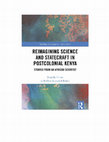
This book delivers a rare first-person account of international research by an African scientist.... more This book delivers a rare first-person account of international research by an African scientist. It is a book about experiments, by medical researchers facing a terrible plague, by an ambitious man in post-colonial Kenya, and by an anthropologist looking for new ways to narrate stories about African science. Davy Kiprotich Koech bravely recalled his memories of a sometimes controversial life in interviews with Denielle Elliott. Elliott's sensitive framing of Koech's testimony offers critical insight into the politics of knowledge in Africa, of power in Kenya, and of the ways that stories make selves. Nancy J. Jacobs, Professor of History, Brown University, author of Birders of Africa: History of a Network (Yale 2016) Stories attest to the profoundly relational nature of human experience and achievement. With these engaging tales from the life of one of Kenya's most prominent scientists, Denielle Elliott's book reveals the intricate web of relationship and heritage through which postcolonial citizens here and elsewhere pursue knowledge, negotiate statecraft, and navigate the promises and pitfalls of transcontinental connection.
Call for Papers (CFP) by Denielle Elliott

How we might study that which we cannot see, count, or measure? How might we analyze invisibility... more How we might study that which we cannot see, count, or measure? How might we analyze invisibility? This is especially important in the context of injuries-to bodies, to infrastructures, to populations of humans and non-humans-that are either undetectable (as with minor strokes) or erased (as in political attempts to obscure events), and the aftermaths they produce, which can lead to novel connections and regenerations. In this panel, we reflect on the invisible and unknown, and invite presenters to explore other ways of knowing injuries. We aim to move beyond the typical critical social critique of scientific evidence-that is, accusations of marginalized evidence-to consider how we might approach the invisible? Fantasies, delusions, visions-each is marked by its intimacy and inexpressibility. But might we make them social? We seek to go beyond an inventory of exclusions to consider the invisible, that which we don't know, and which nonetheless lingers in its effects. We consider other types of evidence, and how novel approaches to evidence might provide ways for articulating anti-epistemologies that destabilize ways of knowing-for scholars as well as our interlocutors. Not simply stating its absence, but asking how we might bring it into focus, make it visible and readable, to include the excluded, as a means to counter what we know, or what think we know, about evidence, interiority, and relationality. How might we interrupt conventional renderings of the injured? How can we render the unknowable knowable for invisible trauma and damaged states?
How do contemporary forms of indigenous life, scholarship, and activism unsettle the political st... more How do contemporary forms of indigenous life, scholarship, and activism unsettle the political stakes and scholarly methods of STS? Recognizing that the 4S meeting of 2018 will be held on the historical and stolen lands of Australian indigenous peoples, this series of panels will explore the possibilities, the productive irritants, and inescapable problematics of thinking through the social study of science, medicine and technology in settler colonial societies. Settler colonialisms and technopolitics share long and complicated histories, histories which have only recently begun to receive critical attention within STS and related disciplines. Technoscience has pervaded indigenous engagements with the state, corporations, academics, and experts, generating paradoxical tests of legitimacy and new sites of wealth extraction, underscoring the entanglements between the nation, citizenship, knowledge claims, and land. Attending to specific sites of engagement and resistance demands new ways of doing (and undoing) STS scholarship. We seek papers that complicate the articulation and circulation of sociotechnical imaginaries; illuminate the ways archival and biomedical technologies shape claims to identity and belonging; and defy prevailing models whereby individual experts enroll allies and cultivate power. We are particularly interested in papers that speak to the legacy of colonial epistemologies in the history and philosophy of science and medicine, new innovative projects that work to decolonize medicine, science and technology (and science and technology studies itself), and speculative visions of an indigenous science studies. We also welcome submissions that subvert the conventional conference paper format, whether through video, audio, or literary productions or live performances. For more information: Denielle Elliott [email protected] or Tom Özden-Schilling [email protected]
Papers by Denielle Elliott
Mapping Medical Anthropology for the Twenty-First Century , 2026
The HIV/AIDS epidemic resulted in two powerful coconstituted political economies in Vancouver, Ca... more The HIV/AIDS epidemic resulted in two powerful coconstituted political economies in Vancouver, Canada's inner-city community: medical research and HIV therapy. British Columbia was the &rst province in Canada to offer free anti-HIV medicines in the s as part of the nationalized universal health care system, but it was entwined with medical research as biomedical researchers sought to understand the effects of antiretrovirals, patterns of infection, and other phenomena related to the emergence of HIV as an urgent, international public health crisis. In Vancouver, a rise in HIV infection rates was matched by a parallel epidemic-deaths resulting from illicit drug overdoses. As a result, medical research intensi&ed in the community so that almost every community member was involved in at least one, if not multiple, research proj ects exploring every thing from CD(counts (epidemiologists) to mapping where residents were publicly urinating and defecating (archaeologists). In such a setting, researchers scale up the studies, developing additional surveillance strategies that exist outside of the clinic or laboratory in order to monitor research participants as they move about their days and nights. In many Global North countries, the s and s marked declining state investments in social welfare and public health programs as part of the roll-back phase of neoliberalism, but in Vancouver, British Columbia, we
American Anthropologist, 2025
In this paper, I consider how one writes an ethnographic memoir about memories, time, and our fie... more In this paper, I consider how one writes an ethnographic memoir about memories, time, and our fieldwork when our memories, or our interlocutors' memories, are unreliable, inconsistent, false, or simply missing. Reflecting on a brain injury that resulted during fieldwork, my (dis)ordered memories, and the intense reliance on memory in sociocultural anthropology, I ask what writing would look like for anthropologists if we wrote with the forgetfulness? Imperceptible to most, and escaping clinical and lab evaluations, the e/affects of my brain injury have reshaped how I am in this world and shifted how I approach and understand the ethnographic project. I suggest that by writing with memory loss, by admitting there are gaps and fissures, by embracing the confusion and confabulations, and by acknowledging the paralleled unfinishedness of the ethnographic project, we work toward a reformed anthropology that no longer uncritically esteems memory as the basis for the anthropological project. In doing so, the paper contributes to what Marlovitz and Wolf-Meyer have called a "psychotic anthropology," one that disrupts disciplinary ideas about minds, methods, and memoir and contributes to a productively unruly, and inclusive, ethnographic practice.
American Anthropologist, 2025
Autoethnography, intimate ethnography, and ethnographic memoir have become increasingly central m... more Autoethnography, intimate ethnography, and ethnographic memoir have become increasingly central modes of anthropological writing. Although this trend has historical precedents, as found in the work of Zora Neale Hurston, Ruth Behar, and others, this two-part special section explores the directions this work is taking, the potential This is an open access article under the terms of the Creative Commons Attribution-NonCommercial-NoDerivs License, which permits use and distribution in any medium, provided the original work is properly cited, the use is non-commercial and no modifications or adaptations are made.
BMJ Medical Humanities, 2026
Amid the rise of image-based social media, digitally circulated visual artefacts now dominate con... more Amid the rise of image-based social media, digitally circulated visual artefacts now dominate contemporary public health conversations. However, infographics and similar materials are more than just channels for clinical discussions; they perform healthcare roles, embodying the clinician's function to promote certain behaviours, prevent others and shape the material reality of a 'healthy' subject. The infographic as a materialdiscursive agent is especially clear in neurology, where instances of altered neuro-states (injuries, diseases) are transformed into shapes, colours, illustrations and affects that inform preventative and rehabilitative practices as well as subjectivities. Features of visual artefacts also change over a person's lifetime, reflecting real or perceived shifts in risk (eg, from infancy to old age: fetal alcohol spectrum disorder, shaken baby syndrome, intimate partner violence, dementia) for various types of altered neuro-states, and differ across different contexts (COVID-19, Zika, 9/11 or cerebral malaria). In this way, visual public health messaging directs a specific trajectory of brain health over time, which in turn constructs a particular notion of a 'healthy brain'. Drawing on a subset of representative visual artefacts (such as posters, pamphlets, social media campaigns and infographics) from a substantive collection of more than 1000, we examine the various ways that neurological health is represented and structured by public health infographics. The infographics are sampled and examined for several key elements including aesthetics (use of colour, font, text, shape and imagery), temporality (when, either implicitly or explicitly, they are intended to be most relevant in a lifespan), gender (ways in which gender is denoted, reified, challenged or enacted) and difference (ethnicity, race and Indigeneity). Specifically, we explore the ways in which public health infographics frame concepts of time in their messaging about preventing and treating brain injuries.
Routledge International Handbook of Sensory Ethnography, 2023
African Journal of Development Studies, 2023
Background: In the last two decades, Kenya's development agenda has focused on Vision 2030's aim ... more Background: In the last two decades, Kenya's development agenda has focused on Vision 2030's aim of transforming the country into an industrialised, modern-middle-income state. To fulfill this desired economic growth, the government has emphasised infrastructure improvement, a move that has
Making Sense of Medicine , 2022
Terrain, 2022
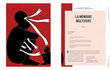
Nokia, ma lumière nocturne solitaire, m'éclairait pendant que j'envoyais un texto à un ami aux an... more Nokia, ma lumière nocturne solitaire, m'éclairait pendant que j'envoyais un texto à un ami aux antipodes, à Vancouver où il faisait encore jour. J'aimais ces nuits trop chaudes pour dormir, l'air immobile, à l'exception des moustiques zigzaguant, des lézards courant sur les murs qui se faufilaient par le toit végétal. J'aimais l'obscurité, le noir profond de la nuit, sans pollution lumineuse, les bruits assourdis. C'était avant que Radio Lake Victoria ne mette en place à Osienala cette puissante lampe de sécurité qui nous aveuglait. C'était avant que Dunga Beach ait l'électricité et que le bar de l'hôtel local n'installe des haut-parleurs qui beuglaient les musiques Benga et Ohanga toute la nuit, avec les basses à fond si bien qu'on pouvait sentir vibrer les booms booms booms à un kilomètre. C'était avant qu'elle n'apparaisse. C'est une histoire sur elle. Sur ses expériences de fantômes, d'hallucinations, de souvenirs, et de ruptures dans l'espace-temps. C'est au cours de cette nuit chaude, collante, noire que se produisit un accroc, une légère distorsion dans le tissu de l'espace-temps, et qu'elle se matérialisa pour me déplacer, pour me remplacer. Pourtant j'existe toujours, pas avec elle, mais abandonnée dans un autre univers. Il y a deux moi maintenant. Le moi qui n'a pas été blessé ; le moi qu'elle est devenue. Pas un passé et un présent ; nous existons dans des multivers, dans différents niveaux de l'espace-temps. La façon dont les physiciens quantiques expliquent la manière dont le temps voyage pourrait fonctionner si nous découvrions « des courbes temporelles fermées ». « La réalité physique consiste en une collection d'univers, parfois appelés multivers… nous devons également exister en de multiples copies, une pour chaque univers 3 . » Sauf que dans cette version des multivers, tandis que son univers continue à se précipiter en avant, mon univers est condamné à se répéter, comme si j'étais piégée dans une courbe temporelle fermée, coincée dans le temps, âgée à jamais de 39 ans. Nous existons dans une sorte de polytemporalité, comme dans le Terrapolis de Haraway 4 . Nous coexistons. Je la vois clairement, aussi puis-je vous raconter cette histoire à son sujet. Comme la « ville dans la ville » de Miéville, mais aucune de nous ne peut traverser la rue pour atteindre l'autre 5 . Il existe cependant une fuite, comme une lente hémorragie cérébrale. Je suis pour elle un vague souvenir, une illusion 3. David Deutsch & Michael Lockwood, « The Quantum Physics of Time Travel », Scientific American, n o 270/3, 1994, p. 68-74. 4. Donna J. Haraway, Vivre avec le trouble (traduit de l'anglais par Vivien García), Vaulx-en-Velin, Les éditions des mondes à faire, 2020 [2016]. 5. China Miéville, A City in the City,
Multimodality & Society, 2022
Brain injuries transform how one's world sounds. What follows are two sonic stories. These short ... more Brain injuries transform how one's world sounds. What follows are two sonic stories. These short audio compositions are designed to transport the listener into the pre-and post-brain injury sensory environment-a textured and embodied landscape that noninjured minded individuals, including most clinicians, have little understanding of. This lack of understanding is a consequence of the sorts of neurological research done in the scientific traditions which tend to leave certain forms of sensory phenomena unstudied and exclude patients' voices. We draw inspiration from Rachel Kolb's (2017) first-person account of hearing music for the first time after getting cochlear implants. She writes that music jolted her core in ways she could not explain. Instead of "Can you hear the music?", she prefers to be asked, "What does music feel like to you?" Stemming from the perspectives of two individuals that live with brain injuries (identified here as Story A and Story B), these sonic stories ask what does a brain injury sound like?
Anthropologica, 2021
Performance directed by Anna Newell and written and produced by playwright Shannon Sickels It is ... more Performance directed by Anna Newell and written and produced by playwright Shannon Sickels It is hard to describe what Reassembled, Slightly Askew actually is. As an art form, it defies categories and definition. Since first viewing/hearing/ participating in it, I have recommended it to dozens of people and each time I do so, I refer to it as something else. A sonic installation, an experiential sonic performance, sort of a play, an autobiographical art installation, or maybe a multimodal art production? I was invited to see it in 2018 with some colleagues while on sabbatical in Vancouver, where it was part of the PuSh Festival, showing at The Cultch, an annual international performing arts festival. I did not know what to expect and, so was really excited to participate in the experimental installation. We were asked to show up a little early, at which time we were directed to sit outside the venue room. There are just eight chairs for eight audience members/ participants. An actor playing a nurse arrived to take our information for our admittance (as if we were being admitted to the hospital) and we were given a medical wrist band. When everyone had completed their forms, we were taken into the venue. There we saw eight hospital beds, four lined along each side of the room. We were asked to pick a bed, take our shoes off, lie down on the bed, and wait for the attending nurse (Illustration 1). The nurse sees each "patient," covers them with a blanket, asks them to put a blindfold over their eyes, and provides them with over-ear headphones. You are directed to continue to lie on the bed until the audio ends.
Field Stories: Experiences, Affect, and the Lessons of Anthropology in the Twenty-First Century, 2021
Anthropology and Humanism, 2019
Introducing the New Editorial Collective "A good ethnographic poem needs to be attuned to poetry'... more Introducing the New Editorial Collective "A good ethnographic poem needs to be attuned to poetry's extraordinary toolkit: using the line and its tension with the sentence and the stanza, their control and release, to offer a glimpse into what it is like to be alive in a body in the world."-Nomi Stone We are pleased to introduce our readers to the new editorial collective for the Poetry section at Anthropology and Humanism. We are honored to inherit the
Catalyst, 2019
This paper, positioned at the intersection of anthropology, science and technology studies, and f... more This paper, positioned at the intersection of anthropology, science and technology studies, and feminist affect theory, considers shifts in memory and neurological disturbances that accompany traumatic brain injuries. Anomia, or anomic aphasia, is the inability to recall certain words, names, or colors caused by damage to the parietal or temporal lobes in the brain. Anomia is a disorder 'on the verge'-there but not quite, a forgotten memory, reluctant to be conjured. How might experimental ethnographic memoir help us uncover such forgotten memories and make sense of neurological disturbances pathologized by science and medicine? My account contributes to a growing body of literature that uses ethnographic memoir as political critique, blending the personal and theoretical, situating the intimate within larger historical and social contexts. It suggests that ethnographic memoir, with attention to the affective interiority of memories, merged with theoretical analyses and political critiques of medicine and/or therapeutic interventions, offer new understandings of being and temporality. Neurological Disturbances We must not allow the fear of forgetting to overwhelm us. And then perhaps it is time to remember the future, rather than only worry about the future of memory.
Thinking Differently about HIV/AIDS: Contributions from Critical Social Science , 2019
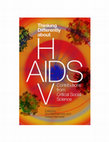
One of the key moments that drew this national attention to the Downtown Eastside was when the Va... more One of the key moments that drew this national attention to the Downtown Eastside was when the Vancouver/Richmond Health Board (VRHB) declared a public health emergency in 1997 in re- sponse to reports that suggested illicit drug use and HIV infections were both dramatically increasing. Framed as a humanitarian inter- vention for the urban poor, and backed by a rights discourse for illicit drug users, the public health emergency was meant to offer much needed health care and social welfare programming to those living with HIV or to those seen as being at risk of HIV. Declaring a public health emergency was both discursive practice and political action, resulting in a whole series of commitments and interven- tions from all three levels of state that would have both intended and unintended consequences. To date, it remains the one and only emergency declared for Vancouver, British Columbia, and, twenty years later, the state of emergency officially remains in place, never having been cancelled. [excerpt]



Uploads
Books by Denielle Elliott
cloaked in mystery around what fieldwork
is really like for researchers, how they collect
data, and how it is analyzed within the social
sciences. Naked Fieldnotes, a unique compen-
dium of actual fieldnotes from contemporary
ethnographic researchers from various mo-
dalities and research traditions, unpacks how
this research works.
The volume pairs fieldnotes based on obser-
vations, interviews, drawings, photographs,
soundscapes, and other encounters with
short, reflective essays, offering rich examples
of how fieldnotes are composed and shaped
by research experiences—giving scholars a
diverse, multimodal approach to conceptu-
alizing and doing ethnographic fieldwork.
Call for Papers (CFP) by Denielle Elliott
Papers by Denielle Elliott