Book by Didem Havlioglu
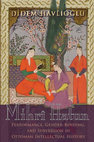
Mihrî Hatun (circa 1512) was the first woman who collected her works and acclaimed throughout Ott... more Mihrî Hatun (circa 1512) was the first woman who collected her works and acclaimed throughout Ottoman intellectual history. As one of the earliest surviving examples of women’s voice, her work lend itself as an excellent case to study the gender construction in early modern Ottoman culture production and artistic practice.
Focusing on her writing in comparison to canonical secondary sources, the book argues that privileged Ottoman women in this period could not only exist in intellectual fields but also welcomed by her colleagues. At this specific time, we see a few women, taking their place in the pages of major history before they vanish completely again for another three centuries. Mihrî Hatun, as an unprecedented incident at the time is unapologetically marginal and generates a rupture crystalizing the performative nature of the Ottoman intellectual discourse. She shows what it means to be a woman in a male-dominated field and the ways in which to become both a legitimate and subversive voice. With the hope to contribute to the discussions of women’s history, the book suggests that Ottoman women may have been part of intellectual history, long before we thought.
Focusing on her writing in comparison to canonical secondary sources, the book argues that privileged Ottoman women in this period could not only exist in intellectual fields but also welcomed by her colleagues. At this specific time, we see a few women, taking their place in the pages of major history before they vanish completely again for another three centuries. Mihrî Hatun, as an unprecedented incident at the time is unapologetically marginal and generates a rupture crystalizing the performative nature of the Ottoman intellectual discourse. She shows what it means to be a woman in a male-dominated field and the ways in which to become both a legitimate and subversive voice. With the hope to contribute to the discussions of women’s history, the book suggests that Ottoman women may have been part of intellectual history, long before we thought.
Podcasts & Interviews by Didem Havlioglu
Love Poems of an Ottoman Woman: Mihrî Hatun
Ottoman History Podcast, 2018
New Books Network Podcast 2018
Mihri Hatun: Performance, Gender-Bending, and Subversion in Ottoman Intellectual History (Syracus... more Mihri Hatun: Performance, Gender-Bending, and Subversion in Ottoman Intellectual History (Syracuse University Press, 2017) by Didem Havlioglu is at once an intellectual history and biography of sorts of Mihri Hatun, a fifteenth century Ottoman poet. It considers the question of what happens when a woman enters a field dominated by men; in this case, poetry. Using her own poetry and biographical dictionaries (the tezkire genre), Havlioglu contextualizes Mihri and tries to understand her as a product of her own time and as someone who understood her multiple roles in society well enough to subvert them.
dizisinin ikinci konuğu, Duke Üniversitesi Asya ve Ortadoğu Çalışmaları Bölümü öğretim üyesi Dide... more dizisinin ikinci konuğu, Duke Üniversitesi Asya ve Ortadoğu Çalışmaları Bölümü öğretim üyesi Didem Havlioğlu: Osmanlı Edebiyatı gibi bir alanı güncel kaygılarla anlamak mümkün değil Duke Üniversitesi Asya ve Ortadoğu Çalışmaları Bölümü öğretim üyesi Didem Havlioğlu ile Osmanlı kültür yapısında cinsiyet ve cinsellik, Osmanlı kadın şairleri ve Osmanlı Edebiyatı çalışmaları ve eğitimi üzerine konuştuk. Havlioğlu, Bilkent Üniversitesi İngiliz Dili ve Edebiyatı Bölümü'ndeki lisans eğitiminin ardından, Washington Üniversitesi Yakın ve Ortadoğu Çalışmaları Bölümü'nde yüksek lisans ve doktora eğitimini tamamladı. Osmanlı'da kadın ve toplumsal cinsiyet, Osmanlı entelektüel tarihinin cinsiyet yapısı, İslamî edebiyatlar ve Osmanlı Edebiyatı üzerine çeşitli araştırmaları bulunuyor.
"Women Literati and Ottoman Intellectual Culture" Ottoman History Podcast 2012
Papers by Didem Havlioglu
Approaches to Teaching the Works of Orhan Pamuk, 2017
The Writing Subjects: Halide Edip and Assia Djebar
The use of humor in early modern Islamic world is pervasive such as the puppet theater and repres... more The use of humor in early modern Islamic world is pervasive such as the puppet theater and representations in miniature paintings. In particular, the consistent use of mockery while dealing with sexuality in both classical and folk literatures points out to the dual and paradoxical function of humor: allowing liberation and enforcing gender roles. The double function manifests itself through layers of meaning that were clear to the audience. In other words, humor as an artform is one of the legitimate ways to achieve ambiguity which was considered the highest form of artistic expression. As a case in point, the early modern Ottoman court poetry showcases various ways poets used humor for their advantage. For instance, while it can help a male poet to enforce gender roles, in the hands of a woman poet such as Mihri Hatun, it can become useful to challenge the traditional poetics from within.
Turkish Historical Review, Jan 1, 2010
Yılan Kitabı. Kitabevi Yayınları, 2014
Journal of Turkish Studies 34/II, 2010
Türkiye Diyanet Vakfı Yayınları, 2015
Edited Volumes by Didem Havlioglu
Samiha Ayverdi-Annemarie Schimmel Mektuplar: "İşte Böyle Cemileciğim"
Samiha Ayverdi ve Annemarie Schimmel'in 1950-1993 yılları arasındaki karşılıklı mektupları
Sınır Bilgisi: Siyasal İktidar, Toplumsal Mekan ve Kadına Yönelik Şiddet. Eds. Elif Çelebi, Didem Havlioglu, Ebru Kayaalp