Books by Domenico Ingenito

Beholding Beauty: Sa'di of Shiraz and the Aesthetics of Desire in Medieval Persian Poetry, 2020
Beholding Beauty: Saʿdi of Shiraz and the Aesthetics of Desire in Medieval Persian Poetry explore... more Beholding Beauty: Saʿdi of Shiraz and the Aesthetics of Desire in Medieval Persian Poetry explores the relationship between sexuality, politics, and spirituality in the lyrics of Saʿdi Shirazi (d. 1292 CE), one of the most revered masters of classical Persian literature. Relying on a variety of sources, including unstudied manuscripts, Domenico Ingenito presents the so-called “inimitable smoothness” of Saʿdi’s lyric style as a serene yet multifaceted window into the uncanny beauty of the world, the human body, and the realm of the unseen.
The book constitutes the first attempt to study Sa‘di’s lyric meditations on beauty in the context of the major artistic, scientific and intellectual trends of his time. By charting unexplored connections between Islamic philosophy and mysticism, obscene verses and courtly ideals of love, Ingenito approaches Sa‘di’s literary genius from the perspective of sacred homoeroticism and the psychology of performative lyricism in their historical context.
Forugh Farrokhzad. Io parlo dai confini della notte. Tutte le poesie, a cura di Domenico Ingenito, Brill, 2023
The book features the Persian text of all the original collections of poetry published by Farrokh... more The book features the Persian text of all the original collections of poetry published by Farrokhzad during her lifetime, along with poems published posthumously. Persian native speakers and students of Persian language and literature can finally access an annotated (and uncensored!) edition of all of Farrokhzad's original texts.
International Journal of Middle East Studies , 2023
Ali-Asghar Seyed-Gohrab's review of Beholding Beauty: Saʿdi of Shiraz and the Aesthetics of Desir... more Ali-Asghar Seyed-Gohrab's review of Beholding Beauty: Saʿdi of Shiraz and the Aesthetics of Desire in Medieval Persian Poetry (Domenico Ingenito),
International Journal of Middle East Studies (2023), 1–3
Journal of Sufi Studies, 2023
Marc Toutant's review of "Domenico Ingenito, Beholding Beauty : Saʿdi of Shiraz and the Aesthetic... more Marc Toutant's review of "Domenico Ingenito, Beholding Beauty : Saʿdi of Shiraz and the Aesthetics of Desire in Medieval Persian Poetry. Leiden : Brill, 2020," Journal of Sufi Studies 12 (2023)
Beholding Beauty: Sa'di of Shiraz and the Aesthetics of Desire on Medieval Persian Poetry, 2020
"Beholding Beauty: The Flesh, the Forms, and the Meanings of the Visionary Experience," on the co... more "Beholding Beauty: The Flesh, the Forms, and the Meanings of the Visionary Experience," on the competition between Greek and Chinese painters in the Persian literary tradition and the connection between visionary experience and contemplation of mundane beauty.
Beholding Beauty: Sa'di of Shiraz and the Aesthetics of Desire in Medieval Persian Poetry, 2020
Beholding Beauty: Sa'di of Shiraz and the Aesthetics of Desire in Medieval Persian Poetry - chapt... more Beholding Beauty: Sa'di of Shiraz and the Aesthetics of Desire in Medieval Persian Poetry - chapter 3: The Obscene Revisited From the Sexual Reification of the Body to its Spiritual Fetishization
Beholding Beauty Saʿdi of Shiraz and the Aesthetics of Desire in Medieval Persian Poetry, 2020
Beholding Beauty Saʿdi of Shiraz and the Aesthetics of Desire in Medieval Persian Poetry, Part 2:... more Beholding Beauty Saʿdi of Shiraz and the Aesthetics of Desire in Medieval Persian Poetry, Part 2: "Through the Mirror of your Glances: The Sacred Aesthetics of Saʿdi’s Lyric Subject."

Beholding Beauty: Sa'di of Shiraz and the Aesthetics of Desire in Medieval Persian Poetry - Introduction, 2020
Beholding Beauty: Sa'di of Shiraz and the Aesthetics of Desire in Medieval Persian Poetry - Intro... more Beholding Beauty: Sa'di of Shiraz and the Aesthetics of Desire in Medieval Persian Poetry - Introduction (pp. i - 42).
Beholding Beauty explores the relationship between sexuality, politics, and spirituality in the lyrics of Saʿdi Shirazi (d. 1292 CE), one of the most revered masters of classical Persian literature. Relying on a variety of sources, including unstudied manuscripts, Domenico Ingenito presents the so-called “inimitable smoothness” of Saʿdi’s lyric style as a serene yet multifaceted window into the uncanny beauty of the world, the human body, and the realm of the unseen.
The book constitutes the first attempt to study Sa‘di’s lyric meditations on beauty in the context of the major artistic, scientific and intellectual trends of his time. By charting unexplored connections between Islamic philosophy and mysticism, obscene verses and courtly ideals of love, Ingenito approaches Sa‘di’s literary genius from the perspective of sacred homoeroticism and the psychology of performative lyricism in their historical context.
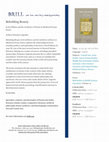
Beholding Beauty: Sa'di of Shiraz and the Aesthetics of Desire in Medieval Persian Poetry, 2020
Beholding Beauty: Saʿdi of Shiraz and the Aesthetics of Desire in Medieval Persian Poetry explore... more Beholding Beauty: Saʿdi of Shiraz and the Aesthetics of Desire in Medieval Persian Poetry explores the relationship between sexuality, politics, and spirituality in the lyrics of Saʿdi Shirazi (d. 1292 CE), one of the most revered masters of classical Persian literature. Relying on a variety of sources, including unstudied manuscripts, Domenico Ingenito presents the so-called “inimitable smoothness” of Saʿdi’s lyric style as a serene yet multifaceted window into the uncanny beauty of the world, the human body, and the realm of the unseen.
The book constitutes the first attempt to study Sa‘di’s lyric meditations on beauty in the context of the major artistic, scientific and intellectual trends of his time. By charting unexplored connections between Islamic philosophy and mysticism, obscene verses and courtly ideals of love, Ingenito approaches Sa‘di’s literary genius from the perspective of sacred homoeroticism and the psychology of performative lyricism in their historical context.
Table of Contents:
General Introduction. “The Mufti of the Masters of Gazes”
Part 1. Uncovering the Skin of the Ghazal
Chapter 1. The Homoerotics of Political Power and the Emergence of Gendered Desires
Chapter 2. Movements and Gazes in the Rose Garden: Pseudo-Biographical Experience, Political Engagement, and Fictive Sensuality in the Emergence of a Lyric Voice
Chapter 3. The Obscene Revisited: From the Sexual Reification of the Body to its Spiritual Fetishization
Part 2. Through the Mirror of Your Glances: The Sacred Aesthetics of Saʿdi’s Lyric Subject
Chapter 4. The Body as a Divine Sign: The Hermeneutics of Spiritual Desire
Chapter 5. The ʿĀrif as a Beholder: The Divine Pen Depicting the Khaṭṭ of the Beloved
Chapter 6. Between the Rational Soul and the Internal Senses: For a Psychology of the Lyric Subject
Chapter 7. Spiritual Cardiology: The Heart as a Mirror Reflecting the Unseen
Chapter 8. Beholding Beauty: The Flesh, the Forms, and the Meanings of the Visionary Experience
Part 3. The Lyrical Ritual (Samāʿ) as the Performative Space of Sacred Eroticism
Chapter 9. “Where is This Singer From? He Shouted the Name of the Beloved!”: Toward a Chronological and Physio-Psychological Approach to Samāʿ in Saʿdi’s Ghazals
Chapter 10. The Ghazal as Description of Performance, Ritualized Script, and “Performative” Analogue of Samāʿ
Epilogue: Poetry as a Mirror for Experience
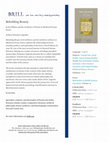
Beholding Beauty Saʿdi of Shiraz and the Aesthetics of Desire in Medieval Persian Poetry, 2020
Author: Domenico Ingenito
Beholding Beauty: Saʿdi of Shiraz and the Aesthetics of Desire in Medie... more Author: Domenico Ingenito
Beholding Beauty: Saʿdi of Shiraz and the Aesthetics of Desire in Medieval Persian Poetry explores the relationship between sexuality, politics, and spirituality in the lyrics of Saʿdi Shirazi (d. 1292 CE), one of the most revered masters of classical Persian literature. Relying on a variety of sources, including unstudied manuscripts, Domenico Ingenito presents the so-called “inimitable smoothness” of Saʿdi’s lyric style as a serene yet multifaceted window into the uncanny beauty of the world, the human body, and the realm of the unseen.
The book constitutes the first attempt to study Sa‘di’s lyric meditations on beauty in the context of the major artistic, scientific and intellectual trends of his time. By charting unexplored connections between Islamic philosophy and mysticism, obscene verses and courtly ideals of love, Ingenito approaches Sa‘di’s literary genius from the perspective of sacred homoeroticism and the psychology of performative lyricism in their historical context.
https://brill.com/view/title/57745
Papers by Domenico Ingenito
Journal of Medieval and Early Modern Studies, 2026
Journal of Medieval and Early Modern Studies
Toggle Menu
Skip Nav Destination
Research Article| J... more Journal of Medieval and Early Modern Studies
Toggle Menu
Skip Nav Destination
Research Article| January 01 2026
The Enchanted Ecstasy of Medieval Persian Lyric: Toward a New Theory of Lyric Affect
Domenico Ingenito
Journal of Medieval and Early Modern Studies (2026) 56 (1): 85–112.
https://doi.org/10.1215/10829636-12217719
Standard View
Open thePDFfor in another window
Share Icon Share
Tools Icon Tools Open Menu
Rather than conceiving of poetry as a container of biographically determined meaning, medieval Arabo‐Persian poetics emphasize the impact that texts have on the human body and psyche. Medieval manuals on mystical practices describe the correlation between ecstatic states of consciousness and the experience of listening to lyric poetry. In a similar vein, contemporary theorizations conceive of lyric as a suspended gesture that neither mimics external reality nor provides readers with purely fictional worlds. According to such models, the sharing of lyric poetry is conceived as an act‐event that must be performed by a reading or listening subject in order to generate meaning. By juxtaposing medieval Persian poetics with modern paradigms through a critical inquiry that is both circular and cross‐cultural, this article shows how a new affective theory of the lyric can account for experiences of enchantment, disenchantment, and partial self‐loss that redefine the boundaries of selfhood and regulate the reader's jouissance when embodying lyric texts.
Saʿdī (d. 691/1292) on the Senses, the Body, and Imagination". In Islamic Sensory History, (Leiden, The Netherlands: Brill, 2024), 2024
Ingenito, Domenico. "Chapter 39 Saʿdī (d. 691/1292) on the Senses, the Body, and Imagination". In... more Ingenito, Domenico. "Chapter 39 Saʿdī (d. 691/1292) on the Senses, the Body, and Imagination". In Islamic Sensory History, (Leiden, The Netherlands: Brill, 2024) doi: https://doi.org/10.1163/9789004515932_040
Al-Ghazālī (d. 505/1111) on Visionary Experiences and the Internal and External Senses, 2024
Ingenito, D. (2024). "Chapter 30 Al-Ghazālī (d. 505/1111) on Visionary Experiences and the Intern... more Ingenito, D. (2024). "Chapter 30 Al-Ghazālī (d. 505/1111) on Visionary Experiences and the Internal and External Senses". In Islamic Sensory History. Leiden, The Netherlands: Brill. https://doi.org/10.1163/9789004515932_031
Iranian Studies, Nov 1, 2018
This article constitutes a preliminary attempt to explore the geographical dimension of premodern... more This article constitutes a preliminary attempt to explore the geographical dimension of premodern Persian lyric poetry from the perspective of the relationship between the historical adherence of a text to external reality and the rhetorics of intertextuality and performativity. The pretext for this exploration is the poem known as "Tork-e Shirazi" or "The Turk from Shiraz," one of the most celebrated ghazals of Hafez of Shiraz. The analysis focuses in particular on the first two lines of the ghazal, whose rich and ambiguous imagery has challenged the community of readers, interpreters, and scholars for centuries. On the basis of historiographical, formalist, and poststructuralist approaches to the study of lyric poetry, the article outlines a generative paradigm that analyzes a given text from the perspective of its abstract, genre-specific, conventionally negotiated, and referential levels of meaning. The contribution of geocritical studies will be combined with rhetorical analysis to conceive of Hafez's text as a geopoetic map in which the cities of Shiraz, Samarkand, and Bukhara are put in conversation with the mental and historical representations of Iran and India between the thirteenth and fourteenth centuries, during the transition from the Mongol to the Timurid models and ideals of power.
The Beloved in Middle Eastern Literatures: The Culture of Love and Languishing, ed. Alireza Korangy, Hanadi al-Samman, Michael C. Beard, (London, New York: I.B. Tauris):177-21, 330-337., 2018
Goethe. Die Reise des Hâfez von Shiraz über Istanbul und Wien nach Weimar
“Europa – und darin lag seine Starke – hatte nie eine reine Seele”: so Wolf Lepenies anlasslich d... more “Europa – und darin lag seine Starke – hatte nie eine reine Seele”: so Wolf Lepenies anlasslich der Verleihung des Friedenspreises des Deutschen Buchhandels 2006.2 Die “Vermittlungstatigkeit der Araber” seit dem 8. Jahrhundert, ohne die laut Lepenies in Europa weder Renaissance noch Aufklarung moglich gewesen waren, bestand freilich in einer genauer zu benennenden Arbeit: im Ubersetzen und Kommentieren. Es waren Ubersetzer, die Europas Seele von Anfang an verunreinigt haben; Ubersetzer, deren Spuren jeder heutigen Behauptung einer “christlichen Identitat” Europas die historische Berechtigung entziehen; Ubersetzer, deren Nachlass jeden Versuch, reine und unvermischte kulturelle Blocke zu konstruieren und gegeneinander auszuspielen, zur Geschichtsluge macht.
The Ghazal as Description of Performance, Ritualized Script, and “Performative” Analogue of Samāʿ
Beholding Beauty, 2020
“Where is This Singer From? He Shouted the Name of the Beloved!”
Beholding Beauty, 2020
Movements and Gazes in the Rose Garden
Beholding Beauty, 2020



Uploads
Books by Domenico Ingenito
The book constitutes the first attempt to study Sa‘di’s lyric meditations on beauty in the context of the major artistic, scientific and intellectual trends of his time. By charting unexplored connections between Islamic philosophy and mysticism, obscene verses and courtly ideals of love, Ingenito approaches Sa‘di’s literary genius from the perspective of sacred homoeroticism and the psychology of performative lyricism in their historical context.
International Journal of Middle East Studies (2023), 1–3
Beholding Beauty explores the relationship between sexuality, politics, and spirituality in the lyrics of Saʿdi Shirazi (d. 1292 CE), one of the most revered masters of classical Persian literature. Relying on a variety of sources, including unstudied manuscripts, Domenico Ingenito presents the so-called “inimitable smoothness” of Saʿdi’s lyric style as a serene yet multifaceted window into the uncanny beauty of the world, the human body, and the realm of the unseen.
The book constitutes the first attempt to study Sa‘di’s lyric meditations on beauty in the context of the major artistic, scientific and intellectual trends of his time. By charting unexplored connections between Islamic philosophy and mysticism, obscene verses and courtly ideals of love, Ingenito approaches Sa‘di’s literary genius from the perspective of sacred homoeroticism and the psychology of performative lyricism in their historical context.
The book constitutes the first attempt to study Sa‘di’s lyric meditations on beauty in the context of the major artistic, scientific and intellectual trends of his time. By charting unexplored connections between Islamic philosophy and mysticism, obscene verses and courtly ideals of love, Ingenito approaches Sa‘di’s literary genius from the perspective of sacred homoeroticism and the psychology of performative lyricism in their historical context.
Table of Contents:
General Introduction. “The Mufti of the Masters of Gazes”
Part 1. Uncovering the Skin of the Ghazal
Chapter 1. The Homoerotics of Political Power and the Emergence of Gendered Desires
Chapter 2. Movements and Gazes in the Rose Garden: Pseudo-Biographical Experience, Political Engagement, and Fictive Sensuality in the Emergence of a Lyric Voice
Chapter 3. The Obscene Revisited: From the Sexual Reification of the Body to its Spiritual Fetishization
Part 2. Through the Mirror of Your Glances: The Sacred Aesthetics of Saʿdi’s Lyric Subject
Chapter 4. The Body as a Divine Sign: The Hermeneutics of Spiritual Desire
Chapter 5. The ʿĀrif as a Beholder: The Divine Pen Depicting the Khaṭṭ of the Beloved
Chapter 6. Between the Rational Soul and the Internal Senses: For a Psychology of the Lyric Subject
Chapter 7. Spiritual Cardiology: The Heart as a Mirror Reflecting the Unseen
Chapter 8. Beholding Beauty: The Flesh, the Forms, and the Meanings of the Visionary Experience
Part 3. The Lyrical Ritual (Samāʿ) as the Performative Space of Sacred Eroticism
Chapter 9. “Where is This Singer From? He Shouted the Name of the Beloved!”: Toward a Chronological and Physio-Psychological Approach to Samāʿ in Saʿdi’s Ghazals
Chapter 10. The Ghazal as Description of Performance, Ritualized Script, and “Performative” Analogue of Samāʿ
Epilogue: Poetry as a Mirror for Experience
Beholding Beauty: Saʿdi of Shiraz and the Aesthetics of Desire in Medieval Persian Poetry explores the relationship between sexuality, politics, and spirituality in the lyrics of Saʿdi Shirazi (d. 1292 CE), one of the most revered masters of classical Persian literature. Relying on a variety of sources, including unstudied manuscripts, Domenico Ingenito presents the so-called “inimitable smoothness” of Saʿdi’s lyric style as a serene yet multifaceted window into the uncanny beauty of the world, the human body, and the realm of the unseen.
The book constitutes the first attempt to study Sa‘di’s lyric meditations on beauty in the context of the major artistic, scientific and intellectual trends of his time. By charting unexplored connections between Islamic philosophy and mysticism, obscene verses and courtly ideals of love, Ingenito approaches Sa‘di’s literary genius from the perspective of sacred homoeroticism and the psychology of performative lyricism in their historical context.
https://brill.com/view/title/57745
Papers by Domenico Ingenito
Toggle Menu
Skip Nav Destination
Research Article| January 01 2026
The Enchanted Ecstasy of Medieval Persian Lyric: Toward a New Theory of Lyric Affect
Domenico Ingenito
Journal of Medieval and Early Modern Studies (2026) 56 (1): 85–112.
https://doi.org/10.1215/10829636-12217719
Standard View
Open thePDFfor in another window
Share Icon Share
Tools Icon Tools Open Menu
Rather than conceiving of poetry as a container of biographically determined meaning, medieval Arabo‐Persian poetics emphasize the impact that texts have on the human body and psyche. Medieval manuals on mystical practices describe the correlation between ecstatic states of consciousness and the experience of listening to lyric poetry. In a similar vein, contemporary theorizations conceive of lyric as a suspended gesture that neither mimics external reality nor provides readers with purely fictional worlds. According to such models, the sharing of lyric poetry is conceived as an act‐event that must be performed by a reading or listening subject in order to generate meaning. By juxtaposing medieval Persian poetics with modern paradigms through a critical inquiry that is both circular and cross‐cultural, this article shows how a new affective theory of the lyric can account for experiences of enchantment, disenchantment, and partial self‐loss that redefine the boundaries of selfhood and regulate the reader's jouissance when embodying lyric texts.