Books by Donovan Schaefer
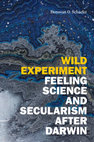
Duke University Press, 2022
Introduction: Cogency Theory: An Essay on Our Intellectual Affects
Full book available at: https... more Introduction: Cogency Theory: An Essay on Our Intellectual Affects
Full book available at: https://www.dukeupress.edu/wild-experiment
In Wild Experiment, Donovan O. Schaefer challenges the conventional wisdom that feeling and thinking are separate. Drawing on science studies, philosophy, affect theory, secularism studies, psychology, and contemporary literary criticism, Schaefer reconceptualizes rationality as defined by affective processes at every level. He introduces the model of “cogency theory” to reconsider the relationship between evolutionary biology and secularism, examining mid-nineteenth-century Darwinian controversies, the 1925 Scopes Trial, and the New Atheist movement of the 2000s. Along the way, Schaefer reappraises a range of related issues, from secular architecture at Oxford to American eugenics to contemporary climate denialism. These case studies locate the intersection of thinking and feeling in the way scientific rationality balances excited discovery with anxious scrutiny, in the fascination of conspiracy theories, and in how racist feelings assume the mantle of rational objectivity. The fact that cognition is felt, Schaefer demonstrates, is both why science succeeds and why it fails. He concludes that science, secularism, atheism, and reason itself are not separate from feeling but comprehensively defined by it.
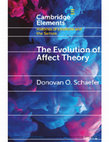
Cambridge University Press website:
https://doi.org/10.1017/9781108765343
Across the humanit... more Cambridge University Press website:
https://doi.org/10.1017/9781108765343
Across the humanities, a set of interrelated concepts—excess, the virtual, becoming, the event—have gained purchase as analytical tools for thinking about the field of power. Within affect theory, a “Deleuzian dialect” has been built around Gilles Deleuze’s concept of becoming, proposing that affect is best understood as a sort of stream of dynamic novelty, what has been called the “autonomy of affect.” This vocabulary is often justified and buttressed with reference to research in the life sciences.
The Evolution of Affect Theory provides a philosophical genealogy of the Deleuzian dialect of affect theory and makes an argument that the cluster of terms synonymous with becoming are workable as models of substance, but fail as a register of the analytics of power. As an alternative, this volume proposes reconsidering affect theory’s relationship with the life sciences and ultimately reimagining affect as animal rather than autonomous. This sets the stage for exploring two other dialects of affect theory: the Tomkins dialect and the phenomenological dialect, both of which emphasize emotion, embodiment, and diversity rather than becoming. Critics such as Ruth Leys have noticed some of the weaknesses in the Deleuzian dialect and sought to project them as a blanket criticism of all affect theory. This volume considers and responds to these criticisms.
By way of a case study, this volume concludes with a return to the work of Saba Mahmood, in particular her 2005 study of the women’s mosque movement in Cairo, The Politics of Piety. The volume reinterprets Mahmood’s conclusions about agency using Sara Ahmed’s notion of an affective economy.
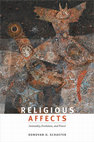
In Religious Affects Donovan O. Schaefer challenges the notion that religion is inextricably link... more In Religious Affects Donovan O. Schaefer challenges the notion that religion is inextricably linked to language and belief, proposing instead that it is primarily driven by affects. Drawing on affect theory, evolutionary biology, and poststructuralist theory, Schaefer builds on the recent materialist shift in religious studies to relocate religious practices in the affective realm—an insight that helps us better understand how religion is lived in conjunction with systems of power. To demonstrate religion's animality and how it works affectively, Schaefer turns to a series of case studies, including the documentary Jesus Camp and contemporary American Islamophobia. Placing affect theory in conversation with post-Darwinian evolutionary theory, Schaefer explores the extent to which nonhuman animals have the capacity to practice religion, linking human forms of religion and power through a new analysis of the chimpanzee waterfall dance as observed by Jane Goodall. In this compelling case for the use of affect theory in religious studies, Schaefer provides a new model for mapping relations between religion, politics, species, globalization, secularism, race, and ethics.
Papers by Donovan Schaefer
Secular Studies, 2025
Hollywood Cemetery in Richmond, Virginia is one of the most iconic cemeteries in the United State... more Hollywood Cemetery in Richmond, Virginia is one of the most iconic cemeteries in the United States, featuring an array of significant memorials and graves relating to the US Civil War. The Hollywood Memorial Association, a group of middle and upper-class white women, would play an outsize role in remaking Richmond as Confederate holy ground. They began with Hollywood Cemetery itself—which they came to call “Our Westminster”—establishing it as the city’s preeminent memorial site. Drawing on research at the HMA archives in Richmond, this article examines Hollywood Cemetery and related sites around Richmond as material secular forms that were sacralized through the work of the HMA. There are two facets considered here: the first is the way that the Confederacy was sacralized in order to authorize the “Lost Cause” myth propagated by Confederates to obscure the real motives and causes that led to Southern secession. The second is the distinct way that whiteness itself was sacralized. The Hollywood Memorial Association was a key player in the creation of a sacred secular material culture that glorified white supremacy and helped to undo the halting efforts at equalizing Black citizens during Reconstruction.
"The Scopes Trial at 100: Secularism, Race, and Education" workshop was held at the University of... more "The Scopes Trial at 100: Secularism, Race, and Education" workshop was held at the University of Pennsylvania, March 20–21, 2025. The event was accompanied by an exhibit of items from the University of Pennsylvania Library Collections, catalogued in this document.
Further details are available here:
https://www.library.upenn.edu/america-250-penn/scopes-trial-100-secularism
Zygon, 2024
In this rejoinder for the Book Symposium on WILD EXPERIMENT, I consider several themes that recur... more In this rejoinder for the Book Symposium on WILD EXPERIMENT, I consider several themes that recurred across the five responses. These themes are: the way we classify and morally position science, religion, and secularity; the relationship between scientific rationality and its others; the roles of scientific emotions in scientific training; and the relationship between the cool or calm cognitive emotions and scientific practice.
All essays in the symposium available here:
https://www.zygonjournal.org/article/id/17162/
The Unthinkable Body: Challenges of Embodiment in Religion, Politics, and Ethics , 2024
My goal in this chapter is to investigate what I call the “excess paradigm,” especially where it ... more My goal in this chapter is to investigate what I call the “excess paradigm,” especially where it intersects with (1) affect theory and (2) religion. The excess paradigm is more like a broad-based firmament of academic common sense than a discrete school of thought, a paradigm that is specifically interested in the elevation of a set of mutually reinforcing tropes as particularly significant for understanding history, culture, and power. In every case, its remit of interest is the “excessive”—that which is beyond thought, beyond words, beyond order, beyond the self, beyond the pale. In spite of the extraordinary reach of this intellectual framework and its near unchallenged dominance in some academic spaces, my suggestion will be that the excess paradigm does not and cannot live up to its promises. On the political front, it lapses into a simplistic romanticism that valorizes a certain category of experience with no necessary correspondence with any one political agenda. The cluster of affects we might identify as excessive, in other words, can be marshalled in the service of a number of different political projects. On a descriptive level, too, the excess paradigm is not up to par. It implicitly reaffirms a hard-edged binary of conscious and unconscious modalities of experience, mapping on to an equally simplistic humanism.
My itinerary in this chapter will be to investigate the thematics of excess primarily through the prism of debates in contemporary affect theory, where the excess paradigm has been considered extensively. I will then look at the transposition of this paradigm to theology and religion before considering the limitations of the excess paradigm in terms of its efforts to create both political norms and effective description. I will close with a call to move on from the excess paradigm by abandoning the thinking/feeling binary.
Cultural Critique, 2024
Commenting on Frantz Fanon's account of the material culture created by European colonizers in th... more Commenting on Frantz Fanon's account of the material culture created by European colonizers in the aftermath of invasion, Achille Mbembe notes that the colony is fundamentally a state of war, a contest of forces, in which "sensory life"—the continuum of bodies, objects, and landscapes—is a battlefield. "From this point of view," he writes, "colonial domination requires an enormous investment in affect and ceremony and a significant emotional expenditure." This essay argues for a reappraisal of the work of Michel Foucault as a theory of material culture. Linking Foucault's work on power to studies of material culture, it reviews Foucault's late concept of the dispositif, which specifies the ways power is projected by objects like the scaffold and the panopticon. The article then puts Foucault's approach to material culture in conversation with two strands of contemporary critical thought—New Materialism and affect theory—to show how a full-fledged analytics of power–matter–affect might emerge. What Foucault calls the "analytics of power" supports the critical study of affect and ceremony—the streams of force that constitute subjectivity above, beneath, or outside of language. By way of example, this article explores how this emergent framework can provide new resources for moving beyond liberal approaches to the problem of Confederate monuments. Although Foucault is often read as a theorist preoccupied with discourse, a reconsideration of the dispositif shows that Foucault's analytics of power enhances our understanding of the role of material culture in guiding political affects.
Religion, 2023
The conventional formula for dividing religious and secular connects religion to emotion and secu... more The conventional formula for dividing religious and secular connects religion to emotion and secularity to rationality. However, recent work in what has been called critical secularism studies has challenged this orientation. This body of scholarship has proposed that the line between secular and religious is blurry, and that we should expect the secular to be determined by emotion just as much as religion. Postcolonial theorist Saba Mahmood calls these “secular affects,” which include the affects of science. Recent research in science and technology studies has suggested that science itself is driven by feelings, like excitement in the exploration of concepts and information.
This paper considers the desire built into science as a vehicle not only of important scientific achievements, but also scientific violence. What Aristotle called the “desire to know” can be linked to a history of extraordinary racialized and gendered forms of violence throughout the history of science. Today, one of the most prominent domains of scientific violence is directed at nonhuman animals. Building on studies of the embodied practices that render scientists morally capable of laboratory animal experimentation, this article considers how scientific affects are able to produce regimes of spectacular violence, which in turn become part of the broader landscape of the secular.
Animals and Religion, 2024
This chapter considers an evolutionary approach to religion that spotlights the importance of fee... more This chapter considers an evolutionary approach to religion that spotlights the importance of feeling. It starts with a consideration of how Charles Darwin transformed our understanding of human beings by demonstrating the biological connection between humans and animals. This included, for Darwin, special attention to the correspondence between human and animal emotions. Building on this approach, the “life-world” science of Jakob von Uexküll is discussed. In this method, humans and other than human animals are defined by the deep emotional relationships we form with the world around us. This suggests a way of thinking about religion that is shared by both humans and other animals. Examples of animal behavior that could be considered religious are considered in this light. The chapter concludes by thinking through the ethical implications of this new understanding of animal religious emotions.
Material Religion, 2023
This brief article maps the links between the material religion approach and contemporary affect ... more This brief article maps the links between the material religion approach and contemporary affect theory, proposing that material religion and material culture studies more generally can be deepened by taking affect into account. To fully unlock affect theory's potential to augment material culture studies, we need to commit to an understanding of affect that moves beyond "relationality." The article concludes with a consideration of how this approach can be applied to the study of controversies around Confederate monuments. A contribution to the "In Conversation" section on "Material and Embodied Power Dynamics in Religion" in Material Religion (19.1).
https://www.tandfonline.com/doi/full/10.1080/17432200.2023.2170110
Stereotyping Religion II: Critiquing Cliches, 2023
This chapter considers the relationship between science and religion. Although the conventional w... more This chapter considers the relationship between science and religion. Although the conventional wisdom is that science and religion are exact opposites, destined to clash whenever they try to occupy the same space—what historians of science call the "conflict thesis"—this chapter reveals a much more nuanced range of interactions, both historically and in the present day. At the same time, the chapter will show that to understand their interactions, we need to critically consider the history of the terms “science” and “religion” themselves. Ultimately, it is suggested, we need to turn away from simple maps of science and religion as either “in conflict” or “in harmony.”
GLQ, 2021
Is there a queer Darwin? It is often assumed that Darwinian biology is an ally of conservative ap... more Is there a queer Darwin? It is often assumed that Darwinian biology is an ally of conservative approaches to sexuality and gender. The Christian legal framework known as natural law philosophy, for instance, reads Darwin as a champion of heterosexual coupling, proving the biological imperative of straight sex. Some feminist readings of Darwin (such as that of Elizabeth Grosz) find in Darwin a confirmation of the necessity of sexual difference organized around masculinity and femininity—an approach Myra Hird has called the “ontology of heterosexuality.” But these interpretations are incorrect. Schaefer argues that far from being an advocate for the ontology of heterosexuality, Darwin provides tools to demolish it. Turning to his research on barnacles and orchids and his speculation on the sources of organic variation, this essay highlights the irreducible importance of diversity and change for Darwin's framework. The ongoing ferment of variation that is the guideline of all life on earth extends not only to the morphology of sex organs but to desire itself. Darwin shows that the ontology of heterosexuality is an arbitrary snapshot, a single moment in the fluid trajectory of life, rather than a law that can be arbitrarily cast over the whole arc. In this, Darwin supports Eve Kosofsky Sedgwick's first axiom for queer theory: “People are different from each other.” The essay concludes by connecting a Darwinian approach to sex with José Esteban Muñoz's call for a queer ecstasy that anticipates the futurity of desire.
Author version. Please cite published version available here: https://read.dukeupress.edu/glq/article-abstract/27/4/525/175602/Darwin-s-OrchidsEvolution-Natural-Law-and-the
Capacious, 2022
Ruth Leys’s work is often cited in conversations around affect, especially her 2011 article “The ... more Ruth Leys’s work is often cited in conversations around affect, especially her 2011 article “The Turn to Affect,” which became the foundation for her subsequent book _The Ascent of Affect: Genealogy and Critique_. In this critical review essay, I suggest that Leys’ work is most often invoked in these contexts as a placeholder for criticism of affect theory without a clear sense of the particulars of her argument. I set out to show that her analysis of affect theory relies on a questionable interpretation of a 1994 book by psychologist Alan Fridlund--a book that does not fully align with her own line of argument. Leys’ work, I argue here, offers a distorted representation of the state of the scientific conversation in psychology of emotion, then awkwardly transposes that image onto contemporary affect theory in the humanities.
This essay examines four aspects of Leys’ project that reflect mischaracterizations or idiosyncratic interpretations of her scientific sources. First, I consider Leys’ commitment not to “genealogy” per se, as her title announces, but to an attempt to adjudicate debates in emotion psychology by referring all of them back to Fridlund’s 1994 book _Human Facial Expressions: An Evolutionary View_. Second, I look at Leys’ imprecise engagement with the philosophical debates around “intentionality,” which she understands as being broadly about rationality and consciousness, rather than a narrower, technical discussion about the nature of mental processes and their relation to objects. Third, I consider how Leys’ elevation of Fridlund’s affinity with Richard Dawkins’ gene-level adaptationist view of evolutionary biology further undermines her efforts to carve out a space for human “meaning.” All of this is driven, I conclude, by a kind of nostalgia for an unchallenged liberal rationalism. In addition to unraveling how science is invoked in Leys’ arguments, the article also responds to the general criticisms she and others level against affect theory.
Full open-access article available here: https://capaciousjournal.com/issue/vol-2-no-4-articles/schaefer-rationalist-nostalgia.pdf
Zygon, 2022
Author version. Please cite final published version available here: https://onlinelibrary.wiley.c... more Author version. Please cite final published version available here: https://onlinelibrary.wiley.com/doi/full/10.1111/zygo.12766
As Alister McGrath has argued across a lifetime of work, we need to approach the binaries that have been handed down to us—personal/academic, emotional/intellectual, secular/religious—with a healthy skepticism toward the integrity of their boundaries, attending instead to the contact zones between them. This article connects McGrath's body of work to what I call “cogency theory,” an approach that rejects the thinking/feeling binary itself. It begins with a survey of how McGrath understands rationality—not only as multiple, but as defined, in meaningful ways, by feeling. This is illustrated by reexamining McGrath's controversy with Richard Dawkins, analyzing their debate in terms of how the argument itself comes to feel. This new paradigm allows us to supersede petty antagonisms built into contemporary culture—like the presumed science–religion conflict—and refocus on overarching concerns like the climate crisis. The article concludes with a question about the extent to which beliefs and “worldviews” define how we—either as groups or individuals—can make or unmake ecological disaster.
Material Religion, 2022
Full open-access article available here: https://www.tandfonline.com/doi/full/10.1080/17432200.20... more Full open-access article available here: https://www.tandfonline.com/doi/full/10.1080/17432200.2022.2048604
This article examines the visual culture of the 1925 Scopes Trial, including editorial cartoons from contemporary periodicals and the 1960 film version of Inherit the Wind. Combining studies of material religion with affect theory, it suggests that this network of imagery instantiates an "economy of dignity" in which different factions seek to consolidate their positions through visual representations of shame and pride.
Implicit Religion, 2019
Is secularism something that could or should be taught in the world religions classroom? This pod... more Is secularism something that could or should be taught in the world religions classroom? This podcast with Christopher Cotter and Donovan Schaefer for the Religious Studies Project considers the rationale for including the study of secularism as part of the study of world religions, proposing two possible avenues for doing so. The transcript, published in Implicit Religion, kicks off a symposium on this topic with responses from Thomas J. Coleman, Kyle Messick, Christopher R. Cotter, Tenzan Eaghll, Jacqui Frost, Mariam Goshadze, and James Murphy.
Religious Studies Project link: https://www.religiousstudiesproject.com/podcast/is-secularism-a-world-religion/
Implicit Religion link: https://journal.equinoxpub.com/IR/article/view/15408
Implicit Religion, 2019
A response to commentators as part of the symposium on "Is Secularism a World Religion?" on the p... more A response to commentators as part of the symposium on "Is Secularism a World Religion?" on the pedagogical value of teaching secularism in the world religions classroom.
https://journal.equinoxpub.com/IR/article/view/15422
Studies in Gender and Sexuality, 2018
Natural law perspectives take existing formations of life-matter and translate them into normativ... more Natural law perspectives take existing formations of life-matter and translate them into normative templates. From an evolutionary perspective, the normative aspect of natural law is always under suspicion. Because life-forms have histories and futures that are shaped by a dynamic of accidents, they are not susceptible to normative assertions about what they "should" be or do. This is particularly the case with sex. Sexual reproduction is a minoritarian strategy within the full spectrum of life. Like all aspects of life, sex is a product of a fluctuating backdrop of phylogenetic (species-forming) and ontogenetic (individual-forming) accidents. And like all aspects of life, it continues to vary within this field of material processes. My argument in this essay is that, rather than a fully integrated feature of a lawlike apparatus, sex is a mess. From the evolutionary perspective-and especially, I show, in the light of the new "extended evolutionary synthesis"-sex always has been and always will be barnacled with accidents. This dovetails with what we might call material trans theory, a species of New Materialism that sees sex as a concrescence of material forces and processes introjected into bodies. Both views leave sex fundamentally incompatible with metaphysical explanations or metaphysical norms-including and especially natural law.
Part of the symposium "Nonhuman Encounters: Animals, Objects, Affects, and the Place of Practice" edited by Katie Gentile and Ann Pellegrini, Studies in Gender and Sexuality (2018.1).
https://www.tandfonline.com/doi/full/10.1080/15240657.2018.1419690
Provides a brief overview of affect theory and challenges its dominant Deleuzian interpretation b... more Provides a brief overview of affect theory and challenges its dominant Deleuzian interpretation by reorienting the study of affect to animality. It concludes with a case study in applying this revised approach to the work of Saba Mahmood.
Published in _Religion, Emotion, Sensation: Affect Theories and Theologies._ Bray, Karen, and Stephen Moore, ed. Fordham University Press, 2019.
An excerpt from the Elements volume _The Evolution of Affect Theory: The Humanities, the Sciences, and the Study of Power_ (Cambridge: 2019)



Uploads
Books by Donovan Schaefer
Full book available at: https://www.dukeupress.edu/wild-experiment
In Wild Experiment, Donovan O. Schaefer challenges the conventional wisdom that feeling and thinking are separate. Drawing on science studies, philosophy, affect theory, secularism studies, psychology, and contemporary literary criticism, Schaefer reconceptualizes rationality as defined by affective processes at every level. He introduces the model of “cogency theory” to reconsider the relationship between evolutionary biology and secularism, examining mid-nineteenth-century Darwinian controversies, the 1925 Scopes Trial, and the New Atheist movement of the 2000s. Along the way, Schaefer reappraises a range of related issues, from secular architecture at Oxford to American eugenics to contemporary climate denialism. These case studies locate the intersection of thinking and feeling in the way scientific rationality balances excited discovery with anxious scrutiny, in the fascination of conspiracy theories, and in how racist feelings assume the mantle of rational objectivity. The fact that cognition is felt, Schaefer demonstrates, is both why science succeeds and why it fails. He concludes that science, secularism, atheism, and reason itself are not separate from feeling but comprehensively defined by it.
https://doi.org/10.1017/9781108765343
Across the humanities, a set of interrelated concepts—excess, the virtual, becoming, the event—have gained purchase as analytical tools for thinking about the field of power. Within affect theory, a “Deleuzian dialect” has been built around Gilles Deleuze’s concept of becoming, proposing that affect is best understood as a sort of stream of dynamic novelty, what has been called the “autonomy of affect.” This vocabulary is often justified and buttressed with reference to research in the life sciences.
The Evolution of Affect Theory provides a philosophical genealogy of the Deleuzian dialect of affect theory and makes an argument that the cluster of terms synonymous with becoming are workable as models of substance, but fail as a register of the analytics of power. As an alternative, this volume proposes reconsidering affect theory’s relationship with the life sciences and ultimately reimagining affect as animal rather than autonomous. This sets the stage for exploring two other dialects of affect theory: the Tomkins dialect and the phenomenological dialect, both of which emphasize emotion, embodiment, and diversity rather than becoming. Critics such as Ruth Leys have noticed some of the weaknesses in the Deleuzian dialect and sought to project them as a blanket criticism of all affect theory. This volume considers and responds to these criticisms.
By way of a case study, this volume concludes with a return to the work of Saba Mahmood, in particular her 2005 study of the women’s mosque movement in Cairo, The Politics of Piety. The volume reinterprets Mahmood’s conclusions about agency using Sara Ahmed’s notion of an affective economy.
Papers by Donovan Schaefer
Further details are available here:
https://www.library.upenn.edu/america-250-penn/scopes-trial-100-secularism
All essays in the symposium available here:
https://www.zygonjournal.org/article/id/17162/
My itinerary in this chapter will be to investigate the thematics of excess primarily through the prism of debates in contemporary affect theory, where the excess paradigm has been considered extensively. I will then look at the transposition of this paradigm to theology and religion before considering the limitations of the excess paradigm in terms of its efforts to create both political norms and effective description. I will close with a call to move on from the excess paradigm by abandoning the thinking/feeling binary.
This paper considers the desire built into science as a vehicle not only of important scientific achievements, but also scientific violence. What Aristotle called the “desire to know” can be linked to a history of extraordinary racialized and gendered forms of violence throughout the history of science. Today, one of the most prominent domains of scientific violence is directed at nonhuman animals. Building on studies of the embodied practices that render scientists morally capable of laboratory animal experimentation, this article considers how scientific affects are able to produce regimes of spectacular violence, which in turn become part of the broader landscape of the secular.
https://www.tandfonline.com/doi/full/10.1080/17432200.2023.2170110
Author version. Please cite published version available here: https://read.dukeupress.edu/glq/article-abstract/27/4/525/175602/Darwin-s-OrchidsEvolution-Natural-Law-and-the
This essay examines four aspects of Leys’ project that reflect mischaracterizations or idiosyncratic interpretations of her scientific sources. First, I consider Leys’ commitment not to “genealogy” per se, as her title announces, but to an attempt to adjudicate debates in emotion psychology by referring all of them back to Fridlund’s 1994 book _Human Facial Expressions: An Evolutionary View_. Second, I look at Leys’ imprecise engagement with the philosophical debates around “intentionality,” which she understands as being broadly about rationality and consciousness, rather than a narrower, technical discussion about the nature of mental processes and their relation to objects. Third, I consider how Leys’ elevation of Fridlund’s affinity with Richard Dawkins’ gene-level adaptationist view of evolutionary biology further undermines her efforts to carve out a space for human “meaning.” All of this is driven, I conclude, by a kind of nostalgia for an unchallenged liberal rationalism. In addition to unraveling how science is invoked in Leys’ arguments, the article also responds to the general criticisms she and others level against affect theory.
Full open-access article available here: https://capaciousjournal.com/issue/vol-2-no-4-articles/schaefer-rationalist-nostalgia.pdf
As Alister McGrath has argued across a lifetime of work, we need to approach the binaries that have been handed down to us—personal/academic, emotional/intellectual, secular/religious—with a healthy skepticism toward the integrity of their boundaries, attending instead to the contact zones between them. This article connects McGrath's body of work to what I call “cogency theory,” an approach that rejects the thinking/feeling binary itself. It begins with a survey of how McGrath understands rationality—not only as multiple, but as defined, in meaningful ways, by feeling. This is illustrated by reexamining McGrath's controversy with Richard Dawkins, analyzing their debate in terms of how the argument itself comes to feel. This new paradigm allows us to supersede petty antagonisms built into contemporary culture—like the presumed science–religion conflict—and refocus on overarching concerns like the climate crisis. The article concludes with a question about the extent to which beliefs and “worldviews” define how we—either as groups or individuals—can make or unmake ecological disaster.
This article examines the visual culture of the 1925 Scopes Trial, including editorial cartoons from contemporary periodicals and the 1960 film version of Inherit the Wind. Combining studies of material religion with affect theory, it suggests that this network of imagery instantiates an "economy of dignity" in which different factions seek to consolidate their positions through visual representations of shame and pride.
Religious Studies Project link: https://www.religiousstudiesproject.com/podcast/is-secularism-a-world-religion/
Implicit Religion link: https://journal.equinoxpub.com/IR/article/view/15408
https://journal.equinoxpub.com/IR/article/view/15422
Part of the symposium "Nonhuman Encounters: Animals, Objects, Affects, and the Place of Practice" edited by Katie Gentile and Ann Pellegrini, Studies in Gender and Sexuality (2018.1).
https://www.tandfonline.com/doi/full/10.1080/15240657.2018.1419690
Published in _Religion, Emotion, Sensation: Affect Theories and Theologies._ Bray, Karen, and Stephen Moore, ed. Fordham University Press, 2019.
An excerpt from the Elements volume _The Evolution of Affect Theory: The Humanities, the Sciences, and the Study of Power_ (Cambridge: 2019)