Videos by Dr Brandon Reece Taylorian
Season 3 of Cometan's video series exploring all things space religion, philosophy and spirituali... more Season 3 of Cometan's video series exploring all things space religion, philosophy and spirituality returns with a familiar face from Season 1, David Warner Mathisen. Cometan invites David back to speak on the topic of astrotheology and David's theory of the existence of a worldwide system of star myths and celestial metaphor. This new season starts off with a detailed and varied conversation in a way that feels fresh and new. Particularly interesting is how David takes a more systematic approach in presenting the evidence he has compiled over the last decade or so in support of the theory of the existence of a global phenomenon of celestial metaphor spanning prehistoric, ancient and modern eras and that possesses an abundance of resources to help individuals and all humanity in contemporary times.
Thank you for watching Episode 1 of Season 3 of A Conversation with Cometan. Stay tuned for what's yet to come in Season 3! 5 views
Cometan explains his creation of the First Major Astronist Mechanism, a visual framework detailin... more Cometan explains his creation of the First Major Astronist Mechanism, a visual framework detailing the Astrosoteriology and the Astroeschatology, the branches of Astronism concerned with salvation and the future of humanity respectively. This framework called Major Astronist Mechanism 1 is just the first in a series of mechanisms planned to represent the complexities of the Astronist religion and Astronist philosophy in visual form. This first instalment in the Major Astronist Mechanism series explores the prospective timeline and significant process of the Astronist salvific endeavour of transcension including the branches Degradation and Transcension oriented on the choices humanity makes during the events of the impending Twilightide. 1 views
Giulio Prisco returns to A Conversation with Cometan for Season 3. The transhumanist and cosmist ... more Giulio Prisco returns to A Conversation with Cometan for Season 3. The transhumanist and cosmist thinker sits down with Cometan once again for a fascinating deep dive into the concept of a cosmic anastasis, or a far-future resurrection of our human ancestors as one of the many rewards of humanity's exploration of outer space and our civilised expansion to the stars. Indeed, this is the cosmist dream envisioned by Nikolai Fyodorov and his contemporaries but Cometan brings in his own Astronist perspective on the topic by introducing his Astroeschatology. Astroeschatology embodies Astronism's doctrines of the final destination of the soul and humankind among the stars as based on the astrosoteriological dogma of transcension (also called the analipsis). 5 views
Steven Wolfe returns to A Conversation with Cometan to engage in a discussion about all things sp... more Steven Wolfe returns to A Conversation with Cometan to engage in a discussion about all things space philosophy while Cometan provides some details about his experience of astral ecstasy which formed part of the basis for his founding of Astronism. Space philosophy is the discourse through which space exploration, and indeed all human interaction with the external stimuli of outer space, is discussed. Space philosophy provides an important basis for the elevation of cultural, religious and philosophical movements that orient themselves on a worldview of cosmocentrism. Steven Wolfe and Cometan discuss the current status of the philosophy of space exploration and the potential it has to inspire new generations of spacers and it is this discussion that gives rise to an interjection from Cometan about the basic purpose of Astronism as the belief system he founded at age fifteen. 22 views
Cometan delivers the first part of the Total Immersion into Astronism, a complete and extensive e... more Cometan delivers the first part of the Total Immersion into Astronism, a complete and extensive exposition of the Astronist belief system. This part focuses on the Astronist approach to the concept of salvation, particularly to denote salvation's contingency on exploration of the astronomical world physically, intellectually and mystically. This central belief about salvation has come to form the Astronist tradition of salvation called transcension, the study of which is formalised into the discipline of astrosoteriology. 17 views
Facilitationism is the branch of recognitionism that emblematises the Cometanic approach for solv... more Facilitationism is the branch of recognitionism that emblematises the Cometanic approach for solving current issues in the field of religious freedom, specifically the misuse of recognition systems to suppress free religious activity. Cometan explores the central problems in the recognition and registration of belief groups and religious organisations and presents ideas for how these identified issues may be overcome by applying the principle of facilitation (making religious activity and its registration easier). Cometan presents his facilitationist approach as part of his broader doctoral research covering the topic of human rights, specifically freedom of religion or belief. This can be considered a preview of the topics addressed and the approaches outlined in Cometan's upcoming thesis.
Thank you for watching the first half of Season 3 of A Conversation with Cometan. Season 3 will return in April 2022 with the second half of the season after the mid-season break. 2 views
Cometan sits down with the President of the Beyond Earth Institute, Steven Wolfe, to discuss all ... more Cometan sits down with the President of the Beyond Earth Institute, Steven Wolfe, to discuss all things relating to international space law, especially the implications of commercial ventures into outer space and the degree of government involvement in human space activities. Cometan brings in his focus on human rights in outer space and his concern for how some governments may extend their restrictive policies to extraterrestrial objects and other worlds if there exists insufficient provisions for the protection of human dignity beyond Earth. Steve and Cometan also discuss their mutual connection to the astronomical world and the prospects for space exploration activities in the near future. 38 views
For the first time, Cometan gives a brief exposition of his theory of recognitionism, namely how ... more For the first time, Cometan gives a brief exposition of his theory of recognitionism, namely how he sees recognition of religion or belief as being the necessary precursor to improving conditions and standards of religious freedom. In this short lecture, Cometan provides some of his most recent findings from his doctoral research so far and the hypotheses he intends to put to the test as part of his PhD work. Cometan gives us an overview of why recognition is an important tool in the human rights field, the different types of recognition, and how recognition is both used and misused and what provisions and procedures can be put in place to encourage the former but reduce the latter. 16 views
Adriano Autino, founder of the Space Renaissance Initiative, joins Cometan to kick off Season 2 o... more Adriano Autino, founder of the Space Renaissance Initiative, joins Cometan to kick off Season 2 of A Conversation with Cometan. Their talk covers topics ranging from the fundamentals of Autino's philosophy of astronautic humanism to the possibilities involved in the human settlement of the Solar System and far beyond towards the Interstellar. 3 views
Cometan delivers a lecture on the central Astronist belief of transcension, also called analipsis... more Cometan delivers a lecture on the central Astronist belief of transcension, also called analipsis or diascension -- the belief that space exploration and the astronomical world both possess the capacity for bringing about the salvation of humankind. This core Astronist belief has recently been elevated to the level of dogma in the Astronist belief system meaning that the notion that space exploration will bring about the salvation of humanity is regarded as an incontrovertible principle in Astronism, a decision that was not lightly made and not without reservation or hesitancy but that was regarded as necessary in order to establish Astronism and the Astronist identity as distinct from all other religions. The discipline of analipsology studies the various components of this salvific endeavour into the astronomical world called transcension, including how the state of transcensia may be achieved and why this is important to human existence. Cometan explores the mystical tradition of the Astronist religion, called Astrocism. Outlined is ... more Cometan explores the mystical tradition of the Astronist religion, called Astrocism. Outlined is the condition of astrosis, namely "the ultimate condition of the limited self" and how this state of being can be achieved through proximation of the astronomical world due to it being regarded as the existential source in Astronism. Highlighted are the main practices that form core parts to this Astronist tradition of mysticism, such as astration and prostellation, as well as how individual attainment of astrosis is intertwined with and deeply connected to the astrosoteriology, namely transcension (the collective astrosis of humanity), and to the eschatology of Astronism. 85 views
Cometan explores the internal structures of the Astronist belief system, namely to delineate how ... more Cometan explores the internal structures of the Astronist belief system, namely to delineate how Astronism functions as well as its features or components. Also introduced are the disciplines of Astronist theory, the extension of Astronism into philosophical discourses, and meta-Astronist theory, the study of what makes Astronism what it is and how Astronism functions as a system of interrelated concepts, beliefs and practices. Cometan then goes on to briefly outline the concept of emotionalism, the worldview of cosmocentrism, and the disciplines of prosipatology and astrogenology among other topics. 44 views
Cometan delivers the part of the Total Immersion that deals with the Astronist study of the last ... more Cometan delivers the part of the Total Immersion that deals with the Astronist study of the last things called astroeschatology or Astronist eschatology. In this lecture, Cometan delineates Astronist approaches to questions of the afterlife, the final destination of the soul and of all humankind, as well as the end of the world and the future of humanity among the stars. The astroeschatology forms an integral part of the current structure of the Astronist belief system as it stands here at the beginning of the Establishment era. 67 views
Cometan delivers two sections of the Total Immersion series addressing in full the cosmology and ... more Cometan delivers two sections of the Total Immersion series addressing in full the cosmology and the theology of Astronism. The cosmology of Astronism essentially delineates how Astronism sees the structure and functions of the universe while theology of Astronism relates to Astronist conceptions of and approaches to the concept of God. 58 views
In this episode of Season 2, Cometan sits down to talk about his views on the supposed decline of... more In this episode of Season 2, Cometan sits down to talk about his views on the supposed decline of religion in the Western world, especially his unique position as the founder of a new religious movement -- Astronism. Sitting beside his silver globe, Cometan explores four primary topics on the issue of the decline of religion. Firstly, the issue of science becoming a belief identity; secondly, the opportunities for new religious movements like Astronism and minorities to gain higher levels of freedom by the reduction of hegemonic forms of organised religion; thirdly, the correlation between reductions in mental wellbeing and the decline of religion and belief or associations with philosophies of life more broadly; finally, the issue of what will fill the void left behind by religion. Michael York returns to converse with Cometan on the matters of religious history, astronomy, and... more Michael York returns to converse with Cometan on the matters of religious history, astronomy, and the pagan faith. This fascinating conversation covers areas of philosophical, eschatological and soteriological relevance with Professor York and Cometan both presenting their understandings of astronomy's role in the history of religion, what significance this holds, and how the organisation of this history should be approached. Indeed, Cometan comes at the topic from his Astronist perspective while Professor York approaches the topic from his pagan point of view. Yet again, Cometan and Professor York establish an important dialogue on a topic of mutual interest with particular relevance to Cometan's development of his religion and philosophy called Astronism. 48 views
Astronism is a belief system founded by Cometan in 2013 while cosmism is a broader movement with ... more Astronism is a belief system founded by Cometan in 2013 while cosmism is a broader movement with origins in the 19th century, specifically in the form of Russian cosmism as pioneered by Nikolai Fyodorov (1829-1903). Cosmism's influence has been evident in those thinkers engaging in space philosophy ever since, particularly in 20th century generations. Cometan now gives his view of the similarities and differences between his system Astronism and the older system of cosmism. He explores how Astronism is a movement going beyond that of its predecessor in new and bold ways, charting courses into realms of soteriology and eschatology that are reminiscent of cosmist thought but are indeed distinctly Astronist in substance and character. In essence, the lecture provides an exposition on both of these space-themed philosophies so that audiences can make a more informed decision of which system they feel best resonates with them. 9 views
Cometan discusses one of the central beliefs of his Astronist religion known as transcension, the... more Cometan discusses one of the central beliefs of his Astronist religion known as transcension, the belief in the salvific powers of the astronomical world and the endeavour of space exploration. Cometan foresees that the religions of the future will be forced to adapt to the revelations that will come about from space exploration and progressions in scientific astronomy, revelations that his own Astronism eagerly awaits. Astronism is truly a space religion for the 21st century and beyond but here, Cometan gives us his overview in his own words about what he thinks Astronism might become in the future with transcension as one of its five central dogmas. 41 views
Cometan picks the brilliant brain of Octavio Chon on the fascinating topic of astrobiology as Sea... more Cometan picks the brilliant brain of Octavio Chon on the fascinating topic of astrobiology as Season 3 continues. A wonderful and dynamic conversation, the subjects addressed ranged from cosmocentrism to space exploration to the underlying philosophy of the search for extraterrestrial life. We get to know Professor Octavio Chon from the University of Lima, Peru and his important work in the field of astrobiology, altogether learning how his search for extraterrestrial life has influenced his own personal religious and philosophical views.
Thank you for watching Episode 2 of Season 3 of A Conversation with Cometan. Stay tuned for Episode 3 of Season 3!
S3E2's Official IMDb Page: https://www.imdb.com/title/tt16156556/
Visit The Official Website of Cometan: https://www.cometan.org
Visit The Official Website of Astronism: https://www.astronism.com
Visit The Online Encyclopedia of Astronism: https://www.astronism.org
Visit Astropedia: https://astronism.fandom.com 7 views
In Episode 3 of A Conversation with Cometan, a fascinating conversation takes place between Dr. J... more In Episode 3 of A Conversation with Cometan, a fascinating conversation takes place between Dr. Jeffrey Kotyk and Cometan regarding meta-astrological issues, such as "what is astrology", "should it be considered as religion", . Following on from this, the conversation moves into an explanation of astral magic, the history of astrology in Chinese civilisation, its interactions with Buddhism and Confucianism, and finally, Cometan explains how he sees Astrology's place as being part of the Astronic religious tradition (or Astronicism). A big thank you to Jeffrey for a brilliant conversation this evening. 198 views
In this lecture, Cometan delivers a succinct explanation of the fundamentals of Astronism (includ... more In this lecture, Cometan delivers a succinct explanation of the fundamentals of Astronism (including astronality, astrosis and cosmosis), what the phrase space religion means, and how the origins of the Astronic religious tradition can be traced back 40,000 BCE during the Upper Palaeolithic Stone Age. Following on from the lecture itself, a question and answer session ensues followed by a broader discussion of Astronist cosmology and theology with greater interaction with students and from Dr. Ramli himself. 30 views
In the penultimate episode of Season 1, Cometan and Giulia Bassani (a.k.a. Astro Giulia) discuss ... more In the penultimate episode of Season 1, Cometan and Giulia Bassani (a.k.a. Astro Giulia) discuss a wide range of space-related topics, from the prospect of human settlements on Mars to the possibilities of life in The Cosmos. Giulia also tells Cometan about her career plans to become aerospace systems engineer and hopefully to one day go into space herself as an astronaut. Giulia and Cometan's not only covered humanity's near-fear on Mars, but also the far future of humanity discovering the mysteries of The Cosmos. 30 views
Following on from his lecture titled Astronism: A Space Religion, Cometan in this lecture deliver... more Following on from his lecture titled Astronism: A Space Religion, Cometan in this lecture delivers an overview of Astronist beliefs and the philosophical fundamentals of Astronism (including astronality, astrotheism, depadotheism etc.), but then goes into further depth regarding the soteriological (salvational) and eschatological topics of the Astronist religion. The connection between the processes of astrosis and cosmosis with human redemption are explored in the form of transcension as is the physical, spiritual and intellectual ascension of humanity to the stars. Additionally, Cometan reasserts the origins of Astronism as part of a broader tradition of religion called the Astronic tradition which holds Palaeolithic origins at least around 40,000 BCE. 58 views
Ending Season 1 of "A Conversation with Cometan" is Italian cosmist and author of "Tales of the T... more Ending Season 1 of "A Conversation with Cometan" is Italian cosmist and author of "Tales of the Turing Church", Giulio Prisco! He and Cometan sit down discuss the present condition of human life and our spacefaring futures, both in the short and long terms. Giulio explains how the endeavour to explore outer space is not inconsistent with ongoing social justice and environmentalist movements while Cometan explains the Astronist doctrine of the "scope of man" and why an emphasis placed on humanity's relationship with the stars is integral to the success of our explorations of The Cosmos.
Thank you for watching Season 1 of A Conversation with Cometan. Stay tuned for Season 2 coming soon! 36 views
The Conversation with Cometan series begins by speaking with David Warner Mathisen about the Astr... more The Conversation with Cometan series begins by speaking with David Warner Mathisen about the Astronic religious tradition, the origins of religion, Astronism, astronomical religion, the star myths of ancient and prehistoric times, and Mathisen's theory that all religious and cultural systems are based upon observations of the stars and the interpretation of celestial phenomena.
Visit The Official Website of Cometan: https://www.cometan.org
Visit The Official Website of Astronism: https://www.astronism.com
Follow Cometan on Social Media:
Facebook – https://www.facebook.com/CometanOfficial
Twitter - https://www.twitter.com/CometanOfficial
Instagram – https://www.instagram.com/CometanOfficial
This video remains property of the Astronist Institution.
© 2020 Astronist Institution 27 views
Cometan delivers the fourth lecture in The Original Astronist Lecture Series to an audience of Ba... more Cometan delivers the fourth lecture in The Original Astronist Lecture Series to an audience of Bachelor's Degree students studying Religion, Culture and Society at the University of Central Lancashire (UCLan). In this lecture, Cometan explores the role that science fiction has played in the development of some contemporary religions, he explores how the Astronic tradition and astronomical religions of prehistoric times continue to impact present human beliefs, and how the future of religion may be impacted by his own theorisation and establishment of the Astronic religious tradition. 198 views
The Conversation with Cometan series continues with a second episode featuring David Warner Mathi... more The Conversation with Cometan series continues with a second episode featuring David Warner Mathisen. In this episode, David and Cometan explore Ancient Egyptian conceptions of the night sky and how their religious beliefs regarding the astronomical world certainly possess prehistoric origins. Later in the episode, Cometan explains a some fundamentals of the Astronist philosophical worldview of cosmocentrism and David explains his views on the invisible divine world. 21 views
Cometan sits down with space policy analyst and scholar Namrata Goswami to discuss the latest hot... more Cometan sits down with space policy analyst and scholar Namrata Goswami to discuss the latest hot topics in the field of humanity's ventures into outer space. This fascinating conversation centres on the discussion of the importance of the role of space policy, particularly focusing on human rights in outer space, the democratisation of space, persistent issues with the implementation of space policy in the international system, and the dangerous hazards of weaponising space. Also discussed was the crucial role of space policy on combatting the issue of the increasing amounts of space debris. 14 views
A Conversation with Cometan returns in 2021 and this time, Cometan speaks with American author an... more A Conversation with Cometan returns in 2021 and this time, Cometan speaks with American author and former publicist Howard Bloom about all things outer space. From religion and spirituality, the greening of worlds beyond our own to the future of Astronism as a belief system, Episode 5 has it all! 1 views
Cometan sits alone with his Astronist thoughts and beliefs and gives us an insight into his strug... more Cometan sits alone with his Astronist thoughts and beliefs and gives us an insight into his struggles to get others to understand his position. Cometan discusses the Astronist doctrine of the Scope of Man as well as the importance of various Astronist conferments like stellancy and astronality. The Founder of Astronism then goes on to discuss how the world's distractions are taking away from the astronomical world due to humankind's Controversion (our preoccupation with ourselves or our self-concern). Here, some of the fundamental components of Astronism are revealed by their Founder, Cometan. 5 views
Cometan delivers the second part of his Total Immersion into Astronism which centres on the expos... more Cometan delivers the second part of his Total Immersion into Astronism which centres on the exposition of the Astronist philosophical tradition. In this, Cometan explores the Astronist approaches to questions such as the meaning of life and he gives an outline of the Astronist tradition in the traditional philosophical disciplines of epistemology, ontology, philosophy of religion as well as new Astronist disciplines of sentereology, Astronist theory, and astrofuturology. Added as an appendage to the main part of the lecture is Cometan's discussion of the persistent issues surrounding the defining and designating of Astronism which namely pose the questions, how can Astronism be both described and categorised? 57 views
Cometan delivers his research and theory on the Astronic religious tradition holding prehistoric ... more Cometan delivers his research and theory on the Astronic religious tradition holding prehistoric origins during the Upper Palaeolithic period of the Stone Age. This section of the Total Immersion complements prior sections by giving a context to Astronism and providing a home for this contemporary belief system within a tradition that holds prehistoric origins. A selection of specimen denoting this Astronic tradition are presented, as are a series of related theories, concepts and frameworks for understanding this tradition, its functions and its dynamics. 151 views
On this, Cometan's 23rd birthday, the Founder of Astronism formally announces the beginning of Th... more On this, Cometan's 23rd birthday, the Founder of Astronism formally announces the beginning of The Establishment of Astronism, a new era in the history of the Astronist belief system exactly eight years after its founding on 1st July 2013. In this single format sit down, Cometan gives us an insight into what this last eight years of the Founding era has been like. He explains the different events that have taken place during these eight years that have lead to Astronism's status as now being "founded" and the work he and other early Astronists have undertaken to secure Astronism's founding. Cometan also explains the plans and ambitions of the Astronist Institution for the impending Establishment era. 31 views
Cometan delivers the final section of the Total Immersion, to complete his extensive exposition o... more Cometan delivers the final section of the Total Immersion, to complete his extensive exposition of the current state of the Astronist belief system at the close of the Founding era and the commencement of the Establishment era. In this concluding episode to the Total Immersion, Cometan explores prismatics, the discipline studying the Astronist spiritual tradition, as well as a variety of other smaller Astronist disciplines such as astrolinguistics, meta-Astronism, disseminology, Astrocism, and astroncy studies (also called sidereology). 32 views
The second half of Season 3 of A Conversation with Cometan begins with Cometan disclosing some in... more The second half of Season 3 of A Conversation with Cometan begins with Cometan disclosing some interesting information about his family history in Lancashire and beyond. Cometan explains the progress he has made in researching his ancestry over the last three years and the lessons he has learned. He explores some key individuals and their curious life stories, all in an attempt to try to understand what the lives of his ancestors were like go back into the 20th, 19th, 18th and even 17th century. 1 views
This First Vicinal Assembly brings together minds from across the world to discuss spirituality, ... more This First Vicinal Assembly brings together minds from across the world to discuss spirituality, religion and humanity's exploration of outer space with Cometan asserting his regard for the importance of unity among cosmocentric thinkers, the universal adoption of the terms Astronism and Astronist, and he also introduces the concepts of vicinalism and 'coming into vicinality' with the Astronist Institution.
Part of the First Vicinal Assembly were attendees (in speaking order):
1. Adriano Autino
2. Giulio Prisco
3. Paul Ziolo
4. Tsvi Bisk
5. Cometan
6. Steven Wolfe
7. Alberto Cavallo 35 views
Cometan sits down with virtual reality pioneer, public speaker and all-round space enthusiast Phi... more Cometan sits down with virtual reality pioneer, public speaker and all-round space enthusiast Philippe van Nedervelde to discuss how and why humanity should become a multiplanetary species, the emotional and spiritual dimensions of observing the stars, the probability of the existence of extraterrestrial life, the prospect of a desolate cosmos and much more. You'll get to hear how Van Nedervelde become the VR specialist and space buff he is today and how events in space exploration have shaped both his personal life and his professional ventures.
Thank you for watching Episode 19 of Season 2 of A Conversation with Cometan. Stay tuned for Season 3!
Visit The Official Website of Cometan: https://www.cometan.org
Visit The Official Website of Astronism: https://www.astronism.com
Cometan's Social Media:
Facebook – https://www.facebook.com/CometanOfficial
Twitter - https://www.twitter.com/CometanOfficial
Instagram – https://www.instagram.com/CometanOfficial 2 views
Link to Full Video of the 2021 Terasem Space Day Event – https://www.youtube.com/watch?v=wC-TpTlz... more Link to Full Video of the 2021 Terasem Space Day Event – https://www.youtube.com/watch?v=wC-TpTlz3EQ&t=0s
Cometan joins Giulio Prisco and a range insightful speakers including Steve Wolfe, Namrata Goswami, Rachel Lyons and Natasha Vita-More, for the 2021 Terasem Space Day to discuss the Astronist belief system. In short, by focusing on one of the Astronism's fundamental principles called predeterminationism - the belief that it is humanity's destiny and existential purpose to explore the astronomical world as evidenced by humankind's unique evolution to intelligence. Cometan explains how he sees the world from a cosmocentric perspective and how both personal and collective proximation to the astronomical world - called stellancy - is crucial to fulfilling this solemn anthropic destiny.
Thank you for watching Episode 17 of Season 2 of A Conversation with Cometan. Stay tuned for Episode 18 Coming Soon! Cometan and eminent scholar of religious studies Professor Michael York engage in the last conver... more Cometan and eminent scholar of religious studies Professor Michael York engage in the last conversation of the season on the fascinating topics of astrology, new religious movements, cultural astronomy, the future and origins of religion as well as Astronism itself of course. Professor York provides his insight on the validity of Cometan's theory for an Astronic religious tradition, explains how he became interested in the field of religious studies and his views on the various theories claiming to the origins of religion. To end, Professor York describes his trip to Mount Sinai where he saw a beautiful Egyptian sunrise which further contributed to his fascination for the astronomical world.
Thank you for watching Episode 18 of Season 2 of A Conversation with Cometan. 30 views
Papers by Dr Brandon Reece Taylorian

The Robinson Latter-day Saints of Lancashire: An Account of Religious Conversion, Emigration, and Settlement, 1886–1966
Latter-day Saint Historical Studies, 2025
When Margaret Robinson converted to The Church of Jesus Christ of Latter-day Saints in 1886, her ... more When Margaret Robinson converted to The Church of Jesus Christ of Latter-day Saints in 1886, her decision reshaped the lives of her husband and nine children. This article reconstructs the Robinsons’ conversion, their staggered three-year emigration from Lancashire to Utah, and the challenges they encountered upon arrival, drawing on a previously unpublished family account by Robinson’s granddaughter. Particular attention is given to the family’s reliance on missionaries and the fraught relationship with Isaac J. Riddle, whose simultaneous reputation as a devoted missionary and exploiter of immigrant children highlights the moral complexity of late-nineteenth-century Latter-day Saint settlement. The article further situates the Robinsons’ account within broader patterns of Latter-day Saint migration by comparing it to the much earlier emigration of the Moon family in 1840. This comparison underscores shifting doctrines of “the gathering” and illuminates the strengths and limitations of how family memory frames narratives of sacrifice, betrayal, and faith across generations.
The Journal of CESNUR, 2026
Under international law, states are granted allowances to dissolve religious organizations, but o... more Under international law, states are granted allowances to dissolve religious organizations, but only for select reasons based on narrow circumstances. However, a trend over the last twenty years has seen state authorities over-exercise their margins of appreciation by forcibly dissolving religious organizations on baseless grounds while claiming the dissolutions were for legitimate reasons that comply with international standards. This article analyzes the prevalence of forced dissolution and its impacts on the freedoms of a range of religious communities, especially members of minority religions and new religious movements. It also considers the legitimacy of the reasons found permissible under international law for states to dissolve religious organizations. A spectrum is introduced to grade the rights violations faced by religious communities following the dissolution of their legal organizations, to better understand the implications for the conditions of freedom of religion or belief. Reviews of three relevant cases lodged against Azerbaijan and Russia are conducted to show how dissolution cases arise and what guidance the Strasbourg Court is dispensing on best practices for states when dissolving religious organizations.

2025 CESNUR Conference Spirituality, Religion, and New Religious Movements, 2025
In 2024, 127 countries and territories from across the spectrum of authoritarian to democratic st... more In 2024, 127 countries and territories from across the spectrum of authoritarian to democratic states continued to impose some form of mandatory registration on religious communities to legally gather for worship services, import and distribute their literature and manifest their beliefs publicly. However, the variety of mandatory registration policies and their relationship with the prevailing cultural, political and religious order remain poorly understood in most nations. Based on doctoral research conducted at the University of Central Lancashire in Preston, UK, this presentation introduces the Spectrum of Religious Registration, which identifies several types of registration policies, gives examples of countries where each policy is imposed and places policies into three classifications: ‘optional’, ‘mandatory’ and ‘non-registration.’ This presentation concentrates on the countries imposing the policy types identified as ‘mandatory’, especially those where unregistered religious activity is criminalised. It highlights the impacts of mandatory policies on the freedom of religious communities to exercise the full range of rights protected under FoRB using data from doctoral research. The presentation also puts a face to the issues raised by spotlighting cases of religious prisoners of conscience charged with unregistered religious activity under mandatory registration regimes. Five brief case studies of countries adhering to different types of state-religion relations but where mandatory registration is imposed will be included in the presentation, providing an in-depth assessment of how registration laws manifest in practice and enable states to control religious activity by collecting information on religious groups, surveilling their activities, raiding places of worship or private residences and violating several fundamental rights during the arrest and imprisonment of group members and leaders. Overall, the presentation highlights the significance of mandatory registration in contemporary debates on protecting the right to freedom of religion or belief.
Journal of Astronist Studies, 2025
In July 2024, the Astronist Institution published a video on TikTok that, within a week, amassed ... more In July 2024, the Astronist Institution published a video on TikTok that, within a week, amassed thousands of views and, up to that point, was the single largest exposure to the public that Astronism received after being founded in 2013. Since being posted, the video has received over 77,000 views, over 1,150 likes, over 120 comments and 297 shares on the platform. The mixed response to the video among members of the public prompts the question: How have people reacted to Astronism so far online? By scouring the internet for reactions to the story of how Astronism was founded and Astronist beliefs and practices, this article answers that question. In turn, it develops an ethnography of Astronists and non-Astronists about their initial response to content published by the Astronist Institution. The article begins by focusing on the “What is Astronism?” video posted on TikTok but broadens its scope to address reactions to Astronism appearing on other platforms. The aim is to analyse comments on the TikTok video and elsewhere to understand early forms of Astronist self-identification, lines of criticism against Astronist doctrine and the themes that people tend to raise whenever they discuss Astronism.
Journal of Astronist Studies, 2025
During the New Imperialism (1884-1920) period, an attitude pervaded the Western mindset that non-... more During the New Imperialism (1884-1920) period, an attitude pervaded the Western mindset that non-Christian religions were inferior and unsophisticated. At the heart of the colonialist view was 'the white man's burden' of civilising primitive societies, including converting Indigenous peoples to Christianity. This aim escalated into a conscious effort among colonial powers to exert dominance over their subjects by othering and stereotyping non-Christians by presenting their religions through the prism of exoticism and orientalism. This article explores how colonialism accelerated modern recognition and registration issues for religious communities and continues to influence state-religion relations today, including how governments restrict religious freedom.
The Journal of the Friends' Historical Society, 2024
In 1653, Edward Moon, a husbandman of the Fylde coast, his wife Isabel and three of their sons le... more In 1653, Edward Moon, a husbandman of the Fylde coast, his wife Isabel and three of their sons left the Church of England to join the Religious Society of Friends which had been founded as a result of a vision George Fox had experienced on nearby Pendle Hill just a year earlier. The Moons were fined, distrained of their property and imprisoned in Lancaster Castle for their newfound adherence to Quakerism. However, Edward’s son Thomas attempted to escape persecution by migrating south to Bristol where he raised two sons John and Paul who eventually established a leatherworks business in the city. While his brother John emigrated to Pennsylvania with other Quakers, Paul remained in Bristol, becoming a prominent Quaker there and published two notable broadsides advocating his beliefs, the first A Visitation of Love to All People in 1681 which he wrote while imprisoned in Newgate gaol and the second God’s Controversy in 1693 which he wrote while on a preaching tour in Ireland. In 1696, Moon served as a witness at the second wedding of William Penn to Hannah Callowhill while an analysis of his writings reveal that he made some contributions to early Quaker literature.
Journal of Mormon History
On June 6, 1840, the Britannia set sail from the docks at Liverpool bound for New York City with ... more On June 6, 1840, the Britannia set sail from the docks at Liverpool bound for New York City with twenty-one-year-old Henry Moon aboard, sitting among thirty-nine other converts to the Latter-day Saint movement, over a dozen of whom were Henry’s relatives in the Moon family. Henry and his fellow British Saints nervously anticipated their journey to the American promised land. This voyage was the first of its kind as it was transporting the earliest emigrant members of the Church of Jesus Christ of Latter-day Saints (LDS Church) from their humble origins in the farmlands of Lancashire to the industrial streets of New York, eventually headed for the location of their prophet Joseph Smith Jr. who, by 1840, had fled Pennsylvania with his most loyal followers to Illinois to escape persecution. What awaited the Mormon Moons upon their arrival in the United States a month and a half later put their newfound faith to the test.
Cause for the Beatification of Irene Mary and Derrick Taylor, 2025
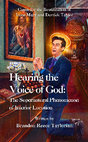
Hearing a divine voice is a type of supernatural experience recognised in religions the world ove... more Hearing a divine voice is a type of supernatural experience recognised in religions the world over. In Catholicism, a handful of saints and blesseds have reported experiencing locutions while some mystics have conducted theological inquiry into these divine communications. Locutions are not confined to the history books but continue as private revelation, a recent example being the locutions of Derrick Taylor which acted as the case study in this research. An English convert and post-conciliar traditionalist, Mr Taylor claimed to experience two sessions of locution during his lifetime (first in 1971 and again in 1978), both addressing his disillusionment with the Church hierarchy during the implementation of reforms to the Tridentine liturgy after the Second Vatican Council. The first was a locution brought about by the intermediation of the Sacred Heart while the second was spoken by the voice of a deceased priest who had been Mr Taylor’s confessor. Deconstructing each of Mr Taylor’s locutionary accounts and comparing them to past reports of locution tested them according to criteria established by mystics to help ascertain their authenticity.
Nottingham Law Journal, 2024
Over the past two decades, the Strasbourg Court has received more than two dozen cases involving ... more Over the past two decades, the Strasbourg Court has received more than two dozen cases involving states denying access to legal personality for religious or belief organisations or otherwise misusing the mechanism of registration to impose undue limits on freedom of religion or belief (FoRB). Most of these cases have resulted in the Court ruling in favour of the applicant by determining such policies and practices as violations of Article 9. Moreover, with the publication in 2014 of the Joint Guidelines on the Legal Personality of Religious or Belief Communities by the joint actions of the Venice Commission and the OSCE, one might assume that issues surrounding recognition and registration have been settled but this would be an inaccurate assessment. The complex disputes over registration that continue to reach the ECtHR, combined with guidelines that are either outdated in parts or vague on key issues, demand that the attention of human rights organisations turns again to the discussion of recognition and registration with a view to developing a new standards document. This article looks back at the guidance the Strasbourg Court has dispensed on cases involving the recognition or registration of religious or belief organisations to reflect on the inadequacy of the criteria used by the Court to determine the permissibility of registration laws. This article also analyses the 2014 OSCE Guidelines to form a series of critical judgements intended to confirm the need for updated international guidance so that legal scholars, policymakers and judges can ascertain with greater precision at what specific points recognition and registration policies and practices contravene FoRB.
Quaker History, 2024
In April 1658, a Lancastrian currier named John Moon claimed to receive a revelation from Jesus C... more In April 1658, a Lancastrian currier named John Moon claimed to receive a revelation from Jesus Christ that affirmed many tenets taught by the English Dissenter George Fox. Moon, along with his parents, brother and uncle, joined the Religious Society of Friends in 1653, a year after Fox’s vision on Pendle Hill, not far from the Moon’s homeland on the plains of the Fylde. This portion of the Moon family received instant reprisal for converting to the new movement. However, imprisonments, fines and the seizure of his possessions did not stop John from publishing several works affirming his newfound beliefs. Still, scholars remain in dispute over parts of the history of the Moon family’s conversion. This article investigates the early history of Quakerism in Lancashire with special attention given to John Moon’s literary works which may warrant his recognition as a Quaker leader key to the propagation of the movement.
The Local Historian, 2024
In Paris in August 1839, the French government revealed a gift free of charge that would change t... more In Paris in August 1839, the French government revealed a gift free of charge that would change the world forever. This gift was the daguerreotype process which had been invented by artist Louis Daguerre who used an iodine-sensitised silvered plate and mercury vapour to create some of the world’s earliest photographs and soon afterwards commercial photography was born. The trend of taking photographs spread quickly across the English Channel, but competition was fierce over the next several decades to develop new methods of creating clearer images for less expense and with reduced exposure times. Victorian society embraced the technology of photography and much of the work conducted by family historians today revolves around identifying relatives in nineteenth and early twentieth century photographs. This article explores the history of portrait photography followed by an analysis of the ambrotype, tintype, cartes de visite and cartes postale found in the collection of the Moon/Prescott family from Lancashire which will provide a practical guide to dating and interpreting antique photographs.
Journal of Astronist Studies, 2024
In April 1961, Yuri Gagarin became the first human being to journey beyond Earth’s atmosphere and... more In April 1961, Yuri Gagarin became the first human being to journey beyond Earth’s atmosphere and enter outer space. This achievement cemented the status of the Soviet Union as a global superpower and intensified its race with the United States to be the first nation to put a person on the Moon. However, what many people are far less aware of is that a proto-transhumanist and quasi-religious movement in the nineteenth century laid the philosophical foundations for the Space Race. At the same time, the writings of its main proponents continue to inspire beliefs at the confluence of religion, space exploration and spirituality. This movement was called Cosmism and was spearheaded by an unusual character named Nikolai Fyodorov, a librarian from Moscow whose idiosyncrasies became just as notorious as his radical beliefs about humanity colonising the Milky Way and using science to resurrect the dead. Fyodorov’s Common Task set out a grand plan for humanity’s future, one in which Homo sapiens would become a spacefaring species and construct a utopian civilisation among the stars. In 1953, Israeli political theorist Mordechai Nessyahu founded Cosmodeism which advocated a similar endeavour of human expansion into the extraterrestrial world but focused its beliefs around the prophecy that spaceflight will see humans eventually become gods in a presently godless cosmos. However, new developments have begun to take place in space religion in the twenty-first century with the youngest religion having been founded only a decade ago in 2013 whose followers are known as Astronists. Astronism repackages human space expansion as a sacred endeavour called transcension, the object of which is to see humanity escape the cosmos entirely and thus relieve itself of all limitations. Studying the interplay between these three space religions will demonstrate how they have contributed to art and film, astronautics and spaceflight, philosophy and literature.
Journal of Astronist Studies, 2024
Celestial bodies have long been a source of religious objectification and this article aims to co... more Celestial bodies have long been a source of religious objectification and this article aims to convey the origin of the relationship between human religious belief and observations of the night sky. The academic search for the origin of religion commenced in the early nineteenth century and since then the debate of whether animism or pre-animism is the original religion has dominated this field. Until now, no unified theory has acknowledged the influence of primitive astronomy on the origin of religion. However, the theory of Astronicism supports the pre-animist hypothesis by proposing that early modern humans of the Upper Palaeolithic made simple associations between celestial bodies and their apparent capacity to determine human survival. This article asserts that these associations led to celestial deification long before humans animated astronomical phenomena with spirits. Archaeological specimens from Europe and beyond including astral rock art, cup marks and engravings are used in this article to assert that astrolatry and astromancy were crucial to the development of religion.
North West Catholic History, 2024
The 1960s and 1970s in Britain was a time of revolution in attitudes towards sex, especially in t... more The 1960s and 1970s in Britain was a time of revolution in attitudes towards sex, especially in the public education system. The campaign to see sex education established as a subject in primary and secondary schools was gaining traction despite fierce opponents like Mary Whitehouse. This article focuses on the story of a traditionalist Catholic couple named Mr Derrick Taylor and Mrs Irene Taylor who set up a campaign to defend their children against what they saw as the encroachment of immorality, promiscuity and pornography. Mrs Taylor worked to spread the message that sex education was wrong by building a network of mothers who shared her views while Mr Taylor defended in court his decision to remove his children from school altogether. This article gives an account of the lengths Mr and Mrs Taylor went to in order to try to stop sex education and describes the impacts this campaign had on their children.
Doctoral Research Proposal of Cometan: Do recognitory and commercial restrictions imposed on religious organisations around the world cause impediments to freedom of religion?
In their 2020 International Religious Freedom Report, the United States Commission on Internation... more In their 2020 International Religious Freedom Report, the United States Commission on International Religious Freedom (USCIRF) detailed the recognition processes for religious organisations by country. Although the dynamics of religious restriction were acknowledged, the data alone did not explicate the possible link between the abuse of recognition systems and issues such as religious freedom violations, forced migration, discrimination, and terrorism. This project is primarily concerned with how the legal apparatus of religious recognition could be abused by governments and why this may be fundamental to the conditions of religious liberty. Religious recognition denotes the mechanism for the legal registration of religious institutions in a country; government recognition normally permits institutions to conduct commercial operations and religious services legally
When Religion Goes Extraterrestrial
This fourth instalment of The Original Astronist Lecture Series explores the intersections betwee... more This fourth instalment of The Original Astronist Lecture Series explores the intersections between religion and science fiction in popular culture and how this has contributed to the development of space religions, UFO religions, and the incorporation of belief in extraterrestrial life into belief systems. The lecture also re-analyses the origins and features of the Astronic tradition from its prehistoric origins through to its ancient manifestations. This presentation was used as part of Cometan's lecture to a cohort of students on the course Religion, Culture & Society at the University of Central Lancashire on Thursday 4th March 2021.
When Religion Goes Extraterrestrial
This fourth instalment of The Original Astronist Lecture Series explores the intersections betwee... more This fourth instalment of The Original Astronist Lecture Series explores the intersections between religion and science fiction in popular culture and how this has contributed to the development of space religions, UFO religions, and the incorporation of belief in extraterrestrial life into belief systems. The lecture also re-analyses the origins and features of the Astronic tradition from its prehistoric origins through to its ancient manifestations. This presentation was used as part of Cometan's lecture to a cohort of students on the course Religion, Culture & Society at the University of Central Lancashire on Thursday 4th March 2021.
The Eschatology & Soteriology of Astronism
This third instalment in The Original Astronist Lectures Series gave audiences an insight into As... more This third instalment in The Original Astronist Lectures Series gave audiences an insight into Astronist beliefs regarding death and the afterlife, as well as Astronist conceptions of human destiny. In addition, this lecture provided a short delineation of Astronist views on salvation and how Astronism asserts that salvation for humankind is achievable by means of space exploration and engagement with the astronomical world on a variety of levels, from the physical to the intellectual to the metaphysical.
The Eschatology & Soteriology of Astronism
This third instalment in The Original Astronist Lectures Series gave audiences an insight into As... more This third instalment in The Original Astronist Lectures Series gave audiences an insight into Astronist beliefs regarding death and the afterlife, as well as Astronist conceptions of human destiny. In addition, this lecture provided a short delineation of Astronist views on salvation and how Astronism asserts that salvation for humankind is achievable by means of space exploration and engagement with the astronomical world on a variety of levels, from the physical to the intellectual to the metaphysical.
Astronism: A Space Religion
This second instalment in The Original Astronist Lecture Series delineates some of the fundamenta... more This second instalment in The Original Astronist Lecture Series delineates some of the fundamental beliefs and concepts of prominence at time of presentation creation in October and November 2020 of The Year of Manifestation, but delineates these as part of a broader theme of space religion. The goal of this presentation is to precisely explain what a space religion is, how it differs from other categories of religion, and how Astronism as a belief system accurately fits the characteristics of being called a space religion.



Uploads
Videos by Dr Brandon Reece Taylorian
Thank you for watching Episode 1 of Season 3 of A Conversation with Cometan. Stay tuned for what's yet to come in Season 3!
Thank you for watching the first half of Season 3 of A Conversation with Cometan. Season 3 will return in April 2022 with the second half of the season after the mid-season break.
Thank you for watching Episode 2 of Season 3 of A Conversation with Cometan. Stay tuned for Episode 3 of Season 3!
S3E2's Official IMDb Page: https://www.imdb.com/title/tt16156556/
Visit The Official Website of Cometan: https://www.cometan.org
Visit The Official Website of Astronism: https://www.astronism.com
Visit The Online Encyclopedia of Astronism: https://www.astronism.org
Visit Astropedia: https://astronism.fandom.com
Thank you for watching Season 1 of A Conversation with Cometan. Stay tuned for Season 2 coming soon!
Visit The Official Website of Cometan: https://www.cometan.org
Visit The Official Website of Astronism: https://www.astronism.com
Follow Cometan on Social Media:
Facebook – https://www.facebook.com/CometanOfficial
Twitter - https://www.twitter.com/CometanOfficial
Instagram – https://www.instagram.com/CometanOfficial
This video remains property of the Astronist Institution.
© 2020 Astronist Institution
Part of the First Vicinal Assembly were attendees (in speaking order):
1. Adriano Autino
2. Giulio Prisco
3. Paul Ziolo
4. Tsvi Bisk
5. Cometan
6. Steven Wolfe
7. Alberto Cavallo
Thank you for watching Episode 19 of Season 2 of A Conversation with Cometan. Stay tuned for Season 3!
Visit The Official Website of Cometan: https://www.cometan.org
Visit The Official Website of Astronism: https://www.astronism.com
Cometan's Social Media:
Facebook – https://www.facebook.com/CometanOfficial
Twitter - https://www.twitter.com/CometanOfficial
Instagram – https://www.instagram.com/CometanOfficial
Cometan joins Giulio Prisco and a range insightful speakers including Steve Wolfe, Namrata Goswami, Rachel Lyons and Natasha Vita-More, for the 2021 Terasem Space Day to discuss the Astronist belief system. In short, by focusing on one of the Astronism's fundamental principles called predeterminationism - the belief that it is humanity's destiny and existential purpose to explore the astronomical world as evidenced by humankind's unique evolution to intelligence. Cometan explains how he sees the world from a cosmocentric perspective and how both personal and collective proximation to the astronomical world - called stellancy - is crucial to fulfilling this solemn anthropic destiny.
Thank you for watching Episode 17 of Season 2 of A Conversation with Cometan. Stay tuned for Episode 18 Coming Soon!
Thank you for watching Episode 18 of Season 2 of A Conversation with Cometan.
Papers by Dr Brandon Reece Taylorian