Papers by Elisa Bernard
Zeitschrift für archäologische Aufklärung, 2025

“Living Museums” and societal change: The National Museum of Palermo between the 1860s and the 1950s
Mare Internum. Archeologia e culture del Mediterraneo, 2022
This article engages with a question that is underrated and underexplored in the literature on mu... more This article engages with a question that is underrated and underexplored in the literature on museum history: how do museums respond to and/or trigger societal, political, and cultural changes? To answer this question, this research applies to museum institutions the Greek philosopher Plato’s well-known observation that no living organism or piece of knowledge stays the same throughout its lifetime, as the fundamental nature of human bodies and knowledge is continuous change. From this perspective, we can ask what elements cause a museum to be perceived as the same museum or a different one over time. In this perspective, we can also further analyze the conditions under which the balance between stability and change breaks down in the long-term life of institutions (in our case, museums). A case study approach seems the most promising strategy to address these questions. It also seems the most well-suited strategy to begin drafting an analytical model that would allow us to identify and analyze the feld-of-force system in which museums are embedded by studying the concrete changes museums undergo or trigger in their interaction with societal changes. The case study analyzed in this paper is the National Museum of Palermo: beginning with Antonino Salinas at the end of the nineteenth century, its directors have envisioned the museum as a school and the pinnacle of Sicilian civilization and identity. The analysis presented here identifes various stimuli for change, both exogenous and endogenous, and shows how these forces can coalesce in specifc moments of a museum’s life in such a way that, viewed a posteriori, they turn into pivotal turning points.
Il capitale culturale, 2022
This paper takes Greek philosopher Plato’s well-known observation that no living organism stays a... more This paper takes Greek philosopher Plato’s well-known observation that no living organism stays actually the same throughout its lifetime since its fundamental nature is instead continuous change, and applies it to museum institutions. Museum institutions might be regarded as living organisms as well and, from this perspective, we can ask what causes a museum to be perceived as the same museum over time. In so doing, we can thus also analyse the conditions under which the balance between stability and change breaks down. Combining contextual analysis and a case study approach seems the most promising strategy to address these questions. In this paper, we analyse the debate over the function and mission of museums in post-Unification Italy to show that museums can serve multiple purposes, purposes which in turn might shape museums’ collections, visions, and display and narrative strategies. We also present the analysis of a case study which not only demonstrates that museums never stay the same but also allows us to draft an analytical model according to which the substantial changes museums undergo or trigger in interaction with and relation to societal changes enable us to identify the fields of force in any given concrete situation in which museums are located and act as institutions.
Nationalism versus “identity pluralism”? Preserving and valorizing archeological heritage
International Journal of Constitutional Law, 2022
This article discusses how archeological objects’ “pluralistic identity”—defined as the archeolog... more This article discusses how archeological objects’ “pluralistic identity”—defined as the archeological relic’s life in the ancient world and its afterlife, including its reuse and potential return to its original national context—complicates the protection of archeological heritage on the Italian territory in the shadow of the cultural property nationalism/internationalism dialectic. It begins by reconstructing and discussing the debate underscoring the first retentionist cultural property law in post-Unity Italy. The article then analyzes a series of case studies testifying to the (in)efficacy of such a law—for instance, vis- -vis political interests—the impact of bilateral agreements for the repatriation of looted archeological property from “universal museums” to Italy as the Nation of origin, and the dilemma over the state’s functions of preservation and fruition. The paper asks whether archeological relics which are understood as state property are indeed the “national(ist)” heritage of one national past and whether and how the national identity that they are thought to epitomize can coexist with an inclusive valorization of their “pluralistic identity” in our contemporary society.
Exploring Authenticity Through Classical Art: Originals, Fakes and Copies
Studies in Conservation, 2021
Today, standing in situ or displayed in museums, are several classical and post-classical copies ... more Today, standing in situ or displayed in museums, are several classical and post-classical copies of works of art. In contrast, fakes are usually locked away in museum stores. This dichotomy sparks a reflection on the authenticity attached to fakes and to copies of classical artworks. Building upon Denis Dutton’s work and drawing on a series of examples, this article contends that, although neither fakes nor copies are (the) original, copies are ‘nominally authentic’ regarding their authorship, origin, findspot, and/or provenance, whereas fakes are not. Also, copies are ‘expressively authentic’ in so far as they honestly fulfil the function for which they were created, are situated in the context of the original, or somehow speak of continuity with artistic and art historical traditions. On the contrary, once spotted, fakes lose their purpose and their intended audience, proving expressively inauthentic. Therefore, what fakes and copies have in common is their non-originality, explored here as both creativity and exemplarity or fecundity, that is, the capacity to originate an artistic or figurative tradition. The article concludes by asking what we are to do with fakes and contends that, as historical documents, they warrant exhibition since they can contribute to unlocking the multiple narratives surrounding originals.
Y. Tonga Uriarte, M.L. Catoni (Eds), Temporary Organizing and Temporality: Stability and Change in Cultural and Creative Industries, Fazzi Editore, 2020
Il Capitale Culturale. Studies on the Value of Cultural Heritage, 2020
Since the second decade of the twentieth century, temporary exhibitions on art and archaeological... more Since the second decade of the twentieth century, temporary exhibitions on art and archaeological fakes and reproductions have appeared in museums, galleries and research institutes in Europe and America. Aiming to educate collectors and curators, to denounce and raise public awareness of forgeries, and eventually to disseminate the value of fakes as historical documents, these exhibitions are something of a litmus test for the perception of, and critique on, this phenomenon over time. Drawing upon an anthology of paramount exhibitions held during the first half of the century, this research provides an insight on display strategies, as well as the patterns, reasons and purposes for exposing fakes and reproductions, tracing back both commonalities, differences and changes over time.
«Mostre permanenti». Carlo Ludovico Ragghianti in un secolo di esposizioni, 2018
This Catalogue Entry reviews the Exhibition "Mostra dell'Opera di Adolphe Appia (1882-1928)", fir... more This Catalogue Entry reviews the Exhibition "Mostra dell'Opera di Adolphe Appia (1882-1928)", first held at La Strozzina in Palazzo Strozzi, Florence, in April-March 1963, and later on tour in various Italian cities.
Favaretto, I., F. Ghedini , P. Zanovello, E.M. Ciampini, eds. "Anti. Archeologia. Archivi", 2019
This research investigates Carlo Anti’s exegetic approach to classic iconography within the inter... more This research investigates Carlo Anti’s exegetic approach to classic iconography within the international hermeneutic critics of his own time. Out of some contributions dealing with roman art, the archaeologist chiefly delved into Greek art – in particular, into the interactions between Greek oral literature and performances and vase painting. He mainly focused on theatre, using Greek and southern-Italian vases and roman reliefs as means to inspect mythic traditions (and variations) and to reconstruct plots and plays of ancient dramas, as well as scenic designs and ritual practices.
Cavada, E., ed. "Alle origini della Pieve di San Lorenzo. Storia e archeologia del costruito e del contesto", 2019
Baggio, M., E. Bernard, M. Salvadori, L. Zamparo, eds. "Anthropology of Forgery. A Multidisciplinary Approach to the Study of Archaeological Fakes", 2019
This article deals with a group of 8 pseudo-Apulian vases in the archaeological collection of Bru... more This article deals with a group of 8 pseudo-Apulian vases in the archaeological collection of Bruno Marchetti, which the University of Padova received as a bequest in December 2015. The aims of this work are, first, to test an “authentication protocol” based on the synergy of archaeological and archaeometric analyses; second, to investigate the forger’s modus operandi and figurative culture; and lastly, to prove whether these vases can be attributed to the “hand” of the same “serial forger”.
Contributo al Convegno Nazionale "L'Arte non vera non può essere Arte" organizzato dal Comando Ca... more Contributo al Convegno Nazionale "L'Arte non vera non può essere Arte" organizzato dal Comando Carabinieri Tutela Patrimonio Culturale in collaborazione con il Ministero per i Beni e le Attività Culturali, l'Università degli Studi di Roma Tre e dal Consiglio Nazionale Anticontraffazione (Roma 5 dicembre 2017)
Archeologia dell'architettura, 2017
Archeologia dell'architettura, 2016
This paper will discuss the “restoration” of the so-called House of Juliet in Verona, which was i... more This paper will discuss the “restoration” of the so-called House of Juliet in Verona, which was influenced by Antonio Avena and was finally conducted between November 1939 and April 1941. The data from topographical, archaeological and archival sources, together with the historical guide books and postcards, reveal that, up until the 20th century, the location of Juliet’s House was understood to be the casa torre facing via Cappello. After a long series of proposed restoration projects dating back to the early 20th century, the restoration conducted by A. Avena created Juliet’s House as we know it today in the building facing the inner courtyard. Through the study of the archival sources, old photographs and the archaeological analysis of the facies of the building, it is possible to acquire an idea of how the restoration was made and the underlying ideas of the project. The restoration consisted in a combination of recycled fragments, “antiqua spolia”, and architectonical elements emulating ancient ones, in order to create an evocative pastiche. It was meant to recreate a medieval atmosphere and to create a backdrop to the Shakespearian drama.
Keywords: Juliet’s House, Antonio Avena, Verona, restoration, architecture, archaeology.

Available at http://www.engramma.it/eOS/index.php?id_articolo=3024.
This paper deals with mourni... more Available at http://www.engramma.it/eOS/index.php?id_articolo=3024.
This paper deals with mourning gestures in Roman literary and iconographic productions. Both literature and iconography are thought to be the product of a shared cultural background but, at the same time, they show differences in the way each of them expresses this background: the literary form is dynamic, while the iconographic form seems to be static. Hence, ritual mourning scenes are analyzed either in literature (where some vivid details allow the reader to visualize what is being said through words) or in iconography (where an aoristic image stands for a durative narration). In particular, the analysis focuses on a selection of literary sources that contain vivid descriptions of ritual mourning scenes and date back to a period between the I century BC and the II century AD. They are compared to the conclamatio scenes that are portrayed on some groups of Urban sarcophagi, i.e. children sarcophagi and some mythological ones (depicting the death of Patroclus, Meleager, or Alcestis), all of which date back to the middle Imperial Age. Thus, this paper aims at decoding mourning gestures as well as drawing attention to the similarities and differences that can be detected between the literary horizon and the iconographic one in regard to this particular theme.
Call for Papers by Elisa Bernard
Books by Elisa Bernard
maria pacini fazzi editore, 2024
Monumenti di marmo e bronzo occhieggiano tra i meandri della città: sono monumenti a regnanti, er... more Monumenti di marmo e bronzo occhieggiano tra i meandri della città: sono monumenti a regnanti, eroi del Risorgimento, glorie locali. Inavvertiti in quanto consueti, divenuti silenziosi col passare del tempo e per lo sbiadirsi della memoria, possono tuttavia tornare a parlare attraverso le carte che si conservano negli archivi. In esse infatti risuonano, come in un’eco lontana, le voci di chi ha ispirato l’erezione di quei monumenti e di chi li ha invece contrastati. Di chi con lo scalpello li ha impressi nel crisma della storia. Di chi, infine, molto tempo dopo, ha deliberato lo spostamento, se non anche l’abbattimento, di ciò che aspirava a diventare eterno. Riprendono così forma i profili di committenti e artisti; gli aneliti e le idiosincrasie sottesi alla dedica, all’ostracismo, alla trasformazione, traslazione o distruzione di ogni monumento; le reazioni ora ardenti, ora inerti, ora ostili della comunità civica. Nei monumenti si riflette, insomma, la storia della città: una storia di cultura e arte e politica e società, una storia delle idee e delle ideologie che nei monumenti hanno preso “corpo” (o che con essi si è rischiato di obliare, o tentato di cancellare), e che proprio attraverso quei monumenti si possono oggi tornare a raccontare.

https://www.padovauniversitypress.it/publications/9788869381546, 2019
The forgery of archaeological artefacts and works of art is an ancient and complex phenomenon, st... more The forgery of archaeological artefacts and works of art is an ancient and complex phenomenon, strictly connected to the history of discoveries and the history of collecting, to the development of the antiquities market, the progress in restoration techniques, and, lastly, to the history of archaeology and art criticism. What is the relationship between counterfeit, restoration, and reproduction of an object? How does this relationship change over time, and in relation to the place and the social and cultural context? What are the tools and methods for the authentication of an allegedly archaeological artefact? Can a fake become a historical tool useful to understand the history of taste and ideas? How may the currently rampant forgery be countered? Trying to answer these and other questions, this volume looks at the falsification of archaeological and art objects through the prism of several disciplines, with contributions of academics, administrators of the cultural heritage, and market professionals. It opens with a historical overview of restoration and reproduction methods between the 16th and 19th centuries, followed by a series of recent case studies that confirm the manifold nature of fakes and describe some authentication methods. The book continues with a collection of essays that aim to revaluate the fake object as a document for the history of culture, and it closes with some remarks on the legislation on counterfeiting and on the antiquities market. This volume is an interesting instrument to understand an extremely pressing, relevant phenomenon for cultural heritage, put in a historical perspective.
La falsificazione dei reperti archeologici e delle opere d’arte è un fenomeno antico e complesso, strettamente connesso alla storia delle scoperte e del collezionismo, allo sviluppo del mercato antiquario, al progresso delle tecniche di restauro e alla storia dell’archeologia e della critica d’arte. Qual è il rapporto tra contraffazione, restauro e riproduzione di un oggetto? Come cambia questo rapporto in funzione del tempo, del luogo e del contesto sociale e culturale? Quali sono gli strumenti e i metodi dell’autenticazione di un presunto reperto archeologico? Un falso può diventare uno strumento ermeneutico per la storia del gusto e delle idee? Com’è possibile combattere l’attuale dilagante falsificazione? Per tentare di rispondere a queste e altre domande, il volume scompone il fenomeno della falsificazione degli oggetti archeologici e artistici nel prisma di varie discipline, raccogliendo contributi di accademici, amministratori del patrimonio culturale e professionisti del mercato. Si apre con un panorama storico delle pratiche di restauro e riproduzione tra XVI e XIX secolo, seguito da una serie di casi di studio recenti che confermano la multiforme natura del falso e illustrano alcuni metodi di autenticazione. Si prosegue con una raccolta di saggi che propongono di rivalutare l’oggetto falso come documento per la storia della cultura e si conclude con alcune note sulla legislazione in materia di contraffazione e sul mercato antiquario. Il libro offre dunque un interessante strumento per comprendere un fenomeno urgente e di grande rilevanza e attualità per il patrimonio culturale, in prospettiva storica.
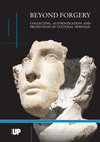
For centuries, art forgery has threatened our cultural heritage’s intangible values and undermine... more For centuries, art forgery has threatened our cultural heritage’s intangible values and undermined fundamental concepts like public trust, ownership, knowledge, and identity. Moreover, honest copies and digital technologies like virtual or augmented reality nuance the uniqueness on which the protection of cultural objects is based. Beyond Forgery. Collecting, Authentication and Protection of Cultural Heritage explores the blurry notions of original, fake, and copy, the stimuli to forgery and its implications, and the authentication techniques from a historical perspective and within a broader discourse about securing cultural heritage. The book includes some reflections on forgery and art collecting and the role of museums in representing authenticity. The relationship between forgery and illicit trade in cultural goods is also addressed. Gathering contributions by scholars in the fields of archaeology, art history, history, anthropology, philosophy, museum studies, legal studies, psychology, and natural science, this book offers a wide perspective on some of the most significant threats and challenges our cultural heritage has posed and poses to us. Acknowledging such threats and challenges is crucial for understanding, protecting, and valorizing our cultural heritage.
Book Reviews by Elisa Bernard
Predella. Journal of Visual Arts, 2020
Recensione a Tommaso Casini, Laura Lombardi (a cura di), The Gentle Art of Fake. Arti, teorie e d... more Recensione a Tommaso Casini, Laura Lombardi (a cura di), The Gentle Art of Fake. Arti, teorie e dibattiti sul falso, Milano, Silvana Editore, 2019.



Uploads
Papers by Elisa Bernard
Keywords: Juliet’s House, Antonio Avena, Verona, restoration, architecture, archaeology.
This paper deals with mourning gestures in Roman literary and iconographic productions. Both literature and iconography are thought to be the product of a shared cultural background but, at the same time, they show differences in the way each of them expresses this background: the literary form is dynamic, while the iconographic form seems to be static. Hence, ritual mourning scenes are analyzed either in literature (where some vivid details allow the reader to visualize what is being said through words) or in iconography (where an aoristic image stands for a durative narration). In particular, the analysis focuses on a selection of literary sources that contain vivid descriptions of ritual mourning scenes and date back to a period between the I century BC and the II century AD. They are compared to the conclamatio scenes that are portrayed on some groups of Urban sarcophagi, i.e. children sarcophagi and some mythological ones (depicting the death of Patroclus, Meleager, or Alcestis), all of which date back to the middle Imperial Age. Thus, this paper aims at decoding mourning gestures as well as drawing attention to the similarities and differences that can be detected between the literary horizon and the iconographic one in regard to this particular theme.
Call for Papers by Elisa Bernard
Books by Elisa Bernard
La falsificazione dei reperti archeologici e delle opere d’arte è un fenomeno antico e complesso, strettamente connesso alla storia delle scoperte e del collezionismo, allo sviluppo del mercato antiquario, al progresso delle tecniche di restauro e alla storia dell’archeologia e della critica d’arte. Qual è il rapporto tra contraffazione, restauro e riproduzione di un oggetto? Come cambia questo rapporto in funzione del tempo, del luogo e del contesto sociale e culturale? Quali sono gli strumenti e i metodi dell’autenticazione di un presunto reperto archeologico? Un falso può diventare uno strumento ermeneutico per la storia del gusto e delle idee? Com’è possibile combattere l’attuale dilagante falsificazione? Per tentare di rispondere a queste e altre domande, il volume scompone il fenomeno della falsificazione degli oggetti archeologici e artistici nel prisma di varie discipline, raccogliendo contributi di accademici, amministratori del patrimonio culturale e professionisti del mercato. Si apre con un panorama storico delle pratiche di restauro e riproduzione tra XVI e XIX secolo, seguito da una serie di casi di studio recenti che confermano la multiforme natura del falso e illustrano alcuni metodi di autenticazione. Si prosegue con una raccolta di saggi che propongono di rivalutare l’oggetto falso come documento per la storia della cultura e si conclude con alcune note sulla legislazione in materia di contraffazione e sul mercato antiquario. Il libro offre dunque un interessante strumento per comprendere un fenomeno urgente e di grande rilevanza e attualità per il patrimonio culturale, in prospettiva storica.
Book Reviews by Elisa Bernard