Books by Elisabetta Di Stefano
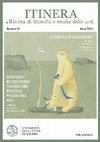
Estetica della biodiversità, 2025
The volume Aesthetics of Biodiversity, edited by Elisabetta Di Stefano, Valeria Maggiore, and Sal... more The volume Aesthetics of Biodiversity, edited by Elisabetta Di Stefano, Valeria Maggiore, and Salvatore Tedesco, offers an interdisciplinary exploration of the relationship between aesthetics and biodiversity in the context of the current ecological crisis. Structured into four sections – theoretical roots and models, dialogue with science and ecology, artistic practices and ecological imaginaries, culture and communication – the book investigates the historical and philosophical genealogies of the aesthetic experience of biological diversity, introduces new paradigms linking aesthetics with the life sciences, and highlights the role of the arts, design, and everyday practices in fostering a more attentive and responsible relationship with the living world.
Far from considering biodiversity as a mere naturalistic datum, the contributions collected here show how it constitutes a sensitive and relational field of experience, capable of reshaping the perception, imagination, and language through which we inhabit the world. The volume thus positions itself as an operational manifesto for an ecological aesthetics of biodiversity, acknowledging biological diversity not only as a scientific and ecological value, but also as an aesthetic, political, and cultural condition of our being-in-the-world.
ITALIAN: Il volume Estetica della biodiversità, curato da Elisabetta Di Stefano, Valeria Maggiore e Salvatore Tedesco, esplora in prospettiva interdisciplinare il rapporto tra estetica e biodiversità, affrontando le sfide poste dall’attuale crisi ecologica. Articolato in quattro sezioni – radici e modelli teorici, dialogo con le scienze e l’ecologia, pratiche artistiche e immaginari ecologici, cultura e comunicazione – il volume indaga le genealogie storiche e filosofiche dell’esperienza estetica della diversità biologica, apre a nuovi paradigmi di riflessione tra estetica e scienze della vita, e mette in luce il ruolo delle arti, del design e delle pratiche quotidiane nella costruzione di un rapporto più consapevole e responsabile con il vivente.
Lungi dal concepire la biodiversità come semplice dato naturalistico, i contributi raccolti mostrano come essa costituisca un campo di esperienza sensibile e relazionale, capace di trasformare la percezione, l’immaginazione e il linguaggio con cui abitiamo il mondo. Il volume si propone così come un manifesto operativo per un’estetica ecologica della biodiversità, che riconosce nella biological diversity non solo un valore scientifico ed ecologico, ma anche una condizione estetica, politica e culturale del nostro essere al mondo
![Research paper thumbnail of Estetica urbana. Atmosfere e artificazione degli spazi della città, Milano, Mimesis, 2023 [ISBN 978-88-5759-873-4]](https://attachments.academia-assets.com/103830205/thumbnails/1.jpg)
ITALIAN ABSTRACT: L’estetica urbana è al centro del dibattito internazionale già da alcuni decenn... more ITALIAN ABSTRACT: L’estetica urbana è al centro del dibattito internazionale già da alcuni decenni, tuttavia in Italia manca ancora uno studio su questo argomento, infatti i pochi saggi su temi analoghi non adottano una prospettiva filosofica. Il volume mira a colmare questa lacuna affrontando l’estetica urbana attraverso due paradigmi interpretativi, che talvolta nel libro vengono intrecciati: i concetti di atmosfera e di artificazione.
La nozione di “atmosfera” nasce in seno alla nuova fenomenologia tedesca di Hermann Schmitz ed è declinata verso l’estetica dal filosofo Gernot Böhme che la considera un paradigma privilegiato per indagare gli spazi emozionali, intesi come frutto di relazioni affettive tra il soggetto percipiente e l’oggetto percepito. Pertanto l’estetica delle atmosfere si rivela uno strumento teorico utile per la progettazione architettonica e urbana. Le atmosfere degli ambienti privati e pubblici saranno analizzate attraverso casi di studio focalizzati sullo spazio domestico, sullo spazio dei libri (biblioteche e librerie) e sugli ambienti sacri. Tali analisi spesso si muoveranno tra spazi reali e immaginari, poiché secondo Boehme l’estetica delle atmosfere ha una matrice retorica e trova un caso esemplare nelle descrizioni letterarie.
Nell’estetica urbana il concetto di atmosfera si relaziona produttivamente con quello di artificazione che, in senso lato, indica “la trasformazione di qualcosa che non è arte in arte”. Intrecciando diversi concetti di artificazione (quello delle sociologhe francesi Natalie Heinich e Roberta Shapiro; quello elaborato dai teorici dell’Everyday Aesthetics Thomas Leddy, Yuriko Saito, Ossi Naukkarinen e quello dell’etologa Ellen Dissanayke), l’arificazione sarà qui intesa come un processo e un “fare arte” in senso collettivo. Questo “fare arte insieme” ha spesso come risultato quello di modificare non solo gli ambienti che vengono “artificati”, ma anche i soggetti coinvolti nel processo trasformativo, pertanto l’artificazione acquista il valore di strumento di trasformazione sociale e urbana. Tale fenomeno sarà analizzato attraverso alcuni esempi incentrati sui processi artistici collettivi messi in pratica nelle case private durante il lockdown, nelle carceri e nelle periferie urbane degradate che vengono sempre più spesso decorati con murales. Tuttavia, nei vari esempi considerati, la trasformazione non si traduce in un processo finalizzato alla produzione di opere d’arte o in un abbellimento puramente esteriore, ma in un “fare arte” collettivo che determina cambiamenti sociali.
Il volume pur raccogliendo alcuni saggi già pubblicati (per lo più in inglese) in altre sedi editoriali, li rielabora alla luce del filo conduttore volto a tenere insieme due paradigmi teorici che non erano mai stati accostati e che invece possono offrire una chiave di lettura inusitata e originale per l’estetica urbana.
Pur mantenendo il rigore scientifico e argomentativo dei testi originari, il volume mira a presentare i concetti di atmosfera e artificazione in forma semplice e chiara anche grazie al ricorso ai casi di studio, in modo da rendere il volume accessibile non solo alla comunità scientifica, ma anche agli studenti universitari e ai lettori non specialisti.
ENGLISH ABSTRACT: Urban aesthetics has been at the center of the international debate for several decades, yet in Italy, there is still a lack of study on this subject. The few essays on similar topics do not adopt a philosophical perspective. This volume aims to fill this gap by addressing urban aesthetics through two interpretive paradigms, which are sometimes intertwined in the book: the concepts of atmosphere and artification.
The notion of "atmosphere" emerges within the new German phenomenology of Hermann Schmitz and is applied to aesthetics by the philosopher Gernot Böhme, who considers it a privileged paradigm for investigating emotional spaces, understood as the result of affective relationships between the perceiving subject and the perceived object. Therefore, the aesthetics of atmospheres proves to be a useful theoretical tool for architectural and urban design. The atmospheres of private and public environments will be analyzed through case studies focused on domestic space, spaces of books (libraries and bookstores), and sacred ambiance. These analyses often move between real and imaginary spaces because, according to Böhme, the aesthetics of atmospheres has a rhetorical matrix and finds an exemplary case in literary descriptions.
In urban aesthetics, the concept of atmosphere is productively related to that of artification, which, in a broad sense, indicates "the transformation of something that is not art into art." By interweaving different concepts of artification (those of the French sociologists Natalie Heinich and Roberta Shapiro, those developed by the theorists of Everyday Aesthetics Thomas Leddy, Yuriko Saito, Ossi Naukkarinen, and that of the ethologist Ellen Dissanayke), artification is understood here as a collective process and "making art" in a collective sense. This "making art together" often results in not only modifying the environments that are "artified" but also the individuals involved in the transformative process. Therefore, artification takes on the value of a tool for social and urban transformation. This phenomenon will be analyzed through examples focusing on collective artistic processes carried out in private homes during the lockdown, in prisons, and in deteriorated urban peripheries that are increasingly decorated with murals. However, in the various examples considered, transformation does not translate into a process aimed at producing works of art or purely external embellishment but rather into a collective "making art" that determines social changes.
While the volume collects some essays already published (mostly in English), it reworks them in light of the guiding thread aimed at bringing together two theoretical paradigms that had never been juxtaposed before and that can instead offer an unusual and original interpretation for urban aesthetics.
While maintaining the scientific and argumentative rigor of the original texts, the volume aims to present the concepts of atmosphere and artification in a simple and clear form, also thanks to the use of case studies, in order to make the volume accessible not only to the scientific community but also to university students and non-specialist readers.
Everyday Aesthetics: European Perspectives, Elisabetta Di Stefano & Sanna Lehtinen (eds.), ISSN 1339 – 1119, 2021
authors reflect how European and Europe-inspired thinking has affected and developed further the ... more authors reflect how European and Europe-inspired thinking has affected and developed further the field of Everyday Aesthetics.

Lo spazio dei libri. Costruzione del sé, rappresentazione immaginaria, forma architettonica, incontro con l’altro, UNIPAPRESS, Palermo, 2021, pp. 109-129 [ISBN stampa: 978-88-5509-300-2/ online: 978-88-5509-301-9], 2021
Cos’è lo spazio dei libri? Il volume, frutto di una ricerca interdisciplinare, mira a rispondere ... more Cos’è lo spazio dei libri? Il volume, frutto di una ricerca interdisciplinare, mira a rispondere a questa domanda attraverso diverse chiavi interpretative. I libri costruiscono architetture di pensieri, sviluppano percorsi immaginari eformano le identità dei lettori. La biblioteca può essere uno spazio fisico che si relaziona alla città - un edificio volto a custodire il patrimonio librario e a favorire il confronto delle idee - o uno spazio immaginario, sfondo di narrazioni letterarie e cinematografiche, o ancora uno spazio simbolico costruito attraverso l’atto della lettura e il dialogo con gli autori; in ogni caso, lo spazio dei libri è sempre un luogo di incontro con i libri e tra i libri, uno spazio capace di generare nuove relazioni e nuovi saperi.

Che cos'è l'estetica quotidiana, Carocci, Roma, 2017 ISBN 978-88-430-9061-7, 2017
Come è possibile accostare l’estetica, ovvero lo studio dell’arte e del bello, alla vita di tutti... more Come è possibile accostare l’estetica, ovvero lo studio dell’arte e del bello, alla vita di tutti giorni? Eppure nell’attuale dibattito anglo-americano questa locuzione ossimorica sta prendendo sempre più consistenza teorica nell’ambito di una nuova disciplina, l’Everyday Aesthetics. Il libro si propone di presentare, per la prima volta in lingua italiana, questo recente campo di indagine, intrecciando le ricerche anglo-americane sull’Everyday Aesthetics e quelle europee sull’estetizzazione del reale. Da queste analisi appare evidente che l’estetica ha ormai cessato di essere una filosofia riferita a uno specifico oggetto di studio (arte bella), ed è diventata un paradigma transdisciplinare, aperto alle pratiche della vita di ogni giorno (cura del corpo, cibo, moda, design). Tuttavia tale ampliamento di orizzonti verso la quotidianità non deve volgersi a una bellezza superficiale e consumistica, come spesso accade, ma all’acquisizione di una consapevolezza corporea (aisthesis) capace di guidarci verso scelte più responsabili e di indurci ad avere maggiore cura di noi stessi, degli altri e dell’ambiente in cui viviamo.
![Research paper thumbnail of Iperestetica. Arte, natura, vita quotidiana e nuove tecnologie, (“Aesthetica preprint” n. 95), Palermo, Centro Internazionale Studi di Estetica, 2012 [ISSN 0393-8522]](https://a.academia-assets.com/images/blank-paper.jpg)
Contemporary society is characterized by excess, by the exasperated search for beauty, in both ps... more Contemporary society is characterized by excess, by the exasperated search for beauty, in both psycho-physical (e.g., from athletics to yoga, from fashion to cosmetics, from cosmetic surgery to genetic engineering) and material terms (from clothes to accessories, from mobile phones to automobiles). Confronting a reality where appearance, pleasure, and fun have become dominant concerns, the study of aesthetics has to move beyond the “canonical” confines of abstract academic inquiry in order to orient its research sphere in a pragmatic direction. There is an increasingly urgent need to identify new categories and to articulate more appropriate epistemological models.
Addressing these concerns in the present volume, Elisabetta Di Stefano aims to reconfigure aesthetics in transdisciplinary and transartistic (i.e., “hyperaesthetic”) terms. The goal is to understand the complexity of experience by establishing a dialogue with other disciplines (e.g., ecology, biology, sociology, psychology, anthropology, gastronomy) and also to initiate a richer and more comprehensive analysis of art, whose forms are no longer (or not solely) to be found in the artistic object, but also in the practices of everyday life. This goal explains the decision (which may be restrictive, but it is not arbitrary) to adopt as privileged interpretive frameworks the theories of two philosophers, the American pragmatist Richard Shusterman and the German neophenomenologist Gernot Böhme, because both reevaluate the significance of sensible knowledge through explicit references to Baumgarten. Shusterman aims to rethink in philosophic terms some bodily practices (e.g., cosmetics, cosmetic surgery, athletics, yoga) and to account for the aesthetic value of popular culture. Böhme articulates the new category of “atmosphere” in order to offer interpretive and critical tools with which to intervene consciously in many fields of “aesthetic work:” from design to packaging, from scenography to interior architecture, from fashion to cosmetics, from communications to advertising. Adopting this dual interpretive framework, the author examines various aspects of everyday life (from nature to design, from marketing to politics), in order to reconceptualize them in light of a new pragmatist aesthetics.
La società odierna è caratterizzata dall’eccesso, dall’esasperata ricerca di bellezza sia psico-fisica (dalla ginnastica allo yoga, dalla moda alla cosmetica, dalla chirurgia estetica all’ingegneria genetica) sia materiale (dagli abiti agli accessori, dal telefonino all’automobile). Di fronte a questa realtà in cui l’apparenza, il piacere e il divertimento sono divenuti, in ogni campo, gli obiettivi dominanti l’estetica deve sforzarsi di superare i confini “canonici” di un’astratta speculazione accademica al fine di orientare in senso pragmatico la sfera d’indagine. Diviene, quindi, sempre più urgente individuare nuove categorie e adottare più adeguati modelli epistemologici. Da qui l’ipotesi di riconfigurare l’estetica (“iperestetica”) in senso transdisciplinare e transartistico. Lo scopo è quello comprendere la complessità dell’esperienza attraverso il dialogo con altri saperi (ecologia, biologia, sociologia, psicologia, antropologia, gastronomia), ma anche di avviare un’indagine più ricca ed esaustiva sull’arte, le cui forme non sono più (o non solamente) identificabili con l’oggetto artistico, bensì sono da rintracciare tra le pratiche della vita quotidiana. Con questo obiettivo si giustifica la scelta, forse restrittiva ma non arbitraria, di privilegiare, come chiavi di lettura per questo lavoro, le teorie di due filosofi: il pragmatista americano Richard Shusterman e il neofenomenologo tedesco Gernot Böhme, poiché entrambi rivalutano, attraverso un esplicito richiamo a Baumgarten, il valore della conoscenza sensibile. Shusterman vuole riconsiderare, in chiave filosofica, alcune pratiche corporee (cosmetica, chirurgia estetica, ginnastica, yoga ecc.) e riconoscere il valore estetico della cultura popolare. Böhme, attraverso la nuova categoria di “atmosfera”, vuole offrire strumenti interpretativi e critici con cui operare consapevolmente in molti settori del “lavoro estetico”: dal design al packaging, dalla scenografia all’architettura d’interni, dalla moda alla cosmetica, dalla comunicazione alla pubblicità. Secondo questa duplice chiave interpretativa vari ambiti della vita quotidiana (dalla natura al design, dal marketing alla politica) saranno sondati al fine di riconsiderarli alla luce di una nuova estetica pragmatica."

Art and Ideas
Francisco de Hollanda and Sixteenth-Century Aesthetics
The historians of aesthetic... more Art and Ideas
Francisco de Hollanda and Sixteenth-Century Aesthetics
The historians of aesthetics who have studied the problem of
ideas in art theory (from Panofsky to Baeumler and Tatarkiewicz) have overlooked Da pintura antiga, by Portuguese artist and theoretician Francisco de Hollanda (1517-1584), a text where the Platonic notion of idea enters a treatise on art for the first time.
The present volume aims to fill such gap by shedding light on an author who has long been overshadowed by the great Michelangelo (whom Hollanda met during his stay in Rome in the years 1538-1540), as well as by advancing an analysis of the aesthetic concepts that emerge not only from Da pintura antiga, but from the entire body of Hollanda’s works.
The most significant element is that in Hollanda’s approach art
theory appropriates connotations previosuly reserved for poetic
creativity. In fact, poetry had borrowed from Platonic philosophy the notion of “divine frenzy” to describe the inspired poet. According to Hollanda, on the contrary, it is the artist who, possessed by such frenzy, is able to rise to the world of ideas. Artistic creativity thus acquires a sacred dimension: “ancient painting” is seen as a sort of “prisca pictura” that, like Ermete Tremegisto’s “prisca theologia”, reveals the most hidden truths. The “melancholic”
artist, who possesses an inspired and bizarre imagination,
as best exemplified by “grottesche”, is the only one capable of
grasping the idea and fixing it with uncommon rapidity in a
sketch. This is a complex and not always immediately successful procedure. Thus, Hollanda considers blindness as a privileged factor to grasp the kind of beauty that the artist, like the prophet, can see only with his “inner eyes”, eyes that are not dimmed by sensible perceptions.
Consequently, “drawing” becomes a key element of Hollanda’s
thought. Drawing emerges as the basis not only of painting,
sculpture, and architecture, but of all the arts that are connected with images: from martial strategy to civil and military engineering; from maps to the design of insignia, livery, clothes, and ornaments.
Hollanda moves beyond the distinction between major
and minor arts, and his approach emerges as more modern than the one that Vasary will articulate a few years later in his famous definition of the “arts of drawing”.

Ornament and Architecture. The Functionalist Aesthetic of Louis H. Sullivan
The present volume b... more Ornament and Architecture. The Functionalist Aesthetic of Louis H. Sullivan
The present volume by Elisabetta Di Stefano offers an introduction to and advances a new interpretation of the aesthetic of Louis Henry Sullivan(1856-1924).
Sullivan is universally known as one of the most important American architects, possibly even the greatest one of the 19th century.
Scholars of the Modern Movement have misinterpreted his motto “form follows function” and have hailed him as the “father of functionalism”. Sullivan, however, attributed to the concepts of “form”, “function” and “suitability” a higher and more poetic meaning than the other architects of the Chicago School, among whom the debate on such issues, as related to Gottfried Semper’s theories and evolutionist doctrines, was quite heated. Nevertheless, rationalist criticism has approached Sullivan solely as “the prophet” of the new architecture of glass and steel, and it has privileged those drawings where mass and simplicity prevailed over ornament, ignoring that part of his theoretical and projectual work that Sullivan himself considered the most significant.
Admittedly, among Sullivan's numerous essays there are only two that focus explicitly on the ornament (both of which have been included in the Appendix to the present volume): Ornament in Architecture (1892) and A System of Architectural Ornament, According with a Philosophy of Man’s Powers (1924). However, in light also of the fact that the first of these essays was written at the height of his career and that he was working on the second at the end of his life, it can be argued that the ornament was a central issue that, though intertwined with functionalist and organicist
concerns, permeated Sullivan’s entire work.

Orfeo Boselli and the “Nobility” of Sculpture
There is not much information available about the ... more Orfeo Boselli and the “Nobility” of Sculpture
There is not much information available about the work of Orfeo Boselli, sculptor, theoretician and restorer, and there is only very incomplete data also about his life and artistic production.
Even though his name is mentionened in several texts of art criticism, he remains a rather shadowy and little-known figure in the context of 17th-century aesthetics. To this day, there are no studies specifically devoted to the reevaluation of the far from secondary role Boselli played in the theoretical debates of his times.
His volume Observations on Ancient Sculpture belongs to the tradition, started by 15th-century theoreticians, that aimed at bestowing intellectual value on the figurative arts by including them among the liberal arts. Boselli pursued this goal of demonstrating the “nobility” of sculpture also in the lesson (which has been reprinted in the Appendix to the present volume) that he gave in 1663 at the Accademia di San Luca, of which he was a member.
Boselli, in fact, opposed the old prejudice that underplayed the
importance of sculpture via-à-vis the other two figurative arts.
That this prejudice was still prevalent in the 18th century is demonstrated by the fact that, despite the great achievements of Baroque sculpture (especially with such artists as Gian Lorenzo Bernini), Boselli’s Observations is the only 17th-century treatise that deals specifically with the practical and theoretical aspects of sculpture as an art.
Along with more technical sections, Boselli’s volume includes
chapters that discuss, in remarkably original ways, aesthetic issues such as the theory of ideal beauty in connection with the baroque notion of “wonder”, the figure of the “learned sculptor”, and artistic representation in relation with the “theory of affections”.
Of particular importance is also Boselli’s emphasis on restoration, which he presented for the first time as a profession in its own right possessing intellectual dignity and value.
Estetiche dell’ornamento
"Di Stefano Elisabetta, Estetiche dell’ornamento, 2006, pp. 160 Isbn 9788884834058, Euro 15,00
... more "Di Stefano Elisabetta, Estetiche dell’ornamento, 2006, pp. 160 Isbn 9788884834058, Euro 15,00
Nell'architettura, tra la fine del secondo e l'inizio del terzo millennio, si assiste al crollo di quei principi di firmitas, utilitas e venustas che, da Vitruvio in poi, erano stati alla base dell'arte dell'edificare; ai valori del peso, della struttura, dell'ornamento subentrano altre categorie estetiche: l'immaterialità, la multimedialità, la sensorialità. Pertanto non si può più parlare di ornamento secondo le chiavi di lettura tradizionali, quali ad esempio la dialettica struttura/decorazione o utile/superfluo, ma è preferibile ricorrere ad un linguaggio metaforico che, gravitando nell'ambito semantico del "corpo", della "veste", del "trucco" e della "maschera", coinvolge spesso la polarità tra verità e inganno. Attraverso le pagine di alcuni autori che dall'antichità ai nostri giorni hanno affrontato, da prospettive diverse, la questione dell'ornamento (Senofonte, Vitruvio, Alberti, Perrault, Laugier, Piranesi, Burke, Le Camus de Mézières, Kant, Semper, Baudelaire, Ruskin, Loos, Le Corbusier, Adorno, Arnheini, Venturi, Mendini) questo testo esamina le tensioni fondative che animano lo statuto teorico dell'ornamento e mette in luce come la retorica antica, attraverso il principio del decorum, possa essere una valida chiave ermeneutica per cogliere l'orientamento dell'architettura contemporanea."

The Beautiful and The Idea in 17th-Century Aesthetics
In his renowned lecture on the Idea, which... more The Beautiful and The Idea in 17th-Century Aesthetics
In his renowned lecture on the Idea, which he delivered at the Academy of Saint Luke in 1664, Giovan Pietro Bellori asserts the superiority of ideal beauty against the slavish imitation of reality and the unbridled freedom of the imagination. However, an equally important, albeit lesser known, contributor to the formulation of this classicist aesthetic theory is Giovan Battista Agucchi, author of a Treatise on Painting that appeared in fragmentary form in 1646. In this work, Agucchi identifes beauty as the truest and highest aim of painting; he attributes to the artist the power to contemplate the Idea, and confers a profound cognitive value to
this form of imitation. Finally, he ponders on aesthetic judgement, addressing the issue, which became increasingly more relevant in the 17th century, of the role of the connoisseur. Many of these themes would later be reelaborated, in a changed cultural context,
by Bellori, who would define the co-ordinates of a strict classicism which centered on the selective paradigm of ideal beauty. Elisabetta Di Stefano proposes a comparative
analysis of the two afore-mentioned texts which are reprinted
in the appendices. Her study foregrounds the progressive ascent of the Idea from natural data to the perfection of beauty, a complex process that in the 18th century, through the theories of Batteux and Winckelmann, will lead to the birth of modern aesthetics under the banner of ideal beauty.

Different Knowledge
Beauty, Art, and Images in Leon Battista Alberti
The great attention that, d... more Different Knowledge
Beauty, Art, and Images in Leon Battista Alberti
The great attention that, during the past few years, has been paid to Leon Battista Alberti has led to the creation of research centers and to the organization of exhibitions and conferences dedicated to him, but it has yet to result, especially in Italy, in a new approach to his aesthetic theories. This represents a serious scholarly gap, because Alberti was an important figure in the history of aesthetics, both for the role he played in the aesthetic and literary debates of the 15th century, as well as for the impact that his thought had on theory and art in subsequent centuries. The present volume constitutes an important tool to fill such gap.
The volume centers on three key concepts: beauty, art, and images. The first chapter problematizes the traditional view that Alberti promoted an objective notion of beauty as harmony, showing instead how he also entertained a functionalist aesthetics and considered the perception of beauty as a subjectve experience linked to individual taste. In the second chapter, after examining the relationship between Alberti’s treatises and ancient models, the analysis focuses on the “learned artist”, outlining a conception of knowledge that, refuting all abstractions, is rooted in practical experience and activity. The last chapter examines Alberti’s theory of images, which has been neglected by scholars, and focuses on Egyptian hieroglyphs. The concluding pages of the present volume analyze the hierglyph of the winged eye, which was adopted by Leon Battista Alberti as his personal emblem, and suggest that it may provide a key for a comprehensive interpretation of his humanistic thought.
Papers by Elisabetta Di Stefano
To bring philosophy out of closets and libraries, schools and colleges, 2025
ENGLISH ABSTRACT:
The landscape is a complex cultural phenomenon — not merely an object of contem... more ENGLISH ABSTRACT:
The landscape is a complex cultural phenomenon — not merely an object of contemplation or a backdrop to daily life but an active element that interacts with communities and helps shape their identity. Following an introduction to the concept of landscape and “cultural landscape,” along with a brief overview of aesthetic perspectives developed in the United States and Europe, this essay focuses on the German philosopher Gernot Böhme’s theory of atmospheres. An atmosphere is not only the result of synesthetic perception; it can also be artificially created, not only through natural and architectural elements — as landscape architects do — but also through media such as literature, photography, and cinema. In its final section, the essay examines, through the lens of “atmospherography” — the study of how media construct atmospheres — some Sicilian atmospheres shaped by cinematic and television imaginaries. Through this exploration, the essay aims to demonstrate how films and TV series do more than merely represent Sicily; they stage it, generating atmospheres that shape collective imagination and influence the very relationship with the landscape.
ITALIAN ABSTRACT:
Il paesaggio è un complesso fenomeno culturale — non semplicemente un oggetto di contemplazione o uno sfondo della vita quotidiana, ma un elemento attivo che interagisce con le comunità e contribuisce a plasmarne l’identità. Dopo un’introduzione al concetto di paesaggio e di “paesaggio culturale”, insieme a una breve panoramica delle prospettive estetiche sviluppatesi negli Stati Uniti e in Europa, il saggio si concentra sulla teoria delle atmosfere del filosofo tedesco Gernot Böhme. L’atmosfera non è soltanto il risultato di una percezione sinestetica; può essere anche artificialmente creata, non solo attraverso elementi naturali e architettonici — come fanno i paesaggisti — ma anche tramite media quali la letteratura, la fotografia e il cinema. Nella sezione conclusiva, il saggio esamina, attraverso la lente dell’“atmosferografia” — lo studio di come i media costruiscono le atmosfere — alcune atmosfere siciliane modellate dagli immaginari cinematografici e televisivi. Questa esplorazione intende mostrare come film e serie TV non si limitino a rappresentare la Sicilia, ma la mettano in scena, generando atmosfere che plasmano l’immaginario collettivo e influenzano il rapporto stesso con il paesaggio.
BIODIVERSITY AND THE ART OF LIVING. FOOD AS AN AESTHETIC AND ENVIRONMENTAL EXPERIENCE, 2025
This essay explores the relationship between biodiversity and the art of living through the lens ... more This essay explores the relationship between biodiversity and the art of living through the lens of food, understood as both an aesthetic and environmental experience. It begins by examining the current biodiversity crisis and the proliferation of industrial food systems, which contribute to unsustainable and unhealthy lifestyles. The aesthetic dimension of eating is then analyzed in light of "aesthetic capitalism" (Böhme) and the greenwashing practices it often entails. Within the theoretical framework of Everyday Aesthetics (Berleant, Saito), the essay proposes an alternative food culture and experience grounded in the concepts of engagement and care. Drawing on the Greek notion of diaita-understood not simply as a dietary regimen but as a harmonious and mindful way of life-the essay reinterprets gastronomic experience as an embodied and situated aesthetic practice, capable of integrating sensoriality, ethics, and sustainability. In this sense, nourishment is no longer reduced to a consumable object but is redefined as a form of aisthesis: a mode of sensitive knowledge that respects and fosters both natural and cultural biodiversity.

“Anuario filosofico” 58/1 (2025), pp. 77-98, special issue titled “El poder transformador de la Estética de lo cotidiano”, eds. Raquel Cascales, Mª Jesús Godoy Domínguez, [ISSN: 0066-5215; ISSN-e: 2173-6111] , 2025
English Abstract
Emerging as a distinctive sub-discipline within Anglo-American aesthetics, Every... more English Abstract
Emerging as a distinctive sub-discipline within Anglo-American aesthetics, Everyday Aesthetics has revolutionized traditional inquiries by directing attention towards the aesthetics inherent in commonplace practices and objects. This philosophical trend, initially prominent in the United States, found resonance in European academia, broadening its scope and introducing diverse interpretative frameworks. However, amidst this burgeoning discourse, the historical dimension of Everyday Aesthetics remains relatively unexplored. This paper endeavors to fill this gap by delving into the historical origins of Western aesthetics, focusing on the notions of care of the home in the thought of Socrates and Xenophon, two eminent Greek philosophers. Adopting a historical approach inspired by Władysław Tatarkiewicz, the essay proposes a historical investigation aimed at identifying traces of everyday aesthetics in Greek thought. Through the analysis of Xenophon's Memorabilia and Oeconomicus, it is highlighted how the concepts of order and beauty, generally interpreted by ancient philosophy in a metaphysical context, are applied by Xenophon's Socrates and Xenophon himself to objects and practices of daily life, specifically to the care of the home. By recognizing implicit aesthetics in everyday practices, this historical lens enriches contemporary discussions within Everyday Aesthetics, particularly concerning cleanliness, order, and domestic care.
Italian Abstract: Nata come una sotto disciplina nell'ambito dell'estetica anglo-americana, l'Everyday Aesthetics ha rivoluzionato le indagini estetiche tradizionali, spostando l'attenzione verso le pratiche e gli oggetti comuni. Questa corrente filosofica, inizialmente affermatasi negli Stati Uniti, ha trovato risonanza nella ricerca europea, ampliando il proprio campo d'indagine e introducendo diversi approcci interpretativi. Tuttavia, all'interno di questo crescente dibattito, la dimensione storica dell'Everyday Aesthetics rimane poco esplorata. Questo contributo si propone di colmare tale lacuna, approfondendo le origini storiche dell'estetica occidentale e focalizzandosi sulle nozioni di cura della casa nel pensiero di Socrate e Senofonte, due eminenti filosofi greci. Adottando un approccio storico ispirato a Władysław Tatarkiewicz, l’articolo propone un’indagine storica volta a individuare tracce di estetica del quotidiano nel pensiero greco. Attraverso l’analisi dei Memorabili e dell’Economico di Senofonte, si evidenzia come i concetti di ordine e bellezza, generalmente interpretati dalla filosofia antica in un contesto metafisico, siano applicati dal Socrate di Senofonte e da Senofonte stesso agli oggetti e alle pratiche della vita quotidiana, in particolare alla cura della casa. Riconoscendo un’estetica implicita nelle pratiche quotidiane, questa prospettiva storica arricchisce le discussioni contemporanee all’interno dell’Everyday Aesthetics, in particolare per quanto riguarda la pulizia, l’ordine e la cura domestica.

Elisabetta Di Stefano e Diego Mantoan (a cura di), Libro d’arte biodiverso. Parole e immagini tra estetica, arte e ambiente (apparato iconografico di Laura Pitingaro), Edizioni Bisso, Palermo, 2024, pp. 4-9, [ISBN 978-88-944917-6-0]
The text explores the concept of biodiversity in its ecological, social, and cultural dimensions,... more The text explores the concept of biodiversity in its ecological, social, and cultural dimensions, highlighting the interconnectedness between nature, human communities, and artistic practices. Art is presented as a powerful tool for raising environmental awareness and promoting ecological transition, with examples of works that celebrate biodiversity or denounce its threats, such as those by Isabella Kirkland and Nancy Campbell. Particular attention is given to the "art book," understood as a form of expression that combines words and images from a multidisciplinary and transdisciplinary perspective. The book thus becomes not only a vehicle of knowledge but also an aesthetic and sensory experience, capable of fostering a profound understanding of biodiversity as an essential and unique value.

Bellezza e natura. Il giardino come forma d’arte e di relazione tra uomo e ambiente, a cura di Loredana Tarallo e Michele Di Cintio, Palermo, Edizioni Ex-Libris, , 2024
The garden has long been considered a form of art and one of the highest moments of aesthetic con... more The garden has long been considered a form of art and one of the highest moments of aesthetic contemplation within a tradition of studies, exemplified by Immanuel Kant. However, as highlighted by Gilles Clément, today the art of gardens is called upon to face a greater challenge by embracing the idea of a "planetary garden," where environmental care is crucial. Following this trend, artistic performances focused on planting and cultivating fields and gardens emerge. The garden thus becomes a performative space where people can actively participate in its creation and maintenance, but these "artified" gestures acquire symbolic value. An exemplary case is represented by the evolutionary gardens of the artist Egle Oddo, where care becomes a shared act and an opportunity for community building. From this perspective, Egle Oddo's gardens can be interpreted as a daily aesthetic practice in light of Everyday Aesthetics, a field of study that values ordinary and repetitive actions as forms of beauty and social inclusion.
ITALIAN ABSTRACT:
Il giardino è stato considerato una forma arte e uno tra i momenti più elevati di contemplazione estetica da una lunga tradizione di studi, che ha in Immanuel Kant un esemplare esponente. Oggi però, come ha messo in evidenza Gille Clément, l’arte dei giardini è chiamata ad affrontare una sfida più grande, abbracciando l'idea di un "giardino planetario", dove la cura dell'ambiente è cruciale. Su questa scia si pongono le performance artistiche incentrate sulla piantumazione e sulla coltivazione di campi e giardini. Il giardino diviene così un luogo performativo in cui le persone possono partecipare attivamente alla sua creazione e manutenzione, ma tali gesti “artificati” acquistano un valore simbolico. Un caso esemplare sono i giardini evolutivi dell’artista Egle Oddo in cui la cura diventa un atto condiviso e un’occasione per fare comunità. In quest’ottica i giardini di Egle Oddo possono essere interpretati come pratica estetica quotidiana alla luce dell’Everyday Aesthetics, un'area di studio che valorizza le azioni ordinarie e ripetitive come forma di bellezza e inclusione sociale.

Estetica della strada, 2024
ENGLISH ABSTRACT: During the 20th century, cities became a privileged stage for contemporary art,... more ENGLISH ABSTRACT: During the 20th century, cities became a privileged stage for contemporary art, driven by artists’ desire to break away from institutional circuits and experiment with new forms of expression. Among these, walking in urban environments emerged as an artistic practice capable of transforming the everyday act of moving into an aesthetic experience. This essay explores the aesthetic value of walking as an art form through the lens of Gernot Böhme's aesthetics of atmospheres, which conceives aesthetics as a science of perception and sensitive knowledge. Following a historical overview of this practice’s roots in Dadaism, Surrealism, and Situationism, the essay focuses on a specific case study: Sposare la notte (“Marrying the Night”), a performance by g.olmo stuppia developed across four episodes in Venice and Palermo as part of the Italian Pavilion at the 59th Venice Biennale (2022).
The analysis centers on the third episode of the performance, held in Brancaccio, a peripheral district of Palermo marked by a complex history of industrial rise, urban decay, and anti-mafia memory. Based on the author’s participation, the essay examines how the route created a multisensory and immersive experience, generating contrasting atmospheres that encouraged new ways of perceiving and belonging to the city. Finally, the essay reflects on how these artistic practices not only enrich relationships with urban spaces but also promote processes of social and cultural regeneration, proposing a renewed aesthetic for urban living.
ITALIAN ABSTRACT:
Nel corso del Novecento, la città diventa un palcoscenico privilegiato per l'arte contemporanea, grazie al desiderio degli artisti di uscire dai circuiti istituzionali e sperimentare nuove forme espressive. Tra queste, il camminare in ambiente urbano si configura come una pratica artistica capace di trasformare il gesto quotidiano dello spostarsi in un’esperienza estetica. Questo saggio esplora il valore estetico del camminare come forma d’arte attraverso la lente dell’estetica delle atmosfere di Gernot Böhme, che concepisce l’estetica come scienza della percezione e conoscenza sensibile. Dopo una ricognizione sulle radici storiche di questa pratica nei movimenti artistici del Dadaismo, Surrealismo e Situazionismo, il saggio si concentra su un caso di studio specifico: la performance Sposare la notte di g.olmo stuppia, sviluppata in quattro episodi tra Venezia e Palermo nell’ambito del Padiglione Italia della 59ma Biennale di Venezia (2022).
L'analisi si focalizza sul terzo episodio della performance, svoltosi a Brancaccio, quartiere periferico di Palermo, caratterizzato da un intreccio di storia industriale, degrado urbano e memoria antimafia. Partecipando personalmente all’evento, l’autrice esamina come il percorso abbia creato un’esperienza multisensoriale e immersiva, generando atmosfere contrastanti capaci di stimolare nuove modalità di percezione e appartenenza alla città. Infine, il saggio riflette su come queste pratiche artistiche possano non solo arricchire il rapporto con gli spazi urbani, ma anche favorire processi di rigenerazione sociale e culturale, proponendo una rinnovata estetica del vivere urbano.
![Research paper thumbnail of Beauty as care. Designing atmospheres for healthcare places, in “Contemporary Aesthetics”, vol 12, 2024, special issue “Atmospheric Design and Everyday Aesthetics”, [ISSN 1932-8478]](https://attachments.academia-assets.com/120483904/thumbnails/1.jpg)
“Contemporary Aesthetics”, vol 12, , 2024
English Abstract: According to German philosopher Gernot Böhme, the “aesthetics of atmospheres” i... more English Abstract: According to German philosopher Gernot Böhme, the “aesthetics of atmospheres” is highly important in architectural design. This holds particularly true in the design of hospitals and sanatoriums, where users require special care and attention. Moreover, in these marginal places of everyday life, not only the production of appropriate atmospheres but also the “aesthetics of care” can transform into a tool capable of influencing patients' health. This essay aims to establish a connection between the aesthetics of atmosphere and the aesthetics of care, which stem from different philosophical backgrounds, namely Phenomenology and Everyday Aesthetics. By examining their interrelations through the lens of “artification”, this paper will shed light on their potential practical applications.
Italian Abstract: Secondo il filosofo tedesco Gernot Böhme, l'“estetica delle atmosfere” riveste un'importanza fondamentale nella progettazione architettonica. Questo è particolarmente vero nel caso di ospedali e sanatori, dove gli utenti necessitano di cure e attenzioni speciali. Inoltre, in questi luoghi marginali della vita quotidiana, non solo la creazione di atmosfere adeguate, ma anche l'“estetica della cura” può trasformarsi in uno strumento capace di influire sulla salute dei pazienti. Questo saggio si propone di stabilire un collegamento tra l'estetica dell'atmosfera e l'estetica della cura, che derivano da differenti ambiti filosofici, rispettivamente la Fenomenologia e l'Everyday Aesthetics. Esaminando le loro interrelazioni attraverso il concetto di “artificazione”, questo contributo mira a far luce sulle loro potenziali applicazioni pratiche.

Studi di estetica, anno LII, IV serie, 2/2024 Sensibilia, pp. 21-34 ISSN 0585-4733, e-ISSN 1825-8646, 2024
English Abstract: The essay aims to demonstrate that participatory ecological art focused on plan... more English Abstract: The essay aims to demonstrate that participatory ecological art focused on planting, sowing, and cultivation serves as a means to promote a culture of environmental care. After exploring several artistic projects involving community engagement in landscape stewardship, the essay focuses on the debate concerning gesture and behavioral patterns. Finally, by examining artist Egle Oddo's Performative Habitats project, it seeks to understand how art can influence the formation of new habits through both increased environmental awareness and repeated action, employing key theoretical frameworks of Everyday Aesthetics.
Italian Abstract: L'articolo si propone di dimostrare che l'arte ecologica partecipativa, focalizzata su piantare, seminare e coltivare, rappresenta un mezzo per promuovere una cultura della cura ambientale. Dopo aver esplorato diversi progetti artistici che coinvolgono la comunità nella gestione del paesaggio, l'articolo si concentra sul dibattito riguardante il gesto e i modelli comportamentali. Infine, esaminando il progetto Performative Habitats dell'artista Egle Oddo, cerca di comprendere come l'arte possa influenzare la formazione di nuove abitudini attraverso una maggiore consapevolezza ambientale e l'azione ripetuta, impiegando i principali quadri teorici dell'Estetica del Quotidiano.



Uploads
Books by Elisabetta Di Stefano
Far from considering biodiversity as a mere naturalistic datum, the contributions collected here show how it constitutes a sensitive and relational field of experience, capable of reshaping the perception, imagination, and language through which we inhabit the world. The volume thus positions itself as an operational manifesto for an ecological aesthetics of biodiversity, acknowledging biological diversity not only as a scientific and ecological value, but also as an aesthetic, political, and cultural condition of our being-in-the-world.
ITALIAN: Il volume Estetica della biodiversità, curato da Elisabetta Di Stefano, Valeria Maggiore e Salvatore Tedesco, esplora in prospettiva interdisciplinare il rapporto tra estetica e biodiversità, affrontando le sfide poste dall’attuale crisi ecologica. Articolato in quattro sezioni – radici e modelli teorici, dialogo con le scienze e l’ecologia, pratiche artistiche e immaginari ecologici, cultura e comunicazione – il volume indaga le genealogie storiche e filosofiche dell’esperienza estetica della diversità biologica, apre a nuovi paradigmi di riflessione tra estetica e scienze della vita, e mette in luce il ruolo delle arti, del design e delle pratiche quotidiane nella costruzione di un rapporto più consapevole e responsabile con il vivente.
Lungi dal concepire la biodiversità come semplice dato naturalistico, i contributi raccolti mostrano come essa costituisca un campo di esperienza sensibile e relazionale, capace di trasformare la percezione, l’immaginazione e il linguaggio con cui abitiamo il mondo. Il volume si propone così come un manifesto operativo per un’estetica ecologica della biodiversità, che riconosce nella biological diversity non solo un valore scientifico ed ecologico, ma anche una condizione estetica, politica e culturale del nostro essere al mondo
La nozione di “atmosfera” nasce in seno alla nuova fenomenologia tedesca di Hermann Schmitz ed è declinata verso l’estetica dal filosofo Gernot Böhme che la considera un paradigma privilegiato per indagare gli spazi emozionali, intesi come frutto di relazioni affettive tra il soggetto percipiente e l’oggetto percepito. Pertanto l’estetica delle atmosfere si rivela uno strumento teorico utile per la progettazione architettonica e urbana. Le atmosfere degli ambienti privati e pubblici saranno analizzate attraverso casi di studio focalizzati sullo spazio domestico, sullo spazio dei libri (biblioteche e librerie) e sugli ambienti sacri. Tali analisi spesso si muoveranno tra spazi reali e immaginari, poiché secondo Boehme l’estetica delle atmosfere ha una matrice retorica e trova un caso esemplare nelle descrizioni letterarie.
Nell’estetica urbana il concetto di atmosfera si relaziona produttivamente con quello di artificazione che, in senso lato, indica “la trasformazione di qualcosa che non è arte in arte”. Intrecciando diversi concetti di artificazione (quello delle sociologhe francesi Natalie Heinich e Roberta Shapiro; quello elaborato dai teorici dell’Everyday Aesthetics Thomas Leddy, Yuriko Saito, Ossi Naukkarinen e quello dell’etologa Ellen Dissanayke), l’arificazione sarà qui intesa come un processo e un “fare arte” in senso collettivo. Questo “fare arte insieme” ha spesso come risultato quello di modificare non solo gli ambienti che vengono “artificati”, ma anche i soggetti coinvolti nel processo trasformativo, pertanto l’artificazione acquista il valore di strumento di trasformazione sociale e urbana. Tale fenomeno sarà analizzato attraverso alcuni esempi incentrati sui processi artistici collettivi messi in pratica nelle case private durante il lockdown, nelle carceri e nelle periferie urbane degradate che vengono sempre più spesso decorati con murales. Tuttavia, nei vari esempi considerati, la trasformazione non si traduce in un processo finalizzato alla produzione di opere d’arte o in un abbellimento puramente esteriore, ma in un “fare arte” collettivo che determina cambiamenti sociali.
Il volume pur raccogliendo alcuni saggi già pubblicati (per lo più in inglese) in altre sedi editoriali, li rielabora alla luce del filo conduttore volto a tenere insieme due paradigmi teorici che non erano mai stati accostati e che invece possono offrire una chiave di lettura inusitata e originale per l’estetica urbana.
Pur mantenendo il rigore scientifico e argomentativo dei testi originari, il volume mira a presentare i concetti di atmosfera e artificazione in forma semplice e chiara anche grazie al ricorso ai casi di studio, in modo da rendere il volume accessibile non solo alla comunità scientifica, ma anche agli studenti universitari e ai lettori non specialisti.
ENGLISH ABSTRACT: Urban aesthetics has been at the center of the international debate for several decades, yet in Italy, there is still a lack of study on this subject. The few essays on similar topics do not adopt a philosophical perspective. This volume aims to fill this gap by addressing urban aesthetics through two interpretive paradigms, which are sometimes intertwined in the book: the concepts of atmosphere and artification.
The notion of "atmosphere" emerges within the new German phenomenology of Hermann Schmitz and is applied to aesthetics by the philosopher Gernot Böhme, who considers it a privileged paradigm for investigating emotional spaces, understood as the result of affective relationships between the perceiving subject and the perceived object. Therefore, the aesthetics of atmospheres proves to be a useful theoretical tool for architectural and urban design. The atmospheres of private and public environments will be analyzed through case studies focused on domestic space, spaces of books (libraries and bookstores), and sacred ambiance. These analyses often move between real and imaginary spaces because, according to Böhme, the aesthetics of atmospheres has a rhetorical matrix and finds an exemplary case in literary descriptions.
In urban aesthetics, the concept of atmosphere is productively related to that of artification, which, in a broad sense, indicates "the transformation of something that is not art into art." By interweaving different concepts of artification (those of the French sociologists Natalie Heinich and Roberta Shapiro, those developed by the theorists of Everyday Aesthetics Thomas Leddy, Yuriko Saito, Ossi Naukkarinen, and that of the ethologist Ellen Dissanayke), artification is understood here as a collective process and "making art" in a collective sense. This "making art together" often results in not only modifying the environments that are "artified" but also the individuals involved in the transformative process. Therefore, artification takes on the value of a tool for social and urban transformation. This phenomenon will be analyzed through examples focusing on collective artistic processes carried out in private homes during the lockdown, in prisons, and in deteriorated urban peripheries that are increasingly decorated with murals. However, in the various examples considered, transformation does not translate into a process aimed at producing works of art or purely external embellishment but rather into a collective "making art" that determines social changes.
While the volume collects some essays already published (mostly in English), it reworks them in light of the guiding thread aimed at bringing together two theoretical paradigms that had never been juxtaposed before and that can instead offer an unusual and original interpretation for urban aesthetics.
While maintaining the scientific and argumentative rigor of the original texts, the volume aims to present the concepts of atmosphere and artification in a simple and clear form, also thanks to the use of case studies, in order to make the volume accessible not only to the scientific community but also to university students and non-specialist readers.
Addressing these concerns in the present volume, Elisabetta Di Stefano aims to reconfigure aesthetics in transdisciplinary and transartistic (i.e., “hyperaesthetic”) terms. The goal is to understand the complexity of experience by establishing a dialogue with other disciplines (e.g., ecology, biology, sociology, psychology, anthropology, gastronomy) and also to initiate a richer and more comprehensive analysis of art, whose forms are no longer (or not solely) to be found in the artistic object, but also in the practices of everyday life. This goal explains the decision (which may be restrictive, but it is not arbitrary) to adopt as privileged interpretive frameworks the theories of two philosophers, the American pragmatist Richard Shusterman and the German neophenomenologist Gernot Böhme, because both reevaluate the significance of sensible knowledge through explicit references to Baumgarten. Shusterman aims to rethink in philosophic terms some bodily practices (e.g., cosmetics, cosmetic surgery, athletics, yoga) and to account for the aesthetic value of popular culture. Böhme articulates the new category of “atmosphere” in order to offer interpretive and critical tools with which to intervene consciously in many fields of “aesthetic work:” from design to packaging, from scenography to interior architecture, from fashion to cosmetics, from communications to advertising. Adopting this dual interpretive framework, the author examines various aspects of everyday life (from nature to design, from marketing to politics), in order to reconceptualize them in light of a new pragmatist aesthetics.
La società odierna è caratterizzata dall’eccesso, dall’esasperata ricerca di bellezza sia psico-fisica (dalla ginnastica allo yoga, dalla moda alla cosmetica, dalla chirurgia estetica all’ingegneria genetica) sia materiale (dagli abiti agli accessori, dal telefonino all’automobile). Di fronte a questa realtà in cui l’apparenza, il piacere e il divertimento sono divenuti, in ogni campo, gli obiettivi dominanti l’estetica deve sforzarsi di superare i confini “canonici” di un’astratta speculazione accademica al fine di orientare in senso pragmatico la sfera d’indagine. Diviene, quindi, sempre più urgente individuare nuove categorie e adottare più adeguati modelli epistemologici. Da qui l’ipotesi di riconfigurare l’estetica (“iperestetica”) in senso transdisciplinare e transartistico. Lo scopo è quello comprendere la complessità dell’esperienza attraverso il dialogo con altri saperi (ecologia, biologia, sociologia, psicologia, antropologia, gastronomia), ma anche di avviare un’indagine più ricca ed esaustiva sull’arte, le cui forme non sono più (o non solamente) identificabili con l’oggetto artistico, bensì sono da rintracciare tra le pratiche della vita quotidiana. Con questo obiettivo si giustifica la scelta, forse restrittiva ma non arbitraria, di privilegiare, come chiavi di lettura per questo lavoro, le teorie di due filosofi: il pragmatista americano Richard Shusterman e il neofenomenologo tedesco Gernot Böhme, poiché entrambi rivalutano, attraverso un esplicito richiamo a Baumgarten, il valore della conoscenza sensibile. Shusterman vuole riconsiderare, in chiave filosofica, alcune pratiche corporee (cosmetica, chirurgia estetica, ginnastica, yoga ecc.) e riconoscere il valore estetico della cultura popolare. Böhme, attraverso la nuova categoria di “atmosfera”, vuole offrire strumenti interpretativi e critici con cui operare consapevolmente in molti settori del “lavoro estetico”: dal design al packaging, dalla scenografia all’architettura d’interni, dalla moda alla cosmetica, dalla comunicazione alla pubblicità. Secondo questa duplice chiave interpretativa vari ambiti della vita quotidiana (dalla natura al design, dal marketing alla politica) saranno sondati al fine di riconsiderarli alla luce di una nuova estetica pragmatica."
Francisco de Hollanda and Sixteenth-Century Aesthetics
The historians of aesthetics who have studied the problem of
ideas in art theory (from Panofsky to Baeumler and Tatarkiewicz) have overlooked Da pintura antiga, by Portuguese artist and theoretician Francisco de Hollanda (1517-1584), a text where the Platonic notion of idea enters a treatise on art for the first time.
The present volume aims to fill such gap by shedding light on an author who has long been overshadowed by the great Michelangelo (whom Hollanda met during his stay in Rome in the years 1538-1540), as well as by advancing an analysis of the aesthetic concepts that emerge not only from Da pintura antiga, but from the entire body of Hollanda’s works.
The most significant element is that in Hollanda’s approach art
theory appropriates connotations previosuly reserved for poetic
creativity. In fact, poetry had borrowed from Platonic philosophy the notion of “divine frenzy” to describe the inspired poet. According to Hollanda, on the contrary, it is the artist who, possessed by such frenzy, is able to rise to the world of ideas. Artistic creativity thus acquires a sacred dimension: “ancient painting” is seen as a sort of “prisca pictura” that, like Ermete Tremegisto’s “prisca theologia”, reveals the most hidden truths. The “melancholic”
artist, who possesses an inspired and bizarre imagination,
as best exemplified by “grottesche”, is the only one capable of
grasping the idea and fixing it with uncommon rapidity in a
sketch. This is a complex and not always immediately successful procedure. Thus, Hollanda considers blindness as a privileged factor to grasp the kind of beauty that the artist, like the prophet, can see only with his “inner eyes”, eyes that are not dimmed by sensible perceptions.
Consequently, “drawing” becomes a key element of Hollanda’s
thought. Drawing emerges as the basis not only of painting,
sculpture, and architecture, but of all the arts that are connected with images: from martial strategy to civil and military engineering; from maps to the design of insignia, livery, clothes, and ornaments.
Hollanda moves beyond the distinction between major
and minor arts, and his approach emerges as more modern than the one that Vasary will articulate a few years later in his famous definition of the “arts of drawing”.
The present volume by Elisabetta Di Stefano offers an introduction to and advances a new interpretation of the aesthetic of Louis Henry Sullivan(1856-1924).
Sullivan is universally known as one of the most important American architects, possibly even the greatest one of the 19th century.
Scholars of the Modern Movement have misinterpreted his motto “form follows function” and have hailed him as the “father of functionalism”. Sullivan, however, attributed to the concepts of “form”, “function” and “suitability” a higher and more poetic meaning than the other architects of the Chicago School, among whom the debate on such issues, as related to Gottfried Semper’s theories and evolutionist doctrines, was quite heated. Nevertheless, rationalist criticism has approached Sullivan solely as “the prophet” of the new architecture of glass and steel, and it has privileged those drawings where mass and simplicity prevailed over ornament, ignoring that part of his theoretical and projectual work that Sullivan himself considered the most significant.
Admittedly, among Sullivan's numerous essays there are only two that focus explicitly on the ornament (both of which have been included in the Appendix to the present volume): Ornament in Architecture (1892) and A System of Architectural Ornament, According with a Philosophy of Man’s Powers (1924). However, in light also of the fact that the first of these essays was written at the height of his career and that he was working on the second at the end of his life, it can be argued that the ornament was a central issue that, though intertwined with functionalist and organicist
concerns, permeated Sullivan’s entire work.
There is not much information available about the work of Orfeo Boselli, sculptor, theoretician and restorer, and there is only very incomplete data also about his life and artistic production.
Even though his name is mentionened in several texts of art criticism, he remains a rather shadowy and little-known figure in the context of 17th-century aesthetics. To this day, there are no studies specifically devoted to the reevaluation of the far from secondary role Boselli played in the theoretical debates of his times.
His volume Observations on Ancient Sculpture belongs to the tradition, started by 15th-century theoreticians, that aimed at bestowing intellectual value on the figurative arts by including them among the liberal arts. Boselli pursued this goal of demonstrating the “nobility” of sculpture also in the lesson (which has been reprinted in the Appendix to the present volume) that he gave in 1663 at the Accademia di San Luca, of which he was a member.
Boselli, in fact, opposed the old prejudice that underplayed the
importance of sculpture via-à-vis the other two figurative arts.
That this prejudice was still prevalent in the 18th century is demonstrated by the fact that, despite the great achievements of Baroque sculpture (especially with such artists as Gian Lorenzo Bernini), Boselli’s Observations is the only 17th-century treatise that deals specifically with the practical and theoretical aspects of sculpture as an art.
Along with more technical sections, Boselli’s volume includes
chapters that discuss, in remarkably original ways, aesthetic issues such as the theory of ideal beauty in connection with the baroque notion of “wonder”, the figure of the “learned sculptor”, and artistic representation in relation with the “theory of affections”.
Of particular importance is also Boselli’s emphasis on restoration, which he presented for the first time as a profession in its own right possessing intellectual dignity and value.
Nell'architettura, tra la fine del secondo e l'inizio del terzo millennio, si assiste al crollo di quei principi di firmitas, utilitas e venustas che, da Vitruvio in poi, erano stati alla base dell'arte dell'edificare; ai valori del peso, della struttura, dell'ornamento subentrano altre categorie estetiche: l'immaterialità, la multimedialità, la sensorialità. Pertanto non si può più parlare di ornamento secondo le chiavi di lettura tradizionali, quali ad esempio la dialettica struttura/decorazione o utile/superfluo, ma è preferibile ricorrere ad un linguaggio metaforico che, gravitando nell'ambito semantico del "corpo", della "veste", del "trucco" e della "maschera", coinvolge spesso la polarità tra verità e inganno. Attraverso le pagine di alcuni autori che dall'antichità ai nostri giorni hanno affrontato, da prospettive diverse, la questione dell'ornamento (Senofonte, Vitruvio, Alberti, Perrault, Laugier, Piranesi, Burke, Le Camus de Mézières, Kant, Semper, Baudelaire, Ruskin, Loos, Le Corbusier, Adorno, Arnheini, Venturi, Mendini) questo testo esamina le tensioni fondative che animano lo statuto teorico dell'ornamento e mette in luce come la retorica antica, attraverso il principio del decorum, possa essere una valida chiave ermeneutica per cogliere l'orientamento dell'architettura contemporanea."
In his renowned lecture on the Idea, which he delivered at the Academy of Saint Luke in 1664, Giovan Pietro Bellori asserts the superiority of ideal beauty against the slavish imitation of reality and the unbridled freedom of the imagination. However, an equally important, albeit lesser known, contributor to the formulation of this classicist aesthetic theory is Giovan Battista Agucchi, author of a Treatise on Painting that appeared in fragmentary form in 1646. In this work, Agucchi identifes beauty as the truest and highest aim of painting; he attributes to the artist the power to contemplate the Idea, and confers a profound cognitive value to
this form of imitation. Finally, he ponders on aesthetic judgement, addressing the issue, which became increasingly more relevant in the 17th century, of the role of the connoisseur. Many of these themes would later be reelaborated, in a changed cultural context,
by Bellori, who would define the co-ordinates of a strict classicism which centered on the selective paradigm of ideal beauty. Elisabetta Di Stefano proposes a comparative
analysis of the two afore-mentioned texts which are reprinted
in the appendices. Her study foregrounds the progressive ascent of the Idea from natural data to the perfection of beauty, a complex process that in the 18th century, through the theories of Batteux and Winckelmann, will lead to the birth of modern aesthetics under the banner of ideal beauty.
Beauty, Art, and Images in Leon Battista Alberti
The great attention that, during the past few years, has been paid to Leon Battista Alberti has led to the creation of research centers and to the organization of exhibitions and conferences dedicated to him, but it has yet to result, especially in Italy, in a new approach to his aesthetic theories. This represents a serious scholarly gap, because Alberti was an important figure in the history of aesthetics, both for the role he played in the aesthetic and literary debates of the 15th century, as well as for the impact that his thought had on theory and art in subsequent centuries. The present volume constitutes an important tool to fill such gap.
The volume centers on three key concepts: beauty, art, and images. The first chapter problematizes the traditional view that Alberti promoted an objective notion of beauty as harmony, showing instead how he also entertained a functionalist aesthetics and considered the perception of beauty as a subjectve experience linked to individual taste. In the second chapter, after examining the relationship between Alberti’s treatises and ancient models, the analysis focuses on the “learned artist”, outlining a conception of knowledge that, refuting all abstractions, is rooted in practical experience and activity. The last chapter examines Alberti’s theory of images, which has been neglected by scholars, and focuses on Egyptian hieroglyphs. The concluding pages of the present volume analyze the hierglyph of the winged eye, which was adopted by Leon Battista Alberti as his personal emblem, and suggest that it may provide a key for a comprehensive interpretation of his humanistic thought.
Papers by Elisabetta Di Stefano
The landscape is a complex cultural phenomenon — not merely an object of contemplation or a backdrop to daily life but an active element that interacts with communities and helps shape their identity. Following an introduction to the concept of landscape and “cultural landscape,” along with a brief overview of aesthetic perspectives developed in the United States and Europe, this essay focuses on the German philosopher Gernot Böhme’s theory of atmospheres. An atmosphere is not only the result of synesthetic perception; it can also be artificially created, not only through natural and architectural elements — as landscape architects do — but also through media such as literature, photography, and cinema. In its final section, the essay examines, through the lens of “atmospherography” — the study of how media construct atmospheres — some Sicilian atmospheres shaped by cinematic and television imaginaries. Through this exploration, the essay aims to demonstrate how films and TV series do more than merely represent Sicily; they stage it, generating atmospheres that shape collective imagination and influence the very relationship with the landscape.
ITALIAN ABSTRACT:
Il paesaggio è un complesso fenomeno culturale — non semplicemente un oggetto di contemplazione o uno sfondo della vita quotidiana, ma un elemento attivo che interagisce con le comunità e contribuisce a plasmarne l’identità. Dopo un’introduzione al concetto di paesaggio e di “paesaggio culturale”, insieme a una breve panoramica delle prospettive estetiche sviluppatesi negli Stati Uniti e in Europa, il saggio si concentra sulla teoria delle atmosfere del filosofo tedesco Gernot Böhme. L’atmosfera non è soltanto il risultato di una percezione sinestetica; può essere anche artificialmente creata, non solo attraverso elementi naturali e architettonici — come fanno i paesaggisti — ma anche tramite media quali la letteratura, la fotografia e il cinema. Nella sezione conclusiva, il saggio esamina, attraverso la lente dell’“atmosferografia” — lo studio di come i media costruiscono le atmosfere — alcune atmosfere siciliane modellate dagli immaginari cinematografici e televisivi. Questa esplorazione intende mostrare come film e serie TV non si limitino a rappresentare la Sicilia, ma la mettano in scena, generando atmosfere che plasmano l’immaginario collettivo e influenzano il rapporto stesso con il paesaggio.
Emerging as a distinctive sub-discipline within Anglo-American aesthetics, Everyday Aesthetics has revolutionized traditional inquiries by directing attention towards the aesthetics inherent in commonplace practices and objects. This philosophical trend, initially prominent in the United States, found resonance in European academia, broadening its scope and introducing diverse interpretative frameworks. However, amidst this burgeoning discourse, the historical dimension of Everyday Aesthetics remains relatively unexplored. This paper endeavors to fill this gap by delving into the historical origins of Western aesthetics, focusing on the notions of care of the home in the thought of Socrates and Xenophon, two eminent Greek philosophers. Adopting a historical approach inspired by Władysław Tatarkiewicz, the essay proposes a historical investigation aimed at identifying traces of everyday aesthetics in Greek thought. Through the analysis of Xenophon's Memorabilia and Oeconomicus, it is highlighted how the concepts of order and beauty, generally interpreted by ancient philosophy in a metaphysical context, are applied by Xenophon's Socrates and Xenophon himself to objects and practices of daily life, specifically to the care of the home. By recognizing implicit aesthetics in everyday practices, this historical lens enriches contemporary discussions within Everyday Aesthetics, particularly concerning cleanliness, order, and domestic care.
Italian Abstract: Nata come una sotto disciplina nell'ambito dell'estetica anglo-americana, l'Everyday Aesthetics ha rivoluzionato le indagini estetiche tradizionali, spostando l'attenzione verso le pratiche e gli oggetti comuni. Questa corrente filosofica, inizialmente affermatasi negli Stati Uniti, ha trovato risonanza nella ricerca europea, ampliando il proprio campo d'indagine e introducendo diversi approcci interpretativi. Tuttavia, all'interno di questo crescente dibattito, la dimensione storica dell'Everyday Aesthetics rimane poco esplorata. Questo contributo si propone di colmare tale lacuna, approfondendo le origini storiche dell'estetica occidentale e focalizzandosi sulle nozioni di cura della casa nel pensiero di Socrate e Senofonte, due eminenti filosofi greci. Adottando un approccio storico ispirato a Władysław Tatarkiewicz, l’articolo propone un’indagine storica volta a individuare tracce di estetica del quotidiano nel pensiero greco. Attraverso l’analisi dei Memorabili e dell’Economico di Senofonte, si evidenzia come i concetti di ordine e bellezza, generalmente interpretati dalla filosofia antica in un contesto metafisico, siano applicati dal Socrate di Senofonte e da Senofonte stesso agli oggetti e alle pratiche della vita quotidiana, in particolare alla cura della casa. Riconoscendo un’estetica implicita nelle pratiche quotidiane, questa prospettiva storica arricchisce le discussioni contemporanee all’interno dell’Everyday Aesthetics, in particolare per quanto riguarda la pulizia, l’ordine e la cura domestica.
ITALIAN ABSTRACT:
Il giardino è stato considerato una forma arte e uno tra i momenti più elevati di contemplazione estetica da una lunga tradizione di studi, che ha in Immanuel Kant un esemplare esponente. Oggi però, come ha messo in evidenza Gille Clément, l’arte dei giardini è chiamata ad affrontare una sfida più grande, abbracciando l'idea di un "giardino planetario", dove la cura dell'ambiente è cruciale. Su questa scia si pongono le performance artistiche incentrate sulla piantumazione e sulla coltivazione di campi e giardini. Il giardino diviene così un luogo performativo in cui le persone possono partecipare attivamente alla sua creazione e manutenzione, ma tali gesti “artificati” acquistano un valore simbolico. Un caso esemplare sono i giardini evolutivi dell’artista Egle Oddo in cui la cura diventa un atto condiviso e un’occasione per fare comunità. In quest’ottica i giardini di Egle Oddo possono essere interpretati come pratica estetica quotidiana alla luce dell’Everyday Aesthetics, un'area di studio che valorizza le azioni ordinarie e ripetitive come forma di bellezza e inclusione sociale.
The analysis centers on the third episode of the performance, held in Brancaccio, a peripheral district of Palermo marked by a complex history of industrial rise, urban decay, and anti-mafia memory. Based on the author’s participation, the essay examines how the route created a multisensory and immersive experience, generating contrasting atmospheres that encouraged new ways of perceiving and belonging to the city. Finally, the essay reflects on how these artistic practices not only enrich relationships with urban spaces but also promote processes of social and cultural regeneration, proposing a renewed aesthetic for urban living.
ITALIAN ABSTRACT:
Nel corso del Novecento, la città diventa un palcoscenico privilegiato per l'arte contemporanea, grazie al desiderio degli artisti di uscire dai circuiti istituzionali e sperimentare nuove forme espressive. Tra queste, il camminare in ambiente urbano si configura come una pratica artistica capace di trasformare il gesto quotidiano dello spostarsi in un’esperienza estetica. Questo saggio esplora il valore estetico del camminare come forma d’arte attraverso la lente dell’estetica delle atmosfere di Gernot Böhme, che concepisce l’estetica come scienza della percezione e conoscenza sensibile. Dopo una ricognizione sulle radici storiche di questa pratica nei movimenti artistici del Dadaismo, Surrealismo e Situazionismo, il saggio si concentra su un caso di studio specifico: la performance Sposare la notte di g.olmo stuppia, sviluppata in quattro episodi tra Venezia e Palermo nell’ambito del Padiglione Italia della 59ma Biennale di Venezia (2022).
L'analisi si focalizza sul terzo episodio della performance, svoltosi a Brancaccio, quartiere periferico di Palermo, caratterizzato da un intreccio di storia industriale, degrado urbano e memoria antimafia. Partecipando personalmente all’evento, l’autrice esamina come il percorso abbia creato un’esperienza multisensoriale e immersiva, generando atmosfere contrastanti capaci di stimolare nuove modalità di percezione e appartenenza alla città. Infine, il saggio riflette su come queste pratiche artistiche possano non solo arricchire il rapporto con gli spazi urbani, ma anche favorire processi di rigenerazione sociale e culturale, proponendo una rinnovata estetica del vivere urbano.
Italian Abstract: Secondo il filosofo tedesco Gernot Böhme, l'“estetica delle atmosfere” riveste un'importanza fondamentale nella progettazione architettonica. Questo è particolarmente vero nel caso di ospedali e sanatori, dove gli utenti necessitano di cure e attenzioni speciali. Inoltre, in questi luoghi marginali della vita quotidiana, non solo la creazione di atmosfere adeguate, ma anche l'“estetica della cura” può trasformarsi in uno strumento capace di influire sulla salute dei pazienti. Questo saggio si propone di stabilire un collegamento tra l'estetica dell'atmosfera e l'estetica della cura, che derivano da differenti ambiti filosofici, rispettivamente la Fenomenologia e l'Everyday Aesthetics. Esaminando le loro interrelazioni attraverso il concetto di “artificazione”, questo contributo mira a far luce sulle loro potenziali applicazioni pratiche.
Italian Abstract: L'articolo si propone di dimostrare che l'arte ecologica partecipativa, focalizzata su piantare, seminare e coltivare, rappresenta un mezzo per promuovere una cultura della cura ambientale. Dopo aver esplorato diversi progetti artistici che coinvolgono la comunità nella gestione del paesaggio, l'articolo si concentra sul dibattito riguardante il gesto e i modelli comportamentali. Infine, esaminando il progetto Performative Habitats dell'artista Egle Oddo, cerca di comprendere come l'arte possa influenzare la formazione di nuove abitudini attraverso una maggiore consapevolezza ambientale e l'azione ripetuta, impiegando i principali quadri teorici dell'Estetica del Quotidiano.