Papers by Emanuele Morezzi
Labor & Engenho, Dec 26, 2017
Le recenti trasformazioni della Battersea Power Station impongono una riWlessione sulla modiWica ... more Le recenti trasformazioni della Battersea Power Station impongono una riWlessione sulla modiWica del paesaggio industriale londinese del XX secolo. L'articolo intende porre una riWlessione non solo sulla conservazione/trasformazione del rudere, ma anche sulla valenza iconica dell'ediWicio e sull'importanza del simbolo che esso rappresenta nel panorama londinese, in qualità di caso studio di architettura legata al periodo industriale e alle architetture per la produzione di energia elettrica.
DergiPark (Istanbul University), Nov 25, 2022
The years of conflict in Syria has affected the cultural heritage severely and threatened social ... more The years of conflict in Syria has affected the cultural heritage severely and threatened social and symbolic values. This paper illustrates firstly the real condition of the city of Aleppo, through presenting some cases of high cultural value buildings damaged by the conflict, even some were totally collapsed, which represent an important bond of Aleppo citizens similar to the idea of "Istanza Psicologica" theorized by Roberto Pane. Secondly, the research aims to analyze the criteria of "second-day" intervention (conservation, restoration, enhancement
The interest in the land has encouraged studies and restoration projects aimed at the enhancement... more The interest in the land has encouraged studies and restoration projects aimed at the enhancement of the architectural heritage contained in it, but excluded assets that just lent themselves to actions of new functions: a network of small buildings that together with natural and urbanized areas, form a territorial system in which the architecture is bound by ties of interdependence: Italian buildings for the production of wine as the "palmenti" for grape pressing, the Galicians "horreos" for storage cereals, the "pigeonniers" of the Pyrenees, small buildings, mainly rural character. Such architectures are now vulnerable since, illsuited to host functions economically attractive. Based on these considerations, we suggest actions to value based not so much on the new functions the same as their "reviving": that is, their conservation through the sole use as a symbol of collective memory and historical evidence of cultural processes of contexts a...
Labor e Engenho, 2017
Le recenti trasformazioni della Battersea Power Station impongono una riflessione sulla modifica ... more Le recenti trasformazioni della Battersea Power Station impongono una riflessione sulla modifica del paesaggio industriale londinese del XX secolo. L'articolo intende porre una riflessione non solo sulla conservazione/trasformazione del rudere, ma anche sulla valenza iconica dell'edificio e sull'importanza del simbolo che esso rappresenta nel panorama londinese, in qualità di caso studio di architettura legata al periodo industriale e alle architetture per la produzione di energia elettica.
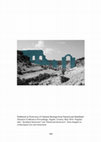
The roman necropolises of the Cilicia Trachea represent an interesting case study for the investi... more The roman necropolises of the Cilicia Trachea represent an interesting case study for the investigation of archaeological heritage and its transformation. Since the nineteenth century explorations, in fact, there is confirmations of how such systems of buildings have undergone profound changes, adapting to the needs of local populations. The article aims to analyze the contemporary conditions of conservation of such structures, in order to define how such this transformation, does not concern only the past but still pursues today. To confirm this theory the essay will be focused mainly on the Cilicia Trachea and Lycia necropolises, with particular mention to the northeastern necropolis of Elaiussa Sebaste. This reality will show different constructional and architectural types of funerary buildings, in order to achieve a more complete perception of the cultural and archaeological landscape of the area.
The International Archives of the Photogrammetry, Remote Sensing and Spatial Information Sciences, 2016
CIPA is contributing with its technical knowledge in saving the heritage of Syria by constructing... more CIPA is contributing with its technical knowledge in saving the heritage of Syria by constructing an open access database based on the data that the CIPA members have collected during various projects in Syria over the years before the civil war in the country broke out in 2011. In this way we wish to support the protection and preservation of the environment, sites, monuments, and artefacts and the memory of the cultural region that has been crucial for the human past and the emergence of civilizations. Apart from the countless human atrocities and loss, damage, destruction and looting of the cultural heritage have taken place in a large scale. The CIPA's initiative is one of the various international projects that have been set up after the conflict started. The Directorate-General of the Antiquities and Museums (DGAM) of Syria as well as UNESCO with its various sub-organizations have been central in facing the challenges during the war. Digital data capture, storage, use and dissemination are in the heart of CIPA's strategies in recording and documenting cultural heritage, also in Syria. It goes without saying that for the conservation and restoration work the high quality data providing metric information is of utmost importance.
Memoria trasformata e memoria cristallizzata: due interventi sul costruito di Joao Luis Carrillo da Graca
La Scuola materna di "Canton Vesco" ad Ivrea: il calcestruzzo armato come materiale per i servizi e la memoria collettiva dell'architettura
The International Archives of the Photogrammetry, Remote Sensing and Spatial Information Sciences, 2016
CIPA is contributing with its technical knowledge in saving the heritage of Syria by constructing... more CIPA is contributing with its technical knowledge in saving the heritage of Syria by constructing an open access database based on the data that the CIPA members have collected during various projects in Syria over the years before the civil war in the country broke out in 2011. In this way we wish to support the protection and preservation of the environment, sites, monuments, and artefacts and the memory of the cultural region that has been crucial for the human past and the emergence of civilizations. Apart from the countless human atrocities and loss, damage, destruction and looting of the cultural heritage have taken place in a large scale. The CIPA's initiative is one of the various international projects that have been set up after the conflict started. The Directorate-General of the Antiquities and Museums (DGAM) of Syria as well as UNESCO with its various sub-organizations have been central in facing the challenges during the war. Digital data capture, storage, use and dissemination are in the heart of CIPA's strategies in recording and documenting cultural heritage, also in Syria. It goes without saying that for the conservation and restoration work the high quality data providing metric information is of utmost importance.
Roberto Di Stefano: filosofia della conservazione e prassi del restauro., 2013
L'attenzione per le tematiche piu contemporanee alla disciplina ha caratterizzato trasversalmente... more L'attenzione per le tematiche piu contemporanee alla disciplina ha caratterizzato trasversalmente tutta la produzione di Roberto Di Stefano: dall'attenzione al concetto di conserva-zione integrata all'idea di rinnovamento dell'ambiente urbano; dai limiti della conservazione e del restauro al ruolo dell'eco-logia nel contesto costruito; dalla partecipazione della popola-zione, in un'ottica di trasformazione sociale, all'importanza dell'interesse degli intellettuali nei confronti della disciplina. Se, infatti, tale produzione scientifica ha il pregio di aver sempre affrontato tematiche di grande attualita per sondare i possibili scenari futuri nel campo della conservazione, appare oggi di particolare interesse, approfondire queste tesi nel con-testo contemporaneo, alla luce dello sviluppo e dell'importanza di concetti successivi a quanto teorizzato da Di Stefano, come ad esempio la sostenibilita. Risulta pertanto opportuno sugge-rire una rilettura di alcuni scritti dell'Autore al fine di comprenderne maggiormente la portata innovativa rispetto alla disciplina. Attualmente, infatti, i concetti vicini ai canoni di sosteni-bilita Á non interessano solamente le nuove costruzioni, ma in-fluenzano le scelte di architetti restauratori che operano sulla preesistenza 1. Inoltre, la sostenibilita Á ha fra le proprie caratte-ristiche la qualita Á di essere un terreno di ricerca estremamente multidisciplinare 2 , inglobando fra le materie piu Á importanti l'ecologia, l'economia, la gestione delle risorse, la cooperazione all'interno di un progetto, il tutto finalizzato ad un migliora-mento sociale e culturale. Partendo da questo punto di vista, l'attivita Á scientifica di Roberto di Stefano sembra anticipare molti dei caratteri che successivamente assumeranno il nome dì sostenibilita Á': l'attenzione per l'ambiente e le risorse naturali (ecologia), gli studi compiuti nei confronti delle leggi urbani-stiche e per la conservazione degli antichi centri urbani (eco-nomia), fino all'impegno espresso nella costituzione dei piani COPAM (Cooperazione per il Patrimonio Architettonico Me-diterraneo). Sul piano della gestione dei beni culturali, inoltre, le lunghe ricerche dello studioso napoletano nei confronti di Ruskin, non hanno abbracciato esclusivamente le tematiche piu Á architettoniche e relative alla conservazione, ma si sono spinte fino alla interpretazione della teoria relativa al concetto di valore del bene culturale e dell'economia politica dell'arte, comprendendo implicitamente l'importanza di una sostenibi-lita Á piu Á sociale. Da tali osservazioni quindi, si puo Á evincere come sia plausibile una nuova lettura dell'attivita Á scientifica di Di Stefano in un'ottica che possa oggi abbracciare anche i piu Á recenti concetti di sostenibilita Á, oggi al centro di un im-portante dibattito internazionale. Nell'ambito della trattazione circa l'ecologia e gli effetti sull'ambiente, le anticipazioni di Di Stefano sembrano puntare a canoni che solo successivamente sono stati condivisi attra-verso l'emanazione di documenti internazionali 3. Un esempio e Á la volonta Á di lasciare spazio sulla rivista Restauro alle idee, coerenti al suo pensiero, di Giancarlo De Riu, dove si sottoli-nea come il principio fondativo di ogni speculazione del co-struito debba essere la qualita Á della vita 4. Da tali idee si sot-tolinea come sia necessario considerare oggettivamente i biso-gni della societa Á, classificandoli a seconda della loro impor-tanza. Il pregio di Di Stefano appare essere quello di riuscire a collegare un dibattito di pochi anni precedente ad opera di alcuni sociologi statunitensi 5 alle necessita Á relative alla conser-vazione del patrimonio in ambito europeo ed internazionale. La classificazione inoltre dei bisogni dell'uomo comprende una categorizzazione dei bisogni di base, divisi in bisogni univer-sali «condivisi da tutto il genere umano perche  l'uomo e Á l'uomo» 6 e bisogni culturali «peculiari della cultura di una data nazione o regione» 7. Se i bisogni universali poi, possono essere divisi in bisogni fisiologici e socialmente acquisiti e Á sui bisogni culturali che il teorico napoletano si avvicina maggior-mente alle conclusioni di diversi anni successive in ambito di sostenibilita Á 8. Tali bisogni «sono quelli di cui un uomo e Á con-sapevole e rappresentano il frutto delle sue esperienze perso-nali ed associative all'interno di un dato ambiente. Compren-dere valori sociali della persona definiti dalla sua esperienza culturale» 9. Di Stefano, sottolinea come sia proprio questa ultima categoria di bisogni a risentire maggiormente del de-grado ambientale e dell'assenza di una politica ecologica ade-guata, riuscendo a intuire come le ricadute della mancata con-servazione del territorio non siano solo di natura ambientale, ma riguardino l'intera collettivita Á fino a comprometterne le connotazioni piu Á personali. Le anticipazioni degli scritti in questione non riguardano esclusivamente la componente legata all'ecologia, ma si spin-gono fino a considerazioni inerenti l'ambito economico e le implicazioni finanziarie e culturali della conservazione del pa-trimonio. A tal riguardo, e Á necessario citare gli studi che si sono occupati della trasformazione degli ambiti urbani, e la cooperazione con le leggi urbanistiche emanate dal dopo-guerra 10. Merito di Di Stefano, in questo caso, non e Á solo quello di essersi occupato in prima persona delle ricadute eco-nomiche circa la conservazione dei centri urbani campani 11 , ma di aver sollevato la questione e aver quindi influenzato ulteriori studiosi ad occuparsi di tali tematiche. Oltre alle gia Á citate relazioni circa i piccoli centri campani, appare di parti-colare interesse l'approccio che di Stefano e altri studiosi a lui vicini 12 hanno voluto seguire nell'accostarsi a queste proble-matiche: risulta infatti evidente come l'utilizzo di parole qualì risorsa',`gestione',`benefici' e`valore' siano oggi al centro del dibattito riguardante la sostenibilita Á economica delle citta Á 13. L'esempio piu Á emblematico, risulta essere l'idea di centro an-tico come risorsa e come sviluppo per il futuro 14. Se infatti lo sviluppo sostenibile fonda le proprie basi sul concetto di ri-sorse limitate e utilizzo delle stesse in modo consapevole 15 , le idee di Forte e del gruppo di studiosi napoletani, anticipano i tempi applicando tali concetti ad un contesto fino ad allora inesplorato inerente cioe Á la conservazione e il restauro dei beni culturali. Stupisce inoltre la sistematizzazione di tali con-cetti teorici all'interno di un elaborato insieme di suggerimenti 136 Roberto Di Stefano. Filosofia della conservazione e prassi del restauro Ecologia, sostenibilita Á , conservazione, restauro all'interno della produzione scientifica
The main square inside the Citadel structure.
E. Romeo - Cultura e prassi della conservazione in Turchia, 2020
Premessa «Des générations entières construisent et sculp-tent à grande frais leur demeures funebr... more Premessa «Des générations entières construisent et sculp-tent à grande frais leur demeures funebre; d'autres générations violent ces asiles sacrés, elle jettent au vent les cendres, et dans le ruisseau les ossaments qu'on y avait pieusement deposes […] elles s'accomodent de ces tombeaux et les transforment en maisons, les cham-bres funéraires en appartements, les place évidées pour le cercueil en lits et en alcoves, les sarcophagus enfin en auges et en bahuts» (De Laborde 1838, p. 132). Attraverso queste parole, affidate ai pro-pri diari di viaggio, Leon De Laborde, esploratore francese che nei primi anni dell'Ottocento visita La speculazione edilizia lungo il litorale turco e le necropoli in parte intatte.
E. Morezzi - Perspectives on Architectural Preservation Essays 2010 - 2020, 2020
The research intends to investigate the link between accidental destruction due to natural disast... more The research intends to investigate the link between accidental destruction due to natural disasters, such as earthquakes or spontaneous collapses, and intentional destruction operated by unfortunate conservation and restoration strategies. In order to conceptually embrace the buildings’ decay as inalienable, the essay aims at establishing a parallelism between what the nature has destroyed and the strategies to fix to such damage, and what has been modified or destructed, instead, by human work, often scarcely aware of the historical, value-driven and technological properties of the asset. The article will examine many archeological realities present in Asia
Minor and attributable to the Roman or late Roman age, with the purpose
to provide for operational examples of intervention and modification of
the archeological context and to fulfill a parallelism that proposes itself as interesting critical reading of the intervention strategies.
E. Morezzi - Perspectives on Architectural Preservation. Essays 2010-2020, 2020
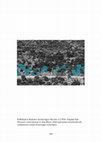
The Roman necropolises of Cilicia Trachea represent an interesting case study for the investigati... more The Roman necropolises of Cilicia Trachea represent an interesting case study for the investigation of the archaeological heritage and its transformation. Since the nineteenth century surveys, in fact, confirmations of how such systems of buildings have undergone profound changes, adapting to the needs of local populations, emerge. The article aims to analyze the contemporary status of these structures, in order to define how transformation still pursues today. To confirm this theory, the essay will focus mainly on the Cilicia Trachea and Lycia necropolises, with particular mention to the Northeastern necropolis of Elaiussa Sebaste. This site is made of different construction and architectural types of funerary buildings, whose analysis will allow for a more complete perception of the cultural and archaeological landscape of the area.
E. Morezzi - Perspectives on Architectural Preservation. Essays 2010-2020, 2020
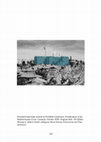
Although Ankara gained international attention mainly after its declaration as Capital of the Tur... more Although Ankara gained international attention mainly after its declaration as Capital of the Turkish Republic in 1923, the city hosts many buildings and monuments from different historical eras. The remains of Roman, Byzantine, Seljuk and Ottoman Empires discovered in the center of the city, clearly bear witness to the rich and diverse heritage of the capital. However, this heritage, compared to the one present in other ancient Turkish cities, appears as less documented, studied and even not properly conserved. The citadel of Ankara (Ankara Kalesi, in Turkish) - which dominates the narrow streets of the old city located in the lowest part of the city - has withstood its long history very well and today houses a small neighborhood made up of valuable Ottoman wooden buildings. The citadel is surrounded by two city walls (7th and 8th centuries), mostly built with the stones of the ancient city’s constructions, such as the main pagan temples and the Roman theatre. The Hisar gate, a massive tower with a clock, allows penetrating into the lower enclosing wall, which is 1500 m long and equipped with 14 bastions. The ruins of the castle on the top of a hill are connected with all the surroundings. The link to the Roman and Medieval periods is still tangible. The Roman theatre remains at the foot of the hill is still observable, while the stone columns and beams were used in the construction of the walls in a later era. The aim of this paper is to
document and present the different historical eras of the castle, focusing on the remains of the Medieval era, especially with the recent announcement of a competition for the upgrading of the castle and its surroundings to be an attraction point for tourists, and an identity element for the city and its inhabitants. Analyzing the key features of the castle and the previous intervention on it will support the identification of the potentials of the site. Finally, recommendations about the most appropriate future work of architectural preservation and transformation will be elaborated on the basis of national and international conservation guidelines and charters.
E. Morezzi - Perspectives on Architectural Preservation. Essays 2010-2020, 2020
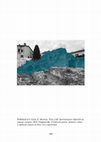
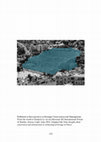
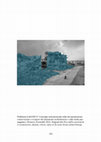
The outlining of hypotheses for the conservation and restoration of the
Fausto Amphitheatre in Te... more The outlining of hypotheses for the conservation and restoration of the
Fausto Amphitheatre in Terni is at the basis of this article, which aims
at reflecting upon the role of the ruins in the Western culture and the
opportunity to intend the concept of ruins and rubble as integrated into the
current culture. In order to achieve this objective, the essay will examine
many examples from the fine arts (architecture, contemporary art,
photography), useful to expand the concept of ruin. Such a redefinition
of value is preliminary to a more conscious intervention strategy on the
archeological context. Already involved in an intervention and protection
strategy, the Terni area, indeed, offers itself to an open interpretation of the future scenarios associated to the design of the archeological area of the amphitheater and the Roman city as a whole.
Perspectives on Architectural Preservation. Essays 2010-2020, 2020
French archaeological heritage of the classic age has been subjected, over the centuries, to phen... more French archaeological heritage of the classic age has been subjected, over the centuries, to phenomena that have caused either its abandonment or the continuation of its use, its transformation, or the loss of its integrity. In particular, the sites for entertainment such as theatres, amphitheaters, circuses, stadiums, and hippodromes are now often in ruins (as a result of either destructive events or the interruption of their use) after knowing seasons of transformation, conversion to new uses, repairing of damage of various kinds, restoration, adaptation to new stylistic canons: processes that have ensured the survival of these buildings through a continuous integration in urban activities. Today, these goods, mostly located in relevant urban contexts, are part of a landscape whose transformations guided by illusions aimed to make them attractive for tourists, are creating sharp separations between these monuments and the contest in which they are. Based on these premises, the paper presents the results of a research aimed at the preservation of this heritage, suggesting strategies for its valorization that, in accordance with the requirements of the contemporary world,
propose a project for tourist fruition which must be compatible with such goods that are architectural and parts of a landscape. In particular, the paper analyzes some interventions of enhancement on the archaeological heritage in comparison with those cases in which development strategies have proved compatible effects with the demands of conservation.
E. Morezzi - Perspectives on Architectural Preservation. Essays 2010-2020, 2020
Years of conflict in Syria has affected the cultural heritage severely and threatened social and ... more Years of conflict in Syria has affected the cultural heritage severely and threatened social and symbolic values. This paper illustrates firstly the real condition of the city of Aleppo, through presenting some cases of high cultural value buildings damaged by the conflict, even some were totally collapsed, which represent an important bond of Aleppo citizens similar to the idea of "Istanza Psicologica" theorized by Roberto Pane. Secondly, the research aims to analyze the criteria of "second-day" intervention (conservation, restoration, enhancement and eventual reconstruction) on this damaged heritage, by investigating the cultural significant values of these buildings damaged or completely destroyed. Finally, the paper concludes with a few suggestions about the optimum intervention of different case studies represents the values mentioned before. To sum up, the research aims to involve the international debate about conservation and restoration with a critical situation of cultural heritage in crisis.
Perspectives on Architectural Preservation. Essays 2010-2020, 2020
The paper aims to the main idea “transmitting venustas”. In order to understand a path to conserv... more The paper aims to the main idea “transmitting venustas”. In order to understand a path to conserve the past architecture and, moreover, its
venustas, the paper suggests to analyze two case studies of the Portuguese architect J. L. Carrilho da Graça. These two examples will explain opposite paths to get to the transmission of the past architecture’s beauty. In the first example, venustas will result from new construction in dialogue with an existing building, in the second one, from the emptiness of the design. The final results may declare the importance of the relation with the landscape and the respect for the existing architecture in order to share the idea of venustas


Uploads
Papers by Emanuele Morezzi
Minor and attributable to the Roman or late Roman age, with the purpose
to provide for operational examples of intervention and modification of
the archeological context and to fulfill a parallelism that proposes itself as interesting critical reading of the intervention strategies.
document and present the different historical eras of the castle, focusing on the remains of the Medieval era, especially with the recent announcement of a competition for the upgrading of the castle and its surroundings to be an attraction point for tourists, and an identity element for the city and its inhabitants. Analyzing the key features of the castle and the previous intervention on it will support the identification of the potentials of the site. Finally, recommendations about the most appropriate future work of architectural preservation and transformation will be elaborated on the basis of national and international conservation guidelines and charters.
Fausto Amphitheatre in Terni is at the basis of this article, which aims
at reflecting upon the role of the ruins in the Western culture and the
opportunity to intend the concept of ruins and rubble as integrated into the
current culture. In order to achieve this objective, the essay will examine
many examples from the fine arts (architecture, contemporary art,
photography), useful to expand the concept of ruin. Such a redefinition
of value is preliminary to a more conscious intervention strategy on the
archeological context. Already involved in an intervention and protection
strategy, the Terni area, indeed, offers itself to an open interpretation of the future scenarios associated to the design of the archeological area of the amphitheater and the Roman city as a whole.
propose a project for tourist fruition which must be compatible with such goods that are architectural and parts of a landscape. In particular, the paper analyzes some interventions of enhancement on the archaeological heritage in comparison with those cases in which development strategies have proved compatible effects with the demands of conservation.
venustas, the paper suggests to analyze two case studies of the Portuguese architect J. L. Carrilho da Graça. These two examples will explain opposite paths to get to the transmission of the past architecture’s beauty. In the first example, venustas will result from new construction in dialogue with an existing building, in the second one, from the emptiness of the design. The final results may declare the importance of the relation with the landscape and the respect for the existing architecture in order to share the idea of venustas