Papers by Emília Perez (Janecová)

Media Accessibility Educators in the Era of Digital Transformation – finding a home within translation studies
Confronting Digital Dilemmas in Translator and Interpreter Training, 2026
This chapter examines the evolving landscape of media accessibility education within translation ... more This chapter examines the evolving landscape of media accessibility education within translation studies curricula, focusing on the role of media accessibility educators as key knowledge and skill multipliers. Drawing on both the authors’ previous and current research conducted via qualitative in-depth interviews with educators from multiple regions, it explores their diverse backgrounds, expertise, and methodologies, as well as the varying professional realities they navigate. Acknowledging the pioneering work done by audiovisual translator educators in integrating accessibility topics in their classrooms, the authors investigate the extent to which translator educators more generally could also benefit from integrating accessibility. This is motivated by the latest developments in practice, including the growing automation in both translation and media accessibility, as well as by the shift to more collaborative and inclusive approaches to communication. The authors emphasize the pivotal role of media accessibility educators in fostering barrier-free, inclusive communication, and in ensuring equitable access to information and content, while embracing opportunities to respond to and shape the evolving technological, societal, and pedagogical landscapes.
Confronting Digital Dilemmas: Humans are here to stay
Confronting Digital Dilemmas in Translator and Interpreter Training, 2026
Vysokoškolská učebnica Základy audiovizuálnej prístupnosti v prekladateľskej teórii a praxi pozýv... more Vysokoškolská učebnica Základy audiovizuálnej prístupnosti v prekladateľskej teórii a praxi pozýva čitateľstvo do sveta (nielen) audiovizuálnej prístupnosti, v ktorom sa autorka s nadšením pohybuje už niekoľko rokov. Predkladaný text je médiom, ktorým by do tohto sveta chcela pozvať aj ďalších a zároveň vytvára priestor pre pochopenie podstaty, komplexnosti a uplatniteľnosti prístupnosti v kontexte komunikácie, prekladového transferu a audiovízie.
Slovenské divadlo, 2025
Hoci sú interlingválne titulky najrozšírenejšou formou sprostredkovania divadelných predstavení i... more Hoci sú interlingválne titulky najrozšírenejšou formou sprostredkovania divadelných predstavení inojazyčnému či medzinárodnému publiku, tvorba divadelných titulkov dodnes stojí na okraji vedeckého záujmu v rámci myslenia o divadelnej či prekladovej komunikácii. Existujúce práce z oblasti divadelnej translácie sa primárne sústredia skôr na literárny preklad dramatického textu, pričom javiskový preklad, či priamo interlingválne titulkovanie divadelných predstavení ostáva doposiaľ len málo prebádanou témou. Predložená štúdia sa preto zameriava práve na túto oblasť, a to konkrétne v prostredí divadelných festivalov. Prostredníctvom zistení z kvalitatívnych výskumných rozhovorov s titulkármi a koordinátormi interlingválneho titulkovania na divadelných festivaloch na Slovensku ponúka sondu do vývoja existujúcich stratégií v zabezpečovaní interlingválnych titulkov, identifikuje kompetenčný a kvalifikačný profil titulkárov, ich pracovné podmienky, ako aj problémy, ktorým uplatňované modely práce čelia. V závere vyhodnocuje kľúčové výzvy domácej praxe a zamýšľa sa nad stratégiami vedúcimi k väčšej profesionalizácii v danej oblasti, s cieľom zvyšovať kvalitu interlingválneho titulkovania v slovenskom divadelnom priestore.
World Literature Studies, 2024
This article examines the accessibility of theater performances for Deaf audiences in Slovakia, w... more This article examines the accessibility of theater performances for Deaf audiences in Slovakia, with a main focus on the provision of Theater Sign Language Interpreting (TSLI). Drawing on analysis of current access strategies, the authors highlight examples of good practice aligned with more user-centred, inclusive and participatory access-provision models. Based on the results of an exploratory qualitative research interview with the key representative of the Deaf community involved in their development in the country, the main principles within these strategies are
identified. Through this exploration, the article advocates for further enhancement of integrated and inclusive access strategies in Slovak theaters and further reveals the characteristics as well as the potential of professional TSLI.
I-LanD, 2023
This paper explores the potenti al of a parti cipatory approach in enhancing accessibility at fi ... more This paper explores the potenti al of a parti cipatory approach in enhancing accessibility at fi lm festi vals, with a primary focus on engaging deaf and blind audiences. The investi gati on uti lises a case study 1 conducted over the last four years of the internati onal documentary fi lm festi val One World-the largest and oldest documentary festi val in Slovakia, and at the same ti me, the fi rst Slovak fi lm festi val addressing the access needs of visually and hearing-impaired audience. Having the opportunity to conti nuously observe access strategies at the festi val from their incepti on, the study aims to provide insight into why and how a creati ve and organising team transiti ons from traditi onal, add-on access strategies towards a more integrated, inclusive, parti cipatory approach-and what the benefi ts of such a development can be. It analyses fi ndings gathered from parti cipatory observati on, direct access to the festi val organisati on, and semi-structured interviews with the festi val management, access professionals and parti cipati ng communiti es, providing an analysis of an applied strategies, their planning and implementati on. Key fi ndings off er valuable insights into practi cal applicati ons of the more integrated, inclusive, parti cipatory approach in the context of fi lm festi vals, demonstrati ng its eff ecti veness in creati ng a more inclusive environment for festi val att endees.
Journal of Audiovisual Translation
The increase in demand for the localisation of audiovisual media content has led to increased inc... more The increase in demand for the localisation of audiovisual media content has led to increased incorporation of audiovisual translation and accessibility modules into university curricula in many regions (Bolaños-García-Escribano et al., 2021). This study aims to map part of the audiovisual translation (AVT) and media accessibility (MA) training landscape in Europe, presenting the findings of the 2020 Audiovisual Translation and Media Accessibility Training Survey conducted among the European Master’s in Translation network. It reflects on the results obtained from 55 European Master’s programmes focused on the training of future translators and shows that the majority provide AVT and some MA training, mainly within broad AVT modules and, to a much lesser extent, in dedicated compulsory modules. The insights gained from this study are relevant to establishing a benchmark that will make it possible to track any developments in the teaching of AVT and MA in the EMT network and beyond. ...
inTRAlinea, 2022
This article presents the potential of creative, integrated and inclusive access services for the... more This article presents the potential of creative, integrated and inclusive access services for theatre performances to address specific concerns linked to traditional access provision. In doing so, it uses two case studies – one from the UK (Be My Baby) and one from Slovakia (Aj muži majú svoje dni). The UK case study discusses integrated captioning from the perspective of creative and technology potential, including the points of view of the respective directors. It focuses on integrated captioning as a tool to respond to equality, accuracy, isolation and stigma concerns, while highlighting new challenges it poses in terms of responsibility for access, expert knowledge and technology use. The Slovak case study focuses on the provision of theatre sign language interpreting (TSLI), revealing the potential of integrating artistic coordination and supervision by representatives of the Deaf community. It provides an insight into how such an inclusive approach to coordination addresses the concerns related to collaboration within more traditional access models. Providing perspectives gathered from three professional theatre sign language interpreters and a Deaf coordinator and supervisor, the concerns related to involvement of access professionals, responsibility for access and access expertise are reflected upon. Using data gathered from direct access to the respective creative teams and access professionals, participatory observation and semi-structured interviews, the article provides an analysis of the effect integrated and inclusive approaches can have on the creative product and process especially when compared to traditional approaches, and highlights the opportunities for innovation and creativity integration can bring.
Teaching and Learning Translation and Interpreting in the Time of COVID-19: Preparation, Class Content and Activities and Assessment (The Slovak Case)
Corpora and intercultural studies, 2022
Current Trends in Translation Teaching and Learning E, 2021
The main focus of the study lies on the challenges in translation and interpreting university tra... more The main focus of the study lies on the challenges in translation and interpreting university training in the changed environment of the COVID-19 pandemic. It reflects the significant changes in training and learning in Slovakia after shifting from campus-based training to remote training, investigating the key factors influencing the learning process of students from their perspective. Based on the results of a focus group discussion with students, their qualitative analysis and quantitative verification via an online survey at all Slovak universities that provide translation and interpreting study programme, three types of factor were identified. The first category – procedural factors – relates to the training process itself; technical factors relate to technical aspects and limitations influencing the education of students; and psychosocial factors reflect intra- and interpersonal aspects affecting students in either a positive or negative way. Investigation of these factors pro...
Personal and interpersonal competence of to-be translators and interpreters during COVID-19 remote learning (students’ perspective)
The journal of Internationalisation and Localisation, Dec 31, 2022
The main focus of the study lies on the challenges, procedures and consequences in personal and i... more The main focus of the study lies on the challenges, procedures and consequences in personal and interpersonal competence development in university translation and interpreting (T&I) students during the COVID-19 pandemic. It reflects the significant change in learning conditions in Slovakia after shifting from campus-based to remote learning throughout the three waves of the pandemic, considering the personal and interpersonal competence an integral part of the curricula. The attention of the authors centres on the students’ perspective – their insight and evaluation of the applied training procedures in selected personal (self-assessment, time management, compliance with instructions and deadlines) and interpersonal (teamwork, collaborative tasks, communication with the client/assignor) skills. The year-on-year comparison of students’ responses shows improvement in training and learning strategies in almost all observed aspects of personal and interpersonal competence development and demonstrates students’ general adaptation to the changed learning environment. The findings of the research, however, raise several concerns related to students’ well-being and potential risks of mental health issues which appear to result from the overall crisis situation, social distancing, but also increased workload and work-life imbalance.
Translation and Interpreting Training in Slovakia, 2021
TRANSLATOLOGIA JOURNAL, 2018
Analysis of the preferred AVT modes in Central European countries indicates that Slovakia can be ... more Analysis of the preferred AVT modes in Central European countries indicates that Slovakia can be categorized as a country with a strong dubbing tradition. The generally acknowledged preference for dubbing over subtitling seems to be supported mainly by the dominant position of dubbing in TV broadcasting whilst the number of programmes with interlingual subtitles on television is negligible. Does that necessarily mean that Slovakia is a dubbing country? Probably yes, especially when focusing on TV broadcasting. However, a certain shift towards subtitling in media other than TV broadcast has been observed in several European countries (see Cintas 2017), and our continuous research shows Slovakia might be one of them. The aim of this paper is to provide an overview of current AVT strategies in the country, taking into consideration recent developments in cinema as well as VOD. This quantitative study offers a different perspective on how much dubbing (and under what circumstances) is available to a Slovak audience in various contexts, whilst evaluating the possible causes of the observed phenomena.
Multikultúrne špecifiká v preklade prózy amerických etnických menšín. Interpretácia a analýza originálu a prekladu románu K. Hosseiniho
World Literature Studies, 2020
The article focuses on agents facilitating translation and interpreting and provides a sociolog-i... more The article focuses on agents facilitating translation and interpreting and provides a sociolog-ical probe into the particulars of interlingual intercultural transfer in Slovakia on the back-ground of political and economic specifics of the region. The observed tendencies seem to point to the fact that in the past half century, despite the changes brought about by the Velvet Revolution, the social standing of translators and interpreters has been less determined by officially proclaimed ideologies than economic forces. From the legislative point of view, lan-guage policies have had a significant impact on the phenomena in question.
http://www.wls.sav.sk/?page_id=9
World Literature Studies, 2013
Focused on dubbing and subtitling, the aim of the proposed article is to cover relevant matters o... more Focused on dubbing and subtitling, the aim of the proposed article is to cover relevant matters of audiovisual translation theory and practice in 21st century Slovakia and to discuss the reality of the professional milieu and its broader sociocultural consequences in Slovakia. This might support an increase in the quality of translated products and
emphasise the importance of further academic research within the field. Proposing ideas for further approaches within the Slovak academic milieu, the paper outlines the widening borders of audiovisual translation. It also underlines the importance of the preparation
phase of translation studies trainees at Slovak universities and maps and outlines the possibilities for their specialised education in future.
Çankaya University Journal of Humanities and Social Sciences, Feb 1, 2012
ÖZET Günümüzde görsel-iflitsel çevirinin insanlar›n günlük yaflamlar›nda karfl›laflt›klar› en yay... more ÖZET Günümüzde görsel-iflitsel çevirinin insanlar›n günlük yaflamlar›nda karfl›laflt›klar› en yayg›n çeviri türlerinden biri oldu¤u öne sürülebilir. Avrupa ülkelerinin ço¤u, özellikle de orta Avrupa ülkelerinin ço¤u küreselleflmifl kitle medyas› ve iletiflimi nedeniyle d›flar›dan oldukça fazla say›da görsel-iflitsel ürün almakta-d›r. Bu nedenle, çok say›da izleyici taraf›ndan tüketilece¤i için uygun çeviri gereksinimi do¤mufltur. Son yirmi otuz y›ld›r bu bölgeye görsel-iflitsel çal›flmalar›n ithalinin art›fl›n› ve teknolojilerin geliflimi ve elektronik medyan›n üstünlü¤ünü takiben görsel-iflitsel çeviri sürecine dahil olan kiflilerin profesyonel istekleri dikkate de¤er biçimde artm›flt›r. Bu› nedenle bu makale, görsel-iflitsel metinlerin çevirilerine iliflkin baz› önemli bulgulara genel bir bak›fl sunar ve görsel-iflitsel medya çevirisiyle ilgilenen ö¤rencilerin e¤itimi ve çeviri çal›flmalar›n›n ö¤retimindeki zorluklara odaklanarak gelece¤e yönelik akademik ilgi alanlar› önerir.
Násilie a neľudskosť ruskej vojny na Ukrajine definitívne ukončili falošný pocit bezpečia, ktorý ... more Násilie a neľudskosť ruskej vojny na Ukrajine definitívne ukončili falošný pocit bezpečia, ktorý Európa zažívala od juhoslovanských vojen. Udržiavanie priateľského dialógu s ľuďmi na celom svete je teraz dôležitejšie ako kedykoľvek predtým, aby sa zabránilo ďalším tragédiám. Preklad vo všetkých jeho podobách je kľúčový pre sprostredkovanie vzájomného porozumenia, ktoré je nevyhnutné, ak chceme ďalším generáciám odovzdať planétu v obývateľnom stave. Okrem iných disciplín sa práve translatológia čoraz aktívnejšie zaoberá najzložitejšími problémami našej planéty. Odkedy sú informačné toky priamo závislé od polohy na geopolitickej mape a podliehajú trhovým pravidlám, mnohé dôležité štúdiá uskutočňované mimo hlavných centier zostávajú napriek významným výsledkom a motivácii vedeckej obce v medzinárodnej akademickej sfére neznáme. Vďaka vedeckým osobnostiam, ktoré prispeli do tejto kolektívnej publikácie, sa translatológia na Ukrajine a excelentný výskum, ktorý sa na jej univerzitách real...
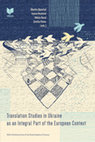
Násilie a neľudskosť ruskej vojny na Ukrajine definitívne ukončili falošný pocit bezpečia, ktorý ... more Násilie a neľudskosť ruskej vojny na Ukrajine definitívne ukončili falošný pocit bezpečia, ktorý Európa zažívala od juhoslovanských vojen. Udržiavanie priateľského dialógu s ľuďmi na celom svete je teraz dôležitejšie ako kedykoľvek predtým, aby sa zabránilo ďalším tragédiám. Preklad vo všetkých jeho podobách je kľúčový pre sprostredkovanie vzájomného porozumenia, ktoré je nevyhnutné, ak chceme ďalším generáciám odovzdať planétu v obývateľnom stave. Okrem iných disciplín sa práve translatológia čoraz aktívnejšie zaoberá najzložitejšími problémami našej planéty. Odkedy sú informačné toky priamo závislé od polohy na geopolitickej mape a podliehajú trhovým pravidlám, mnohé dôležité štúdiá uskutočňované mimo hlavných centier zostávajú napriek významným výsledkom a motivácii vedeckej obce v medzinárodnej akademickej sfére neznáme. Vďaka vedeckým osobnostiam, ktoré prispeli do tejto kolektívnej publikácie, sa translatológia na Ukrajine a excelentný výskum, ktorý sa na jej univerzitách real...
Personal and interpersonal competence of to-be translators and interpreters during COVID-19 remote learning (students’ perspective)
The Journal of Internationalization and Localization
The main focus of the study lies on the challenges, procedures and consequences in personal and i... more The main focus of the study lies on the challenges, procedures and consequences in personal and interpersonal competence development in university translation and interpreting (T&I) students during the COVID-19 pandemic. It reflects the significant change in learning conditions in Slovakia after shifting from campus-based to remote learning throughout the three waves of the pandemic, considering the personal and interpersonal competence an integral part of the curricula. The attention of the authors centres on the students’ perspective – their insight and evaluation of the applied training procedures in selected personal (self-assessment, time management, compliance with instructions and deadlines) and interpersonal (teamwork, collaborative tasks, communication with the client/assignor) skills. The year-on-year comparison of students’ responses shows improvement in training and learning strategies in almost all observed aspects of personal and interpersonal competence development an...



Uploads
Papers by Emília Perez (Janecová)
identified. Through this exploration, the article advocates for further enhancement of integrated and inclusive access strategies in Slovak theaters and further reveals the characteristics as well as the potential of professional TSLI.
http://www.wls.sav.sk/?page_id=9
emphasise the importance of further academic research within the field. Proposing ideas for further approaches within the Slovak academic milieu, the paper outlines the widening borders of audiovisual translation. It also underlines the importance of the preparation
phase of translation studies trainees at Slovak universities and maps and outlines the possibilities for their specialised education in future.