Synopsis
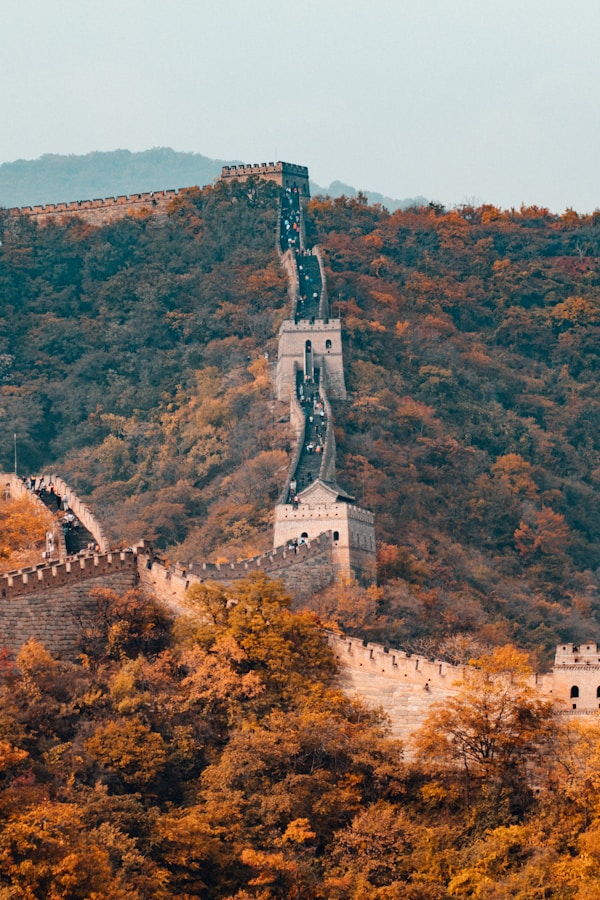
The Great Wall of China stretches over 21,196 km across 2,300 years of history. A UNESCO World Heritage Site since 1987, it is one of the greatest architectural achievements in human civilization.
Overview
The Great Wall of China is China's most iconic historical and cultural landmark — a series of ancient military fortifications stretching across northern China. With a total length of approximately 21,196 kilometers (13,171 miles), it is the largest and longest construction project in human history. The best-known and best-preserved sections were built during the Ming Dynasty (1368–1644) and stretch approximately 8,850 kilometers (5,499 miles).
Construction of the Great Wall began in the 7th century BC during the Spring and Autumn period, spanning over 2,300 years of history. After Qin Shi Huang unified China in 221 BC, he connected the walls of various states to create the original "Ten Thousand Li Great Wall." Subsequent dynasties including the Han, Sui, Jin, and Ming all made significant contributions to the wall system. The existing wall we see today is primarily the Ming Dynasty construction, built with brick and stone in magnificent scale.
In 1987, the Great Wall was inscribed as a UNESCO World Heritage Site, making it one of China's first World Heritage designations. It is not only a national symbol of China but also one of the greatest architectural achievements in human civilization, often listed alongside the Pyramids and the Taj Mahal among the wonders of the world. The wall attracts tens of millions of domestic and international visitors each year.
Historical Timeline
The Great Wall's construction spans several key periods of Chinese history:
Spring and Autumn Period (770–221 BC): Various warring states built walls to defend against neighboring states. The states of Chu, Qi, Yan, and Zhao built the largest sections. This was the origin of the Great Wall.
Qin Dynasty (221–206 BC): After unifying China, Qin Shi Huang ordered the connection and extension of existing walls, creating a continuous wall from Lintao in the west to Liaodong in the east. General Meng Tian led an army of 300,000 to complete this monumental project.
Han Dynasty (206 BC – 220 AD): Emperor Wu of Han massively expanded the wall westward to Jade Gate Pass and Yang Pass beyond Dunhuang, stretching over 10,000 li. The Han Dynasty Great Wall was essential protection for the Silk Road trade routes.
Ming Dynasty (1368–1644): The existing Great Wall is primarily Ming Dynasty construction. The Ming Wall runs from Shanhaiguan in the east to Jiayuguan in the west, spanning approximately 8,850 km. Built mainly with brick and stone, it features numerous watchtowers, passes, and fortresses, representing the most sophisticated defensive system.
Other Dynasties: The Northern Wei, Northern Qi, Sui, and Jin dynasties also constructed significant wall sections. The Jin Dynasty's "Jin Trench" is an important component of the wall system.
Major Sections
| Section | Location | Features |
|---|---|---|
| Badaling | Yanqing, Beijing | Most famous section, well-preserved, full facilities |
| Mutianyu | Huairou, Beijing | Scenic beauty, fewer crowds |
| Jinshanling | Kuancheng, Hebei | Original atmosphere, photographers' paradise |
| Simatai | Miyun, Beijing | Only section preserving original Ming appearance |
| Shanhaiguan | Qinhuangdao, Hebei | Eastern terminus, "First Pass Under Heaven" |
| Jiayuguan | Jiayuguan, Gansu | Western terminus, "Greatest Pass Under Heaven" |
| Yumen Pass | Dunhuang, Gansu | Han Dynasty Silk Road fortress |
Architectural Features
The Great Wall's architecture reflects the highest level of ancient Chinese military engineering:
Adaptive Materials: Different regions used different construction materials. Mountainous areas used cut stone and brick; plains used rammed earth; desert regions used reed and red willow branches mixed with sand. This adaptive strategy ensured durability across diverse terrains.
Beacon Tower System: Beacon towers were placed at regular intervals along the wall. By day they produced smoke signals; by night, fire. This created an efficient military communication system that could transmit messages hundreds of kilometers within hours.
Fortress Defense System: Major passes like Shanhaiguan, Jiayuguan, and Juyongguan formed the defensive core of the wall. These passes typically featured multiple layers of defense including walls, gate towers, barbicans, and moats.
Terrain Utilization: The wall follows mountain ridges, using natural topography to enhance defensive capabilities. Built on steep ridgelines, the wall made frontal assault virtually impossible.
Cultural Significance
The Great Wall's cultural significance is profound and multi-dimensional:
Symbol of the Chinese Nation: The Great Wall symbolizes the resilience, determination, and unity of the Chinese people. The phrase "He who has not been to the Great Wall is not a true man" reflects the deep emotional connection Chinese people feel toward the wall.
World Heritage: Inscribed on the UNESCO World Heritage List in 1987, it was described as "one of the greatest architectural achievements in human civilization."
Protector of the Silk Road: The Han Dynasty Great Wall protected the Silk Road, facilitating cultural exchange and trade between East and West for centuries.
Literary and Artistic Inspiration: The Great Wall has been a major subject in Chinese literature, painting, and music for millennia. From ancient frontier poetry to modern cinema, it has served as an enduring source of artistic inspiration.
Global Recognition: The Great Wall is the most recognized Chinese cultural symbol worldwide and a must-visit destination for international travelers. Over 10 million visitors visit the Badaling section alone each year.
Practical Information
Best Time to Visit: Spring (April–May) and autumn (September–November) offer the most pleasant weather. Summer is hot and crowded; winter is cold but offers stunning snow-covered scenery.
Transportation: Badaling is approximately 70 km from central Beijing, accessible by Bus 877 or the Beijing-Zhangjiakou high-speed railway. Mutianyu has dedicated tourist shuttle buses.
Tickets: Badaling 40 RMB (peak season April–October), 35 RMB (off-season). Mutianyu 40 RMB.
Tips: Some sections are steep and challenging — wear comfortable hiking shoes. Bring sufficient water. Apply sun protection in summer.
References
- Wikipedia - Great Wall of China https://en.wikipedia.org/wiki/Great_Wall_of_China
- UNESCO World Heritage https://whc.unesco.org/en/list/438
- China Highlights https://www.chinahighlights.com/greatwall/
- Travel China Guide https://www.travelchinaguide.com/china_great_wall/
Stills & Gallery
Comments (0)