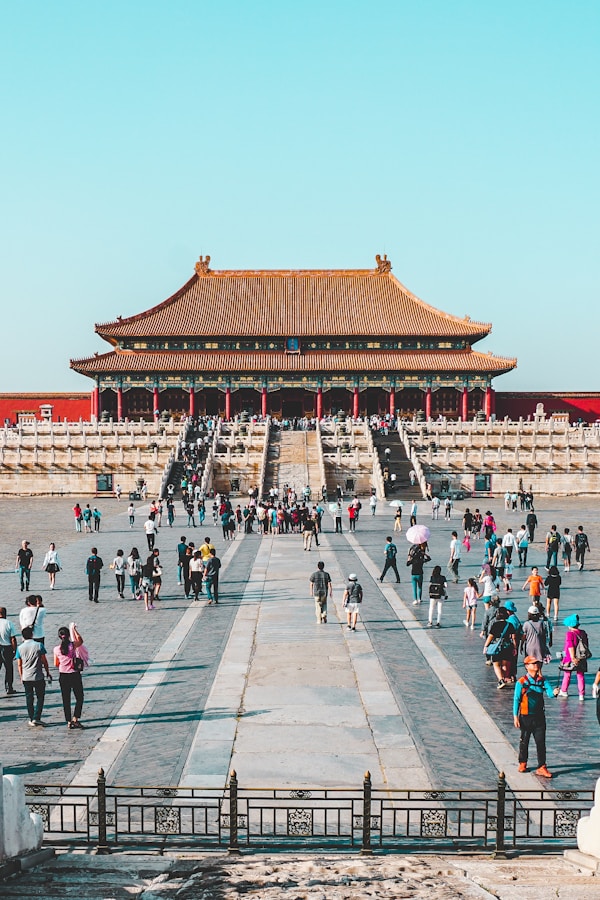
Ming Dynasty 1566
Synopsis
A magisterial chronicle of power and principle in the dying years of the Ming dynasty, following the clash between the Daoist-obsessed Emperor Jiajing and the famously incorruptible official Hai Rui. Douban rating: 9.8 — the highest-rated Chinese TV drama of all time.
Overview
Ming Dynasty 1566 is a 2007 Chinese historical drama that stands as the highest-rated Chinese television series on Douban with a staggering 9.8 out of 10 from over 350,000 user reviews, 90.1% of which are five-star ratings. Directed by Zhang Li, written by Liu Heping, and scored by acclaimed composer Zhao Jiping, the series is widely regarded as the pinnacle of Chinese television.
Set in the 39th year of the Jiajing reign (1560 CE), the drama chronicles the political struggles between Emperor Jiajing and the legendary incorruptible official Hai Rui. It offers a penetrating examination of power, corruption, and moral courage in the late Ming dynasty.
Plot Summary
The Ming Empire appears prosperous but is rotting from within. Emperor Jiajing (Chen Baoguo) has not held court in over twenty years, preferring to pursue Daoist alchemy in his palace. Yet through a sophisticated network of eunuchs and cabinet ministers, he maintains an iron grip on power. The cunning Grand Secretary Yan Song (Ni Dahong) has dominated the government for two decades, his cronies plundering the treasury while the common people suffer.
Into this cauldron of corruption steps Hai Rui (Huang Zhizhong), a county magistrate in Zhejiang known for his absolute integrity. Refusing to bow to authority or compromise his principles, Hai Rui investigates wrongful convictions and prosecutes corrupt officials, eventually challenging the very center of imperial power.
What sets Ming Dynasty 1566 apart from ordinary political dramas is its refusal to paint characters in black and white. Emperor Jiajing appears neglectful but is revealed as a master of imperial statecraft. Yan Song is corrupt yet possesses genuine political acumen. Even Hai Rui's moral absolutism comes at a terrible cost to those around him. Every character is a fully realized human being navigating impossible choices within an autocratic system.
Cast
| Actor | Character | Description |
|---|---|---|
| Chen Baoguo | Emperor Jiajing | The Daoist-obsessed ruler, a master of political manipulation |
| Huang Zhizhong | Hai Rui | The famously incorruptible magistrate of Chun'an |
| Ni Dahong | Yan Song | The powerful Grand Secretary who dominates the court |
| Wang Qingxiang | Hu Zongxian | Governor-General of Zhejiang, a loyal military commander |
| Yan Ni | Consort Li | One of the emperor's favored concubines |
| Yan Yikuan | Prince Yu | The emperor's son, later Emperor Longqing |
| Guo Dongwen | Yan Shifan | Yan Song's arrogant and ruthless son |
| Xu Guangming | Lu Fang | The powerful Chief Eunuch of the Directorate of Ceremonial |
Production
Produced by Beijing Tianfeng Haixu Film & TV Culture Media and Hunan Satellite TV, the series represents the creative zenith of China's historical drama tradition. Director Zhang Li is widely considered the foremost director of Chinese historical dramas, with credits including For the Sake of the Republic and The Right Path of Human Life.
Screenwriter Liu Heping, whose other masterworks include Yongzheng Dynasty and Peace in the Northwest, brought decades of historical scholarship to the project. His dialogue is celebrated for its literary elegance and political profundity. Composer Zhao Jiping provided music of sweeping grandeur that perfectly complements the series' historical weight.
Cultural Impact
Ming Dynasty 1566 has exerted a profound and lasting influence on Chinese culture. The series is frequently cited as required viewing for understanding Chinese political history and the mechanics of autocratic power. Its dialogue has entered the popular lexicon, with lines like "There is no place under heaven that is not imperial land" becoming widely quoted.
Multiple Chinese universities use the series as teaching material in political science and history courses. When the drama was re-released on Chinese streaming platforms in 2022, it ignited a new wave of viewership and critical discussion, demonstrating the timeless power of truly great television.
References
- Douban: Ming Dynasty 1566
- Wikipedia: Ming Dynasty 1566
- IMDb: Ming Dynasty 1566
- Baidu Baike: Ming Dynasty 1566
Stills & Gallery
Comments (0)