Books by Eulalia Vernet i Pons

Francisco del Río, Adelina Millet and Eulàlia Vernet. Textos de la tradición cabalística judía. Madrid: Tritemio, 280 p., 2019

En esta publicación presentamos algunos textos significativos del corpus pre-cabalístico y cabalí... more En esta publicación presentamos algunos textos significativos del corpus pre-cabalístico y cabalístico propio de la tradición judía. Nuestro objetivo es acercar esta literatura al público de lengua española a fin de que pueda obtener una visión general de este tipo de material, al que no siempre es fácil acceder. Creemos que, ofreciendo también una explicación y contextualización de sus contenidos, el lector no iniciado en la literatura bíblica y rabínica podrá comprender más fácilmente las afirmaciones y la metodología especulativa de los textos cabalísticos, algo que, de otra manera, resultaría arduo de entender, tanto por la dificultad de los conceptos empleados como por el contexto en el que dicha especulación fue producida.

Extractiones de Talmud, per ordinem sequentialem. Corpus Christianorum Continuatio Mediaevalis 291 (ed. U. Cecini, Ó. de la Cruz, adiuvantibus: E. Vernet, F. dal Bo). Turnhout: Brepols, 2018
Research paper thumbnail of Ordo Virtutum. Hildegarda de Bingen. Estudi, edició crítica i traducció.

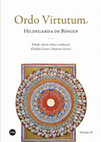
Eulàlia Vernet and Mariona Vernet. Ordo Virtutum. Hildegarda de Bingen. Estudi, edició crítica i traducció . Barcelona: Edicions de la Universitat de Barcelona, 217 p., 2018

Aquest llibre ofereix, per primera vegada en català, la traducció i una nova edició crítica llati... more Aquest llibre ofereix, per primera vegada en català, la traducció i una nova edició crítica llatina de l’Ordo Virtutum (ca. 1151), possiblement el drama al·legòric musical més rellevant de l’edat mitjana, escrit i musicat per l’abadessa mística benedictina Hildegarda de Bingen. Aquest melodrama, de bellesa insòlita, conserva íntegrament el text llatí i la música, anotada en neumes, i ens ofereix, en vers lliure, la història d’una Ànima que es debat entre seguir una vida lluminosa, inspirada per les Virtuts, o una vida obscura, imbuïda pel Diable i el reguitzell de temptacions que volen fer-la’n caure.
En aquesta edició, el lector interessat en el text, la llengua i la música, hi trobarà un estudi complet i nou d’aquest drama llatí tan antic, però, alhora, tan vigent: esperem que li permeti de copsar la bellesa lírica i mística, així com la força dramàtica i espiritual d’aquesta obra universal.
Research paper thumbnail of Studies on the Latin Talmud

Eulàlia Vernet and Ulisse Cecini (eds.). 2017. Studies on the Latin Talmud. Bellaterra: Servei de Publicacions de la Universitat Autònoma de Barcelona, 197 p., 2017
Studies on the Latin Talmud gathers the latest findings on the Latin translation of the Babylonia... more Studies on the Latin Talmud gathers the latest findings on the Latin translation of the Babylonian Talmud which was produced in Paris in the 1240s and eventually led to its condemnation by the Catholic Church in 1248. Prominent international scholars guide the reader through the historical circumstances of the translation, its methodology, the manuscript tradition and the intertextual relations with Latin and Hebrew sacred texts and commentaries (Latin and Hebrew Bible, Rashi, Church Fathers, Jewish and Christian commentators), thus giving unprecedented insight into this fundamental chapter of Christian-Jewish relations. Authors of the contributions are: Ulisse Cecini, Federico Dal Bo, Óscar de la Cruz Palma, Alexander Fidora, Ari Geiger, Annabel González, Görge Hasselhoff, Isaac Lampurlanés, Montse Leyra and Eulàlia Vernet.

Research paper thumbnail of Historia del Pueblo Judío.

Historia del Pueblo Judío. Desde sus orígenes hasta la llegada del islam. Madrid: Tritemio, 552 p., 2016

La historia del pueblo judío forma parte de las raíces tanto de la cultura de Occidente como de O... more La historia del pueblo judío forma parte de las raíces tanto de la cultura de Occidente como de Oriente Próximo. Por este motivo, se hace imprescindible conocer los hitos históricos más relevantes de un pueblo y de una religión de enorme influencia en otras culturas.

La división de los dos reinos, Judá e Israel, el posterior exilio y cautividad en Babilonia, la restauración de Judea, la dominación persa y helena, la época macabea, la conquista por parte de Roma, la caída de Jerusalén y, finalmente, la llegada del islam, son los episodios que marcan el curso de este libro, obra de un grupo de expertos en la materia que van guiando al lector por los escenarios y acontecimientos que provocaron dichos sucesos.

El texto se enriquece con aportaciones que van desde Flavio Josefo a la literatura rabínica y desde la Cábala hasta los Talmudin. Además, incorpora un interesante estudio sobre la literatura judía, especialmente de la Torá.
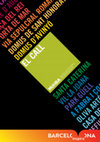
Research paper thumbnail of Call/Bcn. Guia d’Història Urbana.

Eulàlia Vernet, Anna Rich i Carles Puigferrat. Call/Bcn. Guia d’Història Urbana. Barcelona: Museu d’Història de Barcelona , 2015

Les dades que la història ens ha llegat relatives a la població jueva de Barcelona durant l’alta ... more Les dades que la història ens ha llegat relatives a la població jueva de Barcelona durant l’alta edat mitjana són boiroses. Tanmateix, cal suposar que devia haver-hi jueus establerts des de temps molt antics, car Barcino era una etapa important de l’antiga via Augusta.
A la Barcelona medieval hi havia dos barris jueus: el Call Major i el Menor. El Call Major, el fundacional, ocupava el quadrant nord-oest de l’antiga Barcino. Disposava de diverses sinagogues, d’una miqvé, un forn de pa, una carnisseria i, segurament, un alfòndec per a emmagatzemar-hi el gra. L’accés al Call Major es feia a través de dues portes: l’una, situada a la confluència entre el Carrer de Sant Domènec i del Call; i, l’altra, a la cruïlla entre el mateix Carrer del Call i el de Sant Honorat.
Al s. XIII l’increment demogràfic de la ciutat propicià que el rei Jaume I fes erigir la nova muralla medieval de la Rambla. L’arribada de jueus foragitats d’Occitània féu que, per mitjà del reial Decret de Fundació (1257), s’aprovés la creació del Call Menor.

El Call Menor era format per un sol carrer amb portals oberts a cada cap: l’un al Carrer d’Avinyó, sota el Castell Nou, i, l’altre, al Carrer d’en Rauric. Des del 1263 aquest nou call tingué la seva pròpia sinagoga, la qual ha de ser situada en l’actual parròquia de Sant Jaume.

L’aljama jueva de Barcelona, representant d’una cultura mil·lenària, va viure al Call fins el 1391, l’any de l’avalot, arran del qual la comunitat en restà completament destruïda. L’atac contra el Call de Barcelona va suposar la mort d’uns tres-cents jueus i, o bé la conversió al cristianisme dels restants o bé la fugida a altres territoris

Research paper thumbnail of Origen etimològic dels verbs làmed-he de l’hebreu masorètic: un estudi sobre la formació de les arrels verbals en semític.

Origen etimològic dels verbs làmed-he de l’hebreu masorètic. Un estudi sobre la formació de les arrels verbals en semític. Barcelona: Institut d’Estudis Catalans (Societat Catalana d’Estudis Hebraics), 404 p. , 2011

The aim of this doctoral dissertation is to offer an etymological and comparative study of the th... more The aim of this doctoral dissertation is to offer an etymological and comparative study of the third weak radical verbs (*y and *w) in Proto-Semitic and to show, in those cases where it would be possible, the etymological origin of the root-determinative suffixed to the Semitic verbal root.

This doctoral thesis can be divided into two parts. The first one (§1-5) explains from a historical point of view the origin and formation of the verbal (and nominal) roots in Semitic. The second part (§§ 6 and 7) centres basically on the etymological and comparative study of masoretic biblical Hebrew tertiae infirmae.

The etymological and reconstructive work has been based fundamentally on the comparative study of the Semitic languages. The comparative task of this dissertation has always offered the parallel Semitic forms of weak verbs (tertiae infirmae, secundae infirmae, primae infirmae, secundae geminatae (type pll) and the reduplicated ones (type plpl) that could be in contact with the third radical *y or *w verbs.

The Semitic languages that are used to reconstruct the Proto-Semitic system are the most ancient: Akkadian, Ugaritic, Old Epigraphic South Arabic (Sabaean dialect), Classical Arabic, Geˁez (Ethiopic), north-western epigraphic languages, Hebrew (biblical and rabbinic), Aramaic (biblical and rabbinic) and Syriac.

It is interesting to mention that the morphological and semantical identification of this root-determinative has been an important step to understand the historical formation of the verbal root in Proto-Semitic. The results obtained in this project have been very satisfactory and interesting for our discipline, as a tool to define from a historical point of view the structure of the Proto-Semitic and Afro-Asiatic verbal and nominal root.

KEY WORDS:
Historical linguistics
Proto-Semitic
Afro-Asiatic
Weak verbs
Root-determinative

Papers by Eulalia Vernet i Pons
Research paper thumbnail of "Els Papirs arameus d'Elefantina: Religió i culte d'una comunitat jueva preexílica i prebíblica".

Scripta Biblica 16: 53-79 (Església i comunitats jueves i cristianes en el món bíblic i postbíblic (Armand Puig i Tàrrech ed.) , 2017

The island of Elephantine is located in the north of the first Nile cataract, opposite the old ci... more The island of Elephantine is located in the north of the first Nile cataract, opposite
the old city called Sun in imperial Aramaic. This ancient island of the Nile became
famous among Semitists and archaeologists for the discovery in the early twentieth century of Aramaic papyri dated from the VI-V century BC. These Aramaic
documents inform us that, under the rule of the Achaemenid Empire from 525
BC, Elephantine became the centre of the Persian military command in Egypt.
A community of mercenary soldiers lived there, composed of military regiments
(Aram. degalim דגלים (of Jewish soldiers (Aram. hilâ Yehudâ יהודה חילא .(The aim of
this paper is to offer an updated overview of the religion and the pantheon of the
Jewish community that lived on the island as a military garrison, as seen through
the papyri and ostraka that were found in Elephantine at the beginning of the 20th
century.
Research paper thumbnail of "La Bíblia glossada de Vic (1268): un testimoni capdavanter per al context cultural de la Catalunya baixmedieval".

Tamid 17: 81-104, 2022

L’Arxiu i Biblioteca episcopal de Vic custodia, d’entre els seus manuscrits més antics i preuats,... more L’Arxiu i Biblioteca episcopal de Vic custodia, d’entre els seus manuscrits més antics i preuats, una Bíblia excepcional, en quatre volums, datada del 1268 (avui Arxiu i Biblioteca Episcopal, Ms. 1–4 (XXII–XXV)). El seu propietari fou Pere d’Eres, canonge de la catedral de Vic i notari públic d’aquest mateixa ciutat fins l’any 1278. Aquesta Bíblia llatina, que conté l’Antic i el Nou Testament (vols. I-III i vol. IV respectivament), és una còpia valuosa, no només per les miniatures il·luminades que conté, ans també perquè el seu text llatí és comentat marginalment per glosses que expliquen o esmenen el text de manera exegètica i crítica.
Aquest estudi examina els orígens i determina la qualitat i naturalesa d’aquestes glosses: llur anàlisi ens permetrà de situar contextualment l’origen d’aquesta Bíblia i establir indirectament, si és possible, els lligams amb el context històric i cultural de la Disputa de Barcelona (1263), el debat teològic que enfrontà el dominic convers Pau Cristià i una de les figures més insignes del judaisme, Moisès ben Naḥman de Girona, rabí general de Catalunya.

Historische Sprachforschung 131: 300–330, 2021
The aim of this article is to define the Proto-Semitic and Proto-Indo-European verbal root from a... more The aim of this article is to define the Proto-Semitic and Proto-Indo-European verbal root from a historical perspective based upon the testimony of ancient Semitic and Indo-European languages in order to better understand the process of the root extension and to determine the differences and agreements in both families of languages. In regard to the biconsonantal verbal roots in Semitic we will focus our attention on the root extensions as old suffixes and prefixes. We will analyze reduplication and gemination of the verbal roots as an extension process in Semitic. All these phenomena will be typologically compared with those of Indo-European.

Research paper thumbnail of "An Untapped Treasure of Carolingian Text Culture: The Homiliary of Luculentius from the Spanish March (c. 900)".

Revue d'histoire ecclésiastique 115: 715-728, 2020
In the twenty-first century, the chance to discover, study and edit a quasi-unknown and disregard... more In the twenty-first century, the chance to discover, study and edit a quasi-unknown and disregarded Latin text from the Early Medieval Ages is remarkably rare. The Homiliary of Luculentius offers us this exceptional opportunity. All current indicators favour our hypothesis that this considerable source, known only from selected parts, is a rarity in the proper sense: it appears to be the earliest autochtho-nous monument of Latin literature of the so-called Spanish March, the north-eastern part of the Iberian Peninsula dominated by the Carolingians and their culture. Our research project aims at the full edition of this work, the identification of its sources and the religious, social and political contextualisation of the probably monastic author and his network. The exploration of this work fundamentally changes our vision of Carolingian culture in a still-underrated periphery of Charlemagne’s Empire.

Research paper thumbnail of "L’Homiliari de Luculentius (marca hispànica catalana, ca. 900): un tresor amagat de la cultura textual carolíngia".

Miscel·lània litúrgica catalana 28: 67-96, 2020

Al segle XXI, la possibilitat de descobrir, estudiar i editar un text llatí quasi desconegut i ig... more Al segle XXI, la possibilitat de descobrir, estudiar i editar un text llatí quasi desconegut i ignorat de l’edat mitjana primerenca és un fet francament rar. L’Homiliari de Luculentius ens ofereix aquesta excepcional oportunitat.
Tots els indicis afavoreixen, ara per ara, la nostra hipòtesi, segons la qual aquesta font rellevant, coneguda únicament a partir de fragments concrets escollits, és una raresa en el sentit propi del terme: ha de ser con-siderada clarament el primer monument de la literatura llatina de l’anomenada Marca Hispànica, la regió nord-oriental de la península Ibèrica dominada pels carolingis i la seva cultura. El nostre projecte de recerca té com a objectiu dur a terme l’edició crítica completa d’aquest corpus homilètic, la identificació de les seves fonts i la contextualització religiosa, social i política de l’autor, d’àmbit possiblement monàstic, i de la seva xarxa. L’exploració d’aquest homiliari canviarà fonamentalment la visió que tenim de la cultura religiosa carolíngia a Catalunya, una regió perifèrica de l’Imperi de Carlemany, no prou valorada encara.

Svmma. Revista de Cultures Medievals 10: 67-83, 2017

Abstract The studies on the type of versification that the Rhenish abbess and mystic Hildegard of... more Abstract The studies on the type of versification that the Rhenish abbess and mystic Hildegard of Bingen (1098-11179) used in her works are scarce, and even more so those specifically devoted to her Ordo Virtutum or Order of the Virtues, one of the most outstanding Latin melodramas of the Middle Ages, written around 1151. This article aims to fill this void. On the one hand it will offer a precise description of the type of metre that can be found in the free verses of the Ordo Virtutum, which, as will be shown, are very close to Hebrew biblical poetry; on the other hand, it will discuss the biblical lyrical images of the text in order to show the biblical background that pervades this melodrama.

Tamid 11: 73 - 97, 2015

L'objectiu d'aquest article és el d'oferir alguns dels trets característics presents en la traduc... more L'objectiu d'aquest article és el d'oferir alguns dels trets característics presents en la traducció llatina del Talmud, anomenada Extractiones de Talmud, la qual fou elaborada a París pels volts de 1244-1245.

Aquestes Extractiones de Talmud són importants pel fet que configuren la primera traducció més o menys extensa del Talmud. Aquesta primera traducció llatina es caracteritza per ser una traducció força exhaustiva, però no pas completa, car ofereix una selecció de diferents llocs talmúdics, amb finalitat teològica i pensada per a la refutació del judaisme.

Feta una breu presentació del context en què neix aquesta traducció llatina, passarem a descriure'n el text, bo i comentant-ne alguns exemples, per tal de valorar la qualitat d'aquesta traducció.
Research paper thumbnail of ''On the Latin Transcription of Hebrew and Aramaic Proper Names in the Latin Talmud (Tractate Sanhedrin). Phonetic Features of the Translation''.

Journal of Transcultural Medieval Studies 2: 197 - 219, 2015
The aim of this paper is to provide a linguistic and onomastic description of the proper names an... more The aim of this paper is to provide a linguistic and onomastic description of the proper names and other Hebrew biblical realia transcribed and translated into Latin in the Talmudic tractate of Sanhedrin (thirteenth century). The Latin translation of Sanhedrin is a part of the Talmudic corpus known as Extractiones de Talmud; it is the largest Latin translation of the Talmud and was produced in Paris by Christian theologians in the 1240s. While the Extractiones are a quite exhaustive translation of the Talmud, they are not complete, but offer a selection of different Talmudic tractates that were of theological interest in order to strengthen the Christian faith in a context of anti-Jewish polemic. An onomastic approach to the Latin Sanhedrin will allow us to describe philologically the Hebrew words underlying the Latin transcription. It will also give us information about the criteria of transcription followed by the Latin translators of the Talmud.

Research paper thumbnail of "Die große Sphinx von Gizeh: vergleichende und sprachwissenschaftliche Überlegungen zu einer afroasiatischen Etymologie".

Ugarit Forschungen 42: 713-718, 2011

In diesem Beitrag wird eine gemeinsame Etymologie für den Namen der großen Sphinx von Gizeh ḥw un... more In diesem Beitrag wird eine gemeinsame Etymologie für den Namen der großen Sphinx von Gizeh ḥw und den Namen der Aägypt. Göttin Hw.t, deren Bedeutung bislang ungeklärt sind, vorgeschlagen. Zunächst werden diese Wörter in Beziehung zu anderen Aägypt. Namen, die die allgemeine Bedeutung ‘jung sein’, ‘Jugend’ tragen, gesetzet, wie z.B. Hwn ‘jung werden, jung machen’; Hwn ‘Knabe, Jüngling, junger Mann’; Hwn ‘Kindheit, Jugend’ und möglicherweise auch Hw.w ‘(kämpfende) Stiere’ und Hwyw ‘Rinder’. Ferner soll der Name der Göttin hw.t in Verbindung mit dem ps. Adj. *Hay-, das in den semitschen Sprachen oft als Gottes- oder Königsbeiwort mit der Bedeutung ‘lebendig’ belegt ist, gebracht werden. Auf Grund dieser etymologischen Verbindungen, wird am Schluss eine urspr. Aa. AdjWz. *Hy/w- ‘lebendig’ rekonstruiert, von der, unserer Meinung nach, eine Reihe von abgeleiteten und erweiterten VerbalWzz. (ps. *Hy-y/Hy-w ‘leben, lebendig sein’; aägypt. Hw-n ‘jung werden, jung machen’) und Subst.Wzz. (ps. *Hay-aw ‘Tier’; aägypt. Hw.w ‘(kämpfende) Stiere’; Hwyw ‘Rinder’; Zentraltschad. *χiw < *χVyVw- ‘Tier’; Osttschad. *yVw- ‘Tier’) und eben auch der Name der großen Sphinx und der Aägypt. Göttin Hw.t abstammen.

Research paper thumbnail of "Semitic Root Incompatibilities and Historical Linguistics".

Journal of Semitic Studies 56: 1-15, 2011

This paper focuses on root incompatibilities in Proto-Semitic and examines the importance of thes... more This paper focuses on root incompatibilities in Proto-Semitic and examines the importance of these laws with regard to historical root reconstruction. As is well known, these rules can only be applied to verbal roots, not to derivative forms and affixed forms. The importance of these structural incompatibilities consists, then, in the fact that they reduce the possible number of combinations of the triconsonantal bases. Excluding onomatopoeic roots and loan words, these laws of incompatibility are fully regular in the verbal roots (but not in the nominal ones) and, therefore, do not have exceptions, as is the case in all phonological laws.

The structure of the Semitic verbal roots is, then, absolutely conditioned by these restrictions of incompatibility. These rules are universal in character and apply also to the different families of the Afro-Asiatic and Indo-European languages. The restrictions of incompatibility are a tool of great importance in the historical reconstruction of the roots (especially, of the verbal roots in Semitic).

Catalan Review. International Journal of Catalan Culture 25: 233-255, 2011

This article offers, for the first time, a literary commentary on eight poems of biblical influen... more This article offers, for the first time, a literary commentary on eight poems of biblical influence written by the catalan poet Josep Carner and published in 1957 in Verb. These poems, together with Nabí, his most extensive poem, were inspired by different episodes and characters of the Old Testament.

The purpose of this paper is to offer a formal, stylistic and argumental analysis of these poems. It will also pay special attention to the influence of the Old Testament on the one hand, and to the use of the biblical source that the poet made, on the other.

Revista de Catalunya 273/74: 147 - 165, 2011

Aquest article ofereix, per primera vegada, el comentari d’un conjunt de poesies, que tenen la pa... more Aquest article ofereix, per primera vegada, el comentari d’un conjunt de poesies, que tenen la particularitat de beure, totes elles, d’una mateixa font: l’Antic Testament. L’anàlisi de cadascuna d’aquestes vuit composicions, editades l’any 1957 sota el títol de Verb, és formal, estilística i argumental, i va encaminada, principalment, a la cerca de la petja veterotestamentària i a la descripció del tractament de la font bíblica feta per Carner, car aquest recull de versos, juntament amb el Nabí, són, en l’obra del poeta, els que s’inspiren, de manera directa, en diferents episodis i personatges de l’Antic Testament.

Tamid 7: 181-188, 2010

En aquest article s’ofereix la reconstrucció etimològica del verb hebreu ḥåyâ ʻviureʼ, un verb do... more En aquest article s’ofereix la reconstrucció etimològica del verb hebreu ḥåyâ ʻviureʼ, un verb doblement dèbil, els orígens del qual van més enllà de l’estadi protosemític i s’endinsen en l’estadi antiquíssim del protoafroasiàtic.

A partir dels testimonis de les llengües semítiques i afroasiàtiques més antigues, ens proposem oferir la reconstrucció de l’arrel protosemítica i protoafroasiàtica d’aquest verb hebreu i oferim nous comentaris etimològics que fins ara havien passat desapercebuts