Books by Gábor Barabás
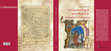
In this book a specific aspect of the Kingdom of Hungary in the Arpadian age and of Hungarian ecc... more In this book a specific aspect of the Kingdom of Hungary in the Arpadian age and of Hungarian ecclesiastical history is explored, the emergence and operation of the system of delegated papal jurisdiction and its interaction with local conditions from the beginnings in the late twelfth century until the end of the Arpadian age. Due to the reforms of the medieval papacy, which began in the late eleventh century, the popes acquired several new practical and conceptual tools that could be used both to restructure or reshape the Church and its various regions and to receive feedback from the local churches. Perhaps the best example of the latter (sending feedback tied to representation) is the work of the papal judges-delegate. The system of papal delegated jurisdiction on one hand supported the claims of the Apostolic See for the primacy in the Church, on the other hand the litigants played a role in shaping the legal frames and the practice of papal delegations as well. The author offers in his book an insight into the general tendencies of the system, meanwhile the Hun garian situation and the individual cases are analysed in detail as well. Gábor Barabás is an As so ciate Professor of the Institute of History at the University of Pécs (Hun gary). His main fields of in terest are several aspects of medieval Church history.

In the past decade the focus of the author’s research has been on various aspects of the relation... more In the past decade the focus of the author’s research has been on various aspects of the relations of the Hungarian Kingdom with the Papacy in the thirteenth century. Among other things the following topics have been dealt with: the activities of papal legates sent to the Realm of St Stephen, the operation of papal delegated jurisdiction in the church of Hungary, and the role that certain members of the royal family played in this era All but one of the studies presented in this book have already been published. Nevertheless, the papers are updated based on comments received since their original publications. The texts of several studies were altered, new parts were added, certain passages were removed, and the references were completed with recent, or previously missing works. Hopefully, this collection – of somewhat overlapping studies – off ers new aspects on the research of the history of the Papacy and the Kingdom of Hungary in the High Middle Ages.
Érdemes itt is felhívni a figyelmet arra, hogy a delegált bíráskodás nem jelentette a helyi egyhá... more Érdemes itt is felhívni a figyelmet arra, hogy a delegált bíráskodás nem jelentette a helyi egyháziak mellőzését, hiszen a pápák, nyilván gyakorlati okokból (nyelv-és helyismeret), elsősorban őket kérték fel bírói feladatra. 61 L.
![Research paper thumbnail of Barabás Gábor: A pápaság és Magyarország a 13. század első felében. Pápai hatás - együttműködés - érdekellentét [Th e Papacy and Hungary in the First Half of the 13th Century Papal infl uence – cooperation – clash of interests]](https://attachments.academia-assets.com/60530869/thumbnails/1.jpg)
Thesaurus Historiae Ecclesiasticae in Universitate Quinqueecclesiensi 5., 2015
Th e present book is an edited version of the dissertation submitted in 2013 to the University of... more Th e present book is an edited version of the dissertation submitted in 2013 to the University of Erlangen (Friedrich-Alexander Universität Erlangen-Nürnberg) as a contribution to the research project called „Päpstlich geprägte Integrationsprozesse in Ost- und Westeuropa (11.-13. Jh.) – Universale Einheit oder vereinheitlichte Vielfalt“. The main focus of the research group was on the relations of papacy
with the various formations of the European borderlands, and their repercussions. Since the beginning of the so-called “Gregorian reform” the Apostolic See tried to put into practice the idea of primacy in the orbis christianus with more and more success, and it was the papacy which played the role of the motor in the integration. It has been stated in historiography that despite these phenomena just a few papers are available which could throw light on the impact exerted on the regions
by the everywhere employed papal measures. Among the regions of the Christian periphery studied by the project (South-Italy, Iberian Peninsula and Hungary) mine research focused on the relations of the papacy with Hungary but on certain issues comparisons with other East-Central
European territories are also given. My aim was to analyse papal-Hungarian relations in the fi rst half of the 13th century. Principally, these relations can be understood through the papal measures and institutions: spread of canon law, papal legations, delegated jurisdiction and the papal chancellery. Th e selected period covers the pontifi cates of Innocent III, Honorius III, and Gregory IX (1198–1241). The reason for this choice, on the one hand, lies in the circumstances of the relations because this period can show characteristics which previously were not
present. Th is approach can be supported not only by the general ctivities of the popes mentioned but also through the interactions with Hungary. The pontificate of Innocent III (1198–1216) opened up a new era in the papal-Hungarian relations as the increase in the number of the papal charters addressed to Hungarians shows. Thanks to the papal register we know that this is not exclusively a Hungarian specialty; still though, this factor is a very important one considering the chances for the survival of related sources in Hungary.
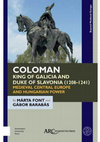
A figure of crucial importance to scholarship on western and eastern Europe alike, King Coloman (... more A figure of crucial importance to scholarship on western and eastern Europe alike, King Coloman (1208–1241) here receives long-overdue scholarly treatment as a key fi gure of the thirteenth century. The Árpád prince ruled over a vast area in Central Europe which remained largely affi liated to the Western Church. Renowned for fi ghting the Mongol Empire, he had close relations with Pope Gregory IX, and he was a contemporary of Emperor Friedrich II, Philippe Auguste of France, and Henry III of England. Coloman controlled territories that comprise modern-day Hungary, Slovakia, Croatia, and Bosnia and, as a result, he has long featured in various competing national historiographies. This study draws on Hungarian and other research that is inaccessible outside the region and places Coloman at the crossroads of Latin Christendom, Eastern Orthodoxy, and the Mongol Empire. It moves beyond previous national and religious narratives and foregrounds Central Europe in the histor y of early thirteenth-century Europe.
![Research paper thumbnail of Font Márta – Barabás Gábor: Kálmán (1208 – 1241). Halics királya – Szlavónia hercege [Coloman (1208 – 1241). King of Galicia – Duke of Slavonia]. Budapest – Pécs, 2017. (with English summary)](https://attachments.academia-assets.com/55072409/thumbnails/1.jpg)
Prince Coloman, second son of King Andrew II (1205–1235), younger brother of King Béla IV (1235–1... more Prince Coloman, second son of King Andrew II (1205–1235), younger brother of King Béla IV (1235–1270) is probably not among the best-known members of the Árpádian dynasty (1000–1301), or the medieval Hungarian rulers, yet, his life was quite extraordinary. He was the second member in his dynasty with this given name after King Coloman the Learned (1095–1116). The later King of Galicia and Duke of Slavonia was born in 1208 as the fourth child of Andrew II and Queen Gertrud of Andechs, therefore, he was a prince of the ruling dynasty. He was barely six years old when he was engaged to Salomea, the daughter of Leszek the White (Biały), Duke of Cracow as a result of the agreement between their fathers in the Spiš in 1214. Not long after he was crowned king of a principality of the Kievan Rus’, Galicia (Halych). He received the necessary approval and a crown from Pope Innocent III (1198–1216) on that occasion.
Coloman was in a minor age whilst his rule in Galicia, therefore he was in no position to shape the course of events there. He was the sufferer of his father’s will and the circumstances. The cooperation of the Hungarian king and Prince Leszek of Cracow was not without problems, in fact, it was full of conflicts despite the agreement of Spiš (1214). Therefore, we cannot speak of a continuous Polish–Hungarian coalition, it was rather a rivalry. The competing rulers came to agreements several times, with various terms and outcomes, meanwhile Leszek the White supported the claims of one or another princes of the Rus’ (e.g. Vladimir, Roman Igorevich and Daniel Romanovich). Andrew II, on the contrary, had a sole goal, the security of the Hungarian supremacy, regardless the fact which of his sons could represent it: either Coloman as king, or the youngest sibling, Andrew as prince.
The disaffection of a certain part of the Hungarian elite forced the king to allow for the coronation of his eldest son, Béla in 1214: their intention was to divide the power in the realm. Nevertheless, the lack of territorial power prevented the fragmentation in Andrew II’s realm despite the enthronement of Béla, even though a new court was established around the crown-prince in which new positions opened up for the members of the kingdom’s elite: they got new tracks to increase their influence. The events in Galicia had quite similar effects, the Hungarian elite was willing to make practical use of the Hungarian expansion there. This situation did not change radically after the end of Coloman’s kingdom, and the establishment of Prince Andrew’s territorial rule and court in 1227 even created a new centre and presented further possibilities for the elite to gain offices and donations. The Hungarian princes had their fair share in King Andrew II’s expansion, which was combined with the Christian mission to the vicinal territories. Béla supported the conversion of the Cumans, Coloman was interested in the fight against the Bosnian heresy, whereas Andrew’s reign probably was meant to prepare the union of the local orthodox church with Rome, yet, the lack of support in his environment made this endeavour impossible, if there were any attempts at all.
In our opinion, Coloman’s Galician kingdom established a precedent in the north-eastern vicinity of the Hungarian Kingdom. A few decades later and under different circumstances, Prince Daniel was also crowned with a diadem sent from the papal Curia in 1253. The two cases, even though they are not identical, bear common features, since Daniel was raised in Hungary between 1206–13 and he was probably aware of the meaning of the act of the coronation; therefore, it was probably not a coincidence that he sought alliance in the West after the Mongol invasion in 1241. To favour this quest he accepted the crown offered by Pope Innocent IV as well as the requirement of the ecclesiastical union bound to it. Daniel’s desire for the royal title is probably one of the many effects of the Hungarian rule on the Principality of Galicia.
The young king and his wife, Salomea were forced to leave Galicia around 1221, and they moved to Hungary and settled down in the Spiš, whilst he kept his royal title. At first Coloman had no share in the government of the realm (no measures of his concerning the territory have come down to us from this period), his charters which handled affairs of the Spiš region were all issued at later dates. His seclusion ended in 1226 when his father placed him on the top of the provinces of Dalmatia, Croatia and Slavonia, which previously had been controlled by his brother, Prince Béla. Coloman travelled already in 1226 to the coastal towns, where he presented himself as the new duke through several solemn entries. Yet, the sources offer a detailed picture of his rule in the territory of the so-called whole Slavonia only from 1229 on. Coloman handled a wide spectrum of cases. For instance, he privileged hospes-communities (among others in Dubica, Samobor or Varaždin) on several occasions and favoured Bishop Stephen of Zagreb in his endeavours, such as the case of the planned union of his bishopric with the archbishopric of Split. Coloman also supported his brother in the revision of the former royal donations before and after 1235, i.e. the death of their father, Andrew II. The duke of Slavonia took part alongside his family in the campaign against the Babenberg dynasty’s Austrian provinces, whereas Pope Gregory IX (1227-1241) two times entrusted him as lay protector of widowed Polish duchesses.Coloman occupied himself not only in the affairs of his duchy and his family, but also acted as a warlord; the duke probably invaded Bosnia and attacked its ruler (ban), who was accused of heresy, Matej Ninoslav. Nevertheless, his assumable conquest did not last long, as Béla IV had to lead a campaign to Bosnia as early as 1247. The duke’s martial skills are, however, undoubted: he showed a great deal of valiance in the battle of Muhi in 1241, where he managed to resist the Mongol offensive, yet, a few weeks later he died in Slavonia of the wounds he suffered in this combat.
Coloman’s reign had an impact, among other things, on the establishment of the concept of the so-called whole Slavonia and the urbanization of the area through the help provided for foreign settlers under his rule. His relationship to his elder brother also has to be emphasized: it was a unique phenomenon in the Árpádian dynasty since even Béla’s accession to throne did not cast a shadow on it.
Coloman, second son to Andrew II, brother of Béla IV may not be the most famous member of the Árpáds, the first Hungarian dynasty, still, he deserves our closer attention. His life is relevant because of great many things; its various episodes are interesting not only for Hungarian, but also for Ukrainian, Polish, Slovak, Croatian and Bosnian historiography and, last but not least, the wider public. Nevertheless, previously the diversity of Coloman’s life led to contradictory statements, and this is one of the reasons why the authors of this book decided to take a closer look at the question. One has to examine the remaining sources carefully to be able to trace down the events so that the details of the life of such an extraordinary man could get the attention it deserves.
![Research paper thumbnail of A pápaság és Magyarország a 13. század első felében. Pápai hatás - Együttműködés - Érdekellentét. [The Papacy and Hungary in the First Half of the 13th Century. Papal Influence – Cooperation – Clash of Interests.] Pécs, 2015.](https://attachments.academia-assets.com/37720611/thumbnails/1.jpg)
A pápai-magyar kapcsolatok vizsgálata ugyan hosszú múltra tekint vissza, de érdemes új szempontok... more A pápai-magyar kapcsolatok vizsgálata ugyan hosszú múltra tekint vissza, de érdemes új szempontok, kérdésfeltevések alapján elemezni a fellelhető forrásokat. Jelen kötet elsősorban arra keresi a választ, hogy a pápaság számára az egész orbis christianusban rendelkezésre álló eszközök (legátusok, kánon-jog, pápai kiküldött bíróság, oklevelezés) hogyan jelentek meg az Apostoli Szentszék és Magyar Királyság viszonyában a 13. század első felében. Barabás Gábor monográfiájában bemutatja az említett pápai eszközöket, azok magyarországi megjelenését, illetve a kötet második részében ismerteti a pápai-magyar kapcsolatokban nyomon követhető ügyek tematikus csoportjait. Ezek közé tartozik többek között a pápák
dinasztikus konfliktusokban játszott szerepe, a keresztes háborúk kérdésköre, a Német Lovagrend történetének magyarországi epizódja, de a kánoni választások, vagy éppen az egyházak és egyháziak elleni támadások esetei is.
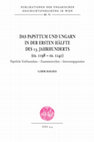
The Papacy and Hungary in the First Half of the 13th Century
Papal influence – Cooperation – Cla... more The Papacy and Hungary in the First Half of the 13th Century
Papal influence – Cooperation – Clash of Interests
The present book is an edited version of the dissertation submitted in 2013 to the University of Erlangen (Friedrich-Alexander Universität Erlangen-Nürnberg) as a contribution to the research project called „Päpstlich geprägte Integrationsprozesse in Ost- und Westeuropa (11.-13. Jh.) – Universale Einheit oder vereinheitlichte Vielfalt“. The main focus of the research group was on the relations of papacy with the various formations of the European borderlands, and their repercussions. Since the beginning of the so-called “Gregorian reform” the Apostolic See tried to put into practice the idea of primacy in the orbis christianus with more and more success, and it was the papacy which played the role of the motor in the integration. My aim was to analyse papal-Hungarian relations in the first half of the 13th century. Principally, these relations can be understood through the papal measures and institutions: spread of canon law, papal legations, delegated jurisdiction and the papal chancellery. The selected period covers the pontificates of Innocent III, Honorius III, and Gregory IX (1198-1241).
Edited volumes by Gábor Barabás
Tartalom TANULMÁNYOK H. Németh István Az árvák védelmezője. Az önálló árvaügy létrejötte a magyar... more Tartalom TANULMÁNYOK H. Németh István Az árvák védelmezője. Az önálló árvaügy létrejötte a magyarországi szabad királyi városokban a 18. század első harmadáig.
│ 97 "super hiis inquiratis diligenter rei veritatem" * A szerző az NKFIH NN 124763 "Pápai megbíz... more │ 97 "super hiis inquiratis diligenter rei veritatem" * A szerző az NKFIH NN 124763 "Pápai megbízottak a 14. századi Magyarországon (1295-1378) -Online adattár" projekt vezető kutatója, továbbá a TK2020-IKA-04 kutatócsoport főmunkatársa. A kutatást és a tanulmány elkészítését e projektek támogatták. 1 4. (2021) pp. 110-130.
Horváth Balázs "Ezen bajoknak megszüntetésére törvény kell, (…)". Az első statisztikai törvény ke... more Horváth Balázs "Ezen bajoknak megszüntetésére törvény kell, (…)". Az első statisztikai törvény keletkezéstörténete és szerepe a magyarországi hivatalos statisztika megszilárdításában .
Meeting of Rulers in the Scepus Region (1214) * The personal meetings of medieval rulers were of ... more Meeting of Rulers in the Scepus Region (1214) * The personal meetings of medieval rulers were of great importance just like the political meetings of our present days. Yet, in most cases only the fact of the meeting has remained to us, without any information on thé détails, thé pérsons présént théré, and thé duration of thé participants' stay étc. In this paper we intend to reconstruct the meeting and its circumstances based on the events prior to that and on its consequences.
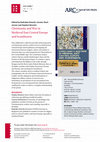
This collaborative collection provides fresh perspectives on Christianity and the conduct of war ... more This collaborative collection provides fresh perspectives on Christianity and the conduct of war in medieval East Central Europe and Scandina-via, investigating the intersection between religion, culture, and warfare in territories that were only integrated into Christendom in the Central Middle Ages. The contributors analyze cultures that lay outside Charle-magne's limes and the frontiers of the Byzantine Empire, to consider a region stretching from the Balkans to the south, through Hungary and the Slavic lands (Poland, Bohemia, Rus), to the Baltic coastline with Polabia, Pomerania, Prussia, and Estonia, and reaching into Scandinavia. The volume considers clerics as military leaders and propagandists, the role of Christian ritual and doctrine in warfare, and the adaptation and transformation of indigenous military cultures. It uncovers new information on perceptions of war and analyzes how local practices were incorporated into clerical narratives, enabling the reader to achieve a complete understanding of the period.
CONTENTS:
Christianity and War in Medieval East Central Europe and Scandinavia: An Introduction -- RADOSŁAW KOTECKI, CARSTEN SELCH JENSEN, and STEPHEN BENNETT
PART ONE: THE CHURCH AND WAR
Chapter 1. The Role of the Dalmatian Bishops and Archbishops in Warfare During the Twelfth and Thirteenth Centuries: A Case Study on the Archbishops of Split -- JUDIT GÁL
Chapter 2. Thirteenth- Century Hungarian Prelates at War -- GÁBOR BARABÁS
Chapter 3. The Image of “Warrior- Bishops” in the Northern Tradition of the Crusades -- SINI KANGAS
Chapter 4. Memory of the “Warrior- Bishops” of Płock in the Writings of Jan Długosz -- JACEK MACIEJEWSKI
Chapter 5. Preachers of War: Dominican Friars as Promoters of the Crusades in the Baltic Region in the Thirteenth Century -- JOHNNY GRANDJEAN GØGSIG JAKOBSEN
Chapter 6. Depictions of Violence in Late Romanesque Mural Paintings in Denmark -- MARTIN WANGSGAARD JÜRGENSEN
PART TWO: RELIGION IN WAR AND ITS CULTURAL EXPRESSIONS
Chapter 7. Religious Rituals of War in Medieval Hungary Under the Árpád Dynasty -- DUŠAN ZUPKA
Chapter 8. Pious Rulers, Princely Clerics, and Angels of Light: “Imperial Holy War” Imagery in Twelfth- Century Poland and Rus’ -- RADOSŁAW KOTECKI
Chapter 9. Religion and War in Saxo Grammaticus’s Gesta Danorum: The Examples of Bishop Absalon and King Valdemar I -- CARSTEN SELCH JENSEN
Chapter 10. Rhetoric of War: The Imagination of War in Medieval Written Sources (Central and Eastern Europe in the High Middle Ages) -- DAVID KALHOUS and LUDMILA LUŇÁKOVÁ
Chapter 11. Civil War as Holy War? Polyphonic Discourses of Warfare During the Internal Struggles in Norway in the Twelfth Century -- BJØRN BANDLIEN
Chapter 12. Martyrdom on the Field of Battle in Livonia During Thirteenth Century Holy Wars and Christianization: Popular Belief and the Image of a Catholic Frontier -- KRISTJAN KALJUSAAR
Chapter 13. Orthodox Responses to the Baltic Crusades -- ANTI SELART
Selected Bibliography
Index
A kötetben felhasznált képek, ábrák és térképek szerzői jogi felelőssége a szerzőket terheli.
Thesaurus Historiae Ecclesiasticae in Universitate Quinqueecclesiensi 9., 2019
1) Nagy, Levente: Methodological Problems of Christianization as a Historical process in the 3rd–... more 1) Nagy, Levente: Methodological Problems of Christianization as a Historical process in the 3rd–5th century A.D. Pannonia. Can the Written and Archaeological Sources be Considered Together?
2) Barabás, Gábor: Clerics of the Papal Curia and Kingdom of Hungary in the 14th Century
3) Langó, Péter: From the „Discovery” of the Holy Cross to the Rediscovery” of Catacombs. Outline of the Early History of Research on Christian Archaeological Monuments
4) Andreides, Gábor: Fascism and the Catholic Church
5) Csarnai, Márk: Calvary of Transcarpathian Hungarian Reformation in the Years of Stalinism (1944–1953)
6) Ö. Kovács, József: Pócspetri the „Cop Killer Village”. How the Communist Distorted Words during the Expropriation of Ecclesiastical
Schools and how Society Reacted
7) Illyés, Szabolcs: Identity of Minority: Small Hungarian Catholic Communitiesduring the Decades of the Church-Persecution
8) Kahler, Frigyes: Contributions to the History of the Hungarian Church Pursuits (1945–1989)
The editors’ aim was to gather leading scholars in chronicle research, specialists from Central a... more The editors’ aim was to gather leading scholars in chronicle research, specialists from Central and Eastern Europe as well as established scholars from the West, in order to discuss the various aspects of the topic, Hungary and Hungarians in Central and East European Narrative Sources (10th-17th Centuries).
The articles, for the most part, address the issue of the image of Hungarians as presented in various chronicles, either in text or in visual form. Although this theme features prominently in the book, it is not the only one analysed by the authors. Neither constraints of genre nor chronological limits were applied rigidly. Therefore, themes other than ‘image’, such as chronicle compositions and the inevitably ensuing problem of dating various events also comprise an integral part of the volume.
A kötetben felhasznált képek szerzői jogi felelőssége a szerzőket terheli.
Specimina Nova Pars Prima Sectio Mediaevalis, 2019
A Pécsi Tudományegyetem Középkori és Koraújkori Történeti Tanszékének Történeti közleményei - Dis... more A Pécsi Tudományegyetem Középkori és Koraújkori Történeti Tanszékének Történeti közleményei - Dissertationes historicae collectae per
Cathedram Historiae Medii Aevi Modernorumque Temporum Universitatis Quinqueecclesiensis

Lectori salutem!
A PTE BTK Történettudományi Intézetének keretei között folytatott munkánk gerin... more Lectori salutem!
A PTE BTK Történettudományi Intézetének keretei között folytatott munkánk gerincét a tanár- és bölcsészképzésben való oktatás, illetve a kollégák egyéni és kutatócsoportok keretében végzett tudományos tevékenysége alkotja, melyek kreatív és magas színvonalon történő ellátása minden munkatársunk fő törekvése. Fiatal kollégáink részéről közel egy éve fogalmazódott meg az a gondolat, hogy szükség lenne egy olyan, rendszeresen megjelenő online vagy papír alapú kiadványra, amely valamilyen módon reprezentálja az Intézet egészét, megjeleníti az itt folytatott tudományos munka eredményeit és intézetként is összeköt minket a tudományos közélettel, növeli intézményi láthatóságukat.
A most útjára induló évkönyv címválasztása is ezekre az összekötő „hidakra” utal: az egyes történelmi korszakokat oktató tanszékek közti személyi és tematikai kapcsolódásokra valamint az Intézetnek a hazai- és a nemzetközi történettudománnyal való kapcsolataira. A szerkesztők (a „pontifexek”) filozófiájának egyik eleme, hogy a kiadvány egy-egy szélesebb témához, problémakörhöz kötődően adjon korszakokon átívelő, olyan tudományos ismereteket, amelyek az Intézet oktatóinak kutatási területét is megjelenítik, illetve kapcsolódnak újabb nemzetközi történettudományi eredményekhez, új módszertani kérdéseket vetnek fel. Másrészt törekednek arra, hogy korszakos tanszékeknek is lehetőséget nyújtsanak saját „arculatuk” megmutatására, saját „hídjaik” megerősítésére.
Ennek szemlélet jegyében a Pontes váltakozva, két típusú tartalommal jelenik majd meg a jövőben. Az első számmal induló páratlan években intézeti szinten összeállított tematikus kötetek készülnek, míg a páros években az Intézet egyes tanszékei szerkesztik saját korszakos számaikat, kronológia rendben előrehaladva, átadva egymásnak a „hídépítő szerszámokat”. A munka folytonosságát és az egységesen magas színvonalat egy hazai és nemzetközi tagokból álló szakmai tanácsadó testület, valamint egy állandó szerkesztőbizottság biztosítja, az egyes tematikus- és korszakos kötetek esetében pedig alkalmi szerkesztők bevonására kerülhet sor.
A kezdeményezést az Intézet vezetése örömmel vette, és az olvasó immár az első produktumát láthatja a közös munkának, amelynek témaválasztátását José Casanova Public Religion Revisited című írása inspirálta. A szerző a szekularizáció értelmezésben alakított ki egy új, egyéni megközelítést, amelynek szélesebb körben történő megismertetését fontosnak gondolják a szerkesztők. Ezért e tanulmány fordítása nyitja a kötet írásainak sorát. A tanulmányok (és részben a többi „rovat” írásai) tehát a vallás illetve az egyházak kérdésére fókuszálnak, a vallás – szekularizáció – transzformáció hívószavak köré szerveződnek.
A kötetben a tanulmányok mellett az Intézet munkatársainak az utóbbi két-három évben megjelent könyviről készült ismertetések, kritikák is olvashatók, de úgy gondoljuk, hogy az első szám feladata az is, hogy az intézményben működő állandó kutatócsoportok számára lehetőséget adjunk a bemutatkozásra. Végül a pécsi történeti műhely létrehozása kapcsán néhány alapító kollégával készült interjú zárja az írások sorát. A periodika természetesen nyitott, a Történettudományi Intézet a jövőben szívesen látja a további számokban külsős szerzők tanulmányait is. A kiadvány elsősorban online formában jelenik majd meg, de a lehetőségektől függően igyekszünk papír alapon is hozzáférhetővé tenni.
Bízunk benne, hogy az olvasónak képzeletbeli hidjainkon gondolatébresztő átkelésekben lesz része!
Prof. Dr. Sashalmi Endre
egyetemi tanár, intézetigazgató



Uploads
Books by Gábor Barabás
with the various formations of the European borderlands, and their repercussions. Since the beginning of the so-called “Gregorian reform” the Apostolic See tried to put into practice the idea of primacy in the orbis christianus with more and more success, and it was the papacy which played the role of the motor in the integration. It has been stated in historiography that despite these phenomena just a few papers are available which could throw light on the impact exerted on the regions
by the everywhere employed papal measures. Among the regions of the Christian periphery studied by the project (South-Italy, Iberian Peninsula and Hungary) mine research focused on the relations of the papacy with Hungary but on certain issues comparisons with other East-Central
European territories are also given. My aim was to analyse papal-Hungarian relations in the fi rst half of the 13th century. Principally, these relations can be understood through the papal measures and institutions: spread of canon law, papal legations, delegated jurisdiction and the papal chancellery. Th e selected period covers the pontifi cates of Innocent III, Honorius III, and Gregory IX (1198–1241). The reason for this choice, on the one hand, lies in the circumstances of the relations because this period can show characteristics which previously were not
present. Th is approach can be supported not only by the general ctivities of the popes mentioned but also through the interactions with Hungary. The pontificate of Innocent III (1198–1216) opened up a new era in the papal-Hungarian relations as the increase in the number of the papal charters addressed to Hungarians shows. Thanks to the papal register we know that this is not exclusively a Hungarian specialty; still though, this factor is a very important one considering the chances for the survival of related sources in Hungary.
Coloman was in a minor age whilst his rule in Galicia, therefore he was in no position to shape the course of events there. He was the sufferer of his father’s will and the circumstances. The cooperation of the Hungarian king and Prince Leszek of Cracow was not without problems, in fact, it was full of conflicts despite the agreement of Spiš (1214). Therefore, we cannot speak of a continuous Polish–Hungarian coalition, it was rather a rivalry. The competing rulers came to agreements several times, with various terms and outcomes, meanwhile Leszek the White supported the claims of one or another princes of the Rus’ (e.g. Vladimir, Roman Igorevich and Daniel Romanovich). Andrew II, on the contrary, had a sole goal, the security of the Hungarian supremacy, regardless the fact which of his sons could represent it: either Coloman as king, or the youngest sibling, Andrew as prince.
The disaffection of a certain part of the Hungarian elite forced the king to allow for the coronation of his eldest son, Béla in 1214: their intention was to divide the power in the realm. Nevertheless, the lack of territorial power prevented the fragmentation in Andrew II’s realm despite the enthronement of Béla, even though a new court was established around the crown-prince in which new positions opened up for the members of the kingdom’s elite: they got new tracks to increase their influence. The events in Galicia had quite similar effects, the Hungarian elite was willing to make practical use of the Hungarian expansion there. This situation did not change radically after the end of Coloman’s kingdom, and the establishment of Prince Andrew’s territorial rule and court in 1227 even created a new centre and presented further possibilities for the elite to gain offices and donations. The Hungarian princes had their fair share in King Andrew II’s expansion, which was combined with the Christian mission to the vicinal territories. Béla supported the conversion of the Cumans, Coloman was interested in the fight against the Bosnian heresy, whereas Andrew’s reign probably was meant to prepare the union of the local orthodox church with Rome, yet, the lack of support in his environment made this endeavour impossible, if there were any attempts at all.
In our opinion, Coloman’s Galician kingdom established a precedent in the north-eastern vicinity of the Hungarian Kingdom. A few decades later and under different circumstances, Prince Daniel was also crowned with a diadem sent from the papal Curia in 1253. The two cases, even though they are not identical, bear common features, since Daniel was raised in Hungary between 1206–13 and he was probably aware of the meaning of the act of the coronation; therefore, it was probably not a coincidence that he sought alliance in the West after the Mongol invasion in 1241. To favour this quest he accepted the crown offered by Pope Innocent IV as well as the requirement of the ecclesiastical union bound to it. Daniel’s desire for the royal title is probably one of the many effects of the Hungarian rule on the Principality of Galicia.
The young king and his wife, Salomea were forced to leave Galicia around 1221, and they moved to Hungary and settled down in the Spiš, whilst he kept his royal title. At first Coloman had no share in the government of the realm (no measures of his concerning the territory have come down to us from this period), his charters which handled affairs of the Spiš region were all issued at later dates. His seclusion ended in 1226 when his father placed him on the top of the provinces of Dalmatia, Croatia and Slavonia, which previously had been controlled by his brother, Prince Béla. Coloman travelled already in 1226 to the coastal towns, where he presented himself as the new duke through several solemn entries. Yet, the sources offer a detailed picture of his rule in the territory of the so-called whole Slavonia only from 1229 on. Coloman handled a wide spectrum of cases. For instance, he privileged hospes-communities (among others in Dubica, Samobor or Varaždin) on several occasions and favoured Bishop Stephen of Zagreb in his endeavours, such as the case of the planned union of his bishopric with the archbishopric of Split. Coloman also supported his brother in the revision of the former royal donations before and after 1235, i.e. the death of their father, Andrew II. The duke of Slavonia took part alongside his family in the campaign against the Babenberg dynasty’s Austrian provinces, whereas Pope Gregory IX (1227-1241) two times entrusted him as lay protector of widowed Polish duchesses.Coloman occupied himself not only in the affairs of his duchy and his family, but also acted as a warlord; the duke probably invaded Bosnia and attacked its ruler (ban), who was accused of heresy, Matej Ninoslav. Nevertheless, his assumable conquest did not last long, as Béla IV had to lead a campaign to Bosnia as early as 1247. The duke’s martial skills are, however, undoubted: he showed a great deal of valiance in the battle of Muhi in 1241, where he managed to resist the Mongol offensive, yet, a few weeks later he died in Slavonia of the wounds he suffered in this combat.
Coloman’s reign had an impact, among other things, on the establishment of the concept of the so-called whole Slavonia and the urbanization of the area through the help provided for foreign settlers under his rule. His relationship to his elder brother also has to be emphasized: it was a unique phenomenon in the Árpádian dynasty since even Béla’s accession to throne did not cast a shadow on it.
Coloman, second son to Andrew II, brother of Béla IV may not be the most famous member of the Árpáds, the first Hungarian dynasty, still, he deserves our closer attention. His life is relevant because of great many things; its various episodes are interesting not only for Hungarian, but also for Ukrainian, Polish, Slovak, Croatian and Bosnian historiography and, last but not least, the wider public. Nevertheless, previously the diversity of Coloman’s life led to contradictory statements, and this is one of the reasons why the authors of this book decided to take a closer look at the question. One has to examine the remaining sources carefully to be able to trace down the events so that the details of the life of such an extraordinary man could get the attention it deserves.
dinasztikus konfliktusokban játszott szerepe, a keresztes háborúk kérdésköre, a Német Lovagrend történetének magyarországi epizódja, de a kánoni választások, vagy éppen az egyházak és egyháziak elleni támadások esetei is.
Papal influence – Cooperation – Clash of Interests
The present book is an edited version of the dissertation submitted in 2013 to the University of Erlangen (Friedrich-Alexander Universität Erlangen-Nürnberg) as a contribution to the research project called „Päpstlich geprägte Integrationsprozesse in Ost- und Westeuropa (11.-13. Jh.) – Universale Einheit oder vereinheitlichte Vielfalt“. The main focus of the research group was on the relations of papacy with the various formations of the European borderlands, and their repercussions. Since the beginning of the so-called “Gregorian reform” the Apostolic See tried to put into practice the idea of primacy in the orbis christianus with more and more success, and it was the papacy which played the role of the motor in the integration. My aim was to analyse papal-Hungarian relations in the first half of the 13th century. Principally, these relations can be understood through the papal measures and institutions: spread of canon law, papal legations, delegated jurisdiction and the papal chancellery. The selected period covers the pontificates of Innocent III, Honorius III, and Gregory IX (1198-1241).
Edited volumes by Gábor Barabás
CONTENTS:
Christianity and War in Medieval East Central Europe and Scandinavia: An Introduction -- RADOSŁAW KOTECKI, CARSTEN SELCH JENSEN, and STEPHEN BENNETT
PART ONE: THE CHURCH AND WAR
Chapter 1. The Role of the Dalmatian Bishops and Archbishops in Warfare During the Twelfth and Thirteenth Centuries: A Case Study on the Archbishops of Split -- JUDIT GÁL
Chapter 2. Thirteenth- Century Hungarian Prelates at War -- GÁBOR BARABÁS
Chapter 3. The Image of “Warrior- Bishops” in the Northern Tradition of the Crusades -- SINI KANGAS
Chapter 4. Memory of the “Warrior- Bishops” of Płock in the Writings of Jan Długosz -- JACEK MACIEJEWSKI
Chapter 5. Preachers of War: Dominican Friars as Promoters of the Crusades in the Baltic Region in the Thirteenth Century -- JOHNNY GRANDJEAN GØGSIG JAKOBSEN
Chapter 6. Depictions of Violence in Late Romanesque Mural Paintings in Denmark -- MARTIN WANGSGAARD JÜRGENSEN
PART TWO: RELIGION IN WAR AND ITS CULTURAL EXPRESSIONS
Chapter 7. Religious Rituals of War in Medieval Hungary Under the Árpád Dynasty -- DUŠAN ZUPKA
Chapter 8. Pious Rulers, Princely Clerics, and Angels of Light: “Imperial Holy War” Imagery in Twelfth- Century Poland and Rus’ -- RADOSŁAW KOTECKI
Chapter 9. Religion and War in Saxo Grammaticus’s Gesta Danorum: The Examples of Bishop Absalon and King Valdemar I -- CARSTEN SELCH JENSEN
Chapter 10. Rhetoric of War: The Imagination of War in Medieval Written Sources (Central and Eastern Europe in the High Middle Ages) -- DAVID KALHOUS and LUDMILA LUŇÁKOVÁ
Chapter 11. Civil War as Holy War? Polyphonic Discourses of Warfare During the Internal Struggles in Norway in the Twelfth Century -- BJØRN BANDLIEN
Chapter 12. Martyrdom on the Field of Battle in Livonia During Thirteenth Century Holy Wars and Christianization: Popular Belief and the Image of a Catholic Frontier -- KRISTJAN KALJUSAAR
Chapter 13. Orthodox Responses to the Baltic Crusades -- ANTI SELART
Selected Bibliography
Index
2) Barabás, Gábor: Clerics of the Papal Curia and Kingdom of Hungary in the 14th Century
3) Langó, Péter: From the „Discovery” of the Holy Cross to the Rediscovery” of Catacombs. Outline of the Early History of Research on Christian Archaeological Monuments
4) Andreides, Gábor: Fascism and the Catholic Church
5) Csarnai, Márk: Calvary of Transcarpathian Hungarian Reformation in the Years of Stalinism (1944–1953)
6) Ö. Kovács, József: Pócspetri the „Cop Killer Village”. How the Communist Distorted Words during the Expropriation of Ecclesiastical
Schools and how Society Reacted
7) Illyés, Szabolcs: Identity of Minority: Small Hungarian Catholic Communitiesduring the Decades of the Church-Persecution
8) Kahler, Frigyes: Contributions to the History of the Hungarian Church Pursuits (1945–1989)
The articles, for the most part, address the issue of the image of Hungarians as presented in various chronicles, either in text or in visual form. Although this theme features prominently in the book, it is not the only one analysed by the authors. Neither constraints of genre nor chronological limits were applied rigidly. Therefore, themes other than ‘image’, such as chronicle compositions and the inevitably ensuing problem of dating various events also comprise an integral part of the volume.
Cathedram Historiae Medii Aevi Modernorumque Temporum Universitatis Quinqueecclesiensis
A PTE BTK Történettudományi Intézetének keretei között folytatott munkánk gerincét a tanár- és bölcsészképzésben való oktatás, illetve a kollégák egyéni és kutatócsoportok keretében végzett tudományos tevékenysége alkotja, melyek kreatív és magas színvonalon történő ellátása minden munkatársunk fő törekvése. Fiatal kollégáink részéről közel egy éve fogalmazódott meg az a gondolat, hogy szükség lenne egy olyan, rendszeresen megjelenő online vagy papír alapú kiadványra, amely valamilyen módon reprezentálja az Intézet egészét, megjeleníti az itt folytatott tudományos munka eredményeit és intézetként is összeköt minket a tudományos közélettel, növeli intézményi láthatóságukat.
A most útjára induló évkönyv címválasztása is ezekre az összekötő „hidakra” utal: az egyes történelmi korszakokat oktató tanszékek közti személyi és tematikai kapcsolódásokra valamint az Intézetnek a hazai- és a nemzetközi történettudománnyal való kapcsolataira. A szerkesztők (a „pontifexek”) filozófiájának egyik eleme, hogy a kiadvány egy-egy szélesebb témához, problémakörhöz kötődően adjon korszakokon átívelő, olyan tudományos ismereteket, amelyek az Intézet oktatóinak kutatási területét is megjelenítik, illetve kapcsolódnak újabb nemzetközi történettudományi eredményekhez, új módszertani kérdéseket vetnek fel. Másrészt törekednek arra, hogy korszakos tanszékeknek is lehetőséget nyújtsanak saját „arculatuk” megmutatására, saját „hídjaik” megerősítésére.
Ennek szemlélet jegyében a Pontes váltakozva, két típusú tartalommal jelenik majd meg a jövőben. Az első számmal induló páratlan években intézeti szinten összeállított tematikus kötetek készülnek, míg a páros években az Intézet egyes tanszékei szerkesztik saját korszakos számaikat, kronológia rendben előrehaladva, átadva egymásnak a „hídépítő szerszámokat”. A munka folytonosságát és az egységesen magas színvonalat egy hazai és nemzetközi tagokból álló szakmai tanácsadó testület, valamint egy állandó szerkesztőbizottság biztosítja, az egyes tematikus- és korszakos kötetek esetében pedig alkalmi szerkesztők bevonására kerülhet sor.
A kezdeményezést az Intézet vezetése örömmel vette, és az olvasó immár az első produktumát láthatja a közös munkának, amelynek témaválasztátását José Casanova Public Religion Revisited című írása inspirálta. A szerző a szekularizáció értelmezésben alakított ki egy új, egyéni megközelítést, amelynek szélesebb körben történő megismertetését fontosnak gondolják a szerkesztők. Ezért e tanulmány fordítása nyitja a kötet írásainak sorát. A tanulmányok (és részben a többi „rovat” írásai) tehát a vallás illetve az egyházak kérdésére fókuszálnak, a vallás – szekularizáció – transzformáció hívószavak köré szerveződnek.
A kötetben a tanulmányok mellett az Intézet munkatársainak az utóbbi két-három évben megjelent könyviről készült ismertetések, kritikák is olvashatók, de úgy gondoljuk, hogy az első szám feladata az is, hogy az intézményben működő állandó kutatócsoportok számára lehetőséget adjunk a bemutatkozásra. Végül a pécsi történeti műhely létrehozása kapcsán néhány alapító kollégával készült interjú zárja az írások sorát. A periodika természetesen nyitott, a Történettudományi Intézet a jövőben szívesen látja a további számokban külsős szerzők tanulmányait is. A kiadvány elsősorban online formában jelenik majd meg, de a lehetőségektől függően igyekszünk papír alapon is hozzáférhetővé tenni.
Bízunk benne, hogy az olvasónak képzeletbeli hidjainkon gondolatébresztő átkelésekben lesz része!
Prof. Dr. Sashalmi Endre
egyetemi tanár, intézetigazgató