Papers by Ingrid Halászová
ARS, 2025
The study focuses on the monumental Baroque altar (1733-1735) in St. Martin's Cathedral in Bratis... more The study focuses on the monumental Baroque altar (1733-1735) in St. Martin's Cathedral in Bratislava, created by one of the most important sculptors of the Austrian High Baroque, Georg Raphael Donner. Although only the central sculpture of St. Martin on horseback has been preserved in the church, historical visual sources help reconstruct its original appearance. The altar's volute canopy with a large model of the Hungarian royal crown has traditionally been linked to the church's coronation function, but is here reinterpreted as a symbolic representation of the "invisible Crown"-the politically conceived Hungarian Land. Donner's innovative depiction of St. Martin as a Hungarian hussar combines political, religious, and national symbolism. The dynamic rearing horse suggests influence from classical dressage, possibly inspired by François Robichon de la Guérinière's École de cavalerie. The composition's torso movement also appears to reference Rubens' painting of the dying Roman consul Decius Mus.
Collections in Early Modern Era. , 2024
Regarding the research tasks and challenges in post-socialist countries, the chapter mentions the... more Regarding the research tasks and challenges in post-socialist countries, the chapter mentions the principal determinants of the historical ruptures of the content and scope of the Pálffy collections. An important part of describing these historical movements of the Pálffy collection is to sketch the spatial transfers of Pálffy portraits between the residences they variously inhabited for about 350 years.
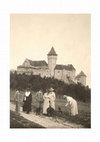
Hupko, Daniel - Orosová, Martina (eds.): Pálffyovci v Smoleniciach. Bratislava: Pamiatkový úrad Slovenskej republiky, 2023, 2023
Portraits of Ján VIII. Pálffy – the only owner of the Smolenice Estate
from the younger branch of... more Portraits of Ján VIII. Pálffy – the only owner of the Smolenice Estate
from the younger branch of the family.
Ingrid Halászová
Until now, the literature has focused mainly on members of the elder branch of the Pálffy family. This paper brings attention to the personality of Count Ján Leopold Pálffy (1728 – 1791), who was the first member of the family to acquire and administer the Smolenice Estate and the adjacent town. At the same time, it should be noted that he was the grandfather of the last descendant of the younger branch of the Pálffy family – the famous art collector Ján XIV. František Pálffy (1829 – 1908). The physical appearance of Ján VIII. Leopold Pálffy as an adult has
been virtually unknown and unpublished until now. The presented paper is therefore an ideal opportunity to bring the appearance of the first Pálffy owner of Smolenice out of anonymity. In addition to Ján Leopold himself, it also presents portraits of his parents and other family members, which are in the collections of the Slovak National Museum – Červený Kameň Museum.
In addition to these few portraits from the original property of the family, confiscated by the state after 1945, the Červený Kameň Museum’s collections also hold a portrait of Ján Leopold as a boy, long considered to be a portrait of Karol Hieronymus Pálffy from the eldest line of the family, heir to the Malacky branch.
Ars, Jun 12, 2024
Portrait and Rhetoric. On the Relationships and Connections Between Rhetorical Embellishments and... more Portrait and Rhetoric. On the Relationships and Connections Between Rhetorical Embellishments and Formulas of Pathos in Early Modern Portraiture Theory and Practice.
The theme of eternal returns in art and culture focuses on certain historically returning principles that survive in cultural society, even under new conditions, in a modified form. As one of them, the survival of ancient rhetoric through the centuries to the present day is one of them. The presented text shows the trajectories of how classical rhetoric was reactivated in the early modern period in theoretical writing on art and functionally applied to contemporary visual (especially portrait) practice. It also points to the internal parallels between the effort of German and Netherlandish painters and
theorists of art to emphasize the persuasive necessity of certain forms of dynamic movement in the picture to Aby Warburg’s much the same ambition to identify such movement, energizing and spiritual patterns (pathos formulas) in his paintings. Last but not least, the contribution opens a new field of research into the experience of Warburgian pathos formulas in early modern portraiture.
Keywords: rhetoric, visual rhetoric, early modern portrait, energeia, colores rhetorici, Warburg, Pathosformel
Malacky a okolie 16: História., 2023
The paper deals with an image that is well-known to the public. It is an impressive work by Marti... more The paper deals with an image that is well-known to the public. It is an impressive work by Martin Meytens the Younger, which is now owned by the Belvedere Museum in Vienna, but originally decorated the Pálffy mansion in Malacca. The detailed oil painting on canvas presents a group portrait of the family of Count Nicholas VIII Pálffy of Malacky.
Although the authorship is archivally documented, the painting is still dated differently. Therefore, in the paper, I try to present my opinion on its creation's time (and phases).
The first P�lffy Portrait Gallery in Cerven� Kamen Castle (V�r�sko, Bibersburg)
Acta Historiae Artium, 2006
ON PORTRAITURE:Theory, Practice, and Fiction. From Francisco de Holanda to Susan Sontag. Lisbon: Faculty of Fine Arts of the University of Lisbon., 2022
The contribution focuses on the portrait concepts of a sovereign ruler in two treatises on images... more The contribution focuses on the portrait concepts of a sovereign ruler in two treatises on images (respectively on visual arts) published shortly after each other, in which several chapters were firstly devoted to a portrait genre: in Paleotti’s Discorso intorno alle imagini sacre e profane (Bologna 1582) and in Lomazzo´s Trattato dell’arte della pittvra, scoltvra, et architettvra (Milano 1584).
OPUSCULA HISTORIAE ARTIUM /70 / 2021, č. 1 2 0 2 1, , 2021
Not long ago, a portrait of the palatine Johann Bernard Stephan Pálffy (1663-1751) was identified... more Not long ago, a portrait of the palatine Johann Bernard Stephan Pálffy (1663-1751) was identified in the collections of Pernštejn Castle in Moravia. The portrait itself does not contain an identifying inscription, nor a dating or author's signature; it therefore opens up a number of serious issues. The three most fundamental questions may be formulated as follows: is Johann Pálffy really the aristocrat depicted in this portrait? If it really is the portrait of the aforementioned Pálffy, how and when did the painting get to Pernštejn Castle? And finally, can it be considered an early work

Reneszánsz és barokk Magyarországon Művészettörténeti tanulmányok Galavics Géza tiszteletére I. kötet. , 2021
The Aristocrat’s „Political Body”. Some Remarks on the Public Portrait Representation of Miklós P... more The Aristocrat’s „Political Body”. Some Remarks on the Public Portrait Representation of Miklós Pálffy V and János Pálffy V through the Lens of the Treatises on Art of the Era.
In the first half of the 18th century, Miklós V and János V, the Pálffy brothers, were successful high military commanders and statesmen. Both of them also reached the highest political position in the Kingdom of Hungary: the office of a palatine. Their official portraits were created to express their high ranks to the public audience.
My contribution to the congratulatory volume aims to acquaint the reader with generally accepted requirements for the decorum of official public portraits within the context of the previous and period theory of art. Since the end of the 16th century, treatises on painting have generally reflected the need of high society to clarify the requirements for creating official portraits of rulers and high-ranking public persons as symbolic pictorial
constructs of their “political body”, within the context of their dignity and socio-political functions. There is an occasion to analyze the general theoretical discourse concerning the official public portraits within the context of a portrait representation of the two Pálffy brothers-palatines. This paper, on examples of portraits of both brothers-palatines Pálffy, tries to outline how the “political body” of the palatine as well as the knight of the Order of the Golden Fleece was created, during the first half of the 18th century.
Malacky a okolie 15 História, 2022
ARS , 2003
http://dejum.sav.sk/docs/mag/ARS_2003_2.pdf
Muzeológia a Kultúrne Dedičstvo, 2019
Muzeológia a Kultúrne Dedičstvo, 2018
Podobizne absolventiek šlʹachtického vzdelávacieho inštitútu Notre Dame v Bratislave
Pálff yovské katalógy zbierok a inventáre ako pramene k poznaniu umeleckého zariadenia rezidencie Červený Kameň v polovici 18. storočia
In: Theatrum historiae 9 (2011), s. 491 - 507. Abstract: The text evaluates the crucial sources o... more In: Theatrum historiae 9 (2011), s. 491 - 507. Abstract: The text evaluates the crucial sources of the Pálff y's collections and their interior design at the Castle of Červený Kameň in the mid-18th century, when this oldest family residence was inhabited by members of both family branches. Th e older branch of the family (Rudolf I Pálff y) is represented by the preserved collections catalogues in six books; the younger line (Karl Paul Pálffy) is represented by several inventories of their rooms from 1742–1774.
Pálffyovské katalógy zbierok a inventáre ako pramene k poznaniu umeleckého zariadenia rezidencie Červený Kameň v polovici 18. storočia
The text evaluates the crucial sources of the Palffy’s collections and their interior design at t... more The text evaluates the crucial sources of the Palffy’s collections and their interior design at the Castle of Cervený Kameň in the mid-18th century, when this oldest family residence was inhabited by members of both family branches. The older branch of the family (Rudolf I Palffy) is represented by the preserved collections catalogues in six books; the younger line (Karl Paul Palffy) is represented by several inventories of their rooms from 1742–1774.
Pálffyovská kolekcia na dreve maľovaných portrétov viri illustri z prelomu 16.–17. storočia
The first Pálffy Portrait Gallery in Červený Kameň Castle (Vöröskő, Bibersburg)
Acta Historiae Artium, 2006



Uploads
Papers by Ingrid Halászová
from the younger branch of the family.
Ingrid Halászová
Until now, the literature has focused mainly on members of the elder branch of the Pálffy family. This paper brings attention to the personality of Count Ján Leopold Pálffy (1728 – 1791), who was the first member of the family to acquire and administer the Smolenice Estate and the adjacent town. At the same time, it should be noted that he was the grandfather of the last descendant of the younger branch of the Pálffy family – the famous art collector Ján XIV. František Pálffy (1829 – 1908). The physical appearance of Ján VIII. Leopold Pálffy as an adult has
been virtually unknown and unpublished until now. The presented paper is therefore an ideal opportunity to bring the appearance of the first Pálffy owner of Smolenice out of anonymity. In addition to Ján Leopold himself, it also presents portraits of his parents and other family members, which are in the collections of the Slovak National Museum – Červený Kameň Museum.
In addition to these few portraits from the original property of the family, confiscated by the state after 1945, the Červený Kameň Museum’s collections also hold a portrait of Ján Leopold as a boy, long considered to be a portrait of Karol Hieronymus Pálffy from the eldest line of the family, heir to the Malacky branch.
The theme of eternal returns in art and culture focuses on certain historically returning principles that survive in cultural society, even under new conditions, in a modified form. As one of them, the survival of ancient rhetoric through the centuries to the present day is one of them. The presented text shows the trajectories of how classical rhetoric was reactivated in the early modern period in theoretical writing on art and functionally applied to contemporary visual (especially portrait) practice. It also points to the internal parallels between the effort of German and Netherlandish painters and
theorists of art to emphasize the persuasive necessity of certain forms of dynamic movement in the picture to Aby Warburg’s much the same ambition to identify such movement, energizing and spiritual patterns (pathos formulas) in his paintings. Last but not least, the contribution opens a new field of research into the experience of Warburgian pathos formulas in early modern portraiture.
Keywords: rhetoric, visual rhetoric, early modern portrait, energeia, colores rhetorici, Warburg, Pathosformel
Although the authorship is archivally documented, the painting is still dated differently. Therefore, in the paper, I try to present my opinion on its creation's time (and phases).
In the first half of the 18th century, Miklós V and János V, the Pálffy brothers, were successful high military commanders and statesmen. Both of them also reached the highest political position in the Kingdom of Hungary: the office of a palatine. Their official portraits were created to express their high ranks to the public audience.
My contribution to the congratulatory volume aims to acquaint the reader with generally accepted requirements for the decorum of official public portraits within the context of the previous and period theory of art. Since the end of the 16th century, treatises on painting have generally reflected the need of high society to clarify the requirements for creating official portraits of rulers and high-ranking public persons as symbolic pictorial
constructs of their “political body”, within the context of their dignity and socio-political functions. There is an occasion to analyze the general theoretical discourse concerning the official public portraits within the context of a portrait representation of the two Pálffy brothers-palatines. This paper, on examples of portraits of both brothers-palatines Pálffy, tries to outline how the “political body” of the palatine as well as the knight of the Order of the Golden Fleece was created, during the first half of the 18th century.