Synopsis
The Spring Festival is China's most important traditional holiday, marking the lunar new year from New Year's Eve through the Lantern Festival — inscribed by UNESCO in 2024.
Overview
The Spring Festival (春节, Chūn Jié), also known as Chinese New Year or Lunar New Year, is the most important traditional holiday in Chinese culture and one of the largest annual celebrations and migrations in the world. It marks the beginning of a new year on the traditional lunisolar Chinese calendar, running from Chinese New Year's Eve (the evening before the first day of the year) through the Lantern Festival on the 15th day of the first lunar month — approximately 15 days of festivities in total. In 2024, "Spring Festival — social practices of the Chinese people in celebration of traditional new year" was inscribed on UNESCO's Representative List of the Intangible Cultural Heritage of Humanity.
The origins of the Spring Festival can be traced back over 3,000 years to the Shang Dynasty (c. 1600–1046 BC), when people held sacrificial ceremonies at the turn of the year to honor deities and ancestors, praying for bountiful harvests. The name "Spring Festival" was first proposed in 1914 by Yuan Shikai, then interim president of the Republic of China. Before this, the holiday was commonly called "Yuandan" (元旦) or "Guo Nian" (过年). When the Republican government adopted the Gregorian calendar, "Yuandan" was reassigned to January 1, and the traditional New Year was officially renamed the "Spring Festival."
The Spring Festival is far more than a holiday — it is the core carrier of Chinese emotional identity. No matter where they are in the world, Chinese people embark on journeys home before the Spring Festival to reunite with their families. This devotion to "going home for the New Year" reflects the supreme importance of family and kinship in Chinese culture.
Historical Origins
The origins of the Spring Festival are closely tied to ancient China's agricultural civilization. Historical records indicate that during the Shang Dynasty, people held "La sacrifices" (腊祭) at year's end, offering thanks to gods and ancestors and praying for prosperity in the coming year. During the Western Zhou Dynasty (c. 1046–771 BC), Spring Festival celebrations gradually became institutionalized as an annual festival of great significance.
During the reign of Emperor Wu of Han (141–87 BC), the first day of the first lunar month was formally established as New Year's Day — a convention that has endured for over two millennia. Throughout this long history, the ways of celebrating have evolved, but the core spirit — bidding farewell to the old and welcoming the new, family reunion — has remained unchanged.
The most famous legend associated with the Spring Festival concerns the monster "Nian" (年, also called "Xi" 夕). According to the tale, Nian was a ferocious beast that emerged at year's end to terrorize villages. People discovered that the monster feared the color red, bright lights, and loud noises, so they hung red paper, lit fires, and set off firecrackers to drive it away. While this is mythology, it explains the origins of many Spring Festival customs.
Traditional Customs
Spring Festival celebrations begin on the 23rd day of the twelfth lunar month (Xiao Nian, or "Little New Year") and continue through the 15th day of the first lunar month (Lantern Festival):
Sweeping the Dust (腊月二十四): Before the Spring Festival, every household conducts a thorough cleaning, symbolically "sweeping away" the bad luck of the past year and making room for incoming good fortune.
Spring Couplets and Paper-Cuts (before New Year's Eve): Red couplets (对联, duìlián) are pasted on door frames, and paper-cut decorations adorn windows. Couplets use carefully balanced parallel prose to express hopes for the new year. The character "福" (fú, fortune) is often pasted upside down, as "upside down" (倒, dào) sounds like "arrived" (到, dào) — meaning "fortune has arrived."
Reunion Dinner (除夕, New Year's Eve): The family reunion dinner on New Year's Eve is the most important ritual of the Spring Festival. No matter the distance, family members strive to return home for this feast. In northern China, families traditionally eat jiaozi (dumplings), symbolizing the transition between the old and new year (更岁交子). In the south, tangyuan (glutinous rice balls) are preferred, symbolizing family unity and togetherness. Fish is an indispensable dish at the reunion dinner because the word for fish (鱼, yú) sounds like "surplus" (余, yú) — wishing for "abundance year after year" (年年有余).
Staying Up Late (守岁, Shousui): On New Year's Eve, the whole family stays awake to welcome the arrival of the new year. Traditionally, this symbolizes bidding farewell to the old year and welcoming the new, and is also believed to add longevity to one's elders.
New Year Greetings (拜年, Bainian): Starting on the first day of the new year, people dress in new clothes and pay New Year calls to their elders, offering greetings and blessings. Peers also exchange greetings with one another.
Red Envelopes (红包, Hongbao): Elders give younger family members red envelopes containing money (压岁钱, yasuiqian) during the Spring Festival. The tradition is meant to suppress evil spirits and ensure peace and safety. Red envelopes are, as the name suggests, red — the auspicious color — and contain even-numbered amounts (except for the number 4, which sounds like "death" in Chinese).
Firecrackers and Fireworks: Setting off firecrackers and fireworks during the Spring Festival is a traditional way to ward off evil and welcome good fortune. The loud noises are said to scare away the monster Nian. In recent years, many cities have restricted fireworks for environmental and safety reasons.
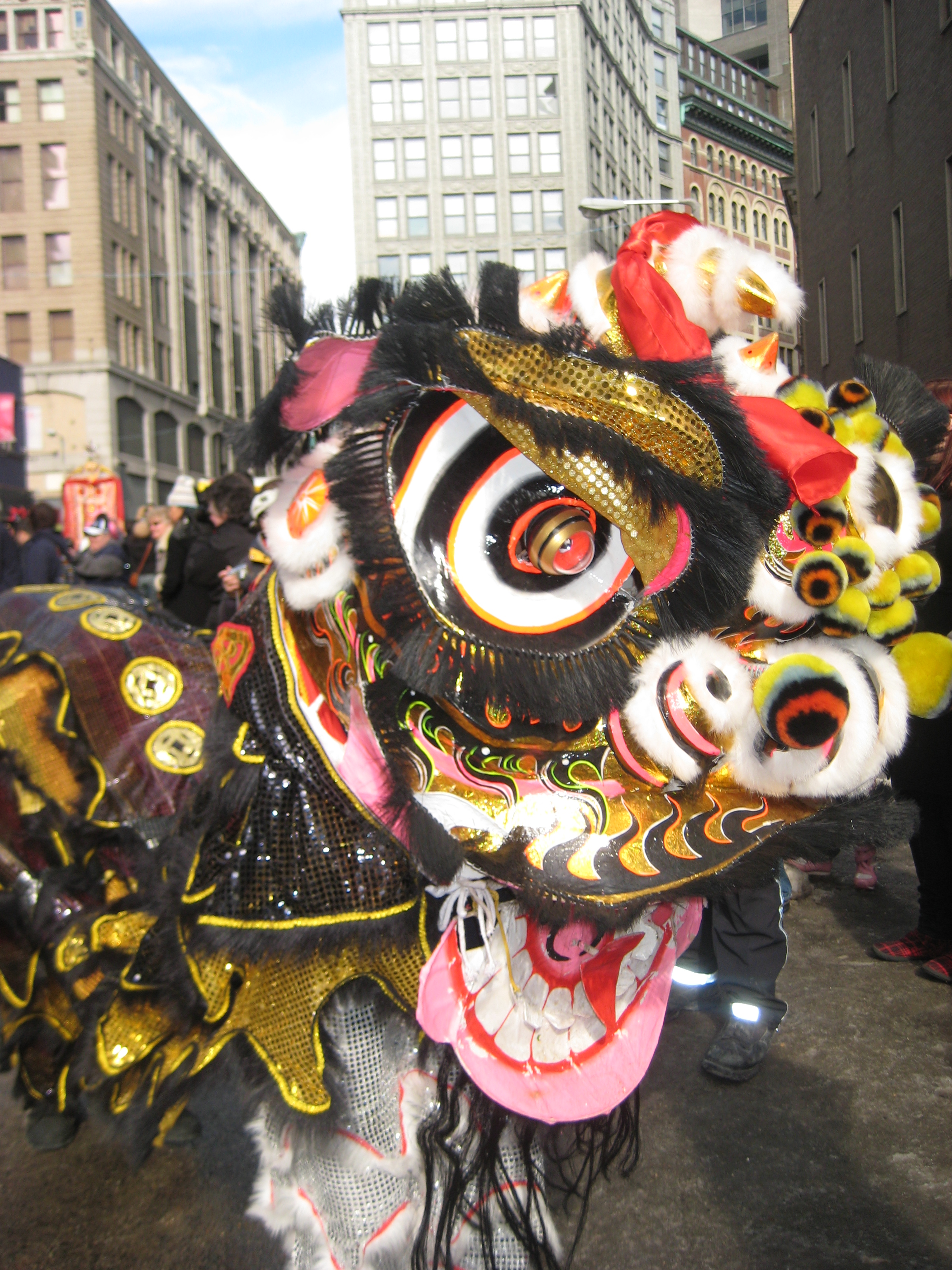
Lion and Dragon Dances: During the Spring Festival, lion and dragon dance performances are held throughout China. The dragon symbolizes power and good fortune, while the lion is regarded as an auspicious beast that can驱邪 (ward off evil). Lion dances are divided into "Southern Lion" (Cantonese lion) and "Northern Lion," each with distinct styles.
Lantern Festival (元宵节, Yuánxiāo Jié, 15th day of the first lunar month): The final day of the Spring Festival celebration, when people admire lanterns, eat yuanxiao (sweet glutinous rice balls), and solve lantern riddles. The Lantern Festival marks the圆满 (complete and圆满) conclusion of the Spring Festival festivities.
The Chinese Zodiac
The Spring Festival is intimately connected with the twelve zodiac animals (鼠 Rat, 牛 Ox, 虎 Tiger, 兔 Rabbit, 龙 Dragon, 蛇 Snake, 马 Horse, 羊 Goat, 猴 Monkey, 鸡 Rooster, 狗 Dog, 猪 Pig). Each year is associated with one animal, cycling through all twelve over a twelve-year period. The zodiac is not only used to designate years but is also believed to influence a person's character and destiny.
Recent Spring Festival dates and zodiac signs:
- February 10, 2024 — Year of the Wood Dragon (甲辰年)
- January 29, 2025 — Year of the Wood Snake (乙巳年)
- February 17, 2026 — Year of the Fire Horse (丙午年)
- February 6, 2027 — Year of the Fire Goat (丁未年)
Modern Spring Festival
With the passage of time, Spring Festival celebrations have continued to evolve:
Chunyun (春运): The period surrounding the Spring Festival witnesses the world's largest annual human migration. Hundreds of millions of people who work, study, and live away from their hometowns travel back to reunite with their families. During Chunyun, China's railways, highways, and airlines transport over 3 billion passenger trips.
CCTV Spring Festival Gala (春晚, Chunwan): First broadcast in 1983, the CCTV Spring Festival Gala has become a New Year's Eve tradition. Each year, over 1 billion viewers tune in, making it one of the most-watched television programs in the world.
Digital Red Envelopes: In recent years, sending red envelopes through WeChat and Alipay has become a new Spring Festival tradition, especially popular among younger generations.
Travel for the New Year: An increasing number of Chinese families now choose to travel during the Spring Festival, gradually changing the tradition of "staying home for the New Year."
Global Influence
The Spring Festival is celebrated not only in China but in countries and regions with significant Chinese communities worldwide. Singapore, Malaysia, Indonesia, the Philippines, Thailand, Brunei, South Korea, and Vietnam all recognize the Spring Festival as an official public holiday. In major international cities such as New York, London, Paris, and Sydney, grand Spring Festival parades and cultural events are held annually.
In 2023, the 78th United Nations General Assembly passed a resolution designating the Lunar New Year (Spring Festival) as an official UN holiday — a significant milestone in the festival's global recognition.
As a core symbol of Chinese culture, the Spring Festival is increasingly recognized and respected worldwide. The spirit of reunion, harmony, and renewal that it embodies transcends cultural boundaries and carries universal resonance.
References
- Wikipedia - Chinese New Year
- UNESCO - Spring Festival (Intangible Cultural Heritage, 2024)
- Baidu Baike - 春节
- Chinese Folklore Network - Spring Festival Customs
- UN General Assembly Resolution on Lunar New Year (2023)
Stills & Gallery
Comments (0)