Papers by Jelena Jovanović

In the past years, means of acquisition of 3D information became all present - the requirements t... more In the past years, means of acquisition of 3D information became all present - the requirements to successfully create an accurately<br> reconstructed copy of an object in 3D dramatically plummeted and made the process broadly available to both professionals and enthusiasts alike. The IBM (Image Based Modelling) on it's basic levels required only a camera and some overcast sky or studio light, to have your site, your trench or a newly uncovered artifact, preserved as accurately scaled digital copy, for as long as the storage units would hold the data. The more important question has been treated as of late - what to do with created models, and what value do they add to the research work, if any?<br> Project "People of Lepenski Vir: protocols for digitalization of bioarchaeological heritage" used number of techniques to capture and store 3D data of the osteoarchaeological record from Danubian gorge, dated to Mesolithic and Neolithic period. Laboratory for Bi...

People of Lepenski Vir: first results of developing gudielines for digitalization of osteoarchaeological record
The success in adoption and overall enthusiasm of the archaeologist with the process of 3D scanni... more The success in adoption and overall enthusiasm of the archaeologist with the process of 3D scanning of artefacts and contexts has been on the rise in the past years. This could be easily explained: the requirements for doing a quality 3D information capture plummeted with the appearance of the novel and general - public based approach to data acquisition. The IBM (Image Based Modelling) on it's basic levels required only a camera and some overcast sky or studio light, to have your site, your trench or a newly uncovered artifact, preserved as accurately scaled digital copy, for as long as the storage units would hold the data. There is a flaw, however, present in the fact that this technology has been majorly promoted for use in documenting the very special, beautiful and exquisite of the archaeological record – which is only a small portion of its extent in totality. The mundane and unattractive artefacts and remains of past populations remain untreated, as the process is biasin...
Godišnjak CBI, 2021
The Selimiye is a mosque complex located in the old city's center of Doboj-the Upper Town (čaršij... more The Selimiye is a mosque complex located in the old city's center of Doboj-the Upper Town (čaršija). We present the results of the first interdisciplinary analysis of archaeological and bioarchaeological finds from its excavations in 1994 attempting to get the first insights into living conditions of the Ottoman period Bosnia. Archaeological assemblage dated to the 16 th-19 th century is composed of pottery, clay tobacco pipes, small everyday metal objects, functional parts of costume, and glass fragments. Animal remains were probably associated with ritual context of food consumption during the Eid al-Adha feasts. Burial of a child inside the mosque's harem indicates its belonging to an upper class Muslim family of Doboj.
Documenta Praehistorica, 2021
The paper provides a detailed overview of new radiocarbon dates, stable isotopes, and anthropolog... more The paper provides a detailed overview of new radiocarbon dates, stable isotopes, and anthropological information obtained on prehistoric human remains (mostly Neolithic) from the Balkans and southwestern Carpathian Basin. It covers a large chronological sequence from the Mesolithic to the Bronze Age (9746–2628 cal BC), which encompasses different archaeological cultures. In total 76 radiocarbon dates deriving from 27 sites were obtained, coupled with new isotopic (n=34) and anthropological (n=33) data. The results filled the gaps in some of the older interpretations, but also produced new insights regarding chronology, health, and diet, leaving a strong baseline for all future research into Neolithic lifestyles.
Microbotanical evidence for the spread of cereal use during the Mesolithic-Neolithic transition in the Southeastern Europe (Danube Gorges): Data from dental calculus analysis
Journal of Archaeological Science
Research increasingly suggests that natural and social environments shaped the Neolithic expansio... more Research increasingly suggests that natural and social environments shaped the Neolithic expansion of the farming niche into Europe. The Danube Gorges, on account of its position between the Mediterranean and more temperate regions and the presence of archaeological sites with continuous Mesolithic and Neolithic layers of occupation associated with vast burial grounds is ideal for studying the modality of Neolithization. Previous dietary stable isotope (carbon, nitrogen, and sulphur) studies in the Central Balkan area indicate that many Neolithic humans remained reliant on foraged aquatic resources in the Gorges. Until now, there is no unambiguous evidence of cereal consumption in this region. The possibility that the rich aquatic resources of the Danube river habitats within Central Balkans influenced diet and thus delayed uptake of Neolithic cultigens is unanswered. The extensive skeletal record from sites in the Danube Gorges (Central Balkans) with its long temporal sequence, provides the opportunity to reconstruct plant use during Mesolithic and the Neolithic. To assess when cereals and possibly cultivated plants spread to the region, we analysed the microbotanical remains (starch grains and phytoliths) entrapped in the dental calculus of 81 individuals dating from 9100 to 5500 cal BC, recovered from five sites in the Danube Gorges. This study marks the largest study of dental calculus from this period so far conducted. Added to this, we present new radiocarbon dates (n = 17), bone collagen stable isotope data (δ13C and δ15N; n = 5) and data on caries frequency. This dietary study identifies that the growing of crops commenced in the Early Neolithic circa 6000 cal BC and was brought by farming migrants of north-western Anatolian ancestry into the Danube Gorges. Despite bringing a Neolithic agro-pastoral subsistence practices and cultural novelties in the Gorges, these migrants and their descendants adopted some of the local dietary and cultural traditions, suggesting a mosaic pattern of Neolithization. The resulting data provides a better understanding of the tempo and spread of cereal agriculture practices and the role of cereals in the diet of Danube Gorges inhabitants.

Quaternary International, Feb 10, 2021
With the exception of the well known Mesolithic sites in the Danube Gorges (or the Iron Gates), t... more With the exception of the well known Mesolithic sites in the Danube Gorges (or the Iron Gates), the wider areas of the Central Balkans and southern fringes of the Great Pannonian Plain still represent a terra incognita when it comes to the presence of Mesolithic communities. The absence of Mesolithic sites in the region was associated with environmental changes in the Early Holocene, presumed low human population densities, limited possibilities of detection, or the lack of adequate research. However, valuable insights into the obscure regional Mesolithic can be gained not only by new archaeological excavations, but also by revisiting and reanalysing of existing archaeological collections. Particularly informative in this respect are the Early Neolithic sites, indicative of the extensive spread of farming communities from c. 6200 cal BC. Within the ERC Project BIRTH, a large sample of human and animal remains from these sites was dated, falling in the (expected) range between c. 6200‒5300 cal BC. However, one human and several animal bone samples from the sites of Magareći mlin, Gospođinci-Nove zemlje and Grabovac-Đurića vinogradi were dated to the 8th millennium cal BC, providing the first radiocarbon evidence of Early Holocene sequences in the territory of Serbia other than the Danube Gorges. In this paper, we present the new radiocarbon dates, discuss the contextual provenance of dated bones, and explore the implications of these results for a better understanding of the problem of the “missing” and “invisible” Mesolithic in the region.
Microbotanical evidence for the spread of cereal use during the Mesolithic-Neolithic transition in the Southeastern Europe (Danube Gorges): Data from dental calculus analysis
Journal of Archaeological Science, 2021
Research increasingly suggests that natural and social environments shaped the Neolithic expansio... more Research increasingly suggests that natural and social environments shaped the Neolithic expansion of the farming niche into Europe. The Danube Gorges, on account of its position between the Mediterranean and more temperate regions and the presence of archaeological sites with continuous Mesolithic and Neolithic layers of occupation associated with vast burial grounds is ideal for studying the modality of Neolithization. Previous dietary stable isotope (carbon, nitrogen, and sulphur) studies in the Central Balkan area indicate that many Neolithic humans remained reliant on foraged aquatic resources in the Gorges. Until now, there is no unambiguous evidence of cereal consumption in this region. The possibility that the rich aquatic resources of the Danube river habitats within Central Balkans influenced diet and thus delayed uptake of Neolithic cultigens is unanswered. The extensive skeletal record from sites in the Danube Gorges (Central Balkans) with its long temporal sequence, provides the opportunity to reconstruct plant use during Mesolithic and the Neolithic. To assess when cereals and possibly cultivated plants spread to the region, we analysed the microbotanical remains (starch grains and phytoliths) entrapped in the dental calculus of 81 individuals dating from 9100 to 5500 cal BC, recovered from five sites in the Danube Gorges. This study marks the largest study of dental calculus from this period so far conducted. Added to this, we present new radiocarbon dates (n = 17), bone collagen stable isotope data (δ13C and δ15N; n = 5) and data on caries frequency. This dietary study identifies that the growing of crops commenced in the Early Neolithic circa 6000 cal BC and was brought by farming migrants of north-western Anatolian ancestry into the Danube Gorges. Despite bringing a Neolithic agro-pastoral subsistence practices and cultural novelties in the Gorges, these migrants and their descendants adopted some of the local dietary and cultural traditions, suggesting a mosaic pattern of Neolithization. The resulting data provides a better understanding of the tempo and spread of cereal agriculture practices and the role of cereals in the diet of Danube Gorges inhabitants.
Making Spaces into Places. The North Aegean, the Balkans and Western Anatolia in the Neolithic, 2020
PLOS ONE, 2020
The application of biomolecular techniques to archaeological materials from the Balkans is provid... more The application of biomolecular techniques to archaeological materials from the Balkans is providing valuable new information on the prehistory of the region. This is especially relevant for the study of the neolithisation process in SE Europe, which gradually affected the rest of the continent. Here, to answer questions regarding diet and subsistence practices in early farming societies in the central Balkans, we combine organic residue analyses of archaeological pottery, taxonomic and isotopic study of domestic animal remains and biomolecular analyses of human dental calculus. The results from the analyses of the lipid residues from pottery suggest that milk was processed in ceramic vessels. Dairy products were shown to be part of the subsistence strategies of the earliest Neolithic communities in the region but were of varying importance in different areas of the Balkan. Conversely, milk proteins were not detected within the dental calculus. The molecular and isotopic identification of meat, dairy, plants and beeswax in the pottery lipids also provided insights into the diversity of diet in these early Neolithic communities, mainly based on terrestrial resources. We also present the first compound-specific radiocarbon dates for the region, obtained directly from absorbed organic residues extracted from pottery, identified as dairy lipids.
PLOS ONE, Aug 20, 2020
The application of biomolecular techniques to archaeological materials from the Balkans is provid... more The application of biomolecular techniques to archaeological materials from the Balkans is providing valuable new information on the prehistory of the region. This is especially relevant for the study of the neolithisation process in SE Europe, which gradually affected the rest of the continent. Here, to answer questions regarding diet and subsistence practices in early farming societies in the central Balkans, we combine organic residue analyses of archaeological pottery, taxonomic and isotopic study of domestic animal remains and biomolecular analyses of human dental calculus. The results from the analyses of the lipid residues from pottery suggest that milk was processed in ceramic vessels. Dairy products were shown to be part of the subsistence strategies of the earliest Neolithic communities in the region but were of varying importance in different areas of the Balkan. Conversely, milk proteins were not detected within the dental calculus. The molecular and isotopic identification of meat, dairy, plants and beeswax in the pottery lipids also provided insights into the diversity of diet in these early Neolithic communities, mainly based on terrestrial resources. We also present the first compound-specific radiocarbon dates for the region, obtained directly from absorbed organic residues extracted from pottery, identified as dairy lipids.
Гласник Српског археолошког друштва 35, 2019
Aнтрoпoлoшкa aнaлизa 50 људских лoбaњa сa лoкaлитeтa Винчa – Бeлo брдo (11–15. вeк) пoкaзaлa je и... more Aнтрoпoлoшкa aнaлизa 50 људских лoбaњa сa лoкaлитeтa Винчa – Бeлo брдo (11–15. вeк) пoкaзaлa je изузeтнo лoш здрaвствeни стaтус индивидуa сaхрaњeних нa oвoj нeкрoпoли. У рaду су прикaзaни рeзултaти aнaлизe здрaвствeнoг стaтусa и нaчинa исхрaнe 31 жeнe, 18 мушкaрaцa и jeднe индивидуe нeутврђeнoг пoлa. Рeзултaти пoкaзуjу висoкe стoпe присуствa cribrae orbitaliae (кoд 85,10% индивдуa), пoрoзнe хипeрoстoзe (61,22%), хипoплaзиje зубнe глeђи (кoд 70% индивидуa oднoснo нa 22,12% зубa), кaриjeсa (кoд 86% индивидуa, oднoснo нa 23,10% зубa), кao и зaживoтнo изгубљeних зубa (кoд 88% индивидуa). Taкoђe, пoкaзaнo je дa знaчajнo лoшиjи здрaвствeни стaтус издвaja индивидуе сахрањене на овом локалитету oд oстaлих истoврeмeних пoпулaциja из рeгиoнa.

PLOS ONE, Dec 19, 2019
Around 8000 years ago, throughout the Neolithic world a new type of artefact appeared, small spoo... more Around 8000 years ago, throughout the Neolithic world a new type of artefact appeared, small spoons masterly made from cattle bone, usually interpreted as tools, due to their intensive traces of use. Contrary to those interpretations, the small dimensions of spoons and presence of intensive traces of use led us to the assumption that they were used for feeding babies. In order to test that assumption we compared 2230 marks on three spoons from the Neolithic site of Grad-Starčevo in Serbia (5800−5450 cal BC) with 3151 primary teeth marks produced experimentally. This study has shown that some of the marks on spoons were made by primary teeth, which indicate their usage in feeding babies. The production of a new type of artefact to feed babies is probably related to the appearance of a new type of weaning food, and the abundance of spoons indicates that new baby gruels became an important innovation in prehistoric baby-care.
Bulletins et mémoires de la Société d’anthropologie de Paris (BMSAP) 31, 2019
The current world population of approximately seven billion people shows that despite the complex... more The current world population of approximately seven billion people shows that despite the complexities of human birthing, the human species is thriving. Changes in human pelvic morphology resulting from bipedalism and encephalisation, often described as the “obstetric dilemma”, have made the birthing process extremely difficult and risky for both mothers and neonates. The major Mesolithic- Neolithic shift in lifestyle could have had important obstetric consequences. It is often hypothesised that the shift to an agricultural diet, with a lower protein content and higher glycaemic loading than the hunter-gatherer diet, could have led to a decrease in maternal height and an increase in neonatal birth weight, brain size and foetal-pelvic strain, which may have exacerbated the obstetric dilemma. The Mesolithic-Neolithic osteological collection from the Danube Gorges (7400-5500 cal BC, Balkans) provides material (2 pelvises and a neonate skull) to test this hypothesis by virtually reconstructing the fossil dyads and their foetal-pelvic relationship.We compared these dyads with a large obstetrical sample of mother-child dyads with a known birthing history, conducting a lineardiscriminant analysis in order to predict the most probable delivery outcomes for the prehistoric dyads. The results suggest that delivery was dystocic for the Mesolithic motherchild dyad and eutocic for the Neolithic mother-child dyad; obstetrically, the former is notably more efficient. However, due to the small sample size, further research is required with a larger series in order to determine whether the development of obstetrically efficient pelvic bones in the Neolithic was widespread and whether it had an impact on the birthing process and thus potentially contributed to the increasing size of the population.
Гласник Српског археолошког друштва 33 , 2017
Током седамдесетих година XX века на локалитету Тополе код Бача откривено је старчевачко насеље. ... more Током седамдесетих година XX века на локалитету Тополе код Бача откривено је старчевачко насеље. Пронађено је неколико јама, подова могућих стамбених структура, као и три скелетне сахране. Скелети 1 и 2 пронађени су испод поднице објекта, на истој висини, у згрченом положају, леђима окренути један од
другог и с главама на супротним странама. Скелет 3 је лежао на десном боку у полузгрченом положају, већим делом такође испод поднице. На основу покретног археолошког материјала локалитет се датује у касну фазу старчевачке културе. Међутим, радиокарбонски датуми показали су да је разлика између скелета 1 и 2 готово 1000 година, с обзиром на то да је један датован у мезолит а други у рани неолит. Циљ овог рада је контекстуална и антрополошка анализа три скелета. Резултати су показали да припадају ранонеолитском периоду и да су скелети 1 и 2 највероватније млађи од скелета 3. Такође, контекстуална анализа је показала да је скелет 3 укопан пре изградње поднице, а да су скелети 1 и 2 вероватно сахрањени након тога, приликом њеног прокопавања.
Documenta Praehistorica 46, 2019
The Neolithic way of life was accompanied by an increase in various forms of physiological stress... more The Neolithic way of life was accompanied by an increase in various forms of physiological stress (e.g. disease, malnutrition). Here we use the method of tooth cementum annulation (TCA) analysis in order to detect physiological stress that is probably related to calcium metabolism. The TCA method is applied to a sample of teeth from three Mesolithic and five Neolithic individuals from the Central Balkans. The average number of physiological stress episodes is higher in the Neolithic group – but the statistical significance of this result cannot be evaluated due to the small sample size, therefore these results should be taken as preliminary.
Archaeological and Anthropological Sciences, 2019
This paper presents new results of stable isotope analysis made on human and animal bones from Me... more This paper presents new results of stable isotope analysis made on human and animal bones from Mesolithic–Neolithic sites (9500–5200 cal BC) in the Central Balkans. It reconstructs dietary practices in
the Mesolithic and documents the development of new subsistence strategies and regional differences during the process of Neolithisation.We achieved these insights into dietary changes by analysing bone collagen δ13C (n = 75), δ15N (n = 75) and δ34S (n = 96) and comparing stable isotope data of Mesolithic–Neolithic communities from the Danube Gorges with the data of the first farmers who lived outside of the Gorges in the Central Balkans. The Bayesian model was employed to evaluate the relative importance of different animal proteins in human diet. Results bring a new overview and highlight important chronological and regional differences. They suggest that Late Mesolithic humans included more anadromous and potamodromous fish in their diet, which is consistent with archaeozoological evidence. On the other hand, differing from archaeozoological data, the model also points to a greater reliance on terrestrial carnivores (dogs) in the Late Mesolithic diet, a pattern that can be also explained by other dietary and environmental factors. In the Transitional and Neolithic period in the Gorges, some individuals have consumed fewer aquatic resources and favoured more terrestrial products. However, one site in the Gorges represents an exception—Ajmana, where we have the earliest farmers in this region since their subsistence economy wasmainly oriented toward terrestrial products. Furthermore, results shows that Neolithic
individuals inhumated at sites outside of the Danube Gorges in the Balkans had dietary patterns that vary in both terrestrial and freshwater resources, indicating that early farming communities had a diversified diet linked to a local natural environment. Comparative data finally indicates regional differentiations associated with locally available resources but also related to the traditions of prehistoric communities and to specific economic innovations.
Last hunters–first farmers: new insight into subsistence strategies in the Central Balkans through multi-isotopic analysis. Archaeological and Anthropological Sciences.
This paper presents new results of stable isotope analysis made on human and animal bones from Me... more This paper presents new results of stable isotope analysis made on human and animal bones from Mesolithic–Neolithic sites (9500–5200 cal BC) in the Central Balkans. It reconstructs dietary practices in the Mesolithic and documents the development of new subsistence strategies and regional differences during the process of Neolithisation. We achieved these insights into dietary changes by analysing bone collagen δ13C (n = 75), δ15N (n = 75) and δ34S (n = 96) and comparing stable isotope data of Mesolithic–Neolithic communities from the Danube Gorges with the data of the first farmers who lived outside of the Gorges in the Central Balkans. The Bayesian model was employed to evaluate the relative importance of different animal proteins in human diet. Results bring a new overview and highlight important chronological and regional differences. They suggest that Late Mesolithic humans included more anadromous and potamodromous fish in their diet, which is consistent with archaeozoological evidence. On the other hand, differing from archaeozoological data, the model also points to a greater reliance on terrestrial carnivores (dogs) in the Late Mesolithic diet, a pattern that can be also explained by other dietary and environmental factors. In the Transitional and Neolithic period in the Gorges, some individuals have consumed fewer aquatic resources and favoured more terrestrial products. However, one site in the Gorges represents an exception—Ajmana, where we have the earliest farmers in this region since their subsistence economy was mainly oriented toward terrestrial products. Furthermore, results shows that Neolithic individuals inhumated at sites outside of the Danube Gorges in the Balkans had dietary patterns that vary in both terrestrial and freshwater resources, indicating that early farming communities had a diversified diet linked to a local natural environment. Comparative data finally indicates regional differentiations associated with locally available resources but also related to the traditions of prehistoric communities and to specific economic innovations.
Arhaika, 2017
Pripitomljavanje životinja i biljaka, i promene koje su time usledile, imaju ključno mesto u arhe... more Pripitomljavanje životinja i biljaka, i promene koje su time usledile, imaju ključno mesto u arheološkim narativima o procesima neolitizacije. Budući da se neolitske zajednice po pravilu percipiraju kao " stočarsko-zemljoradničke " , aktivnosti koje su uključivale lov na divlje životinje u ovim kontekstima često su interpretirane kao sporadične, usputne i sezonske, pa čak i kao anomalije. U ovom radu, ukazujemo da su ljudske strategije opstanka i interakcije sa životinjama u kontekstu ranog neolita Vojvodine i centralnog Balkana bile mnogo raznovrsnije i (mikro) regionalno i kulturno specifične. U žiži rada je nalazište Golokut-Vizić, koje se izdvaja u odnosu na druga starčevačka naselja kako po svom specifičnom položaju u okviru šumovitog i brdovitog pejzaža Fruške gore, tako i po visokom udelu ostataka divljih životinja u faunističkom uzorku. Inkorporirajući prethodno publikovane i nove rezultate arheozooloških analiza (na prvom mestu taksonomski sastav faune i studije sezonalnosti), rezultate analiza stabilnih izotopa i arheološke podatke o obrascima naseljavanja (studije arhitektonskih objekata i artefakata), razmatramo ekološki, ekonomski i društveni kontekst eksploatacije životinja na Golokutu, i problematizujemo dihotomiju
lov:stočarstvo u kontekstu ranog neolita na teritoriji Vojvodine i centralnog Balkana.
In: "From Hunter-Gatherers to Farmers: Human Adaptations at the End of the Pleistocene and the first Part of the Holocene", 2017
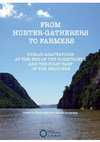
There are now several different plant assemblages originating from the Late Mesolithic, Mesolithi... more There are now several different plant assemblages originating from the Late Mesolithic, Mesolithic-Neolithic (transitional) and Early(/Middle) Neolithic layers of the sites in the Iron Gates area (c. 7400-5500 BC – Borić 2011). To a varied, but also very limited extent, they can be used to glean the availability of plant food sources and the possible components of plant-based human diets over these periods in the region. The botanical archives are, however, beset by problems such as the small size, unclear archaeological and chronological provenance, complex taphonomy and analytical-methodological issues. This paper reviews the so far available evidence and highlights the associated problems delimiting the potential for integrating the datasets and the reconstruction of plant-based diets of the Iron Gates Mesolithic and Neolithic communities.


Uploads
Papers by Jelena Jovanović
другог и с главама на супротним странама. Скелет 3 је лежао на десном боку у полузгрченом положају, већим делом такође испод поднице. На основу покретног археолошког материјала локалитет се датује у касну фазу старчевачке културе. Међутим, радиокарбонски датуми показали су да је разлика између скелета 1 и 2 готово 1000 година, с обзиром на то да је један датован у мезолит а други у рани неолит. Циљ овог рада је контекстуална и антрополошка анализа три скелета. Резултати су показали да припадају ранонеолитском периоду и да су скелети 1 и 2 највероватније млађи од скелета 3. Такође, контекстуална анализа је показала да је скелет 3 укопан пре изградње поднице, а да су скелети 1 и 2 вероватно сахрањени након тога, приликом њеног прокопавања.
the Mesolithic and documents the development of new subsistence strategies and regional differences during the process of Neolithisation.We achieved these insights into dietary changes by analysing bone collagen δ13C (n = 75), δ15N (n = 75) and δ34S (n = 96) and comparing stable isotope data of Mesolithic–Neolithic communities from the Danube Gorges with the data of the first farmers who lived outside of the Gorges in the Central Balkans. The Bayesian model was employed to evaluate the relative importance of different animal proteins in human diet. Results bring a new overview and highlight important chronological and regional differences. They suggest that Late Mesolithic humans included more anadromous and potamodromous fish in their diet, which is consistent with archaeozoological evidence. On the other hand, differing from archaeozoological data, the model also points to a greater reliance on terrestrial carnivores (dogs) in the Late Mesolithic diet, a pattern that can be also explained by other dietary and environmental factors. In the Transitional and Neolithic period in the Gorges, some individuals have consumed fewer aquatic resources and favoured more terrestrial products. However, one site in the Gorges represents an exception—Ajmana, where we have the earliest farmers in this region since their subsistence economy wasmainly oriented toward terrestrial products. Furthermore, results shows that Neolithic
individuals inhumated at sites outside of the Danube Gorges in the Balkans had dietary patterns that vary in both terrestrial and freshwater resources, indicating that early farming communities had a diversified diet linked to a local natural environment. Comparative data finally indicates regional differentiations associated with locally available resources but also related to the traditions of prehistoric communities and to specific economic innovations.
lov:stočarstvo u kontekstu ranog neolita na teritoriji Vojvodine i centralnog Balkana.