Books by Joanna Merwood-Salisbury
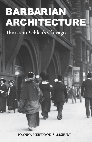
A richly visual architectural history and theory of modernity that reexamines Thorstein Veblen's ... more A richly visual architectural history and theory of modernity that reexamines Thorstein Veblen's classic text The Theory of the Leisure Class through the lens of Chicago in the 1890s.
An important critic of modern culture, American economist Thorstein Veblen is best known for the concept of “conspicuous consumption,” the ostentatious and wasteful display of goods in the service of social status—a term he coined in his 1899 classic The Theory of the Leisure Class. In the field of architectural history, scholars have employed Veblen in support of a wide range of arguments about modern architecture, but never has he attracted a comprehensive and critical treatment from the viewpoint of architectural history. In Barbarian Architecture, Joanna Merwood-Salisbury corrects this omission by reexamining Veblen's famous book as an original theory of modernity and situating it in a particular place and time—Chicago in the 1890s.
Merwood-Salisbury takes her title from Veblen's use of the term “barbarian,” which refers to his belief that Gilded Age American society was a last remnant of a barbarian state of greed and acquisitiveness. Taking an interdisciplinary approach that draws on biography, intellectual history, and historiography, she explores Veblen's position in relation to debates about industrial reform and aesthetics in Chicago during the period 1890–1906. Bolstered by a strong visual narrative made possible by several of Chicago's historic photographic collections, Barbarian Architecture makes a compelling and original argument for the influence of Veblen's home city on his work and ideas.
ISBN: 9780262547413
Design for the Crowd: Patriotism and Protest in Union Square, 2019
"Design for the Crowd is an exceptional urban history, a model for scholars of public space." - J... more "Design for the Crowd is an exceptional urban history, a model for scholars of public space." - Journal of Urban History
"Merwood-Salisbury provides a compelling narrative that combines urban planning history with the socio-political movements that have animated Union Square, making it a must-read for anyone interested in the intersections of public space and democracy." - Journal of American History
Design for the Crowd, a history of Union Square in New York City, illustrates ongoing debates over the proper organization of urban space—and competing images of the public that uses it. In this sweeping history of an iconic urban square, Merwood-Salisbury gives us a review of American political activism, philosophies of urban design, and the many ways in which a seemingly stable landmark can change through public engagement and design.
Chicago 1890: The Skyscraper and the Modern City, 2009
Chicago’s first skyscrapers are famous for projecting the city’s modernity around the world. But ... more Chicago’s first skyscrapers are famous for projecting the city’s modernity around the world. But what did they mean at home, to the Chicagoans who designed and built them, worked inside their walls, and gazed up at their façades? Answering this multifaceted question, Chicago 1890 reveals that early skyscrapers offered hotly debated solutions to the city’s toughest problems and, in the process, fostered an urban culture that spread across the country. An ambitious reinterpretation of the works of Louis Sullivan, Daniel Burnham, and John Wellborn Root, this volume uses their towering achievements as a lens through which to view late nineteenth-century urban history. "This probing and original study of Chicago architecture during the boom years, for the first time joins a critical approach to the architecture, its theory and practice, and the social and political context of its construction and reception. A beautifully nuanced account that succeeds in enhancing our appreciation of Sullivan, Burnham and their colleagues as intellectuals and pragmatists in architecture in a moment of raw capitalism.” Anthony Vidler
After Taste:Expanded Practice in Interior Design, 2012
AfterTaste: Expanded Practices in Interior Design is an edited volume comprising texts, interview... more AfterTaste: Expanded Practices in Interior Design is an edited volume comprising texts, interviews and portfolios that collectively document new theories and emerging critical practices in the field of interior design. The material is informed by, but not limited to, the annual AfterTaste symposia hosted by Parsons The New School of Design. The central argument of the book is that the field of interior design is inadequately served by its historical reliance on taste-making and taste-makers, and, more recently from a set of theoretical concerns derived from architecture; the volume seeks to set an expanded frame by advancing new voices and perspectives in both the theory and practice of interior design, considered as an independent discipline.
Book Chapters and Papers by Joanna Merwood-Salisbury
Architectural Theory Review, 2025
[Co-authored with José R. Núñez Collado] This paper examines how U.S. imperialism shaped the arch... more [Co-authored with José R. Núñez Collado] This paper examines how U.S. imperialism shaped the architectural landscape of the Dominican Republic in the early-twentieth century, culminating in the construction of the National Palace in 1947 under the authoritarian rule of Rafael Trujillo. Rather than viewing the Palace solely as a symbol of post-occupation sovereignty, we analyse it as an expression of un neoclásico propio—a Dominican version of neoclassicism. Built on the site of the plantation-style Customs Receiver’s residence that embodied the economic dominance of the US during the 1916-24 occupation, the Palace asserts a Dominican identity grounded in colonial heritage. We argue that this hybrid architectural language emerged through the very legacies it sought to overcome. Tracing the connections between colonial buildings, imperial infrastructure, and monumental nationalism, the paper reveals how Trujillo’s regime manipulated architecture to erase signs of US imperial control while reinforcing its own authoritarian ideology under the guise of cultural renaissance and national pride.
EPE: Nature and Space, 2025
[Primary author: José R. Núñez Collado] This article examines a risk-reduction intervention in an... more [Primary author: José R. Núñez Collado] This article examines a risk-reduction intervention in an informal settlement in the Global South through the lens of historical legacies and discourses. Specifically, we investigate a large upgrading project in Domingo Savio, a flood-prone barrio marginado (marginal informal settlement) in Santo Domingo, Dominican Republic. We propose 'the politics of spatial memory' as a framework for understanding how historical legacies and narratives shape contemporary climate adaptation efforts. The article examines three interrelated dimensions. First, it establishes how past sociopolitical dynamics have contributed to the settlement's enduring vulnerability. Second, it identifies parallels between past and present urban renewal efforts, revealing persistent patterns of state-led spatial marginalization. Lastly, the article explores how historical narratives are strategically employed by key stakeholders in the project. While the state leverages these histories to justify the intervention as a form of 'reparation'-thereby garnering political support-non-governmental organizations and barrio residents mobilize the same temporal discourses to challenge statedriven narratives, foregrounding recurrent cycles of displacement and dispossession. Our analysis underscores that the politics of memory is both social and spatial, shaping responses to environmental risks.
Journal of Design History, 2025
Recent scholarship in the history of modern interior design has moved beyond the rhetoric of the ... more Recent scholarship in the history of modern interior design has moved beyond the rhetoric of the avant-garde to recognize the enduring importance of style as an expression of social identity and taste as a mediator between design and broader cultural trends. This shift highlights the complex interplay between aesthetic choices and socio-cultural dynamics. As a case study of this interplay, this paper employs a Veblenian perspective-based on the work of economist Thorstein Veblen, notably his 1899 book The Theory of the Leisure Class-to reexamine one of the most iconic examples of modern furniture: Frank Lloyd Wright's highbacked dining chair. Specifically, the paper explores the role of Wright's chair in the context of the formal dining room of one of Wright's largest Prairie-style houses, the Susan Lawrence Dana House in Springfield, Illinois, completed in 1903. Shifting focus from the production to the consumption of furniture, the paper investigates how Wright's dining chairs defined the relationship between what Veblen called the "leisure" and "laboring" classes within this domestic realm. Viewed in situ, Wright's iconic chair reveals a dichotomy deeply embedded within its design. While it was an advertisement for advanced industrial production, it also served as a luxury item created to fulfill the imperative of conspicuous consumption.
Journal of the Society of Architectural Historians, 2023
The American economist Thorstein Veblen’s The Theory of the Leisure Class (1899) has been used to... more The American economist Thorstein Veblen’s The Theory of the Leisure Class (1899) has been used to support and define concepts of architectural modernity for more than one hundred years. Best known for introducing the concept of “conspicuous consumption,” this influential book has been especially valuable for historians of the architecture of consumer culture. Yet curiously, Veblen’s own architectural examples have escaped scholarly attention. This article explores the link Veblen drew between Gothic Revival architecture and cultural barbarism. Inverting the concepts and terminology of race science, Veblen used the image of the Gothic Revival university to criticize the rhetoric of American exceptionalism. Seen through the lens of Veblen’s writing, Henry Ives Cobb’s design for the University of Chicago (1891–97), where Veblen taught for fourteen years, represents the transformation of leisure-class aesthetics under the logic of capitalism.
Urban History, 2021
[Primary author: José R. Núñez Collado] Santo Domingo in the Dominican Republic, the oldest conti... more [Primary author: José R. Núñez Collado] Santo Domingo in the Dominican Republic, the oldest continuously inhabited European settlement in what was later called the 'New World', was a centre of the Atlantic slave trade. While it has been called the 'cradle of blackness in the Americas', discussion of racial exclusion and marginalization is mostly absent in the city's architecture and urban history. This article investigates how architecture and urban design helped reinforce the colonizers' control over enslaved peoples. Specifically, we explore the Santa Bárbara neighbourhood, its church and the slave warehouse known as La Negreta. Drawing on historical maps and archival documents, we draw attention to how the spatial and material construction of Santa Bárbara constituted and maintained social and racial structures of oppression.
Valuing Architecture: Heritage and the Economics of Culture, 2020
In 2014 the Museum of Modern Art in New York demolished its next-door neighbor, the American Folk... more In 2014 the Museum of Modern Art in New York demolished its next-door neighbor, the American Folk Art Museum, in order to accommodate an expansion. Designed by architects Tod Williams and Billie Tsien, the award-winning Folk Art Museum was only thirteen years old. The demolition was highly controversial: prominent architects and critics implored MoMA to find a way to preserve Williams and Tsien’s building, arguing that the rules of obsolescence do not apply to cultural monuments in the same way they do to commercial buildings. Marshalling its influence, the art and architecture press created a narrative in which MoMA, with its corporate sensibility, insatiable desire for growth, and bland corporate aesthetic, had betrayed its mission to promote good architecture. This essay places these events within the longer history of architecture at MoMA as both the institution that established the canon of ‘modern architecture’ and as a built form that slowly expanded within a single New York City block. Tracing the history of architecture at MoMA, including its early curatorial agenda, its later attitude towards expansion, and its actions in demolishing the Folk Art Museum, allows us to reconsider millennial anxiety about museum architecture.
Published in the anthology, Valuing Architecture: Heritage and the Economics of Culture, Ashley Paine, Susan Holden and John Macarthur Eds (Amsterdam: Valiz, 2020) ISBN: 9789492095930
Fabrications: The Journal of the Society of Architectural Historians, Australia and New Zealand, 2020
In 1899 the American journalist Henry Demarest Lloyd was one of many social reformers who travell... more In 1899 the American journalist Henry Demarest Lloyd was one of many social reformers who travelled to New Zealand to witness the social programmes instituted by the Liberal government. For Lloyd and other Progressives, New Zealand represented a model industrial democracy. His book Newest England (1900) describes Public Works Department projects built under the direction of the Department’s Minister, Richard Seddon, including the Makōhine Railway Viaduct. This viaduct was significant as the first steel structure built using the cooperative labour system. This paper places Lloyd’s interpretation of the Makōhine Viaduct within the Progressive discourse about design and labour taking place in Chicago around 1900. Attention to Lloyd’s Newest England reveals a radical plan for the future of industrial society, one that prefigured the technocracy movement of the early twentieth century. In its dedication to the aims of settler colonialism, it also reveals the theme of racial evolution underpinning Progressive visions of the coming industrial democracy. Exploring that theme, the paper expands scholarship on the origins of modern American architecture in Chicago to include the historical context of colonisation and global immigration.
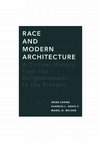
Race and Modern Architecture: A Critical History from the Enlightenment to the Present, 2020
Peter B. Wight’s monumental National Academy of Design building in New York City is one of most p... more Peter B. Wight’s monumental National Academy of Design building in New York City is one of most prominent examples of Gothic Revival architecture built in the United States during the nineteenth century. While the context of the building’s construction against the backdrop of the social and political upheaval of the Civil War has been acknowledged in architectural history, the centrality of that national crisis to its design has not been. This essay discusses the relationship between the adoption of the Gothic Revival style for the National Academy of Design and the broader aims of its patrons and its architect as members of the northern antislavery coalition. Without explicit reference to race, Wight, a disciple of Ruskin, relied on the symbolism of the Gothic Revival (both its aesthetic form and its explicit reference to craft production) to convey complementary ideals of creative and social freedom. As this essay explores, the building embodied a concept of “free labor” that had particular connotations in the context of mid-nineteenth-century America, one that helped shape ideas about the racial landscape of the nation after the war.
About Race and Modern Architecture
Although race—a concept of human difference that establishes hierarchies of power and domination—has played a critical role in the development of modern architectural discourse and practice since the Enlightenment, its influence on the discipline remains largely underexplored. This volume offers a welcome and long-awaited intervention for the field by shining a spotlight on constructions of race and their impact on architecture and theory in Europe and North America and across various global contexts since the eighteenth century. Challenging us to write race back into architectural history, contributors confront how racial thinking has intimately shaped some of the key concepts of modern architecture and culture over time, including freedom, revolution, character, national and indigenous style, progress, hybridity, climate, representation, and radicalism. By analyzing how architecture has intersected with histories of slavery, colonialism, and inequality—from eighteenth-century neoclassical governmental buildings to present-day housing projects for immigrants—Race and Modern Architecture challenges, complicates, and revises the standard association of modern architecture with a universal project of emancipation and progress.
https://upittpress.org/books/9780822946052/
ISBN 9780822946052
Oxford Bibliographies: Architecture, Planning and Preservation, 2020
An online entry in the Oxford Bibliographies series, this annotated bibliography discusses the Ch... more An online entry in the Oxford Bibliographies series, this annotated bibliography discusses the Chicago School of Architecture.
While contemporary scholars question the existence of a cohesive “Chicago School” of architecture, there is no doubt that by the mid-1890s Chicago came to be recognized nationally and internationally for the technological and aesthetic innovation evident in a number of commercial buildings erected in the downtown business area known as the Loop. These buildings serviced the rapid growth of a city founded earlier in the century as a major trading hub linking the East Coast and the American “West.” Principally office buildings, some were erected for particular companies while others were built as speculative ventures. These innovations were known first as the “commercial style,” then simply as “tall office buildings”; the term “skycraper” came into popular use around 1895. In order to find the correct expression for this unprecedented building type, local architects adapted historical styles including the neo-Gothic, the Romanesque, the Venetian, and the neoclassical. In their published writings, they positioned their work as the development of an indigenous American style particular to the region. By the 1920s, critics described this style as the product of an identifiable “Chicago School.” The idea of such a school played, and continues to play, a significant role in histories of modern architecture. For much of the 20th century, the term referred to a select group of commercial buildings erected between roughly 1883 and 1910. During that period, the Chicago School was positioned as precursor to the modern or International style, prefiguring the functionalism and “new objectivity” of the early-20th-century European avant-garde. Since the 1980s, scholars have dismantled the narrow and monolithic view of the subject, placing its key monuments back within the specific social and economic concerns of the late 19th century, introducing a wider range of projects and typologies for consideration, and including projects constructed up until about 1920. There is less emphasis on aesthetic commonality, and more on the diversity of built responses to the forces of industrialization, urbanization, and capitalism that shaped the American city. The texts listed here survey the Chicago School as it was defined during the 20th century as well as more recent scholarship that questions the canonical view.
https://www.oxfordbibliographies.com/view/document/obo-9780190922467/obo-9780190922467-0009.xml
Architectural Theory Review, 2020
This paper explores the role of architecture as a catalyst for housing policy through analysis of... more This paper explores the role of architecture as a catalyst for housing policy through analysis of the Tenement House Exhibition held in New York City in 1900. Organized by the progressive Charity Organization Society, this exhibition exposes the terms in which Americans addressed the problem of urban housing at the turn of the twentieth century. According to its organizers, a professionalized state apparatus, including a regulated rental market, would reform the sanitation problems endemic to the tenement typology while allowing it to continue as a profitable entity. This approach to housing reform reflects the “modern” liberal philosophy of the progressive movement and was intended to preserve the existing social and economic order. The paper explores the role of architecture in this reform movement, as both a model and a standard.
Prometheus, 2019
Brief commentary introducing the Illinois Institute of Technology's 2018 PhD Program Symposium, '... more Brief commentary introducing the Illinois Institute of Technology's 2018 PhD Program Symposium, 'Chicago Schools: Authors, Audiences and History.' Discusses the enduring appeal of the Chicago School of Architecture in popular culture and as a subject of academic research.
AA Files, 2017
Short and squat, Helmut Jahn’s State of Illinois Centre 1987 (now known as the James R. Thompson ... more Short and squat, Helmut Jahn’s State of Illinois Centre 1987 (now known as the James R. Thompson Center) was intended as a catalyst for the revival of the North Loop, the final component of Mayor Richard J. Daley’s plan to shore up the historic core of downtown Chicago. Though formally innovative, the State of Illinois Centre followed the modernist model created by Daley, in which public authorities commissioned iconic buildings from prominent Chicago architecture firms in order to generate urban renewal in the form of private development. Seeking a striking visual identity for the important commission, Jahn returned to the beaux-arts practice of form-making, creating a volume derived from the different programmatic elements and deformed by the various pressures on the square site, clothing it in the transparent curtain wall that had become the Chicago vernacular. Describing the building in the Inland Architect, he declared it ‘a new typology for an urban office building’ created from the synthesis of historical styles. Occupying a highly visible site, it was designed to renew the public profile of the state and its activities with an attractive (in all senses of the word) building. While Jahn’s career soared in the wake of its construction, the State of Illinois Centre is much less celebrated than other projects he completed around the same time, such as the United Airlines Terminal at O’Hare Airport (1983–87). This essay argues that, rather than being considered an agent of privatisation in a declining public sphere, Jahn’s building could equally well serve to counter generic claims about postmodern privatising urbanism.
Skyscraper Gothic: Medieval Style and Modernist Buildings , 2017
Book chapter in Kevin Murphy and Lisa Reilly Eds., Skyscraper
Gothic: Medieval Style and Modernis... more Book chapter in Kevin Murphy and Lisa Reilly Eds., Skyscraper
Gothic: Medieval Style and Modernist Buildings (University of Virginia Press, 2017). This essay traces the transformation of ideas of the Gothic in Chicago’s commercial architecture from 1871 to the turn of the twentieth-century, focusing in particular on the transformation of the Gothic from a morally correct style to a rational constructive principle, a transformation that enabled local architects to unleash the Gothic Revival from its anti-modern connotations and to embrace industrial society.

Deborah Schneiderman and Amy Campos eds., Interiors Beyond Architecture (Routledge, 2017), 2018
Inspired by the discourse of urban interiors, this essay explores the ways in which concepts of i... more Inspired by the discourse of urban interiors, this essay explores the ways in which concepts of interiority have structured the design of urban space from the mid-1960s until today. Beginning with two seemingly oppositional models - the urban living room and the urban surface – it introduces a series of contemporary examples in which concepts of interiority continue to contribute to the creative and innovative design of urban space.
About the Book
Published in Deborah Schneiderman and Amy Campos eds., Interiors Beyond Architecture (Routledge, 2018). Interiors Beyond Architecture proposes an expanded impact for interior design that transcends the inside of buildings, analysing significant interiors that engage space outside of the disciplinary boundaries of architecture. It presents contemporary case studies from a historically nuanced and theoretically informed perspective, presenting a series of often-radical propositions about the nature of the interior itself. Internationally renowned contributors from the UK, USA and New Zealand present ten typologically specific chapters including: Interiors Formed with Nature, Adaptively Reused Structures, Mobile Interiors, Inhabitable art, Interiors for Display and On Display, Film Sets, Infrastructural Interiors, Interiors for Extreme Environments, Interior Landscapes, and Exterior Interiors
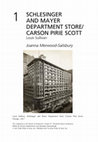
The Companions to the History of Architecture, Volume IV, Twentieth Century Architecture, Mar 28, 2017
In his 1892 essay, “Ornament in Architecture,” Louis Sullivan summarized the aesthetic implicatio... more In his 1892 essay, “Ornament in Architecture,” Louis Sullivan summarized the aesthetic implications of the steel frame: if the structure of a building and its exterior walls are now separate systems, what is the relationship between the two? The chapter features his suggestion that “it would be greatly for our aesthetic good if we would refrain entirely from the use of ornament for a period of years, in order that our thought might concentrate acutely upon the perfection of buildings well formed and comely in the nude.” For much of the twentieth century, Sullivan's Schlesinger and Mayer department store, later known as Carson Pirie Scott (1899–1903), was regarded as the physical manifestation of that impulse, a building in which ornament had been stripped away from all but the base and attic, revealing the naked form of the frame underneath. In this way it seemed to herald a new aesthetic in which the representation of technology replaced conventional forms of ornament. Considered in the urban and social context of late nineteenth-century Chicago, the Schlesinger and Mayer building illustrates Sullivan's belief in the ongoing viability of architectural ornament, in particular as a representation of American democracy. This contextual reading suggests an alternative narrative of architectural modernism, one in which the curtain wall, so long understood as a form of structural expressionism, is also recognized for its decorative function.
Essay in The Companions to the History of Architecture Volume IV, Twentieth-Century Architecture Edited by David Leatherbarrow and Alexander Eisenschmidt, Forthcoming from John Wiley and Son, 2016. ISBN 9781118887226
VOLUME IV Introduction: The Project and Projects of Modern Architecture David Leatherbarrow Part I The Early Twentieth Century: Anticipating Modern Worlds Introduction Alexander Eisenschmidt 1. Schlesinger and Mayer Department Store/Carson Pirie Scott Joanna Merwood-Salisbury 2. House for an Art Lover: Reverberating Echoes Amy Kulper 3. Postal Savings Bank: Timeless Modernity Bela Kerekgyarto 4. AEG Turbine Factory Gabriele H. Bryant 5. Glass House at Cologne Markus Breitschmid 6. Citta Nuova: Fast and Slow Futurism Michelangelo Sabatino Part II The Modern Project: Imagining New Worlds Introduction David Leatherbarrow 7. Monument to the Third International Richard Anderson 8. Friedrichstrasse Skyscraper: Transfiguration through Glass, or Vertical and Horizontal Transparencies Ufuk Ersoy 9. Brick Country House Project George Dodds 10. Stockholm Public Library Michael Asgaard Andersen 11. Contra-Construction: Theo Van Doesburg s Oblique View of Modern Architecture Hilary Bryon 12. Plan Voisin and the Functional City Flora Samuel Part III Revisiting the Modern Project: Constructing New Worlds Introduction David Leatherbarrow 13. The Goetheanum Randall Ott 14. Dymaxion House: Ship Shape AnnMarie Brennan 15. Schocken Department Store: The Art of a Master Kathleen James-Chakraborty 16. E.1027: The Art of Dialogue Caroline Constant 17. Villa Savoye: Building on a Clear Horizon Richard Wesley 18. Villa Muller: Building Philosophy Christopher Long 19. The VDL Research House Edward R. Ford 20. The PSFS Building: Modern Architecture for the Corporate Client Grace Ong Yan 21. Fallingwater Neil Levine 22. Danteum Jonathan Mekinda 23. Maison du Peuple: The Craft of Industrialized Construction Anne Beim 24. The Villa Mairea Scott Poole Part IV Postwar Trends: Beginning Again, But Not at the Beginning Introduction David Leatherbarrow 25. Endless House William W. Braham 26. Golden Lane: The Design and Urbanism of Megastructures Eric Mumford 27. Pajaritos Chapel, Maipu, Chile Rodrigo Perez de Arce 28. The Naked City: Why Put a Collage in a Book on Modern Architecture? Simon Sadler 29. Brasilia: The Pilot Plan and its Monuments Carlos Eduardo Comas 30. Church of Christ the Worker Stanford Anderson 31. Burgerweeshuis Orphanage: A CIty-like House Nathaniel Coleman 32. Plan for Tokyo Zhongjie Lin Part V The 1960s and 1970s: Questioning Modern Worlds Introduction Alexander Eisenschmidt 33. Mother s House Martino Stierli 34. Salk Institute: Hard-won Calm Daniel S. Friedman 35. Brion Cemetery: Between Worlds Michael Cadwell 36. Swimming Pool on the Beach at Leca de Palmeira: The Presence of the Atlantic Ocean Christian Ganshirt 37. Walking City: Archigram and the Pursuit of Style Sarah Deyong 38. Kharga Market: From Vernacularism to Regionalism Hassan Radoine 39. Marie Short House Maryam Gusheh and Catherine Lassen 40. Centre Pompidou Hadas A. Steiner 41. Teatro del Mondo Mary Lou Lobsinger 42. Sangath Kazi Khaleed Ashraf Part VI The Present Generation: Engaging the Contemporary World Introduction Alexander Eisenschmidt 43. Parc de la Villette and its Afterlife Julia Czerniak 44. Stone House: Between the Human and the Non-human Philip Ursprung 45. The Church of the Light Jin Baek 46. Kunsthal: The Pliable Surface Roberto Gargiani 47. Bilbao Guggenheim: A Secular Cathedral of Art Richard M. Sommer 48. Yokohama: International Passenger Terminal Helene Furjan 49. Sendai Mediatheque: The Fifth Plan Ron Witte 50. 21st Century Museum of Contemporary Art Xavier Costa.

Included in an anthology of essays about Chicago architecture and its influence, this essay focus... more Included in an anthology of essays about Chicago architecture and its influence, this essay focuses on the role played by the Museum of Modern Art (MoMA) in creating and disseminating the idea of the “Chicago School of Architecture” to its influential audience during the 1930s. The museum’s promotion of a group of buildings and architects categorized under the heading “Chicago School” was influenced by the writing of avant-garde architects and critics in Europe, and was closely tied to parallel efforts to promote the so-called “International Style,” a depoliticized version of the modern style beginning to appear in Germany, France, and the Netherlands. Starting with a modest exhibition, “Early Modern Architecture: Chicago 1870–1910,” curated in 1933 by Henry-Russell Hitchcock and Philip Johnson, MoMA positioned the early Chicago skyscraper as a formal object worthy of aesthetic consideration; not just an innovative and sophisticated technological object, but one of the nation’s greatest artistic achievements. Throughout the 1930s and 1940s the museum mounted further exhibitions and employed increasingly sophisticated media including publications, radio, and even film, to promote what they saw as formal parallels between the tall office buildings of late-nineteenth-century Chicago and the International Style. The primary goal of these efforts was to "naturalize" the International Style for the United States by providing it with American origins, linking it to capitalism rather than socialist movements in Europe, and by arguing that its representative architectural type was not social housing but the skyscraper. The exhibition was conceived at a time when the skyscraper was under threat as a sustainable type. In 1933 utopian visions for future skyscraper cities were disintegrating in the wake of the global financial collapse of 1929. In this context, the exhibition acted as a form of “operative history,” an instrumental use of the past in order to promote action in the present. The curators used the temporary halt in building production caused by the Depression as an opportunity to criticize the products of the 1920s boom – the fashionable setback skyscraper with art deco massing and ornamental motifs – and at the same time to suggest an American precedent for future building.
From the blurb for "Chicagoisms: The City as Catalyst for Architectural Speculation": Chicago has long captured the global imagination as a place of tall, shining buildings rising from the fog, the playground for many of architecture’s greats—from Mies van der Rohe to Frank Lloyd Wright—and a surprising epicenter for modern construction and building techniques. In this beautifully illustrated volume, Alexander Eisenschmidt and Jonathan Mekinda have brought together a diverse pool of curators, artists, architects, historians, critics, and theorists to produce a multifarious portrait of the Second City. Looking at events as far back as the 1933 exhibition “Early Modern Architecture in Chicago,” Chicago Visions is remarkable for the breadth of its topics and the depth of its essays. From more abstract ventures like tracking the boom-and-bust cycle of Chicago’s commitment to architecture and the influence of the Chicago grid system of Mies van der Rohe, to more straightforward studies of the “Americanization” of Berlin, the editors have chosen essays that convey the complex and varied history and culture of Chicago’s architecture. More than simply an architectural biography of the city, Chicago Visions shows Chicago to have an important role as a catalyst for international development and pinpoints its remarkable influence around the world. The contributors explore topics as diverse as Daniel Burnham’s vision and OMA’s student center for the Illinois Institute of Technology, and show them to all be indelibly products of Chicago. This volume is published to coincide with the exhibition Chicago Visions: A City as Catalyst for Urban Evolution opening at the Art Institute of Chicago, opening in June 2013."""



Uploads
Books by Joanna Merwood-Salisbury
An important critic of modern culture, American economist Thorstein Veblen is best known for the concept of “conspicuous consumption,” the ostentatious and wasteful display of goods in the service of social status—a term he coined in his 1899 classic The Theory of the Leisure Class. In the field of architectural history, scholars have employed Veblen in support of a wide range of arguments about modern architecture, but never has he attracted a comprehensive and critical treatment from the viewpoint of architectural history. In Barbarian Architecture, Joanna Merwood-Salisbury corrects this omission by reexamining Veblen's famous book as an original theory of modernity and situating it in a particular place and time—Chicago in the 1890s.
Merwood-Salisbury takes her title from Veblen's use of the term “barbarian,” which refers to his belief that Gilded Age American society was a last remnant of a barbarian state of greed and acquisitiveness. Taking an interdisciplinary approach that draws on biography, intellectual history, and historiography, she explores Veblen's position in relation to debates about industrial reform and aesthetics in Chicago during the period 1890–1906. Bolstered by a strong visual narrative made possible by several of Chicago's historic photographic collections, Barbarian Architecture makes a compelling and original argument for the influence of Veblen's home city on his work and ideas.
ISBN: 9780262547413
"Merwood-Salisbury provides a compelling narrative that combines urban planning history with the socio-political movements that have animated Union Square, making it a must-read for anyone interested in the intersections of public space and democracy." - Journal of American History
Design for the Crowd, a history of Union Square in New York City, illustrates ongoing debates over the proper organization of urban space—and competing images of the public that uses it. In this sweeping history of an iconic urban square, Merwood-Salisbury gives us a review of American political activism, philosophies of urban design, and the many ways in which a seemingly stable landmark can change through public engagement and design.
Book Chapters and Papers by Joanna Merwood-Salisbury
Published in the anthology, Valuing Architecture: Heritage and the Economics of Culture, Ashley Paine, Susan Holden and John Macarthur Eds (Amsterdam: Valiz, 2020) ISBN: 9789492095930
About Race and Modern Architecture
Although race—a concept of human difference that establishes hierarchies of power and domination—has played a critical role in the development of modern architectural discourse and practice since the Enlightenment, its influence on the discipline remains largely underexplored. This volume offers a welcome and long-awaited intervention for the field by shining a spotlight on constructions of race and their impact on architecture and theory in Europe and North America and across various global contexts since the eighteenth century. Challenging us to write race back into architectural history, contributors confront how racial thinking has intimately shaped some of the key concepts of modern architecture and culture over time, including freedom, revolution, character, national and indigenous style, progress, hybridity, climate, representation, and radicalism. By analyzing how architecture has intersected with histories of slavery, colonialism, and inequality—from eighteenth-century neoclassical governmental buildings to present-day housing projects for immigrants—Race and Modern Architecture challenges, complicates, and revises the standard association of modern architecture with a universal project of emancipation and progress.
https://upittpress.org/books/9780822946052/
ISBN 9780822946052
While contemporary scholars question the existence of a cohesive “Chicago School” of architecture, there is no doubt that by the mid-1890s Chicago came to be recognized nationally and internationally for the technological and aesthetic innovation evident in a number of commercial buildings erected in the downtown business area known as the Loop. These buildings serviced the rapid growth of a city founded earlier in the century as a major trading hub linking the East Coast and the American “West.” Principally office buildings, some were erected for particular companies while others were built as speculative ventures. These innovations were known first as the “commercial style,” then simply as “tall office buildings”; the term “skycraper” came into popular use around 1895. In order to find the correct expression for this unprecedented building type, local architects adapted historical styles including the neo-Gothic, the Romanesque, the Venetian, and the neoclassical. In their published writings, they positioned their work as the development of an indigenous American style particular to the region. By the 1920s, critics described this style as the product of an identifiable “Chicago School.” The idea of such a school played, and continues to play, a significant role in histories of modern architecture. For much of the 20th century, the term referred to a select group of commercial buildings erected between roughly 1883 and 1910. During that period, the Chicago School was positioned as precursor to the modern or International style, prefiguring the functionalism and “new objectivity” of the early-20th-century European avant-garde. Since the 1980s, scholars have dismantled the narrow and monolithic view of the subject, placing its key monuments back within the specific social and economic concerns of the late 19th century, introducing a wider range of projects and typologies for consideration, and including projects constructed up until about 1920. There is less emphasis on aesthetic commonality, and more on the diversity of built responses to the forces of industrialization, urbanization, and capitalism that shaped the American city. The texts listed here survey the Chicago School as it was defined during the 20th century as well as more recent scholarship that questions the canonical view.
https://www.oxfordbibliographies.com/view/document/obo-9780190922467/obo-9780190922467-0009.xml
Gothic: Medieval Style and Modernist Buildings (University of Virginia Press, 2017). This essay traces the transformation of ideas of the Gothic in Chicago’s commercial architecture from 1871 to the turn of the twentieth-century, focusing in particular on the transformation of the Gothic from a morally correct style to a rational constructive principle, a transformation that enabled local architects to unleash the Gothic Revival from its anti-modern connotations and to embrace industrial society.
About the Book
Published in Deborah Schneiderman and Amy Campos eds., Interiors Beyond Architecture (Routledge, 2018). Interiors Beyond Architecture proposes an expanded impact for interior design that transcends the inside of buildings, analysing significant interiors that engage space outside of the disciplinary boundaries of architecture. It presents contemporary case studies from a historically nuanced and theoretically informed perspective, presenting a series of often-radical propositions about the nature of the interior itself. Internationally renowned contributors from the UK, USA and New Zealand present ten typologically specific chapters including: Interiors Formed with Nature, Adaptively Reused Structures, Mobile Interiors, Inhabitable art, Interiors for Display and On Display, Film Sets, Infrastructural Interiors, Interiors for Extreme Environments, Interior Landscapes, and Exterior Interiors
Essay in The Companions to the History of Architecture Volume IV, Twentieth-Century Architecture Edited by David Leatherbarrow and Alexander Eisenschmidt, Forthcoming from John Wiley and Son, 2016. ISBN 9781118887226
VOLUME IV Introduction: The Project and Projects of Modern Architecture David Leatherbarrow Part I The Early Twentieth Century: Anticipating Modern Worlds Introduction Alexander Eisenschmidt 1. Schlesinger and Mayer Department Store/Carson Pirie Scott Joanna Merwood-Salisbury 2. House for an Art Lover: Reverberating Echoes Amy Kulper 3. Postal Savings Bank: Timeless Modernity Bela Kerekgyarto 4. AEG Turbine Factory Gabriele H. Bryant 5. Glass House at Cologne Markus Breitschmid 6. Citta Nuova: Fast and Slow Futurism Michelangelo Sabatino Part II The Modern Project: Imagining New Worlds Introduction David Leatherbarrow 7. Monument to the Third International Richard Anderson 8. Friedrichstrasse Skyscraper: Transfiguration through Glass, or Vertical and Horizontal Transparencies Ufuk Ersoy 9. Brick Country House Project George Dodds 10. Stockholm Public Library Michael Asgaard Andersen 11. Contra-Construction: Theo Van Doesburg s Oblique View of Modern Architecture Hilary Bryon 12. Plan Voisin and the Functional City Flora Samuel Part III Revisiting the Modern Project: Constructing New Worlds Introduction David Leatherbarrow 13. The Goetheanum Randall Ott 14. Dymaxion House: Ship Shape AnnMarie Brennan 15. Schocken Department Store: The Art of a Master Kathleen James-Chakraborty 16. E.1027: The Art of Dialogue Caroline Constant 17. Villa Savoye: Building on a Clear Horizon Richard Wesley 18. Villa Muller: Building Philosophy Christopher Long 19. The VDL Research House Edward R. Ford 20. The PSFS Building: Modern Architecture for the Corporate Client Grace Ong Yan 21. Fallingwater Neil Levine 22. Danteum Jonathan Mekinda 23. Maison du Peuple: The Craft of Industrialized Construction Anne Beim 24. The Villa Mairea Scott Poole Part IV Postwar Trends: Beginning Again, But Not at the Beginning Introduction David Leatherbarrow 25. Endless House William W. Braham 26. Golden Lane: The Design and Urbanism of Megastructures Eric Mumford 27. Pajaritos Chapel, Maipu, Chile Rodrigo Perez de Arce 28. The Naked City: Why Put a Collage in a Book on Modern Architecture? Simon Sadler 29. Brasilia: The Pilot Plan and its Monuments Carlos Eduardo Comas 30. Church of Christ the Worker Stanford Anderson 31. Burgerweeshuis Orphanage: A CIty-like House Nathaniel Coleman 32. Plan for Tokyo Zhongjie Lin Part V The 1960s and 1970s: Questioning Modern Worlds Introduction Alexander Eisenschmidt 33. Mother s House Martino Stierli 34. Salk Institute: Hard-won Calm Daniel S. Friedman 35. Brion Cemetery: Between Worlds Michael Cadwell 36. Swimming Pool on the Beach at Leca de Palmeira: The Presence of the Atlantic Ocean Christian Ganshirt 37. Walking City: Archigram and the Pursuit of Style Sarah Deyong 38. Kharga Market: From Vernacularism to Regionalism Hassan Radoine 39. Marie Short House Maryam Gusheh and Catherine Lassen 40. Centre Pompidou Hadas A. Steiner 41. Teatro del Mondo Mary Lou Lobsinger 42. Sangath Kazi Khaleed Ashraf Part VI The Present Generation: Engaging the Contemporary World Introduction Alexander Eisenschmidt 43. Parc de la Villette and its Afterlife Julia Czerniak 44. Stone House: Between the Human and the Non-human Philip Ursprung 45. The Church of the Light Jin Baek 46. Kunsthal: The Pliable Surface Roberto Gargiani 47. Bilbao Guggenheim: A Secular Cathedral of Art Richard M. Sommer 48. Yokohama: International Passenger Terminal Helene Furjan 49. Sendai Mediatheque: The Fifth Plan Ron Witte 50. 21st Century Museum of Contemporary Art Xavier Costa.
From the blurb for "Chicagoisms: The City as Catalyst for Architectural Speculation": Chicago has long captured the global imagination as a place of tall, shining buildings rising from the fog, the playground for many of architecture’s greats—from Mies van der Rohe to Frank Lloyd Wright—and a surprising epicenter for modern construction and building techniques. In this beautifully illustrated volume, Alexander Eisenschmidt and Jonathan Mekinda have brought together a diverse pool of curators, artists, architects, historians, critics, and theorists to produce a multifarious portrait of the Second City. Looking at events as far back as the 1933 exhibition “Early Modern Architecture in Chicago,” Chicago Visions is remarkable for the breadth of its topics and the depth of its essays. From more abstract ventures like tracking the boom-and-bust cycle of Chicago’s commitment to architecture and the influence of the Chicago grid system of Mies van der Rohe, to more straightforward studies of the “Americanization” of Berlin, the editors have chosen essays that convey the complex and varied history and culture of Chicago’s architecture. More than simply an architectural biography of the city, Chicago Visions shows Chicago to have an important role as a catalyst for international development and pinpoints its remarkable influence around the world. The contributors explore topics as diverse as Daniel Burnham’s vision and OMA’s student center for the Illinois Institute of Technology, and show them to all be indelibly products of Chicago. This volume is published to coincide with the exhibition Chicago Visions: A City as Catalyst for Urban Evolution opening at the Art Institute of Chicago, opening in June 2013."""