Doctoral thesis by Klaus Wagensonner
Master thesis by Klaus Wagensonner
Götterreisen,-prozessionen und Besuchsfahrten in …, Jan 1, 2005
Books by Klaus Wagensonner
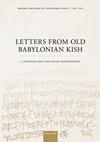
Letters from Old Babylonian Kish presents the primary publication of previously unstudied letters... more Letters from Old Babylonian Kish presents the primary publication of previously unstudied letters from the Old Babylonian Period. Drawing on internal and external evidence, the volume illuminates connections between these letters and other tablets housed in collections in Europe and the USA. The result is the reconstruction of a virtual archive of more than 200 letters from Old Babylonian Kish. Until at least 1600 BC, the compiled archive represents the largest group of related letters from southern Mesopotamia. Although these letters moved into various museums through the antiquities market in the early 1900s, many remained unstudied and unpublished, despite providing many pristine examples of personal and professional correspondence. The study of scribal hands and habits has been aided by the gathering of so many related letters, allowing the identification of four distinct scribal hands. The volume includes an extensive introduction, treating Old Babylonian epistolography and scribal hands.
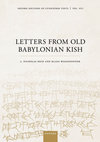
OECT 16 (OUP), 2025
Letters from Old Babylonian Kish presents the primary publication of previously unstudied letters... more Letters from Old Babylonian Kish presents the primary publication of previously unstudied letters from the Old Babylonian Period. Drawing on internal and external evidence, the volume illuminates connections between these letters and other tablets housed in collections in Europe and the USA. The result is the reconstruction of a virtual archive of more than 200 letters from Old Babylonian Kish. Until at least 1600 BC, the compiled archive represents the largest group of related letters from southern Mesopotamia. Although these letters moved into various museums through the antiquities market in the early 1900s, many remained unstudied and unpublished, despite providing many pristine examples of personal and professional correspondence. The study of scribal hands and habits has been aided by the gathering of so many related letters, allowing the identification of four distinct scribal hands. The volume includes an extensive introduction, treating Old Babylonian epistolography and scribal hands.
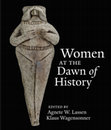
Women at the Dawn of History, 2020
This lavishly illustrated volume gives a voice to women who lived millennia ago in Mesopotamia, p... more This lavishly illustrated volume gives a voice to women who lived millennia ago in Mesopotamia, present-day Iraq, Syria and Turkey, and explores their roles, representations and contributions to society.
Tens of thousands of cuneiform texts, monumental sculptures, and images on terracotta reliefs and cylinder seals cast light on the fates of women at the dawn of history, from queens to female slaves. In the patriarchal world of ancient Mesopotamia, women were often represented in their relation to men—as mothers, daughters, or wives—giving the impression that a woman’s place was in the home. But, as we explore in this volume, they were also authors and scholars, astute business-women, sources of expressions of eroticism, priestesses with access to major gods and goddesses, and regents who exercised power on behalf of kingdoms, states, and empires.
This volume accompanies an exhibition at the Babylonian Collection in the Sterling Memorial Library, showcasing artefacts and texts relating to women, many never exhibited or published before.
Edited book accompanying the exhibition "Women at the Dawn of History" starting 29 February 2020 ... more Edited book accompanying the exhibition "Women at the Dawn of History" starting 29 February 2020 at Sterling Memorial Library, Yale Babylonian Collection, New Haven, CT. The book contains a number of essays on various aspects of the topics in addition to a description of all artifacts that are on display.
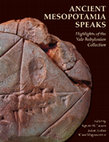
A stunning guide to the highlights housed within the Yale Babylonian Collection, presenting new p... more A stunning guide to the highlights housed within the Yale Babylonian Collection, presenting new perspectives on the society and culture of the ancient Near East
The Yale Babylonian Collection houses virtually every genre, type, and period of ancient Mesopotamian writing, ranging from about 3000 B.C.E. to the early Christian Era. Among its treasures are tablets of the Epic of Gilgamesh and other narratives, the world’s oldest recipes, a large corpus of magic spells and mathematical texts, stunning miniature art carved on seals, and poetry by the first named author in world history, the princess Enheduanna.
This unique volume, the companion book to an exhibition at Yale’s Peabody Museum of Natural History, celebrates the Yale Babylonian Collection and its formal affiliation with the museum. Included are essays by world-renowned experts on the exhibition themes, photographs and illustrations, and a catalog of artifacts in the collection that present the ancient Near East in the light of present-day discussion of lived experiences, focusing on family life and love, education and scholarship, identity, crime and transgression, demons, and sickness.
Agnete W. Lassen is associate curator of the Yale Babylonian Collection at the Yale Peabody Museum of Natural History. Eckart Frahm is professor of Assyriology at Yale University. Klaus Wagensonner is a post-doctoral researcher at Yale University.

The Empirical Dimension of Ancient Near Eastern Studies. Die empirische Dimension altorientalischer Forschungen - Wiener Offene Orientalistik 6, 2011
PREFACE
We present here as the sixth volume of the series “Wiener Offene Orientalistik” a ... more PREFACE
We present here as the sixth volume of the series “Wiener Offene Orientalistik” a collection of 23 essays entitled “The Empirical Dimension of Ancient Near Eastern Studies – Die empirische Dimension altorientalischer Forschungen.” The contributions address the relationship between Assyriological research and science from different perspectives. This volume was conceptualized after a symposium organized with the university’s Oriental Institute between 18th and 21st of July 2007, in order to honour Hermann Hunger on the occasion of his retirement. The programme of the symposium listed the following contributions:
1. Lis Brack-Bernsen: „Worte und Zahlen: Entzifferung von babylonischen astronomischen Vorhersageregeln / Words and Numbers: unravelling Babylonian Astronomical Predicting Rules“ 2. John Steele: „Goal Year Periods and Their Use in Predicting Planetary Phenomena“ 3. Salvo de Meis: „Some hints from the Astronomical diaries and other works by Hermann Hunger“ 4. Hans J. Nissen: „Vor der Schrift“ 5. Martha Roth: „Philological basic research: On the history of the Chicago Assyrian Dictionary“ 6. Karen Radner: „The king and his scholars: How representative are the letters to Esarhaddon and Assurbanipal?“ 7. Dominique Charpin: „Zur Funktion mesopotamischer Tempel“ 8. Tzvi Abusch: „Omens and Voodoo-Death in Ancient Mesopotamia“
We wish to express our gratitude to those colleagues who asked for an eventual publication of their—revised—contributions. We are indebted even more to the other authors who agreed to contribute to this volume, which is far from being normal in the present difficult situation of the universities. An increasing teaching load on a college level at one side and the quest for excellence financed from the outside and within the framework of elaborated but not always feasible and sensible projects consume much time, leaving little time for actual research. The contributions and discussions of Hermann Hunger’s important works on the history of astronomy formed the point of departure for this volume. In the last decades his work became known far beyond the field of cuneiform specialists. An attempt to pay homage to Hermann Hunger was made with the publication of numerous essays in his Festschrift, which appeared 2007 as volume 97 of the Wiener Zeitschrift für die Kunde des Morgenlandes (M. Köhbach, R. Lohlker, S. Procházka and G.J. Selz, eds.). Despite the fact that Hermann Hunger was very supportive of the present volume’s concept, he insisted, in his well-known modesty, that it must not become a second “Festschrift.” Accordingly, whereas a number of contributions are related to Hunger’s research programme, others originate from quite different fields of Assyriology. The title we chose for this volume and to which contributions were asked, is not very specific. In fact, it encapsulates two possible ways of understanding. In one interpretation the theme asks after the relevance of empiricism for the field of Near Eastern Studies, but on the other hand, it does also refer to possible contributions of Ancient Near Eastern studies to the history of sciences. As we see it, this opaqueness turned into an advantage. The authors approached the topic from very different angles. Given this freedom it is of course unavoidable that the thematic relevance of the contributions to the theme is also varying. The conceptualization of this volume and the ongoing discussions in Assyriology prevented us from choosing a more programmatic heading as we find it, for example, in the famous works of G.E.R. Lloyd, Magic, Reason and Experience (1979) or of S.J. Tambiah, Magic, Science, Religion, and the Scope of Rationality (1990). It is well known that divination was the most prominent field for the Mesopotamian scholars, but as there were a number of excellent editions and studies published in the last decades, magic
became not a salient topic. Nevertheless magical concepts cannot be overlooked when one discusses epistemic concepts, related to definitions of “science,” as some contributions do. But, even when we insist on the hypothesis that Mesopotamian knowledge acquisition was primarily empirically based, we are well aware of the fact that all empiricism is based on an epistemic framework. Hence, perception, observation or empiricism deal just with one side of Mesopotamian culture. Epistemic concepts – both ancient and modern – as important as they are, are not in the centre of this volume. Nevertheless, some contributions do address these forms of Mesopotamian knowledge, a topic for which, we feel much further research is wanted. The two major questions of this collection, namely how much Assyriological research can contribute to the different fields in the history of science, and which role empiricism played in the implicit and explicit construction of Mesopotamian scholarship are certainly not fully answered. Such a collection of essays, as offered here to the reader, neither would nor could do so. Our aim was to draw attention to and eventually shed some light on the relevance of empirical approaches in Ancient Near Eastern studies. If we could demonstrate this, eventually beyond the circle of specialists, this undertaking was not in vain. Finally it has to be mentioned that the sometimes difficult task of layouting was entirely done by Klaus Wagensonner in his spare time. The indices were prepared with the help of Nadia Linder (University of Vienna). The printing of this book was supported by grants from the Austrian Bundesministerium für Wissenschaft und Forschung and the Philologisch-Kulturwissenschaftliche Fakultät der Universität Wien.
Vienna, November 2010
Papers by Klaus Wagensonner

Let the Alg̃ar be Played: A New Manuscript of Šū-Suen B
Journal of Near Eastern Studies, 2017
* We would like to thank the Trustees of the British Museum for allowing us to study and publish ... more * We would like to thank the Trustees of the British Museum for allowing us to study and publish this tablet. K. Wagensonner produced the hand-copy of BM 103163. His work benefited from involvement with the project “Episteme als Konfigurationsprozess: Philologie und Linguistik im ‘Listenwissen’ des Alten Orient” (under direction of E. Cancik-Kirschbaum and J. Klinger) within the framework of SFB 980 “Episteme in Bewegung.” N. Reid presented a paper on this manuscript at the Society of Biblical Literature annual meeting in Atlanta, GA, 2016. We are also grateful to Selim Adali for providing photographs of Ni 2461 in the Istanbul Archaeological Museum. We would also like to thank Christopher Walker for providing us with information regarding the acquisition history of the text in the British Museum. In addition, we would like to thank (in alphabetical order) Pascal Attinger, Uri Gabbay, Justin Cale Johnson, Gebhard Selz, and Konrad Volk for reading a draft version of this paper and providing valuable comments. All errors, of course, are the authors’. Finally, we would like to thank Chris Woods, Seth Richardson, and the reviewers of our manuscript. Abbreviations follow those of CDLI (http://cdli.ox.ac.uk/wiki/abbreviations_for_assyriology). For texts referred to in the discussion, the respective entry in the CDLI-database (http://cdli.ucla.edu) is given (“Pnnnnnn”). Further we refer to resources on Pascal Attinger’s institutional page, as well as on entries in the SEAL-database (http://www.seal.uni-leipzig.de), all accessed July 2016. only one other manuscript was known: Ni 2461 (ISET 1, 90), which is kept at the Istanbul Archaeological Museum. The Istanbul tablet is almost completely preserved, and its scribe left ample blank space on the tablet’s reverse after the rubric, followed by a double ruling. This detail is important in view of the previously unknown tablet. As will be demonstrated below, this new textual witness neither duplicates the Istanbul manuscript, nor is it an excerpt of the composition, since it contains new lines together with other lines rearranged. The end result is a more complex and poetic structure. With only two textual witnesses available, the evidence remains insufficient to carry the weight of the argument that the more complex text is the product of scribal redaction and therefore evidence of a linear textual evolution. Instead, the new text likely represents a different recension, possibly from a different locale, while some of the omissions and additions may be best explained as by-products of memorization.2
Nam-dub-sar-ra a-na mu-e-pad3-da-zu . . . De l’apprentissage et l’éducation des scribes médio-assyriens
La famille dans le Proche-Orient ancien: réalités, symbolismes et images, 2014
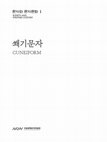
Handcopies of cuneiform texts kept at the National Museum of World Writing Systems in Incheon, So... more Handcopies of cuneiform texts kept at the National Museum of World Writing Systems in Incheon, South Korea. The lineart was produced based on photography provided by the museum.
This book is the first volume of the National Museum of World Writing Systems' academic series Scripts and Writing Culture, and presents research on five cuneiform artifacts in the museum's collection. 2. The Korean title script of "문자와 문자문화" is taken from Worin cheongang jigok (Songs of the Moon's Reflection on a Thousand Rivers), while the English title script Scripts and Writing Culture is adapted from the inscription on the base of Trajan's Column. 3. Information on the plates is organized in the following order: name, period, findspot, dimensions, and holding institution (inventory number). Dimensions are listed as width × height × thickness (cm). 4. Proper nouns, including personal and place names, are rendered in accordance with the foreign-language transcription rules of the National Institute of the Korean Language, although Akkadian terms-once the most widely used lingua franca in Mesopotamia-are transcribed as closely as possible to their original pronunciation. 5. The references are organized according to the original forms submitted by each author.
This chapter examines the development, use, and transmission of early Mesopotamian word lists fro... more This chapter examines the development, use, and transmission of early Mesopotamian word lists from their origins in Uruk (late 4th millennium BCE) through their final attestations in the Old Babylonian period. Drawing on lexical and archaeological evidence from sites such as Fāra, Tell Abū Ṣalābīkh, and Ebla, it highlights the materiality of tablets, their role in scribal training, and the emergence of new compositions alongside inherited traditions. The study emphasizes the dynamic interplay between conservatism and innovation in scribal culture and sheds new light on the longevity and transformation of the early lexical corpus.
The academic year 2019-2020 marks the 50th anniversary for undergraduate women at Yale University... more The academic year 2019-2020 marks the 50th anniversary for undergraduate women at Yale University-a momentous milestone, still within living memory. This volumeand the exhibition it accompanies-celebrates women and highlights their contributions to society and experiences at the dawn of history. It aims to give the women of Mesopotamia a voice by exploring their social and economic roles in one of the earliest cultures of human history. The exhibition "Women at the Dawn of History" is on view in the Babylonian Collection in the Sterling Memorial Library beginning February 29th, 2020. Some fifty artifacts from Mesopotamia, mostly seals, clay tablets inscribed in cuneiform, terracotta plaques, and figurines, are presented in the catalogue section of this book. All derive from the holdings of the Babylonian Collection, operating under the umbrella of the Yale Peabody Museum of Natural History since 2017. The Babylonian Collection, founded in 1911, is a center for research and learning for the Yale community and scholars from across the world. With generous funding from the National Endowment of the Humanities and the Council on Library and Information Resources, the Collection has been digitizing its holdings since 2019, working towards making images of every single artifact available online. Ancient Mesopotamia, the "land between the rivers," was the birthplace of writing, urban culture, the state, and many other technologies, concepts, and institutions that shape our world to this day. Hundreds of thousands of cuneiform documents, art works, and archaeological remains survive from the area that nowadays corresponds to the modern states of Iran, Iraq, Syria, and Turkey. The textual sources, ranging from simple receipts to mathematical problems, from letters to literature, were written by scribes, both male and female, from the mid-fourth millennium bce up to the first century ce (see Figure .5 and 1.6 for a map and timeline). Architecture, sculpture, seals, terracottas, pottery, and more tell the stories of the long lost cultures and peoples of ancient Mesopotamia. The long durée of Mesopotamia was home to complex societies, whose sources, both textual and archaeological, have shaped the modern fields of Assyriology and Near Eastern Archaeology since the first objects were unearthed in the mid-nineteenth century ce and made accessible to scholars. Our sources from Mesopotamia are heavily biased toward men and male-dominated activities. Women and their place in history, by contrast, have largely been neglected in modern research (see Chapter 2, "Women's Lives in the Ancient Near East"). Fig. 1.1 Objects and mounts for the "Women at the Dawn of History" exhibit, on view in the Babylonian Collection. 10 Agnete W. Lassen and Klaus Wagensonner Uruk the first city Invention of writing Competing city states Unified state founded by Sargon Earliest temple towers (ziggurats) Rise of Babylon, Hammurabi's laws (about 1750 bce) Territorial states in Assyria and Babylonia Akkadian lingua franca in the Near East Ashurbanipal's library at Nineveh (about 650 bce) Nebuchadnezzar II conquers Jerusalem (597 bce) Cyrus, Darius I and Xerxes form a new empire Alexander the Great and his successors rule the east Last cuneiform tablet (75 ce) The last empire before the rise of Islam 0 3500 500 1000 1500 2000 2500 3000 Uruk period (4000-3000 bce) Early Dynastic period (3000-2350 bce) Akkad period (2350-2150 bce) Third Dynasty of Ur (2110-2003 bce) Old Assyrian period (2000-1700 bce) Kassite period (1595-1155 bce) Neo-Assyrian Empire (1000-612 bce) Neo-Babylonian Empire (622-539 bce) Persian period (539-331 bce) Hellenistic period (331-141 bce) Parthian period (141 bce-224 ce) Sasanian period (224-651 ce) Old Babylonian period (1900-1600 bce) Middle Assyrian period (1400-1050 bce) Jemdet Nasr period (3100-2900 bce)
Gods and demons, Anatolia and Egypt: Obsidian sourcing of Mesopotamian amulets and cylinder seals using portable XRF
Journal of Archaeological Science: Reports, 2019
Abstract The corpus of sourced obsidian glyptic objects, like inscribed amulets and cylinder seal... more Abstract The corpus of sourced obsidian glyptic objects, like inscribed amulets and cylinder seals, is virtually nonexistent across the Near East. Here we report our findings for two obsidian amulets and two cylinder seals in the Yale Babylonian Collection and Metropolitan Museum of Art. We analyzed the artifacts using portable X-ray fluorescence, which is quantitative, nondestructive, and deployable virtually anywhere in the world. Our results establish that, for such objects, style is an unreliable predictor of obsidian source. Although the amulets are meant to protect against the same demon, they reflect different styles, skill in stone cutting, and knowledge of cuneiform, and their contexts of production must have considerably differed. The amulets' obsidian sources, however, are identical: the Komurcu outcrops of the Gollu Dag volcanic complex in Anatolia. The two cylinder seals exhibit typical Old Babylonian style and iconography, and the seals' obsidians are indistinguishable to the naked eye. One seal, however, matches the Anatolian “Bingol B" source, one of the most important sources in Mesopotamia. The other seal matches an obsidian source that is only known from a vessel fragment unearthed from the Egyptian site of Abydos. This is, to our knowledge, the first time that Egyptian-tied obsidian has been chemically identified amongst Mesopotamian, Anatolian, or Levantine artifacts. Our findings tantalizingly suggest that such artifacts likely had more complex origins than has previously been appreciated. These results also hint that such objects might have been produced closer to the context of their use rather than nearer the volcanic sources of the stone.
Abschrift, Offenbarung, Sukzession
Sukzession in Religionen, 2017
The Empirical Dimension of Ancient Near Eastern Studies. Die empirische Dimension altorientalischer Forschungen
The Empirical Dimension of Ancient Near Eastern Studies. Die empirische Dimension altorientalischer Forschungen - Wiener Offene Orientalistik 6, 2011


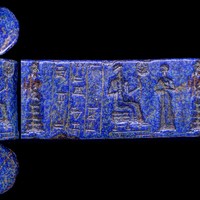
Uploads
Doctoral thesis by Klaus Wagensonner
Master thesis by Klaus Wagensonner
Books by Klaus Wagensonner
Tens of thousands of cuneiform texts, monumental sculptures, and images on terracotta reliefs and cylinder seals cast light on the fates of women at the dawn of history, from queens to female slaves. In the patriarchal world of ancient Mesopotamia, women were often represented in their relation to men—as mothers, daughters, or wives—giving the impression that a woman’s place was in the home. But, as we explore in this volume, they were also authors and scholars, astute business-women, sources of expressions of eroticism, priestesses with access to major gods and goddesses, and regents who exercised power on behalf of kingdoms, states, and empires.
This volume accompanies an exhibition at the Babylonian Collection in the Sterling Memorial Library, showcasing artefacts and texts relating to women, many never exhibited or published before.
The Yale Babylonian Collection houses virtually every genre, type, and period of ancient Mesopotamian writing, ranging from about 3000 B.C.E. to the early Christian Era. Among its treasures are tablets of the Epic of Gilgamesh and other narratives, the world’s oldest recipes, a large corpus of magic spells and mathematical texts, stunning miniature art carved on seals, and poetry by the first named author in world history, the princess Enheduanna.
This unique volume, the companion book to an exhibition at Yale’s Peabody Museum of Natural History, celebrates the Yale Babylonian Collection and its formal affiliation with the museum. Included are essays by world-renowned experts on the exhibition themes, photographs and illustrations, and a catalog of artifacts in the collection that present the ancient Near East in the light of present-day discussion of lived experiences, focusing on family life and love, education and scholarship, identity, crime and transgression, demons, and sickness.
Agnete W. Lassen is associate curator of the Yale Babylonian Collection at the Yale Peabody Museum of Natural History. Eckart Frahm is professor of Assyriology at Yale University. Klaus Wagensonner is a post-doctoral researcher at Yale University.
We present here as the sixth volume of the series “Wiener Offene Orientalistik” a collection of 23 essays entitled “The Empirical Dimension of Ancient Near Eastern Studies – Die empirische Dimension altorientalischer Forschungen.” The contributions address the relationship between Assyriological research and science from different perspectives. This volume was conceptualized after a symposium organized with the university’s Oriental Institute between 18th and 21st of July 2007, in order to honour Hermann Hunger on the occasion of his retirement. The programme of the symposium listed the following contributions:
1. Lis Brack-Bernsen: „Worte und Zahlen: Entzifferung von babylonischen astronomischen Vorhersageregeln / Words and Numbers: unravelling Babylonian Astronomical Predicting Rules“ 2. John Steele: „Goal Year Periods and Their Use in Predicting Planetary Phenomena“ 3. Salvo de Meis: „Some hints from the Astronomical diaries and other works by Hermann Hunger“ 4. Hans J. Nissen: „Vor der Schrift“ 5. Martha Roth: „Philological basic research: On the history of the Chicago Assyrian Dictionary“ 6. Karen Radner: „The king and his scholars: How representative are the letters to Esarhaddon and Assurbanipal?“ 7. Dominique Charpin: „Zur Funktion mesopotamischer Tempel“ 8. Tzvi Abusch: „Omens and Voodoo-Death in Ancient Mesopotamia“
We wish to express our gratitude to those colleagues who asked for an eventual publication of their—revised—contributions. We are indebted even more to the other authors who agreed to contribute to this volume, which is far from being normal in the present difficult situation of the universities. An increasing teaching load on a college level at one side and the quest for excellence financed from the outside and within the framework of elaborated but not always feasible and sensible projects consume much time, leaving little time for actual research. The contributions and discussions of Hermann Hunger’s important works on the history of astronomy formed the point of departure for this volume. In the last decades his work became known far beyond the field of cuneiform specialists. An attempt to pay homage to Hermann Hunger was made with the publication of numerous essays in his Festschrift, which appeared 2007 as volume 97 of the Wiener Zeitschrift für die Kunde des Morgenlandes (M. Köhbach, R. Lohlker, S. Procházka and G.J. Selz, eds.). Despite the fact that Hermann Hunger was very supportive of the present volume’s concept, he insisted, in his well-known modesty, that it must not become a second “Festschrift.” Accordingly, whereas a number of contributions are related to Hunger’s research programme, others originate from quite different fields of Assyriology. The title we chose for this volume and to which contributions were asked, is not very specific. In fact, it encapsulates two possible ways of understanding. In one interpretation the theme asks after the relevance of empiricism for the field of Near Eastern Studies, but on the other hand, it does also refer to possible contributions of Ancient Near Eastern studies to the history of sciences. As we see it, this opaqueness turned into an advantage. The authors approached the topic from very different angles. Given this freedom it is of course unavoidable that the thematic relevance of the contributions to the theme is also varying. The conceptualization of this volume and the ongoing discussions in Assyriology prevented us from choosing a more programmatic heading as we find it, for example, in the famous works of G.E.R. Lloyd, Magic, Reason and Experience (1979) or of S.J. Tambiah, Magic, Science, Religion, and the Scope of Rationality (1990). It is well known that divination was the most prominent field for the Mesopotamian scholars, but as there were a number of excellent editions and studies published in the last decades, magic
became not a salient topic. Nevertheless magical concepts cannot be overlooked when one discusses epistemic concepts, related to definitions of “science,” as some contributions do. But, even when we insist on the hypothesis that Mesopotamian knowledge acquisition was primarily empirically based, we are well aware of the fact that all empiricism is based on an epistemic framework. Hence, perception, observation or empiricism deal just with one side of Mesopotamian culture. Epistemic concepts – both ancient and modern – as important as they are, are not in the centre of this volume. Nevertheless, some contributions do address these forms of Mesopotamian knowledge, a topic for which, we feel much further research is wanted. The two major questions of this collection, namely how much Assyriological research can contribute to the different fields in the history of science, and which role empiricism played in the implicit and explicit construction of Mesopotamian scholarship are certainly not fully answered. Such a collection of essays, as offered here to the reader, neither would nor could do so. Our aim was to draw attention to and eventually shed some light on the relevance of empirical approaches in Ancient Near Eastern studies. If we could demonstrate this, eventually beyond the circle of specialists, this undertaking was not in vain. Finally it has to be mentioned that the sometimes difficult task of layouting was entirely done by Klaus Wagensonner in his spare time. The indices were prepared with the help of Nadia Linder (University of Vienna). The printing of this book was supported by grants from the Austrian Bundesministerium für Wissenschaft und Forschung and the Philologisch-Kulturwissenschaftliche Fakultät der Universität Wien.
Vienna, November 2010
Papers by Klaus Wagensonner
This book is the first volume of the National Museum of World Writing Systems' academic series Scripts and Writing Culture, and presents research on five cuneiform artifacts in the museum's collection. 2. The Korean title script of "문자와 문자문화" is taken from Worin cheongang jigok (Songs of the Moon's Reflection on a Thousand Rivers), while the English title script Scripts and Writing Culture is adapted from the inscription on the base of Trajan's Column. 3. Information on the plates is organized in the following order: name, period, findspot, dimensions, and holding institution (inventory number). Dimensions are listed as width × height × thickness (cm). 4. Proper nouns, including personal and place names, are rendered in accordance with the foreign-language transcription rules of the National Institute of the Korean Language, although Akkadian terms-once the most widely used lingua franca in Mesopotamia-are transcribed as closely as possible to their original pronunciation. 5. The references are organized according to the original forms submitted by each author.