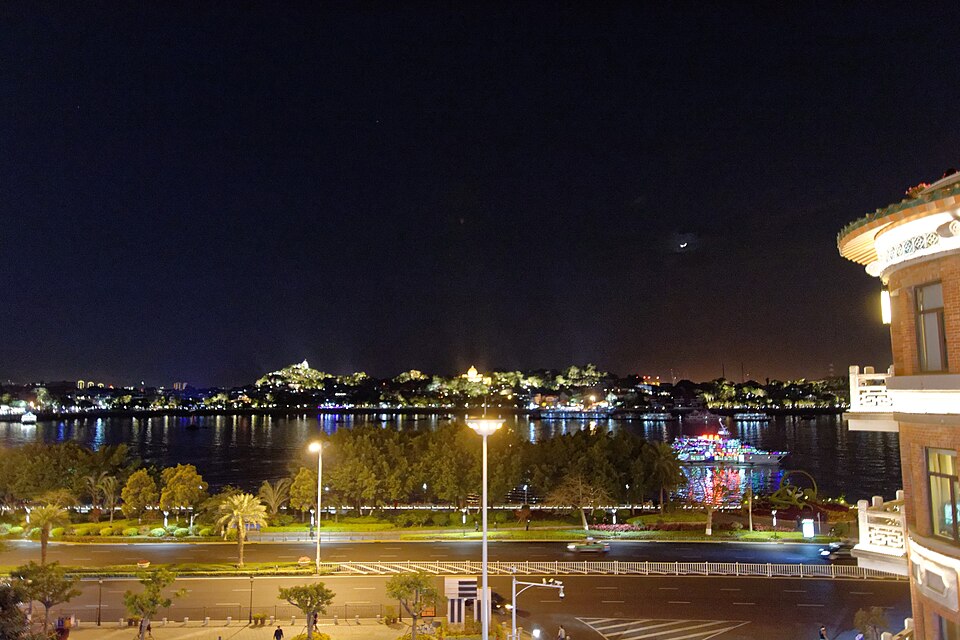
Synopsis
Gulangyu is a tiny island of just 1.83 sq km off Xiamen, yet it's known as the 'Island of Pianos' and 'Exposition of World Architecture.' A UNESCO World Cultural Heritage Site since 2017.
Overview
Gulangyu Island (鼓浪屿), located in Siming District, Xiamen, Fujian Province, faces Xiamen Island across the sea and is the largest islet in Xiamen. Covering approximately 1.83 square kilometers with a circumference of only about 5 kilometers, Gulangyu has earned nicknames such as "Garden on the Sea," "Island of Music," "Island of Pianos," and "Exposition of World Architecture."
Gulangyu's history dates back to the Song and Yuan Dynasties, but its unique cultural character was primarily formed after the Opium War. Following the Treaty of Nanjing in 1842, Xiamen became a treaty port, and Gulangyu gradually developed into a settlement for foreign residents. In 1902, Gulangyu became an "International Settlement," with 13 countries — including Britain, the United States, France, Germany, and Japan — establishing consulates here. This unique historical background created Gulangyu's distinctive blend of Chinese and Western architectural styles.
In July 2017, Gulangyu was inscribed on UNESCO's World Cultural Heritage List.
History
| Period | Event |
|---|---|
| Song-Yuan Dynasties | First settlements on Gulangyu Island |
| 1842 | Treaty of Nanjing signed; Xiamen becomes a treaty port |
| 1902 | Gulangyu becomes an "International Settlement" |
| 1941-1945 | During the Pacific War, Japan occupies Gulangyu |
| 1945 | Japan surrenders; Gulangyu returns to China |
| July 2017 | Inscribed as UNESCO World Cultural Heritage |
Main Attractions
| Attraction | Features |
|---|---|
| Sunlight Rock (Riguang Yan) | Highest point on the island at 92.7m elevation, offering panoramic views of the island and Xiamen city |
| Shuzhuang Garden | A seaside private garden housing the Piano Museum |
| Haoyue Garden | Features a massive statue of Zheng Chenggong (Koxinga) facing the sea |
| Bagua Tower (Organ Museum) | One of Gulangyu's iconic buildings, now home to China's only organ museum |
| Sea Heaven Structure (Haitian Tanggou) | Chinese-Western architectural ensemble showcasing the island's diverse building culture |
| Catholic Church | Gothic-style church |
| Former British Consulate | One of the earliest consular buildings on Gulangyu |
| Longtou Road Commercial Street | The island's busiest shopping street |
Island of Pianos
Gulangyu is known as the "Island of Pianos" and "Island of Music," having the highest piano ownership density in China. The island has approximately 600 pianos — nearly every household owns one. Gulangyu has produced numerous renowned musicians, including:
- Yin Chengzong: Famous pianist, native of Gulangyu
- Xu Feiping: Renowned piano performer
- Zhou Shu'an: Pioneer of modern Chinese music
The island has two important music cultural venues:
- Piano Museum: Located in Shuzhuang Garden, collecting antique pianos from around the world
- Organ Museum: Located in Bagua Tower, China's only organ museum
In 1981, composer Zhong Limin and lyricists Zhang Li and Zhang Hongshu, after visiting Sunlight Rock on Gulangyu, created the song "Waves of Gulangyu" (鼓浪屿之波), which became a beloved classic on both sides of the Taiwan Strait.
Exposition of World Architecture
Gulangyu preserves over 1,000 historical buildings in various styles, encompassing traditional Chinese architecture, Western classical revival, Gothic, Baroque, colonial veranda-style, and more — earning it the title "Exposition of World Architecture." These buildings are not only masterpieces of architectural art but also physical evidence of the cultural exchange between China and the world in modern times.
Representative buildings include:
- Huang Family Garden: Villa complex built by Filipino-Chinese merchant Huang Yizhu
- Bagua Tower: Built by overseas Chinese in America; its red dome is a Gulangyu landmark
- Sea Heaven Structure: A complex of five Chinese-Western buildings
Practical Information
| Item | Details |
|---|---|
| Location | Gulangyu, Siming District, Xiamen, Fujian Province |
| Best Season | Year-round; Spring (Mar-May) and Autumn (Sep-Nov) are best |
| Recommended Duration | 1-2 days (staying overnight on the island is recommended) |
| Ferry | Xiamen Cruise Center → Qiutian Wharf / Neicuo'ao Wharf, ~35 RMB (round trip) |
| Island Transport | Motor vehicles are prohibited on the island; walking or electric cart only |
| Sunlight Rock Ticket | ~50 RMB |
| Shuzhuang Garden Ticket | ~30 RMB |
World Heritage
In 2017, Gulangyu was inscribed by UNESCO as a World Cultural Heritage Site, officially named "Kulangsu: a Historic International Settlement." UNESCO's evaluation noted:
- Gulangyu is a unique testimony to the blending of diverse cultures since the mid-19th century
- The island's architecture and urban planning reflect the coexistence and dialogue of multiple cultures
- Gulangyu's musical tradition is an integral part of its cultural identity
References
- Gulangyu Official Website: https://gly.xm.gov.cn/
- Fujian Provincial Government: https://www.fujian.gov.cn/zwgk/ztzl/sxzygwzxsgzx/sdjj/wvjj/202408/t20240830_6508715.htm
- Xinhua: https://www.news.cn/local/20250428/96873952873242a8bb2fe84985f7b40c/c.html
- UNESCO: https://whc.unesco.org/en/list/1541/
Stills & Gallery
Comments (0)