Papers by Laura Ahlqvist
American Indian Culture and Research Journal, 2024
The paper examines three late nineteenth–early twentieth century Pacific Northwest coast objects—... more The paper examines three late nineteenth–early twentieth century Pacific Northwest coast objects—a Nuu-chah-nulth kuxmin (bird rattle), a Haida sGaaga (medicine man) figure, and a Kwakwaka’wakw or Wuikinuxv wooden model of a totem pole—from the collections of the Ehlers museum in Haderslev, Denmark. Drawing on multiple sources and epistemologies and structuring the study as a weaving of different narratives and perspectives, we investigate the identity of the objects, the materials and pigments used in their making, their function and value in the Indigenous contexts, as well as their significance as collectors’ objects. The article draws attention to the Native American collections at Danish museums, which have not attracted much scholarly attention, and illustrates a need and fruitfulness of a multi-epistemological approach in their studies.
Current Swedish Archaeology, 2020
In this article, we identify and discuss Nordic Bronze Age interspecies relationships through a r... more In this article, we identify and discuss Nordic Bronze Age interspecies relationships through a relational approach that is open to ontologies that differ from our own. Drawing on bronze objects, faunal remains and rock art recovered from a multitude of Nordic Bronze Age sites (1700-500 BC), we outline the complex evolution and interactions of significant socioeconomic and cosmological elements such as the horse, the sun, the warrior, the sea and fish, and their relationships to life and death. We suggest that these elements may be seen as interconnected parts of an entangled whole, which represents a specific Nordic Bronze Age cosmology, which developed between 1600 and 1400 BC, and combined local, archaic world views and foreign influences.
Journal of Material Culture, 2023
In this article, we examine a collection of 47 American Indian baskets collected in the early 20t... more In this article, we examine a collection of 47 American Indian baskets collected in the early 20th century, at the height of the ‘basket craze’. Currently stored in a Danish museum without much archival information, the baskets encapsulate art historical developments taking place at the turn of the century, a time fuelled by the Euro-American preoccupation with collecting and displaying Native American artefacts. Academic debates developed around the derived ‘tourist art’ and the colonial framework still haunt Euro-American notions of authenticity. We investigate the baskets, their role, cultural affiliation and significance in a bottom-up approach, with a persistent view to this historical context as well as their material testimony to the agency of the weavers navigating in a transformed economy and legislative restrictions. We show how the baskets materialize the entangled identities of makers, collectors and museums and how interdisciplinary research can provide a spatio-tempora...
Zusammenfassung: Das Auftreten und die Darstellung gehörnter Helme im bronzezeitlichen Nordeuropa... more Zusammenfassung: Das Auftreten und die Darstellung gehörnter Helme im bronzezeitlichen Nordeuropa regt bis in die Gegenwart Diskussionen darüber an, was davon lokal und was fremd ist. Abbildungen gehörnter Helme finden sich in ganz Europa und dem angrenzenden Mittelmeerraum in einem Zeitraum von 1000-750 v. Chr. Diese Studie beschäftigt sich detailliert mit einer vergleichenden Analyse der Darstellung gehörnter Helme, ausgehend von der Frage, wie ähnlich sich die verwendeten Materialien, das Medium selbst und die kulturellen Kontexte sind. Sardinien, das südwestliche Spanien und Portugal (Iberische Halbinsel) sowie Südskandinavien sind innerhalb dieser Untersuchung von besonderem Interesse, da hier anthropomorphe kriegerähnliche Kreaturen mit gehörnten Helmen in der materiellen und ikonographischen Kultur auftreten. Die Analysen enthüllen Ähnlichkeiten und Unterschiede zwischen den drei Zonen in der Darstellung dieser gehörnten Figuren, der Art und Weise, wie sie dargestellt werden und der Eingliederung dieses Phänomens in Rituale und Alltägliches um 1000-750 v. Chr. Obwohl auch lokale Eigenheiten deutlich herausgearbeitet werden können, ist eine Verbindung dieser drei Regionen nicht zu leugnen. Übergreifend betrachtet können die Hörner als Zeichen der Potenz des Helmträgers interpretiert werden. Sie gelten als Inbegriff eines Kriegers und visualisieren eine begrenzte Gruppe von kriegerischen Wesen. Ihre Bedeutung scheint eng verbunden
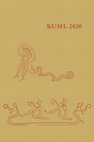
Kuml, 2020
The well-known Nordic Bronze Age razor from Vestrup Mark in northern Jutland, dated to c. 1100-90... more The well-known Nordic Bronze Age razor from Vestrup Mark in northern Jutland, dated to c. 1100-900 BC, is possibly the most well-published Nordic Bronze Age razor, and its motif is commonly regarded as epitomising the religious and ritual sphere of the period. The motif was reexamined in autumn 2018 and autumn 2019, and new details were revealed as a result. Using a digital Dino-Lite USB microscope, model AM4815ZTLx, with x10 x140 magnification and an inbuilt camera, detailed micrographs were taken of the ornamentation. The new analyses revealed that the published illustrations of the razor are not entirely accurate; in one case, the motif has been interpreted incorrectly and then superimposed onto a photograph without alerting the reader’s attention to this manipulation. This is problematic, as later interpretations of the symbolism and meaning behind the motif have depended on this inaccurate illustration. The current article therefore draws attention to the risk of overly relying on old illustrations and highlights the benefits of implementing new analytical methods, even when dealing with well-published objects that have been sitting in museum storerooms for over a hundred years. The low-power micrographic analysis substantiates some of the previous
interpretations of the motif on this razor, while at the same time evoking new ones. It remains evident, however, that the motif is placed firmly within the spiritual sphere of the Nordic Bronze Age and, as such, we may be getting a little closer to this aspect of Bronze Age society and life, now the motif is once again visible.
Nordisk Museologi, 2019
We present a hitherto unresearched part of a shared Danish and American cultural heritage: Native... more We present a hitherto unresearched part of a shared Danish and American cultural heritage: Native American objects in Danish regional museum collections. Thus far, we have identified more than 200 Native American artefacts in 27 local museums, largely a result of Danes abroad privately collecting in the late 1800s and 1950s–70s. The majority of these artefacts, many of which are prehistoric in age, have never been displayed and have lingered in storage since they were accessioned, understudied and often unrecognised for what they are.
Recent deaccessioning pressures from the Danish Agency for Culture and Palaces potentially place these objects at risk of destruction, making the discussions presented here a timely issue. These Native American objects, like the unknown numbers of other non-Danish artefacts held by regional museums, hold tremendous potential
to elucidate overlooked parts of Danish museum history, trans-Atlantic networks and interconnectedness in the nineteenth and twentieth centuries, as well as rich material cultures originating far from Denmark. We argue that this perspective is highly relevant and should be utilised in Danish museums, as it begets reflections on Danish glocal identity and society in a post-colonial world.
Nordisk Museologi, 2019
We present a hitherto unresearched part of a shared Danish and American cultural herit... more We present a hitherto unresearched part of a shared Danish and American cultural heritage: Native American objects in Danish regional museum collections. Thus far, we have identified more than 200 Native American artefacts in 27 local museums, largely a result of Danes abroad privately collecting in the late 1800s and 1950s–70s. The majority of these artefacts, many of which are prehistoric in age, have never been displayed and have lingered in storage since they were accessioned, understudied and often unrecognised for what they are. Recent deaccessioning pressures from the Danish Agency for Culture and Palaces potentially place these objects at risk of destruction, making the discussions presented here a timely issue. These Native American objects, like the unknown numbers of other non-Danish artefacts held by regional museums, hold tremendous potential to elucidate overlooked parts of Danish museum history, trans-Atlantic networks and interconnectedness in the nineteenth and twentieth centuries, as well as rich material cultures originating far from Denmark. We argue that this perspective is highly relevant and should be utilised in Danish museums, as it begets reflections on Danish glocal identity and society in a post-colonial world.
Museum Skanderborg Årbog, 2017
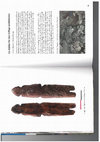
In the spring of 2017, the authors stumbled upon an unusual artifact at the store rooms in the lo... more In the spring of 2017, the authors stumbled upon an unusual artifact at the store rooms in the local museum in Skanderborg: an apparent anthropomorphic bone figurine that was thought to date to the Neolithic and had been found on a field next to a bog. However, based on C14 dating performed as part of this study, it was discovered that it instead dated to the Early Medieval period (c. 1034-1204 AD). During use-wear analysis using a Dino-lite digital microscope, it was observed that the cuts used to demarcate the features of the figurine were made from a wide variety of different tools. The worked areas often showed signs of localized burning on many of the key features. In addition, the cuts appear to be of poor quality with notable mistakes and signs of hesitation. A possible interpretation is put forward that this figurine may have been made by a child or someone lacking in skill and experience, but who still had access to a standard bone working tool kit including knives, saws and files. Furthermore, as the figurine appears to have been made from an off-cut of previously worked bone with a highly polished and flat front and a rounded back, it is likely that the maker had access to a bone working area. Therefore, it could be suggested that the person who made this little doll may have been the child or young apprentice of a more experienced bone worker. Based on the presence of highly polished and rounded areas on the lower backside of the figurine, we further interpret that this figurine may have been worn as a pendant causing the figurine to repeatedly rub on the clothing.
In this article, we expand upon these results of the analyses and further discuss some of the implications of the findings.
Danish Journal of Archaeology, 2018
During the Nordic Bronze Age (NBA), hybrid beasts contributed to cosmological and mythical narrat... more During the Nordic Bronze Age (NBA), hybrid beasts contributed to cosmological and mythical narratives on the main media of metal and rock. These hybrids are composed of body parts from particular animals – including bull, bird, snake, horse and human – which entangle with particular objects or images. On metalwork, they appear especially on bronze razors but also on shields, bowls, combs, helmets and in the shape of figurines. Their main occurrence clusters in the later part of the NBA that is characterised by social change. Especially cremation as the total metamorphosis of the human body aligns with a nexus of analogues firmly linking interspecies composites with ideas of bodily fluidity and transformation. Overall, this may be understood as
a way of perceiving, and potentially controlling, the world. NBA hybridising art does not indicate that the religion of the era is reducible to mere animism throughout, but society certainly retained and put to use properties of an animistic tradition. Supported by contextual data, the article proposes that the hybrids related to shared NBA myths and religious practices while also legitimising the privilege and leadership of the upper echelons of NBA societies.
Conference Presentations by Laura Ahlqvist

Mass consuming miniature meanings: analysing the carved stones of Neolithic Bornholm - TAG 2019
A unique artefact assemblage recovered at the causewayed enclosure of Vasagård on the Baltic isla... more A unique artefact assemblage recovered at the causewayed enclosure of Vasagård on the Baltic island of Bornholm may provide insights into ritual life and underlying patterns of cognition and transmission among the Neolithic population that used this site. Here, more than 400 so-called ‘sun stones’ have emerged – small tablets of shale, sandstone and water-rolled pebbles that have been engraved with a range of motifs. One prevalent motif consists of a circle with radiating lines very similar to what present-day humans would produce if asked to draw a sun, hence the archaeological name; however, a range of other motifs also appear on the stones. All of the engravings are based on a relatively small repertoire and yet, no two stones are identical as the repeated elements are combined in different constellations, creating substantial variability within the material. An explanation for the seeming dichotomy between the normativity that directs the choice of motif, on the one hand, and the relative freedom in its execution, on the other, may potentially be found in the ways that cultural transmission and cognitive processes structured the manufacturing and use of the stones. Drawing on a range of interdisciplinary approaches, we explore the roles of imitation, emulation and active teaching, and how these connect to reproducibility and memorability, in an attempt to understand the apparent combination of structuring and idiosyncrasy. This leads to a number of observations as well as suggestions for further research on these enigmatic stones.
Invisible and Out of Place: Native American Lithics in Danish Collections - Lithic Studies Society Conference 2017
Native American objects have recently been identified in many of the founding collections in Dani... more Native American objects have recently been identified in many of the founding collections in Danish museums. However, these artifacts are usually not registered as such, and often the museums are not aware that they exist. Thus, these objects have remained unstudied and un-displayed. They are invisible objects in the museum. This poses a problem given that Danish museums, as a result of the curation crisis, face demands from the government to deaccession museum objects that are “unprovenanced” or “outside the area of interest” of the museum in question. As Native American objects in Danish Museums arguably fall within these categories, they are potentially in imminent danger of destruction. Therefore, the problematic nature of these artifacts raise many questions:
• What research and dissemination potential do these objects have, given that they seem to fall out of the primary scope of many Danish museums?
• What should be done with these objects before or to prevent them from being destroyed under Danish government guidelines?
• Are there any legal or ethical obligations to repatriate these objects?
The aim of this presentation is to bring to light some of the issues above as well as discuss potential solutions to dealing with this problematic material.
The significance of animals: zoomorphic imagery in Late Bronze Age Europe - Workshop: Animal-human relations in northern Europe – a long-term perspective!
This preliminary study deals with the figurative imagery of the European Late Bronze Age and Earl... more This preliminary study deals with the figurative imagery of the European Late Bronze Age and Early Iron Age found on mostly bronze artefacts. Spread over multiple regions and several centuries, this ornamentation proves to be almost exclusively zoomorphic. A level of idiosyncrasy is evident, but on the other hand some large-scale patterns emerge which are surprisingly persistent. Certain animals, most notably birds, are portrayed numerous times in hundreds of variations in every European region so far surveyed; the seeming popularity of certain animals can even be seen incorporated into various localised traditions, apparently expressed as a taste for fantastical looking beings, in the case of southern Scandinavia. These similarities in ornamentation likely mirrored different types of networks between European Bronze Age societies which were maintained via different routes and communicatory means, however the clear preference for certain animals must be significant as well. Were they bearers of some symbolic meaning that somehow transgressed territories and cultural traditions or was merely the image copied without any meaning attributed to it? A cognitive perspective might offer some suggestions as to why certain animals were seemingly favoured by the human mind - a perspective relevant for human-animal relations of the Bronze Age and beyond.
The southern Scandinavian Bronze Age creature: Modes of dispersion and transformation - The 15th Nordic Bronze Age Symposium 2019
Multiple recent studies have highlighted the highly globalized nature of Scandinavian Bronze Age ... more Multiple recent studies have highlighted the highly globalized nature of Scandinavian Bronze Age society, however at the same time strong localized traditions appear to be in place. The southern Scandinavian iconography on Late Bronze Age objects provides interesting perspectives on this seeming juxtaposition, as it adopts and draws on imagery that is shared across large distances throughout Europe. In this presentation, I will discuss how aspects of this pan-European imagery are reworked and reimagined within an apparent localized southern Scandinavian tradition, creating a very characteristic style involving hybridized creatures, abstract representations and seemingly mythical scenarios. I further explore how this zoomorphic imagery may have materialized aspects of animistic beliefs that entangled with large-scale European narratives. The iconography on these Nordic Bronze Age artefacts thus likely reflects a complex relationship between myth and world view within Scandinavian Bronze Age society, influenced by new means of travel, transportation and contact.
Thesis Chapters by Laura Ahlqvist


Uploads
Papers by Laura Ahlqvist
interpretations of the motif on this razor, while at the same time evoking new ones. It remains evident, however, that the motif is placed firmly within the spiritual sphere of the Nordic Bronze Age and, as such, we may be getting a little closer to this aspect of Bronze Age society and life, now the motif is once again visible.
Recent deaccessioning pressures from the Danish Agency for Culture and Palaces potentially place these objects at risk of destruction, making the discussions presented here a timely issue. These Native American objects, like the unknown numbers of other non-Danish artefacts held by regional museums, hold tremendous potential
to elucidate overlooked parts of Danish museum history, trans-Atlantic networks and interconnectedness in the nineteenth and twentieth centuries, as well as rich material cultures originating far from Denmark. We argue that this perspective is highly relevant and should be utilised in Danish museums, as it begets reflections on Danish glocal identity and society in a post-colonial world.
In this article, we expand upon these results of the analyses and further discuss some of the implications of the findings.
a way of perceiving, and potentially controlling, the world. NBA hybridising art does not indicate that the religion of the era is reducible to mere animism throughout, but society certainly retained and put to use properties of an animistic tradition. Supported by contextual data, the article proposes that the hybrids related to shared NBA myths and religious practices while also legitimising the privilege and leadership of the upper echelons of NBA societies.
Conference Presentations by Laura Ahlqvist
• What research and dissemination potential do these objects have, given that they seem to fall out of the primary scope of many Danish museums?
• What should be done with these objects before or to prevent them from being destroyed under Danish government guidelines?
• Are there any legal or ethical obligations to repatriate these objects?
The aim of this presentation is to bring to light some of the issues above as well as discuss potential solutions to dealing with this problematic material.
Thesis Chapters by Laura Ahlqvist