Books by Leonora M A O'Brien
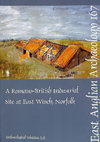
Excavations at East Winch on the Greensand Belt in north-west Norfolk, revealed a Romano-British ... more Excavations at East Winch on the Greensand Belt in north-west Norfolk, revealed a Romano-British pottery production site — part of the Nar Valley industry — as well as more limited evidence of iron smelting and possible habitation. The principal features were a trackway, potentially linking the site to the nearby iron smelting site at Ashwicken, and part of a ditched enclosure containing an aisled building, a stone-founded workshop, four Nar Valley kilns and a drying oven.
The pottery assemblage adds considerably to our understanding of this industry. Of principal importance is the occurrence within the pottery assemblage of tightly dated imports which assist in developing a chronology for the Nar Valley industry. Archaeomagnetic dating of one of the kilns indicated a last firing at some point between AD 200 and 250.
A decline in pottery production in the later Roman period seems to have coincided with a renewed emphasis on iron smelting nearby and the disposal of quantities of tap slag on site.

2016 Bronze Age Barrow, Iron Age Settlement and Burials, and Early Anglo-Saxon Settlement at Harston Mill, Cambridgeshire. East Anglian Archaeology Monograph 157
with contributions by M Allen, J Cowgill, N Crummy, R Gale, P Guest, R Jones, J Last, P Mills, A ... more with contributions by M Allen, J Cowgill, N Crummy, R Gale, P Guest, R Jones, J Last, P Mills, A Peachey, C Phillips, I Riddler, R Scaife, B Sudds, P Thompson, M Tingle and T Waldron
Between June and December 2000 an archaeological excavation was carried out on land adjacent to Harston Mill, at the south end of the village of Harston, Cambridgeshire (NGR TL 418 508), following a trial trench evaluation in February and March 2000. The excavation covered an area of 1.5 ha.
The excavations uncovered substantial remains of early to middle Iron Age and early Anglo-Saxon date, with more limited earlier prehistoric, Roman, medieval and post-medieval evidence. In all periods, the site has been an open, grassy floodplain, and the use of the site has been structured by the line of the river Cam or Rhee to the west and the underlying geology of chalk in the west and gravelly clay to the east.
The earliest features dated to the later Neolithic or Bronze Age, and comprised a small barrow, discrete pits, and residual Mesolithic, Neolithic and Bronze Age struck flint. In the early to middle Iron Age in the east of the site was a settlement of five post-ring structures, four-post granary structures and ?rubbish pits, set within a wider landscape divided by segmented ditches and fencelines. A structural posthole was dated to 2-sigma Cal BC 360 to 200 (2200 ± 40 BP). Contemporary with this settlement were 189 grain storage pits, mostly located on the chalk belt in the west of the site, parallel to the River Rhee. Numerous pits contained ‘special deposits’ of disarticulated, articulated and complete human and animal remains, as well as pottery vessels. Most of the adult humans were female; adults and juveniles were mostly located in storage pits within the chalk belt, and infants were generally in pits to the east, on gravelly clays. In one complex burial, a juvenile was buried with an infant and at least fifteen partially articulated sheep or goats (2-sigma Cal BC 410 to 370 (2330 ± 40 BP). Three curated body bundles were identified, one of which produced 2-sigma ranges of Cal BC 750 to 690, Cal BC 660 to 640 and Cal BC590 to 400 (2410 ± 40 BP). This phase produced a significant assemblage of Chinnor-Wandlebury pottery and a substantial collection of animal bone, including examples of several rarely-found wild species.During the late Iron Age and Roman phases, the area reverted to agricutural use.
In the early to middle Anglo-Saxon period the site was again occupied, with three sunken featured buildings, three ancillary structures and numerous discrete and clustered rubbish pits, set within an open landscape of parallel, linear ditches. One SFB contained a foundation deposits of a lapwing skull (2-sigma Cal AD 570 to 660 (1420 ± 40 BP)). Towards the end of the life-span of the dispersed settlement, it was surrounded by a large, banked ditched enclosure. Finds from the settlement include wool-processing and weaving equipment, dress fittings and personal effects, and quantities of domestic refuse, including a substantial assemblage of pottery, particularly Ipswich ware, and animal bone.
Chapters by Leonora M A O'Brien

M Dawson, E. James & M. Nevell (eds) 2019. Heritage Under Pressure - Threats and Solutions. Studies of agency and soft power in the historic environment. Oxbow Books, 2019
International scientific cooperation with counterparts in developing countries working on develop... more International scientific cooperation with counterparts in developing countries working on developer-led cultural heritage projects can play an important part in developing the heritage management practice and professional training of host countries to protect, record and secure fragile archaeological remains and vulnerable cultural heritage. This is particularly important in the context of growing pressure from economic development and the challenges of environmental change, natural disasters, armed conflict and looting. This paper considers the wider political and diplomatic context of developer-led cultural heritage survey, assessment and mitigation work, seen through the lens of archaeological and cultural heritage studies undertaken in advance of a series of major mining projects in Mauritania.
Papers by Leonora M A O'Brien
The Archaeologist - Chartered Institute for Archaeologists - Issue 119 - ISSN: 1368-9169, 2023
Archaeologists work all over the world in countries and cultures with diverse social, cultural an... more Archaeologists work all over the world in countries and cultures with diverse social, cultural and legal systems. In places with no specific laws or regulations on professional conduct in archaeology, CIfA’s Code of Conduct may be relevant.
Chartered Institute for Archaeologists, 2022
CIfA's specialist competence matrices support applicants for accredited membership. The internati... more CIfA's specialist competence matrices support applicants for accredited membership. The international practice matrix assists applicants in understanding how their work fits into the main competence matrix and by identifying what information they should give to the Validation committee to demonstrate competence at the relevant accredited grade. Competence matrices are aligned with the National Occupational Standards in Archaeological Practice (NOS).
Anglo-Saxon Studies in Archaeology and History, Apr 2015
A series of archaeological investigations on the crest of Temple Hill (NGR TQ 5495 7502), which o... more A series of archaeological investigations on the crest of Temple Hill (NGR TQ 5495 7502), which overlooks the Darent marshes and the Thames estuary, have revealed the peripheral remains of an early to middle Iron Age settlement, a possible Roman hilltop shrine and part of an early Anglo-Saxon inhumation cemetery (mid fifth to late sixth/early seventh century; fifty-six graves, fifty-nine individuals).
The early to middle Iron Age features comprised over 400 pits or postholes, yielding struck and burnt flint, pottery sherds, burnt building materials, loomweights and animal bone. Located in the south of the site, these are probably the peripheral remains of a hillfort settlement located on the hilltop to the south. A large contemporary ditch excavated at East Hill, further to the south, may represent the southern boundary of this possible hillfort (Willson 2002, 47-48).
Roman remains comprised a timber post-built structure on an east/west axis. Beyond the end of the building were two pits containing a significant assemblage of votive Roman model iron tools (knives, cleaver, axe, reaping hook, latchlifter and awl), part of a horse harness, and smithing scrap. Several discrete pits and postholes were noted, and a small assemblage of abraded pottery was recovered. During the Roman period, the lower slopes of Temple Hill formed an extensive burial ground, with graves ranging from cremations to stone sarcophagi and gypsum-filled coffins.
The cemetery was organised in groups of contemporary west/east and south/north aligned graves. Graves were arranged in fairly orderly rows, with little accidental intercutting, suggesting that they may have had ephemeral markers. Three north-south aligned graves were located within ditched enclosures. One of these, situated within a penannular ditch, may have had a wooden post-built structure above it. Two possible cemetery boundary ditches were found, but the cemetery probably extends further to the north and east.
Although skeletal preservation was not good, graves were relatively undisturbed and contained skeletons and grave goods suggesting a generally poor but healthy population. The poor survival of human bone limited demographic analysis, but study of skeletal pathology indicated that the male population undertook heavy labour and the females had poor dental health; there was little evidence of trauma. Males were significantly taller than females. Juveniles were present in the cemetery, but generally had fewer grave goods than adults, with the exception of one juvenile who was buried with weapons within a ring ditch. Several wealthy females were present, as well as three individuals buried with infants.
Grave goods were well preserved, and comprise dress accessories, weapons and pottery accessory vessels, and other items including token knife and spear fragments and a bucket handle. Women were buried with copper-alloy shoulder brooches, finger rings and necklaces of silver slip-knot rings, amber, monochrome and polychrome glass and crystal beads were recovered, as well as a crystal ball mounted in a silver sling on a chatelaine. One ring-sword, ten spearheads and four shield bosses were also recovered in addition to belt buckles and knives. Grave goods do not mirror the Jutish styles seen elsewhere in the Darent Valley, but suggest a degree of Frankish influence, as well as possible Anglian and east Kentish contacts.
Mots-clés : Grande-Bretagne, âge du Fer, sépultures, fosses de stockage, inhumation, crémation, m... more Mots-clés : Grande-Bretagne, âge du Fer, sépultures, fosses de stockage, inhumation, crémation, momification, dépôts symboliques, corps ligotés.
Résumé : L’objectif de cet article est de proposer un bilan synthétique sur des sépultures de l’âge du Fer en Grande-Bretagne en mettant en évidence les principaux thèmes récurrents et les différentes modalités et ressemblances constatées dans les pratiques funéraires. Les sépultures britanniques affichent quelques similitudes avec les pratiques observées dans le nord de la France, la Belgique, le Luxembourg, les Pays-Bas et le sud de l’Allemagne, particulièrement celles qui concernent les gestes funéraires hors normes de conservation de certains corps, comme la momification, mais aussi les dépôts dans des fosses de stockage, des puits et des lieux humides.
Keywords : Britain, Iron Age, human burials, storage pits, inhumation, cremation, mummification, token deposits, bound body bundles.
Summary : This paper aims to provide a synthetic overview of Iron Age burial in Britain, highlighting recurring themes, patterns and parallels in burial practices. British burials display some commonalities with practices observed in northern France, Belgium, Luxembourg, the Netherlands and southern Germany, notably the non-normative practices of corpse curation or mummification, and deposition in storage pits, shafts and watery places.
The International Practice Group provides a forum for archaeologists, historic environment and cu... more The International Practice Group provides a forum for archaeologists, historic environment and cultural heritage professionals working on international projects and initiatives and advises IfA Council on issues relevant to the international practice of archaeological and cultural heritage management. The group brings together international commercial, academic and public sector practice on fieldwork and survey, research, heritage management and policy.
Fieldwork at Newton Farm, Cambuslang (NGR NS 672 610) was undertaken in advance of housing develo... more Fieldwork at Newton Farm, Cambuslang (NGR NS 672 610) was undertaken in advance of housing development in 2005–6.
A cluster of six shallow Neolithic pits were excavated, and a collection of 157 round-based, carinated bowl sherds and a quern fragment were recovered from them. The pits produced a date range of 3700 to 3360 cal BC. Most of the pits yielded burnt material, and one of the pits showed evidence of in situ burning. The pottery may form ‘structured deposits’.
A Bronze Age adult cremation placed in a Food Vessel dated to 3610±30 BP (2040–1880 cal BC) was set in a wider landscape of single and multiple cremations and inhumations on the river terraces overlooking the Clyde. A possible unurned cremation was also identified. This was cut by the course of a small ring-ditch dated to the very late Bronze Age or early Iron Age 2520±30 BP (800–530cal BC).
"A Cultural Heritage Asset Management Plan (CHAMP) was undertaken for Highways Agency Managing Ag... more "A Cultural Heritage Asset Management Plan (CHAMP) was undertaken for Highways Agency Managing Agent Contractor Area 7 (HA MAC Area 7) between July and December 2009. It assesses the condition of heritage assets within and immediately adjacent to the HA estate, and identifies those that are the responsibility of the HA and at risk of damage and/or loss of significance due to the environmental, operational
and development impacts of the MAC’s current and predicted programme.
Area 7 comprises approximately 700km of national trunk roads in the East Midlands. A total of 1189 heritage assets were identified, of which 155 were statutorily designated assets.
The report is accompanied by a CHAMP Area 7 Project Geographical Information System (GIS), designed in accordance with the Highways Agency Environmental Information System (EnvIS) and populated with a subset of data from the Highways Agency Geographical Information System (HAGIS). This GIS provides data on the 1189 assets within or adjacent to the Highways Agency estate, including links to condition survey asset visit sheets and photographs."
2009 with B Roberts, Romano-British roadside remains at 84-88 Moulsham Street, Chelmsford. Essex Arch & Hist, 38, 102–8
Extensive evaluation at a site adjacent to the route of the Roman London - Colchester road from h... more Extensive evaluation at a site adjacent to the route of the Roman London - Colchester road from has revealed further evidence of extramural Roman plot divisions and peripheral activity south of Caesaromagus. A medieval cess-pit and a rubbish pit were found, in addition to post-medieval rubbish pits and levelling. Evidence from this site correlates with that from other excavations in Moulsham Street, indicating that the site lay on the edge of the greatest extent of Roman development in the 2nd century AD.
The remains of circular downdraught brick kilns were recorded during a watching brief on remediat... more The remains of circular downdraught brick kilns were recorded during a watching brief on remediation and ground works at the site of the former Eclipse Brickworks, Crook, Co. Durham in 2004 (NZ 1593 3507; Site Code EBC04, SMR No. D8093). Nine circular brick kilns were recorded, along with associated building walls, flues and working floors, sealed beneath modern concrete. Two of the kilns were sectioned, providing information about their form and construction.
2009 with B Roberts, Late Saxon defences at the former Dovercourt Motors site, Spital Road, Maldon, 2002. Essex Arch & Hist, 38, 109–19
Open area excavation in advance of development at the former Dovercourt Motors Site, Spital Road,... more Open area excavation in advance of development at the former Dovercourt Motors Site, Spital Road, Maldon, Essex revealed a Roman ditch, and early and late medieval quarrying and refuse pits. None of the features related to the Anglo-Saxon burh ditch which was conjectured to cross the western part of the site.
2008 (ed) L Prosser & M Wotherspoon, Excavations at Dolphin Yard, Hertford, Herts Arch & Hist 15, 97–115
Dolphin Yard forms one of several elongated properties extending between Hertford’s main commerci... more Dolphin Yard forms one of several elongated properties extending between Hertford’s main commercial street and the river Lea, which lay at the hub of the town’s malting industry during the 19th century. Demolition of an assortment of light industrial buildings in advance of redevelopment allowed a detailed examination of the area for the first time. A trial trench evaluation and subsequent excavation revealed a sequence of features of late-Saxon and medieval date comprising pits, ditches and post holes, which suggest that the area was used for casual disposal and back-yard occupation from at least the 10th to the 14th century. The town is known from documentary sources to have had a chequered economic history, though supporting archaeological evidence is only partially published.
The results of the excavation generally confirmed the early 10th century foundation of Hertford and its successful initial growth. The river margin was subsequently abandoned during a period of urban contraction, but tentative reoccupation can be ascribed to the 17th century, followed by eventual redevelopment and reclamation from the 18th century. Although peripheral to the main focus of activity within the town, the site provides important supporting ceramic assemblages which define the extent, character and date of urban occupation around Maidenhead Street and Bull Plain.
2008 (ed) A Grassam, Late Bronze Age/early Iron Age activity, Eton Road, Slough. Berks Arch J 77
In 2003 an evaluation and small excavation were undertaken on land to the rear of 36 and 38 Eton ... more In 2003 an evaluation and small excavation were undertaken on land to the rear of 36 and 38 Eton Road, Datchet, Slough, Berkshire. The site is situated in the Thames Valley, an area known for extensive evidence for prehistoric archaeology. The excavation revealed two ditches and a possible waterhole dated to the late Bronze Age/early Iron Age period, and also undated shallow pits, postholes, linear features and tree hollows. The site is possibility part of a larger field system, associated with a settlement. The low quantity of finds recovered from the site suggest that any associated settlement was situated some distance away.
Kent Arch Soc eReports, 2008
An archaeological excavation was undertaken in August 2004 on land at Whitstable Community Colleg... more An archaeological excavation was undertaken in August 2004 on land at Whitstable Community College, Bellevue Road, Whitstable, Kent (NG TR 11680 65720). An earlier trial trench evaluation (Crank & Grassam 2004) revealed several pits and
a ditch, which were either undated, or contained sparse middle Iron Age pottery. The excavation Williamson 2004) revealed a sequence of late Iron Age and Romano-British coaxial ditches, probably part of an agricultural field system peripheral to settlement. Other features included dispersed rubbish pits and tree hollows. Post-medieval agricultural features were also recorded. Artefacts were sparse, and comprised struck and burnt flint, largely undiagnostic, and much abraded late Iron Age and Roman pottery sherds and ceramic building material.
Small-scale archaeological investigation at Great Dunmow Junior School identified a limited range... more Small-scale archaeological investigation at Great Dunmow Junior School identified a limited range of Roman features, the most significant of which were four intact 2nd-century urned cremations and accompanying pottery vessels.
2007 (ed) C Gibson, ‘Minerva: an early Anglo-Saxon mixed-rite cemetery, Alwalton, Cambs’. In S Semple & H Williams (eds) Anglo-Saxon Stud in Arch & Hist 14
During the late spring and summer of 1999 an archaeological excavation was carried out at Minerva... more During the late spring and summer of 1999 an archaeological excavation was carried out at Minerva Business Park, Alwalton, near Peterborough (NGR TL 136 962), in advance of site development. Two separate areas (Area A and B) were excavated. The former produced evidence predominantly of Iron Age date, comprising pits, ditches and a post-hole structure. An early Anglo-Saxon cemetery formed the main component of the Area B excavation. Twenty-eight urned and two unurned cremations dating to between the fifth and sixth centuries and thirty-four inhumations, dating to between the late fifth and early seventh centuries, were uncovered. Both cremations and inhumations were provided with pyre or grave goods, and some of the burials were richly furnished.



Uploads
Books by Leonora M A O'Brien
The pottery assemblage adds considerably to our understanding of this industry. Of principal importance is the occurrence within the pottery assemblage of tightly dated imports which assist in developing a chronology for the Nar Valley industry. Archaeomagnetic dating of one of the kilns indicated a last firing at some point between AD 200 and 250.
A decline in pottery production in the later Roman period seems to have coincided with a renewed emphasis on iron smelting nearby and the disposal of quantities of tap slag on site.
Between June and December 2000 an archaeological excavation was carried out on land adjacent to Harston Mill, at the south end of the village of Harston, Cambridgeshire (NGR TL 418 508), following a trial trench evaluation in February and March 2000. The excavation covered an area of 1.5 ha.
The excavations uncovered substantial remains of early to middle Iron Age and early Anglo-Saxon date, with more limited earlier prehistoric, Roman, medieval and post-medieval evidence. In all periods, the site has been an open, grassy floodplain, and the use of the site has been structured by the line of the river Cam or Rhee to the west and the underlying geology of chalk in the west and gravelly clay to the east.
The earliest features dated to the later Neolithic or Bronze Age, and comprised a small barrow, discrete pits, and residual Mesolithic, Neolithic and Bronze Age struck flint. In the early to middle Iron Age in the east of the site was a settlement of five post-ring structures, four-post granary structures and ?rubbish pits, set within a wider landscape divided by segmented ditches and fencelines. A structural posthole was dated to 2-sigma Cal BC 360 to 200 (2200 ± 40 BP). Contemporary with this settlement were 189 grain storage pits, mostly located on the chalk belt in the west of the site, parallel to the River Rhee. Numerous pits contained ‘special deposits’ of disarticulated, articulated and complete human and animal remains, as well as pottery vessels. Most of the adult humans were female; adults and juveniles were mostly located in storage pits within the chalk belt, and infants were generally in pits to the east, on gravelly clays. In one complex burial, a juvenile was buried with an infant and at least fifteen partially articulated sheep or goats (2-sigma Cal BC 410 to 370 (2330 ± 40 BP). Three curated body bundles were identified, one of which produced 2-sigma ranges of Cal BC 750 to 690, Cal BC 660 to 640 and Cal BC590 to 400 (2410 ± 40 BP). This phase produced a significant assemblage of Chinnor-Wandlebury pottery and a substantial collection of animal bone, including examples of several rarely-found wild species.During the late Iron Age and Roman phases, the area reverted to agricutural use.
In the early to middle Anglo-Saxon period the site was again occupied, with three sunken featured buildings, three ancillary structures and numerous discrete and clustered rubbish pits, set within an open landscape of parallel, linear ditches. One SFB contained a foundation deposits of a lapwing skull (2-sigma Cal AD 570 to 660 (1420 ± 40 BP)). Towards the end of the life-span of the dispersed settlement, it was surrounded by a large, banked ditched enclosure. Finds from the settlement include wool-processing and weaving equipment, dress fittings and personal effects, and quantities of domestic refuse, including a substantial assemblage of pottery, particularly Ipswich ware, and animal bone.
Chapters by Leonora M A O'Brien
Papers by Leonora M A O'Brien
The early to middle Iron Age features comprised over 400 pits or postholes, yielding struck and burnt flint, pottery sherds, burnt building materials, loomweights and animal bone. Located in the south of the site, these are probably the peripheral remains of a hillfort settlement located on the hilltop to the south. A large contemporary ditch excavated at East Hill, further to the south, may represent the southern boundary of this possible hillfort (Willson 2002, 47-48).
Roman remains comprised a timber post-built structure on an east/west axis. Beyond the end of the building were two pits containing a significant assemblage of votive Roman model iron tools (knives, cleaver, axe, reaping hook, latchlifter and awl), part of a horse harness, and smithing scrap. Several discrete pits and postholes were noted, and a small assemblage of abraded pottery was recovered. During the Roman period, the lower slopes of Temple Hill formed an extensive burial ground, with graves ranging from cremations to stone sarcophagi and gypsum-filled coffins.
The cemetery was organised in groups of contemporary west/east and south/north aligned graves. Graves were arranged in fairly orderly rows, with little accidental intercutting, suggesting that they may have had ephemeral markers. Three north-south aligned graves were located within ditched enclosures. One of these, situated within a penannular ditch, may have had a wooden post-built structure above it. Two possible cemetery boundary ditches were found, but the cemetery probably extends further to the north and east.
Although skeletal preservation was not good, graves were relatively undisturbed and contained skeletons and grave goods suggesting a generally poor but healthy population. The poor survival of human bone limited demographic analysis, but study of skeletal pathology indicated that the male population undertook heavy labour and the females had poor dental health; there was little evidence of trauma. Males were significantly taller than females. Juveniles were present in the cemetery, but generally had fewer grave goods than adults, with the exception of one juvenile who was buried with weapons within a ring ditch. Several wealthy females were present, as well as three individuals buried with infants.
Grave goods were well preserved, and comprise dress accessories, weapons and pottery accessory vessels, and other items including token knife and spear fragments and a bucket handle. Women were buried with copper-alloy shoulder brooches, finger rings and necklaces of silver slip-knot rings, amber, monochrome and polychrome glass and crystal beads were recovered, as well as a crystal ball mounted in a silver sling on a chatelaine. One ring-sword, ten spearheads and four shield bosses were also recovered in addition to belt buckles and knives. Grave goods do not mirror the Jutish styles seen elsewhere in the Darent Valley, but suggest a degree of Frankish influence, as well as possible Anglian and east Kentish contacts.
Résumé : L’objectif de cet article est de proposer un bilan synthétique sur des sépultures de l’âge du Fer en Grande-Bretagne en mettant en évidence les principaux thèmes récurrents et les différentes modalités et ressemblances constatées dans les pratiques funéraires. Les sépultures britanniques affichent quelques similitudes avec les pratiques observées dans le nord de la France, la Belgique, le Luxembourg, les Pays-Bas et le sud de l’Allemagne, particulièrement celles qui concernent les gestes funéraires hors normes de conservation de certains corps, comme la momification, mais aussi les dépôts dans des fosses de stockage, des puits et des lieux humides.
Keywords : Britain, Iron Age, human burials, storage pits, inhumation, cremation, mummification, token deposits, bound body bundles.
Summary : This paper aims to provide a synthetic overview of Iron Age burial in Britain, highlighting recurring themes, patterns and parallels in burial practices. British burials display some commonalities with practices observed in northern France, Belgium, Luxembourg, the Netherlands and southern Germany, notably the non-normative practices of corpse curation or mummification, and deposition in storage pits, shafts and watery places.
A cluster of six shallow Neolithic pits were excavated, and a collection of 157 round-based, carinated bowl sherds and a quern fragment were recovered from them. The pits produced a date range of 3700 to 3360 cal BC. Most of the pits yielded burnt material, and one of the pits showed evidence of in situ burning. The pottery may form ‘structured deposits’.
A Bronze Age adult cremation placed in a Food Vessel dated to 3610±30 BP (2040–1880 cal BC) was set in a wider landscape of single and multiple cremations and inhumations on the river terraces overlooking the Clyde. A possible unurned cremation was also identified. This was cut by the course of a small ring-ditch dated to the very late Bronze Age or early Iron Age 2520±30 BP (800–530cal BC).
and development impacts of the MAC’s current and predicted programme.
Area 7 comprises approximately 700km of national trunk roads in the East Midlands. A total of 1189 heritage assets were identified, of which 155 were statutorily designated assets.
The report is accompanied by a CHAMP Area 7 Project Geographical Information System (GIS), designed in accordance with the Highways Agency Environmental Information System (EnvIS) and populated with a subset of data from the Highways Agency Geographical Information System (HAGIS). This GIS provides data on the 1189 assets within or adjacent to the Highways Agency estate, including links to condition survey asset visit sheets and photographs."
The results of the excavation generally confirmed the early 10th century foundation of Hertford and its successful initial growth. The river margin was subsequently abandoned during a period of urban contraction, but tentative reoccupation can be ascribed to the 17th century, followed by eventual redevelopment and reclamation from the 18th century. Although peripheral to the main focus of activity within the town, the site provides important supporting ceramic assemblages which define the extent, character and date of urban occupation around Maidenhead Street and Bull Plain.
a ditch, which were either undated, or contained sparse middle Iron Age pottery. The excavation Williamson 2004) revealed a sequence of late Iron Age and Romano-British coaxial ditches, probably part of an agricultural field system peripheral to settlement. Other features included dispersed rubbish pits and tree hollows. Post-medieval agricultural features were also recorded. Artefacts were sparse, and comprised struck and burnt flint, largely undiagnostic, and much abraded late Iron Age and Roman pottery sherds and ceramic building material.