Investigation Project by Liliana Rozo Pinzón
Research paper thumbnail of Proyecto Colaborartorio Azul: Efectos del Cambio Climático en los Bienes de Interés Cultural de Cartagena de Indias, Colombia

Instituto de Patrimonio Cultural de Cartagena de Indias (IPCC) - Universidad de Cartagena - Fundación Colombia Anfibia, 2023
El proyecto “Colaborartorio Azul” es un laboratorio co-participativo y colaborador que, haciendo ... more El proyecto “Colaborartorio Azul” es un laboratorio co-participativo y colaborador que, haciendo uso de herramientas virtuales y tecnológicas, busca generar conocimiento horizontal sobre el Cambio Climático y su impacto en el Patrimonio Cultural Marítimo de la Ciudad de Cartagena de Indias (Departamento de Bolívar, Colombia). Lo anterior, vinculando perspectivas que contribuyan al desarrollo sostenible de las poblaciones, al tiempo que se busca la interacción entre los actores comunitarios, académicos e institucionales. En este sentido, se busca alcanzar la co-producción científica del conocimiento para enriquecer los mecanismos de gobernanza local y fortalecer la capacidad de toma de decisiones y acciones frente al Cambio Climático. Así pues, el presente documento propone un espacio diseñado para actores comunitarios interesados por generar un impacto que contrarreste las afectaciones de su patrimonio local y regional. Esta iniciativa es resultado de la formulación de los proyectos del Plan Especial de Manejo y Protección (PEMP FORT BAHÍA) del Paisaje Fortificado de la Bahía de Cartagena de Indias.

Research paper thumbnail of Infraestructura Cultural Comunitaria: un modelo de sostenibilidad y gestión para el Patrimonio Cultural Marítimo de Bocachica, Cartagena de Indias

Infraestructura Cultural Comunitaria: un modelo de sostenibilidad y gestión para el Patrimonio Cultural Marítimo de Bocachica, Cartagena de Indias, 2020
El proyecto de grado "Infraestructura Cultural Comunitaria: un modelo de sostenibilidad y gestión... more El proyecto de grado "Infraestructura Cultural Comunitaria: un modelo de sostenibilidad y gestión para el Patrimonio Cultural Marítimo de Bocachica, Cartagena" surgió con la intención de contribuir a la solución de las problemáticas sociales en torno a la apropiación del Patrimonio Cultural Marítimo y Sumergido de Bocachica, esto, por medio del aprovechamiento del Laboratorio de Arqueología Subacuática ubicado en el Fuerte de San Fernando, como base para consolidar una Infraestructura Cultural Comunitaria con un enfoque participativo que lograra vincular diversos grupos de interés: sociedad civil, academia e instituciones políticas. Así, la hipótesis que sustentó el proyecto sostiene que un enfoque participativo donde se vincule a los interesados permite contribuir a la sostenibilidad del Patrimonio Cultural Marítimo. Por lo tanto, el proyecto tuvo como objetivo general: proyectar el Laboratorio de Arqueología Subacuática, ubicado en el Fuerte de San Fernando de Bocachica, Cartagena, como una Infraestructura Cultural Comunitaria (ICC) para contribuir a la sostenibilidad y gestión del Patrimonio Cultural Marítimo y Sumergido del lugar y a la recuperación del entorno patrimonial y arqueológico de Bocachica. De tal forma que en el entorno de la ICC tenga pertinencia la vinculación de grupos de interés para que la comunidad, en sus procesos de socialización e interacción, le apueste a los procesos co-participativos para trabajar por fines comunes y garantizar la preservación, conservación, apropiación y gestión de su Patrimonio Cultural que impacte a generaciones actuales y futuras.

Research paper thumbnail of Componente Arqueológico del Diagnóstico del Plan Especial de Manejo y Protección (PEMP) Fort Bahía, Cartagena de Indias e Inmediaciones

Convenio Específico No. 1 suscrito entre la Universidad Externado de Colombia y la Escuela Taller de Cartagena de Indias en el contexto del Convenio Marco suscrito el 10 de diciembre de 2018, 2020

El presente documento reúne las actividades realizadas en el marco del proyecto “Componente arque... more El presente documento reúne las actividades realizadas en el marco del proyecto “Componente arqueológico para el diagnóstico del PEMP Fort Bahía, Cartagena de Indias e Inmediaciones” desarrolladas por el equipo de trabajo de la Facultad de Estudios del Patrimonio Cultural de la Universidad Externado de Colombia, bajo el convenio interinstitucional formulado en conjunto con el Ministerio de Cultura de Colombia y la Escuela Taller de Cartagena de Indias. De esta manera, el objetivo general consistía en apoyar la realización del componente a través de una aproximación al estudio y análisis arqueológico e histórico del Paisaje Fortificado de la Bahía de Cartagena de Indias. A su vez, los objetivos específicos estaban vinculados a: 1) Caracterizar los diferentes componentes arqueológicos terrestres, costeros, intermareales y subacuáticos asociados al Paisaje Fortificado de Cartagena de Indias e Inmediaciones; 2) Definir las áreas de potencialidad arqueológica estableciendo áreas de influencia directa e indirecta para su manejo y gestión; 3) Describir el estado de conservación de los componentes arqueológicos desde una perspectiva arqueológica;  4) Realizar análisis de petrografía, microquímico de aglutinantes, biodeterioro a través de un muestreo derivado de la caracterización arqueológica del Paisaje Fortificado de Cartagena de indias; 5) Proponer un análisis de los efectos del cambio climático sobre algunos de los componentes que conforman el Paisaje Fortificado de Cartagena de Indias e inmediaciones a partir de la construcción de un estado del arte.

Papers by Liliana Rozo Pinzón

Research paper thumbnail of Climate Change, Maritime Cultural Heritage and Cartagena de Indias: Methodological Proposals for Co-Participatory Analysis in the  Colombian Context

Korean Journal of Maritime Heritage Studies, 2025
In recent years, studies on the incidence of the effects of climate change on cultural heritage h... more In recent years, studies on the incidence of the effects of climate change on cultural heritage have increased considerably. Naturally, due to the evident transformations at the planetary level and the modifications that these are having on the maritime and coastal environments, particular attention has been paid to the cultural heritages located in these contexts. Thus, the need has arisen to generate research and methodological proposals aimed at establishing the necessary measures to understand, analyze and mitigate the impacts of climate change on the maritime cultural resources. Often, these are close to living local communities whose heritage and identity are affected due to the impact that climate change is having on the deterioration of their territories and socio-cultural practices. This is the case of Tierrabomba Island in the coastal city of Cartagena de Indias (Colombian Caribbean). There, there are several evidences that reflect how the intense climatic variations of recent years have affected both the populations that have historically inhabited the territory, as well as the maritime cultural heritages that constitute the island. In this order of ideas, the objective of this article is to present the methodological proposals for coparticipatory analysis that have been worked on in recent years on the island. Particularly, the initial phase of the study "Blue Collaboratory", local research interested in studying the effects of climate change on the Cultural Heritage of Cartagena de Indias, as well as in developing a proposal for co-participatory evaluation and monitoring with the local inhabitants.

Research paper thumbnail of ¿Cómo impulsar la conciencia marítima a través de políticas que incluyan la aplicación de los objetivos de desarrollo sostenible?

¿Cómo impulsar la conciencia marítima a través de políticas que incluyan la aplicación de los objetivos de desarrollo sostenible?, 2020
Existe a nivel mundial la necesidad de impulsar la conciencia marítima como una forma de apropiar... more Existe a nivel mundial la necesidad de impulsar la conciencia marítima como una forma de apropiarse y de proteger los entornos oceánicos, aún más teniendo en cuenta que el 70% de la superficie del planeta está cubierta de agua y los océanos contienen aproximadamente el 96.5%, con lo cual es imprescindible que un país como Colombia, que pretende ser un país marítimo, con una perspectiva bioceánica y considerado como una potencia media oceánica, diseñe políticas públicas con un enfoque a la aplicación de los Objetivos de Desarrollo Sostenible de manera eficiente y eficaz. con las cuales pueda adaptarse no solo a las comunidades costero-marítimas o costero-fluviales, sino también a la sociedad al interior del país, debido a que como se señalará en el ensayo, todos los actos que se realices) al interior del país y en las zonas fluviales afectan de manera indirecta al mar.

Research paper thumbnail of Community Cultural Infrastructure: Sustainability of the maritime and Underwater Cultural Heritage of Bocachica, Cartagena

Community Cultural Infrastructure: Sustainability of the maritime and underwater Cultural Heritage of Bocachica, Cartagena, 2019

The present investigation develops in the framework of the project of the grade of the Archaeolog... more The present investigation develops in the framework of the project of the grade of the Archaeology program in the Universidad Externado de Colombia, entitled “Community Cultural Infrastructure: Sustainability of the maritime and underwater Cultural Heritage of Bocachica, Cartagena”, which wants to consolidate the underwater archaeology Laboratory, located in the Fuerte de San Fernando de Bocachica, Cartagena de Indias, as a Community Cultural Infrastructure (CCI) ; with a view to the sustainability and protection of the Maritime and Underwater Cultural Heritage of the Corregimiento de Bocachica; establishing in this way a node, that is, a point of meeting and building relationships, between the Maritime and Underwater Cultural Heritage and the various interest groups that are linked to the Laboratory (community of the place, academy institutions and state institutions) that allow to promote the social appropriation of the heritage, the active cultural participation, the strengthening of the identity bonds and contribute to the research, conservation, management and divulgation of the Maritime and Underwater Cultural Heritage of this place.

Posters by Liliana Rozo Pinzón

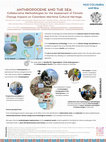
Research paper thumbnail of Anthropocene and the Sea: Collaborative Methodologies for the Assessment of Climate Change Impacts on Colombian Maritime Cultural Heritage

The Asia-Pacific Regional Conference on Underwater Cultural Heritage. National Research Institute of Maritime Cultural Heritage of Korea, 2023
Colombian archaeology has timidly addressed the material culture of recent times despite the fact... more Colombian archaeology has timidly addressed the material culture of recent times despite the fact that, in the last two centuries, humanity has undergone substantial changes in its social and environmental dynamics. From contemporary archaeology, threats such as climate change and pollution are considered as agents that can profoundly affect the Maritime Cultural Heritage of Colombia in its oceans (Pacific and Caribbean). Consequently, a study of the archaeological record corresponding to the Anthropocene should focus on understanding this era characterized by the dynamics of hyper-consumption and global integration of human appropriation of resources. In this sense, the sea behaves as an actor that interconnects the global system and is the medium where waste is transported, thus allowing us to understand the dynamics and movements of deposition. Derived from this, in the last year a methodological proposal has been implemented in two coastal contexts in Tierra Bomba Island, Cartagena de Indias. These are the remains of the San Luis and San José de Bocachica forts, located on the border between the terrestrial and maritime portion, considering the coast a hybrid scenario that connects the sea with the land. This seeks to identify, classify and characterize the evidence of climate change and pollution of the Anthropocene. Thus, collaborative and co-participatory methodologies have been proposed to integrate local knowledge in the identification of values, attributes and impacts of climate change on these sites. From archaeological practice certain gaps can be filled, such as the identification of observation units and materials that allow establishing the relationship between climate change and archaeological contexts. The goal of this poster is not only to present the advances from this study, but also to expose its potential application in the research, management and monitoring of Maritime Heritage from the Colombian Pacific and its present and future climate change impacts.

Research paper thumbnail of Coproducción del Conocimiento para la Identificación de los Impactos del Cambio Climático En el Patrimonio Cultural Marítimo de Cartagena de Indias, Colombia

II Congreso Internacional de Gestión Integral frente al Cambio Climático - Universidad de La Guajira. Sesión de Posters, 2023

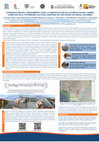
A lo largo de los últimos años, se ha observado cómo el Patrimonio Cultural Costero y Marítimo de... more A lo largo de los últimos años, se ha observado cómo el Patrimonio Cultural Costero y Marítimo de Cartagena de Indias, tanto material como inmaterial, ha sufrido transformaciones y afectaciones debido a factores como la erosión costera, el aumento del nivel del mar, las inundaciones, el cambio de línea costera, entre otros (Del Cairo et al., 2022). Desde un enfoque interinstitucional, acompañado además con una perspectiva interdisciplinaria y comunitaria, se planteó constituir una red de trabajo que acompañara este espacio de colaboración conjunta, donde la coparticipación fuera el eje transversal para la generación de conocimientos sobre el Cambio Climático; ofreciendo, además, soluciones para su mitigación. Es así como se propuso implementar un espacio diseñado para actores comunitarios, interesados por generar un impacto que contrarrestara las afectaciones, producidas por los cambios en los patrones climáticos, en el patrimonio local y regional de Cartagena de Indias (Bolívar, Colombia). El proyecto, denominado “Colaborartorio Azul”, es un laboratorio co-participativo y colaborativo interesado en articular los conocimientos y saberes comunitarios, gubernamentales y académicos sobre los impactos del Cambio Climático. Lo anterior, ante el aumento de la temperatura del planeta provocado por las actividades humanas que han puesto en riesgo al Patrimonio Natural y Cultural (Material - Inmaterial) de esta ciudad (Del Cairo et al., 2023). A través de la vinculación de diversas perspectivas que contribuyeran al desarrollo sostenible de las poblaciones, se generaron espacios de encuentro entre los distintos actores sociales más próximos a esta problemática. Todo esto, con miras a efectuar acciones para la identificación y reconocimiento de las afectaciones sobre las manifestaciones culturales materiales e inmateriales, fortaleciendo la capacidad en toma de decisiones de la comunidad local. Los espacios de cocreación y horizontalización de saberes tenían como objetivo formular mecanismos públicos de transformación frente a esta emergencia mundial. Lo anterior se realizó a través de un trabajo interdisciplinario, analizando las fuentes primarias y secundarias para la reconstrucción histórica sobre la emergencia climática en la ciudad costera, acompañado de las apreciaciones actuales de la comunidad local sobre la importancia del océano para su cotidianidad y existencia sociocultural contemporánea. Entre los resultados de esta primera fase de la investigación, se proporcionó datos útiles para los escenarios presentes y futuros, aportando en la generación de capacidades y divulgación del conocimiento para el diagnóstico y monitoreo de los impactos del Cambio Climático en Cartagena de Indias (Del Cairo et al., 2023), además de los avances de la segunda fase la cual se ha venido trabajando con ICOMOS Internacional,  National Geographic a través del Proyecto Preserving Legacies.

Conference Papers by Liliana Rozo Pinzón
Research paper thumbnail of Climate Chance: Resilience and Adaptation in the Maritime Heritage of Tierrabomba and the Rosario Islands (Cartagena de Indias, Colombia)

8th International Congress for Underwater Archaeology (IKUWA8) - Book of Abstracts, 2025
In 2024, an international workshop was held, supported by National Geographic, the International ... more In 2024, an international workshop was held, supported by National Geographic, the International Council on Monuments and Sites (ICOMOS), and the Climate Heritage Network, in collaboration with the “Preserving Legacies: Creating a Future for Our Past” team. The goal was to develop a collaborative strategy for knowledge transfer regarding the effects of climate change on the Maritime Cultural Landscape of Cartagena de Indias (Colombia), with special attention to Tierrabomba Island and the Rosario Islands. The aim was to raise awareness among the local community, government authorities, and various regional and international audiences about the threats of climate change to the territory and its cultural heritage. The two case studies, Tierrabomba Island and the Rosario Islands, have played a crucial role in shaping the historical trajectory of the city and its influence on the entire Caribbean. However, since the 18th century, climate phenomena have become increasingly evident, influencing the ways in which local communities are organized, as well as the loss of territories and heritage sites located in coastal areas. In the past sixty years, these changes have become more frequent and intense, highlighting the urgent need for adaptation and mitigation strategies to protect the coastal areas of the Colombian Caribbean. Moreover, the maritime landscape is a fundamental part of the identity of the island populations, who face a high risk of disappearing, along with their memory and cultural heritage. Therefore, the purpose of this paper is to present the results of this project, which aims to recognize, document, and transmit this heritage, as well as the risks it faces due to climate change, through narratives that include the resilient voices of local communities and showcase possible alternatives to recover the territory or adapt to these increasingly evident impacts.

Research paper thumbnail of Special Management and Protection Plan - PEMP Fort Bahía: Instrument for the Safeguarding of the Fortified Maritime Cultural Landscape of the World Heritage Site Cartagena de Indias (Colombia)

8th International Congress for Underwater Archaeology (IKUWA8) - Book of Abstracts, 2025
The socio-historical importance of Cartagena de Indias (Colombian Caribbean) during the colonial ... more The socio-historical importance of Cartagena de Indias (Colombian Caribbean) during the colonial period, led to the design and construction of several defensive structures in its territory to prevent enemy invasions of the Spanish Crown. These took place between the 16th and 18th centuries, by empires such as the English and French. Over the years, a whole system of fortifications was built, consisting not only of large fortifications, but also of other types of military constructions, port facilities, civil infrastructures, production plants and the natural elements of the environment. Thus, over the decades, a Fortified Maritime Cultural Landscape was conceived and configured, exposed to constant attacks that led to modifications to improve its functioning. As a result of all this, the complex system ended up with different fortifications, batteries, farms, roads, maritime routes, shipwrecks, docks and other anthropic elements that today constitute the diverse Maritime Cultural Heritage of the region. There are also many submerged archaeological contexts which represent the Underwater Cultural Heritage (UCH) of this landscape. Since 1984, Cartagena de Indias has been declared a World Heritage Site and the entities in charge of the subject have structured protection and safeguarding mechanisms; this is the case of the Special Management and Protection Plan - PEMP Fort Bahía. The goal of this paper is to present the development of this Plan, which has been structured in an interdisciplinary and interinstitutional way in order to promote and guarantee, among other things, the management and protection of the goods and contexts belonging to the Underwater Cultural Heritage. Thanks to the different phases of this plan, which include the diagnosis and research of the different cultural and natural components that compose this landscape, it has been possible to carry out governmental, academic and community articulation. All this in order to build the necessary mechanisms that will allow the short and long-term conservation of the components of the Bay of Cartagena de Indias, given its importance and historical relevance for the Caribbean and the world.

Research paper thumbnail of Anthropocene and the Sea: Collaborative Methodologies for the Assessment of Climate Change Impacts on Colombian Maritime Cultural Heritage

The Asia-Pacific Regional Conference on Underwater Cultural Heritage. National Research Institute of Maritime Cultural Heritage of Korea - Abstract Book, 2023

Colombian archaeology has timidly addressed the material culture of recent times despite the fact... more Colombian archaeology has timidly addressed the material culture of recent times despite the fact that, in the last two centuries, humanity has undergone substantial changes in its social and environmental dynamics. From contemporary archaeology, threats such as climate change and pollution are considered as agents that can profoundly affect the Maritime Cultural Heritage of Colombia in its oceans (Pacific and Caribbean). Consequently, a study of the archaeological record corresponding to the Anthropocene should focus on understanding this era characterized by the dynamics of hyper-consumption and global integration of human appropriation of resources. In this sense, the sea behaves as an actor that interconnects the global system and is the medium where waste is transported, thus allowing us to understand the dynamics and movements of deposition. Derived from this, in the last year a methodological proposal has been implemented in two coastal contexts in Tierra Bomba Island, Cartagena de Indias. These are the remains of the San Luis and San José de Bocachica forts, located on the border between the terrestrial and maritime portion, considering the coast a hybrid scenario that connects the sea with the land. This seeks to identify, classify and characterize the evidence of climate change and pollution of the Anthropocene. Thus, collaborative and co-participatory methodologies have been proposed to integrate local knowledge in the identification of values, attributes and impacts of climate change on these sites. From archaeological practice certain gaps can be filled, such as the identification of observation units and materials that allow establishing the relationship between climate change and archaeological contexts. The goal of this poster is not only to present the advances from this study, but also to expose its potential application in the research, management and monitoring of Maritime Heritage from the Colombian Pacific and its present and future climate change impacts.

Investigation Reports by Liliana Rozo Pinzón
Research paper thumbnail of Proyecto Colaborartorio Azul Fase II: Propuesta de Evaluación y Monitoreo Co-Participativo sobre los Efectos del Cambio Climático en el Patrimonio Cultural Costero de Cartagena de Indias, Colombia

Instituto de Patrimonio Cultural de Cartagena (IPCC) - Observatorio de Patrimonio Cultural de la Universidad de Cartagena - Fundación Colombia Anfibia, 2024
Los resultados obtenidos en 2022 con la fase I del proyecto sobre la identificación de efectos de... more Los resultados obtenidos en 2022 con la fase I del proyecto sobre la identificación de efectos de Cambio Climático sobre Bienes de Interés Cultural localizados en la Isla de Tierrabomba y el Centro Histórico de Cartagena de Indias (Colombia), se enfocaron en sentar las bases para formular la propuesta metodológica coparticipativa para proponer medidas de protección y mitigación. Para ello, se integraron las diversas formas de conocimiento provenientes de representantes institucionales,  miembros de la comunidad y científicos con el fin de identificar unidades de observación que permitieran analizar los impactos y generar las medidas necesarias de salvaguardia. Así, en la segunda fase del proyecto, se propuso realizar una primera aproximación a las estrategias de evaluación y monitoreo para medir la vulnerabilidad de los sitios patrimoniales por efectos del Cambio Climático. En este sentido, se buscó plantear las bases conceptuales y metodológicas para la evaluación y el monitoreo de los contextos arqueológicos localizados en la zona costera e intermareal de la Isla de Tierrabomba (corregimientos de Bocachica y Tierra Bomba), el Centro Histórico y en la zona de Barú.

Research paper thumbnail of Componente Arqueológico Plan Especial de Manejo y Protección del Paisaje Fortificado de la Bahía de Cartagena de Indias - PEMP FORT BAHÍA

Ministerio de Cultura - Escuela Taller de Cartagena de Indias, 2022

En el marco de un trabajo interdisciplinario e interinstitucional, el Componente Arqueológico del... more En el marco de un trabajo interdisciplinario e interinstitucional, el Componente Arqueológico del PEMP Fort Bahía surge de la necesidad de brindar mayores condiciones de gestión y protección al Patrimonio Cultural Arqueológico de la Nación, específicamente, de la Bahía de Cartagena de Indias y sus alrededores. Con la declaratoria como Patrimonio Histórico y Cultural de la Humanidad por parte del Comité de Patrimonio de la Humanidad de la UNESCO en 1984, y considerando uno de los componentes patrimoniales fundamentales de la ciudad como lo son los contextos arqueológicos, se manifestó aún más la importancia de generar estos mecanismos de protección a un patrimonio tan vulnerable. Con esta figura, se encamina y se aúnan los esfuerzos generados en los años recientes en pro de la conservación a corto y largo plazo de las evidencias, en este caso tangibles, de las actividades humanas del pasado en esta área del Caribe Colombiano.
La concepción de un Paisaje Cultural Fortificado de la Bahía de Cartagena de Indias se encamina, entonces, hacia una protección, manejo y gestión integral de cada uno de los componentes que constituyen la región. No obstante, el ámbito arqueológico se posiciona como un eje transversal para la comprensión histórica de este territorio y cada uno de los contextos terrestres, costeros, intermareales y subacuáticos que lo conforman. Partiendo de la noción de este tipo de paisaje y los múltiples componentes que lo constituyen, es necesario mencionar que el marco temporal en el que se encuentra esta herramienta proviene desde el periodo de contacto entre las comunidades originarias-indígenas con la Corona Española, hasta la contemporaneidad (con especial relevancia en el periodo Colonial). Puesto que es en este momento que se cimientan los cambios estructurales a los que se vio expuesto por siglos el territorio. Este último, abarca una gran área de estudio que comprende desde Punta Canoa hasta la península de Barú.

Book Chapters by Liliana Rozo Pinzón

Mujeres ante el cambio climático: un futuro con esperanza, 2024