Papers by Marc Eric S . Reyes
The Fizzling Effect: A Phenomenological Study on Suicidality Among Filipino Lesbian Women and Gay Men
Psychological Studies

Psychological Studies, 2017
Suicide is now the second leading cause of death among the 15- to 29-year-old age group (WHO in: ... more Suicide is now the second leading cause of death among the 15- to 29-year-old age group (WHO in: Preventing suicide: a global imperative, executive summary, World Health Organization, Geneva, 2014. Retrieved from www.who.int/mental_health/suicideprevention/exe_summary_english.pdf). Current research supports the observation that suicidality is a critical concern among lesbian, gay, bisexual, and transgender populations, who may be at greater risk than their heterosexual peers. Phenomenological methods were used to study the dynamics of lesbian women and gay men suicidality in the Philippines. A selection of five self-identified gay men and four self-identified lesbian women met the inclusion criteria of the study and, individually, went through an in depth interview, consisting of two parts, namely the robotfoto and the semi-structured interview. Analyses went through reduction, description, and finding the essence. Three distinct but interrelated themes surfaced: effervescing dilemma, pressurizing turmoil, and fizzling explosion. These themes suggest that Filipino lesbian women and gay men may suffer from internalized stigma and heaving emotional turmoil, which contribute to suicidal ideation and self-injurious behaviors. Difficult life events may trigger an explosion of pent-up negative emotions, culminating in attempted suicide.
North American Journal of Psychology, 2022
The alarmingly increasing prevalence rate of suicide makes it a major public health concern world... more The alarmingly increasing prevalence rate of suicide makes it a major public health concern worldwide. Nevertheless, suicidality is preventable and manageable given the continuous efforts to fully understand it. This grounded study examined the process of suicide recovery among a selection of Filipino youth aged 15 to 27. Twenty-five survivors of suicide attempts were purposively selected and went through in-depth interviews. Emerging categories were monitored until all new data fitted into existing categories and no new data surfaced from further theoretical sampling, indicating theoretical saturation. Theoretical triangulation aided in making the findings comprehensive. Peer debriefing and member validation were conscientiously employed to yield a substantive theory called the Inflorescence Model of Suicide Recovery. This model likened suicide recovery to the processes that a flowering plant goes through. It elucidates the phases of suicide recovery: (1) immersion: the acknowledgment of brokenness and vulnerabilities; (2) germination: the process of splitting off the seed coat of emotional pains; (3) emersion: the sprouting from the soil; (4) entrenchment: the process of rooting deeper; and (5) inflorescence: the flourishing and sustaining of suicide recovery. The Inflorescence Model of Suicide Recovery can contribute to the development of recovery-focused psychological intervention and management strategies for youths suffering from suicidality.
Clinical Medicine Insights: Psychiatry, 2023
The primary aim of suicidology is to understand the phenomenon of suicide by increasing its predi... more The primary aim of suicidology is to understand the phenomenon of suicide by increasing its predictability and prevention to reduce the suicide rate. However, the rate of suicide remained obstinately high. This phenomenological study explored the different perspectives of 5 suicide attempt survivors and 7 mental health professionals on suicide recovery and its process. Phenomenological methods were used to analyze the participants’ lived experiences through reduction, description, and finding the essence. Four essential emergent elements elucidate these perspectives, implying the general status of the current suicide healthcare system, vital in understanding suicide and suicide recovery, namely: (1) contextual elements: factors that describe how the participants view suicidality and suicide recovery; (2) facilitative elements: elements that lead to and affect the youths’ suicide recovery; (3) impeding elements: factors that hinder suicide recovery; and (4) procedural elements: conditions that pertain to the steps in suicide management and intervention program. By integrating the findings of this current phenomenological study with the Inflorescence Model of Suicide Recovery, a suicide recovery-focused paradigm for suicide care and management was conceptualized. Exploring suicide recovery and its process found that there are different perspectives on suicide among suicide attempt survivors and mental health professionals; thereby, showing the gaps or cracks that exist in the health care system. This fragmentation results in deaths of suicide despite psychological and psychiatric treatments. Thus, the findings were used to conceptualize the Inflorescence Suicide Management Program (ISMP) that hopes to contribute to establishing a structured, systemic, and collaborative health care system.
North American Journal of Psychology, 2024
Sexual minority groups are at risk of childhood adversity, which may significantly influence iden... more Sexual minority groups are at risk of childhood adversity, which may significantly influence identity development. As such, Filipino LGBTQ+ individuals who have been exposed to adverse childhood experiences (ACE) may develop negative identities. However, studies have shown that adverse incidences in childhood may be buffered by self- compassion. Thus, the present study investigated whether self- compassion would be a moderator in the relationship between adverse childhood experiences and negative identity development among self- identified lesbian and gay youths in the Philippines using an explanatory, cross-sectional design. A total of 309 Filipinos (lesbian = 126; gay = 183) aged 18 to 24 completed the Adverse Childhood Experiences - International Questionnaire, Lesbian Gay and Bisexual Identity Scale, and Self-Compassion Scale. A Pearson correlation analysis revealed that adverse childhood experiences, negative identity, and self-compassion were significantly associated. Specifically, the analysis showed a significant interaction between ACE, negative identity, and self- compassion, indicating that self-compassion moderates the relationship between ACE and negative identity. For individuals with low self- compassion, there was a moderate positive correlation between ACE and negative identity. However, this relationship was not significant for individuals with high self-compassion.
The Fizzling Effect: A Phenomenological Study on Suicidality Among Filipino Lesbian Women and Gay Men
Psychological Studies
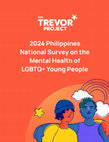
2024 Philippines National Survey on the Mental Health of LGBTQ+ Young People, 2024
The 2024 Philippines National Survey on the Mental Health of LGBTQ+ Young People is the first cou... more The 2024 Philippines National Survey on the Mental Health of LGBTQ+ Young People is the first country-wide survey to focus on LGBTQ+ young people and individual and socioeconomic factors that influence their mental health. While more recent national demographic studies have begun to capture information on sexual orientation and gender identity SOGI, this survey is the first of this scale to examine LGBTQ+ youth mental health in the Philippines.
This project was led by The Trevor Project and the Psychological Association of the Philippines PAP LGBT Psychology Special Interest Group, the first formally recognized collective of psychologists and allied mental health professionals in Southeast Asia. The survey underscores the unique experiences and stressors that LGBTQ+ young people face. While these findings illustrate a number of mental health challenges among this group, they also offer valuable insight into the protective factors that may lead to better mental health outcomes for LGBTQ+ people.
For LGBTQ+ young people in the Philippines, anxiety, depression, and considering or attempting suicide remain far too common. However, the survey shows that accepting communities, supportive family members, and participation in religious practices, among other factors, were associated with lower rates of adverse mental health outcomes.
These findings give us a roadmap to beer understand the mental health and experiences of LGBTQ+ young people across the country, and what steps we can take as adults and allies to support these young people.
We hope that mental health care providers, policymakers, educators, and other youth-facing professionals and organizations use these data as a resource to help build the safe and affirming world that all young people – including LGBTQ+ Filipino young people – deserve
Religious and Spiritual Struggles in Psychotherapy: A Qualitative Exploration of the Experiences of Filipino Secular Psychotherapists in the Philippines
International journal for the advancement of counselling, Mar 5, 2024
Archives of Sexual Behavior, Nov 30, 2023

Climate justice beliefs related to climate action and policy support around the world
Contemporary climate change advocacy, science, and policymaking widely incorporate justice framin... more Contemporary climate change advocacy, science, and policymaking widely incorporate justice framing, but little is known about public understanding of climate justice and the degree to which justice-related beliefs function as a motivation for climate action and policy support. We assessed climate justice awareness among adults in 11 countries spanning the Global North and South (N = 5,627). Most participants (66.2%) had never heard of climate justice. Endorsement of common climate justice-related beliefs was widespread (e.g., acknowledging the need to give voice to frontline communities, and the underpinning role of colonialism and capitalism in the climate crisis). Climate justice beliefs were associated with various indices of climate action and policy support. These associations tended to be stronger in high emitting countries and where social inequality is a more politically salient topic. The results highlight a risk that less privileged groups, often the most affected, are lef...
Sexuality & Culture
The changes in people's way of life through the years raise questions on how they address existen... more The changes in people's way of life through the years raise questions on how they address existential needs and concerns, particularly those related to life and death and spiritual connections. Through a scoping review, we surveyed studies on meaning in life, death anxiety, and spirituality within the lesbian, gay, and bisexual (LGB) community. We determined the extent to which these variables have been studied among LGB participants. A total of 28 eligible articles were reviewed. Six studies were found about meaning in life, five studies about death anxiety, and 16 studies about spirituality. Results suggest that meaning in life was derived from experiences related to parenthood, couplehood, and work satisfaction. Studies on death anxiety among LGB participants, which date back to the 1980 and 1990s, indicated the need to conduct present studies in this area. The review showed that LGB members distinguished between spirituality and religion, giving them more positive recognition of the former than the latter. The forms of spiritual expression were anchored to religious practices, for some, and other expressions of belief and faith outside the confines of formally established religions. Spiritual expressions generally accorded the LGB members direction and satisfaction in life. Not all segments of the LGB community were represented in the studies. The available studies, dominantly quantitative, centered only on the LGB experience. Target age groups varied across the studies. The review indicates that future studies can work on exploring these existential factors considering the emerging contexts and paradigms. Future research can focus on determining what factors contribute to meaning in life, given the changes in time.
Self-Stigma, Self-Concept Clarity, and Mental Health Status of Filipino LGBT Individuals
North American Journal of Psychology, 2015
Many Filipino LGBTs still continue to experience stigma, prejudice, and discrimination (Psycholog... more Many Filipino LGBTs still continue to experience stigma, prejudice, and discrimination (Psychological Association of the Philippines, PAP, 2011). According to PAP (2011) Filipino LGBTs, as sexual minorities, continue to experience countless amounts of minority stressors from society due to the constant contrast of their values and that of the values of the dominant society (Austria, 2004; Bernardo, 2013; IGLHRC, 2011; Manalastas, 2013; Manalastas & del Pilar, 2005; Ofreneo, 2013). Public opinion also suggests that anti-gay prejudice is alive among Filipinos. In the analysis conducted by Manalastas and del Pilar (2005), a nationally representative survey found that 1 out of 4 Filipinos would reject gay people as neighbors and that 28% of Filipino adults consider being gay as "unacceptable." The views regarding homosexuality in the Philippines are somewhat attributed to the dominant culture of heterosexuality and religious teachings. Cultural norms are built around the domin...
I Am What I Am: Congruence and Quality of Life Among Trans Pinoys/Pinays
Sexuality & Culture
A Missing Piece in the Puzzle: Exploring the Phenomenon of Suicide Recovery in Developing a Recovery-Focused Suicide Management Program
Clinical Medicine Insights: Psychiatry
The primary aim of suicidology is to understand the phenomenon of suicide by increasing its predi... more The primary aim of suicidology is to understand the phenomenon of suicide by increasing its predictability and prevention to reduce the suicide rate. However, the rate of suicide remained obstinately high. This phenomenological study explored the different perspectives of 5 suicide attempt survivors and 7 mental health professionals on suicide recovery and its process. Phenomenological methods were used to analyze the participants' lived experiences through reduction, description, and finding the essence. Four essential emergent elements elucidate these perspectives, implying the general status of the current suicide healthcare system, vital in understanding suicide and suicide recovery, namely: (1) contextual elements: factors that describe how the participants view suicidality and suicide recovery; (2) facilitative elements: elements that lead to and affect the youths' suicide recovery; (3) impeding elements: factors that hinder suicide recovery; and (4) procedural element...
BMC Psychology, Jul 6, 2023
The use of social media significantly impacts mental health. It can enhance connection, increase ... more The use of social media significantly impacts mental health. It can enhance connection, increase self-esteem, and improve a sense of belonging. But it can also lead to tremendous stress, pressure to compare oneself to others, and increased sadness and isolation. Mindful use is essential to social media consumption.
Psychological Studies, May 19, 2023
Empirical evidence shows that Internet Gaming Disorder (IGD) with poor psychological well-being i... more Empirical evidence shows that Internet Gaming Disorder (IGD) with poor psychological well-being increases. IGD has become an emerging issue of significant public health concern and the World Health Organization has recently recognized it as a mental health condition. This study examined the efficacy of the Acceptance and Cognitive Restructuring Intervention Program (ACRIP) in reducing the symptoms of IGD and improving the psychological well-being of adolescent gamers from select Asian cultures after proving it effective in a prior study in the Indian setting. The development of the ACRIP employed a sequential exploratory research design and randomized controlled trial on thirty participants. Internet Gaming Disorder (IGDS9-SF) and Ryff's Psychological well-being (PWB) scales were used to measure the severity of the gaming disorder and the state of psychological health of the experimental and control groups. Power analysis ascertained the study with a power of 0.90, indicating a strong probability of obtaining a statistically significant effect. Statistical analyses using paired t-test and MANOVA on post-test mean scores on IGD and PWB of the experimental group showed a significant difference which suggested that the ACRIP is efficacious and culture-free.
Death Anxiety and Self-Esteem of the Filipino Able-aged
With the Terror Management Theory in mind, the research investigated if a relationship exists bet... more With the Terror Management Theory in mind, the research investigated if a relationship exists between a Filipino able-aged's self-esteem and death anxiety. From a pool of 574 Filipino elderly participants, a total of 256 Filipino able-aged with ages 60 years old and above qualified as respondents of the study. Respondents' self-esteem and death anxiety were measured through a Filipino translated version of the Rosenberg Self-esteem Scale and the Templer's Death Anxiety Scale, respectively. Results revealed that the respondents have an average self-esteem and that their anxiety concerning death is within normal limits. Moreover, a significant inverse relationship exists between self-esteem and death anxiety which supports the Terror Management Theory proposed by social psychologists Jeff Greenberg, Tom Pyszczynski, and Sheldon Solomon in 1986. Self-esteem likewise has the ability to affect a Filipino able-aged's death anxiety but self-esteem alone is not strong enough to either reinforce or mitigate their anxiety of death.
Unraveling Non-Suicidal Self-Injury: Understanding the Behavioral Dynamics of Filipino Adolescents at Risk of Deliberate Self Harm
North American Journal of Psychology, 2020
The increasing number of adolescents at risk of non-suicidal self-injurious (NSSI) behaviors has ... more The increasing number of adolescents at risk of non-suicidal self-injurious (NSSI) behaviors has caused concern among mental health professionals and researchers. Prior studies have revealed the classification, pervasiveness, correlates, forms, and functions of NSSI; however, the behavioral dynamics are still unexplored. In order to bridge this knowledge gap, a sequential-explanatory study was conducted to illustrate, describe, and understand the behavioral dynamics of Filipino adolescents at risk of NSSI. Fifty-one participants completed a battery of psychological tests to measure personality traits and five were interviewed. Results revealed that adolescents at risk for NSSI exhibited high levels of neuroticism and openness to experience but low levels of extraversion and conscientiousness. Borderline personality traits were also common among adolescents with NSSI as evidenced by high levels of impulsivity, affective instability, abandonment, and emptiness, but low levels of interpersonal relationships, and self-image. A model fit further signified that only neuroticism and borderline personality traits moderately influence NSSI. Additionally, from the rich and detailed interpretation of the interviews gathered in this study, an interesting description of behavior was identified which includes (a) disturbed, (b) diverted and (c) devitalized behavior. A descriptive circuitry model emerged illustrating the behavioral dynamics of adolescents engaging with NSSI as a product of the intersection of personality and behavior. © NAJP
Love is a worldwide known phenomenon that affects many aspects of human life, including consideri... more Love is a worldwide known phenomenon that affects many aspects of human life, including considering a romantic partner with whom to bond. Thus, developing a reliable and valid measure of love experiences is crucial. One of the most popular tools to test love levels is Sternberg's 45-item Triangular Love Scale (TLS-45), which measures three love components: Intimacy, Passion, and Commitment. However, our literature review reveals that the majority of studies (64%) use a broad variety of shortened versions of the TLS-45. To achieve scientific consensus and improve the reliability, comparability, and generalizability of results across studies, here, we develop a short version of the scale–the TLS-15–which contains 15 items with a 5-point rather than 9-point response scale. In Study 1 (N = 7,332), we re-analyzed secondary data from a large-scale multinational study that validated the original TLS-45 to establish whether the scale could be truncated. In Study 2 (N = 307), we provided...
Body Dysmorphia and Selfie Behavior of Filipino Patients With and Without Mild Acne Vulgaris: A Descriptive Cross-Sectional Study
Journal of Medicine, University of Santo Tomas
Background: Acne vulgaris (AV) is a chronic inflammatory skin condition that is non-life-threaten... more Background: Acne vulgaris (AV) is a chronic inflammatory skin condition that is non-life-threatening but may cause significant psychological morbidity regardless of severity. An extreme case of this is depicted in body dysmorphic disorder (BDD), which is often an undiagnosed condition presenting with excessive preoccupation of perceived flaws not observable by others. With the increasing popularity of social media throughout the years, there has been budding researches exploring its psychological implications, particularly on “selfies” and its possible association with self-image and body dysmorphia. Objectives: To compare body dysmorphic symptoms and selfie behavior between patients with mild AV versus those without AV. Methods This is a single-center, cross-sectional study among patients with mild AV and those without AV seen through a teledermatology platform of a tertiary hospital from April to June 2022. Results: A total of 207 patients were included in this study – 107 patient...



Uploads
Papers by Marc Eric S . Reyes
This project was led by The Trevor Project and the Psychological Association of the Philippines PAP LGBT Psychology Special Interest Group, the first formally recognized collective of psychologists and allied mental health professionals in Southeast Asia. The survey underscores the unique experiences and stressors that LGBTQ+ young people face. While these findings illustrate a number of mental health challenges among this group, they also offer valuable insight into the protective factors that may lead to better mental health outcomes for LGBTQ+ people.
For LGBTQ+ young people in the Philippines, anxiety, depression, and considering or attempting suicide remain far too common. However, the survey shows that accepting communities, supportive family members, and participation in religious practices, among other factors, were associated with lower rates of adverse mental health outcomes.
These findings give us a roadmap to beer understand the mental health and experiences of LGBTQ+ young people across the country, and what steps we can take as adults and allies to support these young people.
We hope that mental health care providers, policymakers, educators, and other youth-facing professionals and organizations use these data as a resource to help build the safe and affirming world that all young people – including LGBTQ+ Filipino young people – deserve