Papers by Markus Messling

Research paper thumbnail of The Epoch of Universalism 1769–1989
Hospitality and solidarity are certainly universal needs and gifts, but as certain as this is the... more Hospitality and solidarity are certainly universal needs and gifts, but as certain as this is the fact that many Europeans struggle with them and have to relearn them often enough, eyes wide open, when they come around in the world. How much this fact is linked to a universalist understanding of Europe, has been rightly and painfully explained by Achille Mbembe when he speaks of what is called the 'Western society' as a "society of enmity", a democratic society that has ever since dialectically built on its "nocturnal body", of those who were exploited by the imperial powers whilst its inhabitants claimed to represent the values of liberty, equality and solidarity. Therefore, a place dedicated to the reflection on Europe seemed to fit very well as a place where to launch a project on "minor universality", on new ways and hopes to experience and reflect a shared humanity that shall no more subsume particularities. "Is there anything that relates us to others so that we can say that we are?", asks Achille Mbembe. To approach this question, a step back seems necessary to what that was, Western Universalism, as a motor for emancipatory ideas, and as an ideology of domination at the same time. The conference held at the Villa Europa was the first one we organized at Saarbrücken continuing years of shared activities on "experiences of the global" at Centre Marc Bloch in Berlin. This is the occasion to thank the colleagues who have shared thoughts with us throughout many years and thus helped shaping the "Minor Universality" project. Our special gratitude goes to

Research paper thumbnail of Fashioning Universality in Literature: Mohamed Mbougar Sarr’s "La plus secrète mémoire des hommes"

Literature and the Work of Universality, 2024

There are two predominant approaches to universality in the contemporary discussion of world lite... more There are two predominant approaches to universality in the contemporary discussion of world literature. The first, rooted in neo-Marxist or Bourdieusian social theory, contends that universality is produced in material processes of circulation and cultural hegemony across the fields of translation and publishing, and through frictions between centres and peripheries. Here, universality is related to norms produced in social and political interactions. A second approach takes recourse to Walter Benjamin and Erich Auerbach and the idea that the anthropological dimension of narration can open up concrete settings towards a shared horizon, humanity and historical justice. In this case, universality, as experience brought to language, “appears” as an emotional and normative possibility that is able to transcend the problems singled out in the first approach. While these understandings are often considered mutually exclusive, the essay argues this is not the case. In his novel La plus secrète mémoire des hommes (The Most Secret Memory of Men), 2021 Goncourt Prize winner Mohamed Mbougar Sarr develops a form of rewriting (literary) history cognizant of the material conditions of the European-African relation and its narrative articulation. Taking into account the first approach, Sarr fashions a new, minor form of universality in the reparative process of writing.

Universalism(e)&…, 2024

For us, this concept of a universality born out of a crisis of modernity is paramount. If globali... more For us, this concept of a universality born out of a crisis of modernity is paramount. If globalisation entails a mighty fragmentation, certain narrative moments have the potential to condense forms of life and a divergent consciousness of world, realised in the practice of conversation. As a specific constellation, it allows for doubt and return, a meandering search for ways of saying, styles of expression and thought, and thus generates a voice that can—at any moment—bring forth an existential present, an affective pause in general discourse, a threshold to universality.

Research paper thumbnail of On Minor Universality

Minor Universality / Universalité mineure, 2023

Our contribution seeks to render intelligible minor forms of a world-consciousness generated thro... more Our contribution seeks to render intelligible minor forms of a world-consciousness generated through social and cultural practices. Departing from Zineb Sedira’s installation “Dreams Have No Titles” for the French Pavilion of the 2022 Venice Biennale and concluding with our project’s research exhibition “The Pregnant Oyster: Doubts on Universalism” at Berlin’s Haus der Kulturen der Welt, we discuss how narrative forms (beyond the book) produce experiences of a shared world. Shifting from an understanding of universality as effect of the universal in particular worlds, we return to the epistemological proposal of the microstoria (Ginzburg, Levi, Revel) to inverse this relation. In doing so, we suggest the concept of a minor universality, by which we describe the genesis of a universal consciousness from concrete contexts. Our notion mobilises Deleuze and Guattari’s concept of the minor through their engagement with Franz Kafka. We draw on it to address the Algerian anti-colonial struggle and the practice of sonic radio resistance described inFrantz Fanon’s “This is the Voice of Free Algeria”. Not captured through the binary of power/resistance, minority/majority, ours/yours, the minor produces instead a potentiality for change, for the not-yet, which foreshadows and intuits a new humanity.

Research paper thumbnail of On the ends of universalism

The Epoch of Universalism: 1769–1989, 2021
Starting with the times of Napoleon Bonaparte and the nexus between European universalism and imp... more Starting with the times of Napoleon Bonaparte and the nexus between European universalism and imperialism, ending with the 1989 scenario and its global implications, this essay analyses the ends of European universalism. It does so in a double sense by addressing its interests and objectives, as well as the end of its legitimation in the times we live in. Through amontage of historical and philosophical constellations from1769 to 2019, ranging fromGoethe and Champollion to Max Lingner and Frantz Fanon, Alain Mabanckou and Camille de Toledo, it seeks to understand the promises and hopes that universalismwas carrying, as well as the deceptions and losses that were caused by its epistemic implication in power relations. The history of universal progress entails a dialectics of contestation and provincialisation, both in a European and in a global perspective. If 1989 has left us with an end of utopia, then we need to understand this history to draw hope for a minor universality.

Research paper thumbnail of Wilhelm von Humboldt’s Critique of a Hegelian Understanding of Modernity. A Contribution to the Debate on (Post)Colonialism

Forum for Modern Language Studies, 2017

Since Edward W. Said’s Orientalism, many polemics on the role of European philologies in cultura... more Since Edward W. Said’s Orientalism, many polemics on the role of European philologies
in cultural reflection have emerged. A point missed so far in this debate is
the historical fact that imperial universalism had entered a crisis already shortly
after the French Revolution, and not only in the Romantic rejection of its French
variant. Alongside this existed attempts to mediate between the force of the
universal legal claim and the diversity of the world. Both G. W. F. Hegel and
Wilhelm von Humboldt clearly represent this position, but while Hegel unsentimentally
observes the disappearance of non-European languages and
cultures in historical progress, Humboldt lucidly foresees the danger of a
monotonization of the world, and tries to establish a dialogical approach which
does not neutralize the ‘other’ as always also the same. This is where the
possibility of thinking a more diverse modernity finds its historical depth.

ANNALES HSS, 2012

In an article that examines the return to philology, Geoffrey Harpham has shown that from the bir... more In an article that examines the return to philology, Geoffrey Harpham has shown that from the birth of modern philology, rigorous work on the immanent structures of texts necessitated an engagement with cultural interpretation, which became more forceful later on. If the positions postulating a return to philology aspire to representing more than a highly ideological positivist reflex in response to the crisis of traditional, neo-humanistic erudition, they must account for this notion of cultural surplus, which they are unable to excise from the tradition of the discipline. But it is precisely in philology’s hermeneutic dimension that resides
the danger of producing culturally interventionist models ("Leitbilder"), which underlie and undermine the exigencies of humanist practice.

Annales. Histoire, Sciences Sociales, 2012
Le tournant philologique dans les sciences des textes est ancré dans la critique de la théorie li... more Le tournant philologique dans les sciences des textes est ancré dans la critique de la théorie littéraire et la recherche de l’objectivité dans la compréhension des écrits. Mais si l’idée de se concentrer sur la structure immanente des textes a été à l’origine de la philologie moderne, les problèmes du sens et de la traduction ont produit un surplus au cours du XIXe siècle qui peut être décrit en termes d’herméneutique culturelle. Ainsi la philologie historique a considérablement élargi sa pratique pour inclure la dimension culturelle. Edward Saïd et ses disciples en ont exploré les implications en lien avec la constitution d’une hégémonie discursive européenne. Pour que le retour à la philologie ne devienne pas l’expression nostalgique du regret du déclin d’une science classique, il faut prendre ce passé en compte.

Research paper thumbnail of Text and Determination: On Racism in 19th Century European Philology

Philological Encounters, 2016

Protagonists of the ‘philological turn’ have claimed philology to be a self-reflective praxis. Th... more Protagonists of the ‘philological turn’ have claimed philology to be a self-reflective praxis. The history of modern philology however demonstrates that this can only be understood as a demand. All too often, philological conceptions went hand in glove with a deterministic anthropology. Whereas current research on the nexus between philology and racial thought focus on how biopolitical assumptions could be applied within philological disciplines, the idea of a ‘hard’ anthropological nucleus and a ‘soft’ textual culture referring to it needs to be revised. Because of their methodological potential and cultural strength, European philologies were scientific models up to the second half of the 19th century and relied on the same epistemic assumptions from which ‘modern’ raciological discourses were born. This comes mainly from the relation established since the 17th century between the variety of languages, scripts and textual cultures on the one hand, and rationality on the other. The arguments that stem from this discourse of a challenged universalism were amalgamated with genealogical thought in 19th century philology and an obsession with origins as the biblical narrative faded away. Thus, spiritual or cognitive forms, understood as determining factors in historical evolution, could then be linked to an assumed ‘original’ intellectual or anthropological potentiality. However, raciological conceptualizations have been far from being without alternative. My paper argues that if the return to philology aims to be more than a reaction to the normative loss of textual culture, then the epistemological struggle within the history of philology needs to be reflected in its relevance for any ‘future’ philology.

Philological Encounters, 2017

Zeitschrift für Ideengeschichte, 2009

Im Juli 1826 hat der russische Gesandte beim Heiligen Stuhl die Faxen dicke: Graf Italinsky bitte... more Im Juli 1826 hat der russische Gesandte beim Heiligen Stuhl die Faxen dicke: Graf Italinsky bittet in die russische Gesandtschaft zum Duell vor Zeugen. Berufen sind all jene «Archäologico- Diplomaten» – Gesandte, Minister, Forscher, Archivare, Vertreter der Kurie –, die über die Altertümer in Rom ein Wörtchen mitreden und insbesondere die von Papst Leo XII. in Auftrag gegebene Dokumentation der Hieroglypheninschriften auf den römischen Obelisken mitverfolgen. «Le tout Rome» befi ndet sich im Frühsommer 1826 im Obeliskenfi eber. So war Champollion aus Livorno in die Ewige Stadt gerufen worden, um einer Revisionskommission vorzustehen, welche die Kopie der Hieroglyphen kritisch begleiten sollte.

Books by Markus Messling

Research paper thumbnail of Universalism(e) & ... Conversations.
This book confronts the history and legitimacy of Western Universalism. In the form of conversati... more This book confronts the history and legitimacy of Western Universalism. In the form of conversations, it documents thinking-in-process about how new forms of universality after hegemonic universalism can be thought and practised. Bringing into play their practices and theories, the interlocutors of Universalism(e) & … lay their own traces of a minor universality, situated in the troubling present of our times.

Ce livre s’attaque à l'histoire et à la légitimité de l’universalisme occidental. Sous la forme de conversations, il documente la réflexion en cours sur les façons de penser et de pratiquer de nouvelles formes d’universalité après l’universalisme hégémonique. À partir de leurs pratiques et de leurs théories, les interlocuteurs d’Universalism(e) & ... font apparaître leur propre cheminement autour de cette universalité mineure située dans le présent troublant de notre époque. 

Universalism(e) & … révolution, histoires concrètes, préhistoire, multiláteralisme, savoir(s), the partisan position, narration, reparation   

Entretiens avec / Conversations with: Arjun Appadurai, Leyla Dakhli, Souleymane Bachir Diagne, Giovanni Levi, Gisèle Sapiro, David Scott, Adania Shibli, Maria Stavrinaki
Research paper thumbnail of Minor Universality. Rethinking Humanity After Western Universalism

Minor Universality. Rethinking Humanity After Western Universalism / Universalité mineure. Penser l'humanité après l'universalisme occidental, 2023

The circulation and entanglements of human beings, data, and goods have not necessarily and by th... more The circulation and entanglements of human beings, data, and goods have not necessarily and by themselves generated a universalising consciousness. The "global" and the "universal", in other words, are not the same. The idea of a world-society remains highly contested. Our times are marked by the fragmentation of a double relativistic character: the inevitable critique of Western universalism on the one hand, and resurgent identitarian and neo-nationalistic claims to identity on the other. Sources of an argumentation for a strong universalism brought forward by Western traditions such as Christianity, Marxism, and Liberalism have largely lost their legitimation. All the while, manifold and situated narratives of a common world that re-address the universal are under way of being produced and gain significance. This volume tracks the development and relevance of such cultural and social practices that posit forms of what we call minor universality. It asks: Where and how do contemporary practices open up concrete settings so as to create experiences, reflections and agencies of a shared humanity?

With contributions by Isaac Bazié, Anil Bhatti, Jean-Luc Chappey, Elsie Cohen, Leyla Dakhli, Souleymane Bachir Diagne, Nicole Fischer, Albert Gouaffo, Stefan Helgesson, Fatma Hotait, Christopher M. Hutton, Ananya Jahanara Kabir, Mario Laarmann, Markus Messling & Jonas Tinius, Rukmini Bhaya Nair, Olivier Remaud, Gisèle Sapiro, Bénédicte Savoy, Maria-Anna Schiffers, Laurens Schlicht, Sergio Ugalde Quintana, Hélène Thierard, Khadija von Zinnenburg Carroll.

Universality After Universalism: On Francophone Literatures of the Present, 2023

The idea of universalism inherited from the French Revolution has been strongly discredited by it... more The idea of universalism inherited from the French Revolution has been strongly discredited by its colonial history; today, it is also the target of nationalist attacks. What remains of it? Now available in English, Markus Messling's critically acclaimed study shows how contemporary Francophone literatures seek, after European universalism, approaches to a new universality, without which knowledge and justice cannot be organised in world society.

With a foreword by Souleymane Bachir Diagne
Research paper thumbnail of The Epoch of Universalism (1769-1989)

The Epoch of Universalism (1769-1989), 2021

2019 witnessed the 30th anniversary of the German reunification. But the remembrance of the fall ... more 2019 witnessed the 30th anniversary of the German reunification. But the remembrance of the fall of the Berlin Wall coincided with another event of global importance that caught much less attention: the 250th anniversary of Napoleon Bonaparte’s birth. There is an undeniable historical and philosophical dimension to this coincidence. Napoleon’s appearance on the scene of world history seems to embody European universalism (soon thereafter in the form of a ‘modern’ imperial project); whilst scholars such as Francis Fukuyama saw in the events of 1989 its historical fulfilment. Today, we see more clearly that the fall of the Berlin Wall stands for an epistemic earthquake, which generated a world that can no longer be grasped through universal concepts. Here, we deal with the idea of Europe and of its relation to the world itself. Picking up on this contingency of world history with an ironic wink, the volume analyses in retrospect the epoch of European universalism. It focusses on its dialectics, polemically addressing and remembering both 1769 and 1989.

L’année 2019 a été marquée par le 30e anniversaire de la réunification de l’Allemagne, éclipsant un autre événement d’envergure mondiale : le 250e anniversaire de Napoléon Bonaparte. La dimension philosophico-historique de cette coïncidence ne peut pourtant pas être négligée : si l’arrivée de Bonaparte sur la scène de l’histoire mondiale semble incarner l’avènement de l’universalisme européen (bientôt amené à prendre sa forme « moderne » et impériale), certains penseurs ont suggéré, avec Francis Fukuyama, que « 1989 » marquait son accomplissement historique. Aujourd’hui, il apparaît au contraire que la chute du mur de Berlin a été un véritable tremblement de terre épistémique, et rendu inopérants les concepts universels. Dans le monde d’après, c’est à l’idée d’Europe et à sa relation au monde que nous avons affaire. Revenant par un geste ironique sur cette contingence historique, le présent volume se veut une analyse rétrospective de l’époque de l’universalisme, dans toute la dialectique que les commémorations de 1769/1989 ont fait surgir.

With contributions by Leyla Dakhli, Valérie Deshoulières, Emmanuel Droit, Tammy Lai-Ming Ho, Christopher M. Hutton, Avi Lifschitz, Hans-Jürgen Lüsebrink, Markus Messling, Sarga Moussa, Christiane Solte-Gresser, Sergio Ugalde Quintana etc.
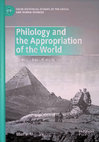
Research paper thumbnail of Philology and the Appropriation of the World

Philology and the Appropriation of the World, 2023
This book sheds new light on the work of Jean-François Champollion by uncovering a constellation ... more This book sheds new light on the work of Jean-François Champollion by uncovering a constellation of epistemological, political, and material conditions that made his decipherment of Egyptian hieroglyphs possible. Champollion’s success in understanding hieroglyphs, first published in his Lettre à M. Dacier in 1822, is emblematic for the triumphant achievements of comparative philology during the 19th Century. In its attempt to understand humanity as part of a grand history of progress, Champollion’s conception of ancient Egypt belongs to the universalistic aspirations of European modernity. Yet precisely because of its success, his project also reveals the costs it entailed: after examining and welcoming acquisitions for the emerging Egyptian collections in Europe, Champollion travelled to the Nile Valley in 1828/29, where he was shocked by the damage that had been done to its ancient cultural sites. The letter he wrote to the Egyptian viceroy Mehmet Ali Pasha in 1829 demands thatexcavations in Egypt be regulated, denounces European looting, and represents perhaps the first document to make a case for the international protection of cultural goods in the name of humanity.

Research paper thumbnail of Les Hiéroglyphes de Champollion

Les Hiéroglyphes de Champollion, 2015

connaissances scientiiques issues de la campagne militaire d'Égypte. Le fruit de son activité est... more connaissances scientiiques issues de la campagne militaire d'Égypte. Le fruit de son activité est la Description de l'Égypte ou Recueil des observations et des recherches qui ont été faites en Égypte pendant l'expédition de l'Armée rançaise, publié par les ordres de S. M. l'Empereur Napoléon le Grand, 23 vol. (10 vol. de texte, 10 vol. de tables, 2 vol. format « éléphant » pour les tables très grand format, 1 atlas), Paris, Imprimerie impé riale (à partir de 1817 : Imprimerie royale), 18091829. 7. E. F. Jomard, « École égyptienne de Paris, avec une liste des jeunes Égyptiens et les Paroles adressées aux jeunes Égyptiens lors de la distribution des prix, le 4 juillet 1828 », art. cité, p. 116. 8. De ce point de vue, Bruno Latour a raison de souligner l'importance du « principe documentaire » pour la « modernité occidentale », importance qui n'est pas sans lien avec les questions de pouvoir.

Talks by Markus Messling

Le Droit de vivre – Revue universaliste et antiraciste, 2025

Dans "L’universel après l’universalisme" (Puf, 2023), Markus Messling, professeur à l’université ... more Dans "L’universel après l’universalisme" (Puf, 2023), Markus Messling, professeur à l’université de la Sarre et directeur du Centre Käte Hamburger (CURE), interroge la notion d’universalisme, ses remises en cause et ses alternatives dans la littérature contemporaine.