Books by Matteo Bortolini

A Joyfully Serious Man. The Life of Robert Bellah, 2021

TOC and colophon from my new biography of Robert N. Bellah
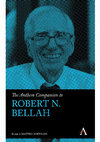
Research paper thumbnail of The Anthem Companion to Robert N. Bellah

The Anthem Companion to Robert N. Bellah, 2019
‘The Anthem Companion to Robert Bellah’ is the first major collection of writings on the life and... more ‘The Anthem Companion to Robert Bellah’ is the first major collection of writings on the life and work of one of the foremost twentieth-century sociologists of religion. Bellah’s work was central in many fields: the sociology of Japanese religion, the relationships between sociology and the humanities, the relationship between American religion and politics, the cultures of modern individualism, and evolution and society. During an intellectual career which spanned six decades, Bellah occupied a central position within at least three major intellectual movements: structural-functionalism and modernization theory in the 1950s and the 1960s; interpretive social science, which he helped create in the early 1970s along with Clifford Geertz and Peter Berger; and the so-called Axial age revival of the late 1990s and early 2000s. More often than not, Bellah’s work was on the edge of social scientific research; his seminal work on civil religion in the early 1970s created a huge debate across disciplines which continues to this day; his co-authored book ‘Habits of the Heart’ (1985) was a bestseller and the object of sustained debate in the general public sphere; his last magnum opus ‘Religion in Human Evolution’, published at 84, was a monument to an extraordinary scholarly and intellectual career. [NP] The richness of Bellah’s work is the object of this collection of essays by top American and European scholars from the social sciences and humanities. Each essay has a double character: it introduces a single topic in an accessible and complete manner, and then presents a reflection on the viability and import of Bellah’s ideas for interpreting contemporary phenomena. Among the authors are some of Bellah’s students who became top scholars in their fields, as well as younger scholars. From a disciplinary point of view, the list includes sociologists (Gorski, Torpey, Boy, Guhin, Libeck), historians (Borovoy, Barshay) and philosophers (Tipton, Lequire) to reflect the diversity of Bellah’s work.

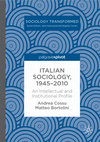
Research paper thumbnail of Italian Sociology 1945-2010: An Institutional and Professional Profile
This book provides a comprehensive profile of the development of sociology in Italy from the post... more This book provides a comprehensive profile of the development of sociology in Italy from the post-war period to the present day. The first English-language account of the history of Italian sociology, it focuses on the process of institutionalization of the discipline within the Italian university system and its changing relationships with extra-academic actors and institutions: political parties, unions, the Catholic Church, political and social movements, as well as local and national governments. Arranged chronologically across eight chapters, it presents all major steps in the development of the discipline in a theoretically-informed but accessible way. The authors explore the pioneering phase of the 1950s to the establishment of the first academic chairs in the 1960s, from the student revolts of 1968 to the creation of the first sociological association in the 1980s and up to the present day. It will appeal to social science and history scholars and students, as well as readers interested in the history of Contemporary Italy.

Armando Editore, Roma, 2013, 2013

Special Issue of «Fenomenologia e società» on R.N. Bellah's "Religion in Human Evolution". Contri... more Special Issue of «Fenomenologia e società» on R.N. Bellah's "Religion in Human Evolution". Contributors: R.N. Bellah; M. Bortolini; P. Kitcher; P. Pombeni; J.C. Alexander; P. Costa; D. Zordan; J. Zhe; M. Sghirinzetti.

Papers by Matteo Bortolini

Research paper thumbnail of Finding Sociology in Its Funding? Networks, Relations, and Key Players in Late 20th Century Social Science
In this paper we start from Mark Solovey's Social Science for What? to analyze the place and ... more In this paper we start from Mark Solovey's Social Science for What? to analyze the place and the role of the social sciences in the US National Science Foundation from the mid-1940s to the end of the 1980s. The book highlights the tensions that built up around the epistemic status of the social sciences vis-à-vis the natural sciences and the reputational debates surrounding their role and fate during and after the postwar period. We mostly focus our attention on structures, actors and processes not addressed by Solovey: relationships, networks, and patterns of stratification within and across disciplines; the emergence of novel approaches outside the scientistic and positivistic framework sponsored by the NSF; alternative sources of funding, such as the National Endowment for the Humanities; and a set of broader, long-term processes in the macro-field of the social and behavioral sciences. We present some preliminary data suggesting that a wider, theoretically-oriented approach ...

Profezia e minoranze creative : ipotesi sull'Europa tra Karol Wojtyła e Joseph Ratzinger

Profezia e minoranze creative : ipotesi sull'Europa tra Karol Wojtyła e Joseph Ratzinger, 2008

Research paper thumbnail of The Anthem Companion to Robert N. Bellah

The Anthem Companion to Robert N. Bellah

‘The Anthem Companion to Robert Bellah’ is the first major collection of writings on the life and... more ‘The Anthem Companion to Robert Bellah’ is the first major collection of writings on the life and work of one of the foremost twentieth-century sociologists of religion. Bellah’s work was central in many fields: the sociology of Japanese religion, the relationships between sociology and the humanities, the relationship between American religion and politics, the cultures of modern individualism, and evolution and society. During an intellectual career which spanned six decades, Bellah occupied a central position within at least three major intellectual movements: structural-functionalism and modernization theory in the 1950s and the 1960s; interpretive social science, which he helped create in the early 1970s along with Clifford Geertz and Peter Berger; and the so-called Axial age revival of the late 1990s and early 2000s. More often than not, Bellah’s work was on the edge of social scientific research; his seminal work on civil religion in the early 1970s created a huge debate across disciplines which continues to this day; his co-authored book ‘Habits of the Heart’ (1985) was a bestseller and the object of sustained debate in the general public sphere; his last magnum opus ‘Religion in Human Evolution’, published at 84, was a monument to an extraordinary scholarly and intellectual career. [NP] The richness of Bellah’s work is the object of this collection of essays by top American and European scholars from the social sciences and humanities. Each essay has a double character: it introduces a single topic in an accessible and complete manner, and then presents a reflection on the viability and import of Bellah’s ideas for interpreting contemporary phenomena. Among the authors are some of Bellah’s students who became top scholars in their fields, as well as younger scholars. From a disciplinary point of view, the list includes sociologists (Gorski, Torpey, Boy, Guhin, Libeck), historians (Borovoy, Barshay) and philosophers (Tipton, Lequire) to reflect the diversity of Bellah’s work.

Italian Sociology,1945–2010, 2017

In the 1950s, the so-called first generation of postwar sociologists saw themselves as contributi... more In the 1950s, the so-called first generation of postwar sociologists saw themselves as contributing to Italian modernization by providing a particular kind of rational, empirically based knowledge aimed at orienting policy decisions. As a result, early postwar sociology emerged as a Janus-faced discipline: Young would-be sociologists had to differentiate their practices from the humanities and sociology as it was understood by statisticians. At the same time, they had the support of powerful academic brokers from the fields of law and philosophy, thus creating an ambiguous situation. The chapter surveys early politicalideological cleavages, pioneering experiences of conducting empirical research and teaching sociology in a hostile academic environment, and the creation of disciplinary hubs in Turin and Florence.

After ’68: A New Generation of Sociologists

Sociologists born in the late 1930s came of age as a ‘disobedient generation’: They contested est... more Sociologists born in the late 1930s came of age as a ‘disobedient generation’: They contested established ways of doing social science and introduced, for the first time, a massive dosage of Marxism into Italian sociology. Many young sociologists developed a new style of ‘co-research ’ based on a radical critique of Italian modernization . At the same time, the emergence of ‘mass university ’ helped them find a quick pathway to tenured jobs within the academic system . This weakened their radical stance and led to a rapid process of normalization. In the 1970s, the enlargement of the Italian sociological community gave rise to geographical and subdisciplinary cleavages, with a prevalence of Northern and Roman scholarly clusters and the importation of new sociological trends from outside Italy.

Myths and Histories of Italian Sociology

This first chapter introduces an analytical narrative of the process of institutionalization of I... more This first chapter introduces an analytical narrative of the process of institutionalization of Italian sociology, as an inquiry into the creation of infrastructures for practicing sociology as an academic discipline. The chapter questions existing disciplinary memory about the ‘rebirth’ of Italian sociology after the Second World War and describes the typical features of early positivistic debates and the role of statistician Corrado Gini and his school during the Fascist regime. The two main theses framing this historical–sociological reconstruction are then advanced: post-war Italian sociology as a complex polycentric endeavor and the ‘colonization’ of sociology by academic mores and processes after its full institutionalization in the mid-1960s.

The Hubs of Newborn Sociology

Italian Sociology,1945–2010, 2017

This chapter focuses on one crucial element of post-war Italian sociology: extra-academic researc... more This chapter focuses on one crucial element of post-war Italian sociology: extra-academic research centers . These institutes were venues for training young sociologists, creating scholarly and political networks, and promoting the discipline and its institutionalization. After a survey of major research centers, the chapter focuses on three cases: the Centro nazionale di prevenzione e difesa sociale in Milan, a research center with close relations to the political establishment; the Associazione il Mulino in Bologna, a cultural association, which created an intellectual infrastructure for the discipline; and the Ufficio Relazioni Sociali of the very large Olivetti enterprise in Ivrea, which framed sociological research as an element in a wider political–cultural project of social reform.

Mark Solovey and Hamilton Cravens (eds.), Cold War Social Science: Knowledge Production, Liberal ... more Mark Solovey and Hamilton Cravens (eds.), Cold War Social Science: Knowledge Production, Liberal Democracy, and Human Nature New York: Palgrave Macmillan 2014 First paperback ed., xvii + 270 pp. ISBN 978-1-137-38835-3 Price: € 31

“Explaining Modernity: Talcott Parsons’s Evolutionary Theory and Individualism”, in The Anthem Companion to Talcott Parsons, edited by J. Treviño, Anthem Press, Oxford, 2016, pp. 133-154

Research paper thumbnail of A Fascinating and Precarious Project: Sociology in Trento

A Fascinating and Precarious Project: Sociology in Trento

This chapter considers the creation of the first academic institution granting accredited degrees... more This chapter considers the creation of the first academic institution granting accredited degrees in sociology as a case study in the institutionalization of sociology in Italy. The Istituto Universitario Superiore di Scienze Sociali was established in Trento in 1962 thanks to the visionary drive of Christian Democratic politician Bruno Kessler . The process involved local and nationwide networks of politicians and social scientists, the elaboration of innovative scholarly and educational programs, and continued quarrels about the influence of scholars from disciplines other than sociology. Trento quickly became one of the hotbeds of student revolts, with different waves of protest and occupation peaking in 1966–1968 and the emergence of a newer generation of sociologists who forcefully contested scholarly and academic conventions in the early 1970s.

Renouncing for Dummies. The Axial Breakthrough and the Form of Life of Intellectuals

La religione nell'evoluzione umana: Robert Bellah in discussione

Research paper thumbnail of Entrenchment and the Emergence of New Structures

Entrenchment and the Emergence of New Structures

This chapter surveys the emergence of the major structural cleavage around which Italian sociolog... more This chapter surveys the emergence of the major structural cleavage around which Italian sociology developed in the 1970s: the grouping of sociologists as two loosely defined ‘Catholic’ and ‘lay’ camps. The first group coalesced around Achille Ardigo , while the lay camp assumed a more polycentric , fragmented pattern. Membership would influence almost every aspect of a sociologist’s scholarly and academic career. In time, the camps grew increasingly self-referential and hindered the emergence of a true scientific community among Italian sociologists. The chapter also follows the estrangement of Franco Ferrarotti from his colleagues and the emergence of a third camp composed of Roman and Southern sociologists. It ends with an interpretation of the process leading to the foundation of the Associazione italiana di sociologia , established in 1982.