Books by Michael Blömer
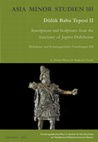
Dolichener und Kommagenische Forschungen 12, Asia Minor Studien 101, 2022
This volume analyses the Greek and Latin inscriptions and sculptures found in the sanctuary of Ju... more This volume analyses the Greek and Latin inscriptions and sculptures found in the sanctuary of Jupiter Dolichenus at Dülük Baba Tepesi, a mountain near the ancient city of Doliche, in the modern province of Gaziantep (South-East Turkey). The summit of the mountain has been investigated since 2001 by a team of the Forschungsstelle Asia Minor (University of Münster) in cooperation with the Turkish Ministry of Culture and Tourism. The excavation results have shed important new light on the cult of Jupiter Dolichenus, a god widely worshipped in the Roman Empire, and its origin in the Iron Age, when a first temple was constructed on Dülük Baba Tepesi. The sculptural and epigraphical material of the Graeco-Roman phase, which was collected in fifteen years of research, is presented here for the first time. Beside the finds from the excavations, the catalogue includes a few already known pieces, which can be attributed to the sanctuary and for which new interpretations are offered.
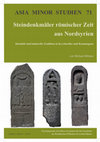
Vorwort X bereitwillig seine Kenntnis der Region mit mir. In gleicher Weise stets hilfreich zur S... more Vorwort X bereitwillig seine Kenntnis der Region mit mir. In gleicher Weise stets hilfreich zur Seite stand mir Fehmi Erarslan, der Direktor des Museums Adıyaman. Als damals noch treuer Helfer und Begleiter sei auch Mustafa Akyol genannt, ohne den meine Reisen in der Südosttürkei weniger fruchtbar gewesen wären. Die größte Kennerin Kommagenes, Dr. Margherita Facella, hat durch zahlreiche Hinweise und in vielen Gesprächen einen wichtigen Beitrag zur Anfertigung der Arbeit geleistet. Wertvolle Gedanken sind zudem aus den immer anregenden Gesprächen mit Dr. Anna Collar erwachsen, der ebenfalls gedankt sei. Für die Überarbeitung der Lesungen des unpublizierten Inschriftenmaterials und dessen kurze Kommentierung im Zuge der Druckvorbereitungen anhand des zur Verfügung stehenden Bildmaterials bin ich Andrew Lepke zu Dank verpflichtet. Darüber hinaus standen mir viele weitere Freundinnen, Freunde, Kolleginnen und Kollegen sowohl während der Arbeit an der Dissertation als auch während der langen Zeit der Druckvorbereitung mit Rat und Tat zur Seite. Einzeln erwähnen möchte ich nur Katinka Sewing und Matthias Stanke, die einen maßgeblichen Anteil daran hatten, dass die Dissertation fertiggestellt werden konnte. Prof. Dr. Klaus Zimmermann und Prof. Dr. Engelbert Winter danke ich für die Aufnahme des Bandes in die Reihe der Asia Minor Studien, Ulrike Rübesam für die ausgezeichnete redaktionelle Betreuung und viele wertvolle Hinweise. Das Erscheinen des Bandes ermöglichten der Druckkostenzuschuss der Deutschen Forschungsgemeinschaft und die finanzielle Unterstützung durch den Historisch-Archäologischen Freundeskreis e.V. Erwähnen möchte ich zuletzt auch den viel zu früh verstorbenen Dr. Norbert Karg, den ich, lange bevor ich die Dissertation begann, auf weiten Reisen durch den Südosten und Osten der Türkei begleiten durfte. Von seinem unerschöpflichen Wissen zu profitieren, war eine mein Leben prägende Erfahrung.
w w w . d o l i c h e . d e Gaziantep'in binlerce yıllık tarihine ışık tutan Dülük (Doliche) Anti... more w w w . d o l i c h e . d e Gaziantep'in binlerce yıllık tarihine ışık tutan Dülük (Doliche) Antik Kenti, sahip olduğu evrensel değerlerle yalnızca şehrimizin değil, tüm insanlığın ortak mirasıdır. Bakır Çağı'ndan günümüze uzanan izler, hâlâ üzerinde yaşanılan Türkiye'nin en eski kenti olan bu kadim yerleşim biriminin sürekliliğini kanıtlamaktadır. Dülük Antik Kenti'nde ele geçen taş alet buluntuları, arkeoloji literatüründe 'Doliciyen taş aletler' olarak adlandırılmış ve bu yönüyle bilim dünyasında özel bir yer edinmiştir. Dülük (Doliche) Antik Kenti, tarih sahnesinde; Hititler, Medler, Asurlular, Persler ve Büyük İskender gibi büyük medeniyetlere ev sahipliği yapmış; ticaret yollarının kesişme noktasında yer alması sayesinde kültürel ve ekonomik anlamda köşe taşlarından biri olmuştur. Bölgedeki Mithras Tapınağı, kaya mezarları, devasa ocaklar ve Alt Paleolitik Dönem'e ait özgün çakmaktaşı aletler, sanki bu toprakları bir açık hava müzesine dönüştürmektedir. Mithras Tapınağı, şu ana kadar ortaya çıkarılmış en büyük Mithras tapınağı olma özelliğini taşımaktadır. Tapınağın içerisinde, Mitra dinini simgeleyen boğanın kurban ediliş sahnesi kabartma olarak işlenmiştir. Ayrıca antik kentin ormanlık alanında, Fırtına Tanrısı Jüpiter Dolicenus'a adanmış kutsal alan gün yüzüne çıkarılmış; burada görev yapan rahiplere ait mezarların bulunduğu 'Rahipler Nekropolü' tespit edilmiştir. Bu mezarlık alanının restorasyonu tamamlanarak kültürel mirasın korunmasına katkı sağlanmıştır. Şehitkamil Belediyesi olarak, Dülük'te devam eden arkeolojik kazı çalışmalarına destek vermek ve bu mirası gelecek nesillere aktarmak bizim en temel sorumluluklarımızdan biridir. Prof. Dr. Michael Blömer (Münster Üniversitesi) ile Koordinatör Kazı Başkanı Prof. Dr. Kutalmış Görkay'ın gözetiminde sürdürülen titiz çalışmalar, özellikle Mozaikli Kilise başta olmak üzere birçok yapının sistematik ve bilimsel bir yaklaşımla gün yüzüne çıkarılması yönündedir. Kültür ve Turizm Bakanlığı ile Gaziantep Valiliği'nin desteğiyle yürütülen arkeolojik kazılarla Dülük (Doliche) Antik Kentinin kültür turizmine açılması planlanmaktadır. Belediyemiz, kamulaştırma çalışmalarının yanı sıra kazı faaliyetlerine verdiği destekle, bu toprakların binlerce yıllık mirasının dünyayla buluşturulmasına katkı sunmaktadır. Bu süreç yalnızca bir görev değil; kültürel değerleri koruma ve geleceğe aktarma iradesinin bir yansımasıdır. Dülük'ün derinliklerinden gün yüzüne çıkan; Mitras Tapınağı örneğinde görüldüğü üzere, yer altı mabetlerinden epigrafik ve heykelsi malzemelere kadar uzanan bu paha biçilmez kültürel zenginliklerin dünyaya tanıtılması; Gaziantep'in kültürel zenginliklerinin insanlığın ortak mirasına sunulması hem ortak bir sorumluluk hem de kurumsal bir gurur kaynağıdır. Die antike Stadt Dülük (Doliche), die das jahrtausendealte Erbe Gazianteps erhellt, stellt mit ihren universellen Werten nicht nur ein Vermächtnis unserer Stadt, sondern auch ein gemeinsames Kulturerbe der gesamten Menschheit dar. Die von der Kupferzeit bis in die Gegenwart reichenden Spuren belegen die Kontinuität dieser Siedlung, die als die älteste kontinuierlich bewohnte Stadt der Türkei gilt. In Dülük gefundene Steinwerkzeuge werden in der archäologischen Fachliteratur als "dolichische Steinwerkzeuge" bezeichnet und haben sich dadurch einen besonderen Platz in der Wissenschaft gesichert. Im Laufe der Geschichte war Dülük (Doliche) Schauplatz großer Zivilisationen wie der Hethiter, Meder, Assyrer, Perser und Alexanders des Großen. Aufgrund seiner Lage an einem Schnittpunkt bedeutender Handelsrouten entwickelte es sich zu einem kulturellen und wirtschaftlichen Zentrum von herausragender Bedeutung. Der Mithras-Tempel, die Felsengräber, die gewaltigen Steinbrüche sowie die einzigartigen Feuersteinartefakte aus dem Altpaläolithikum verleihen dieser Region den Charakter eines Freilichtmuseums. Umut YILMAZ Şehitkamil Belediye Başkanı Bürgermeister von Şehitkamil / Mayor of Şehitkamil w w w . d o l i c h e . d e w w w . d o l i c h e . d e w w w . d o l i c h e . d e
Edited Volumes by Michael Blömer

Antike Welt Sonderheft, 2024
Erhaben und den Göttern nahe». Berge sind für uns heute oft mit Größe und Erhabenheit verbunden. ... more Erhaben und den Göttern nahe». Berge sind für uns heute oft mit Größe und Erhabenheit verbunden. Die menschliche Existenz erscheint angesichts der mächtigen Naturformationen klein, und von Bergen öffnet sich der Blick in weite Ferne. Diese ehrfürchtige und bewundernde Sicht auf Berge, die auch in Caspar David Friedrichs Gemälde «Der Wanderer über dem Nebelmeer» anklingt, dominiert die europäische Kulturgeschichte der Neuzeit. Obschon es solche Perspektiven in Ansätzen bereits in der Vormoderne gab, wurden Berge in der Antike jedoch nicht zuletzt auch als Orte am Rande menschlicher Zivilisation und damit als potentiell bedrohlich empfunden. Gleichzeitig verknüpfte man sie aber auch mit dem Übernatürlichen und Göttlichen. In vielen antiken Religionen stellt man sich vor, dass Götter im Himmel leben und den Menschen nicht in direkter Begegnung zugänglich sind. Brandopfer auf Bergen, die sich dem Himmel entgegenstreckten, boten sich daher in besonderer Weise an, um diese Götter zu erreichen. Zudem sind manche sehr hohe Berge, die der Welt der Menschen entrückt waren, als Göttersitze verstanden worden. So glaubte man, dass der höchste griechische Gott, Zeus, auf dem Berg Olymp thronte und nannte ihn deshalb Zeus Olympios. In manchen Fällen wurden Berge sogar selbst als Gottheiten identifiziert und verehrt. Unser säkularisierter Erhabenheitsblick auf Berge unterscheidet sich somit deutlich von der antiken Wahrnehmung, die stark religiös geprägt war: Berge wurden als Göttersitze verstanden, dienten als Kultorte oder waren selbst göttlich. In dem Band durchschreiten wir verschiedene Landschaften der antiken Mittelmeerwelt, von Portugal bis in den Kaukasus, und blicken auf Berge und ihre diversen Funktionen im religiösen Leben der Menschen. Seitenblicke in den Alten Orient, auf die monotheistischen Religionen und in die spannende Geschichte der Beschäftigung mit Bergen dienen dazu, das Phänomen religiös aufgeladener Berge kulturgeschichtlich breit einzubetten. So hoffen wir, mit diesem Band eine Brücke zu schlagen von unserer romantischen Bergsicht zu einem besseren Verständnis der sakralen Überhöhung von Bergen.
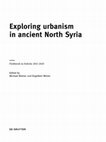
This book accounts for the results of fieldwork in Doliche, located in Gaziantep, South East Turk... more This book accounts for the results of fieldwork in Doliche, located in Gaziantep, South East Turkey. Doliche was an important city of ancient North Syria which continued to thrive into the Middle Ages. For the first time, an international research project started to explore the site in 2015. The chapters collected in this volume discuss the main discoveries of the first seasons. It is divided in two parts. The first part considers the main excavation results, with a particular emphasis on a newly discovered early Christian basilica and its decoration. This section also contains the first comprehensive discussion of a newly discovered Roman Imperial hypogeum from the city necropolis. The chapters of the second part deal with the preliminary findings from an intra-urban intensive survey. Between 2017 and 2019, a significant portion of the city area has been investigated, and the results of the survey offer new insights in the spatial and chronological of the city. The chapters consider methodological questions, but also discuss artefact groups. In general, the results presented in this volume add to the knowledge of urbanism in Roman and Late antique North Syria.
The history and archaeology of Hellenistic Commagene is a rich field of study, not in the least b... more The history and archaeology of Hellenistic Commagene is a rich field of study, not in the least because of the remarkable monuments and inscriptions of king Antiochos I (c. 70–36 BC). Over the last decades important new work has been done on Commagene proper, providing novel interpretations of the epigraphical and historical record or the archaeological data and individual sites, like Nemrud Dağ, Samosata or Arsameia. Simultaneously scholars have tried to better understand Hellenistic Commagene by situating the region and its history in a wider Mediterranean and Near Eastern context. This long-awaited book provides a critical evaluation of all these new data and ideas on the basis of a theoretically embedded, state-of-the-art overview for the history and archaeology of Hellenistic Commagene. From this volume a new picture emerges in which Hellenistic Commagene is no longer understood as peripheral and out-of-the-ordinary, but as an important node in a global Hellenistic network, from Ai-Khanoum to Pompeii and from Alexandria to Armawir.

Blömer, M. and R. Raja (eds). 2019. Funerary Portraiture in Greater Roman Syria, Studies in Classical Archaeology 6 (Turnhout: Brepols)., 2019
In many cities of Roman Greater Syria, the sculptural
habit was revived in the first century ce.... more In many cities of Roman Greater Syria, the sculptural
habit was revived in the first century ce. A sudden
and explosive rise in the production of funerary
sculpture can be observed from in particular the first
century ce onwards. The best-known and most outstanding
example is Palmyra, where thousands of funerary
reliefs depicting the deceased were produced already
from the middle of the first century bce until 273 ce
when Palmyra was sacked by the troops of the Roman
emperor Aurelian. However, Palmyra does not stand as
an isolated phenomenon. Roughly contemporary with
and a bit later than the beginning of the production of
funerary portraits in Palmyra, large quantities of funerary
sculpture were produced in Zeugma and Hierapolis.
Furthermore, locally produced funerary reliefs are
known from rural areas of northern Syria and central
Syria, from Emesa and Epiphaneia, the Hauran, Lebanon
as well as the Decapolis region. Portraiture found its way
into the funerary sphere and in many places became an
integrated part of how individuals were honoured and
commemorated. However, it is also crucial to remember
that the surviving distribution of funerary sculpture
in Syria is uneven and the picture we have is scattered.
The abundance of funerary portraits from Palmyra and
a few other cities and regions tends to conceal the scarcity
if not absence of funerary sculpture in many parts
of Roman Greater Syria, including some of the region’s
most prominent cities. The trajectories behind this scarcity
and perhaps even disinterest in figural decoration of
tombs deserve to be studied in detail.
The funerary portraits of Greater Syria are quite
diverse in format and in style. In some regions, the
portraits display traits which adhere to what usually is
called provincial art, latching on to the current fashion
in contemporary Roman-period portraiture, while
other places, most prominently Palmyra, developed an
individual portraiture style, which cannot be termed
provincial. Nevertheless, the adaption of Graeco-Roman
modes of funerary representation facilitated the emergence
of visual norms and practices in a region with no
sculptural tradition.
Edited by Michael Blömer and Benedikt Eckhardt (Religionsgeschichtliche Versuche und Vorarbeiten 72; Berlin: de Gruyter, 2018)

Bringing together material from a range of disciplines related to the nature and development of r... more Bringing together material from a range of disciplines related to the nature and development of religious identities in the Hellenistic and Roman Near East this volume gives new insight into the latest research on the topic.
This volume addresses questions of continuity and change in the religious life of the Levant between Alexander’s conquest of the Middle East until the end of the Umayyad period, a topic which has received growing attention over the last decade within the fields of ancient history, archaeology, philology, and religious studies. The volume pulls together the efforts of scholars from all of these fields, and its central concerns include the representations and expressions of religious identity in sacred architecture, iconography, and texts. These representations and expressions are explored through literature, inscriptions, and iconography, and though the architectural as well as the functional development of sanctuaries, churches, and mosques. The volume includes papers on themes such as definition, creation, dissolution, and interconnection between sacred sites, as well as access and audience. These developments are examined through the lenses of aspects of continuity and change in material and literary culture.
With a point of departure in the development of urban, sub-urban, and extra-urban sanctuaries, churches, and early mosques, as well as their associated cults and religions, the contributions in this volume explore the shaping and development of the religious identities of individuals, groups, and societies, and assess how these categories of religious identity were interrelated and shaped by a variety of circumstances. The volume aims at underlining the importance of interdisciplinary studies to the comprehensive understanding of this complex field and at opening up discussions of methodological and theoretical approaches which can be used across these disciplines.

Orientalische Religionen in der Antike (ORA) 8
Der Kult des Iuppiter Dolichenus, des lokalen Gottes der Kleinstadt Doliche in der heutigen Südos... more Der Kult des Iuppiter Dolichenus, des lokalen Gottes der Kleinstadt Doliche in der heutigen Südosttürkei, verbreitete sich im 2. Jahrhundert n. Chr. mit großer Geschwindigkeit in weiten Teilen des Imperium Romanum. Die Debatte um „orientalische“ Kulte im römischen Reich, aber auch die Ergebnisse der Ausgrabungen im Hauptheiligtum von Doliche haben Anlass geboten, verschiedene Facetten des Kultes erneut in den Blick zu nehmen. Aus historischer wie archäologischer Perspektive beleuchten die Beiträge ein breites Spektrum von Fragen, das von der Bedeutung Doliches für den Kult im Westen, den Wegen seiner Verbreitung, seinem Status im römischen Heer bis zur Rolle von Frauen im Kult reicht. Außerdem wird die differenzierte Auswertung der bekannten Dolichenus-Heiligtümer und die Darstellung der Funde aus der Donauregion sowie eine ausführliche Vorlage des neu entdeckten Dolichenus-Heiligtums von Vindolanda thematisiert.
Papers by Michael Blömer
Kommagene und Kleinasien Beiträge zu Geschichte, Archäologie und Landschaft. Festschrift für Engelbert Winter, 2025
Es sind daher vor allem einzelne Funde, meist ohne Kontext, die Rückschlüsse auf das Heiligtum de... more Es sind daher vor allem einzelne Funde, meist ohne Kontext, die Rückschlüsse auf das Heiligtum des Jupiter Dolichenus auf dem Dülük Baba Tepesi zulassen. Dazu zählen auch zahlreiche Metallobjekte, die der Ausrüstung des römischen Militärs zuzurechnen sind. Der bemerkenswerteste Fund dieser Gruppe soll hier nun erstmals umfassend vorgestellt und diskutiert werden. Es handelt sich um das Fragment eines seltenen römischen Kompositpanzers, der Kettenhemd und Schuppenpanzer miteinander vereint und oft als lorica plumata bezeichnet wird. Der Kompositpanzer vom Dülük Baba Tepesi Entdeckt wurde das 40,5 cm lange und bis zu 12 cm breite Fragment im Jahr 2010.
in: R. Raja (ed.), The Oxford Handbook of the Hellenistic and Roman Near East, 2025
in: R. Raja (ed.), The Oxford Handbook of the Hellenistic and Roman Near East, 2025
Journal of Urban Archaeology, 2025
Blömer, M., Bobou, O., Neil, E. Q., & Raja, R. (2025). From ‘Secondary’ City to Primary Focus: A ... more Blömer, M., Bobou, O., Neil, E. Q., & Raja, R. (2025). From ‘Secondary’ City to Primary Focus: A Historiographical Approach to the Urbanity of Seleucia in Pieria. Journal of Urban Archaeology, 12, 229-243
AJNES, 2024
This article explores the political and cultural landscapes of the Hellenistic kingdoms of Sophen... more This article explores the political and cultural landscapes of the Hellenistic kingdoms of Sophene and Commagene, with a specific focus on their capital cities and royal residences. The kingdoms, although often overshadowed by larger Hellenistic realms, played a crucial role in the geopolitical dynamics of the Near East. By examining archaeological findings and historical records, this study highlights the development of urban centers and fortresses that served not only as seats of power but also as symbols of royal legitimacy and cultural identity. Key urban sites such as Arsamosata, Samosata, and Arsameia are discussed to illustrate how these cities facilitated the amalgamation of local and Hellenistic influences, reflecting the complex interplay between cultural integration and political sovereignty. The article also addresses the challenges in tracing the precise historical and architectural evolution of these sites due to sparse archaeological evidence. Through a detailed analysis of the available data, the study reconstructs the role these cities played in the broader context of Hellenistic urbanization and regional governance, offering insights into the strategies used by the rulers of Sophene and Commagene to manifest their authority and connect with their subjects.
Journal of Urban Archaeology, 2024
as an onto logical category pertaining to later periods, especially the Hellenistic and Roman per... more as an onto logical category pertaining to later periods, especially the Hellenistic and Roman periods, is surprisingly limited. While individual monuments, religious architecture, public buildings, or certain aspects of elite material culture of Near Eastern cities have been studied in detail (for example,
in: W. Messerschmidt (ed.), Dülük Baba Tepesi I: Das frühe Heiligtum, Dolichener und Kommagenische Forschungen 14, Bonn: Habelt, 2024
6.4.2. Kleinfunde aus Erdlagen und von der ursprünglichen Bergoberfläche 6.4.3. Kleinfunde aus ei... more 6.4.2. Kleinfunde aus Erdlagen und von der ursprünglichen Bergoberfläche 6.4.3. Kleinfunde aus eisenzeitlichen und hellenistischen Kulturschichten und Mauerbefunden 6.4.4. Kleinfunde aus den Zerfallshorizonten der Temenosmauer II 6.4.5. Kleinfunde aus ausgewählten späteren Befunden und modernen Störungen 7. Die Befunde im Südosten des mittleren Zentralplateaus 7.1. Die eisenzeitlichen Schichten Wolfgang Messerschmidt



Uploads
Books by Michael Blömer
Edited Volumes by Michael Blömer
habit was revived in the first century ce. A sudden
and explosive rise in the production of funerary
sculpture can be observed from in particular the first
century ce onwards. The best-known and most outstanding
example is Palmyra, where thousands of funerary
reliefs depicting the deceased were produced already
from the middle of the first century bce until 273 ce
when Palmyra was sacked by the troops of the Roman
emperor Aurelian. However, Palmyra does not stand as
an isolated phenomenon. Roughly contemporary with
and a bit later than the beginning of the production of
funerary portraits in Palmyra, large quantities of funerary
sculpture were produced in Zeugma and Hierapolis.
Furthermore, locally produced funerary reliefs are
known from rural areas of northern Syria and central
Syria, from Emesa and Epiphaneia, the Hauran, Lebanon
as well as the Decapolis region. Portraiture found its way
into the funerary sphere and in many places became an
integrated part of how individuals were honoured and
commemorated. However, it is also crucial to remember
that the surviving distribution of funerary sculpture
in Syria is uneven and the picture we have is scattered.
The abundance of funerary portraits from Palmyra and
a few other cities and regions tends to conceal the scarcity
if not absence of funerary sculpture in many parts
of Roman Greater Syria, including some of the region’s
most prominent cities. The trajectories behind this scarcity
and perhaps even disinterest in figural decoration of
tombs deserve to be studied in detail.
The funerary portraits of Greater Syria are quite
diverse in format and in style. In some regions, the
portraits display traits which adhere to what usually is
called provincial art, latching on to the current fashion
in contemporary Roman-period portraiture, while
other places, most prominently Palmyra, developed an
individual portraiture style, which cannot be termed
provincial. Nevertheless, the adaption of Graeco-Roman
modes of funerary representation facilitated the emergence
of visual norms and practices in a region with no
sculptural tradition.
This volume addresses questions of continuity and change in the religious life of the Levant between Alexander’s conquest of the Middle East until the end of the Umayyad period, a topic which has received growing attention over the last decade within the fields of ancient history, archaeology, philology, and religious studies. The volume pulls together the efforts of scholars from all of these fields, and its central concerns include the representations and expressions of religious identity in sacred architecture, iconography, and texts. These representations and expressions are explored through literature, inscriptions, and iconography, and though the architectural as well as the functional development of sanctuaries, churches, and mosques. The volume includes papers on themes such as definition, creation, dissolution, and interconnection between sacred sites, as well as access and audience. These developments are examined through the lenses of aspects of continuity and change in material and literary culture.
With a point of departure in the development of urban, sub-urban, and extra-urban sanctuaries, churches, and early mosques, as well as their associated cults and religions, the contributions in this volume explore the shaping and development of the religious identities of individuals, groups, and societies, and assess how these categories of religious identity were interrelated and shaped by a variety of circumstances. The volume aims at underlining the importance of interdisciplinary studies to the comprehensive understanding of this complex field and at opening up discussions of methodological and theoretical approaches which can be used across these disciplines.
Papers by Michael Blömer