Books and Edited Volumes by Michael D. Driessen

The Global Politics of Interreligious Dialogue: Religious Change, Citizenship, and Solidarity in the Middle East
Oxford University Press, 2023
The Global Politics of Interreligious Dialogue examines the growth of interreligious dialogue ini... more The Global Politics of Interreligious Dialogue examines the growth of interreligious dialogue initiatives in the Middle East and its adoption by states and international governmental organizations as a policy instrument for engaging with religious communities. The book argues that the rise of interreligious dialogue in the Middle East reflects a complex interplay of geopolitical interests, ideational development and religious change which reveals critical features about the relationship between religion, politics and modernity in the region, as well as the future of religion in global politics. Thus, the book argues that the growth of interreligious dialogue initiatives offers important lessons about the long-run development of the state in the Middle East and the re-institutionalization of religious authority in global politics. It also argues that the growth of interreligious dialogue initiatives offers important lessons about the development of alternative models of political development, citizenship and modernity in the region, and the theological ideas and religious practices which those models reflect and advance.
The first half of the book builds a theoretical framework to better understand these dynamics of power, ideas and practices at work in the politics of interreligious dialogue. It begins by considering recent political science scholarship which interprets the growth of interreligious dialogue as largely the result of geopolitics in the region. The book then turns to theories of post-secularism and post-Islamism to highlight the ways in which interreligious dialogue initiatives also embody ongoing processes of religious change in modernity in both Islam and other religious traditions. In particular, the framework articulates the new ideas and practices of citizenship, religious pluralism and social solidarity which characterize dialogue initiatives in the region. These new ideas and practices have made interreligious dialogue an attractive project for a variety of religious actors and communities, and their institutionalization through dialogue initiatives has important consequences for the ongoing construction of religion and state arrangements in the region.
The second half of the book measures, challenges and recalibrates these insights. It begins by analyzing the history of interreligious dialogue initiatives in the Middle East and explores several key interreligious dialogue declarations produced in the region over the last two decades, including the Amman Message, the A Common Word letter, the Marrakesh Declaration and the Human Fraternity document. Then, drawing on five years of ethnographic fieldwork in Algeria, Lebanon, Qatar, Jordan, the UAE and Egypt, the book presents four case studies of dialogue in the region, namely the Focolare Community in Algeria, the Adyan Foundation in Lebanon, the King Abdullah bin Abdulaliz International Center for Interreligious and Intercultural Dialogue (KAICIID) of Saudi Arabia and the Doha International Center for Interfaith Dialogue (DICID) of Qatar.
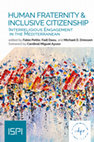
ISPI/Adyan Foundation, 2021
Polarization and discrimination linked to religion have been increasing in many parts of the worl... more Polarization and discrimination linked to religion have been increasing in many parts of the world, including on the two shores of the Mediterranean. Against this background, however, seeds of hope have emerged from a number of religious leaders who have called for a new narrative of human fraternity and inclusive citizenship.
This report analyzes the opportunities which human fraternity and inclusive citizenship offer for government-religious partnerships aimed at building more inclusive and peaceful societies across both shores of the Mediterranean and puts forward interreligious engagement as a new policy framework that recognizes and amplifies these novel dynamics.
Can the interreligious narrative of human fraternity help to create new inclusive forms of citizenship? How can governments and international organizations better partner with religious leaders and communities to concretely build inclusive societies from the MENA region to Europe?
Religion and Democratization: Framing Religious and Political Identities in Muslim and Catholic Societies
Oxford University Press, 2014
Religion and Democratization is a comparative study of democratization in Muslim and Catholic soc... more Religion and Democratization is a comparative study of democratization in Muslim and Catholic societies. It explores the nature and impact of "religiously friendly democratization" processes, which institutionally favor a religion of state and allow religious political parties to contest
elections. The book argues that religiously friendly democratization transforms both the democratic politics and religious life of society. The book explains this transformation by modeling the effects of religiously friendly democratization on the political goals of religious leaders and the
political salience of religious identities. In a religiously charged national setting, religiously friendly democratization can generate more support for democracy among religious actors. By embedding religious ideas and values into its institutions, however, religiously friendly democratization
also impacts national religious markets, creating more favorable conditions for the emergence of public religions and altering trajectories of religious life.
In making these arguments, the book draws on and advances recent scholarship from political science, sociology and philosophy on the relationship between religion and state in contemporary democracies. It engages empirical debates about global patterns of secularization and religious belief;
normative debates about the role of public religions in post-secular societies; and theoretical debates about the democratic future of political Islam and political Catholicism.
The book anchors its theoretical claims in case studies of Italy and Algeria, integrating original qualitative evidence and statistical data on voters' political and religious attitudes. It also compares the dynamics of religiously friendly democratization across the Muslim world today in Tunisia,
Morocco, Turkey and Indonesia. Finally, the book examines the theory's wider relevance through a statistical analysis of cross-national data on democracy, religiosity and religion-state relationships.
Catholicism and European Politics
Religions, 2021
Recent research on political Catholicism in Europe has sought to theorize the ways in which Catho... more Recent research on political Catholicism in Europe has sought to theorize the ways in which Catholic politics, including Catholic political parties, political ideals, and political entrepreneurs, have survived in and navigated a post-secular political environment. Many of these studies have articulated the complex ways in which Catholicism has adjusted and transformed in late modernity, as both an institution and a living tradition, in ways which have opened up unexpected avenues for its continuing influence on political practices and ideas, rather than disappearing from the political landscape altogether, as much previous research on religion and modernization had expected. Among other things, this new line of research has re-evaluated the original and persistent influence of Catholicism on the European Union, contemporary European politics, and European Human Rights discourses. At the same time, new political and religious dynamics have emerged over the last five years in Europe that have further challenged this developing understanding of contemporary Catholicism’s relationship to politics in Europe, through, for example, the papal election of Pope Francis, the immigration “crisis”, and, especially, the rise of populism and new European nationalists, like Victor Orban, Jaroslaw Kaczynski, and Matteo Salvini, who have publicly claimed the mantle of Christian Democracy and Catholic nationalism while simultaneously refashioning those cloaks for new ends. These trends raise difficult new research questions about the relationship of Catholicism, in its broad sense, to the very idea of Europe and its future institutional and spiritual form. Finally, all of these dynamics are intertwined with the continuing transformation of European religiosity, in an often contradictory fashion, and the long-term shift in religious influence from Europe to the global south.
This present volume seeks to take stock of these trends and to theorize the contemporary dynamics of Catholicism and European Politics from a multidisciplinary perspective. The volume therefore invites contributions from the fields of political science, sociology, anthropology, theology, religious studies, and history. It welcomes proposals from both comparative and national perspectives which articulate and problematize the emerging dimensions of political Catholicism in its current post-secular and populist European landscape. As such, the volume encourages the submission of a broad range of article proposals, from multiple perspectives, which address the relationship of Catholicism to contemporary European political dynamics. These may include the following themes: new forms of European nationalism; national and European responses to the immigration crisis; the changing religiosity of European youth; the emergence of new ecological movements and ideas; the shifting role of Catholic movements on contemporary political parties; Catholicism and trans-Atlantic relations; Catholicism and the European Union; Catholic contributions to European debates on religious freedom; interreligious dialogue and human rights discourses; new Catholic perspectives on feminism and gender studies; and European discourses on secularism and post-modernity.
Mapping Contemporary Catholic Politics in Italy
Journal of Modern Italian Studies, 2016
This editors’ introduction opens a special issue of the Journal of Modern Italian Studies on the ... more This editors’ introduction opens a special issue of the Journal of Modern Italian Studies on the topic of ‘Mapping Contemporary Catholic Politics in Italy’. It briefly identifies the political, sociological and ideational changes that have occurred in Catholic politics since the collapse of the Democrazia Cristiana party, and introduces the contributions to the special issue, highlighting the common threads and the important divergences in their analyses.
Papers by Michael D. Driessen
Islam and Interreligious Dialogue
Oxford University Press eBooks, Jun 18, 2023
It's a short paper on Islam and interreligious dialogue. This dialogue requires an intern... more It's a short paper on Islam and interreligious dialogue. This dialogue requires an internal evolution of Islamic theology.
A Brief History of Interreligious Dialogue
Oxford University Press eBooks, Jun 18, 2023
Religious Establishment as a Subject of Political Science
Oxford Research Encyclopedia of Politics, 2019
Recent scholarly attention to religious establishment can be understood as a response to the cris... more Recent scholarly attention to religious establishment can be understood as a response to the crisis of secularization theory and the apparent return of religion to global politics. As a category, religious establishment represents a concrete instance of the religious touching the political, which political scientists can systematically measure and analyze to qualify the nature of religion’s return to global politics. Theoretical advances in the conceptualization of religious establishment as a combination of various policies of government regulation and favoritism of religion, in addition to the creation of cross-national databases to measure these policies, has led scholars to rediscover and categorize a broad range of patterns of religious establishment across the globe. Furthermore, these advances in conceptualization and data collection have enabled scholars to produce new political science research on the relationship between religious establishment and patterns of national rel...
Circuits of Faith: Migration, Education, and the Wahhabi Mission
Journal of Arabian Studies
Sources of Muslim democracy: the supply and demand of religious policies in the Muslim world
Democratization
ABSTRACT This article explores the supply of and demand for religiously infused democratic politi... more ABSTRACT This article explores the supply of and demand for religiously infused democratic politics in the Muslim majority world. The first half of the article reexamines the widespread support of Muslim publics for both democracy and shari’a law. Results from 15 years of public opinion polls in the Muslim world highlight a clear pattern of support for pious political candidates, but not clerical control of politics. These results, the article further claims, are consistent with contemporary scholars’ understanding of Muslim democracy. The second half of the article formulates and then tests several hypotheses about the role of states’ religious policies in generating this public demand for Muslim democracy. Using cross-national data on religion-state arrangements and Arab Barometer and World Values Survey data, the article finds support for the hypothesis that religious favouritism increases demand for pious political candidates, but less support for the hypothesis that religious regulation reduces demand for clerical control of politics.
Political Secularism, Religion, and the State: A Time Series Analysis of Worldwide Data. By Jonathan Fox. New York, NY: Cambridge University Press, 2015. ix + 285 pp. $99.99 Cloth, $34.99 Paper
Politics and Religion
Seven years after the publication of his seminal survey of religion and state, Jonathan Fox’s Pol... more Seven years after the publication of his seminal survey of religion and state, Jonathan Fox’s Political Secularism, Religion, and the State: A Time Series Analysis of Worldwide Data is a worthy sequel that presents and digests the second round of the Religion and State Project, the most nuanced and comprehensive cross-national dataset on religion and state relationships designed and directed by Fox. Spanning nearly 20 years, the addition of this second round of data enables Fox to forcefully summarize, extend, and qualify many of the groundbreaking findings of his earlier scholarship. Thus, he finds broad and continued confirmation, for example, that virtually no state, including no democracy (apart from the interesting example of South Africa), maintains a fully neutral stance with respect to religion. Instead, most states restrict, regulate, support, and discriminate against the religious actors, communities, and practices within their borders in myriad and diverse ways, often with little correlation shown to the religious principles stated in their founding documents. Although Fox chronicles important ways in which many states became less involved with (or less supportive of) religion, notably with respect to abortion and Lesbian, Gay, Bisexual, and Transgender (LGBT) rights, the forceful, if slow-moving global trend that emerges
Religion, State Regulation and Political Context: A Comparative Analysis from France and Italy
Abstract will be provided by author.
In Algeria, a very special thanks to the Centre des Etudes Maghrebines en Algerie, for their supe... more In Algeria, a very special thanks to the Centre des Etudes Maghrebines en Algerie, for their superb and enthusiastic care, especially to Bob Parks and Karim Ouaras for all of their work in helping me meet and contact Algerian scholars and politicians. Special thanks, too, to the Maison Diocesaine en Alger, and to Henri Teissier and Ghaleb Bader for their conversations and aid. Many thanks to Faycal Metaoui, Mounir Boudjemaa, Madjid Makedji, Ahmed Lahkrout, Rachid Tlemcani, and to everyone I interviewed for their gracious availability and frankness of heart. Thanks, too, to the archival staffs at El Watan, Liberte and the Centre Diocesaine en Alger. I would like to extend my thanking far afield these scholarly circles alone and remember, also, every teacher who stooped along my way to guide my mind and sense of wonder. And to my mom and dad, for their kindness and strength and humor, and to my sisters and to my brother, too, and to every friend who smiled and pulled at me. And to my bear cubs, Giacomo and Viola, for all the mirth they added to the undertaking of this project. And, most truly of all, to you Silvia, my muse. All of this is straw when I think of your love.
papers.ssrn.com
This paper considers the effects of institutional variations in religion-state arrangements by re... more This paper considers the effects of institutional variations in religion-state arrangements by reflecting on their relationship to national averages of religiosity. Drawing on an analytical narrative of the modern history of religiosity in Italy and France, I argue that states which promote a predominant, society-wide religion as a public good during moments of economic growth help that religion mediate the downward effects which modernization and religious monopoly are expected to have on national rates of religious participation. In other words, certain types of state subsidies to an official religion can have a positive impact on rates of religiosity. While the paper does not call into question the theoretical usefulness of either secularization or religious market explanations of religiosity, it argues that variations in religionstate arrangements offer an important conditioning element to either theory. In particular, these variations can help demystify what seem to be the abnormally high religious rates associated with the "Catholic effect," which both secularization and religious market theories have had difficulty affronting.
Religion, State, and Democracy
McGraw/The Wiley Blackwell Companion to Religion and Politics in the U.S., 2016
Religions, 2021
This article is an open access article distributed under the terms and conditions of the Creative... more This article is an open access article distributed under the terms and conditions of the Creative Commons Attribution (CC BY
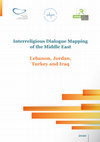
Adyan Foundation, 2020
This report evaluates contemporary interreligious dialogue activities in Lebanon, Jordan, Turkey ... more This report evaluates contemporary interreligious dialogue activities in Lebanon, Jordan, Turkey and Iraq. In order to do so, it introduces a theoretical framework for analyzing interreligious dialogue activities in the Middle East and presents a cross-national analysis of contemporary dialogue trends and challenges. The report profiles the major dialogue initiatives active in each country and provides resources to learn more about them.
In general, the report offers a portrait of a dynamic field in motion whose development reflects both common regional trends and specific national dynamics. Dialogue activities face many political and religious challenges in the region, and the recent decline of interreligious dialogue activity in Turkey highlights its continued vulnerability in the Middle East. Despite these challenges, many of the actors interviewed for this report continue to place great hope in the capacity of dialogue to catalyze spiritual solidarity, social renewal and positive political reform. In many ways, interreligious dialogue activities have become central laboratories in the region where new models of religious and political development are being continuously constructed and tested. These models have the potential to shape the future of religious concerns, social relations and regional politics in the Middle East.
The report formulates seven lessons about the organizational success and social relevance of interreligious dialogue activities in the region:
Lesson 1: Interreligious dialogue in the Middle East is a relatively young field and its growth is directly connected to the major political and social dynamics shaping the region, including the growth of religiously expressed violence.
Lesson 2: The political context of each country affects the development of interreligious dialogue in powerful ways. Most interreligious dialogue organizations perceived local and national political challenges as the most difficult dilemmas they faced in their work.
Lesson 3: Much of the interreligious dialogue activity in the region remains local in scope, at the initiative of faith-based organizations, and oriented to serving basic community needs.
Lesson 4: There is great sensitivity from multiple types of organizations to the foreign interests and influences that may be tied to interreligious dialogue activities.
Lesson 5: There is growing support for interreligious dialogue activities which strengthen citizenship values, even as the exact meaning of those values may change across national contexts.
Lesson 6: There is room for more substantive participation and dialogue outreach to youth, women, conservative religious communities and religious groups that are considered to hold extremist beliefs.
Lesson 7: Strategies of education were recognized as an essential strategy of action which might effectively build dialogue organizations’ capacity to participate in the reform of religious education or education on diversity in the region.
Politics and Religion, 2010
One of the essential characteristics of a democratic regime is the separation of church and state... more One of the essential characteristics of a democratic regime is the separation of church and state. The elected governors of a democratic regime's institutions require sufficient autonomy in order to make policy that is within the bounds of the constitution and which cannot be contested or overruled by non-elected religious leaders or institutions. However, this requirement is often confused by scholars and politicians to mean that a democracy must also be secular. Therefore, the idea of an "Islamic democracy", for example, is often derided as a contradiction in terms. Using quantitative data from and Fox (2006) on cross-national church and state relationships, this paper argues that once the core autonomy prerequisite has been fulfilled, further separation of church and state is not necessarily associated with higher levels of democracy. In fact, the data indicates that there is a wide range of church-state arrangements which gives religion the possibility of a central role in political life while maintaining a high quality of democratic rights and freedoms. Drawing on the statistical results of this analysis, the paper concludes by rethinking about the possibilities and limits for "public" religion to strengthen democratization processes.
Religious Establishment as a Subject of Political Science
The Oxford Encyclopedia of Politics and religion, 2019
Recent scholarly attention to religious establishment can be understood as a response to the cris... more Recent scholarly attention to religious establishment can be understood as a response to the crisis of secularization theory and the apparent return of religion to global politics. As a category, religious establishment represents a concrete instance of the religious touching the political, which political scientists can systematically measure and analyze to qualify the nature of religion’s return to global politics. Theoretical advances in the conceptualization of religious establishment as a combination of various policies of government regulation and favoritism of religion, in addition to the creation of cross-national databases to measure these policies, has led scholars to rediscover and categorize a broad range of patterns of religious establishment across the globe. Furthermore, these advances in conceptualization and data collection have enabled scholars to produce new political science research on the relationship between religious establishment and patterns of national religious life; cross-national levels of democracy; and the probability of political violence. Several hidden threads bind much of this scholarship together, including implicit assumptions made about normative debates on the meaning of religious liberty, as well as historical patterns of state formation. By explicitly recognizing these assumptions and linking them to future research agendas, political science scholarship on religious establishment is well placed to advance debates on the contemporary role of religion in global politics.
Sources of Muslim democracy: the supply and demand of religious policies in the Muslim world
Democratization, 2018
This article explores the supply of and demand for religiously infused democratic politics in the... more This article explores the supply of and demand for religiously infused democratic politics in the Muslim majority world. The first half of the article reexamines the widespread support of Muslim publics for both democracy and shari’a law. Results from 15 years of public opinion polls in the Muslim world highlight a clear pattern of support for pious political candidates, but not clerical control of politics. These results, the article further claims, are consistent with contemporary scholars’ understanding of Muslim democracy. The second half of the article formulates and then tests several hypotheses about the role of states’ religious policies in generating this public demand for Muslim democracy. Using cross-national data on religion-state arrangements and Arab Barometer and World Values Survey data, the article finds support for the hypothesis that religious favouritism increases demand
for pious political candidates, but less support for the hypothesis that religious regulation reduces demand for clerical control of politics.


Uploads
Books and Edited Volumes by Michael D. Driessen
The first half of the book builds a theoretical framework to better understand these dynamics of power, ideas and practices at work in the politics of interreligious dialogue. It begins by considering recent political science scholarship which interprets the growth of interreligious dialogue as largely the result of geopolitics in the region. The book then turns to theories of post-secularism and post-Islamism to highlight the ways in which interreligious dialogue initiatives also embody ongoing processes of religious change in modernity in both Islam and other religious traditions. In particular, the framework articulates the new ideas and practices of citizenship, religious pluralism and social solidarity which characterize dialogue initiatives in the region. These new ideas and practices have made interreligious dialogue an attractive project for a variety of religious actors and communities, and their institutionalization through dialogue initiatives has important consequences for the ongoing construction of religion and state arrangements in the region.
The second half of the book measures, challenges and recalibrates these insights. It begins by analyzing the history of interreligious dialogue initiatives in the Middle East and explores several key interreligious dialogue declarations produced in the region over the last two decades, including the Amman Message, the A Common Word letter, the Marrakesh Declaration and the Human Fraternity document. Then, drawing on five years of ethnographic fieldwork in Algeria, Lebanon, Qatar, Jordan, the UAE and Egypt, the book presents four case studies of dialogue in the region, namely the Focolare Community in Algeria, the Adyan Foundation in Lebanon, the King Abdullah bin Abdulaliz International Center for Interreligious and Intercultural Dialogue (KAICIID) of Saudi Arabia and the Doha International Center for Interfaith Dialogue (DICID) of Qatar.
This report analyzes the opportunities which human fraternity and inclusive citizenship offer for government-religious partnerships aimed at building more inclusive and peaceful societies across both shores of the Mediterranean and puts forward interreligious engagement as a new policy framework that recognizes and amplifies these novel dynamics.
Can the interreligious narrative of human fraternity help to create new inclusive forms of citizenship? How can governments and international organizations better partner with religious leaders and communities to concretely build inclusive societies from the MENA region to Europe?
elections. The book argues that religiously friendly democratization transforms both the democratic politics and religious life of society. The book explains this transformation by modeling the effects of religiously friendly democratization on the political goals of religious leaders and the
political salience of religious identities. In a religiously charged national setting, religiously friendly democratization can generate more support for democracy among religious actors. By embedding religious ideas and values into its institutions, however, religiously friendly democratization
also impacts national religious markets, creating more favorable conditions for the emergence of public religions and altering trajectories of religious life.
In making these arguments, the book draws on and advances recent scholarship from political science, sociology and philosophy on the relationship between religion and state in contemporary democracies. It engages empirical debates about global patterns of secularization and religious belief;
normative debates about the role of public religions in post-secular societies; and theoretical debates about the democratic future of political Islam and political Catholicism.
The book anchors its theoretical claims in case studies of Italy and Algeria, integrating original qualitative evidence and statistical data on voters' political and religious attitudes. It also compares the dynamics of religiously friendly democratization across the Muslim world today in Tunisia,
Morocco, Turkey and Indonesia. Finally, the book examines the theory's wider relevance through a statistical analysis of cross-national data on democracy, religiosity and religion-state relationships.
This present volume seeks to take stock of these trends and to theorize the contemporary dynamics of Catholicism and European Politics from a multidisciplinary perspective. The volume therefore invites contributions from the fields of political science, sociology, anthropology, theology, religious studies, and history. It welcomes proposals from both comparative and national perspectives which articulate and problematize the emerging dimensions of political Catholicism in its current post-secular and populist European landscape. As such, the volume encourages the submission of a broad range of article proposals, from multiple perspectives, which address the relationship of Catholicism to contemporary European political dynamics. These may include the following themes: new forms of European nationalism; national and European responses to the immigration crisis; the changing religiosity of European youth; the emergence of new ecological movements and ideas; the shifting role of Catholic movements on contemporary political parties; Catholicism and trans-Atlantic relations; Catholicism and the European Union; Catholic contributions to European debates on religious freedom; interreligious dialogue and human rights discourses; new Catholic perspectives on feminism and gender studies; and European discourses on secularism and post-modernity.
Papers by Michael D. Driessen
In general, the report offers a portrait of a dynamic field in motion whose development reflects both common regional trends and specific national dynamics. Dialogue activities face many political and religious challenges in the region, and the recent decline of interreligious dialogue activity in Turkey highlights its continued vulnerability in the Middle East. Despite these challenges, many of the actors interviewed for this report continue to place great hope in the capacity of dialogue to catalyze spiritual solidarity, social renewal and positive political reform. In many ways, interreligious dialogue activities have become central laboratories in the region where new models of religious and political development are being continuously constructed and tested. These models have the potential to shape the future of religious concerns, social relations and regional politics in the Middle East.
The report formulates seven lessons about the organizational success and social relevance of interreligious dialogue activities in the region:
Lesson 1: Interreligious dialogue in the Middle East is a relatively young field and its growth is directly connected to the major political and social dynamics shaping the region, including the growth of religiously expressed violence.
Lesson 2: The political context of each country affects the development of interreligious dialogue in powerful ways. Most interreligious dialogue organizations perceived local and national political challenges as the most difficult dilemmas they faced in their work.
Lesson 3: Much of the interreligious dialogue activity in the region remains local in scope, at the initiative of faith-based organizations, and oriented to serving basic community needs.
Lesson 4: There is great sensitivity from multiple types of organizations to the foreign interests and influences that may be tied to interreligious dialogue activities.
Lesson 5: There is growing support for interreligious dialogue activities which strengthen citizenship values, even as the exact meaning of those values may change across national contexts.
Lesson 6: There is room for more substantive participation and dialogue outreach to youth, women, conservative religious communities and religious groups that are considered to hold extremist beliefs.
Lesson 7: Strategies of education were recognized as an essential strategy of action which might effectively build dialogue organizations’ capacity to participate in the reform of religious education or education on diversity in the region.
for pious political candidates, but less support for the hypothesis that religious regulation reduces demand for clerical control of politics.