Books by Milan M. Markovic
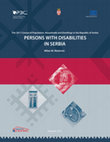
The book on persons with disabilities (persons who have reported difficulty in connection with th... more The book on persons with disabilities (persons who have reported difficulty in connection with their own state of health and functioning) will be based primarily on the data obtained from the national Census conducted in 2011. Taking into consideration the fact that the Census in the Republic of Serbia included the questions in connection with the difficulties for the first time, the study has been envisaged as an analysis that will be used for further interpretation and application of the quantitative data. The aim of the very set of the census questions is not to get an insight about the social interaction, obstacles in that regard and the degree of inclusion of persons with disabilities within the society. Such insight, albeit in a limited scope, is intended to be acquired by cross-classifying the data obtained in different segments of the census questionnaire.
The study intends to obtain the information on the degree of school attainment by cross-classifying the census questions and data. The areas covered in such way will also cover segments of economic activity that includes work and employment and the manner of livelihood.
In its approach the study will make a difference between the persons with disabilities who live in collective institutions (social welfare institutions) and those living in a flat/house, which will be
the subject of a special chapter.
This interdisciplinary study analyses how the internationally guaranteed human ‘right to health’ ... more This interdisciplinary study analyses how the internationally guaranteed human ‘right to health’ is realized by States at a national level. It brings together scholars from more than ten different countries, each of them analyzing the right to health in his or her country or region. They all focus on particular themes that are important in their country, such as health inequalities, the Millennium Development Goals, or the privatization of healthcare. And despite the differences in context, lessons can be learned from the rich experiences of the others, to learn how different countries implement (or not) health-related rights.
In this book scholars, practitioners and policy makers in the fields of human rights law, health law, public health and their intersections will find a rich source of information, giving a boost to the international debate on propagation and implementation of the universal Right to Health.
“The key challenge confronting the health and human rights movement is the translation of international and national human rights law into operational policies, programmes and other health-related interventions. Nowhere is this more challenging – and more important – than within countries.” (from the Foreword by Paul Hunt)
Studija na osnovu rezultata Popisa stanovnistva, domacinstava i stanova u Republici Srbiji 2011.
... more Studija na osnovu rezultata Popisa stanovnistva, domacinstava i stanova u Republici Srbiji 2011.
Persons with Disabilities in Serbia - a study based on data from the 2011 national Census.
Papers by Milan M. Markovic
Stanovnistvo, 2014
The 2011 Census in the Republic of Serbia introduced, for the first time questions about difficul... more The 2011 Census in the Republic of Serbia introduced, for the first time questions about difficulties in functioning, following the Recommendations from the Washington Group on Disability Statistics. Since there are no stable and continuous sources on the position of persons with disabilities in Serbia, the Census results may be used as a relevant source on disability measurement. Of course, due to the main goal of census disability measurement, and that is a general identification of disability in population, these results should be employed with certain reservations and carefully, especially because of some methodological specification in approaching disability. The main use of census data on disability should be found in evaluating the "equality of opportunity" in relevant areas, such as economic activity (labour and employment), education, living sources, etc. and this is to be achieved mainly through comparison between the values in the general population and populati...

The Right to Health
Health and Millennium Development Goals in Africa: Deconstructing the Thorny Path to Success.- En... more Health and Millennium Development Goals in Africa: Deconstructing the Thorny Path to Success.- Ensuring the Realization of the Right to Health through the African Union (AU) System: A Review of its Normative, Policy and Institutional Frameworks.- Equality and the Right to Health: A Preliminary Assessment of China.- The Right to Health in Japan: its implications and challenges.- Codification and implementation of the Right to Health in the Arab World.- The right to health and access to health care in Saudi Arabia with a particular focus on the women and migrants.- The Realization of the Right to Health for Refugees in Jordan.- The Right to Health: the Next American Dream.- The Brazilian Human Rights Indicators System: The Case of the Right to Health.- Aboriginal-specific Health Initiatives and Accessible Health Care in Canada are goodwill initiatives enough.- The Right to Health in Peru: persistent vulnerabilities in the context of HIV/AIDS.- The Right to Health for Vulnerable and Marginalised Groups: Russia as a Case Study.- The Challenges to Realising the Right to Health in Ireland.- Dutch Realities: Evaluating Dutch Health Care Reform from a Human Rights Perspective.
Stanovnistvo, 2012
Adoption of the UN Convention on the Right of Persons with Disabilities (2006) brought about a co... more Adoption of the UN Convention on the Right of Persons with Disabilities (2006) brought about a core shift to how the international community and human rights law see and treat human disability in general. This paradigm shift materilizes itself in a number of provisions ranging from those which catalogue the proclaimed human rights as they are in the context of special implementation and protection of people with disabilities, to those that introduce a level of specificity in light of their holders' particular needs. But the strongest presence of the shift to this regard can be found in the Article 12 CRPD that sheds new light on the concept of (legal) capacity of people with (mental) disabilites. According to this norm and put quite simply - there should be no difference in observing and treating capacity of a person with disabilities to that of any other person. This is not only the matter of prohibiting discrimination on grounds of mental impairments, but furthermore preventin...
Zbornik Matice srpske za drustvene nauke, 2014
The present article has the primary objective of displaying stances about the role, the reach and... more The present article has the primary objective of displaying stances about the role, the reach and limitations of a Census as a means of collecting data on disability in different countries. It will present the purpose of the Recommendation from the Washington Group on Disability Statistics in the context of introducing disability-related questions in national censuses from the year 2010 onwards. Furthermore, the article will inspect the limitations regarding measuring disability and functional difficulties through the means of a census, relying on the experience from other countries and scholarly research. This part will strongly focus on the formulations made by the Washington Group on Disability Statistics and the set of short questions presently used in national censuses. Finally, the article will briefly observe the experience from the Serbian national census in 2011 in measuring functional difficulties for the first time.
"Review of decision making of patients with mental difficulties in the health care context"
Summa... more "Review of decision making of patients with mental difficulties in the health care context"
Summary:
The present article addresses certain aspects of consent to medical treatment of persons with mental difficulties. To that regard, we specifically observe the relation between legal capacity of the patient and the possibility to give consent to or to refuse a medical intervention, and the effects of the mental disability label. The approach we employ is mostly that of human rights and non-discrimination, while the relevant sources used in this piece are the UN CRPD Convention, as well as the reports and recommendations from the relevant international and regional bodies.
Članak ima za glavni cilj da predstavi stepene nejednakosti između opšte populacije i subpopula... more Članak ima za glavni cilj da predstavi stepene nejednakosti između opšte populacije i subpopulacije osoba sa invaliditetom, uočene na osnovu rezultata Popisa iz 2011. godine. Pri tom, posebna pažnja usmerava se na posmatranje razlike u položaju osoba sa invaliditetom u ustanovama kolektivnog smeštaja i onih van takvih ustanova. Podaci koje koristimo rezultat su specifičnog posmatranja vrednosti dobijenih putem Popisa o aspektima obrazovanja i ekonomske aktivnosti kod lica koja su prijavila poteškoće u funkcionisanju. Osnovna upotrebna vrednost popisnih rezultata o invaliditetu leži u proceni "jednakosti mogućnosti" uglavnom između opšte populacije i populacije sa invaliditetom. Imajući u vidu to, kao i činjenicu da se osobe sa invaliditetom u institucionalnom smeštaju smatraju posebno ugroženim i onemogućenim u kontekstu osnovnih prava (obrazovanje, rad, samostalno odlučivanje), želimo da ukažemo na nalaze koji daju potvrdu takvog stanja i ukazuju na stepen odstupanja u pogledu društvenog uključivanja i jednakosti mogućnosti. To nam omogućavaju podaci koji su dostupni po prvi put, a dobijeni su autorovim ukrštanjem popisnih obeležja.
The present article has the primary objective of displaying stances about the role, the reach and... more The present article has the primary objective of displaying stances about the role, the reach and limitations of a census as a means of collecting data on disability in different countries. It will present the purpose of the Recommendations from the Washington Group on Disability Statistics in the context of introducing disability-related questions in national censuses from the year 2010 onward.
Furthermore, the article will inspect the limitations regarding measuring disability and functional difficulties through the means of a census, relying on the experience from other countries and scholarly research. This part will strongly focus on the formulations made by the Group and the set of short questions presently used in national censuses.
Finally, the article will briefly observe the experience from the Serbian national census in 2011 in measuring disability for the first time.
Keywords: measuring disability, census, methodology, survey
Due to its unfavorable status in the Serbian and other regional societies, the Roma minority is a... more Due to its unfavorable status in the Serbian and other regional societies, the Roma minority is affected by numerous problems in enjoying health care, realizing its health status and preserving a satisfactory level of physical and mental health.
The Report explores the conditions of human health through a standpoint of human rights law and t... more The Report explores the conditions of human health through a standpoint of human rights law and the right to health (ICESCR).

Standards of Patients' Rights in Cross-Border Health Care:
Directive 2011/24/EU
Summary
Cross-bor... more Standards of Patients' Rights in Cross-Border Health Care:
Directive 2011/24/EU
Summary
Cross-border healthcare within the European Union includes such movement by the patients-citizens of the member states, in which they, for the reasons of availability, quality or urgancy, seek health services ouside of their country of residence. Although free movement is one of the main postulates of the modern European system, a treatment-driven mobility faces certain limitations.
The new Directive on patients' rights in cross-border haelthcare brings several novelties, as well as clarifies some of the major prior provisions. In that sense, of particular importnace are the solutions concerning decision-making, about justifiability and admissibility of such movement on one hand, and by the patients, their freedom to choose a provider, place and quality of treatment, on the other, as an element of patient's own autonomy and freedom of choice.
The present article offers a kind of analysis of the concept of cross-border care, to the extent to which it serves the analysis over the document adopted in 2011. It focus is on observing the main achievements of the Directive in harmonization of cross-border health care and on recognizing and discussing limitations to that regard.
Keywords: patients' rights, cross-border care, free movement, EU,
Directive 2011/24/EU
Pravo na najvisi dostizni standard zdravlja (pravo na zdravlje) prema Opstem komentaru br. 14
Pr... more Pravo na najvisi dostizni standard zdravlja (pravo na zdravlje) prema Opstem komentaru br. 14
Pravni zivot (2009), 58(9)



Uploads
Books by Milan M. Markovic
The study intends to obtain the information on the degree of school attainment by cross-classifying the census questions and data. The areas covered in such way will also cover segments of economic activity that includes work and employment and the manner of livelihood.
In its approach the study will make a difference between the persons with disabilities who live in collective institutions (social welfare institutions) and those living in a flat/house, which will be
the subject of a special chapter.
In this book scholars, practitioners and policy makers in the fields of human rights law, health law, public health and their intersections will find a rich source of information, giving a boost to the international debate on propagation and implementation of the universal Right to Health.
“The key challenge confronting the health and human rights movement is the translation of international and national human rights law into operational policies, programmes and other health-related interventions. Nowhere is this more challenging – and more important – than within countries.” (from the Foreword by Paul Hunt)
Persons with Disabilities in Serbia - a study based on data from the 2011 national Census.
Papers by Milan M. Markovic
Summary:
The present article addresses certain aspects of consent to medical treatment of persons with mental difficulties. To that regard, we specifically observe the relation between legal capacity of the patient and the possibility to give consent to or to refuse a medical intervention, and the effects of the mental disability label. The approach we employ is mostly that of human rights and non-discrimination, while the relevant sources used in this piece are the UN CRPD Convention, as well as the reports and recommendations from the relevant international and regional bodies.
Furthermore, the article will inspect the limitations regarding measuring disability and functional difficulties through the means of a census, relying on the experience from other countries and scholarly research. This part will strongly focus on the formulations made by the Group and the set of short questions presently used in national censuses.
Finally, the article will briefly observe the experience from the Serbian national census in 2011 in measuring disability for the first time.
Keywords: measuring disability, census, methodology, survey
Directive 2011/24/EU
Summary
Cross-border healthcare within the European Union includes such movement by the patients-citizens of the member states, in which they, for the reasons of availability, quality or urgancy, seek health services ouside of their country of residence. Although free movement is one of the main postulates of the modern European system, a treatment-driven mobility faces certain limitations.
The new Directive on patients' rights in cross-border haelthcare brings several novelties, as well as clarifies some of the major prior provisions. In that sense, of particular importnace are the solutions concerning decision-making, about justifiability and admissibility of such movement on one hand, and by the patients, their freedom to choose a provider, place and quality of treatment, on the other, as an element of patient's own autonomy and freedom of choice.
The present article offers a kind of analysis of the concept of cross-border care, to the extent to which it serves the analysis over the document adopted in 2011. It focus is on observing the main achievements of the Directive in harmonization of cross-border health care and on recognizing and discussing limitations to that regard.
Keywords: patients' rights, cross-border care, free movement, EU,
Directive 2011/24/EU
Pravni zivot (2009), 58(9)