Papers by Nato Gengiuri
![Research paper thumbnail of ᲕᲐᲚᲔᲡ ᲢᲐᲫᲠᲘᲡ ᲐᲠᲥᲘᲢᲔᲥᲢᲣᲠᲐ ᲓᲐ ᲠᲔᲚᲘᲔᲤᲔᲑᲘ 2022 ᲬᲚᲘᲡ ᲔᲥᲡᲞᲔᲓᲘᲪᲘᲘᲡ ᲐᲦᲛᲝᲩᲔᲜᲔᲑᲘᲡ ᲤᲝᲜᲖᲔ [Nato Gengiuri, Nino Kvirikashvil: ARCHITECTURE AND RELIEFS OF THE VALE CATHEDRAL IN LIGHT OF THE DISCOVERIES OF THE 2022 EXPEDITION] i](https://attachments.academia-assets.com/125651805/thumbnails/1.jpg)
Academia, 2023
In June 2022, an expedition was carried out to explore the site of the Vale Cathedral (Fig. 1), d... more In June 2022, an expedition was carried out to explore the site of the Vale Cathedral (Fig. 1), during which a preliminary study of the architecture, several reliefs, and their inscriptions was performed. The cathedral has always aroused the interest of many researchers (Marie- Félicité Brosset, Praskovya Uvarova, Ekvtime Takaishvili, Giorgi Botchoridze, Rusudan Mepisashvili, Valeri Silogava, Tamar Khundadze). Its building layers date back to the 8th- 1 6 th centuries. However, questions remain on several issues related to it. Important discoveries of our expedition are related to reading and deciphering the inscriptions on the facades. When deciphering the inscriptions on the female reliefs of the southern façade (Fig. 5) the names of several previously unidentified individuals were deduced: knowing the name of a lay person called Mariam, now we have found out the names of her father and son – Dachi and Tsotne. The inscription containing the names of three generations of the family is significant for studying the history of the region. Next to the reliefs of knights (Fig. 6) on the southern facade, other previously undiscovered inscriptions were found, which led to their identification. This is St. Sergius and St. Bacchus, reliefs of which have not been found anywhere in Georgia. During the expedition, several issues related to the cathedral appeared in a new light: 1. Architectural Type of the Cathedral. There is no doubt that the cathedral was originally domed. Rusudan Mepisashvili singled out the last decade of the 10th century as the period of construction of the domed church. The cathedral was of the inscribed cross- type with two pillars supporting the dome (Tab. 2), the so- called Samtavisi- Samtavro type. According to the specialized literature, the emergence of this type of cathedral dates back to the first half of the 11th century. The Vale Cathedral precedes all churches belonging to the indicated type. This theory needs additional research regarding the existence of this type in Georgia. 2. Building Layers. Rusudan Mepisashvili highlights two building layers of the 10th century and the second half of the 14th century. Although in the interior we find details and ornaments, which, in our opinion, must belong to another, intermediate building layer (presumably 14- 15 centuries) or maybe from the period reconstruction (e.g. decorative hemispheres – Fig. 4). 3. Extensions. The earth around the cathedral, which used to cover the base, has been removed, and the plinth, consisting of three high steps, is fully visible. In the plinth, carved spaces have been preserved, indicating the addition of a narthex to the cathedral (Tab. 3). The cathedral also has a capital and two identical columns. In our opinion, these parts belonged to an extension built horizontally along the façade and having an open entrance with three arches; we have preserved samples of such narthexes of the 10th- 1 1 th centuries (Burnasheti, 10th c.) or upper churches of Vardzia (11th c.). 4. Reliefs of St. Sergius and St. Bacchus (Fig. 6). It is worth noticing that the cult of the mentioned saints has never been as popular in Georgia as the cult of St. George and St. Theodore. However, we have their depictions in paintings of the 12th century or the following period (Magalaant church, Kintsvisi, icons of New Shuamta, etc.). Images of St. Sergius and St. Bacchus are also known in other Christian countries (the 6th century icon of Mount Sinai Monastery, the 5th century frescos of Santa Maria Antiqua, the 11th century mosaics of Nea Moni of Chios, etc.). The iconography of the knights from the Vale Cathedral is entirely different from the mentioned examples: saints are usually depicted standing next to each other and rarely described as horsemen. In this case, the horsemen ride slowly abreast (icon of Mount Sinai Monastery, 13th century).

International Journal of Arts and Media Researches, 2022
„ხელოვნებისა და მედიის კვლევების საერთაშორისო კრებული“- ის International Journal of Arts and Medi... more „ხელოვნებისა და მედიის კვლევების საერთაშორისო კრებული“- ის International Journal of Arts and Media Researches წლევანდელი, 2022 წლის #2(12) ნომერი გამოიცემა სათაურით „ქალი და ხელოვნება“. ის წარმოგვიდგენს კვლევითი ხასიათის სტატიებს ხელოვნების სხვადასხვა დარგში - თეატრის, კინოს, სახვითი ხელოვნებისა და არქიტექტურის, ქორეოგრაფიის, მუსიკის და, ასევე, მედიის სფეროში. სტეტიების თემატიკა ეძღვნება ქალის საკითხის ხელოვნებაში. კრებულში ეს თემა გაშლილია სხვადასხვა მიმართებით: გენდერული კუთხით დანახული ხელოვნება, ხელოვანი ქალები, ქალის საკითხი ხელოვნებაში, ისტორია ქალის როლზე მხატვრულ პროცესებში და ა.შ.
კრებულში გაერთიანებულია 2021 წელს საქართველოს შოთა რუსთაველის თეატრისა და კინოს სახელმწიფო უნივერსიტეტში ჩატარებული ხელოვნების მკვლევართა XIV საერთაშორისო კონფერენციის თემატური სექციების მასალები.
The 2022 issue #2(12) of the International Journal of Arts and Media Researches is titled Woman and Art. It features research articles into various fields of art, such as theater, cinema, visual arts and architecture, choreography, music, and also media. The topics of these articles celebrate arts, creative women, the issue of a woman in art, stories of women’s role in artistic processes, and others, as seen through the prism of gender.
This miscellany brings together materials from the thematic sections of the 14th International Conference of Art Researchers held in 2021 at Shota Rustaveli Theater and Film Georgia State University.
Editorial Board:
Nato Gengiuri, Professor, Editor in Chief (Tbilisi, Georgia)
Zviad Dolidze, Professor (Tbilisi, Georgia)
Christian Freigang, Professor (Berlin, Germany)
Nadezhda Marinchevska, Professor (Sofia, Bulgaria)
Zviad Dolidze, Professor (Tbilisi, Georgia)
Lela Ochiauri, Professor (Tbilisi, Georgia)
Giorgi Tskitishvili, Professor (Tbilisi, Georgia)
Maka (Marine) Vasadze, Associate Professor (Tbilisi, Georgia)
Tatia Chkheidze, Associate Professor (Tbilisi, Georgia)
Saalbau mit der Kuppel in der georgischen Architektur des Mittelalters
... Saalbau mit der Kuppel in der georgischen Architektur des Mittelalters. Autores: NatoGengiuri... more ... Saalbau mit der Kuppel in der georgischen Architektur des Mittelalters. Autores: NatoGengiuri; Localización: Byzantinoslavica, ISSN 0007-7712, Vol. 64, Nº 1, 2006 , págs. 289-307. Fundación Dialnet. Acceso de usuarios registrados. ...
Saalbau mit der Kuppel in der georgischen Architektur des Mittelalters
Byzantinoslavica, 2006
... Saalbau mit der Kuppel in der georgischen Architektur des Mittelalters. Autores: NatoGengiuri... more ... Saalbau mit der Kuppel in der georgischen Architektur des Mittelalters. Autores: NatoGengiuri; Localización: Byzantinoslavica, ISSN 0007-7712, Vol. 64, Nº 1, 2006 , págs. 289-307. Fundación Dialnet. Acceso de usuarios registrados. ...
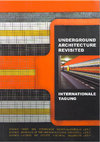
Underground Architecture Revisited, 2020
Architecture of Tbilisi Metro Stations - The Past and Contemporary
The first subway opened in G... more Architecture of Tbilisi Metro Stations - The Past and Contemporary
The first subway opened in Georgia’s capital of Tbilisi on January 11, 1966, back when the country was incorporated into the Soviet Union as one of its Soviet Republics. The first subway stations were designed when Soviet modernism, a new stage in Soviet Georgian architecture, gained a foothold to replace Stalinist Empire style. This transition was related to certain domestic policy changes and a relative degree of freedom allowed under the totalitarian empire.
Chronologically, the stations in Kiev, Ukraine and Baku, Azerbaijan (1958-1967) come closer than any other Soviet city to the period when Tbilisi’s subway stations were designed. Notably, however, old trends are most vividly reflected in the architecture of Kiev’s stations.
The Tbilisi Subway consists of two routes, with the second line added in 1979, still under Soviet rule. In terms of architectural design, the stations along these two routes differ: the architectural composition of the stations from the 1960s features both aboveground and underground sections, while the stations on the second line showcase only aboveground structures. The present work distinguishes three architectural types of Tbilisi subway station: 1) aboveground stations without underground sections (Didube and Elektrodepo [modern-day Gotsiridze] Stations, both designed by architects Nikoloz Lomidze and Givi Modzmanishvili), 2) Stations with both aboveground and underground sections, with the aboveground structures incorporated into others buildings (Train Station Square [modern-day Station Square] designed by architects Revaz Bairamashvili and Davit Morbedadze, also Lenin Square [modern-day Freedom Square] designed by architects Revaz Bairamashvili, Vladimer Aleksi-Meskhishvili, and Ketevan Kobakhidze, and other stations), and 3) stations with standalone aboveground pavilions designed near or directly in garden squares (Rustaveli designed by architects Levan Janelidze and Otar Kalandarishvili), 300 Aragveli designed by architects Tamaz Tevzadze and Giga Batiashvili, Nadzaladevi designed by architects Tamaz Tevzadze and Ramaz Kiknadze, and Isani (architects: Nikoloz Lomidze and Givi Modzmanishvili).
What sets apart the architecture of Tbilisi’s subway stations from their counterparts is their individualistic approach. They usher in modernist trends in the Georgian architecture of that time: simplicity of form, large open glass facades facilitating active communication between the natural environment and interior architecture, and the use of thin-shell architecture technology—all these are new to both Georgian and Soviet architecture as a whole. All these stations share one common characteristic decorative feature, relief sculpture, with panels using both stone and metal—the latter are especially popular in this period because of the growing interest in medieval Georgian metal sculpting. Using metal reliefs is characteristic of the Georgian architectural décor in the 1960s. Equally noteworthy is the employment of color ceramic panels and mosaics.
Subway stations are useful for studying the period of Soviet modernist from the ideological and national angles, also considering the subsequent changes in the post-Soviet era.
“COLOURED” ARCHITECTURE IN THE SOVIET UNION, 2017
“COLOURED” ARCHITECTURE IN THE SOVIET UNION
Architecture of 1960-70ies brings novelty and relativ... more “COLOURED” ARCHITECTURE IN THE SOVIET UNION
Architecture of 1960-70ies brings novelty and relative freedom to by-then Soviet Georgia. Heaviness and solemnity of “Soviet Empire” style constructions were replaced with buildings full of light and ease. The “new architectural wave” is represented by the Sports Palace, Hotel “Iveria”, Philarmonic Hall, Road Construction Ministry (currently Head Office of the Bank of Georgia). After a little, coloured mosaic enters the Georgian architecture, having a solid artistic impact on a number of architectural compositions. Mosaic was quickly mastered in the Soviet architecture (e.g. Stalinist period metro stations in Moscow), and in 1970ies, mosaic almost became mandatory for the new constructions. It was observable everywhere: apartment blocks, pavilions, factories, kindergartens as well as walls of other public facilities. The majority of the mosaic is of a low quality and fail to reflect appropriate artistic level.
However, there are a number of distinguished pieces of work of a high artistic value, created within the Georgian art as a result of creative cooperation between the talented architects and the painters – among them Batumi café “Phantasy”, bus stop pavilions in Abkhazia, seaside resorts with parks and fountains and other art compositions. Their study and comparative analysis with contemporary Soviet and international architecture proves their peculiar artistic nature. These constructions are works of art full of creativity, professionalism, phantasy and knowledge of subject matter, thus representing important cultural heritage of Georgian architecture of Soviet times.
ESCAPE FROM THE PAST OR IN THE PAST (The period of Post-Soviet Architecture in Georgia), 2015
ESCAPE FROM THE PAST OR IN THE PAST
(The period of Post-Soviet Architecture in Georgia)
Almost a ... more ESCAPE FROM THE PAST OR IN THE PAST
(The period of Post-Soviet Architecture in Georgia)
Almost a quarter of a century has passed since the fall of the Soviet Union. It’s quite a long period for history as well as for architecture, which passed the certain stages in Georgia after this historical event and gave us contradictory picture of directions. What does the recent 20 years’ Architecture express in Georgia? What course did it choose? These issues are discussed in this work.When we analyze the architecture of the last decades, we see ideological problem-solving attempts of a new society and search for new target. There is contradictory picture: on the one hand orientation is being on the Georgian architecture of middle centuries, on creation of establishing illusion of traditions in repeating artistic forms of the past epochs. On the other hand, the post-Soviet architecture also reveals that this epoch is striving to enter the Western civilization, escape the Soviet period and its historical and cultural experiences.
STALIN’S EMPIRE – IDEOLOGICAL STAGING, 2011
STALIN’S EMPIRE – IDEOLOGICAL STAGING
The present period posed acutely a whole series of problem... more STALIN’S EMPIRE – IDEOLOGICAL STAGING
The present period posed acutely a whole series of problems facing art historians, which requires special study, analysis, evaluation and conclusions. Artistic processes going on in the 20th-century Georgia, being directly linked with historical-political events, are mostly discussed only in publications issued in the Soviet period. These studies contain significant materials but are confined by ideological fetters and, hence, lack objective analysis. Therefore, I think it necessary to pose the question of study of the cultural heritage of the nearest past of Georgia.
Our contemporaneity perceives as a symbol of the Soviet period primarily architecture and sculpture, which came into being in Stalin’s times. Some people apply the negative attitude towards the Soviet regime to works of art as well. That is why our objective is to interpret artistic processes of the Soviet period, including architecture, to identify “false” and “true”.
What we today refer to as “Stalin’s Empire”, in the period of the USSR was defined as “Soviet architecture”. At present it is already obvious that the concept of Soviet architecture is very general: it unites qualitatively different stages and although on the whole all stages share a common basis, the form and style of artistic expression are different. “Stalin’s Empire”, the same as “Socialist Classicism”, falls within clear-cut time boundaries: 1933-1955. Its beginning as well as end are linked with the Party
decisions and are defined by the Government resolutions.
In the article there is discussed characteristic examples of
Georgian architecture of Stalin’s period, artistic peculiarities,
complex relations with ideology and creation; a brief history
of the origin, establishing and liquidation of Stalin’s Empire is presented.
Hunting Scene on the Relief of Oshi Church – the Meaning and the Symbolism , 2020
ნატო გენგიური, ნინო გოდერძიშვილი
ნადირობის სცენა ოშკის ტაძრის რელიეფზე – მნიშვნელობა და სიმბოლიკა... more ნატო გენგიური, ნინო გოდერძიშვილი
ნადირობის სცენა ოშკის ტაძრის რელიეფზე – მნიშვნელობა და სიმბოლიკა
Nato Gengiuri, Nino Goderdzishvili,
Shota Rustaveli Theatre and Film Georgia State University.
Tbilisi, Georgia
Hunting Scene on the Relief of Oshi Church – the Meaning and the Symbolism
The composition, presented on the top of window in Oshki (Fig. 1) attracts attention by peculiar solution: in the center, animals, standing symmetrically near the tree are presented; they are approached by goat or tur from one side. And on the other side, the kneeling hunter with bowstring pulled, is depicted.
Oshki composition differs from hunting scenes of St. Eustace Placida, known in Georgian art since early Christian period: 1. The hunter is not riding a horse, he is on foot, leaning on the knee; 2. Animals are not running away from him, as it is characteristic for St. Eustace Placida’s hunting iconography, but turs are calmly standing near the tree. The turs, standing near the tree repeat the composition, also characteristic for earlier period: deer or turs near the tree of life (Fig. 2). It is evident that the relief doesn’t depict St. Eustace Placida’s hunting and contains other semantic-symbolic meaning.
In our opinion, the hunter of the relief may mean the zodiac sign – Sagittarius and on the whole, the composition has symbolic meaning related to Christian topics. The fact that Vakhtang Jobadze sees zodiac signs in other reliefs of Oshki Church too, also complies with this opinion.
The image of Sagittarius zodiac occurs in different forms: in Islamic art the archer has the body of lion or fantastic animal (Fig. 8, 9, 10), in Europe, mainly, it is centaur or the figure on foot (Fig. 11, 12, 13, 14, 15, 16). The hunter of Oshki relief should be one of the variants of depicting of zodiac sign of Sagittarius – on foot, kneeling archer.
In the other, opposite edge of the relief, goat is depicted (Fig. 1). In our opinion, it is the Capricorn zodiac. As we know, Sagittarius is the planet Jupiter, and Capricorn – Saturn. Selection of astrological signs on Oshki Church relief is conditioned by the peculiarity of the planets, which were related to them in Middle Ages. The poem of the XII c. “The Knight in the Panther’s Skin” reveals the understandings related to the nature of the planets and allows us to explain the content of the relief. Selection of astrological signs should contain the idea of opposition of good and evil (Jupiter – the planet, bringing victory and happiness, Saturn – dark star, bringing suffering).
Relation of Astral signs with the topic of the “Tree of Life” has its explanation: astral signs personify the passing time of this world, whereas the Tree of Life I the symbol of eternity. In earthly life Jupiter and Saturn influence humans, here the evil and the good are fighting, but the righteous will earn the Heaven. In our opinion, this is the content of Oshki relief.
The 1960s may be characterized as an era of attempts at architectural experimentation in Soviet G... more The 1960s may be characterized as an era of attempts at architectural experimentation in Soviet Georgia. A series of government decrees in 1955 allows architects to do what they were previously banned from doing. Information about novel architectural projects also permeats the borders, imbuing architects with a sense of relative freedom and boosting their thirst for innovations… Consequently, besides general modernist trends in the 1960s, we can identify different “inside” trends, different directions. This work is dedicated to only one of them; we have singled out a group of buildings sharing similar artistic and architectural approaches, architectural interests. What unites them is their construction and technical engineering as they all represent examples of so-called thin-shell structures. These buildings, three in number, were designed in the 1960s: the Isani subway station in Tbilisi (1968, architects Givi Modzmanishvili and Nikoloz Lomidze), the Mineral Spring Pavilion at Borjomi Park (1966, architects Grigol Jabua and Evgeni Tskhakaia), and the aerial lift station in Borjomi. All three projects employ thin shell concreting, a popular technology throughout the world at that time, and resemble projects by Félix Candela, Ulrich Müther, Heinz Isler Schalen, though artistic approaches vary depending on the artist’s taste, by virtue of which they are seen as interesting examples of the Georgian architecture of that period and Soviet modernism in general.
The Villa Firuze, built in 1892 in one of the most famous resorts of Georgia, Borjomi,
was const... more The Villa Firuze, built in 1892 in one of the most famous resorts of Georgia, Borjomi,
was constructed for the Consul of Persia, Mirza Reza Khan (1854-1938), and was his resort residence. When he left Georgia, the building functioned as hotel, and during the Soviet period it became a building within the sanatorium Firuze. Today it is privately owned and is not occupied.
Our research briefly describes the history of the Borjomi resort, a brief biography of Mirza Reza Khan, and the architectural pecu- liarities of the building within the contexts of the function of the building, local circum- stances and the owner’s cultural. A compara- tive analysis of the architectural structure of Iranian residences of the 19th century and local Georgian residences, namely the “Tbi- lisian house”, of the same period reveals the peculiarities of this structure. For both types of residential houses, courtyards were very important, however their cultural uses were quite different. They had different structures and socio-cultural purposes, for example the basis of planning an Iranian residential house was a division into zones (e.g. winter and summer zones). This was influenced both by climate and by a clear delimitation of the social roles of women and men, which dictated personal and semi-personal space, or andaruni and biruni (andarūnī , bīrūnī ). For an Iranian house, the existence of both personal and semi-personal spaces is char- acteristic. The Iranian courtyard is com- pletely closed to the outer world and does not open outwards; nor does it offer access on any side. This is a main difference from Tbilisian courtyards that are semi-open and connect directly to the street, i.e. the outer world. There is no clear limit between per- sonal and public spaces. To the contrary, the yard--as well as the balcony--is a kind of intermediary link, a semi-open, transitional space, where personal activity is directed to- wards the social and doesn’t turn its back on public space. Such considerations show how architecture accommodates the content, ex- pressing cultural identity.
In the case of Firuze, however, the concept of yards is different from Iranian residences of the 19th c. Indeed it resembles the yards of a Tbilisian house as it directly adjoins the street and the space is not completely isolat- ed from public space. The Villa Firuze court- yard, also like a Tbilsian house, is character- ized by uninterrupted balconies along each floor. It resembles a Tbilisian house not only in appearance and style but the function was also similar. The balcony connects dif- ferent parts of the building– rooms, dining hall, kitchen, spa, etc. Yet the building has an oriental appearance and is characterized by its décor. The profile of the upper part of the wooden balcony on the main façade was likely inspired by the peshtak-balcony with pointed arch, characteristic of Iranian archi- tecture. Mosaics with mirrors were also char- acteristic of Iranian architecture. Here these were created by the master, Mirza Muham- mad Naqash Qazvin, invited from Qazvin. His name is written on a board in the center of the balcony. Oriental mukarnas motifs, Iranian paintings with flowers and birds, etc. are also used in the décor. Thus, the desire of the owner, Mirza Deza Khan, to make his Borjomi residence resemble his native Iran and express his identity was realized. Photos of portraits of the Iranian Shah of the epoch and other nobles were included in the décor of the balcony, giving the building its unique appearance. Thus, Villa Firuze embodies ele- ments both of Iranian art and the architec- tural concepts of a Tbilisian house, including its European embossed décor with cupids and embellishments.
Overall, the Firuze is a building with diverse and interesting visual aspects with its roofs of different shapes, while the dynamically ar- ranged architectural structures fit the envi- ronment – the Caucasus Mountains reaching to the sky, the tall spruce and other trees, all perfectly fitting the environment and creat- ing an organic unity with nature. Villa Firuze is unique for its artistic-architectural charac- teristics—the organic unification of different artistic traditions and a harmonious amalga- mation with nature and environment--that creates its artistic value. Besides this, its his- torical value is also clear proof of the peace- ful co-habitation, openness and cultural dia- logue between people of different identities and cultures of that period.
Saalbau mit der Kuppel in der georgischen Architektur des Mittelalters
Byzantinoslavica, Jan 1, 2006
... Saalbau mit der Kuppel in der georgischen Architektur des Mittelalters. Autores: NatoGengiuri... more ... Saalbau mit der Kuppel in der georgischen Architektur des Mittelalters. Autores: NatoGengiuri; Localización: Byzantinoslavica, ISSN 0007-7712, Vol. 64, Nº 1, 2006 , págs. 289-307. Fundación Dialnet. Acceso de usuarios registrados. ...
The small church in
Kv i i t k i r i s t s k aro
contains a unique
baptismal font created for ... more The small church in
Kv i i t k i r i s t s k aro
contains a unique
baptismal font created for the baptismal
rites. It is 42 cm high with a diameter of
65 cm, resembling a Column capital. Like
a Coorinth capital it is engraved all around
with motifs of leaves. The edges around
the baptismal font are decorated by two
interwoven squares, made of shafts, which
together make an eight pointed star. In my
opinion the font had a leg as support like
batismal fonts of European Romanic style.
Both the form and artistic decoration of the
Kvitkiristskaro baptismal font are outstanding
among stone baptisteries found in Georgia. It
was "built” by combining two forms _ a circle
and a square. The circular outline of the bottom
gradually transforms into a square as
it approaches the top of the baptistery. The
square’s corners are cut so that it has become
an octagon. Both the circle and the octagon
are symbols that relate to baptismal rites.
According to Richard Krauthammer (Introduction
to an "Iconography of Mediaeval
Architecture”, Journal of the Warburg
and Courtauld Institutes, Vol. 5. (1942), pp.
1-33)), the composition of an Early Christian
baptistery was based on the design of antique
tombs. This link was made by considering
the symbolic meaning of the function
of baptism _ for Christians, a believer who
is being baptized is repeating Christ’s death
and resurrection, a spiritual birth. This is
from where the symbolism of the baptistery
font, below floor level, emerges. Being
submerged completely in the holy water
and then rising from the water symbolized
rising from death, similar to Christ’s burial
and resurrection. The resemblance of the
baptistery to a grave held deep and important
symbolic meaning.
Both the form and decoration of the baptismal
font correspond to the theological
meaning of the baptism. Outside Georgia
in other areas of Christianity of the Middle
East-- Syria- Palestine, Rhodes and Egypt,
early 4th -6th cc. stone baptismal fonts are
found, with different shapes: octagonal
(Garizim, Khûrbet thekûa), cross-shaped (Ob
Ğănăh, Isbeita). There are also right angled
from outside, cross-shaped from the inside
(Um eğ Ğelăl, Jerusalem Golgotha), circle
from the outside, cut as quadrifolium from
the inside (Megreh, Khirbet Zaqarieh) and
other forms of baptisteries. The symbolism
of a circle and a cross is clear: the cross is the
main symbol of Christianity; The circle is the
symbol of infinity and eternity. Baptisteries
of circular design (Tash-Bash) and quadrifolium
design (Bzipi) can also be found in
Georgia, where there are also more right-angled,
box-shaped fonts, not as common
elsewhere. Among right-angled baptisteries,
the remarkable Zhaleti baptistery of the 6th
-7th cc is decorated with reliefs. A pre-cursor
to the right-angled, box-shaped baptismal
font design, in our opinion, is the burial sarcophagus.
The right-angled font denotes the
sarcophagus, like the basin--cut below floor
level _ denotes the grave. In both cases the
idea is the same _ the revival of a dead spirit,
and granting eternity through baptism.
The large octagram depicted on the Kvitkiristskaro
Baptistery is also symbolic of
baptism. The octagram or eight-pointed
star covers the edge of the baptismal font .
In Christian art, the eight-pointed star is the
star of the Mother of God, and symbolizes
the Christmas star that brought the Magi to
Christ. We should understand the relation of
this star to the baptistery as indicating how to
come to Christ, through baptism, the second
birth of the believer. A person who was baptized
in the Kvitkiristskaro Baptistery, after
bathing in baptismal water, is considered as
born directly "from the star”. The baptismal
font, cut in the center of the eight-pointed
star, is octagonal. The Old Christian Church
interprets the number "eight” as "the first of
the week days” after the seventh day, when
Christ rose from the dead. It is the "mystery
of the coming universe” and the "new lifestyle”
(Origen. Orig. Komm. z. Römerbrief
(German) II, 13). Eight is the symbol of resurrection
and re-birth during the baptismal
rites. All Biblical events related to "eight” had
to do with Christ’s resurrection on the eighth
(first) day. That is why early Christian baptisteries
were octagonal.
The theme of eternity is again evoked
through floral ornamentation around the
Kvitkiristskaro baptismal font, where _
though they are no longer clearly visible _
some details can be seen, such as the form
of trees, pointing to the tree of life. Stylistically,
these floral ornaments are similar
to the earliest ornaments seen in the decorations
of the Bolnisi Sioni (5th c) and
on engravings at Svetitskhoveli Church,
which have survived since the 5th c. However,
some details of Kvitkiristskaro baptismal
font, i.e. the nature of shafts of the
eight-pointed star – well raised form, also
decorated with cut-in lines, more likely indicates
a period near the 10th c. The archaic
style of the floral ornament and the forms
made of shafts, the plasticity and other details
indicate the 9th -10th cc as the probable
time the baptismal font was created.
Georgian Art and Architecture by Nato Gengiuri
Books by Nato Gengiuri
![Research paper thumbnail of CULTURE IN THE DIGITAL AGE - International Journal of Arts And Media Researches 2025 #5 (15). Editor-in-chief Nato Gengiuri [ᲙᲣᲚᲢᲣᲠᲐ ᲪᲘᲤᲠᲣᲚ ᲔᲞᲝᲥᲐᲨᲘ-ხელოვნებისა და მედიის კვლევების საერთაშორისო კრებული, #5(15), 2025, მთავარი რედაქტორი ნატო გენგიური]](https://attachments.academia-assets.com/125723984/thumbnails/1.jpg)
The 2025 issue of the International Journal of Arts and Media Researches
#5(15) is published unde... more The 2025 issue of the International Journal of Arts and Media Researches
#5(15) is published under the thematic title “Culture in the Digital Age.”
The collection includes articles based on papers presented at the 17th
International Conference of Art Researchers, held in 2024.
The digital age has a significant impact on culture and art. Modern technologies transform creative processes, the boundaries between disciplines, and the forms in which they are disseminated. Consequently, understanding the relationship between the digital environment and culture has become one of the central directions in research across
the arts.
The articles presented in this issue reflect the challenges and opportunities of digital culture from the perspective of various fields: theatre studies, film studies, art history, musicology, and media research.
The authors include both established scholars and early-career researchers from Georgia, Germany, Latvia, Romania, Ukraine, Belarus, Turkey, and China.
https://artsmediajournal.tafu.edu.ge/en/e-journal/
The 2022 issue #2(12) of the International Journal of Arts and Media Researches
is titled Woman ... more The 2022 issue #2(12) of the International Journal of Arts and Media Researches
is titled Woman and Art. It features research articles into various fields of art, such
as theater, cinema, visual arts and architecture, choreography, music, and also media.
The topics of these articles celebrate arts, creative women, the issue of a woman
in art, stories of women’s role in artistic processes, and others, as seen through the
prism of gender.
This miscellany brings together materials from the thematic sections of the 14th
International Conference of Art Researchers held in 2021 at Shota Rustaveli Theater
and Film Georgia State University.



Uploads
Papers by Nato Gengiuri
კრებულში გაერთიანებულია 2021 წელს საქართველოს შოთა რუსთაველის თეატრისა და კინოს სახელმწიფო უნივერსიტეტში ჩატარებული ხელოვნების მკვლევართა XIV საერთაშორისო კონფერენციის თემატური სექციების მასალები.
The 2022 issue #2(12) of the International Journal of Arts and Media Researches is titled Woman and Art. It features research articles into various fields of art, such as theater, cinema, visual arts and architecture, choreography, music, and also media. The topics of these articles celebrate arts, creative women, the issue of a woman in art, stories of women’s role in artistic processes, and others, as seen through the prism of gender.
This miscellany brings together materials from the thematic sections of the 14th International Conference of Art Researchers held in 2021 at Shota Rustaveli Theater and Film Georgia State University.
Editorial Board:
Nato Gengiuri, Professor, Editor in Chief (Tbilisi, Georgia)
Zviad Dolidze, Professor (Tbilisi, Georgia)
Christian Freigang, Professor (Berlin, Germany)
Nadezhda Marinchevska, Professor (Sofia, Bulgaria)
Zviad Dolidze, Professor (Tbilisi, Georgia)
Lela Ochiauri, Professor (Tbilisi, Georgia)
Giorgi Tskitishvili, Professor (Tbilisi, Georgia)
Maka (Marine) Vasadze, Associate Professor (Tbilisi, Georgia)
Tatia Chkheidze, Associate Professor (Tbilisi, Georgia)
The first subway opened in Georgia’s capital of Tbilisi on January 11, 1966, back when the country was incorporated into the Soviet Union as one of its Soviet Republics. The first subway stations were designed when Soviet modernism, a new stage in Soviet Georgian architecture, gained a foothold to replace Stalinist Empire style. This transition was related to certain domestic policy changes and a relative degree of freedom allowed under the totalitarian empire.
Chronologically, the stations in Kiev, Ukraine and Baku, Azerbaijan (1958-1967) come closer than any other Soviet city to the period when Tbilisi’s subway stations were designed. Notably, however, old trends are most vividly reflected in the architecture of Kiev’s stations.
The Tbilisi Subway consists of two routes, with the second line added in 1979, still under Soviet rule. In terms of architectural design, the stations along these two routes differ: the architectural composition of the stations from the 1960s features both aboveground and underground sections, while the stations on the second line showcase only aboveground structures. The present work distinguishes three architectural types of Tbilisi subway station: 1) aboveground stations without underground sections (Didube and Elektrodepo [modern-day Gotsiridze] Stations, both designed by architects Nikoloz Lomidze and Givi Modzmanishvili), 2) Stations with both aboveground and underground sections, with the aboveground structures incorporated into others buildings (Train Station Square [modern-day Station Square] designed by architects Revaz Bairamashvili and Davit Morbedadze, also Lenin Square [modern-day Freedom Square] designed by architects Revaz Bairamashvili, Vladimer Aleksi-Meskhishvili, and Ketevan Kobakhidze, and other stations), and 3) stations with standalone aboveground pavilions designed near or directly in garden squares (Rustaveli designed by architects Levan Janelidze and Otar Kalandarishvili), 300 Aragveli designed by architects Tamaz Tevzadze and Giga Batiashvili, Nadzaladevi designed by architects Tamaz Tevzadze and Ramaz Kiknadze, and Isani (architects: Nikoloz Lomidze and Givi Modzmanishvili).
What sets apart the architecture of Tbilisi’s subway stations from their counterparts is their individualistic approach. They usher in modernist trends in the Georgian architecture of that time: simplicity of form, large open glass facades facilitating active communication between the natural environment and interior architecture, and the use of thin-shell architecture technology—all these are new to both Georgian and Soviet architecture as a whole. All these stations share one common characteristic decorative feature, relief sculpture, with panels using both stone and metal—the latter are especially popular in this period because of the growing interest in medieval Georgian metal sculpting. Using metal reliefs is characteristic of the Georgian architectural décor in the 1960s. Equally noteworthy is the employment of color ceramic panels and mosaics.
Subway stations are useful for studying the period of Soviet modernist from the ideological and national angles, also considering the subsequent changes in the post-Soviet era.
Architecture of 1960-70ies brings novelty and relative freedom to by-then Soviet Georgia. Heaviness and solemnity of “Soviet Empire” style constructions were replaced with buildings full of light and ease. The “new architectural wave” is represented by the Sports Palace, Hotel “Iveria”, Philarmonic Hall, Road Construction Ministry (currently Head Office of the Bank of Georgia). After a little, coloured mosaic enters the Georgian architecture, having a solid artistic impact on a number of architectural compositions. Mosaic was quickly mastered in the Soviet architecture (e.g. Stalinist period metro stations in Moscow), and in 1970ies, mosaic almost became mandatory for the new constructions. It was observable everywhere: apartment blocks, pavilions, factories, kindergartens as well as walls of other public facilities. The majority of the mosaic is of a low quality and fail to reflect appropriate artistic level.
However, there are a number of distinguished pieces of work of a high artistic value, created within the Georgian art as a result of creative cooperation between the talented architects and the painters – among them Batumi café “Phantasy”, bus stop pavilions in Abkhazia, seaside resorts with parks and fountains and other art compositions. Their study and comparative analysis with contemporary Soviet and international architecture proves their peculiar artistic nature. These constructions are works of art full of creativity, professionalism, phantasy and knowledge of subject matter, thus representing important cultural heritage of Georgian architecture of Soviet times.
(The period of Post-Soviet Architecture in Georgia)
Almost a quarter of a century has passed since the fall of the Soviet Union. It’s quite a long period for history as well as for architecture, which passed the certain stages in Georgia after this historical event and gave us contradictory picture of directions. What does the recent 20 years’ Architecture express in Georgia? What course did it choose? These issues are discussed in this work.When we analyze the architecture of the last decades, we see ideological problem-solving attempts of a new society and search for new target. There is contradictory picture: on the one hand orientation is being on the Georgian architecture of middle centuries, on creation of establishing illusion of traditions in repeating artistic forms of the past epochs. On the other hand, the post-Soviet architecture also reveals that this epoch is striving to enter the Western civilization, escape the Soviet period and its historical and cultural experiences.
The present period posed acutely a whole series of problems facing art historians, which requires special study, analysis, evaluation and conclusions. Artistic processes going on in the 20th-century Georgia, being directly linked with historical-political events, are mostly discussed only in publications issued in the Soviet period. These studies contain significant materials but are confined by ideological fetters and, hence, lack objective analysis. Therefore, I think it necessary to pose the question of study of the cultural heritage of the nearest past of Georgia.
Our contemporaneity perceives as a symbol of the Soviet period primarily architecture and sculpture, which came into being in Stalin’s times. Some people apply the negative attitude towards the Soviet regime to works of art as well. That is why our objective is to interpret artistic processes of the Soviet period, including architecture, to identify “false” and “true”.
What we today refer to as “Stalin’s Empire”, in the period of the USSR was defined as “Soviet architecture”. At present it is already obvious that the concept of Soviet architecture is very general: it unites qualitatively different stages and although on the whole all stages share a common basis, the form and style of artistic expression are different. “Stalin’s Empire”, the same as “Socialist Classicism”, falls within clear-cut time boundaries: 1933-1955. Its beginning as well as end are linked with the Party
decisions and are defined by the Government resolutions.
In the article there is discussed characteristic examples of
Georgian architecture of Stalin’s period, artistic peculiarities,
complex relations with ideology and creation; a brief history
of the origin, establishing and liquidation of Stalin’s Empire is presented.
ნადირობის სცენა ოშკის ტაძრის რელიეფზე – მნიშვნელობა და სიმბოლიკა
Nato Gengiuri, Nino Goderdzishvili,
Shota Rustaveli Theatre and Film Georgia State University.
Tbilisi, Georgia
Hunting Scene on the Relief of Oshi Church – the Meaning and the Symbolism
The composition, presented on the top of window in Oshki (Fig. 1) attracts attention by peculiar solution: in the center, animals, standing symmetrically near the tree are presented; they are approached by goat or tur from one side. And on the other side, the kneeling hunter with bowstring pulled, is depicted.
Oshki composition differs from hunting scenes of St. Eustace Placida, known in Georgian art since early Christian period: 1. The hunter is not riding a horse, he is on foot, leaning on the knee; 2. Animals are not running away from him, as it is characteristic for St. Eustace Placida’s hunting iconography, but turs are calmly standing near the tree. The turs, standing near the tree repeat the composition, also characteristic for earlier period: deer or turs near the tree of life (Fig. 2). It is evident that the relief doesn’t depict St. Eustace Placida’s hunting and contains other semantic-symbolic meaning.
In our opinion, the hunter of the relief may mean the zodiac sign – Sagittarius and on the whole, the composition has symbolic meaning related to Christian topics. The fact that Vakhtang Jobadze sees zodiac signs in other reliefs of Oshki Church too, also complies with this opinion.
The image of Sagittarius zodiac occurs in different forms: in Islamic art the archer has the body of lion or fantastic animal (Fig. 8, 9, 10), in Europe, mainly, it is centaur or the figure on foot (Fig. 11, 12, 13, 14, 15, 16). The hunter of Oshki relief should be one of the variants of depicting of zodiac sign of Sagittarius – on foot, kneeling archer.
In the other, opposite edge of the relief, goat is depicted (Fig. 1). In our opinion, it is the Capricorn zodiac. As we know, Sagittarius is the planet Jupiter, and Capricorn – Saturn. Selection of astrological signs on Oshki Church relief is conditioned by the peculiarity of the planets, which were related to them in Middle Ages. The poem of the XII c. “The Knight in the Panther’s Skin” reveals the understandings related to the nature of the planets and allows us to explain the content of the relief. Selection of astrological signs should contain the idea of opposition of good and evil (Jupiter – the planet, bringing victory and happiness, Saturn – dark star, bringing suffering).
Relation of Astral signs with the topic of the “Tree of Life” has its explanation: astral signs personify the passing time of this world, whereas the Tree of Life I the symbol of eternity. In earthly life Jupiter and Saturn influence humans, here the evil and the good are fighting, but the righteous will earn the Heaven. In our opinion, this is the content of Oshki relief.
was constructed for the Consul of Persia, Mirza Reza Khan (1854-1938), and was his resort residence. When he left Georgia, the building functioned as hotel, and during the Soviet period it became a building within the sanatorium Firuze. Today it is privately owned and is not occupied.
Our research briefly describes the history of the Borjomi resort, a brief biography of Mirza Reza Khan, and the architectural pecu- liarities of the building within the contexts of the function of the building, local circum- stances and the owner’s cultural. A compara- tive analysis of the architectural structure of Iranian residences of the 19th century and local Georgian residences, namely the “Tbi- lisian house”, of the same period reveals the peculiarities of this structure. For both types of residential houses, courtyards were very important, however their cultural uses were quite different. They had different structures and socio-cultural purposes, for example the basis of planning an Iranian residential house was a division into zones (e.g. winter and summer zones). This was influenced both by climate and by a clear delimitation of the social roles of women and men, which dictated personal and semi-personal space, or andaruni and biruni (andarūnī , bīrūnī ). For an Iranian house, the existence of both personal and semi-personal spaces is char- acteristic. The Iranian courtyard is com- pletely closed to the outer world and does not open outwards; nor does it offer access on any side. This is a main difference from Tbilisian courtyards that are semi-open and connect directly to the street, i.e. the outer world. There is no clear limit between per- sonal and public spaces. To the contrary, the yard--as well as the balcony--is a kind of intermediary link, a semi-open, transitional space, where personal activity is directed to- wards the social and doesn’t turn its back on public space. Such considerations show how architecture accommodates the content, ex- pressing cultural identity.
In the case of Firuze, however, the concept of yards is different from Iranian residences of the 19th c. Indeed it resembles the yards of a Tbilisian house as it directly adjoins the street and the space is not completely isolat- ed from public space. The Villa Firuze court- yard, also like a Tbilsian house, is character- ized by uninterrupted balconies along each floor. It resembles a Tbilisian house not only in appearance and style but the function was also similar. The balcony connects dif- ferent parts of the building– rooms, dining hall, kitchen, spa, etc. Yet the building has an oriental appearance and is characterized by its décor. The profile of the upper part of the wooden balcony on the main façade was likely inspired by the peshtak-balcony with pointed arch, characteristic of Iranian archi- tecture. Mosaics with mirrors were also char- acteristic of Iranian architecture. Here these were created by the master, Mirza Muham- mad Naqash Qazvin, invited from Qazvin. His name is written on a board in the center of the balcony. Oriental mukarnas motifs, Iranian paintings with flowers and birds, etc. are also used in the décor. Thus, the desire of the owner, Mirza Deza Khan, to make his Borjomi residence resemble his native Iran and express his identity was realized. Photos of portraits of the Iranian Shah of the epoch and other nobles were included in the décor of the balcony, giving the building its unique appearance. Thus, Villa Firuze embodies ele- ments both of Iranian art and the architec- tural concepts of a Tbilisian house, including its European embossed décor with cupids and embellishments.
Overall, the Firuze is a building with diverse and interesting visual aspects with its roofs of different shapes, while the dynamically ar- ranged architectural structures fit the envi- ronment – the Caucasus Mountains reaching to the sky, the tall spruce and other trees, all perfectly fitting the environment and creat- ing an organic unity with nature. Villa Firuze is unique for its artistic-architectural charac- teristics—the organic unification of different artistic traditions and a harmonious amalga- mation with nature and environment--that creates its artistic value. Besides this, its his- torical value is also clear proof of the peace- ful co-habitation, openness and cultural dia- logue between people of different identities and cultures of that period.
Kv i i t k i r i s t s k aro
contains a unique
baptismal font created for the baptismal
rites. It is 42 cm high with a diameter of
65 cm, resembling a Column capital. Like
a Coorinth capital it is engraved all around
with motifs of leaves. The edges around
the baptismal font are decorated by two
interwoven squares, made of shafts, which
together make an eight pointed star. In my
opinion the font had a leg as support like
batismal fonts of European Romanic style.
Both the form and artistic decoration of the
Kvitkiristskaro baptismal font are outstanding
among stone baptisteries found in Georgia. It
was "built” by combining two forms _ a circle
and a square. The circular outline of the bottom
gradually transforms into a square as
it approaches the top of the baptistery. The
square’s corners are cut so that it has become
an octagon. Both the circle and the octagon
are symbols that relate to baptismal rites.
According to Richard Krauthammer (Introduction
to an "Iconography of Mediaeval
Architecture”, Journal of the Warburg
and Courtauld Institutes, Vol. 5. (1942), pp.
1-33)), the composition of an Early Christian
baptistery was based on the design of antique
tombs. This link was made by considering
the symbolic meaning of the function
of baptism _ for Christians, a believer who
is being baptized is repeating Christ’s death
and resurrection, a spiritual birth. This is
from where the symbolism of the baptistery
font, below floor level, emerges. Being
submerged completely in the holy water
and then rising from the water symbolized
rising from death, similar to Christ’s burial
and resurrection. The resemblance of the
baptistery to a grave held deep and important
symbolic meaning.
Both the form and decoration of the baptismal
font correspond to the theological
meaning of the baptism. Outside Georgia
in other areas of Christianity of the Middle
East-- Syria- Palestine, Rhodes and Egypt,
early 4th -6th cc. stone baptismal fonts are
found, with different shapes: octagonal
(Garizim, Khûrbet thekûa), cross-shaped (Ob
Ğănăh, Isbeita). There are also right angled
from outside, cross-shaped from the inside
(Um eğ Ğelăl, Jerusalem Golgotha), circle
from the outside, cut as quadrifolium from
the inside (Megreh, Khirbet Zaqarieh) and
other forms of baptisteries. The symbolism
of a circle and a cross is clear: the cross is the
main symbol of Christianity; The circle is the
symbol of infinity and eternity. Baptisteries
of circular design (Tash-Bash) and quadrifolium
design (Bzipi) can also be found in
Georgia, where there are also more right-angled,
box-shaped fonts, not as common
elsewhere. Among right-angled baptisteries,
the remarkable Zhaleti baptistery of the 6th
-7th cc is decorated with reliefs. A pre-cursor
to the right-angled, box-shaped baptismal
font design, in our opinion, is the burial sarcophagus.
The right-angled font denotes the
sarcophagus, like the basin--cut below floor
level _ denotes the grave. In both cases the
idea is the same _ the revival of a dead spirit,
and granting eternity through baptism.
The large octagram depicted on the Kvitkiristskaro
Baptistery is also symbolic of
baptism. The octagram or eight-pointed
star covers the edge of the baptismal font .
In Christian art, the eight-pointed star is the
star of the Mother of God, and symbolizes
the Christmas star that brought the Magi to
Christ. We should understand the relation of
this star to the baptistery as indicating how to
come to Christ, through baptism, the second
birth of the believer. A person who was baptized
in the Kvitkiristskaro Baptistery, after
bathing in baptismal water, is considered as
born directly "from the star”. The baptismal
font, cut in the center of the eight-pointed
star, is octagonal. The Old Christian Church
interprets the number "eight” as "the first of
the week days” after the seventh day, when
Christ rose from the dead. It is the "mystery
of the coming universe” and the "new lifestyle”
(Origen. Orig. Komm. z. Römerbrief
(German) II, 13). Eight is the symbol of resurrection
and re-birth during the baptismal
rites. All Biblical events related to "eight” had
to do with Christ’s resurrection on the eighth
(first) day. That is why early Christian baptisteries
were octagonal.
The theme of eternity is again evoked
through floral ornamentation around the
Kvitkiristskaro baptismal font, where _
though they are no longer clearly visible _
some details can be seen, such as the form
of trees, pointing to the tree of life. Stylistically,
these floral ornaments are similar
to the earliest ornaments seen in the decorations
of the Bolnisi Sioni (5th c) and
on engravings at Svetitskhoveli Church,
which have survived since the 5th c. However,
some details of Kvitkiristskaro baptismal
font, i.e. the nature of shafts of the
eight-pointed star – well raised form, also
decorated with cut-in lines, more likely indicates
a period near the 10th c. The archaic
style of the floral ornament and the forms
made of shafts, the plasticity and other details
indicate the 9th -10th cc as the probable
time the baptismal font was created.
Georgian Art and Architecture by Nato Gengiuri
Books by Nato Gengiuri
#5(15) is published under the thematic title “Culture in the Digital Age.”
The collection includes articles based on papers presented at the 17th
International Conference of Art Researchers, held in 2024.
The digital age has a significant impact on culture and art. Modern technologies transform creative processes, the boundaries between disciplines, and the forms in which they are disseminated. Consequently, understanding the relationship between the digital environment and culture has become one of the central directions in research across
the arts.
The articles presented in this issue reflect the challenges and opportunities of digital culture from the perspective of various fields: theatre studies, film studies, art history, musicology, and media research.
The authors include both established scholars and early-career researchers from Georgia, Germany, Latvia, Romania, Ukraine, Belarus, Turkey, and China.
https://artsmediajournal.tafu.edu.ge/en/e-journal/
is titled Woman and Art. It features research articles into various fields of art, such
as theater, cinema, visual arts and architecture, choreography, music, and also media.
The topics of these articles celebrate arts, creative women, the issue of a woman
in art, stories of women’s role in artistic processes, and others, as seen through the
prism of gender.
This miscellany brings together materials from the thematic sections of the 14th
International Conference of Art Researchers held in 2021 at Shota Rustaveli Theater
and Film Georgia State University.