Papers by Nicolai Skiveren
Time to Blow Up the Factory? A Q Method Reception Study of Literary Environmental Activism in Malte Tellerup's Spræng Fabrikken (2023), 2025
This paper investigates the reception of Malte Tellerup's novella Spraeng Fabrikken, which tells ... more This paper investigates the reception of Malte Tellerup's novella Spraeng Fabrikken, which tells the story of three young people who decide to sabotage the chemical plant, Cheminova-a real industrial site on Denmark's West Coast. Guided by the NEST framework, the study was conducted through four literary workshops with Danish reading groups based near the factory, who were invited to read and discuss Tellerup's timely and provocative text. Using Q methodology, the study identified four distinct interpretive positions on Tellerup's novella. We coin these: "The Sympathetic Reader", "The Local Sceptic", "The Immersed Reader", and "The Detached Critic"-each reflecting different affective and cognitive engagements with the text. The findings underscore radical literature's potential to provoke critical discussion and challenge prevailing views on activism, ethics, and shared responsibility amid escalating ecological crises.
Which processes allow for a more effective employment of narratives as tools for fostering actual... more Which processes allow for a more effective employment of narratives as tools for fostering actual individual and collective transformation in civil society in response to current environmental crises? This article proposes 'nesting' as both a
We are living in a paradoxical moment in time. On one hand, public discourse around environmental... more We are living in a paradoxical moment in time. On one hand, public discourse around environmental emergencies has never been more widespread. Terms such as sustainability, green transition, and ecological awareness now circulate widely in classrooms, policy documents, media campaigns, and cultural production more generally. In academic contexts, literary and cultural studies, too, have increasingly responded to ecological urgencies by developing new vocabularies and frameworks for approaching narrative. And yet, the gap between this growing attention to climate change – within and beyond academia – and the material conditions it aims to confront has never appeared more visible, raising doubts about the efficacy and reach of the present-day environmental discourse. At the same time, growing societal awareness surrounding the necessity for environmental action seems to have only a limited influence on grander stakeholders, such as industries and policymakers. This is evidenced by the growing impact of glocal manifestations of climate crises in the places we (all) live in, all over the world: extreme weather events, mass displacement, biodiversity loss, and food insecurity. And this gap between knowledge and action, between awareness and engagement, raises pressing questions: What strategies are available to bridge this divide, both for individuals and communities? And in the specific context of literary and cultural studies: What can cultural texts do – not only in representing a crisis, but in imagining functions and possible responses to it? Might narratives – whether in literature, media, and art – prompt shifts in thought, emotion, and behavior?
Environmental Humanities, 2024
This article examines the use of humor in contemporary environmental short films, centering on th... more This article examines the use of humor in contemporary environmental short films, centering on the alleviating power of humor and its capacity to challenge conventional modes of perception. It argues that humor constitutes an important narrative device in the stories of critical hope that scholars claim are necessary in moving beyond the debilitating registers of apocalyptic rhetoric and crisis discourse. By comparing two short films-the Indian satire Finding Beauty in Garbage, and the American mockumentary The Majestic Plastic Bag-the article examines the affordance of irony, parody, and satire to model alternative and hopeful ways of interacting with contemporary toxic landscapes. The article demonstrates that while genres and devices such as satire, irony, and parody all trouble anthropocentric paradigms of human mastery, they do so in different ways and with different implications. Whereas satire offers an effective vehicle for lamenting the proliferation of waste, the critical mood that defines the genre also restricts its capacity for generating meanings and sensibilities outside conventional environmental discourse. By contrast, parody and irony appear more suited to mobilize such changes, as their playful estrangements model innovative and self-reflexive ways of perceiving waste as a source of beauty, a site of agency, and an object of guilt.
Revenant: Critical and Creative Studies of the Supernatural, 2024
This article explores the aesthetic, affective, and epistemological connections that bind togethe... more This article explores the aesthetic, affective, and epistemological connections that bind together science fiction (SF) as a genre of cognitive estrangement, and the varied forms of waste that have come to permeate the genre’s filmic depictions of the future. Whether it be in the shadowy alleyways of Blade Runner 2049 (2017), the shantytowns of District 9 (2009), or the ravaged environments of Idiocracy (2006), waste is always there, lurking in the background, enveloping its human and nonhuman subjects with its elusive yet distinct atmosphere. And yet, it remains unclear what purpose(s), if any, waste might serve within these film-worlds. Because despite the seemingly central place that waste occupies in our cultural imaginaries of the future, no one has yet presented a systematic reflection on its affective, symbolic, and narrative significance. This article therefore brings together writings on ecological SF (Caravan 2014) and critical waste studies (Bauman 2004; Hawkins 2005; Viney 2014) to scrutinize the waste found across the above SF films. The article proposes that waste in contemporary SF film can be seen to operate mainly within three overlapping modes: ‘Wasted worlds,’ ‘Wasted lives,’ and ‘Becoming-waste.’ Drawing especially on Adrian Ivakhiv’s tripartite model for an eco-philosophy of the cinema, this article calls attention to the often subtle ways in which waste participates in (i) cinematic world-building, (ii) representations of otherness, and (iii) depictions of radical forms of change. Taken together, these three modes represent a suggestive image of how waste forms part of contemporary SF film.
Green Letters: Studies in Ecocriticism, 2024
What happens when the narrative of conspiracy theory is used to represent the ecological crisis? ... more What happens when the narrative of conspiracy theory is used to represent the ecological crisis? Among climate scientists, conspiracy theories are often considered harmful, because they spread doubt about the global scientific consensus on climate change. In recent years, however, the rhetoric of conspiracy theory has become increasingly common among environmental filmmakers who use its narrative conventions to tell stories about complex environmental issues. This article explores this trend by analysing the Netflix documentary, Seaspiracy (2021), which portrays the oceanic crisis as the result of global corruption. The article demonstrates how the film’s high narrative velocity, its negotiation of individual agency, and its construction of ‘hierarchies of scale’ create an ambiguous depiction that is both overwhelming and reductive, yet also highly engaging and, potentially, empowering. Reflecting on this ambiguity, the article argues that this emergent subgenre provides insights into our shifting relations with the ecological crisis and its representational challenges.
Empirical Ecocriticism: Environmental Narratives for Social Change, Aug 1, 2023
It is a pervasive condition of empires that they affect great swathes of the planet without the e... more It is a pervasive condition of empires that they affect great swathes of the planet without the empire's populace being aware of that impact-indeed, without being aware that many of the affected places even exist.-Rob Nixon, Slow Violence and the Environmentalism of the Poor In Slow Violence and the Environmentalism of the Poor, Rob Nixon (2011) asks, "How can we imaginatively and strategically render visible vast force fields of interconnectedness against the attenuating effects of temporal and geographical distance?" (38). Nixon here poses the question of how to apprehend slow violence, which he defines as a "violence that occurs gradually and out of sight, a violence of delayed destruction that is dispersed across time and space, an attritional violence that is typically not viewed as violence at all" (2). Climate change, plastic pollution, and radioactive fallout are all cases of slow violence, as their effects are spread out across time and space. However, the ephemeral nature of slow violence presents a representational challenge. "How can we convert into image and narrative," Nixon asks, "the disasters that are slow moving and long in the making, disasters that are anonymous and that star nobody, disasters that are attritional and of indifferent interest to the sensation-driven technologies of our imageworld?" (3). In this chapter, I present a reception study of the documentary Plastic China (2016), which examines the issue of environmental dumping
Ekphrasis, Dec 15, 2020
This article presents a comparative analysis of HBO's mini-series Chernobyl (2019) and Svetlana A... more This article presents a comparative analysis of HBO's mini-series Chernobyl (2019) and Svetlana Alexievich's literary testimonies Voices of Chernobyl: The Oral History of a Nuclear Disaster (1997)-both of which represent the events and the aftermath of the Chernobyl nuclear accident in 1986. As a case study in intermedial ecocriticism, the comparative study investigates the ability of each media product to make perceptible the forces of radiation, focusing in particular on what it feels like to inhabit the atmospheres of contamination that the two media products invite their viewers and readers to enter. The article proposes the neologism 'spectral toxicity' as a means to describe these atmospheres in which the presence of a threatening nonhuman force feels immanent and impending while also remaining imperceptible. Methodologically, the article is situated in the intersection of ecocriticism and intermedial studies, as it seeks to elucidate the phenomenologically distinct ways in which Voices of Chernobyl, as a literary work, and Chernobyl, as an audiovisual work, employ different aesthetic strategies to represent radiation and to mobilize affective experiences. The article argues that both works employ a type of indexical aesthetics, but that the choice of index differs depending on the modality of the media product. Whereas the mini-series constructs a rich soundscape and striking images of bodily decay, Voices of Chernobyl provides a polyphony of firstperson testimonies about the dehumanizing experience of radiation exposure. By comparing the two media products in terms of the experiences they create, the study illustrates the varying affordances of literary and audiovisual media for representing the phenomenon of radiation and the consequences of nuclear disaster.

Screening Waste, Feeling Slow Violence An Empirical Reception Study of the Environmental Documentary Plastic China
Empirical Ecocriticism Environmental Narratives for Social Change, 2023
This chapter explores the representational challenges of slow violence from an empirical perspect... more This chapter explores the representational challenges of slow violence from an empirical perspective. The chapter reports the findings of an explorative and qualitative reception study of the observational documentary Plastic China (2016), a film that portrays the social and environmental consequences of the international plastic recycling industry in China. Methodologically, the study examines the experiences of a group of Danish viewers (N=14) using qualitative interviewing to map their different affective reactions to the film as well as the active efforts they made to interpret it. The interviews found that a number of scenes and narrative features had caught the attention of the participants, who described feeling apprehensive toward the toxic environment that makes up the backdrop of the film, sympathetic for the recycling workers who are forced to live in it, and troubled by the fact that they would recognize many of the waste objects from their everyday lives in Denmark. In addition to the filmic experiences, the study also reports on the reflections that the individual participants voiced in response to the documentary, including thoughts on the complex connections between global consumer capitalism, the agency of the individual (Western) consumer, the recycling industry in China, and environmental degradation in general. In discussing these responses, the chapter employs Stuart Hall’s encoding-decoding model of communication to illustrate how the individual variations within the viewer testimonies can be made sense of through three subject-viewer positions: (i) dominant-hegemonic, (ii) negotiated, and (iii) oppositional. In doing so, the chapter demonstrates one way in which empirical ecocritics might utilize the qualitative framework of audience reception studies as a means to not only evaluate the actual capacity of an environmental documentary to communicate or represent complex ecological issues, but, more importantly, to identify some of the representational obstacles involved in such an effort.
Ekphrasis. Images, Cinema, Theory, Media, 2020
This article presents a comparative analysis of HBO's mini-series Chernobyl (2019) and Svetlana A... more This article presents a comparative analysis of HBO's mini-series Chernobyl (2019) and Svetlana Alexievich's literary testimonies Voices of Chernobyl: The Oral History of a Nuclear Disaster (1997)-both of which represent the events and the aftermath of the Chernobyl nuclear accident in 1986. As a case study in intermedial ecocriticism, the comparative study investigates the ability of each media product to make perceptible the forces of radiation, focusing in particular on what it feels like to inhabit the atmospheres of contamination that the two media products invite their viewers and readers to enter. The article proposes the neologism 'spectral toxicity' as a means to describe these atmospheres in which the presence of a threatening nonhuman force feels immanent and impending while also remaining imperceptible. Methodologically, the article is situated in the intersection of ecocriticism and intermedial studies, as it seeks to elucidate the phenomenologically distinct ways in which Voices of Chernobyl, as a literary work, and Chernobyl, as an audiovisual work, employ different aesthetic strategies to represent radiation and to mobilize affective experiences. The article argues that both works employ a type of indexical aesthetics, but that the choice of index differs depending on the modality of the media product. Whereas the mini-series constructs a rich soundscape and striking images of bodily decay, Voices of Chernobyl provides a polyphony of firstperson testimonies about the dehumanizing experience of radiation exposure. By comparing the two media products in terms of the experiences they create, the study illustrates the varying affordances of literary and audiovisual media for representing the phenomenon of radiation and the consequences of nuclear disaster.
This article presents a comparative analysis of HBO's mini-series Chernobyl (2019) and Svetlana A... more This article presents a comparative analysis of HBO's mini-series Chernobyl (2019) and Svetlana Alexievich's literary testimonies Voices of Chernobyl: The Oral History of a Nuclear Disaster (1997)-both of which represent the events and the aftermath of the Chernobyl nuclear accident in 1986. As a case study in intermedial ecocriticism, the comparative study investigates the ability of each media product to make perceptible the forces of radiation, focusing in particular on what it feels like to inhabit the atmospheres of contamination that the two media products invite their viewers and readers to enter. The article proposes the neologism 'spectral toxicity' as a means to describe these atmospheres in which the presence of a threatening nonhuman force feels immanent and impending while also remaining imperceptible. Methodologically, the article is situated in the intersection of ecocriticism and intermedial studies, as it seeks to elucidate the phenomenologically distinct ways in which Voices of Chernobyl, as a literary work, and Chernobyl, as an audiovisual work, employ different aesthetic strategies to represent radiation and to mobilize affective experiences. The article argues that both works employ a type of indexical aesthetics, but that the choice of index differs depending on the modality of the media product. Whereas the mini-series constructs a rich soundscape and striking images of bodily decay, Voices of Chernobyl provides a polyphony of first-person testimonies about the dehumanizing experience of radiation exposure. By comparing the two media products in terms of the experiences they create, the study illustrates the varying affordances of literary and audiovisual media for representing the phenomenon of radiation and the consequences of nuclear disaster.
Published works by Nicolai Skiveren
Metacritic Journal for Comparative Studies and Theory, 2025
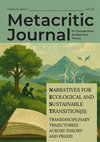
Which processes allow for a more effective employment of narratives as tools for fostering actual... more Which processes allow for a more effective employment of narratives as tools for fostering actual individual and collective transformation in civil society in response to current environmental crises? This article proposes ‘nesting’ as both a concept and a methodology in the development, execution, and evaluation of narrative-based workshops designed for direct and conscious engagement between local communities and global manifestations of climate change. After offering a critical examination of the semantic and metaphorical dimensions of ‘nesting,’ the first part of the article illustrates ‘nesting’ as a concept serving as a theoretical and applied framework for selecting and interpreting texts based on their potential to inspire reflections and practices of ‘homebuilding’ and ‘engagement.’ The second part examines ‘nesting’ as a methodology—proposed as an educational framework—to provide guidance on practical engagements with selected narratives and local communities. It outlines a step-by-step procedure for developing narrative-based workshops structured around four key terms: narrating, embodying, sensing, and transmitting.



Uploads
Papers by Nicolai Skiveren
Published works by Nicolai Skiveren