Papers by Oleksii Kriutchenko
Keywords: Sula basin, Scythian time, hillforts, settlement structure.

Археологія і давня історія України, 2020
has turned the Dnieper-Don forest-steppe into a huge
building site since the second half of the 6th century
BCE. Mass development of fortifications has begun.
Despite the local features related with topography and
the availability of building materials, it is possible to
distinguish some common vectors.
The hillforts are traditionally perceived by researchers as static structures that have «frozen» in their original forms. Recent archaeological researches on the
Tsyrkuny, Bilsk and Mokhnach hillforts in the Forest-Steppe, confirmed by the series of planographic observations on the other sites, allow us to classify some
features of the development of fortified settlements.
On the one hand, hillforts are formed on the basis
of the unfortified settlements. Another part was initially built as fortification. Simple forms of defensive
structures and poorly saturated cultural layer are the
characteristic features of the fortifications of so-called
«shelter-fortresses». The review of the sources allowed
us to say that these sites are hillforts which, for some
unknown reasons, were not settled down, capturing the
first stage of the existence of fortifications, and their
specific cultural layer cannot be the evidence of their
belonging to certain cultural and economic type.
The series of cross-sections of fortifications indicated
the traces of restructuring and repairing of individual
defensive lines throughout the entire period of their
use. There are examples of expanding the area of the
hillfort due to constructing of the new defensive structure as an extension of the main line or the creation of
the fortification on the next cape that could be united
by the common rampart. Also are known the examples
of the special reduction of the area of hillfort. Similar
situation is observed at the last stage of the Bilsk archaeological complex.
In the Late Scythian period, a new type of monuments appeared on the territory of the Dnieper-Don
Forest-Steppe, fortifications consisting of the acropolis
(central fortified part) and large household yard.
The current research allows to critically evaluate
the popular models of classifications and the validity of
their application for historical reconstructions.

Бельское городище: миграции и развитие комплекса (Belsk Hillfort: Migration and Evolution of the Assemblage)
Stratum plus. 2020. №3, 2020
Этнокультурная история населения юга Восточной Европы в VI—IV вв. до н. э. была динамичной благодаря разного рода миграциям. Бельское городище, как центральное поселение племен Днепровского лесостепного Левобережья, было индикатором данных изменений.
Исследования последних лет позволили датировать создание Бельского городища временем около середины — начала третьей четверти VI в. до н. э. Данное событие было связано с походом новых групп кочевого населения из Предкавказья и более восточных регионов на запад и возвращения части номадов назад в Днепровское лесостепное Левобережье. Появление их аристократических захоронений в Бельском некрополе (530—520 гг. до н. э.) позволяет предполагать, что именно они и были инициаторами создания городища-«гиганта» (Гелон Геродота?).
В конце первой трети V в. до н. э. значительная часть городища прекращает использоваться земледельческим населением. Возникают новые некрополи, в том числе и на территории укрепления. Данные изменения можно связывать с вхождением племен Лесостепи в состав северопричерноморской Скифии.
Прекращение функционирования Бельского городища было связано с исчезновением местной аристократии. Это событие произошло синхронно с финалом Скифии, как ведущей силы на юге Восточной Европы, в конце IV в. до н. э. Городище никогда не разрушалось врагами, а было просто оставлено за ненадобностью в новых исторических реалиях.
Ethnocultural history of the population of south of Eastern Europe in the 6th—4th centuries BC was dynamic due to various
types of migrations. Belsk hillfort, as the centerpiece of the tribes of the forest-steppe of the Dnieper Left-Bank, was
an indicator of these changes.
Recent studies allow to date the formation of the Belsk hillfort around the middle — the beginning of the third quarter
of 6th century BC. It was associated with the campaign of new groups of nomads from Ciscaucasia and eastern regions to
the west and the return of part of the nomads back to the forest-steppe of the Dnieper Left Bank. The appearance of the
aristocratic burials in the Belsk necropolis (530—520 BC) suggests that exactly they were the initiators of the foundation of
the “giant” hillfort (Gelonus of Herodotus?).
At the end of the first third of the 5th century BC a significant part of the hillfort ceases to be used by the agricultural
population. The new necropolises appear, including the territory of the fortification. These changes can be associated with
the entry of the Forest-Steppe tribes into the northern Black Sea Scythia.
The end of the Belsk hillfort was associated with the disappearance of the local aristocracy. It occurred at the end of the
4th century BC synchronously with the finale of Scythia, as the leading force in the south of Eastern Europe. The settlement
was never destroyed by enemies, but it was left as unnecessary in the new historical realities.

Археологія, 2019
of military affairs and solving the problems of chronology and ethnocultural history of the population of the East European
Forest-Steppe during Scythian time.
The article is devoted to the publication of the protective structures researches materials at Bilsk hill-fort that were
carried out during 2014, 2016—2018 by the Bilsk archaeological expedition of the IA NAS of Ukraine. The results are
significant in understanding the features of planigraphy and the historical development of the complex.
The excavations in 2014 on the northern part of the Bilsk hill-fort gave us the information about the lack of a cultural
stratum within the Kuzemin fortification. The full height section of the rampart was conducted in the south-eastern part
of the trench, because the rampart was cut by a bulldozer. The ditch was fully explored. The whole complex of defensive
structures was created in one stage. However, for some reasons it was abandoned and wasn’t modernized.
The new researches of protective structures in Tsaryna Mohyla hole were conducted in 2016-2017. The clean layers of
clay from the moat were the basis of the rampart. The available materials, taking into account preliminary chronology of the
finds from the premise and the ashy layer that were situated under the wall gave us a date — the second quarter — middle of VI c. BC. The finds in the layer that directly rested on the clay body of the rampart are important to the date of the rampart
creation time. The cult complex, which consisted of a clay altar and five sacrifices, was correlated with this layer. The walls
of the Big Bilsk hill-fort were created until the middle — beginning of the third quarter of VI c. BC.
Also, in 2018 the Southern Rampart was localized. The profiles were discovered. The surrounding material was collected.
As a result of excavations, the cultural stratum, moat and shaft were investigated and dated by the Scythian time. In the
filling of the moat and in the embankment of the rampart there were found only materials of V—IV c. BC.

Revista Arheologică nr. 1-2(13), 2017
Analysis of the known fortified refuges shows absence of common opinion about such a meaningful feature as thickness of the cultural layer. But this criterion could be very useful. There are no detected artifacts on some of the fortified refuges whereas on another monuments cultural layer could have thickness not more than 0,25-0,3 m. There are several reasons for origination a fortified refuge. External invasions and internal conflicts are among them. In addition, progress in social and economy field should be noted. One can considered that thickness of the cultural layer was conditioned by short-term habitation. Also it is impossible to agree with symbolic or religious significance of the fortified refuges because of lack of material. And possible hypothesis about their usage as fortified pastures requires more proofs. Due to presented in this article material one can suppose that so-called fortified refuges it is remains of the fortified settlements. But life activity here was interrupted on the initial stage of monuments development. Analysis of the hillforts with poor cultural layer shows that they function was primarily as defensive structures.
В настоящее время в Днепро-Донской лесостепи известно не менее 227 городищ скифского времени, 33 из них исследователи выделяют в отдельную группу убежищ. Для этой категории памятников характерен слабонасыщенный культурный слой и отсутствие долговременных сооружений жизнедеятельности человека.
Обзор материалов известных убежищ показывает отсутствие среди учёных единого мнения о таком важном для выделения данной группы признаке, как мощность культурного слоя. В одних случаях находки интересующей нас эпохи не обнаружены вовсе, в других мощность слоя, хоть и невыразительного, достигает 0,25–0,3 м. К причинам появления убежищ относят как факторы внешней агрессии и внутренних междоусобиц, так и изменения в социальной и экономической сферах. По нашему мнению, именно кратковременное использование городищ обусловило слабую насыщенность их культурного слоя. На вопрос «Выполняли ли городища-убежища культовые функции?» в свете имеющегося материала ответить невозможно. А гипотеза об их использовании в качестве загонов для скота требует дополнительной аргументации.
На основе изложенного в статье материала мы можем предположить, что городища-убежища являются свидетельствами первых фаз развития (становления) укреплённых поселений, то есть теми памятниками, развитие которых по неизвестным причинам прервалось на начальном этапе. Рассматривая функциональное назначение всех укреплений со слабонасыщенным культурным слоем, мы не видим убедительных доказательств какой-либо иной их функции, кроме оборонительной.

Археологія і давня історія України. Вип. 2 (23). Старожитності раннього залізного віку., 2017
В статье рассматриваются результаты исследования Перекопского вала расположенного в Валковском районе Харьковской области. С момента своего создания и до 30-х гг. XVIII в. он занимал стратегически важное место, на границе лесостепи и степи. Приведены данные письменных источников и результаты археологического исследования вала 2016 г. На основе полученных материалов возведение первичной насыпи вала отнесено к скифскому времени.

Древности. Харьковский историко-археологический ежегодник. – Вып. 12., 2013
unanimously accepted by all researchers at first. Subsequently, B. A. Shramko proposed
contradictory arguments against the theory of intentional burning. He based his arguments
on his own research of settlements in the area of Seversky Donetz River. As a result, the balls
of burnt clay were associated with fires caused by wars or by domestic reasons. In 1999–
2000 years, due to increase in the number of places where observed traces of burned clay
were observed, some scientists returned to the “reanimated theory” again.
Теорія про навмисний випал серцевини валів змодельована І. А. Фабріціус, спо-
чатку була одностайно прийнята усіма дослідниками. Згодом Б. А. Шрамко, базуючись
на власних дослідженнях городищ в басейні р. Сіверський Донець, висунув низку
аргументів проти теорії навмисного випалу. Шари обпаленої глини у подальшому
пов’язували з пожежами, що виникли внаслідок військових сутичок чи з суто побу-
тових причин. У 1990–2000-х рр. через значне збільшення кількості пунктів, на яких
були зафіксовані сліди обпаленої глини, деякі дослідники знову повернулися до
«реанімованої теорії».

Археологія і давня історія України. ВИП. 2 (27), , 2018
структур та поховальних комплексів
розташованих вздовж Муравського шляху, на кордоні
зі степом. Мова йде про п’ять городищ, майже
шістдесят селищ, три могильники та два пункти
з окремими впускними похованнями, що компактно
розташовані на півдні Лісостепу та належать
сіверськодонецькій групі пам’яток скіфської доби.
The structure of the fortified settlements enlargemented on the territory of the Dnipro-Don foreststeppe, starting from the middle-second half of the VI century BC. According to the results of the investigation of the Bilsk hillfort, the Perekipsky shaft in the Kharkiv region and settlements along the Muravsky path, we suggest that the functions of these fortifications were much wider than the protection of the inhabitants of the surrounding settlements. In this article we summarize the results of the investigation of the settlement group and burial fields that are located on the border of the steppe. A developed system of the open settlements with ashes, which formed the separate groups, so-called bushes, appeared in this region in the Middle Scythian period. That were located in the upper reaches of small tides, among the ramified system of ravines near the watershed. The choice of that place was due to the convenient location for farming, in places free from the forest. At the same time there appered the first hillfort in the region — Chervonosivske. A synchronous and concentrated system of stationary settlements were located around this hillfort. The hillfort had the simple defensive structure (protected by a shaft and a moat from the one side of the field). The Taranivske and Velykohomilshansky hillforts with the bushes of the open settlements appered in the V century BC. Likely, all settlements, except Korobovy Khutory were built in the Middle Scythian time. The site of these ancient settlements is protected along the perimeter with one line of fortifications. The number of settlements along the Muravsky path drastically decreased, in the Late Scythian time. The new settlements appered in the middle flows of tributaries (Novoselivka) and in floodplains of large river systems. As an question — the functioning of Chervonosovsky, Taranivsky and Velykohomilshansky hillforts in the IV century BC. The well-fortified hillfort Korobovy Khutory appeared in the final of V century BC. on the cape near the Siversky Donets.The traces of seasonal stands are recorded in the floodplain. The process proceeds in parallel with the infiltration in the steppe nomads in this region.

Археологія і давня історія України, 2019
of fortified settlements of the Dnieper-Don foreststeppe
interfluves of the Scythian period. The formation
and development of the fortification in that region
was influenced by the economic opportunities of the
local population, relations with neighboring tribes and
among themselves, under special natural-geographical
conditions. The presented systematization of the hillforts
proceeds from the understanding of the principles
of the construction of their defense. Based on which, we
noticed the following possible pattern of systematization
of fortified settlements. Type I is fortified settlements
with a single-row system without additional protective
pre-walls, regardless of whether the fortification
is traced along the entire perimeter or only on the front
side. Type II — single-row settlements with additional
reinforcement on the front side. Type ІІІ — settlements
with a single-row system of fortifications, having additional
protection from a combination of non-residential
frontiers, complicating the approaches to the entrance
to the village site and creating the possibility of leading
flanked fire on the attack. Type IV — monuments
protected (often on the front side) by a multi-row system
of fortifications. Type V — settlements with a pronounced
main courtyard and a large economic frontier.
By the VI type, we attributed the Belsk hillfort due to
its features.

МАҐІСТЕРІУМ. Випуск 67. Археологічні студії., 2017
of the Scythian forest-steppe. The volumes of different constructions (dwelling, farming, or funeral
structures) were compared. Due to calculations, there is a probability of quite a high velocity of
fortifications. But it should be noticed that the scope of fortification work was much greater than that of
building houses or tombs.
During the Scythian times, building fortification constructions took a long time. During building the
workers were freed from agricultural and craft employments. Fortifications resulted from collective actions
and were a significant marker of the progress of ancient societies. Building the fortifications requires a
certain social and technical development level. Coordination of this construction was connected with a high
level of social organization. A technically low-developed society cannot build such long defensive
constructions. Mounting fortifications collectively was an important part of the Scythian’s everyday life in
the forest-steppe area. The archaeologists discovered defence buildings around the hillforts. B. Shramko, A. Moruzhenko, V. Hrytsyk, I. Yefremov, and other archaeologists aimed to explore how the
defence buildings were constructed. A. Moruzhenko was the first to try to calculate how big were labour
expenses at the Belsk hillfort (the author of the field research at Belsk was B. Shramko). This article applies
the formula for calculation of labour expenses. We use traditional standards for calculation of labour
expenses for contemporary workers. In addition, historians and archaeologists calculate labour expenses
for other historical periods (Cf. P. Rappoport’s studies).
So, this paper presents a unique attempt to understand how easy or hard the labour was and what the
social structure of the Scythian society was in the Ukrainian forest-steppe area. In addition, one of the main
questions in this article is how rapid building was in the Scythian times. We know that the military situation
was stressful. An enemy could assault any time. The question of speed was the question of survival.
У статті здійснено спробу аналізу працезатрат на зведення захисних споруд лісостепових горо-дищ скіфського часу та порівняння їх із даними щодо житлових, господарчих та поховальних споруд. За результатами розрахунків встановлено можливість проведення таких будівельних робіт у короткий термін, хоча вони й були більш трудомісткими, ніж під час зведення господарчих споруд, жител чи поховальних конструкцій.

Емінак. - № 1(3)., 2018
The monuments of the fortification of the Scythian time are represented by two categorieson the territory of the Dnieper-Donetsk forest-steppe. The first category is represented by fortified settlements - hillforts, the second – so-called the "long shafts". When we speak about a "long shaft" we mean a system of earth and / or wood-earth fortifications, which are not of a settlement structure. Unlike the hillforts, this shafts were not used to protect only one settlement. A striking feature of these monuments is the simultaneous successful strategic combination of features of the relief and the explicit ignoring of it within the framework of one defensive line. The «long shafts» are an additional barrier for the enemy in places where there were no natural obstacles. It is likely that, despite the preservation of fortification functions, these shafts served as markers of boundaries or status monumental structures - external signs of power. The Perekipsky shaft and the defensive system of the Karatul hillfort are the traditionally kinds of the «long shafts» of the Scythian time in the Left Bank forest-steppe. The question about the time of their creation is discussion. Conditional to the «long shafts»we can include the strengthening of the Great Bilsk hillfort, because of the grandeur of the scale and an unusual topography for the forest-steppe hillforts.
The process of building this protective measures is in the interests of the whole region and requires the involvement of a large human and material resources for its implementation. In later times, the similar in content projects were implemented on the areas of the Left Bank forest-steppe in the Kievan Rus’, the Tsardom of Muscovy and the Russian Empire in the XVII-XVIII centuries. This may indicate that there were forces of organizing large-scale works, and with the intentions to control a certain territory,in the forest-steppein the Scythian period, in a certain section of history.
In our view, it is first of all important to note the attraction of the "long shafts" to ancient land communications. The Perekipsky shaft, crossing the Muravsky way, became the gates deep into the forest-steppe. The Karatul hillfort occupy an important strategic place, where the meridian routes connecting along the Dnieper crossed the latitudinal paths in the place of a comfortable ford. Many of these directions were possible through the branches to the center of the monuments of the left bank forest-steppe – the Bilsk hillfort. According to many researchers, this hillfort was a proto-formation of the city. In this case, the gigantic earthly wall of the Great Bilsk shaft could play the role of a peculiar monumental building. This structure was of great social importance, and possibly a certain political component, embodied in an accessible and at the same time expressive form, it was completed in the soil and the wood. Such structures are of particular importance during the periods of socio-political transformations and cultural prosperity.

Старожитності Лівобережного Подніпров’я, 2019
здійснених у 2016–2017 рр. Наведено попередні дані про початковий етап створення зольника, який було перервано будівництвом насипу валу Великого Більського городища. Охарактеризовано культовий комплекс, котрий було влаштовано на поверхні валу після завершення будівництва.
Preliminary results of the excavations which conducted by Bilsk archaeological expedition of IA of the NASU in 2016-2017 at the territory of the settlement and wall of Big Bilsk site of ancient settlement in Tsaryna Mohyla Stow are presented in the article. The data about correlation of the strats of the settlement and fortification were presented. The building discovered under the wall was described. It was destroyed by fire, and after that it and surrounding territory
became the place in which ash-pit began to form. Materials from the building and ash-pit stratum could be preliminary dated to the late of the 7th – mid-6th cc. BCE. Forming of the ash-pit was interrupted by the building of Big Bilsk site of ancient settlement fortification. Season break in the construction could be supposed. After the end of the work a sacred complex was created in this place (altar, animal sacrifices). Materials from this stratum could be preliminary dated to the second quarter – mid-6th c. BCE.
Вип. 2 (19). Старожитності раннього залізного віку., 2016
tification at the Scythican time hill-fort near Tsyrkuny
village of Kharkiv Oblast. Obtained results allow the
authors to propose a new date of the hill-fort founda-
tion and to trace the dynamics of its development.
Статтю присвячено дослідженню оборонних
споруд Циркунівського городища скіфського часу.
Отримані результати дозволяють уточнити
дату заснування городища та простежити дина-
міку його розвитку.
Key words: Early Iron Age, Vorskla, hillfort, settlements, land communications.

expedition in 2014-2018. Kuzemin fortification (section of protective
structures, excavation and four shells) was studied in 2014. The researches results allowed to date the Kuzemin fortification of the Scythian Time. We investigated protective structures in Carina Mohyla in 2016–2017. The period of the fortification building was in the 6th c. BC. two burial mounds were investigated in Rozryta Mohyla in 2016. There were the Early Scythian and the Middle Scythian time materials. Mound in the necropolis Osniahy was excavated in 2017. That grave was investigated in 1906 by V. Horodtsov. It allowed to localize a number of excavated barrows of that time and the establishment of field research techniques details in the period of the archaeological science formation. The mound was dated of the Early Scythian time. The season 2018 was begun with the investigation of the Southern shaft of the Bilsk hillfort. The cultural layer, the moat and the shaft of the Scythian Time (the 4th – 5th cc. BC) were discovered as a result of the work. A ground grave on Bilsk eastern outskirts was discovered in the same year. It is the first one on the territory of the Bilsk archaeological complex. Five graves were investigated. The works were also carried out o the territory of the burial necropolis «B» of the Bilsk hillfort. Six mounds were investigated. There were a lot of informative materials of the 5th – 4th cc. BC. Some separate field of work was dedicated to exploration at the territory of the northern outskirt of the Bilsk hillfort, which was held during 2015–2108.
Keywords: the left-bank Dniper River forest-steppe area, the Scythian
Time, Bilsk archeological complex, site of ancient settlement, barrows,
burial ground.
Archeological reserches of Bilsc hillfort (АДБГ) by Oleksii Kriutchenko
АРХЕОЛОГІЧНІ ДОСЛІДЖЕННЯ БІЛЬСЬКОГО ГОРОДИЩА 2018 ARCHAEOLOGICAL RESEARCH OF BILSK HILLFORT 2018 ЗБІРНИК НАУКОВИХ ПРАЦЬ, 2019
АРХЕОЛОГІЧНІ ДОСЛІДЖЕННЯ БІЛЬСЬКОГО ГОРОДИЩА 2018 ARCHAEOLOGICAL RESEARCH OF BILSK HILLFORT 2018 ЗБІРНИК НАУКОВИХ ПРАЦЬ, 2019
Great Bilsk hillfort excavation. Studies have shown that it was built in the Scythian
period, after the middle of V century BC.
АРХЕОЛОГІЧНІ ДОСЛІДЖЕННЯ БІЛЬСЬКОГО ГОРОДИЩА 2018 ARCHAEOLOGICAL RESEARCH OF BILSK HILLFORT 2018 ЗБІРНИК НАУКОВИХ ПРАЦЬ, 2019
Археологічні дослідження Більського городища -, 2019
Burial pits were oriented meridionally, some with deviations. On the bottom of the burial of mound 15 the traces of timbers (at the bottom of the funeral platform) were found. The child burial was found in the barrow 17. Attention is attracted to the burial of a heavily armed warrior in the barrow 24. Among the grave goods, in addition
to weapons and ammunition, a jug of Chersonesos production was found. The burial in the barrow 28 was carried out in a wooden chamber.
The burials could be preliminary dated to the 4th century BC.
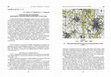
The data of correlation of the strats of the settlement and fortification were present. There are described the building that was discover under the rampart. It buried and after that, it and surrounding territory became the place where ash-hill started to form. Materials from the building and ash stratum could be dated end of the 7th – middle of the 6th centuries BC. The building of Main Bilsk hillfort fortification interrupted forming of the ash-hill. Season break on the construction could suppose. After the end of the work, a sacred complex was create in this place (altar, animal’s sacrifices). Materials from this stratum could preliminary dated about second quarter – middle of the 6th century BC. The burial mound in Osnyagi nature boundary was investigated. The burial was discovered by V. O. Gorodcov in 1906. The dromos in southern side of the tomb was identified. Fragments of the pots and large pot (korchaha) were found on the grave.
Keywords:Bilsk hillfort, fortifications, settlement, burial mound, Scythian time.