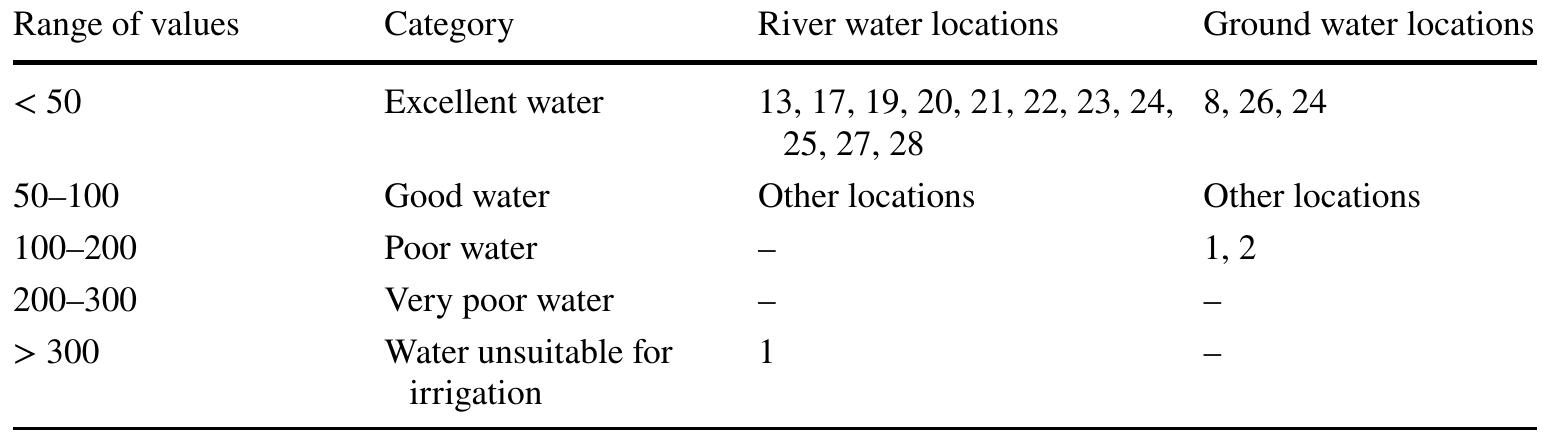
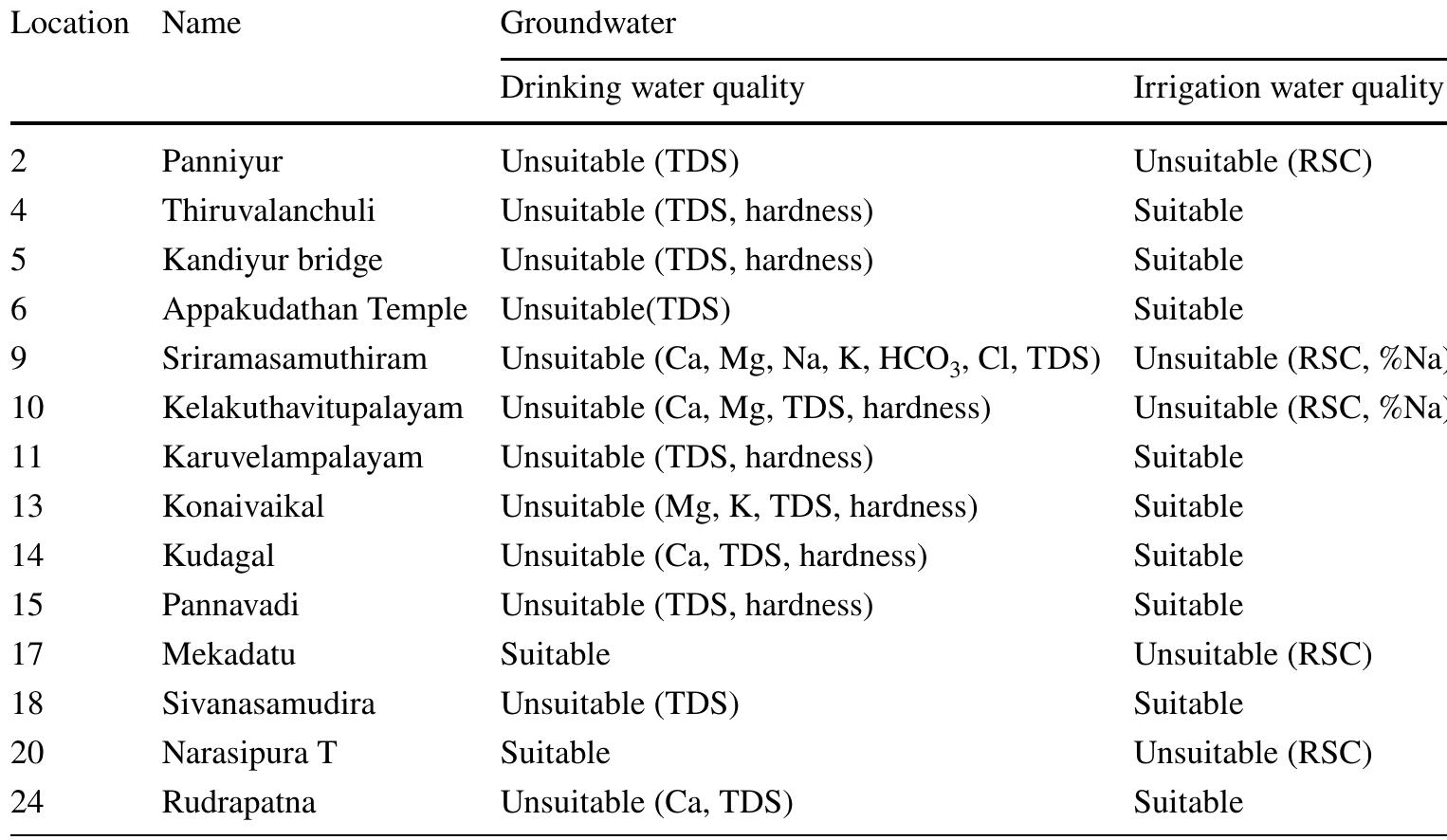
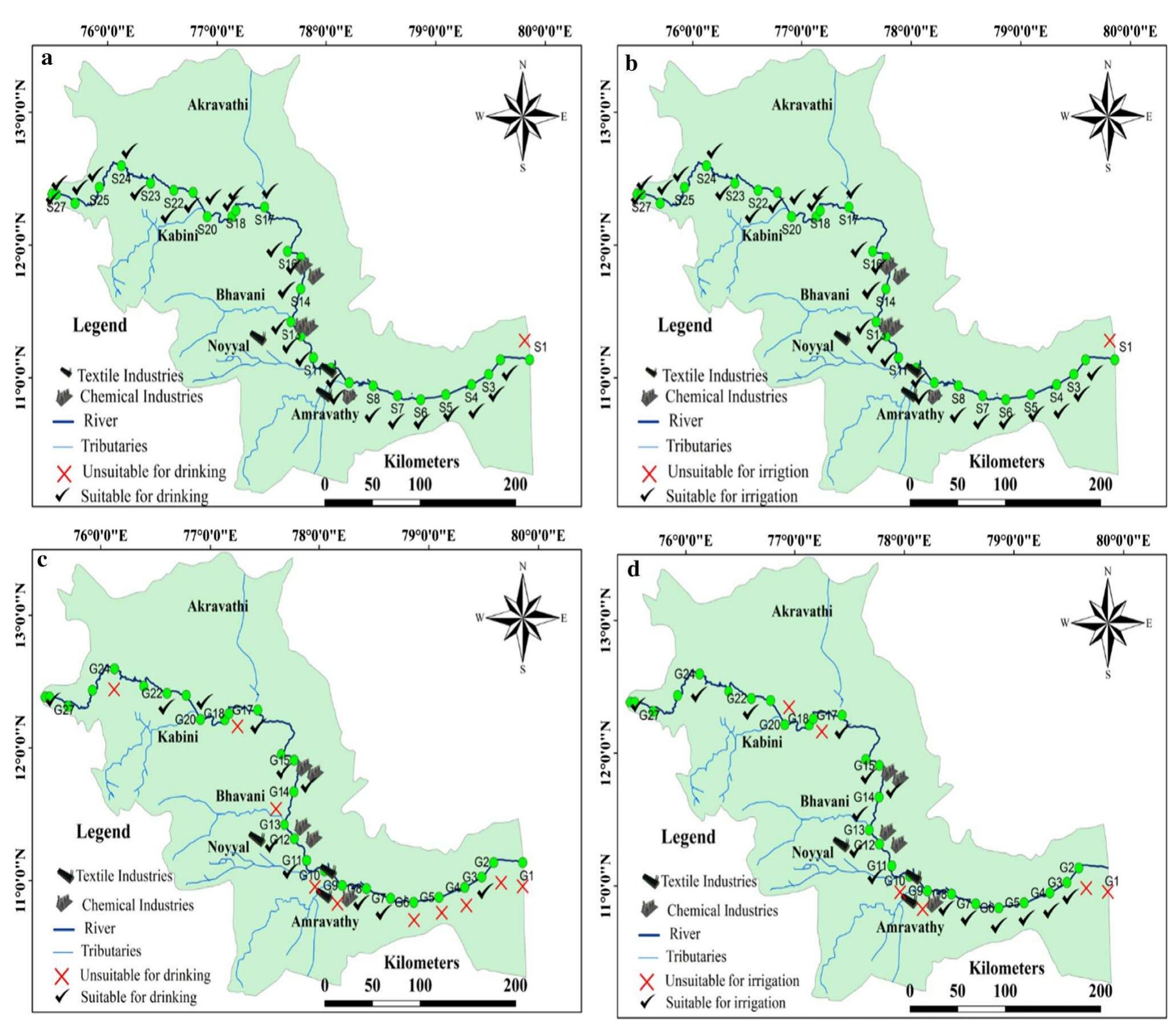
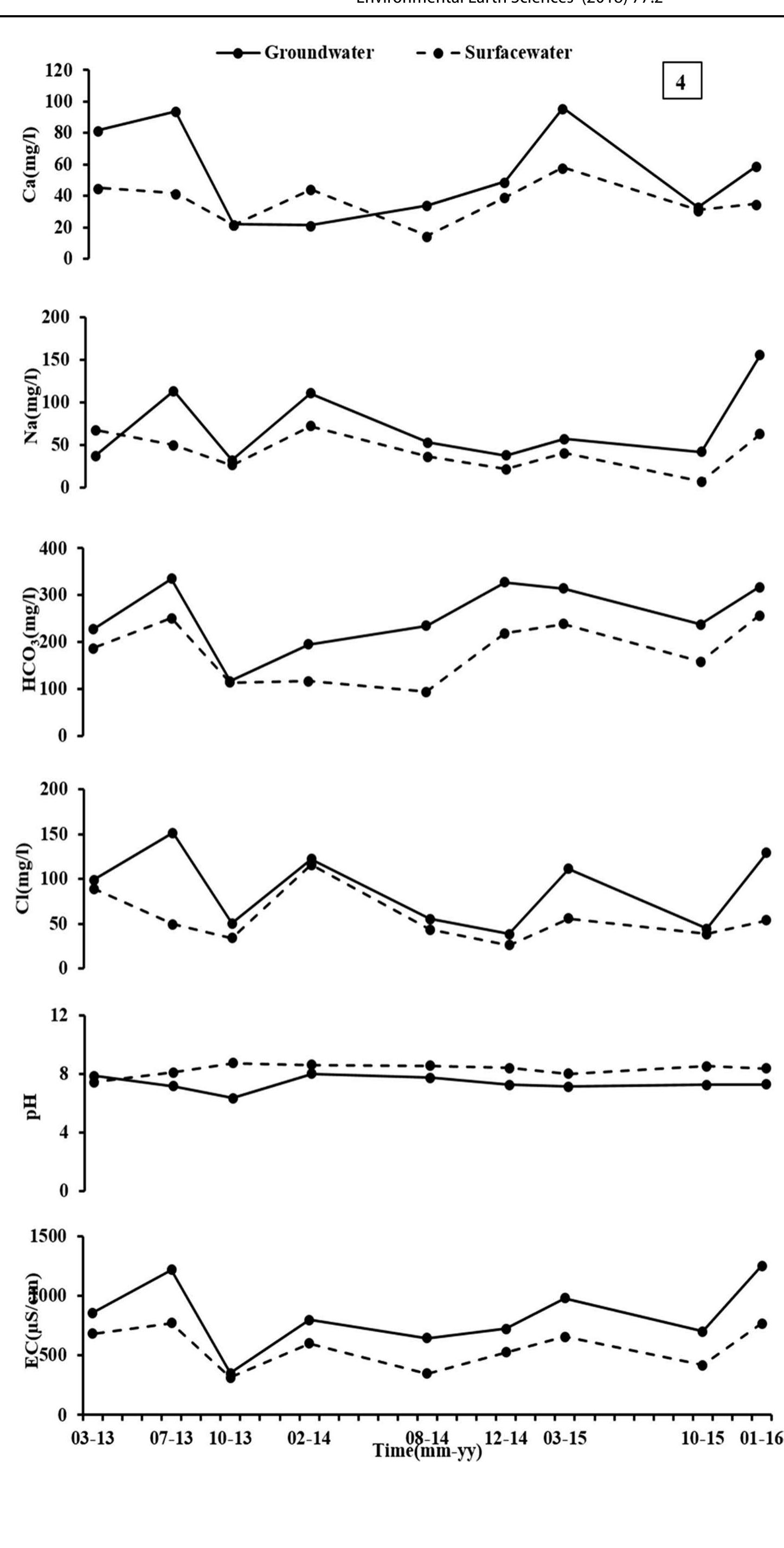
Evaluation of geogenic and anthropogenic impacts on spatio‑temporal variation in quality of surface water and groundwater along Cauvery River, India

https://doi.org/10.1007/S12665-017-7176-6

Abstract

Assessment of groundwater and surface water quality along a river is important as it directly affects the agricultural, industrial activities and population. The objective of the study is to assess the quality of the Cauvery river water and adjacent groundwater for drinking and irrigational purposes and to identify the infuence of geogenic and anthropogenic sources. Groundwater and surface water samples were collected along the course of the river at approximate intervals of 25 km. The samples were analysed for electrical conductivity, pH, sodium, calcium, magnesium, potassium, bicarbonate, chloride and sulphate. Sodium was identified as the dominant cation and bicarbonate was the dominant anion for both river water and groundwater. These values were compared with limits recommended by the Bureau of Indian Standards for drinking purposes. The total dissolved solids were found to exceed the permissible limits for drinking water in most of the groundwater samples, and it was below the permissible limits in river water samples. Most of the river water samples were found to be suitable as per the drinking water quality standards, but most of the groundwater samples were unsuitable based on the concentration of major ions. Irrigation water quality was also assessed based on magnesium hazard, residual sodium carbonate, sodium percentage, sodium adsorption ratio, permeability index and salinity hazard. Most of the river water samples collected were suitable for irrigation, whereas most of the groundwater samples collected were doubtful for irrigation based on residual sodium carbonate and sodium percentage. Drinking water and irrigation water quality indices were also computed to assess the characteristics of water. Groundwater quality in locations nearer to the confluence of tributaries and industrial areas was of poor quality, while both river water and groundwater near the coast were poor, both for drinking and irrigation purposes. Comparison of the dissolved load with other rivers of the world was also made, which reveals that the Cauvery River yields comparatively higher dissolved load per area than most of the rivers. The chemical load in the river is due to natural and anthropogenic sources. Therefore, it is necessary to enforce the existing norms for the discharge of treated effluents by industries and townships along the river so as to reduce the chemicals contributed by anthropogenic sources.
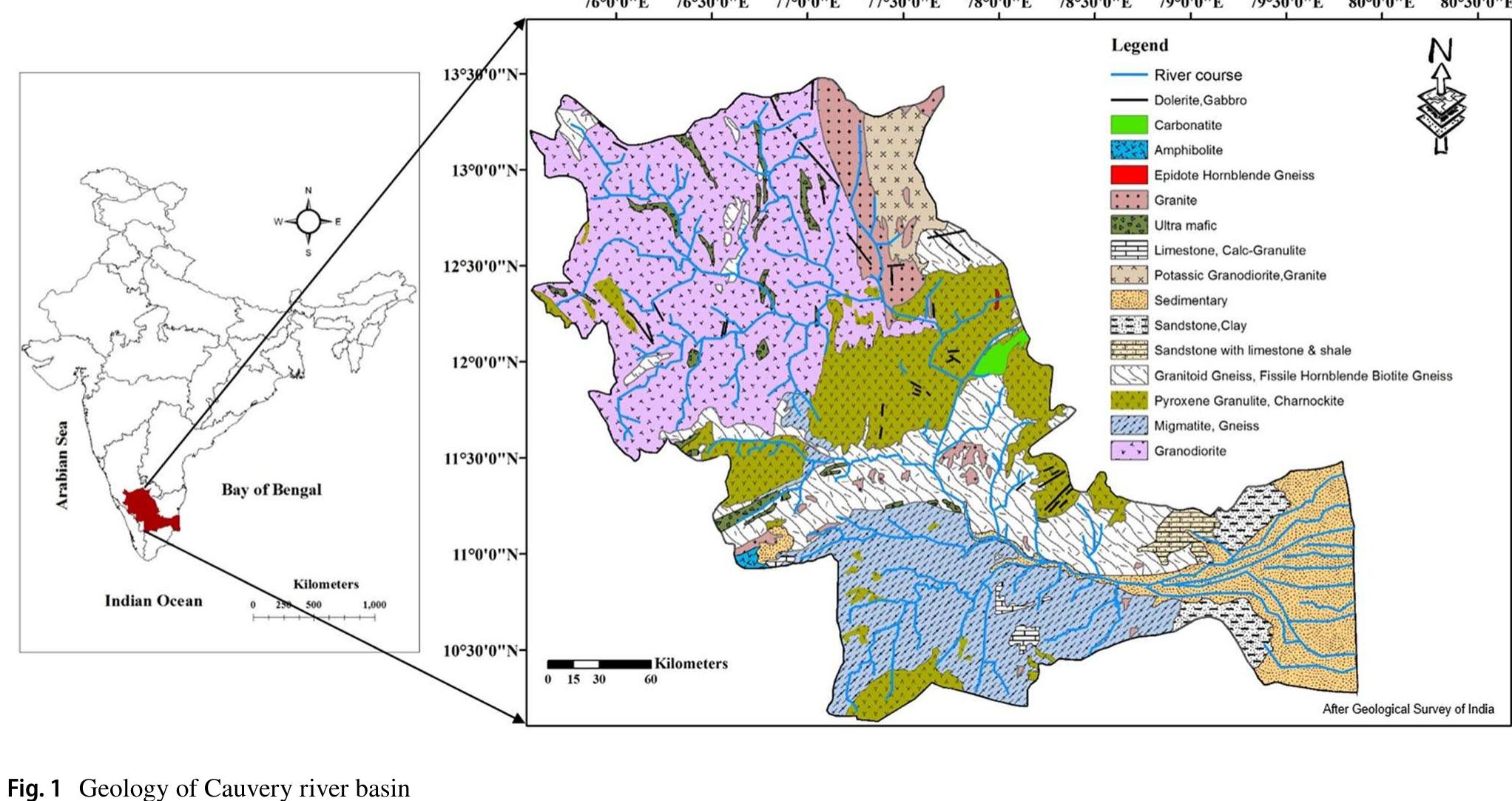
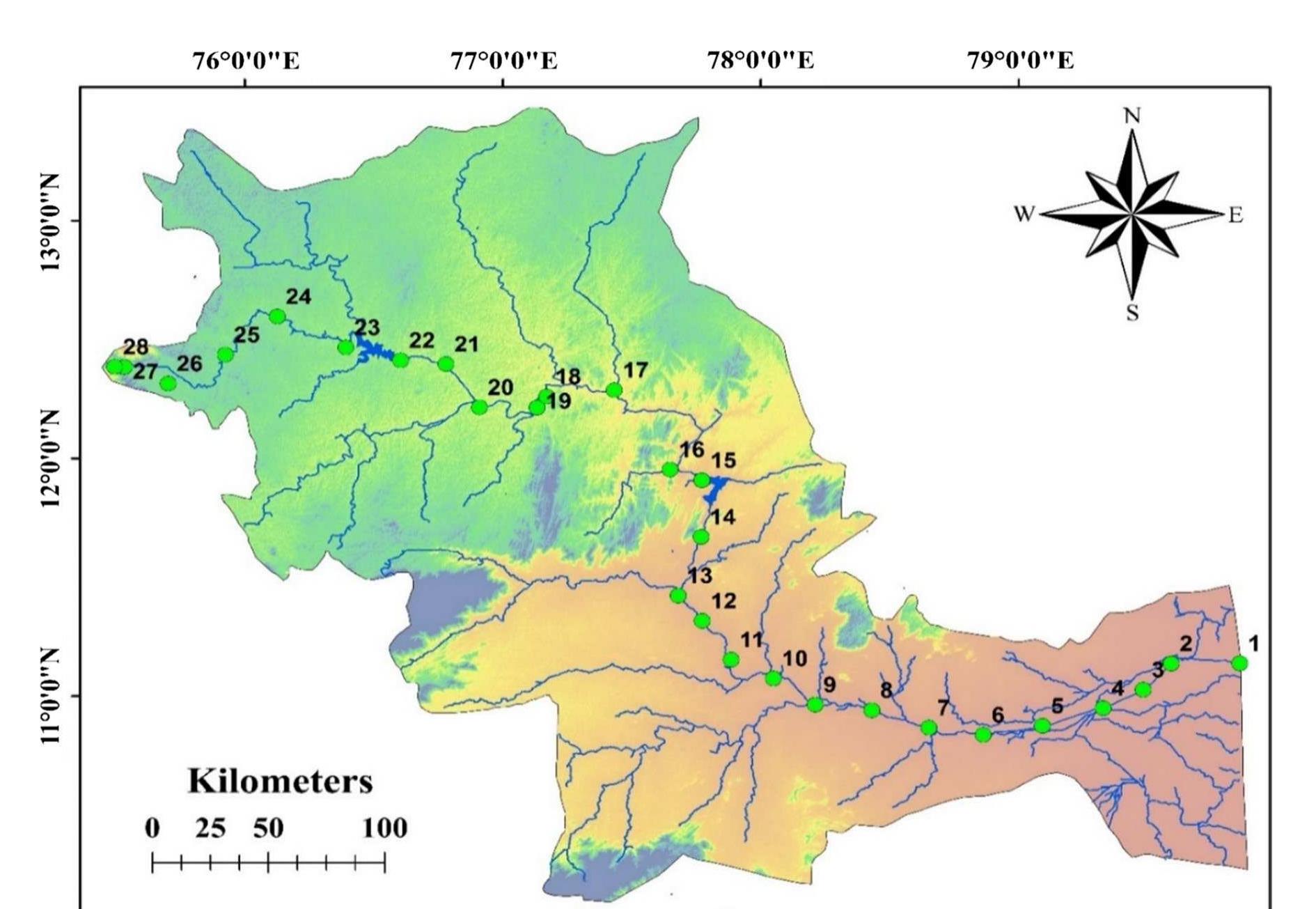
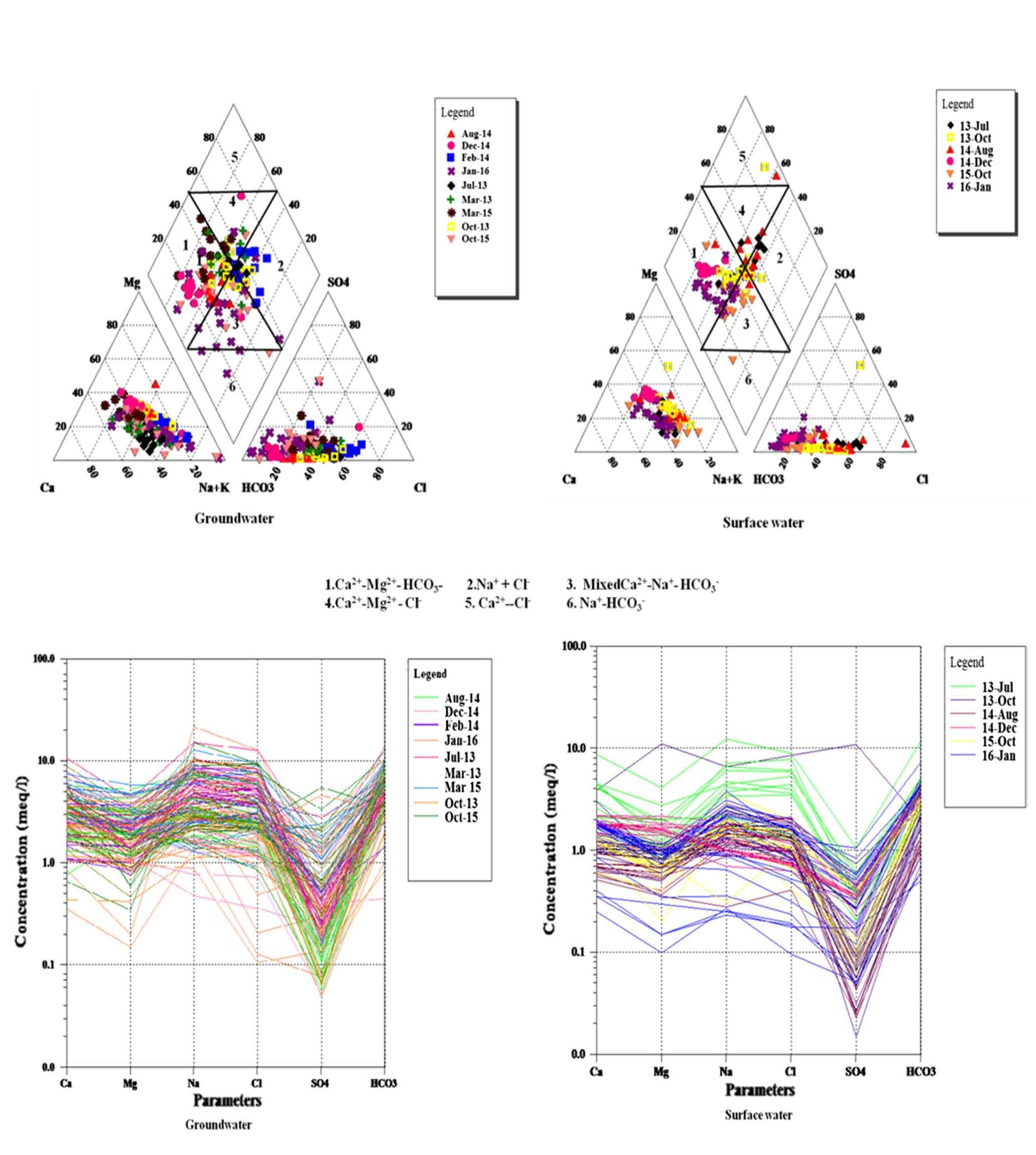
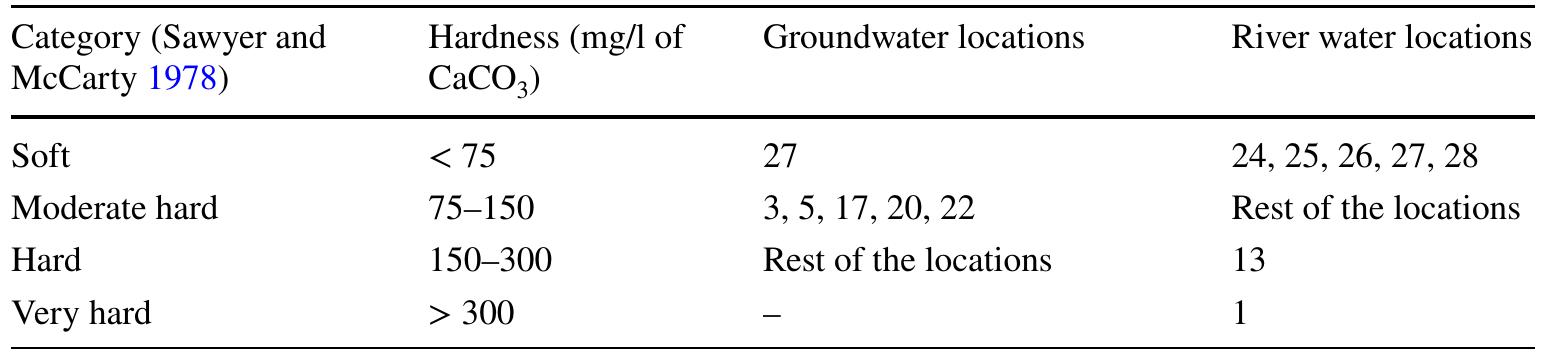
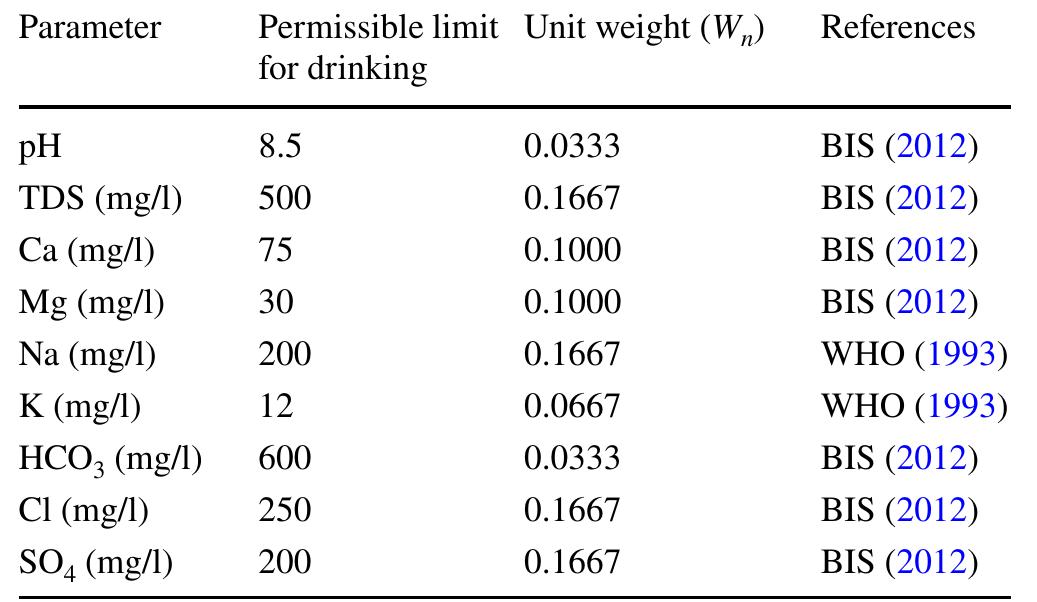
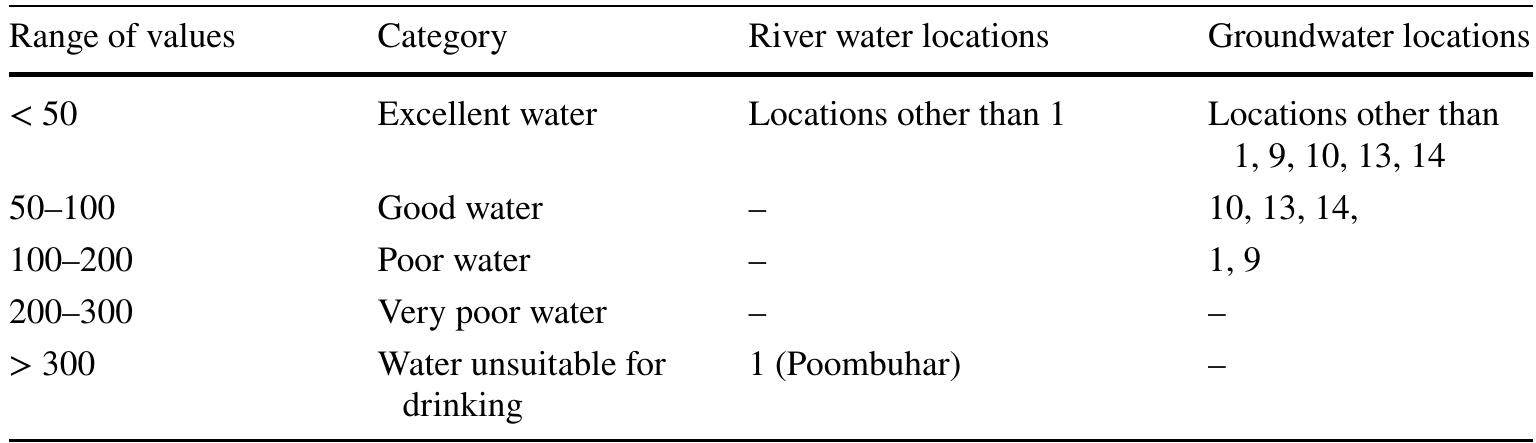
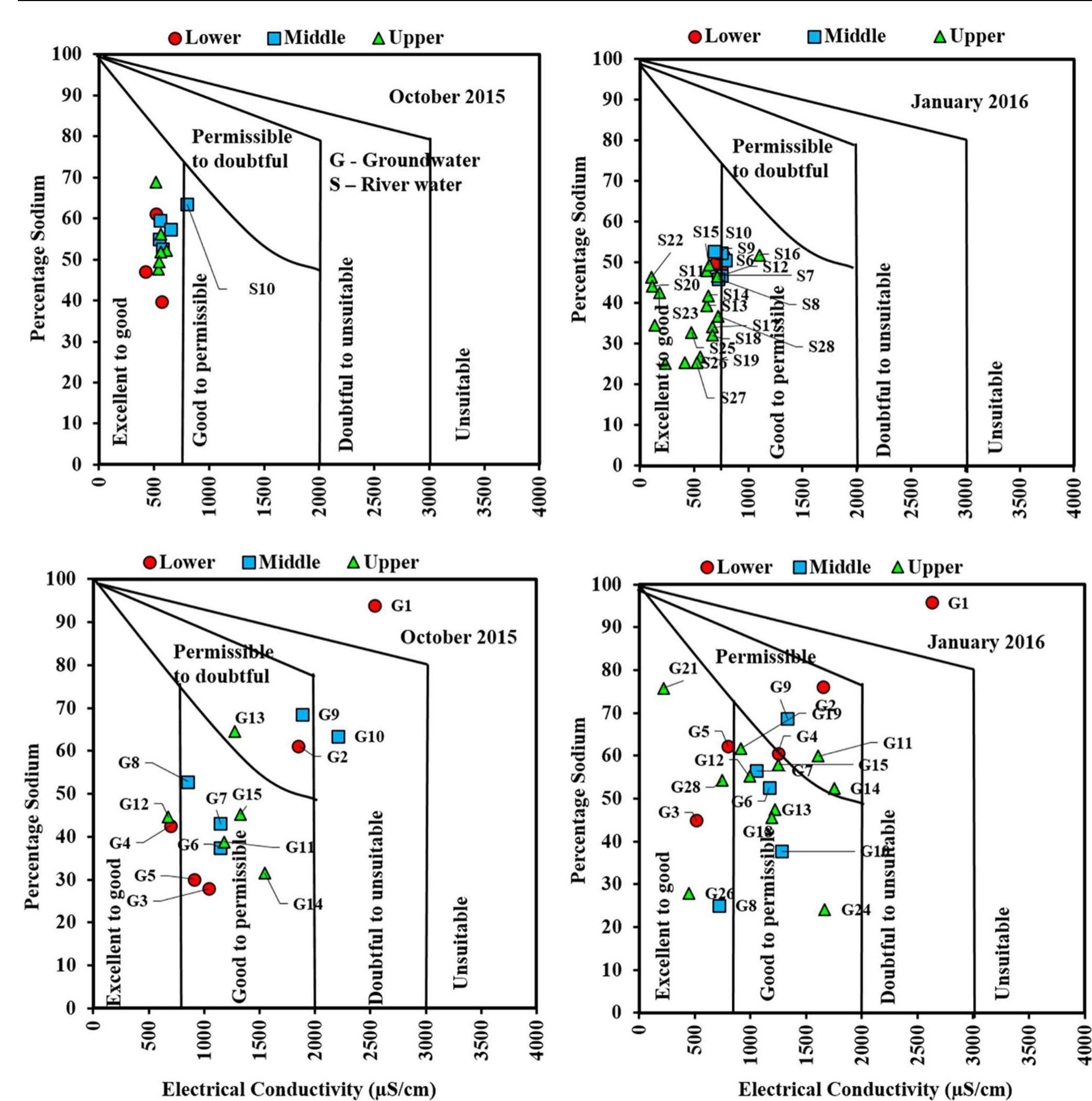
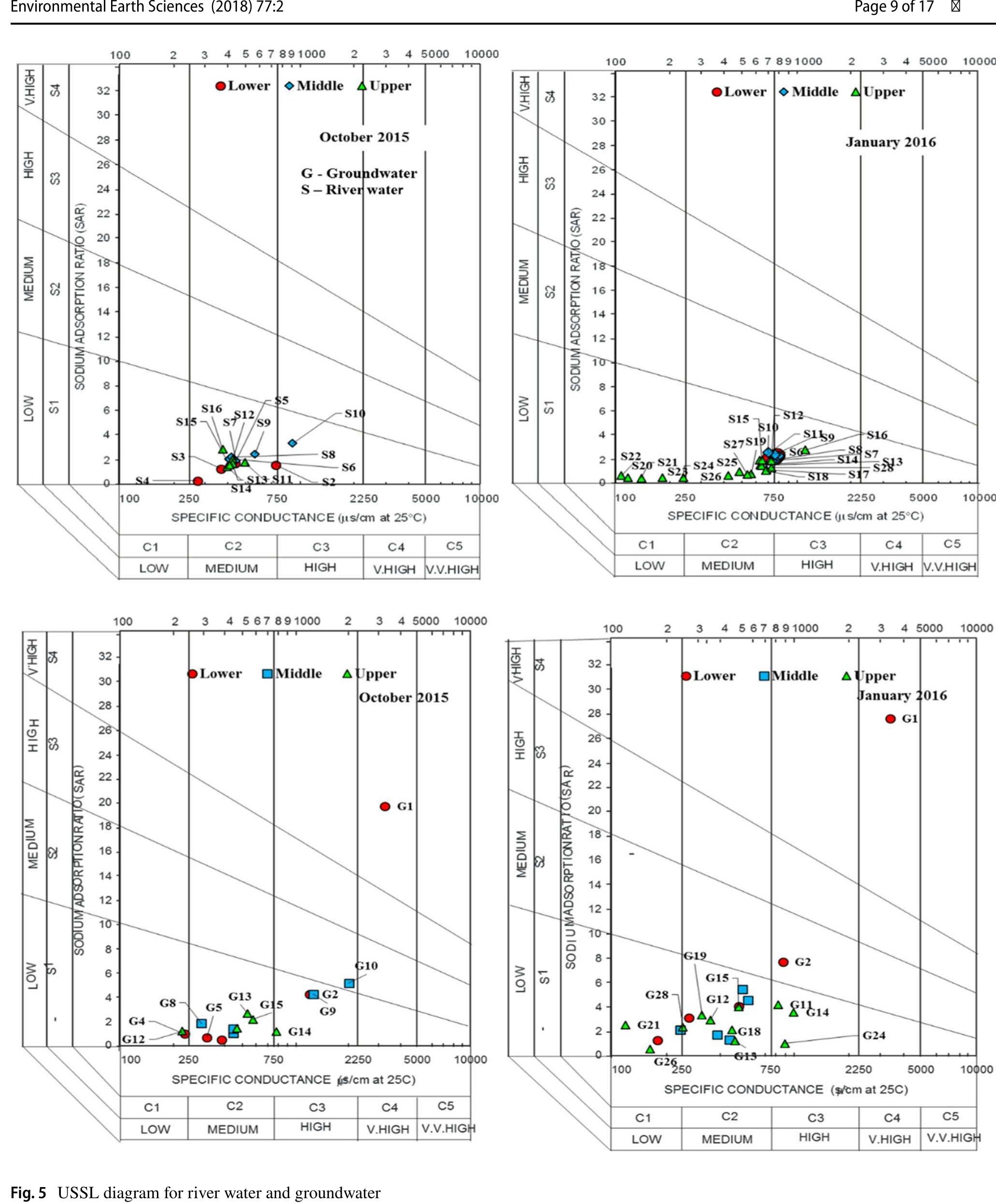
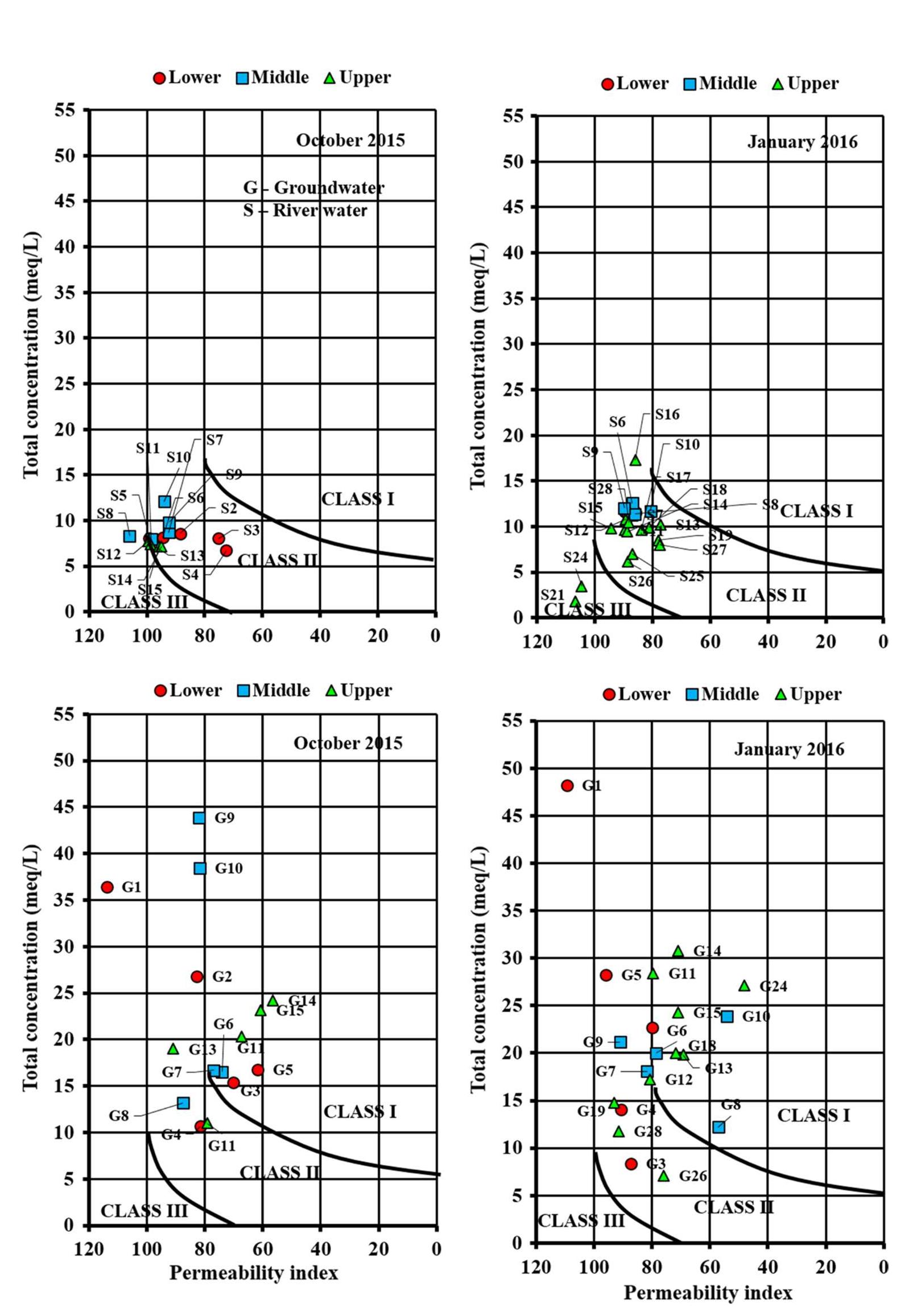
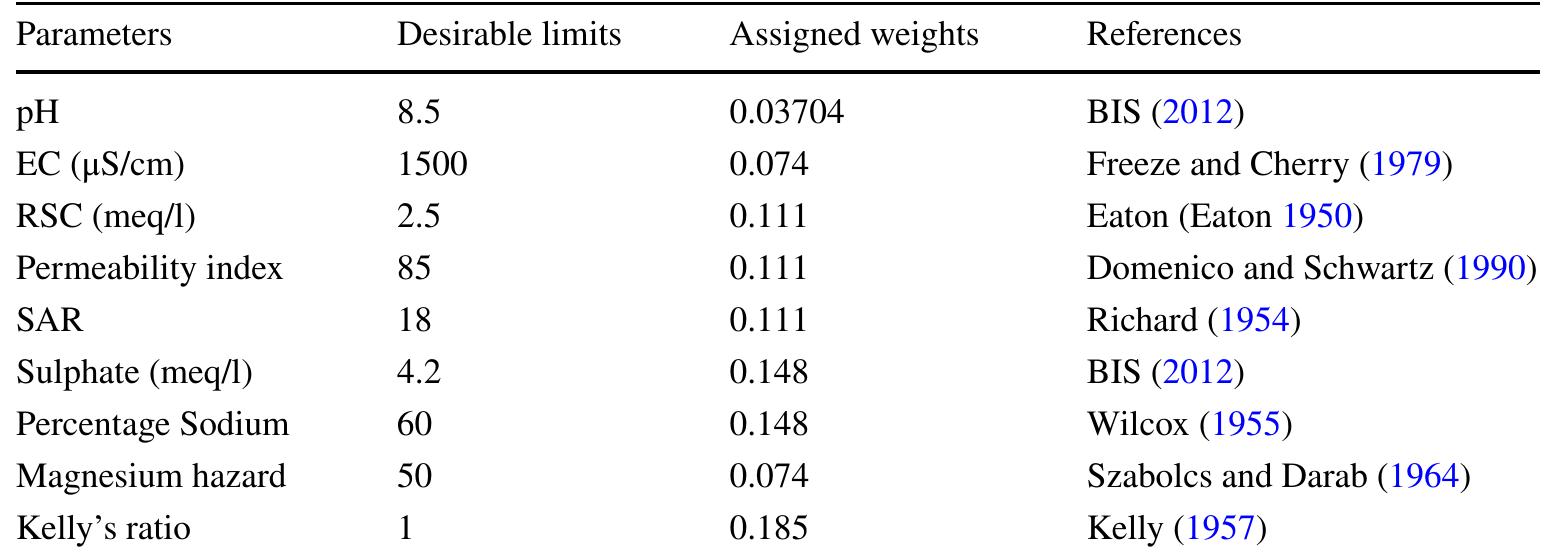
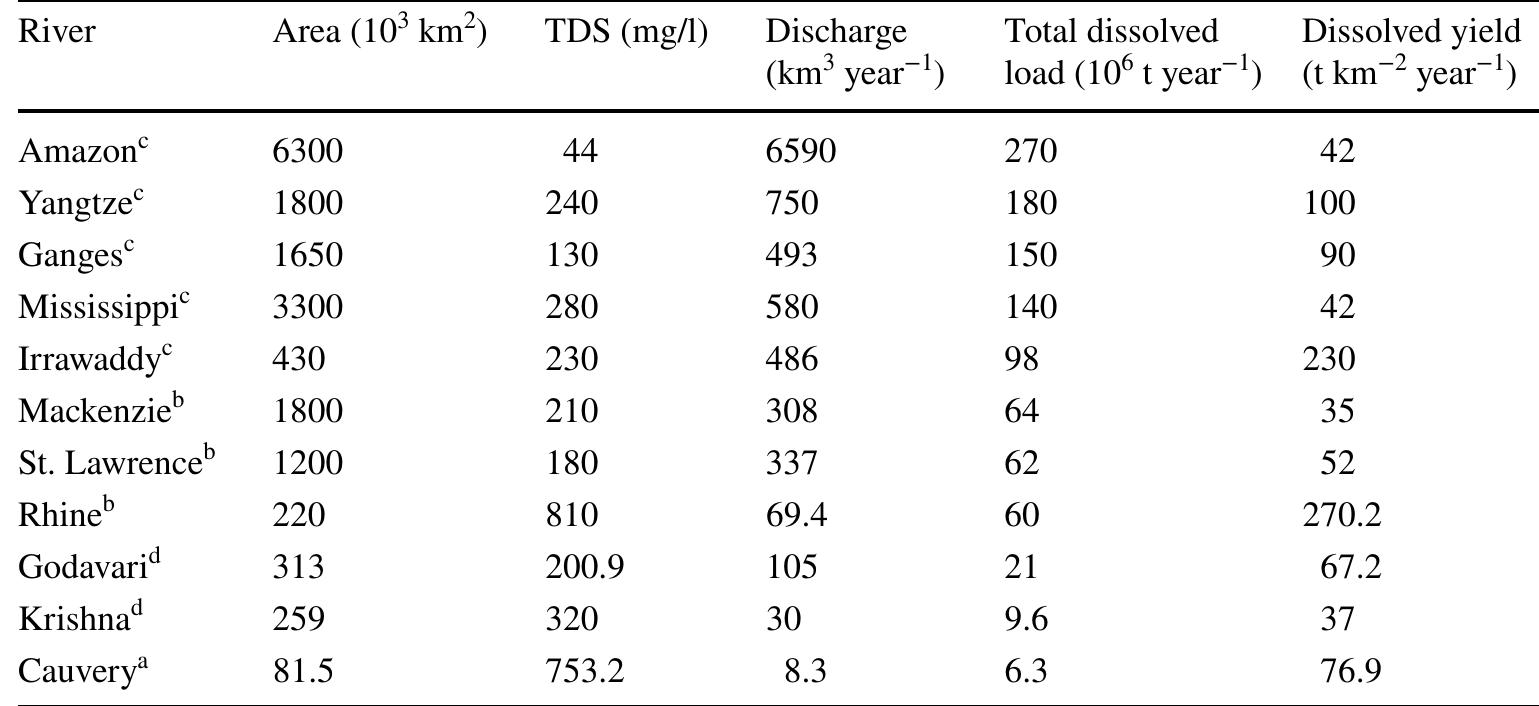
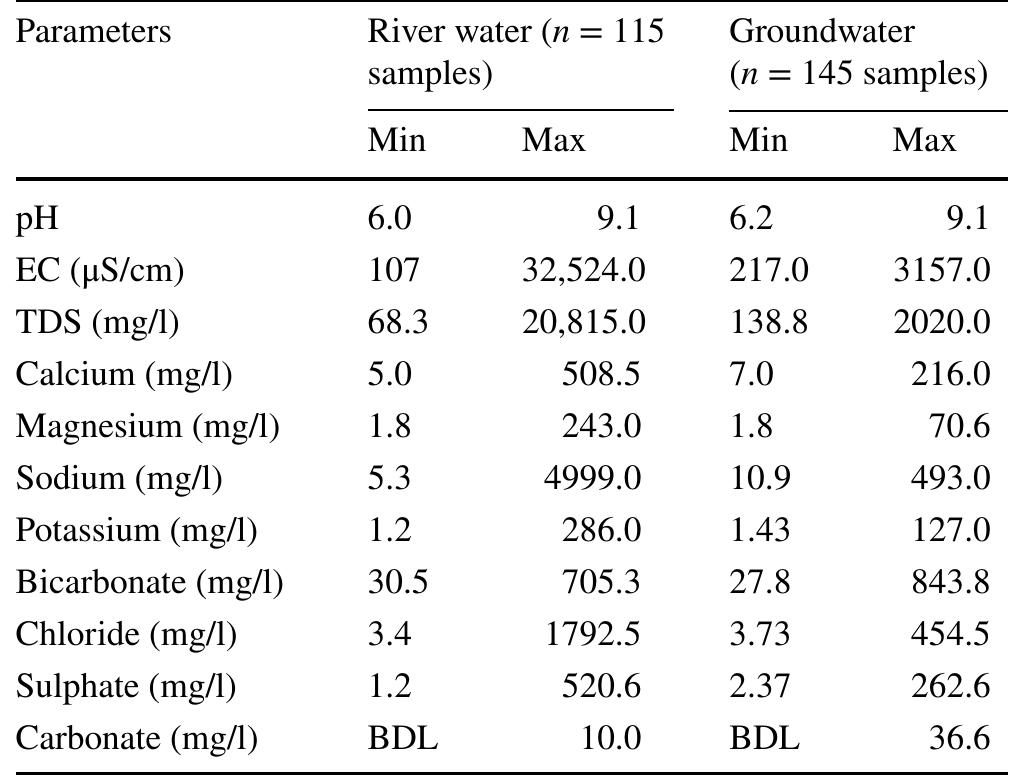
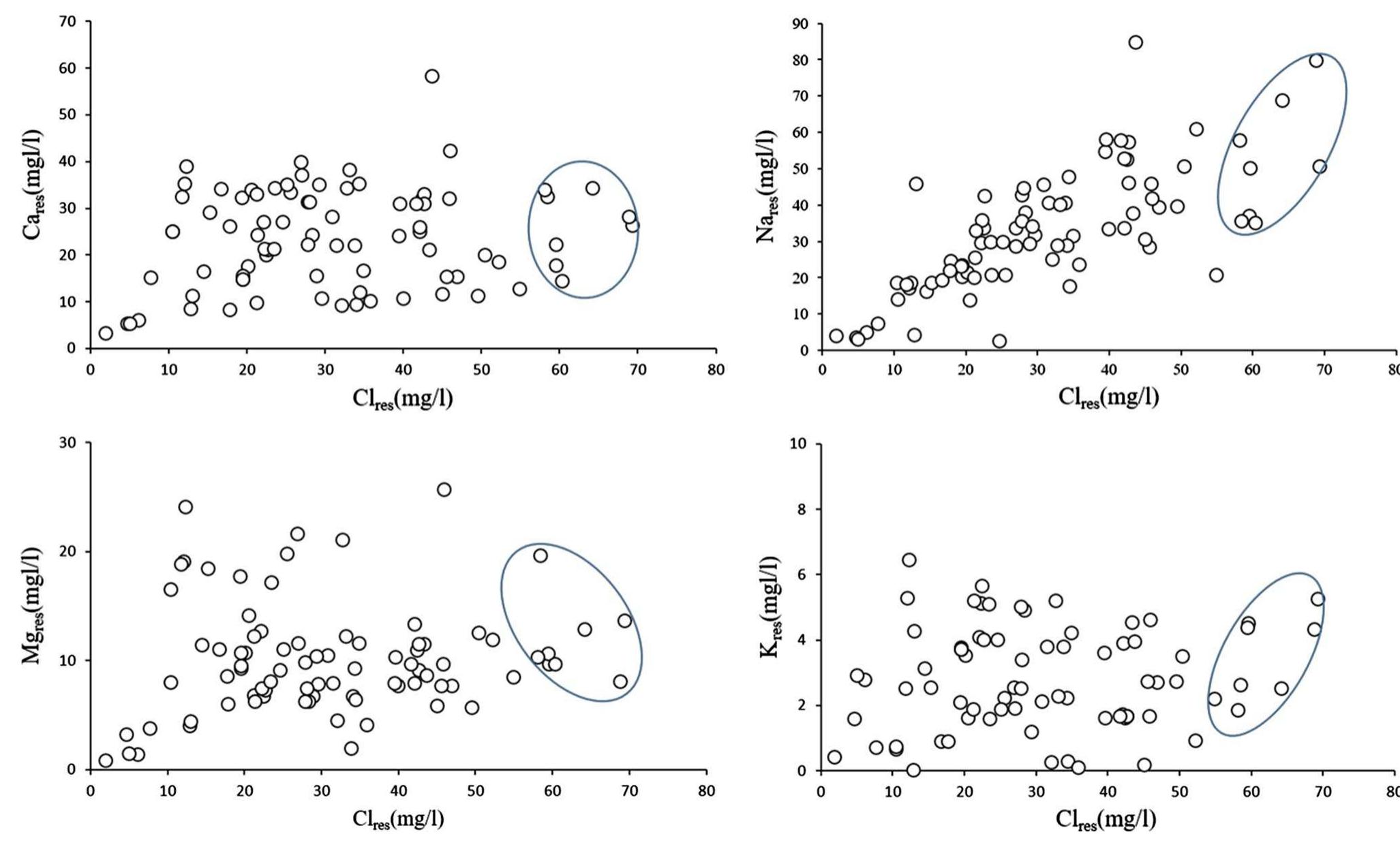
Environmental Earth Sciences (2018) 77:2 https://doi.org/10.1007/s12665-017-7176-6 ORIGINAL ARTICLE Evaluation of geogenic and anthropogenic impacts on spatio‑temporal variation in quality of surface water and groundwater along Cauvery River, India R. RamyaPriya1 · L. Elango1 Received: 31 December 2016 / Accepted: 9 December 2017 © Springer-Verlag GmbH Germany, part of Springer Nature 2017 Abstract Assessment of groundwater and surface water quality along a river is important as it directly afects the agricultural, indus- trial activities and population. The objective of the study is to assess the quality of the Cauvery river water and adjacent groundwater for drinking and irrigational purposes and to identify the infuence of geogenic and anthropogenic sources. Groundwater and surface water samples were collected along the course of the river at approximate intervals of 25 km. The samples were analysed for electrical conductivity, pH, sodium, calcium, magnesium, potassium, bicarbonate, chloride and sulphate. Sodium was identiied as the dominant cation and bicarbonate was the dominant anion for both river water and groundwater. These values were compared with limits recommended by the Bureau of Indian Standards for drinking purposes. The total dissolved solids were found to exceed the permissible limits for drinking water in most of the groundwater samples, and it was below the permissible limits in river water samples. Most of the river water samples were found to be suitable as per the drinking water quality standards, but most of the groundwater samples were unsuitable based on the concentration of major ions. Irrigation water quality was also assessed based on magnesium hazard, residual sodium carbonate, sodium percentage, sodium adsorption ratio, permeability index and salinity hazard. Most of the river water samples collected were suitable for irrigation, whereas most of the groundwater samples collected were doubtful for irrigation based on residual sodium carbonate and sodium percentage. Drinking water and irrigation water quality indices were also computed to assess the characteristics of water. Groundwater quality in locations nearer to the conluence of tributaries and industrial areas was of poor quality, while both river water and groundwater near the coast were poor, both for drinking and irrigation pur- poses. Comparison of the dissolved load with other rivers of the world was also made, which reveals that the Cauvery River yields comparatively higher dissolved load per area than most of the rivers. The chemical load in the river is due to natural and anthropogenic sources. Therefore, it is necessary to enforce the existing norms for the discharge of treated eluents by industries and townships along the river so as to reduce the chemicals contributed by anthropogenic sources. Keywords Total dissolved solids · Hardness · Major ions · Sodium absorption ratio · Water quality index · World rivers Introduction industrialization, especially along the banks of the river, have led to the discharge of untreated or partly treated sew- Rivers have been the soul for human development. Inter- age and eluents in the river that have deteriorated the river estingly, the growth of civilization from ancient periods water quality in many regions around the world (Porcella began around rivers. They form a key role in the economic, and Sorensen 1980). Assessment of river water quality is social and environmental improvement of a country and of paramount importance as they contribute to groundwater account for about 0.006% of the freshwater resources in recharge. Poor quality of river water also afects the ground- the world (Shiklomanov 1998). Rapid urbanization and water quality in adjoining areas. Human health efects due to the utilization of poor quality water have been reported by several researchers (Mohsin et al. 2013; Dahunsi et al. 2014; * L. Elango Afroz et al. 2016; Rasool et al. 2017). Hence, it is of great [email protected] concern to assess the quality of river water and groundwater 1 Department of Geology, Anna University, Chennai, India for not only drinking purposes but also for irrigation, as 13 Vol.:(0123456789) 2 Page 2 of 17 Environmental Earth Sciences (2018) 77:2 it is a major source for agricultural production worldwide Hemavati, Shimsha, Arkavathi, Kabini, Suvarnavathi, (WBCSD 2006). Research groups have been actively asso- Bhavani, Noyyal and Amravathi. ciated for many decades in assessing the river water and Agriculture is the major activity in this river basin and groundwater quality globally (Kalpana and Elango 2013; it accounts for about 3% of the total cultivable land of the Zhu 2016; Zheng et al. 2017). Water quality of major rivers country. The deltaic regions are extensively irrigated with such as the Nile, Colorado, Mississippi and Huang He has the chief crops being rice and sugarcane. Cofee is also been the subject of research by many researchers around the grown in the upper regions of the river. Urbanization has world (Brown et al. 2003; Garbarino et al. 1995; Reynolds been rapid along several locations of this river over the past 1972; Zhang et al. 1995). Deterioration of river water quality few decades where the major urban centres are Mysore, is more prevalent in developing countries, especially in India Erode, Karur and Tiruchirappalli. The regions around the where about 100 million people live on the river banks with river at many places also act as industrial hubs, where a poor sewerage systems (Shio et al. 2015). Quality of water in number of textile and dyeing, cement and chemical indus- Indian rivers such as Brahmaputra, Ganges and Yamuna has tries are present. (India WRIS wiki 2015). been also evaluated by Huang et al. (2011), Bhargava (1985) Geologically, this region comprises of Precambrian rocks, and Mukherjee et al. (1993), respectively. Cauvery is one of principally the dharwars, peninsular granitic gneiss, charnock- the major rivers of southern India. Several studies such as ites, Closepet granite, laterite, sandstone and alluvium (Picha- Solaraj et al. (2010), Suresh et al. (2010), Basu and Lokesh muthu 1978). The dharwars constitute of phyllites, slates, (2012), Vetrimurugan et al. (2013) and Susheela et al. (2014) schists with chlorite, biotite, garnet and hornblende. Closepet have assessed the quality of river water and groundwater in granite is abundantly present in the upper part of the basin in Cauvery River restricting to only certain smaller locations. the form of quartz, plagioclase, microcline, perthite, biotite, Pattanaik et al. (2013) have made an attempt to investigate rutile, apatite, zircon and occasional luorite (Radhakrishna the water quality of Cauvery River, but the groundwater 1956; Jayananda et al. 2000). Greenstones and quartzite are quality along this river has not been investigated. Cauvery also found in the basin (Naqvi et al. 1974). Peninsular granites is a major river supplying water for drinking and irrigation and gneisses are present as biotite granitic gneiss, hornblende for four states in southern India. Therefore, it is important to granitic gneiss adamellite, granodiorite, diorite and pegmatite study the spatial and seasonal variation in quality of water (Pichamuthu 1978; John et al. 2005), and are also represented as there are no systematic long-term studies. Hence, the pre- by gabbros, olivine norites, pyroxene–hypersthene granulites sent investigation was made with an objective of evaluating (Pichamuthu 1976). The lower coastal region is covered by the quality of river water and groundwater along the entire cretaceous sediments consisting of conglomeratic sandstone, stretch of the Cauvery River and  for identifying the inlu- coralline limestone and shale (Sundaram and Rao 1981; Sub- ence of geogenic and anthropogenic sources. ramanian and Selvan 2001; Fig. 1). The major soil types in the region are black soil, red soil, laterites, alluvial soil and mixed soil. Alluvial soil is found abundantly in the deltaic region, whereas red soil is most common (Hart 1999). Materials and methods Sampling locations and ield procedure Description of the study area Understanding the surface water and groundwater quality Cauvery River originates from the Brahamagiri hill ranges of this large river is a major task. Based on criteria such as of the Western Ghats at Thalakaveri at an elevation of about the location of dams, the conluence of tributaries, major 1341 m. The river is 800 km long and forms a delta before industries as well as logistical constraints, sampling points draining into the Bay of Bengal. This river lows across Kar- were chosen at intervals ranging from 18 to 25 km. Care nataka, Tamil Nadu and Puducherry states, and the basin was taken in selecting locations not close to the outfalls of area is about 81,555 km2 which account for about 2.7% of industries and sewage treatment plants so that the localized the total geographic area of India (Rao 1975). The upper anthropogenic factors do not inluence the low and quality region of the river mainly receives rainfall during south- of the river. Sampling was carried out about three times a west monsoon (July–September), and the middle and year from 2013 to 2016 which was planned considering the lower regions receive rainfall during north-east monsoon monsoonal rains so as to represent monsoon, non-monsoon (October–December). The river is non-perennial, gener- and intermittent periods. The locations of the water sampling ally lowing along the entire course from October to Janu- are shown in Fig. 2. The samples were collected in glass ary. The average annual rainfall is about 1129 mm with a bottles, which were prewashed with dilute hydrochloric acid water resource potential of about 21358 MCM (CWC 2016). and distilled water and were also rinsed in the water to be The important tributaries of Cauvery River are Harangi, sampled before sampling. The groundwater samples were 13 Environmental Earth Sciences (2018) 77:2 Page 3 of 17 2 Fig. 1 Geology of Cauvery river basin Fig. 2 Surface water and groundwater sampling locations along the river course 13 2 Page 4 of 17 Environmental Earth Sciences (2018) 77:2 collected from the wells located nearer the river water sam- pH and electrical conductivity pling locations and the average distance between the two was less than 300 m. The water samples were iltered in the The pH of Cauvery river water was found to be slightly ield using 0.45-μm ilter paper using a vacuum hand pump. acidic to alkaline in nature, and the groundwater in the Electrical conductivity (EC) and pH were measured in situ study area was slightly alkaline. The pH in lower reaches using a multiparameter probe (Eureka sub manta 2), carbon- of the river was normally high, where highly alkaline water ate (CO3) and bicarbonate (HCO3) were measured using an was found towards the coast. High pH in water causes bit- alkalinity test kit (Aquamerck 1.11109) in the ield, which ter taste and eye and skin irritation (WHO 2007). EC is is based on the volumetric titration method. a good indicator in assessing water quality. In general, groundwater will have more dissolved ions than surface Laboratory methods water, which is the case in this area too where the EC of groundwater was always higher than the surface water. Standard procedures (APHA 1998) were followed for the EC of groundwater in lower and middle regions of the determination of concentrations of calcium (Ca), magnesium basin was comparatively high. River water and groundwa- (Mg), sodium (Na), potassium (K), chloride (Cl) and sul- ter from Poombuhar sampling location which is near the phate (SO4). The concentrations of calcium and magnesium coast were with very high EC. Higher values of EC reduce were determined by volumetric titration methods, and chlo- the aesthetic appearance of water and are also insensitive ride concentration was determined by auto titrator (Metrohm to infants and heart patients (WHO 2003c). Titrando 905) in the laboratory. Sodium and potassium con- centrations were determined by a lame photometer (Model no. 128), and the concentration of sulphate was determined Total dissolved solids by spectrophotometer (Model no. 119). To verify the accu- racy of the analyses, blanks and standards were run intermit- The total dissolved solids (TDS) are comprised of inor- tently. Further, the ion balance error was computed to check ganic salts and a meagre number of organic compounds. the accuracy of the results which were within ± 5%. TDS were calculated using the formula (Lloyd and Heath- cote 1985) TDS (mg/l) = Electrical Conductivity(μS/cm) × 0.64 Results and discussion (1) Drinking water quality assessment The desirable limit for TDS in drinking water is 500 mg/l as per BIS (2012), the samples at upper regions of the river River water and groundwater quality along the Cauvery have lower TDS, and in regions near the sea, the TDS were River was estimated by collection and analysis of samples high. The TDS of groundwater in most of the locations periodically. The minimum and maximum values of vari- were found to exceed the desirable limit due to longer resi- ous parameters measured in river water and groundwater dence time. Classiication of water was made based on TDS are presented in Table 1. (Table 2) as suggested by Freeze and Cherry (1979) which shows that the groundwater in locations 1 and 9 falls under Table 1 Summary of measured hydrochemical parameters brackish (TDS > 1000 mg/l) category and river water in Parameters River water (n = 115 Groundwater location 1 falls under saline category (TDS > 10,000). samples) (n = 145 samples) Min Max Min Max Major cations pH 6.0 9.1 6.2 9.1 EC (μS/cm) 107 32,524.0 217.0 3157.0 Major cations (Ca, Na, Mg, K) and anions (HCO3, SO4, Cl) TDS (mg/l) 68.3 20,815.0 138.8 2020.0 of both river water and groundwater were used to plot the Calcium (mg/l) 5.0 508.5 7.0 216.0 Piper trilinear plot (Fig. 3) (Piper 1944) to understand the Magnesium (mg/l) 1.8 243.0 1.8 70.6 types of water. From the plot, it is evident that both ground- Sodium (mg/l) 5.3 4999.0 10.9 493.0 water and river water fall under Ca–Mg–HCO3 type, where Potassium (mg/l) 1.2 286.0 1.43 127.0 alkaline earth metals Ca2+ and Mg2+ exceed alkali met- Bicarbonate (mg/l) 30.5 705.3 27.8 843.8 als and weak acids CO32− and HCO3 exceed strong acids Chloride (mg/l) 3.4 1792.5 3.73 454.5 Cl− and SO42−. The plot shows a slight shift towards Na–Cl Sulphate (mg/l) 1.2 520.6 2.37 262.6 type for samples taken near the coast. The dominance of Carbonate (mg/l) BDL 10.0 BDL 36.6 major ions was in the order of Na > Ca > Mg > K and 13 Environmental Earth Sciences (2018) 77:2 Page 5 of 17 2 Table 2 Classiication of water Category (Freeze and TDS (mg/l) Groundwater locations River water locations based on TDS Cherry) Fresh < 1000 Rest of the locations Rest of the locations Brackish 1000–10,000 1,9 – Saline 10,000–100,000 1 Brine > 100,000 – – Fig. 3 Piper and Schoeller plot of groundwater and river water 13 2 Page 6 of 17 Environmental Earth Sciences (2018) 77:2 HCO3 > Cl > SO4 for both groundwater and river water Total hardness during most of the months (Fig. 3). The calcium concentration of groundwater in many loca- The hardness of water is caused by the carbonate and non- tions was below the desirable limit of 75 mg/l (BIS 2012) carbonate salts of calcium and magnesium. Total hardness except for locations 9, 10, 14 and 24, and for river water, (TH) was estimated using the following relation (Todd it was below the desirable limit except for location 1. Cal- 1959). cium in groundwater is mainly due to ion exchange with Total Hardness (mg/l) = (2.5 × Ca) + (4.1 × Mg) (2) the interaction of minerals from rock. Increase in calcium concentration afects the absorption capacity of the human where the concentrations of Ca and Mg are in mg/l. body. The magnesium concentration in groundwater may TH expressed in terms of CaCO 3 varies between have originated from silicate weathering. The groundwater 24.8–751.6 mg/l for groundwater and 17.36–1724 mg/l for and river water sampled were with magnesium concentra- river water. The total hardness for most of the river water tion below the desirable limit of 30 mg/l suggested by BIS and groundwater samples was less than the permissible limit (2012) except for location 13. Sodium was the dominant ion of 600 mg/l as suggested by BIS (2012), except for loca- in both river water and groundwater. Saline intrusion, min- tion 1. According to Sawyer and McCarty (1978) classiica- eral deposits, sewage eluents and water treatment chemi- tion (Table 3), most of the groundwater samples fall under cals contribute sodium in water (WHO 2003a). Sodium con- moderate hard to hard water category and the river water centration was high in locations near the populated cities falls under soft to hard water. TH in water is the sole reason and eluents discharged from the industries. Sodium con- for scaling of boilers where recent studies suggest relation- centration was higher in both river water and groundwater ship between hardness and cardiovascular issues and kidney samples of location 1 and groundwater samples at location ailments 9. High levels of sodium cause risks such as hypertension and reproductive toxicity. Potassium in water is mainly due Drinking water quality index to agricultural run-of and also due to weathering of rocks. The concentration of potassium was below the permissible Water quality index (WQI) is a tool of scientiic assessment limit in the river water. In the case of groundwater except for of water for the intended use taking into account a combina- locations 9 and 13, it was less than the permissible limit. The tion of factors. WQI is a simplistic approach in cumulative bicarbonate concentration was generally high for groundwa- terms, and the drinking water quality index was calculated ter but was below the permissible limits of 600 mg/l except by considering the parameters such as pH, TDS and the for locations 1 and 9, while for river water the concentrations measured major ions. This weighted drinking water qual- are low. Chloride in river and groundwater is contributed ity index (DWQI) (Brown et al. 1972) is expressed by the by both natural and anthropogenic sources, such as run-of relation, containing fertilizers, landill leachates, industrial and sew- ( ) age eluents, irrigation drainage and seawater intrusion in DWQI = Σ Wn × Qn (3) coastal areas (WHO 2003b). The chloride concentration in where Wn = unit weight of the nth parameter, Qn = subindex groundwater was high at locations 1 and 9, and in river water of the corresponding parameter. at location 1. The sulphate concentration in water is con- Though DWQI has been very popular and several tributed due to rocks containing gypsum mineral, pesticides researchers (Goher et al. 2014; Bhutiani et al. 2016) in the and improper disposal from chemical and textile industries recent past have also adopted this technique, no studies have which utilize sulphate-based chemicals. The sulphate con- been made by applying this tool for a very large river. The centration was normally very low in comparison with the weight of each parameter was computed and is summarized desirable limit of 200 mg/l as suggested by BIS standards in Table 4. The DWQI for groundwater varies from 11 to (BIS 2012) in both river water and groundwater in the study 123, and for river water, the values range from 7 to 350. area. Table 3 Classiication of water Category (Sawyer and Hardness (mg/l of Groundwater locations River water locations based on hardness McCarty 1978) CaCO3) Soft < 75 27 24, 25, 26, 27, 28 Moderate hard 75–150 3, 5, 17, 20, 22 Rest of the locations Hard 150–300 Rest of the locations 13 Very hard > 300 – 1 13 Environmental Earth Sciences (2018) 77:2 Page 7 of 17 2 Table 4 Assigned weights of each water quality parameters Sodium percentage Parameter Permissible limit Unit weight (Wn) References for drinking EC and Na% are the important parameters in deining the quality of water used for irrigation. High salinity creates pH 8.5 0.0333 BIS (2012) a physiological drought condition shunting the growth of TDS (mg/l) 500 0.1667 BIS (2012) plants due to decrease in the permeability of soil (Ayers and Ca (mg/l) 75 0.1000 BIS (2012) Westcot 1985). Na% given by Wilcox (1955) as given in Mg (mg/l) 30 0.1000 BIS (2012) Eq. (4) was used where all the ion values are in meq/l Na (mg/l) 200 0.1667 WHO (1993) K (mg/l) 12 0.0667 WHO (1993) ( + Na + K+ × 100 ) HCO3 (mg/l) 600 0.0333 BIS (2012) Na% = ( 2+ (4) Ca + Mg2+ + Na+ + K+ ) Cl (mg/l) 250 0.1667 BIS (2012) SO4 (mg/l) 200 0.1667 BIS (2012) BIS standards recommend Na% of about 60% as it for irrigation (BIS 1982). Na% in the study area lies between 14.18 and 95.7% accounting an average of 45.5%. The Wil- The water has been categorized according to DWQI and cox plot of EC versus Na% (Fig. 4) reveals that groundwater is summarized in Table 5. Groundwater falls under excel- falls under good to permissible category, with few samples lent to good quality, while most of the river water sampled falling under permissible to doubtful category. Most of the is of excellent quality. Both river water and groundwater river water samples fall under excellent and good to permis- of Poombuhar region was unsuitable for drinking purposes. sible category. The groundwater quality was found to be deteriorated around the region of the conluence of Noyyal tributary with Alkali and salinity hazard Cauvery, which is location 9 (Sriramasamuthiram), indicat- ing the possible contamination due to textile and dyeing Sodium adsorption ratio (SAR) estimates the amount of eluents. Though the TDS of groundwater were high, the sodium adsorbed by the soil. SAR is calculated from formula DWQI was better because of the fact that it considers the (5) (Richards 1954) where all the ion values are in meq/l limits prescribed by BIS (2012) for several parameters in a cumulative manner. Na+ SAR = √ Ca2+ +Mg2+ (5) 2 Evaluation of water quality for irrigation The values of SAR for groundwater range from 0.44 to Assessment of irrigation water quality aids in the decisive 29.58, and the values of river water range from 0.28 to 5.74. framework for developing irrigation practices. The quality The water has been classiied according to EC and SAR of water for irrigation normally depends upon EC, relative based on USSL guidelines (Fig. 5) as C1–C4 (low salinity proportions of Na as expressed by Na%, sodium adsorption to high salinity) based on salinity and S1–S4 (low SAR to ratio (SAR), residual sodium carbonate (RSC), permeability high SAR) based on SAR. Most of the river water, as well index (PI), magnesium hazard (MH) and Kelly’s ratio. The as groundwater samples, fall under C2–S1 (medium–low) regions of the river are classiied according to the sampling category, where very few groundwater samples fall under locations as lower (1–5), middle (6–10) and upper (11–27) C3–S1 (high–low) category. River water falls under C2–S1 for better understanding. (medium–low) and C1–S1 (low–low) category. Table 5 Drinking water quality Range of values Category River water locations Groundwater locations index for river water and groundwater samples < 50 Excellent water Locations other than 1 Locations other than 1, 9, 10, 13, 14 50–100 Good water – 10, 13, 14, 100–200 Poor water – 1, 9 200–300 Very poor water – – > 300 Water unsuitable for 1 (Poombuhar) – drinking 13 2 Page 8 of 17 Environmental Earth Sciences (2018) 77:2 Fig. 4 Wilcox diagram for river water and groundwater Residual sodium carbonate is less than 1.25 and unsuitable when RSC is greater than 2.5. The RSC of groundwater varies from − 5.85 to 9.50, The residual sodium carbonate (RSC) of water suggested and for river water, it varies from − 32.18 to 3.46. Most by Eaton (1950) is given by Eq. (6) where all the ion values of the groundwater and river water possess negative RSC are in meq/l. values which indicate little risk of sodium accumulation due to ofsetting levels of calcium and magnesium. Higher HCO−3 + CO2− ) ( 2+ − Ca + Mg2+ [( )] RSC(meq/l) = 3 (6) positive values of groundwater were found in near indus- trial locations and coastal regions, and for river water, it US Environmental Protection Agency (USEPA) recom- is found in location 1. mends that water is suitable for irrigation when the RSC 13 Environmental Earth Sciences (2018) 77:2 Page 9 of 17 2 Fig. 5 USSL diagram for river water and groundwater Permeability index � √ � Na+ + HCO−3 PI = � 2+ � × 100 (7) The permeability index (PI) of the water is calculated using Ca + Mg2+ + Na+ Eq. (7) (Doneen 1964), where all the ion values are in meq/l. 13 2 Page 10 of 17 Environmental Earth Sciences (2018) 77:2 The PI value of groundwater varies between 33.51 and Magnesium hazard 113.88%, and the range of 37.08 to 106.91% was found in the case of river water. Accordingly, based on PI, water Magnesium hazard (MH) is computed by Eq. (8) suggested is classiied under Class I (> 75%), Class II (25–75%) by Szabolcs and Darab (1964), where all the ion values are which is good for irrigation and Class III (< 25%) which in meq/l is unsuitable. The plot of PI versus total concentration Mg (Fig. 6) reveals that most of the groundwater samples fall MH = × 100 (8) under Class I and II category and river water samples fall Ca2+ + Mg2+ under Class II category. Fig. 6 Permeability index diagram for river water and groundwater 13 Environmental Earth Sciences (2018) 77:2 Page 11 of 17 2 MH values of groundwater range between 9.03 and 71.76, where Wn = unit weight of the nth parameter, Qn = subindex and for river water, it ranges from 13.20 to 74.29. MH values of the corresponding parameter. greater than 50 are considered harmful and unsuitable for irri- The unit weights and subindex of all the parameters com- gation. MH values are less than 50 in most of the locations puted and used are summarized in Table 6. except location 1 for both river water and groundwater. The results of IWQI are summarized in Table 7. As indi- cated in this table, most of the river water and groundwater Kelly’s ratio samples are excellent. At location 1, the river water was with IWQI of 350. Groundwater samples collected from locations Kelly’s ratio (KR) is given by Eq. (9) (Kelly 1957), where all 1 and 2 were with values 149 and 132, respectively. concentrations are in meq/l An evaluation table for regions of unsuitability for groundwater is summarized in Table 8. The above param- Na+ KR = (9) eters were considered, and the suitability of river water and Ca2+ + Mg2+ groundwater for the study area is shown in Fig. 7. The river KR ranges between 0.10 and 1.29 for groundwater and from water quality is fairly suitable in other regions except loca- 0.13 to 2.0 for river water. Values greater than 3 are considered tion 1 where both the river and groundwater samples are as unsuitable for irrigation and less than 1 are suitable for irri- unsuitable. gation. KR values are normally lower in most of the regions except location 1. Inluence of river water recharge on groundwater Irrigation water quality index The concentration of major ions in river water varies spa- tially as it generally increases along the direction of low The irrigation water quality index (IWQI) was computed using towards the sea. Certain regions which exempt this paradigm the same formula as of DWQI. The parameters considered for were the regions that are near the industries (locations 10, the irrigation water quality index are pH, EC, SAR, RSC, PI, 11) and urban regions (location 10) and the conluence of MH and Kelly’s ratio. tributaries (location 9). The concentrations of major ions in The weighted IWQI was calculated using the relationship groundwater were higher than river water in all locations as (Brown et al. 1972). the groundwater is evolved from the river with considerable ( ) more residence time. However, in the case of location 1 near IWQI = Σ Wn × Qn (10) the sea, the river water was very saline due to the mixing Table 6 Assigned weight for Parameters Desirable limits Assigned weights References water quality parameters pH 8.5 0.03704 BIS (2012) EC (μS/cm) 1500 0.074 Freeze and Cherry (1979) RSC (meq/l) 2.5 0.111 Eaton (Eaton 1950) Permeability index 85 0.111 Domenico and Schwartz (1990) SAR 18 0.111 Richard (1954) Sulphate (meq/l) 4.2 0.148 BIS (2012) Percentage Sodium 60 0.148 Wilcox (1955) Magnesium hazard 50 0.074 Szabolcs and Darab (1964) Kelly’s ratio 1 0.185 Kelly (1957) Table 7 Irrigation water quality Range of values Category River water locations Ground water locations index for river water and groundwater samples < 50 Excellent water 13, 17, 19, 20, 21, 22, 23, 24, 8, 26, 24 25, 27, 28 50–100 Good water Other locations Other locations 100–200 Poor water – 1, 2 200–300 Very poor water – – > 300 Water unsuitable for 1 – irrigation 13 2 Page 12 of 17 Environmental Earth Sciences (2018) 77:2 Table 8 Locations with Location Name Groundwater unsuitable water quality Drinking water quality Irrigation water quality 2 Panniyur Unsuitable (TDS) Unsuitable (RSC) 4 Thiruvalanchuli Unsuitable (TDS, hardness) Suitable 5 Kandiyur bridge Unsuitable (TDS, hardness) Suitable 6 Appakudathan Temple Unsuitable(TDS) Suitable 9 Sriramasamuthiram Unsuitable (Ca, Mg, Na, K, HCO3, Cl, TDS) Unsuitable (RSC, %Na) 10 Kelakuthavitupalayam Unsuitable (Ca, Mg, TDS, hardness) Unsuitable (RSC, %Na) 11 Karuvelampalayam Unsuitable (TDS, hardness) Suitable 13 Konaivaikal Unsuitable (Mg, K, TDS, hardness) Suitable 14 Kudagal Unsuitable (Ca, TDS, hardness) Suitable 15 Pannavadi Unsuitable (TDS, hardness) Suitable 17 Mekadatu Suitable Unsuitable (RSC) 18 Sivanasamudira Unsuitable (TDS) Suitable 20 Narasipura T Suitable Unsuitable (RSC) 24 Rudrapatna Unsuitable (Ca, TDS) Suitable with sea water. The temporal variation of the concentration afected by anthropogenic activities are plotted as a cluster. of ions was almost similar between the surface water and The plots in the cluster are with high chloride concentration groundwater in all locations, and as an example, the rela- and major cations (Fig. 9) indicating the regions of anthro- tionship only for location 4 is shown in Fig. 8. The temporal pogenic contamination. variation in the major ion concentration of groundwater is generally controlled by the river water quality (Fig. 8). The Comparison of chemical load with the other rivers concentrations of the major ions in river water were very low of the world during monsoons in comparison with other seasons due to dilution efect which in turn also decreases groundwater ion The TDS calculated from EC were used to compute the concentration by river water recharge. River water recharge, chemical load discharged into the sea by the Cauvery River. in general, improves the groundwater storage and its qual- The average TDS of the river water were estimated from the ity as shown in Fig. 7 where the EC was comparatively low present study was 753.2 mg/l. From the average quantum of during months of October and November. However, if the river water discharged into the sea (CWC 2016), the lux of river has just begun to low two to 3 weeks before the sam- chemical load into the sea was estimated. Such exercise has pling period, its impact on groundwater quality could not be been carried out for the other major rivers of the world by observed. The river water quality generally is expected to few researchers (Gaillardet et al. 1999; Milliman 2001; Mey- be controlled by natural and anthropogenic sources. Natural beck and Ragu 2012). The lux of chemical load discharged sources include the geological conditions, soil, vegetation into the sea by these rivers was compared with the present as well as several other factors. Anthropogenic activities study (Table 9). In comparison with the other major rivers in include run-of from agricultural and urban landscapes as India and around the world, the chemical load discharged by well as discharge from industries and sewage treatment the Cauvery River is very less (CPCB 2008, 2014). This is plants. Hence, to understand the inluence of anthropogenic due to the lower discharge of Cauvery River in comparison sources on the ionic constituents in the river water, mass with other rivers. Even though it transports lower dissolved balance approach was used. Chloride was selected, as it is a load into the sea, Cauvery River has high dissolved load conservative ion, and is used as a reference for atmospheric yield per area compared with other major rivers of the world inputs as carried out by Grosbois et al. 2001 and Moosdorf except Rhine, Irrawaddy, Yangtze and Ganges (Table 9). The et al. 2011. Residual chloride was calculated by subtract- major ions (Na = 50.33 mg/l and Cl = 61.5 mg/l) of Cauvery ing the chloride concentrations of the river and chloride River from this study were much higher than the average concentrations of rain water, and the atmospheric corrected values of Asian rivers (Na = 7 mg/l and Cl = 5.8 mg/l) and concentrations of other major ions were also calculated by the global rivers (Na = 5.4 mg/l, Cl = 5.5 mg/l) reported the method proposed by Meybeck (1983). To understand the by Meybeck and Ragu (2012). The ionic concentrations of inluence of the anthropogenic sources, correlation between Cauvery were higher than the east-lowing rivers of India residual chloride concentration and major cations in the river such as Godavari (Na = 24 mg/l; Cl = 22 mg/l), Maha- water was plotted (Fig. 9). It is evident that the locations nadi (Na = 10.15 mg/l and Cl = 22.2 mg/l) but lesser than 13 Environmental Earth Sciences (2018) 77:2 Page 13 of 17 2 Fig. 7 Suitability of irrigation and drinking purposes; a suitability of river water for drinking; b suitability of river water for irrigation; c suit- ability of groundwater for drinking purposes; d suitability of groundwater for irrigation Krishna (Na = 75.6 mg/l and Cl = 110.25 mg/l) (CWC samples were classiied as freshwater based on TDS and 2016) which could be attributed by the anthropogenic activi- were moderately hard to hard. DWQI indicates that most ties along the river. of the river water samples are of excellent quality and groundwater samples are of excellent to good quality. However, at some particular locations of sampling, most of Conclusion the major ions have exceeded their permissible limit. Suit- ability for irrigation is inferred from IWQI which infers Water quality assessment of river water and groundwa- that most of the river water is of excellent to good quality ter has been carried out for Cauvery River. The ground- and groundwater samples are of good water quality cat- water and river water samples collected fall under egory, but while considering irrigation assessment param- Ca–Mg–HCO 3-type water, where sodium and bicarbo- eters such as Na%, SAR, RSC, few groundwater samples nate are the dominant cation and anion, respectively, for are identiied to be unsuitable for irrigation. Focus on both river water and groundwater. Most of the river water individual chemical parameters reveals that water quality samples were categorized as freshwater based on TDS for irrigation and drinking, contradictory locations exist and were moderately hard. A majority of the groundwater which are majorly caused by the anthropogenic activities 13 2 Page 14 of 17 Environmental Earth Sciences (2018) 77:2 Fig. 8 Temporal variation in EC and a few major ions in river water and groundwater at loca- tion 4 (Thiruvalanchuli) 13 Environmental Earth Sciences (2018) 77:2 Page 15 of 17 2 Fig. 9 Correlation plots of residual chloride and other major ions for river water (locations clustered within the oval are inluenced by anthropo- genic sources) Table 9 Comparison of River Area (103 km2) TDS (mg/l) Discharge Total dissolved Dissolved yield chemical load of Cauvery with (km3 year−1) load (106 t year−1) (t km−2 year−1) world rivers Amazonc 6300 44 6590 270 42 Yangtzec 1800 240 750 180 100 Gangesc 1650 130 493 150 90 Mississippic 3300 280 580 140 42 Irrawaddyc 430 230 486 98 230 Mackenzieb 1800 210 308 64 35 St. Lawrenceb 1200 180 337 62 52 Rhineb 220 810 69.4 60 270.2 Godavarid 313 200.9 105 21 67.2 Krishnad 259 320 30 9.6 37 Cauverya 81.5 753.2 8.3 6.3 76.9 a This study; bGaillardet et al. (1999); cMilliman (2001); dCPCB (2014) such as industrial eluents, sewage discharge and agri- treated eluents by the industries and townships along the cultural activities. Though the river has high amount of river so as to reduce the chemicals contributed by anthro- TDS, it transports very lower amount of dissolved load pogenic sources. to the oceans because of the lower discharge, whereas the dissolved load yield per area is high for Cauvery River Acknowledgements The authors thank the Indian Space Research Organisation and National Remote Sensing Centre [Grant No. than most of the rivers around the world. Higher chemical ISRO/IGBP/NCP/NRSC/Project funds/10-2012(2)] for financial load of this river is generated due to geologic conditions support. Thanks are also due to students namely Phrangbor Syiem, and anthropogenic activities. Therefore, it is necessary to Gopalakrishnan N. and Dhanamadavan S. for their assistance in sample stringently enforce the existing norms for the discharge of collection and analyses during the initial stages of this work. 13 2 Page 16 of 17 Environmental Earth Sciences (2018) 77:2 References indices of Ismailia Canal, Nile River, Egypt. Egypt J Aquat Res 40(3):225–233 Grosbois C, Négrel P, Grimaud D, Fouillac C (2001) An overview of Afroz R, Banna H, Masud MM, Akhtar R, Yahaya SR (2016) House- dissolved and suspended matter luxes in the Loire river basin: hold’s perception of water pollution and its economic impact on natural and anthropogenic inputs. Aquat Geochem 7(2):81–105 human health in Malaysia. Desalination and Water Treatment Hart FG (1999) World delta database, Cauvery. http://www.geol.lsu. 57(1):115–123 edu/WDD/ASIAN/Cauvery/cauvery.htm. Accessed 21 Dec 2016 APHA (1998) Standard methods for the examination of water and Huang X, Sillanpää M, Gjessing ET, Peräniemi S, Vogt RD (2011) wastewater, 20th edn. American Public Health Association/ Water quality in the southern Tibetan Plateau: chemical evalu- American Water Works Association/Water Environment Federa- ation of the Yarlung Tsangpo (Brahmaputra). River Res Appl tion, Washington, DC 27(1):113–121 Ayers RS, Westcot DW (1985) Water quality for agriculture, vol 29. India Wris Wiki (2015) Cauvery. http://www.india-wris.nrsc.gov.in/ Food and Agriculture Organization of the United Nations, Rome wrpinfo/index.php?title=Cauvery. Accessed on 21 Sept Basu S, Lokesh KS (2012) Trend of temporal variation of Cauvery Jayananda M, Moyen JF, Martin H, Peucat JJ, Auvray B, Mahabaleswar river water quality at KR Nagar in Karnataka. Int J Eng Sci Tech- B (2000) Late Archaean (2550 2520 Ma) juvenile magmatism nol 4(8):3693–3699 in the Eastern Dharwar craton, southern India: constraints from Bhargava DS (1985) Water quality variations and control technology geochronology, Nd Sr isotopes, and whole rock geochemistry. of Yamuna river. Environ Pollut A 37(4):355–376 Precambrian Res 99:225–254 Bhutiani R, Khanna DR, Kulkarni DB, Ruhela M (2016) Assessment John MM, Balakrishnan S, Bhadra BK (2005) Contrasting metamor- of Ganga river ecosystem at Haridwar, Uttarakhand, India with phism across Cauvery Shear Zone, south India. J Earth Syst Sci reference to water quality indices. Appl Water Sci 6(2):107–113 114(2):1–16 BIS (1982) Indian standard tolerance limits for Inland surface water Kalpana L, Elango L (2013) Assessment of groundwater quality for subject to pollution, IS 2296:1982. Bureau of Indian Standards, drinking and irrigation purposes in Pambar river sub-basin, Tamil New Delhi Nadu. Indian J Environ Prot 33(1):1–8 BIS (2012) Indian standard drinking water speciication, second revi- Kelly WP (1957) Adsorbed sodium cation exchange capacity and per- sion IS 10500:2012. Bureau of Indian Standards, Drinking Water centage sodium sorption in alkali soils. Science 84:473–477 Sectional Committee, FAD25, New Delhi Lloyd JW, Heathcote JA (1985) Natural inorganic hydrochemistry in Brown RM, McCleiland NJ, Deiniger RA and O’Connor MFA (1972) relation to groundwater. Clarendon Press, Oxford Water quality index—crossing the physical barrier. In: Jenkis SH Meybeck M (1983) Atmospheric inputs and river transport of dissolved (ed) Proceedings in international conference on water pollution substances. Dissolved Loads Rivers Surf Water Quant/Qual Rela- research. Jerusalem, pp 787–797 tionsh 141:173–192 Brown P, El Gohary F, Tawic MA, Hamdy EI, Abdel-Gawad S (2003) Meybeck M, Ragu A (2012) GEMS-GLORI world river discharge Nile river water quality management study. Egypt Water Policy database. Laboratoire De Géologie Appliquée, Université Pierre Reform, United States Agency for International Development, et Marie Curie, Paris Egypt Milliman J (2001) River inputs. In: Steele JH (ed) Encyclopedia of CPCB (Central Pollution Control Board) (2008) Status of water qual- ocean sciences. Academic Press, London, pp 2419–2427 ity in India—2007. http://www.cpcb.nic.in/upload/NewItems/ Mohsin M, Safdar S, Asghar F, Jamal F (2013) Assessment of drinking NewItem_129_NWMP-2007.pdf. Accessed 21 Dec 2016 water quality and its impact on residents health in Bahawalpur CPCB (Central Pollution Control Board) (2014) Status of water quality city. Int J Humanit Soc Sci 3(15):114–128 in India—2007. https://data.gov.in/catalog/status-water-quality- Moosdorf N, Hartmann J, Lauerwald R, Hagedorn B, Kempe S (2011) india-2012. Accessed 21 Dec 2016 Atmospheric CO2 consumption by chemical weathering in North CWC (Central Water Commission) (2016) Integrated hydrologic America. Geochim Cosmochim Acta 75(24):7829–7854 data book, New Delhi. http://www.cwc.nic.in/main/downloads/ Mukherjee D, Chattopadhyay M, Lahiri SC (1993) Water quality of IHD2015_inal.pdf. Accessed 21 Dec 2016 the River Ganga (The Ganges) and some of its physico-chemical Dahunsi SO, Owamah HI, Ayandiran TA, Oranusi SU (2014) Drinking properties. Environmentalist 13(3):199–210 water quality and public health of selected towns in South Western Naqvi SM, Divakara Rao V, Satyanarayana K, Hussain SM (1974) Nigeria. Water Qual Expo Health 6(3):143–153 Geochemistry of post-Dharwar basic dykes and the Precambrian Domenico PA, Schwartz FW (1990) Physical and chemical hydrogeol- crustal evolution of Peninsular India. Geol Mag 111:229–236 ogy. Wiley, New York, pp 410–420 Pattanaik JK, Balakrishnan S, Bhutani R, Singh P (2013) Estimation Doneen LD (1964) Water quality for agriculture. Department of Irriga- of weathering rates and CO2 drawdown based on solute load: sig- tion, University of California, Davis niicance of granulites and gneisses dominated weathering in the Eaton EM (1950) Signiicance of carbonates in irrigation waters. Soil Kaveri River basin, southern India. Geochim Cosmochim Acta Sci 69:123–133 121:611–636 Freeze RA, Cherry JA (1979) Groundwater. Englewood Clifs, New Pichamuthu CS (1976) Some problems pertaining to the Peninsular Jersey, p 604 Gneiss Complex. J Geol Soc India 17:1–16 Gaillardet J, Dupre B, Louvat P, Allegre CJ (1999) Global silicate Pichamuthu CS (1978) Archaean geology investigations in southern weathering and CO2 consumption rates deduced from the chem- India. Geol Soc India 19(10):431–439 istry of large rivers. Chem Geol 159(1):3–30 Piper AM (1944) A graphical procedure in the geochemical interpre- Garbarino JR, Antweiler RC, Brinton TI, Roth DA, Taylor HE (1995) tation of water analysis. Trans Am Geophys Union 25:914–928 Concentration and transport data for selected dissolved inorganic Porcella DB, Sorensen DL (1980) Characteristics of nonpoint source constituents and dissolved organic carbon in water collected from urban runof and its efects on stream ecosystems. Corvallis Envi- the Mississippi River and some of its tributaries, July 1991–May ronmental Research Laboratory, Oice of Research and Devel- 1992. US Geol Surv Open File Rep 149:95–149 opment, US Environmental Protection Agency, United States of Goher ME, Hassan AM, Abdel-Moniem IA, Fahmy AH, El-sayed America SM (2014) Evaluation of surface water quality and heavy metal 13 Environmental Earth Sciences (2018) 77:2 Page 17 of 17 2 Radhakrishna BP (1956) The closepet granite of Mysore State, India. Todd DK (1959) Ground water hydrology, 2nd edn. Wiley, New York Mysore Geologists’ Association Special Publication, Bangalore, Vetrimurugan E, Elango L, Rajmohan N (2013) Sources of contami- pp 1–110 nants and groundwater quality in the coastal part of a river delta. Rao KL (1975) India’s water wealth. Orient Longman, New Delhi Int J Environ Sci Technol 10:473–486 Rasool A, Xiao T, Farooqi A, Shafeeque M, Liu Y, Kamran MA, Kat- WBCSD (2006) Business in the world of water: WBCSD water sce- soyiannis IA, Eqani SAMAS (2017) Quality of tube well water narios to 2025. World Business Council for Sustainable Devel- intended for irrigation and human consumption with special opment. http://www.wbcsd.org/Clusters/Water/Resources/Busi- emphasis on arsenic contamination in the area of Punjab, Pakistan. ness-in-the-World-of-Water-WBCSD-water-scenarios-to-2025 Environ Geochem Health 39(4):847–863 Accessed 17 May Reynolds SE (1972) Water quality problem on the Colorado River. Nat WHO (1993) Guidelines for drinking water quality. World Health Resour J 12:480 Organization, 2nd edn. Recommendations, WHO, Geneva Richards LA (1954) Diagnosis and improvement of saline and Alkali WHO (2003a) Sodium in drinking water, background documents for soils. USDA Handbook, Washington, DC development of WHO guidelines for drinking water quality. World Sawyer CN, McCarty PL (1978) Chemistry of environmental engineer- Health Organisation. http://www.who.int/water_sanitation_health/ ing. Series in water resources and environmental engineering, 3rd dwq/chemicals/sodium.pdf. Accessed 16 Oct edn. McGraw–Hill, New York WHO (2003b) Chloride in drinking water, Background documents for Shiklomanov IA (1998) World water resources. A new appraisal and development of WHO guidelines for drinking water quality. World assessment for the 21st century. UNESCO, Paris Health Organisation. http://www.who.int/water_sanitation_health/ Shio T, Maddocks A, Carson C, Loizeaux E (2015) 3 Maps explain dwq/chloride.pdf. Accessed 16 Oct India’s growing water risks. http://www.wri.org/blog/2015/02/3- WHO (2003c) Total dissolved solids in drinking water, Background maps-explain-india%E2%80%99s-growing-water-risks. Accessed documents for development of WHO guidelines for drinking on 5 Oct water quality. World Health Organisation. http://www.who.int/ Solaraj G, Dhanakumar S, Murthy KR, Mohanraj R (2010) Water qual- water_sanitation_health/dwq/chemicals/tds.pdf. Accessed 18 May ity in select regions of Cauvery Delta River basin, southern India, WHO (2007) pH in drinking water, Revised background documents for with emphasis on monsoonal variation. Environ Monit Assess development of WHO guidelines for drinking water quality. World 166(1–4):435–444 Health Organisation. http://www.who.int/water_sanitation_health/ Subramanian KS, Selvan TA (2001) Geology of Tamil Nadu and Pondi- dwq/chemicals/ph_revised_2007_clean_version.pdf. Accessed 16 cherry, 1st edn. Geological Society of India, Bangalore, p 192 Oct Sundaram R, Rao PS (1981) Lithostratigraphy of Cretaceous and Pal- Wilcox LV (1955) Classiication and use of irrigation waters. USDA, aeocene rocks of Tiruchirapalli District, Tamil Nadu, South India. Washington, DC GSI Rec 115(5):9–23 Zhang J, Huang WW, Letolle R, Jusserand C (1995) Major element Suresh M, Gurugnanam B, Vasudevan S, Dharanirajan K, Raj NJ chemistry of the Huanghe (Yellow River), China-weathering pro- (2010) Drinking and irrigational feasibility of groundwater, GIS cesses and chemical luxes. J Hydrol 168(1):173–203 spatial mapping in upper Thirumanimuthar sub-basin, Cauvery Zheng Q, Ma T, Wang Y, Yan Y, Liu L (2017) Hydrochemical char- river, Tamil Nadu. J Geol Soc India 75(3):518–526 acteristics and quality assessment of shallow groundwater in Susheela FS, Srikantaswamy FS, Shiva Kumar FD, Gowda FA, Xincai River Basin, Northern China. Procedia Earth Planet Sci Jagadish FK (2014) Study of Cauvery river water pollution and 17:368–371 its impact on socio-economic status around KRS Dam, Karnataka, Zhu B (2016) Natural water quality and its suitability for drinking India. J Earth Sci Geotech Eng 4(2):91–109 and irrigation purposes in the Jungar Basin, Central Asia. J Civil Szabolcs I, Darab C (1964). The inluence of irrigation water of high Environ Eng 6:232 sodium carbonate content of soils. Proceedings of 8th ISSS Trans, 2:802–812 13
References (56)

  1. Afroz R, Banna H, Masud MM, Akhtar R, Yahaya SR (2016) House- hold's perception of water pollution and its economic impact on human health in Malaysia. Desalination and Water Treatment 57(1):115-123
  2. APHA (1998) Standard methods for the examination of water and wastewater, 20th edn. American Public Health Association/ American Water Works Association/Water Environment Federa- tion, Washington, DC
  3. Ayers RS, Westcot DW (1985) Water quality for agriculture, vol 29. Food and Agriculture Organization of the United Nations, Rome
  4. Basu S, Lokesh KS (2012) Trend of temporal variation of Cauvery river water quality at KR Nagar in Karnataka. Int J Eng Sci Tech- nol 4(8):3693-3699
  5. Bhargava DS (1985) Water quality variations and control technology of Yamuna river. Environ Pollut A 37(4):355-376
  6. Bhutiani R, Khanna DR, Kulkarni DB, Ruhela M (2016) Assessment of Ganga river ecosystem at Haridwar, Uttarakhand, India with reference to water quality indices. Appl Water Sci 6(2):107-113 BIS (1982) Indian standard tolerance limits for Inland surface water subject to pollution, IS 2296:1982. Bureau of Indian Standards, New Delhi BIS (2012) Indian standard drinking water specification, second revi- sion IS 10500:2012. Bureau of Indian Standards, Drinking Water Sectional Committee, FAD25, New Delhi
  7. Brown RM, McCleiland NJ, Deiniger RA and O'Connor MFA (1972) Water quality index-crossing the physical barrier. In: Jenkis SH (ed) Proceedings in international conference on water pollution research. Jerusalem, pp 787-797
  8. Brown P, El Gohary F, Tawfic MA, Hamdy EI, Abdel-Gawad S (2003) Nile river water quality management study. Egypt Water Policy Reform, United States Agency for International Development, Egypt CPCB (Central Pollution Control Board) (2008) Status of water qual- ity in India-2007. http://www.cpcb.nic.in/upload/NewItems/ NewItem_129_NWMP-2007.pdf. Accessed 21 Dec 2016
  9. CPCB (Central Pollution Control Board) (2014) Status of water quality in India-2007. https://data.gov.in/catalog/status-water-quality- india-2012. Accessed 21 Dec 2016
  10. CWC (Central Water Commission) (2016) Integrated hydrologic data book, New Delhi. http://www.cwc.nic.in/main/downloads/ IHD2015_final.pdf. Accessed 21 Dec 2016
  11. Dahunsi SO, Owamah HI, Ayandiran TA, Oranusi SU (2014) Drinking water quality and public health of selected towns in South Western Nigeria. Water Qual Expo Health 6(3):143-153
  12. Domenico PA, Schwartz FW (1990) Physical and chemical hydrogeol- ogy. Wiley, New York, pp 410-420
  13. Doneen LD (1964) Water quality for agriculture. Department of Irriga- tion, University of California, Davis
  14. Eaton EM (1950) Significance of carbonates in irrigation waters. Soil Sci 69:123-133
  15. Freeze RA, Cherry JA (1979) Groundwater. Englewood Cliffs, New Jersey, p 604
  16. Gaillardet J, Dupre B, Louvat P, Allegre CJ (1999) Global silicate weathering and CO 2 consumption rates deduced from the chem- istry of large rivers. Chem Geol 159(1):3-30
  17. Garbarino JR, Antweiler RC, Brinton TI, Roth DA, Taylor HE (1995) Concentration and transport data for selected dissolved inorganic constituents and dissolved organic carbon in water collected from the Mississippi River and some of its tributaries, July 1991-May 1992. US Geol Surv Open File Rep 149:95-149
  18. Goher ME, Hassan AM, Abdel-Moniem IA, Fahmy AH, El-sayed SM (2014) Evaluation of surface water quality and heavy metal indices of Ismailia Canal, Nile River, Egypt. Egypt J Aquat Res 40(3):225-233
  19. Grosbois C, Négrel P, Grimaud D, Fouillac C (2001) An overview of dissolved and suspended matter fluxes in the Loire river basin: natural and anthropogenic inputs. Aquat Geochem 7(2):81-105
  20. Hart FG (1999) World delta database, Cauvery. http://www.geol.lsu. edu/WDD/ASIAN/Cauvery/cauvery.htm. Accessed 21 Dec 2016
  21. Huang X, Sillanpää M, Gjessing ET, Peräniemi S, Vogt RD (2011) Water quality in the southern Tibetan Plateau: chemical evalu- ation of the Yarlung Tsangpo (Brahmaputra). River Res Appl 27(1):113-121
  22. India Wris Wiki (2015) Cauvery. http://www.india-wris.nrsc.gov.in/ wrpinfo/index.php?title=Cauvery. Accessed on 21 Sept Jayananda M, Moyen JF, Martin H, Peucat JJ, Auvray B, Mahabaleswar B (2000) Late Archaean (2550 2520 Ma) juvenile magmatism in the Eastern Dharwar craton, southern India: constraints from geochronology, Nd Sr isotopes, and whole rock geochemistry. Precambrian Res 99:225-254
  23. John MM, Balakrishnan S, Bhadra BK (2005) Contrasting metamor- phism across Cauvery Shear Zone, south India. J Earth Syst Sci 114(2):1-16
  24. Kalpana L, Elango L (2013) Assessment of groundwater quality for drinking and irrigation purposes in Pambar river sub-basin, Tamil Nadu. Indian J Environ Prot 33(1):1-8
  25. Kelly WP (1957) Adsorbed sodium cation exchange capacity and per- centage sodium sorption in alkali soils. Science 84:473-477
  26. Lloyd JW, Heathcote JA (1985) Natural inorganic hydrochemistry in relation to groundwater. Clarendon Press, Oxford
  27. Meybeck M (1983) Atmospheric inputs and river transport of dissolved substances. Dissolved Loads Rivers Surf Water Quant/Qual Rela- tionsh 141:173-192
  28. Meybeck M, Ragu A (2012) GEMS-GLORI world river discharge database. Laboratoire De Géologie Appliquée, Université Pierre et Marie Curie, Paris
  29. Milliman J (2001) River inputs. In: Steele JH (ed) Encyclopedia of ocean sciences. Academic Press, London, pp 2419-2427
  30. Mohsin M, Safdar S, Asghar F, Jamal F (2013) Assessment of drinking water quality and its impact on residents health in Bahawalpur city. Int J Humanit Soc Sci 3(15):114-128
  31. Moosdorf N, Hartmann J, Lauerwald R, Hagedorn B, Kempe S (2011) Atmospheric CO 2 consumption by chemical weathering in North America. Geochim Cosmochim Acta 75(24):7829-7854
  32. Mukherjee D, Chattopadhyay M, Lahiri SC (1993) Water quality of the River Ganga (The Ganges) and some of its physico-chemical properties. Environmentalist 13(3):199-210
  33. Naqvi SM, Divakara Rao V, Satyanarayana K, Hussain SM (1974) Geochemistry of post-Dharwar basic dykes and the Precambrian crustal evolution of Peninsular India. Geol Mag 111:229-236
  34. Pattanaik JK, Balakrishnan S, Bhutani R, Singh P (2013) Estimation of weathering rates and CO 2 drawdown based on solute load: sig- nificance of granulites and gneisses dominated weathering in the Kaveri River basin, southern India. Geochim Cosmochim Acta 121:611-636
  35. Pichamuthu CS (1976) Some problems pertaining to the Peninsular Gneiss Complex. J Geol Soc India 17:1-16
  36. Pichamuthu CS (1978) Archaean geology investigations in southern India. Geol Soc India 19(10):431-439
  37. Piper AM (1944) A graphical procedure in the geochemical interpre- tation of water analysis. Trans Am Geophys Union 25:914-928
  38. Porcella DB, Sorensen DL (1980) Characteristics of nonpoint source urban runoff and its effects on stream ecosystems. Corvallis Envi- ronmental Research Laboratory, Office of Research and Devel- opment, US Environmental Protection Agency, United States of America
  39. Radhakrishna BP (1956) The closepet granite of Mysore State, India. Mysore Geologists' Association Special Publication, Bangalore, pp 1-110
  40. Rao KL (1975) India's water wealth. Orient Longman, New Delhi Rasool A, Xiao T, Farooqi A, Shafeeque M, Liu Y, Kamran MA, Kat- soyiannis IA, Eqani SAMAS (2017) Quality of tube well water intended for irrigation and human consumption with special emphasis on arsenic contamination in the area of Punjab, Pakistan. Environ Geochem Health 39(4):847-863
  41. Reynolds SE (1972) Water quality problem on the Colorado River. Nat Resour J 12:480
  42. Richards LA (1954) Diagnosis and improvement of saline and Alkali soils. USDA Handbook, Washington, DC
  43. Sawyer CN, McCarty PL (1978) Chemistry of environmental engineer- ing. Series in water resources and environmental engineering, 3rd edn. McGraw-Hill, New York
  44. Shiklomanov IA (1998) World water resources. A new appraisal and assessment for the 21st century. UNESCO, Paris
  45. Shio T, Maddocks A, Carson C, Loizeaux E (2015) 3 Maps explain India's growing water risks. http://www.wri.org/blog/2015/02/3- maps-explain-india%E2%80%99s-growing-water-risks. Accessed on 5 Oct
  46. Solaraj G, Dhanakumar S, Murthy KR, Mohanraj R (2010) Water qual- ity in select regions of Cauvery Delta River basin, southern India, with emphasis on monsoonal variation. Environ Monit Assess 166(1-4):435-444
  47. Subramanian KS, Selvan TA (2001) Geology of Tamil Nadu and Pondi- cherry, 1st edn. Geological Society of India, Bangalore, p 192
  48. Sundaram R, Rao PS (1981) Lithostratigraphy of Cretaceous and Pal- aeocene rocks of Tiruchirapalli District, Tamil Nadu, South India. GSI Rec 115(5):9-23
  49. Suresh M, Gurugnanam B, Vasudevan S, Dharanirajan K, Raj NJ (2010) Drinking and irrigational feasibility of groundwater, GIS spatial mapping in upper Thirumanimuthar sub-basin, Cauvery river, Tamil Nadu. J Geol Soc India 75(3):518-526
  50. Susheela FS, Srikantaswamy FS, Shiva Kumar FD, Gowda FA, Jagadish FK (2014) Study of Cauvery river water pollution and its impact on socio-economic status around KRS Dam, Karnataka, India. J Earth Sci Geotech Eng 4(2):91-109
  51. Szabolcs I, Darab C (1964). The influence of irrigation water of high sodium carbonate content of soils. Proceedings of 8th ISSS Trans, 2:802-812
  52. Todd DK (1959) Ground water hydrology, 2nd edn. Wiley, New York Vetrimurugan E, Elango L, Rajmohan N (2013) Sources of contami- nants and groundwater quality in the coastal part of a river delta. Int J Environ Sci Technol 10:473-486
  53. WBCSD (2006) Business in the world of water: WBCSD water sce- narios to 2025. World Business Council for Sustainable Devel- opment. http://www.wbcsd.org/Clusters/Water/Resources/Busi- ness-in-the-World-of-Water-WBCSD-water-scenarios-to-2025 Accessed 17 May WHO (1993) Guidelines for drinking water quality. World Health Organization, 2nd edn. Recommendations, WHO, Geneva WHO (2003a) Sodium in drinking water, background documents for development of WHO guidelines for drinking water quality. World Health Organisation. http://www.who.int/water_sanitation_health/ dwq/chemicals/sodium.pdf. Accessed 16 Oct WHO (2003b) Chloride in drinking water, Background documents for development of WHO guidelines for drinking water quality. World Health Organisation. http://www.who.int/water_sanitation_health/ dwq/chloride.pdf. Accessed 16 Oct WHO (2003c) Total dissolved solids in drinking water, Background documents for development of WHO guidelines for drinking water quality. World Health Organisation. http://www.who.int/ water_sanitation_health/dwq/chemicals/tds.pdf. Accessed 18 May WHO (2007) pH in drinking water, Revised background documents for development of WHO guidelines for drinking water quality. World Health Organisation. http://www.who.int/water_sanitation_health/ dwq/chemicals/ph_revised_2007_clean_version.pdf. Accessed 16 Oct Wilcox LV (1955) Classification and use of irrigation waters. USDA, Washington, DC
  54. Zhang J, Huang WW, Letolle R, Jusserand C (1995) Major element chemistry of the Huanghe (Yellow River), China-weathering pro- cesses and chemical fluxes. J Hydrol 168(1):173-203
  55. Zheng Q, Ma T, Wang Y, Yan Y, Liu L (2017) Hydrochemical char- acteristics and quality assessment of shallow groundwater in Xincai River Basin, Northern China. Procedia Earth Planet Sci 17:368-371
  56. Zhu B (2016) Natural water quality and its suitability for drinking and irrigation purposes in the Jungar Basin, Central Asia. J Civil Environ Eng 6:232
Last updated
Anna University, Faculty Member

Professor L. Elango, Anna University, Chennai is a hydrogeologist with Masters Degree in Science (Applied Geology) from University of Madras(1984), Masters Degree in Engineering (Hydrology & Water Resources Engg.,)(1986) and Ph.D in Hydrogeology(1992) from Centre for Water Resources, Anna University. He has specialised in hydrogeochemical studies and groundwater modelling. He carried out his postdoctoral work at the University of Birmingham under Indian National Science Academy and The Royal Society, London fellowship programme. He has participated in various professional training programmes held in Danish Hydraulic Institute, Swiss Federal Institute of Technology, University of New Castle, UK and Ruhr University, Germany. He has carried out a number of sponsored research projects on various aspects of hydrogeology. He has published about 140 research papers in various journals. Professor Elango was a Vice President of International Association of Hydrological Sciences. He was an Associate Editor of International Journal of Environmental Geosciences and International Association of Hydrogeologist’s Hydrogeology Journal. He is/was on the editorial board of some international journals. He has organised many training programmes/workshops and conferences in the field of Hydrogeology. He coordinated a major capacity building programme for the officers of the State’s Water Resources Organisation under the World Bank funded Hydrology Project. He has organised four International workshops sponsored by UNESCO’s International Hydrology Programme. He has carried out a number of research projects. Some of the projects carried out include in collaboration with the British Geological Survey, Australian Research Council and Russian Academy of Sciences. He has also carried out a number of consultancy projects for major organisations such as Dept of Atomic Energy, PWD, MECON, Larson and Toubro, HPCC, Gammon India, Gimpex, .etc. He has travelled under academic and research assignments to Australia, Brazil, Canada, Denmark, France, Finland, Germany, Hong Kong, Hungary, Japan, Netherlands, Russia, Switzerland, Singapore, Sweden, Tunisia, UK and USA. He has supervised eighteen PhD studies until 2016. He received Tamil Nadu Scientist award in the year 2011. His technical paper won the first prize on the Ministry of Water Resources, Govt of India in the year 2016.

Papers
329
Followers
4,031
View all papers from Elango Larrow_forward