Books by Peter Talloen
Seleukeia Sidera 1: Overview of the Archaeological Excavations and Research at Seleukeia Sidera (2019-2022), 2023
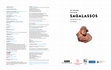
Sagalassos, one of the best-preserved ancient cities of the Mediterranean and included in the Ten... more Sagalassos, one of the best-preserved ancient cities of the Mediterranean and included in the Tentative List of UNESCO World Heritage Sites, is on display at Yapı Kredi Cultural Centre. Occupying three floors at Yapı Kredi Cultural Centre in Beyoğlu, the exhibition introduces visitors to the ancient city of Sagalassos, founded on the southern slopes of the Taurus mountain range, and the history of the region of Pisidia. The most comprehensive archaeological project carried out in recent years Meanwhile in the Mountains: Sagalassos is the result of a collaboration of the Ministry of Culture and Tourism, the Directorate General for Cultural Heritage and Museums and KU Leuven University, Belgium, and their support of the Sagalassos Archaeological Research Project. Displaying 368 objects from Burdur Archaeology Museum, the exhibition is open to visitors at Yapı Kredi Cultural Centre until 28 May 2020. The exhibition, “Meanwhile in the Mountains: Sagalassos”, contains many and divergent historical objects: from mammoth bones from the Burdur region proving that they lived in prehistorical Anatolia, to the massive statues of the Roman emperors Marcus Aurelius and Hadrian. Objects like the terracotta figurines of gods, goddesses and heroes reflecting belief rituals, a statuette of Alexander the Great, stone tools, decorative items, cooking and food vessels from Sagalassos and the region of Pisidia from different periods, shed a light on the past and the daily and social life of the residents of ancient Sagalassos and these can be viewed in chronological and thematic sections covering three floors at the Yapı Kredi Cultural Centre.
Visitors will be Welcomed by Rome’s Last Good Emperor
At the entrance to the museum visitors will be received by the statue of emperor Marcus Aurelius that was unearthed at the Roman Baths at Sagalassos. Originally approximately five metres high and carved in white marble, the head, arms and legs are displayed at the exhibition. The restoration of the Antonin Fountain at Sagalassos, which was built in the reign of Marcus Aurelius, was completed in 2010. The head of emperor Hadrian, who named Sagalassos Pisidia’s ‘first city’, can also be seen at the exhibition. The emperors Hadrian and Marcus Aurelius are among Rome’s Five Good emperors. On the first floor is a multifaceted presentation of the Sagalassos excavations, which is an interdisciplinary research project that commenced in 1990. Shown with the excavations are also Sagalassos and the Pisidian terrain it is part of, along with the geology, vegetation cover, belief system, gods, people, fauna and flora. On the second floor are the primeval periods with artefacts from the Bronze Age, when Sagalassos was founded, the Hellenistic Period, the Roman Period and the Byzantine Period arranged chronologically. The Upper Agora unearthed during the Sagalassos excavations as well as the best examples of statues of emperors, gods and heroes recovered there are also on show here. The third floor comprises thematic sections about ancient economy, quality of life, dietary habits and kitchen utensils, how people dealt with death, and the characteristics of death. Visitors are received by a statue of the goddess of agriculture and abundance, Demeter with the beautiful hair. This section also contains a reconstruction of the rock temple to which it is believed the people of Sagalassos focused their votive observance and from which hundreds of terracotta figurines were recovered. The Sagalassos excavations, interdisciplinary excavations and restoration work of the Sagalassos
Archaeological Research Project that have been conducted since 1990 occupies a very important place within the international scientific community. The exhibition also offers visitors a chance to see these scientific studies in one place. Experts have recreated the faces belonging to the skulls found during the Sagalassos excavation of a Roman man dated to the 3rd century CE and to a Byzantine woman dated to the 11th century. Excavation director Jeroen Poblome, who characterises face reconstruction as a combination of science and creativity, notes that the digital face reconstructions have an accuracy of 75%. The Pisidians, whose real names are unknown, have been named Rhodon and Eirènè by the research team. With the busts of Rhodon and Eirènè having been brought to the exhibition, visitors will have the opportunity to meet ancient Pisidians. The project’s scientific consultancy is undertaken by professor at KU Leuven University and Sagalassos Excavation Director Jeroen Poblome, the coordination by Director of Yapı Kredi Museum Nihat Tekdemir and the design by Pattu Mimarlık. The photographs of the objects brought to the exhibition and all the landscape photographs used at the exhibition were shot by the Belgian photographers Bruno Vandermeulen and Danny Veys. The exhibition is accompanied by a comprehensive book featuring all the historical stages of Sagalassos and the region of Pisidian where it was located. The book “Meanwhile in the Mountains: Sagalassos” is produced in Turkish and English by Yapı Kredi Publications and is the publisher’s 5.500th book. It contains 27 articles, each written in the light of the latest current data by experts in their field, and this makes it the most up to date reference book on Pisidia and Sagalassos.

This volume is dedicated to cult in the ancient region of Pisidia. The findings of the archaeolog... more This volume is dedicated to cult in the ancient region of Pisidia. The findings of the archaeological research at the ancient city of Sagalassos are combined with the results of archaeological survey projects conducted in the region, as well as epigraphic, numismatic and iconographic studies, to create an evolutionary overview of religious practice from Alexander the Great until the rise of Christianity. Set against their indigenous background, the volume assesses the impact on local cult habits of the two acculturation processes occurring within this historical timeframe - Hellenisation and Romanisation - by examining changes and continuities in the constituent elements of religious practice, namely the pantheon of worshipped deities, the sacred space where the communication with the divine sphere took place, the cultic personnel in charge of this interaction, and the rituals involved.
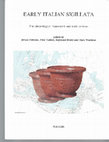
The edited volume is the result of the first international ROCT-conference (Roman Crafts and Trad... more The edited volume is the result of the first international ROCT-conference (Roman Crafts and Trade Network) at the Catholic University Leuven on 7 and 8 May, 1999. The collected papers provide an overview of important recent contributions to the study of Italian sigillata and outline some approaches for future research. The contributions define methodological and chronological problems related to the import of Italian sigillata, and, at the same time, place Italian sigillata against a wider background, in order to evaluate its role in the changing early imperial ceramic assemblages, and discuss whether the trade in Italian sigillata could have been part of a wider pattern of exchange of goods, persons and ideas. The volume brings together a variety of archaeological and archaeometrical papers and covers the western regions of the empire, the Italian motherland and the Roman East, in trying to encompass the complex effects of Italian sigillata.
Journal articles by Peter Talloen
Gephyra, 2024
While evidence of ancient place names is a crucial element for our
understanding of the historica... more While evidence of ancient place names is a crucial element for our
understanding of the historical landscape, many of those toponyms, other than those of major urban centres, have often disappeared in the course of history. The traditional localization of one such ancient toponym, Moatra in the territory of Sagalassos, at the present-day village of Bereket in the central district of Burdur Province (SW Türkiye) has recently been questioned. Allegedly, the vicinity of the modern village presents insufficient remains to support an identification of an ancient settlement there during the Roman Imperial period and this caused scholars to look for its location elsewhere in the area. This article presents an overview of the archaeological evidence from the Bereket intramontane basin and combines it with other strands of evidence to contest this new localization and explain why Moatra could not have been situated anywhere else but at Bereket. These arguments are based on the combination of the results of past and ongoing archaeological, geomorphological and paleo-environmental research, as well as toponymic study. These data help to shed light on the long occupation of the area and clarify the somewhat exceptional nature of the settlement of Moatra within the territory of Sagalassos, providing an outstanding example of how different disciplines
can contribute to our understanding of the ancient settlement landscape and the human-environment relationship in the Late Holocene.
Anatolica, 2023
Thirty years of excavations and research have turned the Upper Agora area of Sagalassos into one ... more Thirty years of excavations and research have turned the Upper Agora area of Sagalassos into one of the best-studied public spaces and political civic centers of Roman poleis in Asia Minor. The area to its east was the last remaining piece of the puzzle to be studied. Between 2015-2021, a series of large-scale excavations obtained a wealth of archaeological evidence, ranging from a Hellenistic neighbourhood to the main gymnasium of the Roman polis, and its rearrangement in Late Antiquity. As a result, these excavations provided information about a wide range of aspects of life in Hellenistic, Roman Imperial, and Early Byzantine Pisidia. This paper presents the relevant evidence and discusses its possible interpretations, so that it can be used to contribute to larger debates and themes within Classical and Anatolian Archaeology.
Anatolica, 2022
In 2000, 2001 and 2003 excavations were conducted on top of the so-called Alexander's Hill at Sag... more In 2000, 2001 and 2003 excavations were conducted on top of the so-called Alexander's Hill at Sagalassos (southwest Anatolia). This paper presents the results of these archaeological works, as well as interprets these against the current framework of knowledge on the archaeology and history of Sagalassos. No remains of the conquest by Alexander the Great were attested, while the location might have functioned as a sanctuary (for Demeter?) in Roman Imperial times. The remains of a 6 th century CE Christian basilica, on the other hand, are certified and can be considered as a funerary church. The 10 th-11 th century CE refurbished version of this church possibly functioned as the episcopal church for the contemporary kastron. Most of the archaeological record, however, is related to a 12 th-13 th century CE fortified hamlet installed on top of Alexander's Hill, the functioning and historical context of which this paper aims to reconstruct.
Bulletin of the American Society of Overseas Research, 2022
Topics such as polis formation and synoikismos have a rich background in classical studies, histo... more Topics such as polis formation and synoikismos have a rich background in classical studies, history and archaeology. Such studies have mainly focused on the attestations of synoikismos events in literary sources and inscriptions. The archaeological side of such processes has not always been given equal weight. This paper presents a more encompassing view on patterns of synoikismos and polis formation by incorporating and assessing archaeological evidence in a model of push-pull interactions between local communities and the Hellenistic kingdoms in southwest Anatolia. This model will be applied on a case study of the origin of polis at Sagalassos and its relation with the nearby settlement at Düzen Tepe during its formative years in the early to middle Hellenistic period (third-second centuries B.C.). It will then situate this case in its wider context of settlement patterns and community formation in southwest Anatolia, focusing on the ancient regions of Pisidia, Lycia and Pamphylia. The paper suggests that interactions between local communities and overarching central administrations offered suitable stimuli that resulted in local communities starting to participate in wider dynamics of economic and political importance. This ultimately resulted in observed patterns of polis formation and a potential synoikismos.
Colloquium Anatolicum, 2020
Pisidia kenti Sagalassos'taki su tedarik ağı ve yönetimi nispeten iyi bilimekle birlikte son arke... more Pisidia kenti Sagalassos'taki su tedarik ağı ve yönetimi nispeten iyi bilimekle birlikte son arkeolojik araştırmalar, bu tedarik ağının yalnızca ağın kendisini anlamamıza değil, aynı zamanda kentsel peyzaj üzerindeki etkisine de katkıda bulunan kalıntılarını ortaya çıkardı. Yeni düzenlenen Sagalassos Yukarı Agorası üzerine inşa edilen Erken Roma İmparatorluk çeşmesi, geleneksel biçim ve yenilikçi şehir manzarasının birleşiminin sonucuydu. Yeni çeşme sadece şehir halkına su sağlamakla kalmamış, aynı zamanda kentsel peyzaj içinde öne çıkan konumu sayesinde, şehrin sağladığı imkanların görsel bir ifadesini sunuyordu. Anıtsal çeşmenin inşası aynı zamanda halkın kullanımı ve suyun teşhir edilmesinde önemli bir değişime işaret ediyordu. Sonunda çeşme, mevcut anıtı yeni bir temsil şekliyle geliştirme niyetiyle, gelişen kentsel peyzajın bir parçası olarak yerini Antonine Çeşmesi'ne bırakmıştır.
Anatolica, 2020
The so-called Rock Sanctuary, a distinctive limestone rock outcrop with natural cavities situated... more The so-called Rock Sanctuary, a distinctive limestone rock outcrop with natural cavities situated in the periphery of the Pisidian city of Sagalassos (SW-Turkey), was a natural feature that was served a variety of functions throughout its history. Rescue excavations carried out at the site mainly yielded evidence for the deposition of specialised offerings in the form of ceramic, glass, metal and stone vessels, pieces of personal adornment, instruments for textile production, but especially many thousands of fragments of terracotta figurines. All of these identified RS as a 'special-purpose site', a natural landform that was given a cultural significance, not by means of monumentalisation but through the activities that took place there during the Hellenistic and Roman Imperial periods. It was the combination of all these objects as a whole and the very context in which these were used and placed that made it possible to identify the site as a sanctuary, more particularly, a site of popular worship. This paper presents an overview of those excavations, highlighting the significance of this site in the landscape of Sagalassos and what it can tell us about the community that conceived it and used it as a cult site, outside of the sphere of official religious practice. RS thus offered a unique glimpse into an aspect of ancient life not previously known from Sagalassos.
Les Carnets de l'ACoSt Association for Coroplastic Studies, 2020
Istanbuler Mitteilungen , 2019
Tijdschrift voor Mediterrane Archeologie, 2018
Herom, 2018
Both literary and archaeological evidence indicates that the playing of board games was a widespr... more Both literary and archaeological evidence indicates that the playing of board games was a widespread and culturally significant phenomenon of the Roman world. In spite of their common presence, ancient board games have been paid little attention by the disciplines studying classical antiquity, and especially their material aspect has been neglected. In most studies, a game board is seen primarily as a particular disposition of places for the counters, in order to identify the types of games that were played on a given board; much less attention is paid to the materiality of the actual boards. Yet, in several cities of southwestern Asia Minor, game boards have been found carved on large stone blocks which must have been part of a more permanent setup or installation. Together with their formal attributes and their prominent locations in public spaces, they can be considered public installations. The focus of enquiry of this article is a series of such monumental boards that have been unearthed at the ancient Pisidian city of Sagalassos (southwestern Asia Minor). The analysis of these boards will not only identify the type of game these were used for but will also provide information on their materiality and location. The presentation of the boards will be used to address further questions. Although very popular, dicing was generally frowned upon by public authorities which makes public installations for these practices somewhat surprising. What caused such a different attitude in this and other cities of southwestern Asia Minor towards a popular practice that was generally condoned but never publicly supported? The paper will try to approach this aspect by looking at another type of public installations erected for dicing and restricted to this part of the Mediterranean, the astragalos oracle.
In Antiquity, public space was used as part of the construction of cultural identities which coul... more In Antiquity, public space was used as part of the construction of cultural identities which could be mul-ti-faceted. The Upper Agora of the Pisidian city of Sagalassos (SW Turkey) was such a dynamic space with a rich collection of images, inscribed texts and monuments that contributed to the construction of local and regional identities. It was the space where, through the use of monuments, images and symbols, these identities were acted out in a memory theatre that served to remind the community of who they were. By examining the constituting monumental elements of the agora, this paper project aims to establish the successive waves of urbanisation, their role in the articulation of different identity-aspects, and the impact of empire on these processes. Antik Çağ'da, kamusal alanla çok yönlü olabilecek kültürel kimliklerin inşasının bir parçası olarak kul-lanılmıştır. Pisidia kenti Sagalassos'un (Türkiye'nin GB) Yukarı Agorası, yerel ve bölgesel kimliklerin inşasına katkıda sağlayan zengin bir betim, yazılı metinler ve anıtlar koleksiyonu içeren dinamik bir mekândı. Anıtların, imajların ve sembollerin kullanılması yoluyla, bu kimlikler, topluluğa kim olduk-larını anımsatmaya hizmet eden bir bellek tiyatrosu idi. Agoranın anıtsal temel unsurlarını inceleye-rek, bu çalışma, kentleşmenin birbirini izleyen dalgalarını, farklı kimlik yönlerinin eklemlenmesindeki rollerini ve imparatorluğun bu süreçler üzerindeki etkisini belirlemeyi amaçlamaktadır.
European Journal of Archaeology, 2017
This article presents the different types of pendant crosses found in the burials of a Middle Byz... more This article presents the different types of pendant crosses found in the burials of a Middle Byzantine graveyard at the Pisidian settlement of Sagalassos in south-western Turkey. The aim is to study both the chronology and function of these pectoral crosses. A variety of sources are used, ranging from stratigraphy and radiocarbon dates to contextual information and skeletal data. The crosses could be broadly dated to between the eleventh and thirteenth century AD, thus providing an indication of the lifespan of the cemetery. Moreover, the typological evolution, which was corroborated by parallels from other sites
in the Byzantine Empire, allowed us to establish a horizontal stratigraphy for the graveyard. The pectoral crosses discussed here shed light on the funerary practices in this part of the Byzantine world.
These generally proved to belong to very young children. They constitute a category of material culture that not only provides insights into the lives of the Byzantine population, especially in early childhood,
but are also the material manifestation of the intersection between popular religion, magic, and funerary rites.
P. Talloen, R. Vandam, M. Broisch, and J. Poblome. 2017. "A Byzantine church discovered in the village of Aǧlasun (Burdur): Some more light on Dark Age Pisidia." Adalya, 20: 375-404, 2017


Uploads
Books by Peter Talloen
Visitors will be Welcomed by Rome’s Last Good Emperor
At the entrance to the museum visitors will be received by the statue of emperor Marcus Aurelius that was unearthed at the Roman Baths at Sagalassos. Originally approximately five metres high and carved in white marble, the head, arms and legs are displayed at the exhibition. The restoration of the Antonin Fountain at Sagalassos, which was built in the reign of Marcus Aurelius, was completed in 2010. The head of emperor Hadrian, who named Sagalassos Pisidia’s ‘first city’, can also be seen at the exhibition. The emperors Hadrian and Marcus Aurelius are among Rome’s Five Good emperors. On the first floor is a multifaceted presentation of the Sagalassos excavations, which is an interdisciplinary research project that commenced in 1990. Shown with the excavations are also Sagalassos and the Pisidian terrain it is part of, along with the geology, vegetation cover, belief system, gods, people, fauna and flora. On the second floor are the primeval periods with artefacts from the Bronze Age, when Sagalassos was founded, the Hellenistic Period, the Roman Period and the Byzantine Period arranged chronologically. The Upper Agora unearthed during the Sagalassos excavations as well as the best examples of statues of emperors, gods and heroes recovered there are also on show here. The third floor comprises thematic sections about ancient economy, quality of life, dietary habits and kitchen utensils, how people dealt with death, and the characteristics of death. Visitors are received by a statue of the goddess of agriculture and abundance, Demeter with the beautiful hair. This section also contains a reconstruction of the rock temple to which it is believed the people of Sagalassos focused their votive observance and from which hundreds of terracotta figurines were recovered. The Sagalassos excavations, interdisciplinary excavations and restoration work of the Sagalassos
Archaeological Research Project that have been conducted since 1990 occupies a very important place within the international scientific community. The exhibition also offers visitors a chance to see these scientific studies in one place. Experts have recreated the faces belonging to the skulls found during the Sagalassos excavation of a Roman man dated to the 3rd century CE and to a Byzantine woman dated to the 11th century. Excavation director Jeroen Poblome, who characterises face reconstruction as a combination of science and creativity, notes that the digital face reconstructions have an accuracy of 75%. The Pisidians, whose real names are unknown, have been named Rhodon and Eirènè by the research team. With the busts of Rhodon and Eirènè having been brought to the exhibition, visitors will have the opportunity to meet ancient Pisidians. The project’s scientific consultancy is undertaken by professor at KU Leuven University and Sagalassos Excavation Director Jeroen Poblome, the coordination by Director of Yapı Kredi Museum Nihat Tekdemir and the design by Pattu Mimarlık. The photographs of the objects brought to the exhibition and all the landscape photographs used at the exhibition were shot by the Belgian photographers Bruno Vandermeulen and Danny Veys. The exhibition is accompanied by a comprehensive book featuring all the historical stages of Sagalassos and the region of Pisidian where it was located. The book “Meanwhile in the Mountains: Sagalassos” is produced in Turkish and English by Yapı Kredi Publications and is the publisher’s 5.500th book. It contains 27 articles, each written in the light of the latest current data by experts in their field, and this makes it the most up to date reference book on Pisidia and Sagalassos.
Journal articles by Peter Talloen
understanding of the historical landscape, many of those toponyms, other than those of major urban centres, have often disappeared in the course of history. The traditional localization of one such ancient toponym, Moatra in the territory of Sagalassos, at the present-day village of Bereket in the central district of Burdur Province (SW Türkiye) has recently been questioned. Allegedly, the vicinity of the modern village presents insufficient remains to support an identification of an ancient settlement there during the Roman Imperial period and this caused scholars to look for its location elsewhere in the area. This article presents an overview of the archaeological evidence from the Bereket intramontane basin and combines it with other strands of evidence to contest this new localization and explain why Moatra could not have been situated anywhere else but at Bereket. These arguments are based on the combination of the results of past and ongoing archaeological, geomorphological and paleo-environmental research, as well as toponymic study. These data help to shed light on the long occupation of the area and clarify the somewhat exceptional nature of the settlement of Moatra within the territory of Sagalassos, providing an outstanding example of how different disciplines
can contribute to our understanding of the ancient settlement landscape and the human-environment relationship in the Late Holocene.
in the Byzantine Empire, allowed us to establish a horizontal stratigraphy for the graveyard. The pectoral crosses discussed here shed light on the funerary practices in this part of the Byzantine world.
These generally proved to belong to very young children. They constitute a category of material culture that not only provides insights into the lives of the Byzantine population, especially in early childhood,
but are also the material manifestation of the intersection between popular religion, magic, and funerary rites.