Papers by Philipp Grassel
Siedlungs- und Küstenforschung im südlichen Nordseegebiet (SKN), 2024
Der Artikel beschäftigt sich mit der Erforschung des Wracks der SMS ARIADNE, eines Kleinen Kreuze... more Der Artikel beschäftigt sich mit der Erforschung des Wracks der SMS ARIADNE, eines Kleinen Kreuzers der Kaiserlichen Marine, der am 28. August 1914 im Seegefecht bei Helgoland versenkt wurde. Er legt unter anderem einen Fokus auf die Beschreibung der Bewaffnung des Schiffes sowie der möglichen Erhaltung von Munitionsresten im und am Wrackbefund. Weiterhin setzt er sich dezidiert mit den Problemen der historisch-archäologischen Erforschung dieses Wracks und seinen Auswirkungen auf die marine Umwelt auseinander. Darüber hinaus werden anhand des Beispiels des Kleinen Kreuzers allgemeinere Probleme der archäologischen Wrackforschung dargelegt und kritisch beleuchtet.
Siedlungs- und Küstenforschung im südlichen Nordseegebiet (SKN), 2023
Der Artikel beschäftigt sich mit der Erforschung des Wracks der SMS MAINZ, eines Kleinen Kreuzers... more Der Artikel beschäftigt sich mit der Erforschung des Wracks der SMS MAINZ, eines Kleinen Kreuzers der Kaiserlichen Marine, der am 28. August 1914 im Seegefecht bei Helgoland versenkt wurde. Er legt dabei unter anderem einen Fokus auf die Beschreibung der Bewaffnung des Schiffes und der möglichen Erhaltung von Munitionsresten im Wrackbefund. Weiterhin setzt er sich dezidiert mit den Problemen der historisch-archäologischen Erforschung dieses Wracks und seinen Auswirkungen auf die marine Umwelt auseinander. Darüber hinaus werden anhand des Beispiels des Kleinen Kreuzers allgemeinere Probleme der archäologischen Wrackforschung dargelegt und kritisch beleuchtet.
Skyllis, 2023
Through a collaboration between experts from the research group System Integration and Verificati... more Through a collaboration between experts from the research group System Integration and Verification of the German Aerospace Centre – Institute for the Protection of Maritime Infrastructures in Bremerhaven, the German Maritime Museum – Leibniz Institute for Maritime History and the Institute of Pre- and Protohistoric Archaeology of the Kiel University, it was possible to investigate several underwater areas within the Kiel Bight in the Baltic Sea. In two campaigns in 2020 and 2021 some large scale surveys were carried out using an autonomous underwater vehicle (AUV) and a remotely operated underwater vehicle (ROV). The article presents some of the objects investigated during these surveys and categorises them scientifically.
Skyllis. Zeitschrift für maritime und limnische Archäologie und Kulturgeschichte, 2022
The article deals with the research of military wrecks of the First and Second World War in the G... more The article deals with the research of military wrecks of the First and Second World War in the German Bight. The focus is on the presentation of some military wrecks investigated in German territorial waters and the German EEZ. The evaluation of the hazardous potential of these and other military wrecks for the marine environment of the North Sea was one of the main objectives of a research project led by the German Maritime Museum, Leibniz Institute for Maritime History (DSM). The potentially remaining ordnances on the ships formed a focus of the research interest of the project. Another important aspect was the combination and evaluation of the critical analysis of historical and archaeological facts about the ships with the scientific data obtained from the wrecks.
North Sea Wrecks - An interdisciplinary approach towards understanding the risks posed by wrecks containing munitions in the North Sea
MARESEC Conference Proceedings, 2022

Arkæologi i Slesvig / Archäologie in Schleswig, 2020
In 2015 and 2016, two unknown wrecks – the MALIK and the 2-Anker Wrack – were found in the Kiel F... more In 2015 and 2016, two unknown wrecks – the MALIK and the 2-Anker Wrack – were found in the Kiel Fjord. Both sites were investigated by short surveys during 2015, 2016, and 2018. The large amount of bricks covering the wrecks is characteristic of both sites. This article gives an overview of past and current research on the wrecks. Additionally, an initial interpretation of the context of the wrecks is suggested including
a possible research project. From the author's point of view, both wrecks were once most likely small wooden sailing ships for commercial purposes; such vessels were very common on the coasts of the Baltic Sea and the North Sea. Due to the lack of usable archaeological data, a detailed dating of the wrecks is not yet possible. Comparative analyses of the anchors and the visible, structural parts of the wrecks roughly date wrecks to the period between the 1830s and the first half of the 20th century.
Deutsche Schiffahrt. Informationen des Fördervereins Deutsches Schiffahrtsmuseum e.V., 2022
Deutsche Schiffahrt. Informationen des Fördervereins Deutsches Schiffahrtsmuseum e.V., 2021
PAST SOCIETIES. Human Development in Landscapes, 2020
This contribution provides an overview about late Hanseatic seafaring in the waters of Iceland, t... more This contribution provides an overview about late Hanseatic seafaring in the waters of Iceland, the Faroe Islands and Shetland and describes the trade of the Hansa with these islands. Between the 15th and 17th centuries, Bremen and Hamburg were the main Hanseatic traders in the North Atlantic area and important commodities, such as the well-known stockfish or sulphur, were exported. Although there is rich knowledge about historical Hansa trade with the North Atlantic islands as well as late Hanseatic seafaring in this area, archaeological proof of this knowledge has been hardly adduced. This paper illustrates actual archaeological research about the islands for the late Hanseatic period and characterises the potential for maritime-archaeological research, which has rarely been undertaken until now.
Baltic and Beyond. Change and Continuity in Shipbuilding. Proceedings of the Fourteenth International Symposium on Boat and Ship Archaeology, Gdańsk 2015, 2017
The aim of this paper is to explain the structure and organisation of the AMLA, a study group for... more The aim of this paper is to explain the structure and organisation of the AMLA, a study group for underwater archaeology, as well as to present some recent projects the AMLA had undertaken in the last couple of years. Therefore, different members of the AMLA gathered and wrote short descriptions of their projects and their results.
Deutsche Schiffahrt. Informationen des Fördervereins Deutsches Schiffahrtsmuseum e.V., 2020
A short Overview about the Interreg-Project "North Sea Wrecks". This project deals with the diff... more A short Overview about the Interreg-Project "North Sea Wrecks". This project deals with the different ecological dangers of military wrecks from both World Wars as well as ammunition and chemical warfare agents which were dumped in the North Sea.
N.E.R.D. New European Researches and Discoveries in Underwaterarchaeology Conference. Beiträge der Internationalen Konferenz der Arbeitsgruppe für maritimen und limnischen Archäologie. 21. - 23. November 2014 in Kiel , 2016
The paper describes the late Hanseatic trade with Iceland, the Faroe Islands and the Shetland Isl... more The paper describes the late Hanseatic trade with Iceland, the Faroe Islands and the Shetland Islands. Between the 15th and 17th centuries Bremen and Hamburg were the main Hanseatic traders in the North Atlantic area. The main commodity of the north was the well-known stockfish but other goods like sulphur, wool cloth or butter were also traded. The ships of the Hansa merchants for the Iceland-trade had an average size of 60 last (120 - 180 tons) and for the Shetland-trade an average size of 20 to 30 last (40 - 90 tons). The small quantity of wreck finds from the Hanseatic periods and the lack of precise ship measurements or constructional information in contemporary sources is the main reason for the currently unsatisfying state of knowledge of Hanseatic seafaring and shipbuilding. Especially in the North Atlantic Islands the archaeological evaluation of possible early modern wreck sites and harbour areas is still only beginning and a lot of maritime archaeological surprises can hopefully be expected here.
Nachrichtenblatt Arbeitskreis Unterwasserarchäologie (NAU), 2016
Der Beitrag erlaubt einen Überblick der hansischen Handelsaktivitäten auf den Inseln des Nordatla... more Der Beitrag erlaubt einen Überblick der hansischen Handelsaktivitäten auf den Inseln des Nordatlantiks vom 15. bis zum 17. Jh. Ein besonderer Fokus wird hierbei auf die Shetland Inseln gelegt. Die Diskrepanz zwischen umfangreichem, quellenbasiertem Wissen und tatsächlicher archäologischer Fassbarkeit desselben wird ebenso dargestellt wie das maritim-archäologische Potenzial dieser nördlichsten Inselgruppe Großbritanniens. Die archäologische Erforschung der Späthansezeit auf den nordatlantischen Inseln und im Besonderen auf den Shetland Inseln steht leider erst am Anfang, kann aber gerade deswegen noch einen wichtigen Beitrag zur archäologischen Aufarbeitung der europäischen Mittelalter-, Hanse- und Neuzeitforschung liefern.
Skyllis. Zeitschrift für Unterwasserarchäologie, 2012
From April to December 2010, in the context of building activities, the area “Quartier Frankenhof... more From April to December 2010, in the context of building activities, the area “Quartier Frankenhof” in Stralsund (about 5000 m²) was excavated by the “Landesamt für Kultur- und Denkmalpflege Mecklenburg-Vorpommern“. The discovered archaeological features and wooden structures dated from the 14th century until the time of the “Great Northern War” (1700 til 1721 A.D.). The medieval structures could be determined as two consecutive features of primitive streets, a small shipyard and two wooden conduct systems. The shipyard and the conduct structures were partly built of former ship timbers and have been analysed in two exams at the Institut of Pre- and Protohistoric Archaeology of the Christian-Albrechts-University of Kiel.
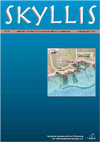
Skyllis. Zeitschrift für Unterwasserarchäologie, 2015
The paper describes the late Hanseatic trade with Iceland, the Faroe Islands as well as the Shetl... more The paper describes the late Hanseatic trade with Iceland, the Faroe Islands as well as the Shetland Islands and gives an overview about the maritime archaeological researches, especially of this time period, in the Shetland Islands. Between the 15th and 17th centuries Bremen and Hamburg were the main Hanseatic traders in the North Atlantic area. The main commodity of the north was the well-known stockfish but other goods like sulphur, wool cloth or butter were also traded. The ships of the Hansa merchants for the Iceland-trade had an average size of 60 last (120 - 180 tons) and for the Shetland-trade an average size of 20 to 30 last (40 - 90 tons). The small quantity of wreck finds from the Hanseatic periods and the lack of precise ship measurements or constructional information in contemporary sources is the main reason for the currently unsatisfying state of knowledge of Hanseatic seafaring and shipbuilding. Especially in the North Atlantic Islands and here in the Shetland Islands, the archaeological evaluation of possible early modern wreck sites and harbour areas is still only beginning and a lot of maritime archaeological surprises can hopefully be expected here.
Monograph by Philipp Grassel
phd-thesis (in german language) / title: The late Hanseatic Seafaring in the North Atlantic from ... more phd-thesis (in german language) / title: The late Hanseatic Seafaring in the North Atlantic from the 15th to the 17th centuries. The maritime-archaeological potential of Hanseatic trading places at the Shetland Islands, Faroe Islands and Iceland based on archaeological and contemporary sources
book contribution by Philipp Grassel

Gestrandet-Versenkt-Versunken. Faszination Unterwasserarchäologie, 2014
Die Städte und ländlichen Siedlungen des Mittelalters und der frühen Neuzeit zeichneten sich, vor... more Die Städte und ländlichen Siedlungen des Mittelalters und der frühen Neuzeit zeichneten sich, vor allem im nordalpinen Raum, durch eine intensive Holznutzung aus. Dieser Rohstoff diente nicht nur als prägender Baustoff für Häuser, sondern auch als elementarer Werkstoff verschiedener städtischer Gewerke. Somit spielte er für die gesamte urbane, infrastrukturelle Entwicklung eine entscheidende Rolle. Auch als Handelsgut erlangte Holz eine große ökonomische Bedeutung innerhalb der städtischen Wirtschaft. Darüber hinaus waren die metallverarbeitenden Berufsgruppen wie Schmiede und Gießer ebenfalls direkt davon abhängig, da ihre Essen mit Holzkohle betrieben wurden.
Das sehr weite Spektrum der Holznutzung und die begrenzte Verfügbarkeit dieses Materials, führte schon früh zu weitreichenden Reglementierungen innerhalb des Einschlages, der Verarbeitung, der Ein- und Ausfuhr sowie der Ressourcenbildung dieses Naturproduktes. Aufgrund des offensichtlich hohen Bedarfes und der begrenzten Verfügbarkeit etablierte sich sehr schnell die Praxis des „Recyclings“ von Hölzern. So trifft man bei Ausgrabungen innerhalb mittelalterlicher Siedlungen häufig auf hölzerne Funde und Befunde, die sich aus wiederverwendeten Bestandteilen anderer Holzkonstruktionen zusammensetzen. Hierbei ist jedoch eine differenzierte Verwendung dieses Materials zu beobachten. Erklären lässt sich diese Differenzierung mit der offensichtlichen Qualitätsminderung des wiederverwendeten Holzes durch dessen Primärnutzung. So wies das Material naturgemäß Gebrauchspuren wie Lochungen, Abarbeitungen, Zersplitterungen oder auch Teer- und Pechreste sowie andere Verschmutzungspuren auf, wodurch nur bedingt eine handwerkliche Neuverarbeitung möglich war. Auch ist anzunehmen, dass diese Hölzer durch ihre langen Nutzungsphasen weder optisch noch olfaktorisch als qualitativ wertvoll angesehen wurden.
Die Wiederverwendung von Hölzern lässt sich auch an einem Fundplatz des 14. Jh. in Stralsund erkennen. Dessen spätmittelalterliche Befunde bildeten die Grundlage zweier wissenschaftlicher Abschlussarbeiten des Institutes für Ur- und Frühgeschichte der CAU zu Kiel und werden im Folgenden näher beschrieben. Die Untersuchungsergebnisse sollen zudem als konkretes Beispiel dienen, um Problematiken bei der Interpretation von sekundär verwendeten Holzfunden aufzuzeigen. Des Weiteren werden die Ergebnisse, die sich aus der wissenschaftlichen Analysen der Befunde ergaben, kurz dargestellt.
Books by Philipp Grassel

The booklet was written to accompany the exhibition Looking In From The Edge - The Hanse in the N... more The booklet was written to accompany the exhibition Looking In From The Edge - The Hanse in the North Atlantic, which will be shown at the German Maritime Museum (DSM), Leibniz Institute for Maritime History, from 24 March 2023 until Spring 2024. From November 2023, parallel exhibitions will also be held at the Stromness Museum in Orkney, and at the Shetland Museum and Archives. These exhibitions are in turn part of the international and interdisciplinary research project Looking In From The Edge (LIFTE). In addition to the two editors of this volume (Bart Holterman and Philipp Grassel), researchers from the University of Tübingen – Department of Medieval Archaeology, Lincoln University in England and the Scottish University of the Highlands and Islands (UHI), Orkney College are involved in the project. All chapters included in this book were written by members of the project.
The LIFTE project is concerned with what is nowadays still a remote region on the fringes of Europe: the British Orkney and Shetland Islands. Despite (or perhaps because of) their location on the edge of Europe, these British Northern Isles today attract thousands of tourists each year and constitute anchor points for the oil and offshore industries in the North Sea. But they have been the destination of Hanseatic merchants, English and Scottish traders and herring fishers from Holland in the Middle Ages and the early modern period.


Uploads
Papers by Philipp Grassel
a possible research project. From the author's point of view, both wrecks were once most likely small wooden sailing ships for commercial purposes; such vessels were very common on the coasts of the Baltic Sea and the North Sea. Due to the lack of usable archaeological data, a detailed dating of the wrecks is not yet possible. Comparative analyses of the anchors and the visible, structural parts of the wrecks roughly date wrecks to the period between the 1830s and the first half of the 20th century.
Monograph by Philipp Grassel
book contribution by Philipp Grassel
Das sehr weite Spektrum der Holznutzung und die begrenzte Verfügbarkeit dieses Materials, führte schon früh zu weitreichenden Reglementierungen innerhalb des Einschlages, der Verarbeitung, der Ein- und Ausfuhr sowie der Ressourcenbildung dieses Naturproduktes. Aufgrund des offensichtlich hohen Bedarfes und der begrenzten Verfügbarkeit etablierte sich sehr schnell die Praxis des „Recyclings“ von Hölzern. So trifft man bei Ausgrabungen innerhalb mittelalterlicher Siedlungen häufig auf hölzerne Funde und Befunde, die sich aus wiederverwendeten Bestandteilen anderer Holzkonstruktionen zusammensetzen. Hierbei ist jedoch eine differenzierte Verwendung dieses Materials zu beobachten. Erklären lässt sich diese Differenzierung mit der offensichtlichen Qualitätsminderung des wiederverwendeten Holzes durch dessen Primärnutzung. So wies das Material naturgemäß Gebrauchspuren wie Lochungen, Abarbeitungen, Zersplitterungen oder auch Teer- und Pechreste sowie andere Verschmutzungspuren auf, wodurch nur bedingt eine handwerkliche Neuverarbeitung möglich war. Auch ist anzunehmen, dass diese Hölzer durch ihre langen Nutzungsphasen weder optisch noch olfaktorisch als qualitativ wertvoll angesehen wurden.
Die Wiederverwendung von Hölzern lässt sich auch an einem Fundplatz des 14. Jh. in Stralsund erkennen. Dessen spätmittelalterliche Befunde bildeten die Grundlage zweier wissenschaftlicher Abschlussarbeiten des Institutes für Ur- und Frühgeschichte der CAU zu Kiel und werden im Folgenden näher beschrieben. Die Untersuchungsergebnisse sollen zudem als konkretes Beispiel dienen, um Problematiken bei der Interpretation von sekundär verwendeten Holzfunden aufzuzeigen. Des Weiteren werden die Ergebnisse, die sich aus der wissenschaftlichen Analysen der Befunde ergaben, kurz dargestellt.
Books by Philipp Grassel
The LIFTE project is concerned with what is nowadays still a remote region on the fringes of Europe: the British Orkney and Shetland Islands. Despite (or perhaps because of) their location on the edge of Europe, these British Northern Isles today attract thousands of tourists each year and constitute anchor points for the oil and offshore industries in the North Sea. But they have been the destination of Hanseatic merchants, English and Scottish traders and herring fishers from Holland in the Middle Ages and the early modern period.