Books by Remy Crassard
Papers from the Special Session "Stone Tools of Prehistoric Arabia" of the Seminar for Arabian St... more Papers from the Special Session "Stone Tools of Prehistoric Arabia" of the Seminar for Arabian Studies held in July 2019 in Leiden. Supplement to volume 50 (2020) of the Proceedings of the Seminar for Arabian Studies.
How have humans colonised the entire planet and reshaped its ecosystems in the process? This uniq... more How have humans colonised the entire planet and reshaped its ecosystems in the process? This unique and groundbreaking collection of essays explores human movement through time, the impacts of these movements on landscapes and other species, and the ways in which species have co-evolved and transformed each other as a result. Exploring the spread of people, plants, animals, and diseases through processes of migration, colonisation, trade, and travel, it assembles a broad array of case studies from the Pliocene to the present. The contributors from disciplines across the humanities and natural sciences are senior or established scholars in the fields of human evolution, archaeology, history, and geography.
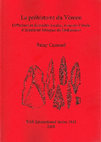
British Archaeological Report BAR International Series S1842, 2008
L'analyse de la variabilité des modalités opératoires des industries lithiques du Yémen connues à... more L'analyse de la variabilité des modalités opératoires des industries lithiques du Yémen connues à ce jour, au sein d'un cadre chronologique large (des origines au début de l'Histoire), permet d'affiner les connaissances de la préhistoire régionale.
L'étude se base ainsi, dans un premier temps, sur la définition des contextes, à la fois environnementaux et méthodologiques. Intervient ensuite une étude dans une région particulière, le Hadramawt, qui sert de référent solide à une dernière étape du raisonnement, laquelle s'intéresse à la place qu'a occupée l'Arabie du Sud-Ouest au cours des différentes époques de la préhistoire. À partir des témoignages les plus anciens (bifaces acheuléens et méthodes Levallois), jusqu'aux plus récents (microlithes sudarabiques), en passant par une étude approfondie des industries de l'Holocène ancien/moyen, la démonstration s'appuie sur un nombre importants de modalités de taille.
La description des techniques employées au cours du temps autorise la proposition de modèles de peuplements et d'occupations préhistoriques à travers le territoire du Yémen actuel. La découverte de plusieurs sites stratifiés permet par ailleurs de réorganiser la terminologie chronologique employée dans la région et d'ouvrir des perspectives de recherche jusque là mésestimées.
The publication "Rescue Excavation along the Yemen LNG Pipeline from Marib to Balhaf" is dedicate... more The publication "Rescue Excavation along the Yemen LNG Pipeline from Marib to Balhaf" is dedicated to the presentation of the main results of two rescue excavations that the Deutsche Archäologische Institut in Sana'a (DAI) and the Centre Français d'Archéologie et de Sciences Sociales de Sanaa (CEFAS) carried out in 2006. The work was the result of the initiative of the Yemen LNG Company, which was building a gas pipeline from the mineral oil fields in Marib (Block 18) to the new natural gas liquefaction plant and port in Balhaf, on the coast of the governorate of Shabwah.
Workshop organization by Remy Crassard

The conference “Archaeological Failaka – Recent and ongoing investigations” is the Fourth Interna... more The conference “Archaeological Failaka – Recent and ongoing investigations” is the Fourth International Conference on the Archaeology of the Arabian Peninsula in Kuwait, yearly organized by the National Council for Culture, Arts and Letters (NCCAL) and the French Centre for Archaeology and Social Sciences (CEFAS).
Failaka Island is a mythical island for historians and archaeologists: its rich ancient heritage made it famous among scholars. Since the 1960s, this island has been explored by Kuwaiti and international teams. Archaeologists have identified a long, if not continuous and dense occupation, as well as monumental architecture (temples, fortress, churches), connections with Mesopotamia, Iran, the Near-East and India. Nine settlements are still under excavations: the Bronze Age sites of al Khider and tell Saad, the Hellenistic fortress of tell Sa’id, the Early Islamic sites of al Qusur and al Qurainiyah, the Late Islamic sites of tell Saad, Kharaib el-Desht, al Awazim, al Said al Ali and al Qurainiyah. These excavations offer the possibility to considerably enrich the history of the island, Kuwait and the Gulf.
This conference is organized by Dr. Sultan Al-Duwaish (NCCAL), Dr. Julie Bonnéric (CEFAS), and Dr. Rémy Crassard (CEFAS). In 2019, the conference is held at the National Library of Kuwait between November 26 and 28.
ARCHAEOBJECTS3D
3D modeling and replication of archaeological objects: Tools for research, conse... more ARCHAEOBJECTS3D
3D modeling and replication of archaeological objects: Tools for research, conservation and exhibition
As a highly mobile and adaptive species, Homo sapiens has colonised most of the Earth’s ecologies... more As a highly mobile and adaptive species, Homo sapiens has colonised most of the Earth’s ecologies and landscapes. This process of migration and colonisation can be traced back to some of our species’ earliest ancestors, more than 2 million years ago, and has continued unabated into the modern era. Through time, human migrations have increased in distance, density and complexity, leading to the highly networked interactions and exchanges of the present day. While these processes of human expansion are widely recognised and intensively studied, the ancient and historical movements of associated species as a result of human migrations and activities have received much less attention. Study of the translocation of disease vectors and invasive species in the ancient world is still in its early stages, and there has been little effort to link these habitat expansions to wider processes of human-related species movement such as the spread of plant and animal domesticates and commensal species. Yet archaeological, palaeoenvironmental, genetic and other studies are increasingly demonstrating the unexpectedly deep histories of human impacts on the landscape and on other species, and the many ways in which species have co-evolved and transformed each other. There is nonetheless a need to systematically consider species movements through time and as part of a broad phenomenon spanning several million years, closely linked to processes of human activity, expansion, migration and colonisation. This conference offers the opportunity to create a dialogue on this emerging topic, explore synergies between different disciplines, and set an agenda for future research. It will bring together leading international researchers across a range of disciplines and is expected to lead to a publication by a seminal publication.
---------------------------------------------------------
En tant qu’espèce particulièrement mobile et adaptable, Homo sapiens a colonisé la plupart des paysages et des milieux de la planète. Les processus de migration et de colonisation se retrouvent chez les plus anciens des ancêtres de notre espèce, il y a plus de 2 millions d’années, et ont persisté jusqu’aux périodes les plus récentes de l’ère moderne. Au cours du temps, les migrations humaines se sont amplifiées en termes de distance, de densité et de complexité, menant aux interactions et aux échanges particulièrement interconnectés que nous connaissons aujourd’hui. Bien que ces processus d’expansion humaine soient largement reconnus et intensivement étudiés, les mouvements historiques et préhistoriques d’espèces associées aux migrations et activités humaines ont reçu beaucoup moins d’attention. L’étude des déplacements des vecteurs de maladies et des espèces invasives dans le passé reste balbutiante, et peu d’efforts ont été initiés pour associer l’expansion de leurs habitats à des processus plus larges de mouvements ‘‘hommes/espèces liées’’, telles que les diffusions de la domestication animale et végétale et des espèces commensales. D’ores et déjà, un ensemble d’études, qu’elles soient archéologiques, paléoenvironnementales, génétiques et autres, démontrent de manière exponentielle la profondeur historique inattendue des impacts de l’homme sur le paysage et sur d’autres espèces d’une part, et d’autres part les nombreuses trajectoires suivies par des espèces qui ont coévoluées et qui se sont transformées. Il existe cependant un besoin de considérer systématiquement les mouvements d’espèces à travers le temps, en intégrant une dimension plus large d’un phénomène qui s’est développé sur plusieurs millions d’années, en lien étroit avec les processus d’activité humaine, d’expansion, de migration et de colonisation. Cette table-ronde offre l’opportunité de créer un dialogue sur ce sujet en devenir, d’explorer les synergies entre différentes disciplines scientifiques, et de proposer des perspectives de recherche pour le futur. Elle permettra de rassembler des chercheurs de premier plan à l’échelle internationale, couvrant un large champ disciplinaire, et conduira à la publication d’un ouvrage qui servira de base pour le développement futur de ce thème de recherche.
Arabian Archaeology and Epigraphy - Special Issue, May 1, 2013
The origins, developments, and characteristics of the Neolithic of the Arabian Peninsula have lon... more The origins, developments, and characteristics of the Neolithic of the Arabian Peninsula have long been debated in academia. However, Arabia remains one of the only geographical areas in the world that still awaits the establishment of a coherent view on human societies that became “Neolithic” around 8,000-4,000BC. This is not only due to the vast size of the peninsula, but also to a lack of communication between archaeologists as a result of the broad variety of participating institutions, different research traditions, and so central forum for discussions. The workshop will serve as a significant milestone to establish future comprehensive research.
Papers by Remy Crassard

Neolithic settlement patterns and subsistence strategies on Marawah Island, Abu Dhabi Emirate, United Arab Emirates
HAL (Le Centre pour la Communication Scientifique Directe), 2022
Recent work has revealed that there are three major Neolithic settlements present on Marawah Isla... more Recent work has revealed that there are three major Neolithic settlements present on Marawah Island, Abu Dhabi, known as MR1, MR2.5, and MR11. Excavations at the settlement of MR11 are radically changing our ideas of Neolithic architecture, in particular the spatial organization of settlements. MR11 comprises a group of seven mounds (Areas A to G), the first of which (Area A) was subject to excavation in 2003 and 2004 (Beech et al. 2005). Work has continued every year since 2014 on Areas A, B, C, and F. Radiocarbon dating of charcoal fragments have demonstrated that this settlement was occupied from c.8000 to 6500 years ago (Beech et al. 2019). The excavation of each of these areas revealed different forms of architecture. It is now clear that a part of the tripartite house in Area A post-dates an earlier building. Areas B and C comprise a series of differently shaped rooms and paved areas with multiple entrances. Preliminary excavations on Area F indicate the presence of a multi-celled structure that is very different in character from the other areas. Some of the key finds from the excavations are discussed, including lithics, plaster vessels, fish bones, marine shells, mineralized date stones, and radiocarbon dates.
Archaeological and Anthropological Sciences, 2025
Discovered during the survey of ancient Madyan, in the modern Al-Bad‘ oasis in north-western Saud... more Discovered during the survey of ancient Madyan, in the modern Al-Bad‘ oasis in north-western Saudi Arabia, the site of
Asifir is distinguished by numerous surface concentrations of Neolithic artefacts. Low sediment mounds identified at the
site indicated the possible preservation of in situ archaeological remains; one such mound was excavated in November
2019. Dated to the Early Arabian Neolithic period, Asifir is an open-air site located at the top of a conglomerate terrace
along Wadi Ifal. The archaeology from the site is characterized by a high number of lithic artefacts, such as flakes, blades,
and bladelets, as well as various lithic tools, including arrowheads, sickle blade insets, scrapers, borers, and grindstones.
Personal ornaments such as small-sized worked shells and beads, are also present. The excavations have yielded a large
hearth, with faunal (including mammals, birds and fish), malacological and botanical macro-remains. The archaeological
evidence reveals the nature of the site as probably a dwelling place where domestic activities were performed. Presence
of sickle blades with pronounced gloss represents a remarkable and unique find in Saudi Arabia, providing compelling
evidence for cereal harvesting practices, possibly involving domesticated species such as Hordeum vulgare (barley). Asifir
represents one of the rare sites in Saudi Arabia dating to this period, and one of the rare to indicate the use of agropastoral
subsistence strategies in the region some 9000 years ago.
PLOS ONE, 2023
Data on how Stone Age communities conceived domestic and utilitarian structures are limited to a ... more Data on how Stone Age communities conceived domestic and utilitarian structures are limited to a few examples of schematic and non-accurate representations of various-sized built spaces. Here, we report the exceptional discovery of the up-to-now oldest realistic plans that have been engraved on stones. These engravings from Jordan and Saudi Arabia depict 'desert kites', humanmade archaeological mega-traps that are dated to at least 9,000 years ago for the oldest. The extreme precision of these engravings is remarkable, representing gigantic neighboring Neolithic stone structures, the whole design of which is impossible to grasp without seeing it from the air or without being their architect (or user, or builder). They reveal a widely underestimated mental mastery of space perception, hitherto never observed at this level of accuracy in such an early context. These representations shed new light on the evolution of human discernment of space, communication, and communal activities in ancient times.
A Late PPNB lithic assemblage associated to kite hunters from Jibal al-Khashabiyeh, southeastern Jordan
9th international conference on the PPN Chipped Ground Stone Industries of the Near East, Nov 1, 2019
Excavations at MR11 on Marawah Island (Abu Dhabi, UAE): new insight into the architecture and planning of Arabian Neolithic settlements and early evidence for pearling
Arabian Archaeology and Epigraphy, Nov 19, 2019
In 1992, an archaeological survey of Marawah Island conducted by the Abu Dhabi Islands Archaeolog... more In 1992, an archaeological survey of Marawah Island conducted by the Abu Dhabi Islands Archaeological Survey identified two significant Neolithic settlements known as MR1 and MR11. Both sites are constructed on prominent rocky platforms located towards the western end of the island. In 2000 and 2003, small‐scale excavations took place at MR11, with the first full excavation taking place in 2004. Excavations continued at MR11 between 2014 up to 2019. Radiocarbon dating demonstrates that the site was occupied between the earliest part of the sixth millennium to the mid‐fifth millennium BC. Three areas have been so far examined. Area A—a tripartite house (2004 and 2014–2017 excavation seasons); Area B—a partial structure (in 2003 and 2017–2018); and Area C—a series of at least five rooms (in 2017–2019). The results provide a valuable new insight into the architecture and planning of Arabian Neolithic settlements in the region, as well as the earliest known evidence for pearling.
Tracking the Neolithic in the Near East. Lithic Perspectives on Its Origins, Development and Dispersals. The Proceedings of the 9th International Conference on the PPN Chipped and Ground Stone Industries of the Near East, Tokyo, 12th–16th November 2019. Leiden: Sidestone Press, pp. 327-339., 2022
A series of eight dwelling sites were discovered recently in south-eastern Jordan, directly assoc... more A series of eight dwelling sites were discovered recently in south-eastern Jordan, directly associated with eight mass-hunting structures: desert kites. These associated sites also share a clear chronological framework, as they are all dated to the end of the Pre-Pottery Neolithic B. The archaeological material, mostly made up of abundant lithic industries, is extremely homogenous and coherent at all the sites. The excavated lithic industries from three of the eight dwelling sites are studied here. They show similarities and consist of a blade and a bifacial component of small to large-sized artefacts, in association with a large assemblage of small arrowheads of various types. On the basis of the specific characteristics of the whole lithic assemblage, a new regional techno-complex, called the “Ghassanian”, is defined for these desert margins of the Fertile Crescent.
Journal of Archaeological Science: Reports, 2022
New desert kites have been discovered over the past two years during the observation of satellite... more New desert kites have been discovered over the past two years during the observation of satellite images of northwestern Arabia. Great numbers of these large archaeological traps were known prior to this from the Aralo-Caspian zone to the Arabian Peninsula. Many of these recent discoveries are constructions without the same closed enclosures as kites, but which are nonetheless clearly related to kites as, like them, they comprise pittraps. The study of all these 'open kites', based on the observation of satellite images, focused on the characterisation of their morphology, topographical location and comparisons of their geographical distribution with that of kites in the region. The analysis of these data was confirmed by a field study in Khaybar, Saudi Arabia, of a sample of open kites in the spring of 2021, during which elements of relative chronology were observed. Open kites are more rudimentary and less systematically organised than kites and represent a 'mega-trap' form that pre-dates the desert kites. Groups of kites were identified on the basis of morphological resemblances, using two different methods, resulting in the overall mapping of mega-traps in the southern part of the kite distribution range. These localised morphological variations probably reflect the evolution of the hunting technique using these traps. They provide new information, which, combined with chronological data from excavations, aims to record the spread of the kite phenomenon.

Archaeological and Anthropological Sciences, 2022
The Camel Site is in the north of Saudi Arabia in the province of al-Jawf. It is characterised by... more The Camel Site is in the north of Saudi Arabia in the province of al-Jawf. It is characterised by three decaying sandstone hillocks with life-sized 3D engravings (or reliefs) of camels and equids likely carved during later prehistory. A survey in the central area of the site identified clusters of flakes and other flintknapping remains in the lower areas between the sandstone spurs and larger silcrete tools directly underneath the animal depictions. Some of these tools presented abraded edges, possibly from prolonged contact with the soft and abrasive sandstone that constitutes the rock spurs where the animals were carved. Experiments were performed to test this hypothesis and have a reference collection for further traceological analysis. The chaine opératoire of the experimental engraving tools, from raw material procurement, tool manufacture and use, reuse and discard, was conducted with locally available materials comparable to the archaeological specimens. Specific experimental variables, including how the force was applied, in what direction the movement took place and the orientation of the stone tool during the experiment, were also recorded. Macro-and microscopic analyses of the experimental collection and a sample of archaeological artefacts seem to show that the ancient tools found on the surface were probably used to make the camelid and equid reliefs at the site.
In A. Betts and P. van Pelt (eds), The gazelle’s dream: game drives of the Old and New Worlds. Adapa Monographs. Sydney: Sydney University Press, 2021
The first kites in Armenia were recorded in 2009 by geologist Arkadi Karakhanyan of the National ... more The first kites in Armenia were recorded in 2009 by geologist Arkadi Karakhanyan of the National Academy of Sciences of Armenia (Karakhanyan 2010). Fieldwork by the Globalkites project in 2011 established that these structures possessed all the necessary kite components – drivelines, enclosures, and cells – and allowed investigators to draw a preliminary map validating satellite observations. This initial campaign was followed by three further seasons in 2012, 2013, and 2015 that included archaeological excavation.
Journal of World Prehistory, 2022
For almost a century there has been debate on the functional interpretation of desert kites. Thes... more For almost a century there has been debate on the functional interpretation of desert kites. These archaeological structures have been interpreted as constructions for animal hunting or domestication purposes, sometimes for both, but with little conclusive evidence. Here, we present new evidence from a large-scale research programme. This unprecedented programme of archaeological excavations and geomatics explorations shows the unequivocal and probably exclusive function of kites as hunting traps. Considering their gigantic size, as well as the significant energy and organization required to build them, these types of traps are called mega-traps. Our research is based on five different field studies in Armenia, Jordan, Kazakhstan and Saudi Arabia, as well as on satellite imagery interpretation across the global distribution area of kites throughout the Middle East, the Caucasus and Central Asia. This hunting interpretation raises questions about the transformation of the landscape by human groups and the consequent anthropogenic impacts on local ecological equilibrium during different periods of the Holocene. Finally, the role of trapping in the hunting strategies of prehistoric, protohistoric and historic human groups is addressed.
Betts, A. and van Pelt, P. (eds.), The Gazelle’s Dream. Game Drives of the Old and New Worlds. University of Sydney Press, Sydney., 2021
The Gazelle's Dream viii 10. Kites in Central Yemen Ueli Brunner 11. The ancient game traps at Gh... more The Gazelle's Dream viii 10. Kites in Central Yemen Ueli Brunner 11. The ancient game traps at Gharb Aswan and across Lower Nubia (north-east Africa) Per Storemyr 12. The desert kites of the Ustyurt Plateau
During a preventive archaeological survey along the Yemen LNG pipeline route, a cemetery was disc... more During a preventive archaeological survey along the Yemen LNG pipeline route, a cemetery was discovered, and was at first dated to the Bronze Age period. After excavation, these tombs were not clearly datable to this period, as typical Iron Age material was discovered ...



Uploads
Books by Remy Crassard
L'étude se base ainsi, dans un premier temps, sur la définition des contextes, à la fois environnementaux et méthodologiques. Intervient ensuite une étude dans une région particulière, le Hadramawt, qui sert de référent solide à une dernière étape du raisonnement, laquelle s'intéresse à la place qu'a occupée l'Arabie du Sud-Ouest au cours des différentes époques de la préhistoire. À partir des témoignages les plus anciens (bifaces acheuléens et méthodes Levallois), jusqu'aux plus récents (microlithes sudarabiques), en passant par une étude approfondie des industries de l'Holocène ancien/moyen, la démonstration s'appuie sur un nombre importants de modalités de taille.
La description des techniques employées au cours du temps autorise la proposition de modèles de peuplements et d'occupations préhistoriques à travers le territoire du Yémen actuel. La découverte de plusieurs sites stratifiés permet par ailleurs de réorganiser la terminologie chronologique employée dans la région et d'ouvrir des perspectives de recherche jusque là mésestimées.
Workshop organization by Remy Crassard
Failaka Island is a mythical island for historians and archaeologists: its rich ancient heritage made it famous among scholars. Since the 1960s, this island has been explored by Kuwaiti and international teams. Archaeologists have identified a long, if not continuous and dense occupation, as well as monumental architecture (temples, fortress, churches), connections with Mesopotamia, Iran, the Near-East and India. Nine settlements are still under excavations: the Bronze Age sites of al Khider and tell Saad, the Hellenistic fortress of tell Sa’id, the Early Islamic sites of al Qusur and al Qurainiyah, the Late Islamic sites of tell Saad, Kharaib el-Desht, al Awazim, al Said al Ali and al Qurainiyah. These excavations offer the possibility to considerably enrich the history of the island, Kuwait and the Gulf.
This conference is organized by Dr. Sultan Al-Duwaish (NCCAL), Dr. Julie Bonnéric (CEFAS), and Dr. Rémy Crassard (CEFAS). In 2019, the conference is held at the National Library of Kuwait between November 26 and 28.
3D modeling and replication of archaeological objects: Tools for research, conservation and exhibition
---------------------------------------------------------
En tant qu’espèce particulièrement mobile et adaptable, Homo sapiens a colonisé la plupart des paysages et des milieux de la planète. Les processus de migration et de colonisation se retrouvent chez les plus anciens des ancêtres de notre espèce, il y a plus de 2 millions d’années, et ont persisté jusqu’aux périodes les plus récentes de l’ère moderne. Au cours du temps, les migrations humaines se sont amplifiées en termes de distance, de densité et de complexité, menant aux interactions et aux échanges particulièrement interconnectés que nous connaissons aujourd’hui. Bien que ces processus d’expansion humaine soient largement reconnus et intensivement étudiés, les mouvements historiques et préhistoriques d’espèces associées aux migrations et activités humaines ont reçu beaucoup moins d’attention. L’étude des déplacements des vecteurs de maladies et des espèces invasives dans le passé reste balbutiante, et peu d’efforts ont été initiés pour associer l’expansion de leurs habitats à des processus plus larges de mouvements ‘‘hommes/espèces liées’’, telles que les diffusions de la domestication animale et végétale et des espèces commensales. D’ores et déjà, un ensemble d’études, qu’elles soient archéologiques, paléoenvironnementales, génétiques et autres, démontrent de manière exponentielle la profondeur historique inattendue des impacts de l’homme sur le paysage et sur d’autres espèces d’une part, et d’autres part les nombreuses trajectoires suivies par des espèces qui ont coévoluées et qui se sont transformées. Il existe cependant un besoin de considérer systématiquement les mouvements d’espèces à travers le temps, en intégrant une dimension plus large d’un phénomène qui s’est développé sur plusieurs millions d’années, en lien étroit avec les processus d’activité humaine, d’expansion, de migration et de colonisation. Cette table-ronde offre l’opportunité de créer un dialogue sur ce sujet en devenir, d’explorer les synergies entre différentes disciplines scientifiques, et de proposer des perspectives de recherche pour le futur. Elle permettra de rassembler des chercheurs de premier plan à l’échelle internationale, couvrant un large champ disciplinaire, et conduira à la publication d’un ouvrage qui servira de base pour le développement futur de ce thème de recherche.
Papers by Remy Crassard
Asifir is distinguished by numerous surface concentrations of Neolithic artefacts. Low sediment mounds identified at the
site indicated the possible preservation of in situ archaeological remains; one such mound was excavated in November
2019. Dated to the Early Arabian Neolithic period, Asifir is an open-air site located at the top of a conglomerate terrace
along Wadi Ifal. The archaeology from the site is characterized by a high number of lithic artefacts, such as flakes, blades,
and bladelets, as well as various lithic tools, including arrowheads, sickle blade insets, scrapers, borers, and grindstones.
Personal ornaments such as small-sized worked shells and beads, are also present. The excavations have yielded a large
hearth, with faunal (including mammals, birds and fish), malacological and botanical macro-remains. The archaeological
evidence reveals the nature of the site as probably a dwelling place where domestic activities were performed. Presence
of sickle blades with pronounced gloss represents a remarkable and unique find in Saudi Arabia, providing compelling
evidence for cereal harvesting practices, possibly involving domesticated species such as Hordeum vulgare (barley). Asifir
represents one of the rare sites in Saudi Arabia dating to this period, and one of the rare to indicate the use of agropastoral
subsistence strategies in the region some 9000 years ago.