Papers by Sara Galli, Ph.D.
Italian Canadiana
Even if literary texts can be seen as difficult teaching tools to use in a language course, they ... more Even if literary texts can be seen as difficult teaching tools to use in a language course, they are in fact valuable material. Through them, instructors can enhance the cultural awareness of their students and give them a glimpse into another culture or society. The lesson plan described in this article will show the benefits of using literary texts and how they are an "advantageous" teaching instrument compared to any other typology of written genres.
Italiano LinguaDue
The first step in designing a course is writing the syllabus. This involves deciding the subject ... more The first step in designing a course is writing the syllabus. This involves deciding the subject matter, the topics covered and the objectives. Today, it is more than ever important also to focus our attention on writing our syllabi to be as inclusive as possible to make all students feel welcome and safe. Furthermore, the materials in of some textbooks do not reflect contemporary Italian society both in language exercises (i.e., not allowing for answers like “voi vi siete sposate”) and in cultural readings (i.e., the woman takes care of the family). This paper focuses on providing suggestions on ways to degenderize an Italian language syllabus and to promote gender equity. Moreover, part of this article focuses on resources and activities to propose in class to help students understand the contemporary Italian society and reflect on the use of the Italian language in the LGBTQIA+ Italian community. Degenerizzare il syllabus di italiano: riflessioni e suggerimenti su come rendere ...
Agustine, Augustinians and Augustinianisms in the Italian Trecent". Resoconto di un recente convegno all'Università di Zurigo
Italian Canadiana
Crossing Bridges by Gianluca Agostinelli describes the reality of many Italian emigrants: the tal... more Crossing Bridges by Gianluca Agostinelli describes the reality of many Italian emigrants: the tale of a world wherein Italian and Canadian languages and cultures live together. This coalescence should come as no surprise as Gianluca was born into a small, Italian family in Niagara Falls, Ontario. He is a Professor of English & Communications at Niagara College, a Long-Term Occasional Teacher with the Niagara Catholic District School Board, and an Education Instructor and Practicum Advisor at Brock University, where he is completing a Ph.D. in Educational Studies. Gianluca is also a member of the university's varsity tennis team, and his research interests are focused on the intersection of gender, sport, and sexuality. Though Gianluca dedicates most
DIALOGOS, 2021
La sociedad en la que vivimos no es la misma en la que vivieron nuestros abuelos, ni nuestros pad... more La sociedad en la que vivimos no es la misma en la que vivieron nuestros abuelos, ni nuestros padres. La verdad es que es muy probable que la sociedad actual no sea la misma de hace diez años. Si bien la realidad que nos rodea está en constante evolución, a veces parece que los instrumentos lingüísticos que existen para representarla son limitados. Al vivir en Canadá nos damos cuenta de que el simple sistema tradicional gramatical binario, de masculino vs femenino, limita la variedad de géneros que existen actualmente. Entonces, cabe preguntarse cuál es el medio más importante que nos permite representar la realidad sino el lenguaje que usamos, y cómo podemos hacer que nuestra forma de hablar sea más fluida para que nos permita representar la realidad de la sociedad que nos rodea.
Italian Canadiana, 2019
Even if literary texts can be seen as difficult teaching tools to use in a language course, they ... more Even if literary texts can be seen as difficult teaching tools to use in a language course, they are in fact valuable material. Through them, instructors can enhance the cultural awareness of their students and give them a glimpse into another culture or society. The lesson plan described in this article will show the benefits of using literary texts and how ther are an "advantageous" teaching instrument compared to any other typology of written genres.
Offstream: Minority and Popular Culture, 2019
When Tommaso Bordonaro writes about his life and his decision to emigrate to the United States, h... more When Tommaso Bordonaro writes about his life and his decision to emigrate to the United States, he frankly portrays his difficult childhood, the challenge of growing up in poverty, his resolution to leave his native country, the struggle to adapt to a new life, and the feeling of being "spartito", divided, between his old and new realities. Throughout his tale, events unfold in an uncertain language that features a combination of Italian, learned over the course of a few years at primary school, the Sicilian dialect, spoken with his family, and English, which he learned in adulthood. After a brief description of the novel and highlighting the elements that characterize Bordonaro's account as a history of migration, I will analyze the language in order to define the book a linguistic autobiography.
«Augustine, Augustinians and Augustinianisms in the Italian Trecento» Resoconto di un recente convegno all’Università di Zurigo, 2018
Articles by Sara Galli, Ph.D.
AntoloGaia: Queering the Seventies, A Radical Trans Memoir, Oct 13, 2023
Foreword to the English translation of Porpora Marcasciano's AntoloGaia (translated by Sandra Wat... more Foreword to the English translation of Porpora Marcasciano's AntoloGaia (translated by Sandra Waters and Francesco Pascuzzi).
Italiano LinguaDue, 2022
The first step in designing a course is writing the syllabus. This involves deciding the subject ... more The first step in designing a course is writing the syllabus. This involves deciding the subject matter, the topics covered and the objectives. Today, it is more than ever important also to focus our attention on writing our syllabi to be as inclusive as possible to make all students feel welcome and safe. Furthermore, the materials in of some textbooks do not reflect contemporary Italian society both in language exercises (i.e., not allowing for answers like “voi vi siete sposate”) and in cultural readings (i.e., the woman takes care of the family). This paper focuses on providing suggestions on ways to degenderize an Italian language syllabus and to promote gender equity. Moreover, part of this article focuses on resources and activities to propose in class to help students understand the contemporary Italian society and reflect on the use of the Italian language in the LGBTQIA+ Italian community.
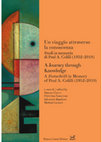
Un viaggio attraverso la conoscenza: Studi in memoria di Paul A. Colilli (1952-2018) / A Journey through Knowledge: A Festschrift in Memory of Paul A. Colilli (1952-2018), 2020
Abstract – Following the debate that began when Alma Sabatini started researching on behalf of th... more Abstract – Following the debate that began when Alma Sabatini started researching on behalf of the National Commission for Equal Opportunities (1986), the present study investigates some issues in gender-inequality in the Italian language, mainly dealing with the lack of the usage of feminine forms of many professional job titles. Teaching Italian in Canada means sometimes facing the fact that some students raise the question of the “unfairness” of the Italian language towards feminine forms. This article focuses on how Italian L1 and L2 speakers perceive such inequalities, by analyzing the results of a questionnaire–shared in universities across Canada–and then reflecting on some solutions that have been adopted to resolve the situation and some suggestions for the future.
Conference Presentations and Invited Talks by Sara Galli, Ph.D.
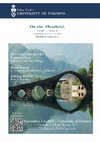
The word “liminality” comes from the Latin līmĕn, meaning ‘threshold’ or ‘entrance’. Līmĕn can al... more The word “liminality” comes from the Latin līmĕn, meaning ‘threshold’ or ‘entrance’. Līmĕn can also mean ‘house’ or ‘dwelling’, and, more provocatively, the beginning or onset of something. The concept “liminality” was developed by French ethnographer Arnold van Gennep (Les rites de passage, 1909) to refer to the ambiguous, disorienting in-between stage that happens during a rite of passage (after “separation” but before “incorporation”), a ritual that indicates a change in someone’s social status. British anthropologist Victor Turner expanded on van Gennep’s concept (cfr. Turner, 1967), arguing that the liminal stage offers a period in which traditional barriers or expectations are dissolved, allowing more freedom regarding one’s identity. The involved individuals, the “liminal personae,” now estranged from the original group but not yet integrated into the new one, experience a period of “structural ‘invisibility’,” becoming “at once no longer classified and not yet classified” (Turner, 1967: 96). This condition, in which hierarchical structures transcend “distinctions of rank, age, kinship position, and […]even sex,” (Turner, 1967: 99-100), offers greater freedom to self-identity, but simultaneously greater confusion: “transitional beings […] have nothing. They have no status, property, insignia, secular clothing, rank, kinship position, nothing to demarcate them structurally from their fellows” (Turner, 1967: 98-99).
More recently, such a topic has been explored to demonstrate that liminality is “a pertinent, even necessary concept for understanding a whole series of contemporary phenomena in a historical period—ours—so variously characterized by constant change, uncertainty, and institutionalized contingency” (Thomassen 39).
La parola “liminarità” deriva dal latino līmĕn, ‘soglia’, ‘ingresso’. Metonimicamente, līmĕn può anche significare ‘casa’ o ‘abitazione’ e, in senso figurato, l’evento introduttivo di un particolare processo o periodo. Il concetto fu sviluppato dall’antropologo Arnold van Gennep (Les rites de passage, 1909) nei suoi studi sui riti di passaggio, atti cerimoniali che segnano il cambiamento di status sociale di un individuo. In questo contesto, il termine “liminare” definisce lo stadio intermedio tra il momento della “separazione” dal precedente status e quello della “reintegrazione”, che identifica il completamento della transizione. Come spiega l’antropologo britannico Victor Turner, che rielabora e approfondisce le teorizzazioni di Van Gennep (cfr. Turner, 1967), la fase liminare coincide con un intervallo di tempo in cui le barriere o le aspettative tradizionali non sono più applicabili. I soggetti coinvolti, le «liminal personae», ormai estranei al gruppo originario ma non ancora parte integrante di quello nuovo, vivono dunque un periodo di «structural “invisibility”», diventando «at once no longer classified and not yet classified» (Turner, 1967: 96). Questa condizione, in cui le strutture gerarchiche trascendono le «distinctions of rank, age, kinship position, and […] even sex» (Turner, 1967: 99-100), offre sicuramente una maggiore libertà di autoidentificazione, ma genera, al tempo stesso, anche confusione e turbamento: «transitional beings […] have nothing. They have no status, property, insignia, secular clothing, rank, kinship position, nothing to demarcate them structurally from their fellows» (Turner, 1967: 98-99).
In anni più recenti il concetto di “liminarità” è stato ricontestualizzato come «a pertinent, even necessary concept for understanding a whole series of contemporary phenomena in a historical period—ours—so variously characterized by constant change, uncertainty, and institutionalized contingency» (Thomassen, 2015: 39). Una prospettiva tanto singolare offre certamente spunti interessanti e innumerevoli possibilità interpretative nel campo degli studi di italianistica largamente intesi.
Outreach Activities by Sara Galli, Ph.D.
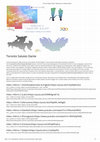
by Elisa Brilli, George P . Ferzoco, Alexander Andrée, Sebastiano Bazzichetto, Alessia Berardi, Brianna Daigneault, Greti Dinkova-Bruun, Konrad Eisenbichler, Paolo Frascà, Sara Galli, Ph.D., Mohammad J Jamali, Ph.D., Eva Plesnik, Nattapol Ruangsri, Lorena Sodano-Flores, and Talia Zajac Commemorating the 700th anniversary of the death of Dante Alighieri, Toronto Salutes Dante featur... more Commemorating the 700th anniversary of the death of Dante Alighieri, Toronto Salutes Dante features more than thirty Canada-based guests who read Dante’s Inferno in various languages, several for the first time. In addition to ten different Italian dialects, there are represented Anishinaabemowin, Arabic, Bulgarian, English, Farsi, French, German, Latin, Mandarin, Portuguese, Québécois, Russian, Sanskrit, Slovak, Spanish, Stoney Nakoda, Swedish, Thai, and Ukrainian. In 15-minute clips, well-known personalities of the Canadian public and cultural life, professors, and Candidates at the University of Toronto, and members of the Italo-Canadian community share their voices and fresh memories of the most important Italian author in world literature. Listen to Dante’s Inferno as you have never heard it before on the Department of Italian Studies’ YouTube channel from March 25th to June 2021.
From an original idea of Elisa Brilli, George Ferzoco, and Nicholas Terpstra, and thanks to the invaluable work of Alice Martignoni and Nattapol Ruangsri (Research Assistants). Sponsored by the Department of Italian Studies, the Emilio Goggio Chair in Italian Studies at the University of Toronto, the Istituto Italiano di Cultura di Toronto, and Villa Charities.
With the participation of (alphabetical order):
A. Andrée (Professor, Centre for Medieval Studies, UofT) https://youtu.be/c7KNumdnWfU
M. Atwood (Writer and UofT Alumna) https://youtu.be/Dck_Medf07Q
S. Bancheri (Professor, Italian Studies, UofT) https://youtu.be/nFHIbUxs2JY
S. Bazzichetto (Uoft Alumnus) https://youtu.be/dCwIMv4DswQ
A. Berardi (Ph.D. Candidate, Centre for Medieval Studies, UofT) https://youtu.be/LESNnTr6eg4
E. Brilli (Professor, Italian Studies & Centre for Medieval Studies, UofT) https://youtu.be/abdojdHQBo4
A.L. Clarkson (Journalist and Stateswoman, and former Governor General of Canada) https://youtu.be/CmyAKJbUsto
B. Daigneault (Ph.D. Candidate, Centre for Medieval Studies, UofT) https://youtu.be/KJaGDS9iSTA
C. Dignard (Ph.D. Candidate, Spanish and Portuguese, UofT) https://youtu.be/1LxCv8mTCto
G. Dinkova-Bruun (Professor, Pontifical Institute) https://youtu.be/Hm4FvkFAAVc
K. Eisenbichler (Emeritus, UofT) https://youtu.be/8zKdgyaHnOk
E. Ferranti (Director Candidate Life, Massey College) https://youtu.be/tszX6lSRgfg
G. Ferzoco (Professor, University of Calgary) https://youtu.be/OGpWK_4wNg0
T. Fimognari (Undergraduate Candidate, UofT) https://youtu.be/cLcCaekbyP4
T. Fox (Ph.D. Candidate, University of Calgary & Translator and Reader in Stoney Nakoda) https://youtu.be/Dck_Medf07Q
P. Frascà (Professor, Italian Studies, UofT) https://youtu.be/p9ylx9xev_0
S. Galli (Ph.D. Candidate, Italian Studies, UofT) https://youtu.be/jQPPIWph_o8
A. Graheli (Professor, Historical Studies & Language Studies, UTM) https://youtu.be/Xi388PgrhiU
M. Jamali (Ph.D. Candidate, Italian Studies, UofT) https://youtu.be/GXG-3txDbdE
P. King (Professor, Philosophy & Centre for Medieval Studies, UofT) https://youtu.be/tOWRHgrwE14
A. Manguel (Writer) https://youtu.be/Dck_Medf07Q
A. Martignoni (Ph.D. Candidate, Italian Studies, UofT) https://youtu.be/oofMThkkxJk
A. Munteanu (Ph.D. Candidate, Linguistics, UofT) https://youtu.be/JnuzzEl95fc
M. Nunno (Translator & Reader in Anishinaabemowin) https://youtu.be/CmyAKJbUsto
W. Ohm (Ph.D. Candidate, German Studies, Uoft) https://youtu.be/zuErC-NMV98
G. Osmat (Ph.D. Candidate, Near & Middle Eastern Civilizations, UofT) https://youtu.be/IenVYWIksvA
E. Plesnik (Ph.D. Candidate, Centre for Medieval Studies, UofT) https://youtu.be/v_jAZJ7vHYw
N. Ruangsri (Ph.D. Candidate, Italian Studies, UofT), several videos
L. Sodano (Ph.D. Candidate, Italian Studies, UofT) https://youtu.be/-M5PvbjPd40
L. Somigli (Professor, Italian Studies, UofT) https://youtu.be/yonwxQsb4hc
R. Sophonpanich (Professor, Thammasat University, Translator & Reader in Thai) https://youtu.be/98QdvI2p02o
M. Stock (Professor, German Studies & Centre for Medieval Studies, UofT) https://youtu.be/8-3Y3xXEd7A
V. Tapia Cruz (Ph.D. Candidate, Spanish and Portuguese, Uoft) https://youtu.be/TSdN_DcxNrM
K. Tarves (Ph.D. Candidate, Slavic Languages and Literatures, UofT) https://youtu.be/Zr-5z6Uftw4
L. Tesi (Ph.D. Candidate, Italian Studies, UofT) https://youtu.be/t5okbQg3PDk
R. Xu (Ph.D. Candidate, Centre for Medieval Studies, UofT) https://youtu.be/AiPwjNFeJzU
A. Zambenedetti (Professor, Italian Studies, UofT) https://youtu.be/bJs4LrvvuO0
T. Zajac (UofT Alumna & Leverhulme Early Career Fellow, University of Manchester)
https://youtu.be/Os6j37jIrmQ
Drafts by Sara Galli, Ph.D.
Honorary president of MIT – Movimento identità trans – Porpora Marcasciano is a witness to the gr... more Honorary president of MIT – Movimento identità trans – Porpora Marcasciano is a witness to the growing Italian trans community's growing changes and language. Her first published volume, "AntoloGaia," is a description of, as Porpora Marcasciano writes, the trip which refers to the journey that started in 1973, as well as the discovery of the social lies (26). Through an honest and objective description of events, Porpora is able to walk us through social changes in Italy and the challenges faced by the Italian trans community. From the initial struggles through the first meetings of the MIT to the approval of Law 164 – which officially gave the courts the power to recognize the new sexual identity of individuals that undergo sex reassignment – in 1982. Porpora recalls her life with a very objective perspective, using a delicate touch when confronting even the more dramatic moments, like the beginnings of the spread of HIV in the trans community, the lack of information, the shame, and the fear that it brought with it. Even if she hides away her feelings behind the facts, we can still see her. She is there, her life, her hopes, and through her language, we can perceive her will in giving voice to the Italian trans community. This paper will focus on the book’s structure which, due to its uniqueness, requires a more careful examination; the historical importance of AntoloGaia; and lastly, its linguistic value.
Book Chapters by Sara Galli, Ph.D.
Italofonia: lingua oltre i confini, 2025
English
This study examines the Italian language and its contemporary presence in Toronto, a city... more English
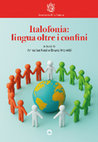
This study examines the Italian language and its contemporary presence in Toronto, a city whose multicultural fabric has long been enriched by Italian migration. Drawing from historical and sociolinguistic perspectives, it traces the evolution of Italian from the early settlements of the late nineteenth century—when multiple regional dialects coexisted—to its consolidation through institutions, the press, and education in the postwar decades. The paper explores the enduring vitality of Italian in the Greater Toronto Area (GTA), sustained by cultural and educational organizations such as the Istituto Italiano di Cultura, Villa Charities, Centro Scuola, CHIN Radio, and the Department of Italian Studies at the University of Toronto. Particular attention is given to emerging community initiatives, including the Accademia dei Ragazzi and AIRIcerca Toronto, which renew intergenerational transmission and professional engagement. The contribution concludes by identifying key challenges and strategies for strengthening Italian’s role within Toronto’s diverse linguistic landscape through collaboration, inclusivity, and innovative outreach.
Italiano
Il presente contributo analizza la presenza e la vitalità contemporanea della lingua italiana a Toronto, città in cui la componente italiana costituisce da oltre un secolo un elemento essenziale del tessuto multiculturale. Dopo un excursus storico sugli insediamenti ottocenteschi e sulle prime forme di italianità urbana, si esamina l’evoluzione linguistica e culturale della comunità, dal periodo fascista al secondo dopoguerra, fino ai giorni nostri. L’articolo evidenzia come l’italiano, oggi diffuso nella Greater Toronto Area, continui a essere sostenuto da una fitta rete di istituzioni accademiche, culturali e mediatiche — tra cui l’Istituto Italiano di Cultura, Villa Charities, il Centro Scuola, CHIN Radio e il Dipartimento di Italianistica dell’Università di Toronto. Particolare attenzione è riservata alle nuove iniziative nate dal basso, come l’Accademia dei Ragazzi e AIRIcerca Toronto, che favoriscono la trasmissione linguistica intergenerazionale e il dialogo professionale. In conclusione, si propongono strategie per il futuro basate su cooperazione, inclusività e innovazione comunicativa.
The Fields of Digital Research: theoretical, methodological and application challenges, 2024
As Ludwig Wittgenstein stated, «the limits of my language are the limits of my world«. Hence the ... more As Ludwig Wittgenstein stated, «the limits of my language are the limits of my world«. Hence the words used by individuals can define their view of society. In the last decade, scholars have discussed how to make the Italian language more inclusive in debates involving native speakers beyond the academic community. The exchanges among users on online platforms such as TikTok and Instagram have generated many linguistic threads. Many forums exhibit hate speech patterns aimed at members of the LGBTQIA+ community. Given that 74.5% of the Italian population use social media, these platforms can serve as a resource to be studied to glimpse contemporary Italian society.
This research investigates the social discourse around online hate speech in Italy, focusing on using offensive words against the LGBTQIA+ community and how people use these terms when participating in public policy debates. Many empirical studies have been conducted to understand how derogatory language can impact different communities, but those with a perspective on Italy and the Italian language are almost absent. Through digital methods and the analysis of data from a search query, we were able to track the use of offensive words on Instagram and TikTok, analysing how users use the leet alphabet and keyword obfuscation to overcome the limitations of algorithms by understanding how the word interpreted is in reality used mainly by members of the LGBTQIA+ community and their allies.



Uploads
Papers by Sara Galli, Ph.D.
Articles by Sara Galli, Ph.D.
Conference Presentations and Invited Talks by Sara Galli, Ph.D.
More recently, such a topic has been explored to demonstrate that liminality is “a pertinent, even necessary concept for understanding a whole series of contemporary phenomena in a historical period—ours—so variously characterized by constant change, uncertainty, and institutionalized contingency” (Thomassen 39).
La parola “liminarità” deriva dal latino līmĕn, ‘soglia’, ‘ingresso’. Metonimicamente, līmĕn può anche significare ‘casa’ o ‘abitazione’ e, in senso figurato, l’evento introduttivo di un particolare processo o periodo. Il concetto fu sviluppato dall’antropologo Arnold van Gennep (Les rites de passage, 1909) nei suoi studi sui riti di passaggio, atti cerimoniali che segnano il cambiamento di status sociale di un individuo. In questo contesto, il termine “liminare” definisce lo stadio intermedio tra il momento della “separazione” dal precedente status e quello della “reintegrazione”, che identifica il completamento della transizione. Come spiega l’antropologo britannico Victor Turner, che rielabora e approfondisce le teorizzazioni di Van Gennep (cfr. Turner, 1967), la fase liminare coincide con un intervallo di tempo in cui le barriere o le aspettative tradizionali non sono più applicabili. I soggetti coinvolti, le «liminal personae», ormai estranei al gruppo originario ma non ancora parte integrante di quello nuovo, vivono dunque un periodo di «structural “invisibility”», diventando «at once no longer classified and not yet classified» (Turner, 1967: 96). Questa condizione, in cui le strutture gerarchiche trascendono le «distinctions of rank, age, kinship position, and […] even sex» (Turner, 1967: 99-100), offre sicuramente una maggiore libertà di autoidentificazione, ma genera, al tempo stesso, anche confusione e turbamento: «transitional beings […] have nothing. They have no status, property, insignia, secular clothing, rank, kinship position, nothing to demarcate them structurally from their fellows» (Turner, 1967: 98-99).
In anni più recenti il concetto di “liminarità” è stato ricontestualizzato come «a pertinent, even necessary concept for understanding a whole series of contemporary phenomena in a historical period—ours—so variously characterized by constant change, uncertainty, and institutionalized contingency» (Thomassen, 2015: 39). Una prospettiva tanto singolare offre certamente spunti interessanti e innumerevoli possibilità interpretative nel campo degli studi di italianistica largamente intesi.
Outreach Activities by Sara Galli, Ph.D.
From an original idea of Elisa Brilli, George Ferzoco, and Nicholas Terpstra, and thanks to the invaluable work of Alice Martignoni and Nattapol Ruangsri (Research Assistants). Sponsored by the Department of Italian Studies, the Emilio Goggio Chair in Italian Studies at the University of Toronto, the Istituto Italiano di Cultura di Toronto, and Villa Charities.
With the participation of (alphabetical order):
A. Andrée (Professor, Centre for Medieval Studies, UofT) https://youtu.be/c7KNumdnWfU
M. Atwood (Writer and UofT Alumna) https://youtu.be/Dck_Medf07Q
S. Bancheri (Professor, Italian Studies, UofT) https://youtu.be/nFHIbUxs2JY
S. Bazzichetto (Uoft Alumnus) https://youtu.be/dCwIMv4DswQ
A. Berardi (Ph.D. Candidate, Centre for Medieval Studies, UofT) https://youtu.be/LESNnTr6eg4
E. Brilli (Professor, Italian Studies & Centre for Medieval Studies, UofT) https://youtu.be/abdojdHQBo4
A.L. Clarkson (Journalist and Stateswoman, and former Governor General of Canada) https://youtu.be/CmyAKJbUsto
B. Daigneault (Ph.D. Candidate, Centre for Medieval Studies, UofT) https://youtu.be/KJaGDS9iSTA
C. Dignard (Ph.D. Candidate, Spanish and Portuguese, UofT) https://youtu.be/1LxCv8mTCto
G. Dinkova-Bruun (Professor, Pontifical Institute) https://youtu.be/Hm4FvkFAAVc
K. Eisenbichler (Emeritus, UofT) https://youtu.be/8zKdgyaHnOk
E. Ferranti (Director Candidate Life, Massey College) https://youtu.be/tszX6lSRgfg
G. Ferzoco (Professor, University of Calgary) https://youtu.be/OGpWK_4wNg0
T. Fimognari (Undergraduate Candidate, UofT) https://youtu.be/cLcCaekbyP4
T. Fox (Ph.D. Candidate, University of Calgary & Translator and Reader in Stoney Nakoda) https://youtu.be/Dck_Medf07Q
P. Frascà (Professor, Italian Studies, UofT) https://youtu.be/p9ylx9xev_0
S. Galli (Ph.D. Candidate, Italian Studies, UofT) https://youtu.be/jQPPIWph_o8
A. Graheli (Professor, Historical Studies & Language Studies, UTM) https://youtu.be/Xi388PgrhiU
M. Jamali (Ph.D. Candidate, Italian Studies, UofT) https://youtu.be/GXG-3txDbdE
P. King (Professor, Philosophy & Centre for Medieval Studies, UofT) https://youtu.be/tOWRHgrwE14
A. Manguel (Writer) https://youtu.be/Dck_Medf07Q
A. Martignoni (Ph.D. Candidate, Italian Studies, UofT) https://youtu.be/oofMThkkxJk
A. Munteanu (Ph.D. Candidate, Linguistics, UofT) https://youtu.be/JnuzzEl95fc
M. Nunno (Translator & Reader in Anishinaabemowin) https://youtu.be/CmyAKJbUsto
W. Ohm (Ph.D. Candidate, German Studies, Uoft) https://youtu.be/zuErC-NMV98
G. Osmat (Ph.D. Candidate, Near & Middle Eastern Civilizations, UofT) https://youtu.be/IenVYWIksvA
E. Plesnik (Ph.D. Candidate, Centre for Medieval Studies, UofT) https://youtu.be/v_jAZJ7vHYw
N. Ruangsri (Ph.D. Candidate, Italian Studies, UofT), several videos
L. Sodano (Ph.D. Candidate, Italian Studies, UofT) https://youtu.be/-M5PvbjPd40
L. Somigli (Professor, Italian Studies, UofT) https://youtu.be/yonwxQsb4hc
R. Sophonpanich (Professor, Thammasat University, Translator & Reader in Thai) https://youtu.be/98QdvI2p02o
M. Stock (Professor, German Studies & Centre for Medieval Studies, UofT) https://youtu.be/8-3Y3xXEd7A
V. Tapia Cruz (Ph.D. Candidate, Spanish and Portuguese, Uoft) https://youtu.be/TSdN_DcxNrM
K. Tarves (Ph.D. Candidate, Slavic Languages and Literatures, UofT) https://youtu.be/Zr-5z6Uftw4
L. Tesi (Ph.D. Candidate, Italian Studies, UofT) https://youtu.be/t5okbQg3PDk
R. Xu (Ph.D. Candidate, Centre for Medieval Studies, UofT) https://youtu.be/AiPwjNFeJzU
A. Zambenedetti (Professor, Italian Studies, UofT) https://youtu.be/bJs4LrvvuO0
T. Zajac (UofT Alumna & Leverhulme Early Career Fellow, University of Manchester)
https://youtu.be/Os6j37jIrmQ
Drafts by Sara Galli, Ph.D.
Book Chapters by Sara Galli, Ph.D.
This study examines the Italian language and its contemporary presence in Toronto, a city whose multicultural fabric has long been enriched by Italian migration. Drawing from historical and sociolinguistic perspectives, it traces the evolution of Italian from the early settlements of the late nineteenth century—when multiple regional dialects coexisted—to its consolidation through institutions, the press, and education in the postwar decades. The paper explores the enduring vitality of Italian in the Greater Toronto Area (GTA), sustained by cultural and educational organizations such as the Istituto Italiano di Cultura, Villa Charities, Centro Scuola, CHIN Radio, and the Department of Italian Studies at the University of Toronto. Particular attention is given to emerging community initiatives, including the Accademia dei Ragazzi and AIRIcerca Toronto, which renew intergenerational transmission and professional engagement. The contribution concludes by identifying key challenges and strategies for strengthening Italian’s role within Toronto’s diverse linguistic landscape through collaboration, inclusivity, and innovative outreach.
Italiano
Il presente contributo analizza la presenza e la vitalità contemporanea della lingua italiana a Toronto, città in cui la componente italiana costituisce da oltre un secolo un elemento essenziale del tessuto multiculturale. Dopo un excursus storico sugli insediamenti ottocenteschi e sulle prime forme di italianità urbana, si esamina l’evoluzione linguistica e culturale della comunità, dal periodo fascista al secondo dopoguerra, fino ai giorni nostri. L’articolo evidenzia come l’italiano, oggi diffuso nella Greater Toronto Area, continui a essere sostenuto da una fitta rete di istituzioni accademiche, culturali e mediatiche — tra cui l’Istituto Italiano di Cultura, Villa Charities, il Centro Scuola, CHIN Radio e il Dipartimento di Italianistica dell’Università di Toronto. Particolare attenzione è riservata alle nuove iniziative nate dal basso, come l’Accademia dei Ragazzi e AIRIcerca Toronto, che favoriscono la trasmissione linguistica intergenerazionale e il dialogo professionale. In conclusione, si propongono strategie per il futuro basate su cooperazione, inclusività e innovazione comunicativa.
This research investigates the social discourse around online hate speech in Italy, focusing on using offensive words against the LGBTQIA+ community and how people use these terms when participating in public policy debates. Many empirical studies have been conducted to understand how derogatory language can impact different communities, but those with a perspective on Italy and the Italian language are almost absent. Through digital methods and the analysis of data from a search query, we were able to track the use of offensive words on Instagram and TikTok, analysing how users use the leet alphabet and keyword obfuscation to overcome the limitations of algorithms by understanding how the word interpreted is in reality used mainly by members of the LGBTQIA+ community and their allies.