Papers and Chapters by Sean Yom
Global Studies Quarterly, 2026
Saudi Arabia and the United Arab Emirates undertook dramatic foreign policy shifts after the 2011... more Saudi Arabia and the United Arab Emirates undertook dramatic foreign policy shifts after the 2011-12 Arab Spring. Long regarded by Western observers as conservative and insular kingdoms, these monarchical states more aggressively projected military force outwards, engaged the increasingly multipolar international system, and executed lavish nation-branding schemes. This paper argues the rise of this new Gulf model of foreign relations reflected not just macrostructural variables, such as oil wealth and declining US hegemony, but also domestic societal interests. Among the Saudi and Emirati publics, popular demands for performance legitimacy as well as ontological security narratives linking state behavior to national stability played a substantial role in accounting for how these royal autocracies adapted to regional crises and began acting like middle powers. Such a finding contravenes prevailing views that mass interests have little influence upon foreign policy in authoritarian settings, while bringing two critical Middle East cases into theoretical discussions about the evolving positionality of supposedly weak or vulnerable states in the modern era. Arabia Saudita y los Emiratos Árabes Unidos emprendieron cambios drásticos con relación a su política exterior después de la Primavera Árabe de 2011-2012. Durante mucho tiempo ambos Estados fueron considerados por los observadores occidentales como reinos conservadores y aislados. Sin embargo, a raíz de estos cambios, estos Estados monárquicos proyectaron su fuerza militar hacia el exterior de manera más agresiva, participaron en un sistema internacional cada vez más multipolar y llevaron a cabo elaborados planes de promoción de la nación. Este artículo argumenta que el surgimiento de este nuevo modelo de relaciones exteriores por parte de los países del Golfo reflejó no solo variables macroestructurales, como la riqueza petrolera y la disminución de la hegemonía estadounidense, sino también los intereses de las sociedades nacionales. Para los públicos saudita y emiratí, las demandas populares en materia de legitimidad basada en el desempeño, así como las narrativas en materia de seguridad ontológica que vinculan el comportamiento del Estado con la estabilidad nacional, jugaron un papel importante para explicar cómo estas monarquías autoritarias se adaptaron a las crisis regionales y comenzaron a actuar como potencias medias. Este hallazgo contraviene las opiniones predominantes que defienden que los intereses del público tienen poca influencia sobre la política exterior en contextos autoritarios. Al mismo tiempo, incorporamos dos casos cruciales, procedentes de Oriente Medio, en las discusiones teóricas sobre la posición, que se encuentra actualmente en evolución, de los Estados supuestamente débiles o vulnerables en la era moderna. L'Arabie saoudite et les Émirats arabes unis ont entrepris de spectaculaires changements de politique étrangère après le Printemps arabe (2011-2012). Longtemps considérés comme des royaumes conservateurs et insulaires par les observateurs occidentaux, ces États monarchiques ont projeté vigoureusement leur puissance militaire vers l'extérieur, participé au système international de plus en plus multipolaire et exécuté des plans extravagants de branding de leur nation. Cet article affirme que l'essor de ce nouveau modèle des relations étrangères du Golfe reflète non seulement des variables macrostructurelles, comme la richesse issue du pétrole et le déclin de l'hégémonie états-unienne, mais aussi des intérêts sociétaux nationaux. Chez les publics saoudien et émirati, les demandes populaires de légitimité de la performance ainsi que de récits de sécurité ontologique reliant le comportement étatique à la stabilité de la nation jouent un rôle important quand il s'agit d'expliquer la façon dont ces autocraties royales se sont adaptées aux crises régionales et ont commencé à agir comme des puissances intermédiaires. Cette conclusion contredit les opinions majoritaires selon lesquelles les intérêts des masses ont peu d'effets sur la politique étrangère dans des contextes autoritaires, tout en confrontant sur le plan théorique deux cas critiques du Moyen-Orient par rapport à l'évolution de la positionnalité d'États supposément faibles ou vulnérables à l'ère moderne.
Routledge Handbook of Civil Society in the Middle East and North Africa, 2026
This chapter covers how, against the backdrop of authoritarian regimes in the Arab world whose le... more This chapter covers how, against the backdrop of authoritarian regimes in the Arab world whose leaders fell to popular insurrections during the 2010s, Jordan stands as an exception. It emphasizes how Jordan’s political past and present are filled with contentious episodes in which civic forces challenged the ruling Hashemite monarchy, and were accommodated or suppressed after repeated confrontations. This chapter reviews the history of civil society and popular mobilization in this country. It highlights the power structures and institutional strategies that sustain authoritarian rule there. It further identifies several crucial episodes of state-society struggle over the past century, in which organized movements and associational actors sought to curtail royal power.
Mediterranean Politics, 2025
Many autocracies pledge to curb corruption within public institutions-and fail. Yet the burgeonin... more Many autocracies pledge to curb corruption within public institutions-and fail. Yet the burgeoning literature on this topic overlooks an intriguing puzzle: while anti-corruption campaigns often do not clean up politics as promised, they still punish at least some perpetrators for their financial and political abuses. What determines how much corruption autocrats target, and whom they punish? We provide novel answers with a multi-method analysis of a crucial case, the Hashemite Kingdom of Jordan. We leverage new data from public investigations, local media sources, and municipal audits to assess how the Jordanian regime has tackled corruption over the past two decades. We find that Jordan's limited anti-corruption efforts prioritize punishing petty corruption involving low-level civil servants, rather than grand corruption by powerful regime elites. We argue that such selectivity reflects the personalistic nature of Jordan's regime, given the importance of sustaining a solidary loyal elite that supports the king. We further find through statistical tests that despite their selective nature, these anti-corruption measures still abide by a strategic logic of timing, which underscores their political value. Anti-corruption investigations are more likely to occur after major protests and prior to elections, reflecting a desire to win over public sympathy.

Jordan: Politics in an Accidental Crucible is the most comprehensive and rigorous study of politi... more Jordan: Politics in an Accidental Crucible is the most comprehensive and rigorous study of politics in the Hashemite Kingdom of Jordan published in English. This accessible roadmap explores Jordan’s government, society, economy, and foreign policy in a systematic manner, giving readers an immersive tour of this underappreciated but vital Arab country since its founding over a century ago. Uniquely, it combines theoretical work from political science, sociology, and other scholarly fields with firsthand knowledge of Jordan garnered over decades of study to guide readers to the most important insights. Emphatic attention falls upon not just the leaders, groups, and movements that have waged political struggles within the kingdom, but also bigger thematic topics that show how Jordan’s experiences mirror the tribulations of the modern Middle East. They include the legacies of colonialism, the malleable nature of citizenship, the weakness of national identity, strategies of authoritarian rule, sophisticated tactics of repression, popular democratic uprisings, civil society protests, economic development, neoliberal reforms, geopolitical crises, regional wars, and Western hegemony. These issues underscore the urgency of grasping contemporary Jordanian affairs. Once relegated to the global sidelines as a small Arab state, Jordan has catapulted to frontline relevance in the twenty-first century. The country touches upon every major crisis that has rocked the Middle East in recent generations, from revolutions and terrorism to the Israeli-Palestinian conflict. How opposition and uprisings unfold within its borders will likewise shape the future of democracy versus dictatorship in the Arab world.
Middle East Law and Governance, 2024
Jordan is one of the most militarized states in the world. Why? Traditional explanations hold tha... more Jordan is one of the most militarized states in the world. Why? Traditional explanations hold that the kingdom's bloated armed forces and security institutions reflect authoritarian dynamics and frequent regional wars. However, such popular arguments falter. Jordan has not been a primary combatant to any major conflict for a half-century, and it is no more authoritarian than other Arab autocracies. This essay instead suggests that militarization begets militarization. In political terms, Jordan's coercive apparatus underpins the tribal coalitional bargain that sustains the Hashemite monarchy. It also paradoxically breeds the very domestic insecurity that it purports to prevent. By exhausting the economy, extreme militarization has spawned public unrest spurred by high unemployment and fiscal crises. And by necessitating a pro-Western foreign policy, it has attracted regional terrorism and triggered further domestic dissent. In sum, Jordanian militarization persists not from exogenous structural forces, but the deliberate choices of its political architects.
Making Sense of the Arab State, 2024
This chapter uses the case of Jordan and the controversy surrounding the Disi Water Conveyance sy... more This chapter uses the case of Jordan and the controversy surrounding the Disi Water Conveyance system (DWC) to problematize how social forces contest specific practices of governance and state power. Detailing the attacks perpetuated by tribal groups that delayed the DWC’s construction during 2010-13 and resulted in a half-billion-dollar lawsuit, it argues that dualistic conceptions of stateness--such as strong versus weak states, or high versus low capacity to govern--lack utility in explaining this episode of violence. The wider question is why some citizens choose to disobey legal rules impressed upon them. Contestations against state power do not necessarily signal the collapse of any institution or the instability of political structures. Instead, they show that the experience of stateness can be extremely uneven, even in seemingly stable authoritarian countries. Noncompliance against legal edicts issued by an autocratic regime, including in sensitive areas such as the provision of public goods like water, demonstrates the limited nature of post-colonial statehood. Those different visions of morally appropriate behavior drove tribal violence against the Disi Water Conveyance system, the most expensive and complicated infrastructural project in Jordanian history.
Full citation: Sean Yom, “Water, Stateness, and Tribalism in Jordan: The Case of the Disi Water Conveyance Project,” in Making Sense of the Arab State, eds. Steven Heydemann and Marc Lynch (Ann Arbor, MI: University of Michigan Press, 2024), 247-273.
Middle East Journal, 2023
Journal of Democracy, 2023
Kuwait is a democratic outlier in the Middle East. In this oil-rich Muslim Arab state, the ruling... more Kuwait is a democratic outlier in the Middle East. In this oil-rich Muslim Arab state, the ruling Sabah monarchy claims considerable executive authority, but it also coexists with a powerful, elected parliament and well-mobilized civil society. This oft-overlooked hybrid system is rooted in liberal norms of pluralism and openness, and enables opposition blocs to advance democratic reforms and rebuff the threat of repression. A transition towards parliamentary democracy, a rarity in the Arab world, is possible. However, this will require overcoming intense cleavages within the royal family, across social groups, and between the royal autocracy and society itself.
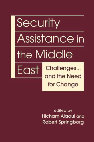
Security Assistance in the Middle East: Challenges and the Need for Change. Edited by Bob Springborg and Hicham Alaoui. Lynne Rienner Publishers, 2023
NOTE: EMBARGOED BY PUBLISHER.
Since the late 1950s, the United States has furnished Jordan a... more NOTE: EMBARGOED BY PUBLISHER.
Since the late 1950s, the United States has furnished Jordan a heavy stream of security assistance, meaning economic funds, military weaponry, specialized training, skills transfers, and other technical support designed to bolster the Jordanian Armed Forces. What has this accomplished? This book chapter argues that the rhetoric of security assistance, which focuses on building partner capacity and enhancing field-based competency, obscures the deeper political logic of sustaining the coercive apparatus of a client state. By virtue of its historical origins and social foundations, the Jordanian military guarantees authoritarian rule in the Hashemite Kingdom through mechanisms of welfarism, communalism, and identity-building.
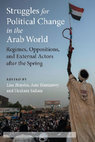
Struggles for Political Change in the Arab World: Regimes, Oppositions, and External Actors after the Spring. Edited by Lisa Blaydes, Amr Hamzawy, and Hesham Sallam. University of Michigan Press, 2022
Jordan has experienced a historically contentious decade since the Arab Spring. Youth activists ... more Jordan has experienced a historically contentious decade since the Arab Spring. Youth activists in hirak groups have been demonstrating, marching, and protesting more than ever. Yet such mobilization has not generated a nationally organized movement, one with permanent leadership and mass structure. This chapter explains why by inverting the moral economy and normative expectations of normalized protest in an era of uprising. The new generation of activism prefers horizontal and informal modes of resistance that shy away from the ideological ideals of traditional opposition actors--a preference borne from the adaptive learning and social origins of activist youths. They seek to avoid the exigencies of repression and identity politics, but also find social meaning in the fluidity and formlessness of grassroots networks. By contrast, they avoid the bureaucratic formalization of more established actors like civil society associations and political parties, which lack credibility as effective vehicles for collective dissent.
The Political Science of the Middle East: Theory and Research since the Arab Uprisings. Eds. Marc Lynch, Jillian Schwedler, and Sean Yom. Oxford University Press, 2022
This chapter explains how strategies and forms of authoritarian rule in the MENA have evolved gre... more This chapter explains how strategies and forms of authoritarian rule in the MENA have evolved greatly since the Arab uprisings. Sidestepping normative expectations for democracy and democratization, the chapter shows the primary pathways of change and persistence for many dictatorships. Many autocracies have become personalistic, bucking assumptions that rational leaders should protect themselves with hegemonic parties rather than cronies and sycophants. Most have become far more repressive since the uprisings, despite the costs of ramping up coercion. Others have catalyzed new modes of cultural domination that induce compliance through ideology. This chapter examines the shift in these different domestic practices, showing also at the external level how many regimes have also become imbricated in new networks of international support. These developments enrich prevailing theories about authoritarianism but also show how quickly regional events outpace them.
European Journal of International Relations, 2020
The 2011-2012 Arab Spring posed an existential threat to the Gulf Cooperation Council's six monar... more The 2011-2012 Arab Spring posed an existential threat to the Gulf Cooperation Council's six monarchies. A major response was the 2012 GCC Internal Security Pact, an innovative project to enhance cross-border repression of domestic opposition and thus bolster collective security. Yet despite its historic weakness, ongoing domestic unrest, and initial enthusiasm for the agreement, Kuwait's monarchy did not ultimately ratify the accord. Building on theories of foreign policy roles and identity, this article presents an ideational explanation for this puzzle. The Security Pact failed because it sparked identity contestation. For many Kuwaitis, the prospect of the Sabah monarchy imposing this scheme for greater repression was incompatible with the regime's historical role of tolerating domestic pluralism and protecting Kuwait from foreign pressures. This role conception of a tolerant protector flowed from historical understandings and collective memory and was cognitively tied to a national self-conception of "Kuwaiti-ness." The mobilizational scope and symbolic power of this popular opposition convinced the regime to acquiesce, despite possessing the strategic incentive and resources to impose the treaty by force. The Kuwaiti case therefore exemplifies how domestic contestation over regime identities and roles can constrain foreign policy behavior, even in authoritarian states facing severe crises of insecurity.
Economic Shocks and Authoritarian Stability: Duration, Financial Control, and Institutions, ed. Victor Shih (University of Michigan Press), 2020
Jordan’s monarchical autocracy weathered devastating financial crisis in the late 1980s that thre... more Jordan’s monarchical autocracy weathered devastating financial crisis in the late 1980s that threatened its coalitional base of longstanding tribal supporters. Afterwards, the regime began shifting away from its historic tribal constituencies in favor of a narrower stratum of new business elites, in line with neoliberal economic restructuring. Yet neither fiscal shock nor coalitional realignments converted tribal communities into hotbeds of radical opposition. This chapter argues that inherited institutional loyalties and fear of Palestinian domination has operated to keep most tribal Jordanians tied to the ruling monarchy, even during circumstances that have imperiled their traditionally privileged status. It also notes the centrality of foreign aid in financing tribal patronage, as well as the fact that monarchist rule rather than ruling party institutions have helped this autocracy maintain stability during hard times. By tracing the colonial origins and development of the tribal-state compact, and then exploring its crisis and recalibration since the 1990s, the chapter accentuates that early incorporation into ruling political institutions, fueled along the way by ethnocratic fear wrought by social competition, can generate long-lasting legacies that can outlive even the worst economic turbulence.
Global Policy Journal, 2020
The Trump administration's foreign policy is often perceived as an isolationist ideology that has... more The Trump administration's foreign policy is often perceived as an isolationist ideology that has radically reversed American global leadership in a matter of years. In the Middle East, critics have harangued the Trump Doctrine as an even hastier surrender of the US hegemony that has defined regional order since the 1980s. In reality, American interest in this region has been declining for a decade as expressed by its rising reluctance to leverage its economic and military supremacy to constrain, regulate, and destroy perceived foes as it once did. This waning interventionism precedes the Trump Doctrine. It stems not from any ideological turn, or the financial and military exhaustion of a cresting superpower, but rather a structural dynamic: the Middle East no longer generates credible threats against the US. Whereas in the past alarmist fears of communism and energy insecurity propelled Washington's regional imperium, today the perceived enemies of US interests -- radical Islamism and Iran -- do not endanger the political institutions and economic prosperity of American society. Absent a catastrophic terrorist attack, the US will continue to relinquish its hegemonic mantle, turning away from overt interventionism as the logic of coercively dominating a region of diminishing importance runs its course.
PS: Political Science and Politics, 2018
As a pillar of Data Access and Research Transparency (DA-RT), analytic transparency calls for rad... more As a pillar of Data Access and Research Transparency (DA-RT), analytic transparency calls for radical honesty about how political scientists infer conclusions from their data. However, honesty about one's research practices often means discarding the linguistic template of deductive proceduralism that structures most writing, which in turn diminishes the prospects for successful publication. This dissonance reflects a unique dilemma: transparency initiatives reflect a vision of research drawn from the biomedical and natural sciences, and struggle with the messier, iterative, and open-ended nature of political science scholarship. Analytic transparency requires not only better individual practices, such as active citations, but also institutional strategies that reward radical honesty. Journals can provide authors with protected space to reveal research practices, further blind the review process, and experiment with special issues. More broadly, analytic openness can be mandated through procedural monitoring, such as real-time recording of research activities and keystroke logging for statistical programs.
Taiwan Journal of Democracy, 2018
The Gulf Cooperation Council (GCC) is an authoritarian regional organization whose unity among it... more The Gulf Cooperation Council (GCC) is an authoritarian regional organization whose unity among its six constituent kingdoms of Saudi Arabia, Kuwait, Bahrain, Qatar, United Arab Emirates, and Oman waxes and wanes in cyclical fashion. Historically, periods of cross-regime cohesion have been followed by defection. This essay examines the GCC since the Arab Spring, characterized by crisis-fueled unity, followed by sharp divergence from Kuwait and Qatar in two regards: Kuwait by refusing to ratify an internal security pact that would have transnationalized standards of repression, and Qatar by maintaining an activist foreign policy that defied GCC consensus by engaging Iran, Islamists, and other GCC foes. Unlike conventional neorealist explanations, this essay argues that such small state defections from regional order stem not from a desire to compensate for security weaknesses but rather from an effort to protect their underlying regime identities. In Kuwait, constitutive norms of domestic pluralism and openness, rooted in historical tradition, so permeates the Sabah dynasty and its societal linkages that integrating Gulf standards of coercion is seen as profoundly incompatible. In Qatar, a new relational understanding of the Thani monarchy as an activist global force, distinct from its Gulf peers, negates the impulse for deeper regional integration. The reassertion of these regime identities helps explain resistance to regionalism even when bandwagoning with the GCC majority would objectively enhance state survival. In sum, domestic order trumps regional order.
CTC Sentinel, 2017
Youth radicalization by Islamist extremists poses a domestic security challenge for Jordan, a key... more Youth radicalization by Islamist extremists poses a domestic security challenge for Jordan, a key U.S. ally and crucial link in the campaign against the Islamic State. Jordanian policies aimed at neutralizing this jihadi threat have long emphasized bolstering the government's policing capabilities and control over society. Yet ongoing terrorist attacks carried out by Jordanian youths suggest this conventional approach is not working. Economic deprivation, substandard education, and the presence of radical Islamist discourse are part of the problem, but the fundamental concern is that Jordan's booming youth population has no emotive attachment to Jordanian identity and thus little stake in political order. Recent research by the authors in Jordan makes clear that young Jordanians are susceptible to radicalization not just because Islamist radicalism seems so strong, but because the political alternative-everyday life as a Jordanian citizen-is so weak. This creates a compelling argument for more political engagement with youngsters as part of a comprehensive counterterrorism strategy.
Journal of Democracy, 2017
Ruling monarchies in Morocco and Jordan outlasted the Arab Spring through familiar tactics such a... more Ruling monarchies in Morocco and Jordan outlasted the Arab Spring through familiar tactics such as halfhearted reforms, as well as upgraded strategies of management. No longer intent on avoiding elections, now these regimes welcome them in order to expose opposition as too incompetent to govern even when given the opportunity. They no longer deny royalist absolutism to the public, but rather embrace it as the ideal guarantor of normalcy and stability. Adapting back, however, is a new generation of youth activists who elude their regimes’ grasp and radically challenge the legitimacy of monarchical governance. The potential for revolution still exists.
Chinese Political Science Review, 2016
New transparency initiatives emerging from Western political science make an ill-fitting standard... more New transparency initiatives emerging from Western political science make an ill-fitting standard for global comparativists who serve as experts in countries and regions-that is, area specialists. This study explores the origins of the current push for greater research transparency, including its underlying norms and genesis in the natural sciences. Noting its strict adherence to a model of deductive proceduralism, I then show how area-focused comparative political scholarship clashes with newfound demands for analytic transparency due to fundamental differences in its real-world practice-that is, how explanations are constructed and evidence is analyzed. Rather than a linear step-by-step approach emphasizing hypothesis confirmation, much area studies work thrives through iterative engagements between theory and evidence in which researchers craft persuasive explanations by repeatedly revising propositions, reconsidering data, and questioning assumptions over time. Squaring this reality with the idealization of enhanced transparency means one of two things: the diminishment of area studies within comparative politics, or the collective lying of many scholars when it comes to divulging how they came to their ultimate causal conclusions.
Government and Opposition, 2015
This comprehensive review essay ties together the latest scholarly interventions from the study o... more This comprehensive review essay ties together the latest scholarly interventions from the study of the Arab Spring. It finds that beyond a mass of descriptive generalizations, the best works on the uprisings focus upon three questions. First, how did the Arab Spring begin – that is, what were the causative origins of popular mobilization in these non-democratic states? Second, how did national insurrections that varied in length and escalation become a truly regional wave of contention, spreading so quickly across borders? Third, why did regime trajectories and outcomes vary so widely, from revolutionary insurrections to leadership survival to civil war?



Uploads
Papers and Chapters by Sean Yom
Full citation: Sean Yom, “Water, Stateness, and Tribalism in Jordan: The Case of the Disi Water Conveyance Project,” in Making Sense of the Arab State, eds. Steven Heydemann and Marc Lynch (Ann Arbor, MI: University of Michigan Press, 2024), 247-273.
Since the late 1950s, the United States has furnished Jordan a heavy stream of security assistance, meaning economic funds, military weaponry, specialized training, skills transfers, and other technical support designed to bolster the Jordanian Armed Forces. What has this accomplished? This book chapter argues that the rhetoric of security assistance, which focuses on building partner capacity and enhancing field-based competency, obscures the deeper political logic of sustaining the coercive apparatus of a client state. By virtue of its historical origins and social foundations, the Jordanian military guarantees authoritarian rule in the Hashemite Kingdom through mechanisms of welfarism, communalism, and identity-building.