Papers by Sibel Karadağ
Comparative Migration Studies, 2019
This article seeks to "decolonize" the externalization project of European borders by focusing on... more This article seeks to "decolonize" the externalization project of European borders by focusing on the subjectivity of Turkey as being a long-standing candidate country, seeking to be a "regional power" in the Middle East and increasingly moving into undemocratic rule. The study suggests that externalization project of European borders does not only move outwards from the European center, and then straightforwardly get implemented by the passive "others". The case of Turkey epitomizes that the "others" are geopolitical subjects with their counter-discourses and strategies as well as their co-constitutive roles in shaping the very framework of the process. The study adopts an implementation perspective with the aim of providing nuanced local details about how Turkish border guards act, interpret, internalize or challenge the border externalization policies.
The Association for Migration Research , 2021
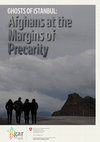
The report examines various forms of precarious conditions of Afghan population that constantly p... more The report examines various forms of precarious conditions of Afghan population that constantly proliferates both during their dangerous journeys as well as lives in Istanbul. While they represent the longest-displaced and dispossessed population in the world, Afghans have not yet received the attention they deserve from the international community. By highlighting a wider international infrastructure reproducing the precarity of Afghan population, this report turns the spotlight on the city of Istanbul and analyzes the circumstances in which Afghans work under extremely cruel conditions, live a totally isolated and invisible life without legal status and are completely abandoned by the international community and civil society. The report firstly reanimates all the steps of Afghans’ journeys from Afghanistan on the way to Istanbul by portraying and visualizing their treacherous routes. Then, the reproduction of various levels of precarity in the city of Istanbul is scrutinized within the contexts of their bodily and ascetic labor force, invisible mobility, fear of deportation and abandonment by the regimes of international protection. The report is based on in-depth interviews conducted with Afghans in the districts of Zeytinburnu, Esenyurt, Tuzla and Beykoz.
Geopolitics, 2020
This Forum aims to push existing debates in critical border and migration studies over the featur... more This Forum aims to push existing debates in critical border and migration studies over the featuring of morals, ethics and rights in everyday practices relating to the governance of the mobility of non-citizen populations. Its contributors steer away from the actual evaluation or advocacy of the good/just/ethical, focusing instead on the sociological examination of morals and ethics in practice, i.e. how actors understand morally and ethically the border and migration policies they implement or resist. A proliferating interest in the discursive and non-discursive materialisation of moral and ethical elements in asylum and migration policies has examined the intertwinement of care and control logics underlying the management of refugee camps, borders and borderzones, and hotspots alongside the deployment of search-and-rescue operations. Nevertheless, recent research has shown the need to unpack narratives and actions displaying values and symbols that are not necessarily encompassed within this intertwinement of compassion and repression. We argue that there is a need to pay more attention to the diversity, plurality and the operation of morality, ethics and rights in settings and geographies, and of including a diversity of actors both across and beyond EUrope.
Comparative Migration Studies, 2019
This article seeks to "decolonize" the externalization project of European borders by focusing on... more This article seeks to "decolonize" the externalization project of European borders by focusing on the subjectivity of Turkey as being a long-standing candidate country, seeking to be a "regional power" in the Middle East and increasingly moving into undemocratic rule. The study suggests that externalization project of European borders does not only move outwards from the European center, and then straightforwardly get implemented by the passive "others". The case of Turkey epitomizes that the "others" are geopolitical subjects with their counter-discourses and strategies as well as their co-constitutive roles in shaping the very framework of the process. The study adopts an implementation perspective with the aim of providing nuanced local details about how Turkish border guards act, interpret, internalize or challenge the border externalization policies.
Turkish Studies, 2018
This paper aims to investigate the Afghan-Turkish-European region migration
system in light of mi... more This paper aims to investigate the Afghan-Turkish-European region migration
system in light of migration system theory, which provides a comprehensive
framework by asking the question of how a set of linkages including some
macro-, meso- and micro-level variables relate to the larger context of
migratory settings. Relating the roles of various structures, institutions and
networks to the operation of the social, political and economic relationships,
it seeks to analyze the dynamics of Afghan migration heading to Turkey and
Europe in a historically contextualized way. The paper argues that one must
focus on the root causes of flows, which are related to the presence of
fragility of the Afghan state together with the continuation of flows via
networks enabling the maintenance of migrants’ links to home, transit and
destination countries.
Toplum ve Bilim, 2017
In the last three decades, a vibrant and vast literature of critical security studies has analyze... more In the last three decades, a vibrant and vast literature of critical security studies has analyzed and criticized the construction of migration as a security issue in Europe. This article aims to provide an overview of this literature with a view toward assessing its relevance in the context of the contemporary refugee crisis facing Europe. In particular, four core critical security concepts will be introduced: securitization, societal security, security technologies, and desecuritization. The securitization theory conceptualizes security as a speech act and thereby a self-referential discursive practice in which an issue is becomes securitized and presented as a “threat” against the referent object regardless to a real existential threat. Societal security is one of the sectors introduced by the securitization theory where an issue is viewed as a “potential threat” to the identity, welfare and “homogeneity” of a society. The process of securitization is not limited to the discursive acts, but also involves the security technologies of control in everyday practice of policies embedded into technologies of electronic walls, visa procedures, finger prints and biometric technologies for identifying and controlling activities. Finally, the study will touch upon the ways in which an issue is desecuritized and “normalized” by moving it into the ordinary sphere and hence, withdrawing it from the realm of exception.
Conference Presentations by Sibel Karadağ

Mobility from Turkey to Europe: Humanitarian Dilemmas
12th Pan-European Conference on International Relations, Prague, Czech Republic, 2018
This paper seeks to analyze the character of humanitarian practice at the European borders. The c... more This paper seeks to analyze the character of humanitarian practice at the European borders. The current discussions on “humanitarian border” points out the novel modalities of humanitarian approach to border security which encompasses both military and humanitarian rationales operating in intertwined logics. The humanitarian discourse does not only encapsulate non-governmental actors, it has also become instrumentalized by the European security and border practitioners. Considering the wide spectrum of humanitarian practice at the European borders, the paper tries to capture the variety in the framing of mobility, control and care in the imaginaries of security professionals as well as that of non-governmental actors. The research argues that humanitarian rationale to border security does not only transform the character of border policing, but also re/conceptualize what is humanitarian practice. The study combines the discourses of actors with their actual practices in their everyday strategies and “adaptations”. Therefore, the methodology combines the interviews with actors and participant observation in order to analyze the actual humanitarian practices. The fieldwork is conducted in Greece (Lesvos) and Turkey (Izmir) from August 2016 to November 2017.
European Border Controls and Agency of Migrants
De-Framing the Mediterranean from the 21st Century: Places, Routes, Actors. Transregional Academy Workshop, Forum Transregionale Studien. Rethymno, Crete.
Human Mobilities and Borders
University College London (UCL) Migration Research Unit Conference. London, UK
Turkish-EU Borders: Constitutive Relationship between Control and Agency
CEU San Pablo University & University Institute for European Studies, Jean Monnet Centre of Excellence. Madrid, Spain.
Encounter Between Border Control and Migration Agency: Turkish-EU Borders
The International Studies Association Conference. Baltimore, USA
Extraterritoriality of European Borders: Informalized Assemblages
Bielefeld University Workshop: Beyond External Borders: Multi-level analysis and comparative perspectives on migration governance. Bielefeld, Germany
Humanitarian Politics of European Borders: Paradox of Protection
MiReKoc Migration Seminar Series. Istanbul, Turkey
SSCI-AHCI Articles by Sibel Karadağ
This paper aims to investigate the Afghan-Turkish-European region migration system in light of mi... more This paper aims to investigate the Afghan-Turkish-European region migration system in light of migration system theory, which provides a comprehensive framework by asking the question of how a set of linkages including some macro-, meso-and micro-level variables relate to the larger context of migratory settings. Relating the roles of various structures, institutions and networks to the operation of the social, political and economic relationships, it seeks to analyze the dynamics of Afghan migration heading to Turkey and Europe in a historically contextualized way. The paper argues that one must focus on the root causes of flows, which are related to the presence of fragility of the Afghan state together with the continuation of flows via networks enabling the maintenance of migrants' links to home, transit and destination countries.
Published in Turkish Studies, 2018, see:
https://doi.org/10.1080/14683849.2018.1454317
Interviews, Talks, Non-academic articles by Sibel Karadağ
The interview is on my doctoral research, ethnographic work at the Aegean Sea, as well as on cont... more The interview is on my doctoral research, ethnographic work at the Aegean Sea, as well as on contemporary politics, borders and mobility.



Uploads
Papers by Sibel Karadağ
system in light of migration system theory, which provides a comprehensive
framework by asking the question of how a set of linkages including some
macro-, meso- and micro-level variables relate to the larger context of
migratory settings. Relating the roles of various structures, institutions and
networks to the operation of the social, political and economic relationships,
it seeks to analyze the dynamics of Afghan migration heading to Turkey and
Europe in a historically contextualized way. The paper argues that one must
focus on the root causes of flows, which are related to the presence of
fragility of the Afghan state together with the continuation of flows via
networks enabling the maintenance of migrants’ links to home, transit and
destination countries.
Conference Presentations by Sibel Karadağ
SSCI-AHCI Articles by Sibel Karadağ
Published in Turkish Studies, 2018, see:
https://doi.org/10.1080/14683849.2018.1454317
Interviews, Talks, Non-academic articles by Sibel Karadağ