Books by Silvia Vacirca
L’adattamento cinematografico non esiste! Questa la tesi dell’autrice che, attraverso una quantit... more L’adattamento cinematografico non esiste! Questa la tesi dell’autrice che, attraverso una quantità di solide e ragionate argomentazioni, dimostrerà conducendovi nel mondo della trasfigurazione di un’opera letteraria in un film, popolata da oscuri personaggi come lo Scrittore, lo Sceneggiatore, il Regista, il Produttore e, ultimo ma non ultimo, lo Spettatore. Dopo una rapida storia di questa pratica antica quanto il cinema e dei suoi teorici, il lettore percorrerà un viaggio che dall’orchidea fantasma del film di Spike Jonze "Adaptation" giunge ai macabri meandri delle varie versioni filmate del romanzo "Shining" di Stephen King, senza dimenticare il segreto ma essenziale ruolo in tutto questo del costume cinematografico.

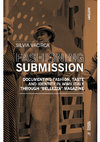
Research paper thumbnail of Fashioning Submission. Documenting Fashion, Taste, and Identity in WWII Italy through "Bellezza" Magazine

Mimesis International, 2023

"A little more than six months after Italy declared war on France and England on the 10th of June... more "A little more than six months after Italy declared war on France and England on the 10th of June 1940, the Ente nazionale della moda (“National Fashion Agency”) launched 'Bellezza Mensile dell’alta moda e della vita italiana' (Beauty, A Monthly Fashion Magazine of Haute Couture and Italian Life), the first Italian fashion magazine aiming to position itself at the level of Vogue and Harper’s Bazaar, which on the eve of the Second World War were the two most important international fashion magazines. Inside Bellezza’s pages, the protagonists of contemporary Italian culture helped sculpt the myth of Italian fascist 'alta moda' (high fashion). Fashion, along with plastic surgery, gymnastics and mastery of the body, was called upon to participate in the creation of the “new humanity” that fascism aimed to shape. A sartorial fascism “of stone”. Nothing should be further from stone than fashion and in 1944, architect Gio Ponti and cosmopolitan countess Elena Celani – nicknamed “Bichette” – had in fact debated from the pages of "Stile" and "Bellezza" whether with the advent of fascism, fashion had not fallen out of fashion and whether it should petrify into 'costume.'"

Articles & Chapters by Silvia Vacirca
Research paper thumbnail of Materializing Iridescence (A. Smelik, A. Vaccari, a cura di, The Four Elements of Fashion, Bembo, 2025)
The Four Elements of Fashion brings together international scholars to rethink fashion through th... more The Four Elements of Fashion brings together international scholars to rethink fashion through the prism of the archetypal elements of earth, water, air, and fire. Emerging from a conference held at the Università Iuav di Venezia and curated by Anneke Smelik and Alessandra Vaccari, the volume offers a new perspective on fashion studies at a time of profound ecological and cultural change. The Book aims to investigate new paradigms of fashion cultures through those elements of matter as they are intertwined in the clothes we wear. The research papers shift the attention towards the material and sensory aspects of fashion. This approach fits in with the 'material turn', inspired by a re-centring of matter and the materiality of things, objects, technologies, and bodies. In readdressing fashion and its histories through the lens of new materialism, the authors envision possible future fashions in multiple ways: from contributing to an environmentally and socially aware fashion to disseminating good practices in the field of fashion design.

Research paper thumbnail of “Mother of Civilization”: The New Italian Woman on the Pages of “La donna fascista” Magazine (V. Ljubin, R. Alonzi, a cura di, Il fascismo italiano: Cento anni di studi. Uno sguardo dalla Russia all’Italia, Mokba, 2025
Despite women are a dynamic force in fascist culture, studies on the image and role of women in t... more Despite women are a dynamic force in fascist culture, studies on the
image and role of women in the fascist dictatorship, and on the extent and methods of their consent, are quite recent and tend not to take fashion into account. The image of fascist femininity that has long prevailed among scholars, as well as the most successful in the media, which has greater visibility and circulation, considers the woman proposed by fascism in her role as «exemplary wife and mother»: a slightly chubby «massaia rurale» with a Duce handkerchief on her head as opposed to the fashionable «woman-crisis» type. A model fascism would share with the Catholic cultural tradition. In this paper, while addressing this widely believed stereotype, also due to the fact that the regime makes a certain commitment to propagate this image, the author examines the image of the new Italian woman formed in the pages of «La donna fascista», the official magazine of the women's fascist associations. This image in the context of the world conflict acquires a new meaning: «Mother of civilisation».
Research paper thumbnail of Visioni glamour di violenza: lo stile di Eva Kant (Ultracorpi. Il fantastico nelle arti dello spettacolo, n.3, 2025)

Ultracorpi. Il fantastico nelle arti dello spettacolo, 2025

Eva Kant, protagonist of sisters Angela and Luciana Giussani's Diabolik, represents a unique fema... more Eva Kant, protagonist of sisters Angela and Luciana Giussani's Diabolik, represents a unique female figure in the Italian cultural landscape: suspended between pop, cinematic, and fashion imagery. Equal companion to the famous masked criminal, Eva Kant is not a simple "femme fatale" but an emancipated, autonomous, cultured, and refined woman. Her elegant and sophisticated style, inspired by 1960s high fashion's codes, influenced by film noir, and the style of Hollywood divas, made her a timeless style icon. In the cinematic context, Eva Kant has been interpreted by several actresses, including Marisa Mell in Mario Bava's Diabolik (1968) and, more recently, by Miriam Leone in the Manetti Bros.' trilogy. After a brief historical and critical introduction to Eva Kant's character, the essay traces her transmedia evolution as a glamorous icon. It aims to demonstrate how her relationship with fashion is closely linked to the construction of her visual "modernity" and power. For Eva Kant, clothing is not merely a matter of aesthetics, but a mask, a disguise, an instrument of seduction and protection. In conclusion, the essay aims to highlight how Eva Kant represents a disruptive and highly modern figure, capable of synthesizing both elegance and subversion, seduction and strength, glamour and violence. A figure who has transcended ever changing fashions and decades with undiminished symbolic power, influencing pop culture as well as fashion and cinema, both Italian and international.

Vedo nudo: breve storia della lingerie nel cinema italiano (in corso)

The Cultural and Anthropological Dimension of the Italian Autarchy Period Through Salvatore Ferragamo’s Contribution (in corso)

"Diamanti" (Quaderni del CSCI, n. 21, 2025)

La moda italiana sullo schermo: profili di un dibattito (1935-1940) (Storia e problemi contemporanei, n. 98, 2026: a cura di Stephen Gundle e Barbara Montesi)
Research paper thumbnail of Matilda De Angelis: Naked Ambition (L. Barra, C. Formenti, M. Pierini, F. Pitassio, a cura di, Italian Contemporary Screen Performers. Training, Production, Prestige, Palgrave Macmillan, 2024)
In the special issue of "Bianco e Nero" dedicated to Italian stardom, Italy is defined as “the co... more In the special issue of "Bianco e Nero" dedicated to Italian stardom, Italy is defined as “the country of the antidivi.” This chapter, through the case study of the young Italian actress Matilda de Angelis, questions that statement. De Angelis’ career shows instead an attitude toward showbusiness that is fully in line with international artistic and production values. Compared to performers of the previous generation such as Margherita Buy, Elio Germano, or Giovanna Mezzogiorno, the case of de Angelis—a young actress of Bolognese origin who, starting from 2015, quickly gained the attention of audiences and critics alike, becoming “the hope of Italian cinema,” is part of the new global trend in which the boundaries of the entertainment and advertising industries, and between spectacle and life are falling apart. As Landrini noted, de Angelis’ persona is characterized by a confrontation with the American entertainment business and the pervasiveness of the third-feminist idea, which facilitates it. This chapter looks closely at how, through the exploitation of the scandal of full-frontal nudity exhibited in the HBO television series The Undoing (2020), de Angelis managed to become an instant glamorous icon, beyond the shared notion of “celebrity.”

Research paper thumbnail of Mourning the Italian Boys: "Gen Z", Masculinity, Teen Stardom (Journal of Italian Cinema & Media Studies, 12, n. 3, 2024)

Journal of Italian Cinema & Media Studies, 2024
This article is the result of a one-year period of research that I conducted at the University of... more This article is the result of a one-year period of research that I conducted at the University of Udine regarding ‘F-ACTOR Forme dell’attorialità mediale contemporanea: Formazione, professionalizzazione, discorsi sociali in Italia (2000–2020)’ (‘Forms of contemporary media acting: Formation, professionalization, social discourses in Italy 2000–2020’) 1 which focused on young, Italian actors of the so-called ‘Generation Z’. My research has produced results – for which an empirical sociological study based on a much larger sample would be necessary – that highlight some possible lines of research regarding the relationship between ‘Generation Z’, the acting profession, the audio-visual industry and gender representations in Italy: how luxury fashion brands are fabricating masculinity through the sponsoring of prestigious film festivals, the relationship between the melodramatic imagination and media representations of youth culture, how the new centrality of streaming platforms is affecting the Italian media landscape and content, the lack of diversity in Italian young adult content and the media industry in general. My research encountered difficulties in contacting young actresses – who I consider an integral part of my research results – compared to young male actors, who I managed to interview in even greater numbers than required by the research project. Another reason why my research is focused mainly on young male actors is because they are effectively dominating the contemporary Italian young adult content. Before introducing the specific results of my research, I will begin with an introduction to ‘Generation Z’ and a panoramic view on Italian masculinity and its relationship to contemporary masculinities and fashion.

Research paper thumbnail of Barbara Stanwick's Grey Hair (E. Scarpellini, a cura di, Fashion and History. How Fashion Has Written History, ZoneModa Journal, 13, n. 2, 2023)

ZoneModa Journal, 2023

Unlike many Hollywood stars of her generation, Barbara Stanwyck extended and diversified her film... more Unlike many Hollywood stars of her generation, Barbara Stanwyck extended and diversified her film career during the 1950s by starring in numerous B-series westerns, where her dominant image of independent, tough woman, questioned the limits of gender and genre. Postwar Hollywood production system changed and veteran film stars were less in demand. This paper aims to investigate the role of Barbara Stanwick as “mature women’s role model”. If it is true that her maturity, emphasized by premature gray hair and the refusal to dye them, influenced her roles and transformed her into a model for mature women, aging certainly not helped fostering her film career. As the scholar Susan Hayward states, “aging is too real — not the ‘real we want to see’” (1996, p. 340). Moreover, Stanwyck’s fascination with the western genre is consistent with his image as a mature woman with Republican tendencies. In 1973, she was the first woman to be included in the “Hall of Fame of Great Western Performers” at the National Cowboy and Western Heritage Museum.

Keywords: Hollywood Stardom; Gender and Ageing; Emotional Acting; Models of Womanhood; Glamourizing Ageing.

L'Italia al lavoro. Un lifestyle da esportazione, 2023

Le curatrici del volume desiderano ringraziare tutti coloro che hanno contribuito, a vario titolo... more Le curatrici del volume desiderano ringraziare tutti coloro che hanno contribuito, a vario titolo e in momenti diversi, offrendo consigli e utili spunti, alle loro ricerche e al buon esito di questa pubblicazione. Un ringraziamento particolare va a Sandra Costa e a Dominique Poulot che, cogliendo la vocazione transdisciplinare di questo volume, lo hanno accolto nella collana ARTE.

Cinergie, 2022

Alice Pagani, protagonist of Netflix "Baby", is a young Italian multi-talented girl. The emblem o... more Alice Pagani, protagonist of Netflix "Baby", is a young Italian multi-talented girl. The emblem of a emerging breed of Italian prosaic goddesses of a new mediated cult of beautiful girlhood who's very good at exploiting the pleasures and boredom of late capitalist culture to make money.

Quaderni del CSCI. Rivista annuale del cinema italiano, 2022

The Culture, Fashion and Society Notebook, 2022

The publisher is available to those copyright holders with whom it was not possible to establish ... more The publisher is available to those copyright holders with whom it was not possible to establish contact for the anthological passages, quotes, graphic, cartographic and photographic reproductions pertaining to the property of third parties included in this work, as well as for any unintentional omissions and/or errors of attribution in the references. Unauthorised reproduction by any means in whole or in part or for educational use is forbidden. Photocopies for personal use of the reader may be made within a limit of 15% of each volume upon payment to the SIAE of the amount envisaged in art. 68, paragraphs 4 and 5 of Italian Law no. 633 of 22 April 1941. Reproductions made for purposes of a professional, economic or commercial nature or for use other than personal use may be made following specific authorization issued by CLEARedi,

Welters, L., Lillethun, A., (a cura di), The Fashion Reader, Bloomsbury, Londra, 2021
Research paper thumbnail of Il caso Tortora: Assuming the Celebrity's Guilt (Mediascapes Journal, n. 11, 2018)

Mediascapes Journal, 2018

On Friday, June 17th 1983, the face of Portobello, Enzo Tortora, is put under arrest for drug tra... more On Friday, June 17th 1983, the face of Portobello, Enzo Tortora, is put under arrest for drug trafficking and mafia crimes. With these words, on Tg2, that day, Italy followed the tv images displaying the famous anchorman being arrested. The role played by media, which circulated not verified news and espoused almost unanimously the 'guilt hypotesis', in the shaping of court cases and public perception of the facts was relevant. 'Il caso Tortora' was an impressive example of spectacular justice. In the light of the scholar Steven Connor's words, that "It is the destiny and function of the celebrity to be exposed to scandal and absurdity and to bear its mark forever" (Connor, 2005, p. 4), this paper intends to focus on the media construction of the 'guilty narrative', in order to underline the possible presence of preconditions that could have favoured the destruction of his public persona and the ways through which his 'presumption of guilt' could be linked to his status as TV celebrity.

ZoneModa Journal, 2017

The aim of the paper is to analyze the contribution of celebrity culture to the reshaping of the ... more The aim of the paper is to analyze the contribution of celebrity culture to the reshaping of the fashion industry, distancing from an oppositional view while embracing a systemic one, where celebrity is considered a fundamental engine of the contemporary cultural production of fashion and a global consumerist culture. The scope of our paper tries to overcome the endorsement point of view to address the relationship between celebrity and fashion as a two-way relationship which is rewiring the fashion industry. The paper will explore the multiple manifestations of the so-called celebrity brand labels, from