Papers by Stanislav Voloshchenko
Biographistica Ukrainica , 2025
This study is dedicated to a less-known researcher of 12-century Apostolus Christinopolitanus Ukr... more This study is dedicated to a less-known researcher of 12-century Apostolus Christinopolitanus Ukrainian linguist Ivan Ivanovych Zavadovsky (1887-1932). The article aims to study the life path and scientific and educational activity of Professor Ivan Zavadovsky of the Public Education Institute of Dnipropetrovsk. The methodology of this scientific research is based on the principles of scientific objectivity, systematicity, and historicism. To realise the outlined goal, general historical methods are used: chronological, problem-thematic, archival heuristics, biographical, prosopographic, and retrospective. The scientific novelty of the stated problem lies in the rethinking of the activity of a linguist based on facts and source materials that are still little known to the public. The biography of Ivan Zavadovsky is considered in the context of the turbulent historical era of the last quarter of the 19th – the first quarter of the 20th century, and the light of his scientific output. Conclusions. The article authors have rediscovered and for the first time analysed in detail the Zavadovsky archival documents enriching the information about scientific and teaching activities and thus correcting inaccuracies in the previous constructions of the professor’s biography. The paper studies Zavadovsky’s unpublished manuscript excerpts from the Apostolus Christinopolitanus, which the linguist copied in the first third of the twentieth century and left the comments to them. The research proves that the Soviet authorities had repressed the scientist because of his linguistic studies. His works were criticised by colleagues and labelled with so-called ‘bourgeois theories’ and ‘bourgeois nationalism’ in particular “Fundamentals of Linguistics”. The persecution of Professor Ivan Zavadovsky affected his health and led to his premature death at the age of 45. The Soviet penal system destroyed the memory of the scientist, especially his original output, which cannot be found today. As a result, the paper rethinks this iconic figure in the history of Ukrainian linguistics and writes his biography in a new way.

Z Badań nad Książką i Księgozbiorami Historycznymi, 2025
This article examines the history of the formation, functioning and development of the Basilians’... more This article examines the history of the formation, functioning and development of the Basilians’ book collection in Volodymyr from the 16th to the first third of the 19th century in the context of the monastery’s educational and cultural activities. Based on the analysis of inventory descriptions from 1705, 1799, 1816 and 1819, the evolution of the library collection is traced from a relatively small collection (301 volumes in 1705) to a substantial educational and religious book repository (760 volumes in 1819). The research revealed that the formation of the book collection occurred through various channels: institutional book transmissions, targeted purchases, donations from benefactors, and bequests and inheritances of books from deceased monks. Special attention is paid to the analysis of the collection’s thematic structure, which included theological, educational, scientific and historical literature in various languages. According to the 1816 catalogue, a wide geography of publishing centres was established – from London to St. Petersburg, with a predominance of publications from Warsaw (30), Venice (28), Vilnius (20) and Rome (21), indicating the monastery’s active integration into the European intellectual space. Chronological analysis of the collection revealed the predominance of 18th-century publications (122 titles), comprising over 50% of the total volume, whilst maintaining a significant number of old printed books from the 16th–17th centuries. The library functioned, as a complex mechanism of knowledge transfer through four key dimensions: intellectual (translation activities, creation of new texts), educational (supporting the learning process), cultural (synthesis of Eastern and Western Christian traditions) and temporal (preservation and transmission of knowledge to subsequent generations). The research confirmed the significant role of the Basilian library in Volodymyr, as an important cultural and educational centre of Volhynia, which served the intellectual needs of the monastic community, teachers, students and regional elite until the monastery’s closure by Russian authorities in 1831.

Studies into the History of the Book and Book Collections, 2025
This article studies the emergence of the Pomianyk (Synodikon) as a separate type of Cyrillic man... more This article studies the emergence of the Pomianyk (Synodikon) as a separate type of Cyrillic manuscript. The emergence of Pomianyk is analysed in the context of the funeral prayer practice used in the Kyiv Metropolis of the Ecumenical Patriarchate in the early modern period. Pomianyk and the memorial records in other books are seen as expressions of memory. The findings revealed that a practical necessity at the request of believers to save their souls in the 16th and 18th centuries was the reason for developing such a separate type of manuscript. The historical sources reflect the mindset of the people of that time, who believed that through charitable activities in favour of the Church, they would receive absolution and salvation of the soul after death. Hetman Ivan Skoropadskyi donated funds to restore the Great Church of Kyiv Pechersk Lavra because he wanted God’s protection both during his life and after his death. The author explores the genesis of the Pomianyk in the donation records in church books and their memorial entries. This study analyses 14 manuscript Pomianyks used in the churches of Kyiv Metropolis, with particular attention paid to the 1741 “Nyzkynychi Pomianyk”, which has not yet been the subject of a separate analysis. In addition, other manuscripts and early printed books of the early modern period, which best reveal the problems of funeral practice in the stated region and at the specified time, were involved in the study.
Text and Image: Essential Problems in Art History, 2024
The purpose of this article is to restore the place of Helena Ettinger’s research in the study of... more The purpose of this article is to restore the place of Helena Ettinger’s research in the study of medieval manuscripts during the 1930s. Due to incomplete evidence and the loss of her work, The Illuminations and Miniatures of Greek and Cyrillic Manuscripts of the 9th–15th Centuries (1935–1936), Helena Ettinger’s position among researchers in Ukrainian bibliographic studies remains undetermined. Her activities as a research associate in the manuscript department of the Library of the Academy of Sciences and the State Historical Library have been limited to a descriptive level in reference publications. The article draws on archival documents from the Institute of Manuscripts at the Vernadskyi National Library of Ukraine and the New York Public Library. It also employs prosopography and comparative biographical methods to reconstruct the scholar’s biography more comprehensively. Based on the preserved introduction and reviews by Mykola Heppener and Serhiy Maslov, the article provides qualitative insights into Ettinger’s lost work. The authors note that Ettinger used the term ornamentation to mean illumination and clarify other terms she employed (e.g., Cyrillic, index, defects). Ettinger's methodological approach surpassed the prevailing practices of her 1930s contemporaries by extending beyond textology and palaeography to incorporate codicology and visual studies. Ettinger carried out meticulous work in compiling collection descriptions, editing predecessor records to establish a uniform standard, creating methodical instructions for miniature descriptions, and contributing to exhibition efforts. Her connections included writer Ivan Le and American ethnologist Stella Marek Cushing, and her interests extended to ethnographic materials. Ettinger’s scientific contributions—such as the stylistic comparison of Greek and Cyrillic medieval manuscripts based on decoration, her linguistic expertise, and her maintenance of international scholarly contacts—along with her background (stemming from a dekulakized Jewish family), may have adversely affected her fate. Her sudden dismissal from the library and her subsequent disappearance during the German-Soviet war remain unexplained.
Academic Papers of The Vernadsky National Library of Ukraine, 2024
This article updates the issue of identifying and attributing Cyrillic fragments of the Middle Ag... more This article updates the issue of identifying and attributing Cyrillic fragments of the Middle Ages using the example of the Apostolus Christinopolitanus of the 12th century. The purpose of the study is to fact-check two fragments that supposedly belong to the codex and their attribution. The article's methodology is built on the principles of scientific systematicity, integrity, objectivity, and historicism. During the writing of the research, general scientific methods of analysis, synthesis, induction, and deduction were used; general-historical: chronological, problem-thematic, and archival heuristics, as well as specific ones, which are used in the study of written sources. The textology methods contribute to identifying the content of fragments; the methods of palaeography and codicology indicate the inconsistency of the selected fragments with the Apostolus Christinopolitanus. The scientific novelty is that for the first time, the fact of belonging to the Apostolus Christinopolitanus of two fragments in Canada and Romania has been disproved, and thus their new attribution has been realized. Conclusions. On the example of two parchment fragments kept in Ottawa (Canada) and Bucharest (Romania), the question of historical memory and the phenomenon of attribution of heritage is raised. The results of the identification of the fragment from the Archive of Oleksandr Kolessa in Ottawa and the manuscript Ms. Sl. 790 from the Library of the Romanian Academy of Sciences, which were considered by Iraida Gerus-Tarnavetska, Iryna Matiash (Ottawa fragment), and Maria Korogodina (Bucharest fragment) to be parts of Apostolus Christinopolitanus of the 12th century. The research establishes mistakes made by experts when describing these fragments and falsifying the artefacts due to incorrect attribution, which is related to the identification of the Ottawa and Bucharest fragments with the Apostolus Christinopolitanus. The article proves that the claimed fragments are not part of the Apostolus Christinopolitanus and never belonged to it. A new attribution of the manuscripts shows that the Ottawa fragment is the folio 10 from the Buchach Gospel of the 13th century, and the Bucharest fragment is the Complete Apostol aprakos of the 12th–13th centuries.

The Studies into the History of the Book and Book Collections, 2024
In this research, colophons are studied as an essential component of Cyrillic codices, which were... more In this research, colophons are studied as an essential component of Cyrillic codices, which were created on the lands of the Grand Duchy of Lithuania and the Crown of Poland (later the Polish-Lithuanian Commonwealth). To write the study, the author analysed more than seventy colophons preserved in manuscripts from the collections of libraries in Lithuania, Poland, Russia, and Ukraine. The earliest colophon is contained in the “Lviv Gospel completed (full) aprakos” 1477, and the latest – the “Kotsuriv Gospel” 1600. The study of the text’s structure showed that these colophons belonged to six types with two subtypes, the classifying feature of which was the initial formula. A detailed analysis of the content of each colophon showed that the main components were the recording of the book’s title, the name of its copyist, its origin, time and place of publication, and mention of the customer or buyer. The analysis of the colophons illustrated the phenomenon of authorial statements of scribes, which consisted of explaining the motives of their work, an idea of their mission, instructions to readers, or a request to correct errors in the text. In the colophons 1594 and 1595 by Stepan Popovych, who was from Trushevychi village, the inadmissibility of stealing codices with an appeal to the Holy Scriptures, in particular the passage Hbr 10,31 with its author’s interpretation, was emphasised quite extensively.
Apostolus Christinopolitanus of the Twelfth Century: Facsimile Edition and Codicological Research, 2023
In 2009, the Horobets Publishing House launched the project Returning cultural heritage to Ukrain... more In 2009, the Horobets Publishing House launched the project Returning cultural heritage to Ukraine, designed to make available to scientists
and everyone interested in cultural heritage, facsimile editions of the medieval codices of Rus-Ukraine, which nowadays belong to foreign
gatherings. Such handwritten books include the Apostolus Christinopolitanus of the 12th century, three parts of which are kept in the collections of
Ukraine and the Republic of Poland. The main part of the medieval manuscript in the form of a codex is in the storage of the Lviv Historical Museum (Inv. No. MS 39, 291 folios). The other two parts are fragments and belong to the collections of the Institute of Manuscripts of the V. Vernadskyi
National Library of Ukraine (Collection 8, no. 3M, 8 folios) and the Princes Czartoryski Library of the National Museum in Kraków (No. MS 11601,
4 folios). The Apostolus Christinopolitanus is a unique parchment manuscript written in Rus-Ukraine in the 12th century. The codex is the oldest and most complete translation of the Acts and Epistles of the Apostles to the Church Slavonic language. The proposed edition consists of an introductory
article by Oleksandr Okhrimenko, dedicated to the book culture of medieval Europe and Rus-Ukraine; a complete photocopy of all three parts of the
Apostolus Christinopolitanus, known as of 2023; a codicological study of the manuscript prepared by archim. Methodius (Stanislav) Voloshchenko.
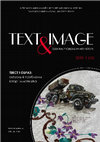
TEXT AND IMAGE: ESSENTIAL PROBLEMS IN ART HISTORY, 2023
This review is dedicated to the debut exhibition of Lviv artist Arsen Shpak. The exhibition calle... more This review is dedicated to the debut exhibition of Lviv artist Arsen Shpak. The exhibition called "Drawing" opened in Lviv, at the Vinyl Club music space, on June 25, 2022. For connoisseurs of the art of drawing, the artist offered thirteen of his own graphic works. The exhibited objects are an exclusively new series of the author's works and were shown for the first time. The work on their creation is largely due to the beginning of the full-scale open invasion of the Russian troops on the territory of Ukraine on February 24, 2022. In my review, the first thing I talk about is the identity of the author, which includes short biographical notes, the stages of his formation, first of all, as an artist, as well as a restorer, which contributes to a better understanding the peculiarities of his work. The proposed text presents the first description of Arsen Shpak's drawings. Attention is focused on the material of his works, performance technique, and analysis of plots. The exhibited objects were created by the author with a graphite pencil on drawing paper, formats A3 and B2. The author demonstrated drawings in passe-partout and anti-frames. His works are characterized by conciseness and simplicity of forms, which are realized through the use of geometric structures. Geometry permeates all drawings, even in the case of anthropological subjects. Eleven works are devoted to female subjects and two to exclusively geometric figures. Female images are characterized by clearly expressed gestural aspects, which are manifested in the cheekbones, features of the gaze of the depicted, as well as masculine features. The works, primarily anthropological, are characterized by sacred interspersions, which are transmitted through the halos above the heads of his characters. Analysis of Arsen Shpak's works proved that the presented graphics were significantly influenced by the tragedy of war, as it was embodied in the emotionality of his heroes, in part, their sadness, pain, and longing, but at the same time with a sense of victory in the fight against evil. Publishing his work to the general public opened up prospects for the artist's further searches and their embodiment in new works.
Biblioteka, 2022
One of the important Cyrillic medieval manuscripts from Kievan Rus is the Apostolus C... more One of the important Cyrillic medieval manuscripts from Kievan Rus is the Apostolus Christinopolitanus – a 12th-century codex which is now separated into two parts that are preserved (though some fragments have been lost) in Kyiv (Insti-tute of Manuscript of V. I. Vernadskyi National Library of Ukraine, since 1927) and Lviv (history Museum of Lviv, since 1948). This article discusses four parchment folia from Kraków (The Princes Czartoryski Library, Poland) discovered in July 2020. Paleographical, orthographical, linguistic and textological features indicate that this section is the previously lost part of the Apostolus Christinopolitanus (excerpts from Act 13,5–20, 15,29–16,4, 1Tim 4,8–5,4 and 2Tim 1,10–2,4). The Kraków folia are the continuation of the Kyiv part and the beginning and final part of the Lviv part of the codex. The Kraków part was detached before 1888, when the manuscript was shown to the public at the Lviv Stauropegion Institute Exhibition and described and foliated for the catalogue by Antonij Petruševič. This article contains photocopies of all of the newly-discovered fragments.

Z Badań nad Książką i Księgozbiorami Historycznymi, 2022
This article is devoted to the recently attributed eight parchment strips stored in the Сollectio... more This article is devoted to the recently attributed eight parchment strips stored in the Сollection of the Archdiocese Archives in Gniezno (MS Fragm. 244). These fragments have not previously appeared in the scientific literature, so the main purpose of this publication is to inform the scientific community about the new sources and their introduction into circulation. All the bits are written with the Ustav script. These fragments were separated from two different Church Slavonic codices as the analysis of handwriting and the content has shown. Six strips belong to the one manuscript with the text from the New Testament. These are two incomplete passages from Eph 3,14–21 and Eph 4,14–16, that allow identifying the original codex as Apostol Aprakos. Two other strips from the liturgical codex. They contain excerpts from prayers, which were read at the evening service on the eve of the feast of the Trinity. The attribution of the content of these two strips has allowed us to consider them an additional part of the Liturgiсon. Those fragments may be dated to the 12th–13th centuries according to the studies of the material side of the pieces, palaeography of scripts, graphic and orthographic identification, and linguistic features.
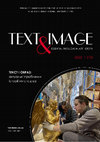
ТЕКСТ І ОБРАЗ: АКТУАЛЬНІ ПРОБЛЕМИ ІСТОРІЇ МИСТЕЦТВА, 2022
The proposed article is devoted to the issue of preservation from possible damage to the national... more The proposed article is devoted to the issue of preservation from possible damage to the national heritage of the Garrison Church of the Holy Apostles Peter and Paul (Jesuit Church or Society of Jesus), as well as the Church of St. Paraskeva Friday in Lviv during the Russian-Ukrainian war (2014 – present). Circumstances of the full-scale military invasion of the Russian Federation into Ukraine on February 24, 2022, necessitated the immediate need to protect the country's cultural heritage. The urgency of the security component of the preservation of art objects was dictated by missile attacks in almost all regions of Ukraine, including the Lviv region. The security measures in which
the authors of the article took part were conditioned by the possibility of rocket attacks on sacred monuments of Lviv and the possibility of their damage by fire or mechanical damage. These cultural values include altars, wooden sculptures, decorative elements, organs, and objects on the canvas of the Garrison Church, as well as a six-row wooden iconostasis of the Church of St.Paraskeva. The specifics of the material of art objects, their size, location, and in part restoration work, made it difficult to evacuate and preserve them in new circumstances. The authors characterize the newly acquired experience of securing the heritage of the 17th – 20th centuries. refractory materials in the outlined Lviv religious buildings. The article deals with artifacts that have been protected from the effects of missile damage. The stages of monument protection work are covered, which first of all consisted in the selection and classification of refractory and heat-resistant materials, team involvement, photo-fixing, marking, inventory of objects, direct security of art objects. The authors express their recommendations for practical solutions in uncertain conditions, since, for the first time since the restoration of Ukraine’s independence, such a practice has been used in architectural monuments of national importance in
Ukraine.

Z Badań nad Książką i Księgozbiorami Historycznymi , 2022
This article is dedicated to the study of the history of the Cyrillic Four Gospels BJ 941 from th... more This article is dedicated to the study of the history of the Cyrillic Four Gospels BJ 941 from the manuscript section of the Department of Special Collections of the Jagiellonian Library in Krakow. The study de nes that the Gospels were rewritten on a paper variety, the identi cation of its watermarks implies that the book was created in the last third of the 16th century. The analysis of the manuscript margins indicates that the manuscript was rewritten and purchased in Stryi, in the former Przemyśl region. The study of four gift records of the 16th and 17th centuries draws an understanding of how the manuscript has functioned and migrated at the appointed time. First, after the purchase, the codex was donated to the church of Paraskeva Piatnytsa in the Pietniczany village in the Lviv region. In 1641 the codex was gifted over to the Church of the Beheading of John the Baptist in Rozhysche, Sataniv povit. Between 1649 and 1678 the Gospels were presented to the Church of the Intercession of the Virgin in Vinnytsia. In 1678 the book appeared in the Church of the Intercession in the village of Nekhaiky in the Cherkasy region. In the 19th century, the Gospels belonged to the private library of Stanisław Krzyżanowski, who in 1870 donated the manuscript to the Jagiellonian Library.
Konštatínove listy, 2022
The study is dedicated to the manuscript of Four-Gospels W 150 from the Chester Beatty Library Co... more The study is dedicated to the manuscript of Four-Gospels W 150 from the Chester Beatty Library Collection (Dublin, Republic of Ireland). The publication consists of four aspects that disclose the history of the creation, provenance, usage, and migrations of the manuscript. A detailed paleographic and codicological study of the Gospels made it possible to determine the exact location of its production – village of Pniv (Ivano-Frankivsk oblast, Ukraine) in the first half of the 17th c., by local priest Ioanne. The study of the inscriptions of 1640, 1641, and 1738 showed the purchase of the book by the family of Kostya and Anastasia, together with their sons Gryd and Stepan, daughter Agafia, son-in-law Petrash, daughter-in-law Christina and Maria, as well as grandchildren. The motive of giving the Gospels to the church in the village Yasinia (Transcarpathian region, Ukraine) was concerned with the salvation of their souls. Spouses Ivan and Olena Strukov and Pavlo Gryd were worried about keeping the codex and together paid for a new binding in 1738. The artistic component of the manuscript was also investigated, which made it possible to find out the identity of the author of drawings. As a result of the research, it was possible to reconstruct the history of its provenience and usage from the time of writing to the time of the migration to the Chester Beatty Library in Dublin, cataloguing and the first description of the codex.
Наукові праці Національної бібліотеки України імені В. І. Вернадського, 2022
The purpose of the study is codicological and textual research of the 41 Cyrillic manuscript frag... more The purpose of the study is codicological and textual research of the 41 Cyrillic manuscript fragments of Przyb. 299/71 from the collection of the Jagiellonian Library in Kraków (Poland). The research methodology applies general scientific methods of analysis, synthesis, induction and deduction, and specific methods for the study of manuscripts. Textology helps organize and identify the texts from the fragments; with a watermark method it is possible to find out the time and place of paper production; methods of palaeography and codicology support a localization a territory of the manuscript’s production. The scientific novelty. The fragments were found in the binding of the Cyrillic print book St. dr. 589 840 III. The article’s first task was to attribute the old print book in which the manuscript fragments were found. It allows to establish the approximate time of the manuscript separation as the 18th century. The identification of the manuscript text helps replace the fragments in the correct sequence. The codicological and palaeographic parameters of the fragments show the place and time of their creation. Conclusions. The article argues that the first edition of Вослѣдованiѧ праздникѡмъ... was published in Cyrillic types in 1741 by Basilian Fathers of the Pochaiv Monastery. The textual attribution shows that the fragments originally were parts of three different manuscripts: Festal Menaion (35), Jerusalem Typikon (2), and another liturgical book (4). The paleographic research concludes that all three fragments were rewritten in the Church Slavonic language by a semi-constitutional type of writing, typical of Early Modern Halychyna. The watermarks of Festal Menaion allow to identify the time of manuscript production as the beginning of the 16th century. The obtained results open up prospects for further search for codices from which the fragments originated. This paper is a case study on fragments from liturgical codices, promoting the publication of new sources, attribution, research, and digitization. The comprehensive study of the manuscripts’ fragments goes alongside the old print book, which was bound together for a long time in the shared sacred space. As the result of the research, it is possible to reconstruct the manuscript codex before the damage and separation for the binding purposes.
Садиба Франка: науковий збірник заповідника "Нагуєвичі" / Ред. кол. Б. Лазорак (голов. ред.), Я. Мельник, М. Мозер, П. Гриценко, Л. Тимошенко, В. Александрович та ін. ), 2020
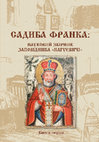
The article is based on the findings obtained during the preservation of church book, published i... more The article is based on the findings obtained during the preservation of church book, published in Univ in 1733, which, together with other Cyrillic textbooks, was transmitted in July 2013 to the Lviv Central Provincial Library of the Fathers of Vassilians at the St. Onufriiyv Monastery from the archives of the library of the St. Nicholas Basilian Monastery in Krekhiv. During the study, a double sheet of Cyrillic handwriting was discovered under the flywheel of the lower bezel, which was dismantled and restored. An analysis of the sheet with Cyrillic alphabet text made it clear that it is an excerpt from the Epistle of St. Paul to the Jews, written in Cyrillic, a semi-original type of writing with using of the yus. It is established that the preserved fragment of the handwritten Apostle dates from the first half of the 16th century. It is also established that a similar copy of the Apostle is kept in the department of the manuscripts of the Vasyl Stefanyk Lviv National Scientific Library of Ukraine of the NAS of Ukraine.
Церква – наука – суспільство: питання взаємодії. Матеріали Сімнадцятої Міжнародної наукової конференції , 2019
Матеріали Сімнадцятої Міжнародної наукової конференції (28 травня -1 червня 2019 р.)
Матэрыялы XV Міжнародных кнігазнаўчых чытанняў, 2019
Localisation of the Provenance of the Cyrillic copies of the Jerusalem Typikon.
The article is de... more Localisation of the Provenance of the Cyrillic copies of the Jerusalem Typikon.
The article is devoted to the provenance of Jerusalem Typikon, copies of which are collected in Ukraine. It investigates the localization and the places of the use for direct purposes till the time of their admissions to the modern place of preservation – scientific libraries and museums. The marginalia of scribes and marks of provenience are studied as a source for the research.
Здабыткі: дакументальныя помнікі на Беларусі, 2018
The Cyrillic copy of the Jerusalem Typikon of the beginning of the 17th century is investigated f... more The Cyrillic copy of the Jerusalem Typikon of the beginning of the 17th century is investigated from the collection of the Vernadskyi National Library of Ukraine. On the base of the colophon and margins information, the author reconstructs the place of origin of the codex, which was Trinity Lavra of St. Sergius, where it was created in 1603. The names of the scriber and the customer are restored; the first one was the monk and clerical, the second one was the abbot the monastery. The analysis of the text information let discover the history of the existence of the manuscript and the migration from Russia to Ukraine. With the analysis of the water-marks, the dates of the codex were proved, the paper of the manuscript belongs to the end of the 16th century – beginning of the 17th century. The author shows the codicological and palaeographical features of the codex. The formula of the quires and foliation was reconstructed. The signatures of the quires are from the dates of the codex, but the foliation was done in the 19tn century. The special focus of the article was on the characteristics of the page organization of the manuscript, the palaeography of the hands was investigated. The author states, that four scribers created the Jerusalem Typikon, but the main among them was Danilka Gavrilov. The article characterizes the elements of the ornamentation of the manuscript, e.g. four golden headpieces, and studies the material, construction and decoration of the cover. The analysis of the cover features let find the place of the origin - Trinity Lavra of St. Sergius. The research focuses also on the conditions of the codex as the source for the history of reading during its direct primary using.
Hiperboreea, 2019
The Gavril Uric’s Psalter, created in 1437, remains one of the important manuscripts from the Nea... more The Gavril Uric’s Psalter, created in 1437, remains one of the important manuscripts from the Neamț Monastery and South Slavic Cyrillic heritage. Involving the late medieval religious source into research, especially then it is a common text as Psalter, inspires to see this codex as the material object that was used by several generations. The system how the scribe organized the page, how he solved the mistakes, how he decorated the text is the way of interacts with his readers; behind the sacred text he put eyes of God, shown by his calligraphy. The Psalter of 1437 became a memorial of the scribe Gavril Uric, Leon the monk, and other people, who signed the codex with their names at different times. Until the 19th century, this Psalter remained the physical mediator between the person and God. From the end of the 19th century, the book was an object for scientific research and closed to the public. Nowadays, the digital version gives a new breath for the Psalter and new opportunity to revise our perception and the way in which we study medieval manuscripts.
Konštantínove listy, Jun 2019
The article is dedicated to research of the oldest survived Cyrillic copy of Jerusalem Typikon of... more The article is dedicated to research of the oldest survived Cyrillic copy of Jerusalem Typikon of the last third of the 15th century. The author investigates the problem of its dating, localization of its origin and use. The paper also lists the names of the owners and describes the transfer of the manuscript from Russia to Ukrainian Lviv. The ignorance of the codex by researchers and a lack of publications prompted this scientific study based on a codicological analysis of the external and internal features of the manuscript with methods of the auxiliary sciences of history. The paper argues that the codex is a complex artifact of culture and history.



Uploads
Papers by Stanislav Voloshchenko
and everyone interested in cultural heritage, facsimile editions of the medieval codices of Rus-Ukraine, which nowadays belong to foreign
gatherings. Such handwritten books include the Apostolus Christinopolitanus of the 12th century, three parts of which are kept in the collections of
Ukraine and the Republic of Poland. The main part of the medieval manuscript in the form of a codex is in the storage of the Lviv Historical Museum (Inv. No. MS 39, 291 folios). The other two parts are fragments and belong to the collections of the Institute of Manuscripts of the V. Vernadskyi
National Library of Ukraine (Collection 8, no. 3M, 8 folios) and the Princes Czartoryski Library of the National Museum in Kraków (No. MS 11601,
4 folios). The Apostolus Christinopolitanus is a unique parchment manuscript written in Rus-Ukraine in the 12th century. The codex is the oldest and most complete translation of the Acts and Epistles of the Apostles to the Church Slavonic language. The proposed edition consists of an introductory
article by Oleksandr Okhrimenko, dedicated to the book culture of medieval Europe and Rus-Ukraine; a complete photocopy of all three parts of the
Apostolus Christinopolitanus, known as of 2023; a codicological study of the manuscript prepared by archim. Methodius (Stanislav) Voloshchenko.
the authors of the article took part were conditioned by the possibility of rocket attacks on sacred monuments of Lviv and the possibility of their damage by fire or mechanical damage. These cultural values include altars, wooden sculptures, decorative elements, organs, and objects on the canvas of the Garrison Church, as well as a six-row wooden iconostasis of the Church of St.Paraskeva. The specifics of the material of art objects, their size, location, and in part restoration work, made it difficult to evacuate and preserve them in new circumstances. The authors characterize the newly acquired experience of securing the heritage of the 17th – 20th centuries. refractory materials in the outlined Lviv religious buildings. The article deals with artifacts that have been protected from the effects of missile damage. The stages of monument protection work are covered, which first of all consisted in the selection and classification of refractory and heat-resistant materials, team involvement, photo-fixing, marking, inventory of objects, direct security of art objects. The authors express their recommendations for practical solutions in uncertain conditions, since, for the first time since the restoration of Ukraine’s independence, such a practice has been used in architectural monuments of national importance in
Ukraine.
The article is devoted to the provenance of Jerusalem Typikon, copies of which are collected in Ukraine. It investigates the localization and the places of the use for direct purposes till the time of their admissions to the modern place of preservation – scientific libraries and museums. The marginalia of scribes and marks of provenience are studied as a source for the research.