Current Projects by Sundhya Pahuja
Rethinking International Law and the Corporation
A critical history of the relationship between the Company and International Law, from the East I... more A critical history of the relationship between the Company and International Law, from the East India Company to the Global Compact.
Video and Audio Lectures by Sundhya Pahuja

The Great Reversal: Corporate Property and Corporate Conduct in International Law
Jon O. Newman Oration, Yale Law School, 2019
The Annual Jon. O. Newman lecture, delivered at Yale Law School in February 2019, available by cl... more The Annual Jon. O. Newman lecture, delivered at Yale Law School in February 2019, available by clicking through.
It is commonly held that ‘International Investment Law’, and the ‘UN Framework on Business and Human Rights’ are new and emerging fields of international legal activity. Both engage directly with the place of the multinational corporation, the first in terms of the protection of property and the adjudication of disputes, the second in terms of the conduct of corporations. But these engagements are not as new as they may appear. In this talk, I enrich our understandings of the emergence of these fields by offering an account of an earlier attempt to deal with both the property and conduct of multinational corporations. That was the attempt in the 1970s led by the Global South to establish the UN Commission on Transnational Corporations. That initiative sought to internationalise legal control over the conduct of multi-national corporations, whilst at the same time, to assert national authority over the ownership of property. But what eventuated was the reverse: internationalized protection for foreign property, and national responsibility for corporate conduct. Understanding the story of these ‘new’ regimes in this way - and as intimately connected to each other - sheds light on the dark side of their combined operations today.
Cite as: Sundhya Pahuja, Newman Oration, Yale Law School, 25 Feb 2019.
The Changing Place of the Corporation in International Law
Hersch Lauterpacht Memorial Lecture, 2018
An audio recording of three lectures delivered at the University of Cambridge in 2018.
Part 1: ... more An audio recording of three lectures delivered at the University of Cambridge in 2018.
Part 1: From Colonial Companies to Global Corporations
In this lecture, I will introduce the problematic of the corporation in international law. The modern corporation is often understood to be a child of the state, a child which has grown too powerful to control. However, we need to go back further than the advent of the modern corporation in order to see that the Company emerged in the early modern period not as a child of the state but rather as a form of associational life which exercised public authority and which rivalled other such forms, including the state. In this lecture, I will suggest ways in which a richer understanding of the history of the corporation and its jurisprudential form can illuminate contemporary patterns of global ordering.
Part 2: Decolonisation and Battles over Global Corporations and International Law
This lecture will trace the struggles over the question of the corporation, how it should be conceptualized, and its proper relation to international law during the period bookended by the end of the Second World War, and the end of the Cold War.
It will focus in particular on the attempt in 1974, by the ‘Group of 77’ developing states, to assert international legal control over trans or multi-national corporations through the establishment of the Commission on Transnational Corporations, as well as consider the rivalrous jurisprudence and institutional initiatives emerging at the same time.
Part 3: Contemporary Patterns of Ordering: Business and Human Rights and International Investment Law
This lecture will consider what happened to the earlier struggles over the global corporation, once history ‘ended’, and three worlds putatively became one. It will trace the twin emergence of International Investment Law, and Business and Human Rights, in order to ask what account of the international - and what kind of world - is authored and authorised by those ‘regimes’.
Authored Books by Sundhya Pahuja
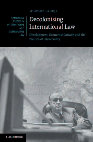
The universal promise of contemporary international law has long inspired countries of the Globa... more The universal promise of contemporary international law has long inspired countries of the Global South to use it as an important field of contestation over global inequality. Taking three central examples, Sundhya Pahuja argues that this promise has been subsumed within a universal claim for a particular way of life by the idea of 'development'. As the horizon of the promised transformation and concomitant equality has receded ever further, international law has legitimised an ever-increasing sphere of intervention in the Third World. The post-war wave of decolonisation ended in the creation of the developmental nation-state, the claim to permanent sovereignty over natural resources in the 1950s and 1960s was transformed into the protection of foreign investors, and the promotion of the rule of international law in the early 1990s has brought about the rise of the rule of law as a development strategy in the present day.
Winner, 2012 American Society of International Law Certificate of Merit.
Edited Books by Sundhya Pahuja
International law and the Cold War, 2019
International Law and the Cold War is the first book to examine the
relationship between the Col... more International Law and the Cold War is the first book to examine the
relationship between the Cold War and International Law. The authors
adopt a variety of creative approaches – in relation to events and fields
such as nuclear war, environmental protection, the Suez crisis and the
Lumumba assassination – in order to demonstrate the many ways in
which international law acted upon the Cold War and in turn show how
contemporary international law is an inheritance of the Cold War. Their
innovative research traces the connections between the Cold War and
contemporary legal constructions of the nation-state, the environment,
the third world and the refugee; and between law, technology, science,
history, literature, art and politics.
Reading Modern Law identifies and elaborates upon key critical methodologies for reading and writ... more Reading Modern Law identifies and elaborates upon key critical methodologies for reading and writing about law in modernity. The force of law rests on determinate and localizable authorizations, as well as an expansive capacity to encompass what has not been pre-figured by an order of rules. The key question this dynamic of law raises is how legal forms might be deployed to confront and disrupt injustice. The urgency of this question must not eclipse the care its complexity demands. This book offers a critical methodology for addressing the many challenges thrown up by that question, whilst testifying to its complexity. The essays in this volume - engagements direct or oblique, with the work of Peter Fitzpatrick - chart a mode of resisting the proliferation of social scientific methods, as much as geo-political empire. The authors elaborate a critical and interdisciplinary treatment of law and modernity, and outline the pivotal role of sovereignty in contemporary formations of power, both national and international. From various overlapping vantage points, therefore, Reading Modern Law interrogates law's relationship to power, as well as its relationship to the critical work of reading and writing about law in modernity.
Events: The Force of International Law presents an analysis of international law, centred upon th... more Events: The Force of International Law presents an analysis of international law, centred upon those historical and recent events in which international law has exerted, or acquired, its force. From Spanish colonization and the Peace of Westphalia, through the release of Nelson Mandela and the Rwandan genocide, and to recent international trade negotiations and the 'torture memos', each chapter in this book focuses on a specific international legal event. Short and accessible to the non-specialist reader, these chapters consider what forces are put into play when international law is invoked, as it is so frequently today, by lawyers, laypeople, or leaders. At the same time, they also reflect on what is entailed in naming these ‘events’ of international law and how international law grapples with their disruptive potential. Engaging economic, military, cultural, political, philosophical and technical fields, Events: The Force of International Law will be of interest to international lawyers and scholars of international relations, legal history, diplomatic history, war and/or peace studies, and legal theory. It is also intended to be read and appreciated by anyone familiar with appeals to international law from the general media, and curious about the limits and possibilities occasioned, or the forces mobilised, by that appeal.
"Divining the Source: Law's Foundation and the Question of Authority" is a collection of exciting... more "Divining the Source: Law's Foundation and the Question of Authority" is a collection of exciting essays by leading international scholars in the fields of critical legal theory and international law. It both critiques and moves beyond the law discipline's anxiety about the moral foundations of international law and human rights and places struggles against imperialism's grab for land, territory, knowledges and peoples within Western law's attempts to rewrite the colonial grounds of its claims for legitimacy.
The editors Jennifer Beard and Sundhya Pahuja have collected a diverse set of scholarly works in which law's claims of authority and legitimacy are subjected to questions of the cultural limits of writing and researching legal thinking in the field of international economic law and development. Is the story of western modernity to be limited to the concept of "the savage" at its heart? Should "the savage" as law's limit be written over, or written out? Or can we find the "wild heart" of the savage within each legal writer? Have questions of the "origins" of justice always deflected the judical process away from more proper concerns with the question of human Being? Is the process of native title in Australia simply one more way to deny a humanness to the being of indigenous others? Has the claim for rights to land in Uganda simply made visible how international economic programs feed upon law's imperatives for a gendered justice? Can imagining the human reasoning process as a machine like Cyborg enhance legal theory's ability to stay vigilant to the historiography of reason and imperialism?
"Divining the Source" is a collection of 8 essays written for academic lawyers, legal theorists and cultural studies teachers, and postgraduate students in the fields of law, international relations, cultural studies, postcolonial theory, and feminist legal studies. It introduces teachers, researchers and students to the ideas of prominent legal theorists and practitioners in human rights and development. The collection could be set as a text for a postgraduate seminar on Legal Theory, International Law and Development Studies, or as an advanced level text for an undergraduate course on Human Rights.
Book Chapters by Sundhya Pahuja
The Routledge Handbook of International Law and the Humanities, 2021
This chapter begins by describing two overlapping traditions of handbook writing, identified for ... more This chapter begins by describing two overlapping traditions of handbook writing, identified for heuristic purposes as the ‘encyclopaedic’ and ‘technical’ traditions. The chapter gestures to the entangled traditions of thought in the humanistic study of law that these traditions carry, and the ways in which the Routledge Handbook of International Law and the Humanities takes up an inheritance of those traditions. The aim is draw attention to the relationship between styles of handbooks, traditions of transmission and instruction, and accounts of authority, knowledge and law. The chapter describes the Handbook’s horizon as being set more by the traditions of instructional writing which cleave to the craftsperson’s manual, than by an ambition to produce an authoritative guide to a jurisprudential field. It describes how the 36 works of scholarship that have been drawn together, each exemplify the practice, craft and ethos of ‘international law and the humanities’, and how the Handbook as a whole might serve as a basis for training and inspiration.
Handbook on Methodologies in International Law, 2020
This is a piece which addresses the question of ‘methodology’ as a scholarly practice which forms... more This is a piece which addresses the question of ‘methodology’ as a scholarly practice which forms part of the craft of research. It refers to the ways one does a particular piece of research, but more precisely, to the practice of writing about the ways one does the research.
Because it emphasises practice and technique, rather than theory or precept, work in this tradition is often catalogued in the technical writing, or ‘how to write a PhD/dissertation’ section of the library. It may be dismissed - too quickly - as only for students, or close to academic self-help. Such works are seldom written from the perspective of a jurist, and even more rarely an international legal scholar. But in the changed inflection from precept to practice, and from theory to technique, approaching methodology as the practice of writing about how we do our research has several advantages….
This piece is related to the 'Asking Better Questions' lecture I have presented at workshops including IGLP, Lund, Stockholm/Oxford, NUW, Glasgow, SOAS, MLS, LSE, and Osgoode.
Forthcoming, Nicholas Tsagourias (ed.), Handbook on Methodologies in International Law, (Elgar, 2020) Penultimate Draft
In this chapter, I draw on the idiom of jurisdictional thinking to re-describe the Peace of Utrec... more In this chapter, I draw on the idiom of jurisdictional thinking to re-describe the Peace of Utrecht, and the events leading up to it, in terms of the rivalry in the late 17th and early 18th centuries in England, between the sovereign-territorial arrangements we now call the state, and commercial-political groupings of merchants associated in the juridical form of the joint-stock company. I suggest that in the context of this rivalry over public authority, the Peace of Utrecht marks a moment in which the practices of contest and relation between those rival actors, and their rival forms of associational life, can be seen to have been shaped and conducted through the new instrumentality of public debt. More precisely, I will suggest that the particular treaties of the Peace of Utrecht were, at least in one dimension, instruments by which borrower and creditor were brought together, or joined, and which shaped the way that relation - and contest - travelled, and particularly moved ‘Southward’ for both Company and State. Forthcoming in Alfred Soons (ed.), The 1713 Peace of Utrecht and its Enduring Effects (Netherlands: Brill, 2020).
The Cambridge Companion to the Rule of Law, 2020
The ‘rule of law’ is a relatively recent addition to the development project. Only after the end ... more The ‘rule of law’ is a relatively recent addition to the development project. Only after the end of the 1980s, when the Cold War was over, history had ended, and three worlds had putatively become ‘one’, did it also become commonsensical for law, institutions and ‘governance’ to be understood as integral to ‘development’. Since that time, not only have developmental institutions taken up promotion of the rule of law as a core aspect of their mandates, but a significant marketplace of international, transnational, government, and domestic actors has emerged. The result is a multi-billion dollar industry that is centrally concerned with ‘the rule of law’ as instrument, end, and indicator of ‘development’, positioned at the heart of state-making more broadly. Yet, while the term ‘rule of law’ may be a relative newcomer to the development project, this most recent form of developmental intervention continues in striking ways earlier attempts to reshape the non-European world. In this chapter, we describe the institutional account of the rule of law most prevalent within the development project today, outlining its emergence during the post-war period, and describing its re-emergence in the post-Cold War period. We turn to Liberia to both to illustrate our account of the present, and to locate the precursors of ‘law and development’ in the colonial period. Through the example of Liberia, we see that developmental interventions continue the transformational violence of colonialism. Under the sign of a never-fulfilled convergence with an ideal, a unique history becomes a familiar (Third World) trajectory, rehearsing the tragedy of the (rule of law and) development story.
Empire, Race and Global Justice, 2019
In this chapter, I will contrast two normative approaches to the question of justice between peop... more In this chapter, I will contrast two normative approaches to the question of justice between peoples which emerged during the period of decolonization in the Twentieth Century, and which circulate in international law and institutions. These approaches have struggled through the period of the 'Cold War' to the present day. The first, underpinned by an historically decontextualized, moral universalism, sees 'poverty' as a threat to world peace, prosperity and security and its 'alleviation' as a gesture of enlightened self-interest. The second is inflected by an historical and political-economic understanding of global inequality as resulting from an active impoverishment of the Third World by the First World during the period of imperialism, and potentially remediable through the acquisition of statehood and the development and deployment of international law. The concept of race figures in each of these approaches in different ways, but has merged over time to divorce racialized disparities from analyses of global economic inequality. In order to illustrate this struggle, and the changed analytical valency of race, I will trace the attempt made in the 1970's, by the 'Group of 77' states, to assert international legal control over trans or multi-national corporations, and the contemporaneous response by the West, which prefigured the transformation of the initiative after the end of the Cold War. This example is a site in which the rival accounts of 'global justice' did battle. Re-reading this struggle with race in mind, both suggests what might be at stake in their competing political and jurisprudential visions and reveals the racialized underpinnings of the way that authority and responsibility are distributed in international law and institutions today.
The Battle for International Law: South-North Perspectives on the Decolonization Era, 2019
Struggles 'over' international law in the period between 1955 and 1974 should be understood not a... more Struggles 'over' international law in the period between 1955 and 1974 should be understood not as a battle to control a pre-existing international law in an extant world, but instead as marking a series of encounters between rival practices of world making, each of which travelled with rival accounts of international law. The question of the corporation, how it should be conceptualized, and its proper relation to law and state, was a key element of those rival stories. In this chapter, we will deploy a novel methodological orientation toward an 'historically inflected jurisprudence', to the (successful) effort to establish the UN Commission on Transnational Corporations, and the (unsuccessful) attempt to draft a binding convention on Trans National Corporations. This telling institutional moment reveals that the struggle over the proper understanding of the relationship between international law, the state, and corporation-which-travels was a struggle between rival practices of authorization, invoking both the authorship of worlds, as well as the authority to govern them. Paying attention to such practices shows us that the battle lines were drawn in ways which upset the comfortable rehearsal of a North-South divide. Anti-colonial struggles, the incipient 'Cold War', the invention of Development, and the implementation of a (Marshall) Plan to (re)construct Europe, all played into the generation of rival imaginaries and competing anxieties, producing unexpected commonalities include coalitions across North and South, and instructive alliances of interest between 'public' and 'private' actors. Slowing down our study of this moment reveals that much of what was a stake then remains so today, and that other worlds are still possible.
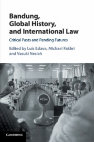
Between 1921 and 1945, Jawaharlal Nehru was imprisoned many times for ‘crimes’ related to India’s... more Between 1921 and 1945, Jawaharlal Nehru was imprisoned many times for ‘crimes’ related to India’s struggle for independence. Cumulatively, he spent many years in prison. Whilst in prison for the second or third time, Nehru began to write a series of letters to his then ten year old daughter, Indira. This chapter takes those letters as a point of departure for reflecting on the political work of history-telling in international law, and on the ways in which the ‘people’ in the Third World may be called by their leaders into relation, with each other, and with the world. In consideration of these questions, this essay is speculative rather than biographical, reflective rather than historical. What I seek to do here is to tease out a juridical-political imaginary of a certain moment, which the reader may juxtapose with what is imagined to be possible now for international law for, in and of the Global South. Forthcoming in Eslava, Fakhri and Nesiah (eds.), Bandung, Global History and International Law: Critical Pasts and Pending Futures (Cambridge: Cambridge University Press, 2016).
This chapter is published in James Crawford et al, 'The International Legal Order: Current Needs ... more This chapter is published in James Crawford et al, 'The International Legal Order: Current Needs and Possible Responses' (Brill, 2017). It offers a re-reading of the Anglo-Iranian Oil Case as not the dry, procedural dispute it is commonly understood to be, but as an instance of the intense project of world making being undertaken in the middle of the twentieth century.
There is currently, in rich countries and poor, a groundswell of activism, activity, protest and ... more There is currently, in rich countries and poor, a groundswell of activism, activity, protest and popular engagement directed at creating a better world. Everywhere we look, people are singing, dancing, shopping (or not shopping), blogging, protesting, writing, performing, sponsoring and volunteering in the name of global justice. It is obvious that people care. This ethical impulse is coming from both the Third and First worlds, or if you prefer, from the both the Global South and the Global North. It is democratic, and not confined to young idealists and old hippies. As a human being, this makes me optimistic. I am grateful for people's energy and engagement. But as an international lawyer and scholar, the political shape of this ethical impulse and the institutional form to which it ultimately translates gives me pause.
https://www.youtube.com/watch?v=NtFE_43lKVs
In this chapter I argue that international institutional attempts to address poverty (re)iterated... more In this chapter I argue that international institutional attempts to address poverty (re)iterated in the idiom of development are likely to make the problem worse, rather than better. The international development project can be understood as a continuation of ‘the benevolence of empire’ in which interventions were conducted ‘in the service of enabling the conditions of modernity to emerge, in the belief that these would serve better the interests and well-being of humanity’. The point of this characterisation is not to judge the sincerity of the ‘good intentions’, but to draw attention to the fact that ‘what remains indisputable is the authority with which such a gesture can be made, the vantage point from which it asserts itself’. Chapter published in Ruth Buchanan and Peer Zumbansen (eds), Law in Transition: Human Rights, Development and Transitional Justice (Hart, 2014).
Reading Modern Law Critical Methodologies , 2012



Uploads
Current Projects by Sundhya Pahuja
Video and Audio Lectures by Sundhya Pahuja
It is commonly held that ‘International Investment Law’, and the ‘UN Framework on Business and Human Rights’ are new and emerging fields of international legal activity. Both engage directly with the place of the multinational corporation, the first in terms of the protection of property and the adjudication of disputes, the second in terms of the conduct of corporations. But these engagements are not as new as they may appear. In this talk, I enrich our understandings of the emergence of these fields by offering an account of an earlier attempt to deal with both the property and conduct of multinational corporations. That was the attempt in the 1970s led by the Global South to establish the UN Commission on Transnational Corporations. That initiative sought to internationalise legal control over the conduct of multi-national corporations, whilst at the same time, to assert national authority over the ownership of property. But what eventuated was the reverse: internationalized protection for foreign property, and national responsibility for corporate conduct. Understanding the story of these ‘new’ regimes in this way - and as intimately connected to each other - sheds light on the dark side of their combined operations today.
Cite as: Sundhya Pahuja, Newman Oration, Yale Law School, 25 Feb 2019.
Part 1: From Colonial Companies to Global Corporations
In this lecture, I will introduce the problematic of the corporation in international law. The modern corporation is often understood to be a child of the state, a child which has grown too powerful to control. However, we need to go back further than the advent of the modern corporation in order to see that the Company emerged in the early modern period not as a child of the state but rather as a form of associational life which exercised public authority and which rivalled other such forms, including the state. In this lecture, I will suggest ways in which a richer understanding of the history of the corporation and its jurisprudential form can illuminate contemporary patterns of global ordering.
Part 2: Decolonisation and Battles over Global Corporations and International Law
This lecture will trace the struggles over the question of the corporation, how it should be conceptualized, and its proper relation to international law during the period bookended by the end of the Second World War, and the end of the Cold War.
It will focus in particular on the attempt in 1974, by the ‘Group of 77’ developing states, to assert international legal control over trans or multi-national corporations through the establishment of the Commission on Transnational Corporations, as well as consider the rivalrous jurisprudence and institutional initiatives emerging at the same time.
Part 3: Contemporary Patterns of Ordering: Business and Human Rights and International Investment Law
This lecture will consider what happened to the earlier struggles over the global corporation, once history ‘ended’, and three worlds putatively became one. It will trace the twin emergence of International Investment Law, and Business and Human Rights, in order to ask what account of the international - and what kind of world - is authored and authorised by those ‘regimes’.
Authored Books by Sundhya Pahuja
Winner, 2012 American Society of International Law Certificate of Merit.
Edited Books by Sundhya Pahuja
relationship between the Cold War and International Law. The authors
adopt a variety of creative approaches – in relation to events and fields
such as nuclear war, environmental protection, the Suez crisis and the
Lumumba assassination – in order to demonstrate the many ways in
which international law acted upon the Cold War and in turn show how
contemporary international law is an inheritance of the Cold War. Their
innovative research traces the connections between the Cold War and
contemporary legal constructions of the nation-state, the environment,
the third world and the refugee; and between law, technology, science,
history, literature, art and politics.
The editors Jennifer Beard and Sundhya Pahuja have collected a diverse set of scholarly works in which law's claims of authority and legitimacy are subjected to questions of the cultural limits of writing and researching legal thinking in the field of international economic law and development. Is the story of western modernity to be limited to the concept of "the savage" at its heart? Should "the savage" as law's limit be written over, or written out? Or can we find the "wild heart" of the savage within each legal writer? Have questions of the "origins" of justice always deflected the judical process away from more proper concerns with the question of human Being? Is the process of native title in Australia simply one more way to deny a humanness to the being of indigenous others? Has the claim for rights to land in Uganda simply made visible how international economic programs feed upon law's imperatives for a gendered justice? Can imagining the human reasoning process as a machine like Cyborg enhance legal theory's ability to stay vigilant to the historiography of reason and imperialism?
"Divining the Source" is a collection of 8 essays written for academic lawyers, legal theorists and cultural studies teachers, and postgraduate students in the fields of law, international relations, cultural studies, postcolonial theory, and feminist legal studies. It introduces teachers, researchers and students to the ideas of prominent legal theorists and practitioners in human rights and development. The collection could be set as a text for a postgraduate seminar on Legal Theory, International Law and Development Studies, or as an advanced level text for an undergraduate course on Human Rights.
Book Chapters by Sundhya Pahuja
Because it emphasises practice and technique, rather than theory or precept, work in this tradition is often catalogued in the technical writing, or ‘how to write a PhD/dissertation’ section of the library. It may be dismissed - too quickly - as only for students, or close to academic self-help. Such works are seldom written from the perspective of a jurist, and even more rarely an international legal scholar. But in the changed inflection from precept to practice, and from theory to technique, approaching methodology as the practice of writing about how we do our research has several advantages….
This piece is related to the 'Asking Better Questions' lecture I have presented at workshops including IGLP, Lund, Stockholm/Oxford, NUW, Glasgow, SOAS, MLS, LSE, and Osgoode.
Forthcoming, Nicholas Tsagourias (ed.), Handbook on Methodologies in International Law, (Elgar, 2020) Penultimate Draft
https://www.youtube.com/watch?v=NtFE_43lKVs